Pt 2 Medical Screening and Differential Diagnosis for Physical Therapists
 Call Kai
 Learn
Learn Practice Test
 Spaced Repetition
 Match
Match Flashcards
 Knowt Play
1/29

Earn XP
Description and Tags
Vocabulary practice flashcards covering medical screening terminology, referred pain signs, and systemic pathology indicators for physical therapy students.
Name | Mastery | Learn | Test | Matching | Spaced | Call with Kai | Chat |
|---|
No analytics yet
Send a link to your students to track their progress
30 Terms
describe the different sources of pain
can have cutaneous sources of pain, somatic sources, visceral, neuropathic pain, and referred pain
describe nociceptive pain
due to activation of nociceptors (inflammatory, mechanical irritant, injury)
describe nociplastic pain
pain due to disturbance of central pain processing (increased excitability or decrease inhibition), examples are fibromyalgia, temporomandibular disorder, nonspecific low back pain
describe neuropathic pain
due to lesion or disease of the somatosensory system, examples include diabetic neuropathy, carpal tunnel syndrome, complex regional pain syndrome
typically, how is pain presentation with MSK pain vs systemic pain?
in MSK, pain is above and below the joints, in systemic the clinical presentation may not fit the expected pain pattern
describe the signs and symptoms of MSK pain
decreases with rest, lessens at night
sharp or superficial pain
usually decreases with stopping of activity
aggravated by mechanical stress
trigger points may be accompanied by nausea, sweating depending on location
describe the symptoms associated with systemic pain
disturbs sleep/awakens at night
deep aching or throbbing
reduced by pressure
not aggravated by mechanical stress
constant or waves of pain
associated with jaundice, arthralgia, skin rash, enlarged lymph nodes, fatigue, weight loss, fever (low grade), generalized weakness, cyclic and progressive symptoms
what are the characteristics of viscerogenic pain?
gradual, progressive and cyclical pain patterns, constant pain, PT interventions “fail”, pain does not fit the expected pattern
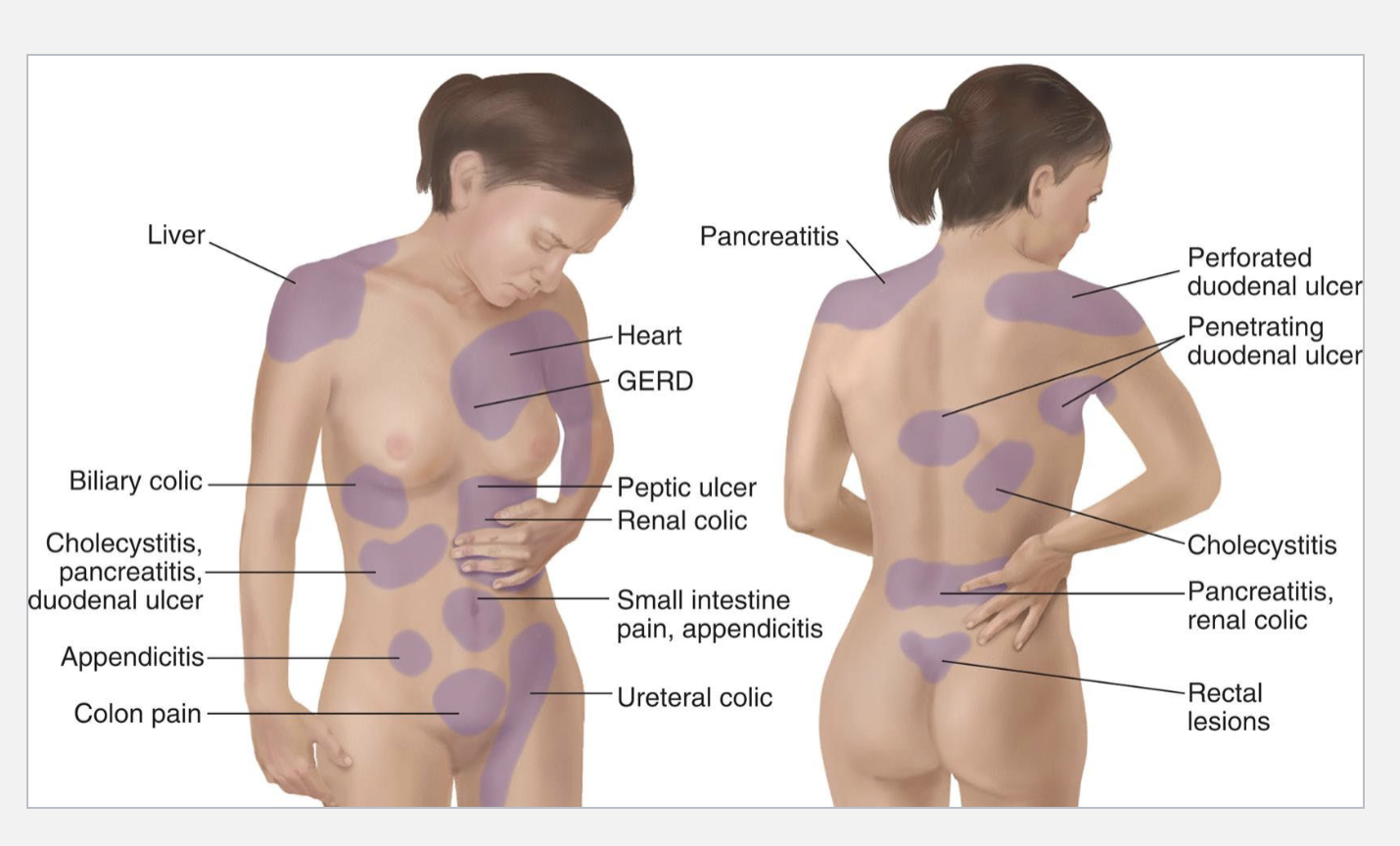
describe the referral patter of different visceral organs
see image
what are the guidelines for immediate medical attention?
sudden worsening of intermittent claudication, symptoms of TIAs in any individual, esp with hx of HTN, heart disease, or tobacco use. onset of anginal pain requires immediate cessation of exercise, anyone with coronary artery stent experiencing chest pain, difference of more than 40 mmHg in pulse pressure, women with chest/breast pain who have family hx of breast cancer or heart disease, palpitation in person with hx of unexplained sudden death in family, fainting w/o warning, report any new arrythmias, extreme dyspnea
what are the signs and symptoms of pulmonary system dysfunction
cough, dyspnea, cyanosis, clubbing, altered breathing patterns
describe the referred pain patters of the pulmonary system
usually localized in the substernal or chest region over the involved lung fields, can radiate to the neck, UT, costal margins, thoracic region, scapulae, or shoulder. tracheobronchial pain, pleural pain, and diaphragmatic pleural pain
describe the screening for gastrointestinal disease
age over 45
previous hx of NSAID induces GI bleeding
symptoms increase within 2 hours after taking NSAIDs or other meds
symptoms affected by food
back, shoulder pelvic, or sacral pain
iliopsoas/obturator sign, McBurney’s sign, heel tap
joint pain with arthralgias with skin rash
how is abdominal pain normally described?
deep aching, penetrating, gnawing, vague burning, or deep grinding (can be caused by inflammation, organ distension, necrosis)
Kehr's Sign
Pain in the left shoulder when pressure is placed on the upper abdomen, often caused by retroperitoneal bleeding, free air or blood in the abdomen, or a damaged/ruptured spleen.
Danforth Sign
Shoulder pain occurring with inspiration, which may indicate retroperitoneal bleeding or air/blood within the abdominal cavity.
where might perforated duodenal or gastric ulcer refer pain?
due to leakage that irritates the diaphragm may refer pain to the R shoulder or the R armpit/axilla region
where might pancreatic cancer or pancreatitis refer pain to?
the left shoulder
where might spleen, liver, or stomach bleeding refer pain to?
bilateral shoulders (due to irritation of the diaphragm)
Palmar Erythema
Also known as liver palms, this condition causes reddening of the skin over the palms and occurs in the presence of liver impairment.
Leukonychia
The appearance of white bands across the nail plate, which can be an integumentary sign of liver impairment.
Epigastric Pain
Visceral pain located from the mid-sternum to the xiphoid process originating from organs with a T3−T5 sympathetic nerve distribution, such as the heart, esophagus, stomach, duodenum, gallbladder, and liver.
Periumbilical Pain
Visceral pain corresponding to a T9−T11 nerve distribution, originating from the small intestine, pancreas, or appendix.
Hypogastric Pain
Visceral pain in the lower abdomen originating from the large intestine or colon, which may easily be mistaken for bladder or uterine pain.
Rhabdomyolysis
A condition characterized by muscle aches, cramps, soreness, and weakness, which can be seen with acute trauma or COVID-19 and may involve respiratory muscle myopathy, liver, or renal impairment.
VINDICATE Mnemonic
A framework for identifying causes of low back pain based on underlying system mechanisms: Vascular, Inflammatory, Neoplastic, Drugs, Infectious, Congenital, Autoimmune, Traumatic, and Endocrine/Psychosocial.
what are some sigs of hepatic or biliary dysfunction ?
hepatic or biliary referred pain patterns
enlarged and palpable liver
skin and nail bed changes
jaundice, pallor, orange or green skin
spider angiomas and palmar erythema
white bands across the nail plate, clubbed nails, koionychia
Upper Urinary Tract Pain
Pain from the kidneys or ureters typically located in the posterior subcostal and costovertebral regions, which remains constant and unchanged by altering body position.