Ecology/Evolution 1
 Studied by 0 people
 Call Kai
 Learn
Learn Practice Test
 Spaced Repetition
 Match
Match Flashcards
 Knowt Play
1/58

There's no tags or description
Looks like no tags are added yet.
Name | Mastery | Learn | Test | Matching | Spaced |
|---|
No study sessions yet.
59 Terms
Evolution
Living organisms have ancestors in common and have diverged from the common ancestors through various mechanisms (including natural selection). Descent with modification/changes in the genetic composition of a population with the passage of each generation.
Ecology
The scientific study of the distribution and abundance of organisms and the interactions that determine distribution and abundance
Theory
A comprehensive explanation of some aspect of nature that is supported by a vast body of evidence.
Observations from nature that explain why a theory may arise
• Many, many kinds of organisms (species)
• Different species nonetheless share certain attributes
• Species are not uniformly distributed on Earth (and oftentimes, similarity and geography are correlated)
• Species are "well-suited" (usually) to their environments
• Things that existed at one time no longer exist (i.e., we have fossils)
Natural Theology Author(1802)
William Paley
Immutable
Unchanging over time (explanation as to why natural, as opposed to supernatural explanations for biological diversity, were slow to develop)
Catastrophism
Sudden, catastrophic, large-scale events are responsible for the Earth's geological features, and the forces responsible for these catastrophes are different from the forces acting today.
Uniformitarianism
The processes (and their rates) acting today are the same as those that acted in the past (Hutton).
Gradualism
Large changes are the result of the accumulation of small changes over time (Lyell).
Changes in thinking about scale
Developments in optics revealed that things existed beyond our previous comprehension in space, and naturally, this also challenges our ideas about time. This resulted in a greater desire for natural explanations of observed phenomena.
Changes in thinking about the age of the earth and a relaxing of the idea that species are immutable lead to thinking in evolutionary terms
Erasmus Darwin & Robert Chambers(1976)
Proposed that species change over time, but did not propose a mechanism.
Jean-Baptiste Lamarck(1809)
Proposed that species evolve and provided a mechanism: the inheritance of acquired characteristics.
The voyage of the British surveying ship: HMS Beagle(1831-1836)
Darwin proposed that species had been taken and modified for different ends. He begins thinking about descent and modification.
Common ancestry
One of Darwin's insights in "On the Origin of Species" (1859) that explains the idea that living species have ancestors and have ancestors in common
Natural selection
One of Darwin's insights in "On the Origin of Species" (1859) that explains the mechanism he proposes for how organisms have come to be numerous, diversified, and well-adapted. The idea was formally introduced into the world, along with Alfred Russel Wallace's ideas, to the scientific world together in 1858.
Domesticiation
Artificial selection. Darwin emphasizes that even domestic animals vary and that they tend to true breed(their traits are heritable). We have limited control over causing the variation. We choose the most desirable animals or plants, allow them to breed, and prevent the others from breeding.
Natural selection postulates
1) Individuals within populations are phenotypically variable
2) The variation is heritable (can be genetically passed on)
3) In every generation, some individuals produce more offspring than others- differences in fitness
4) These differences in offspring production are related to the variation among individuals
Mutation
The ultimate source of variation. Random, but the process of natural selection is not random. It is non-random and cumulative.
Darwin recognizes two problems with his theory
1) It predicts intermediate or transitional forms
2) Complex traits(organs) would have evolved gradually from simpler traits but its hard to see how the intermediate stages could have actually functioned well enough to be favored
Homology
same because of ancestry, but different because of natural selection (ex: eyes, liver of shark and orca)
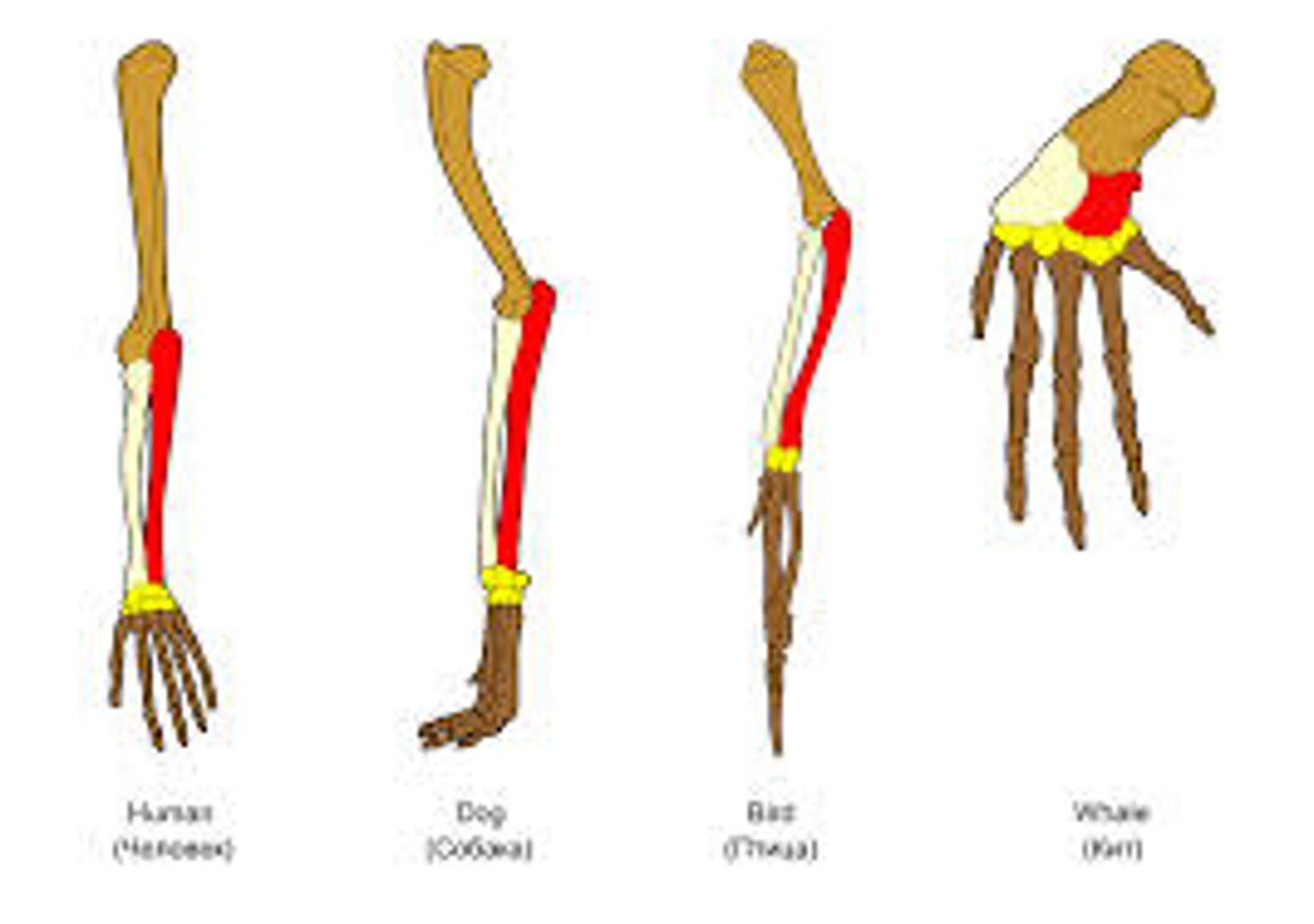
Convergence
similarities that have evolved independently (ex: dorsal fin of shark and orca)
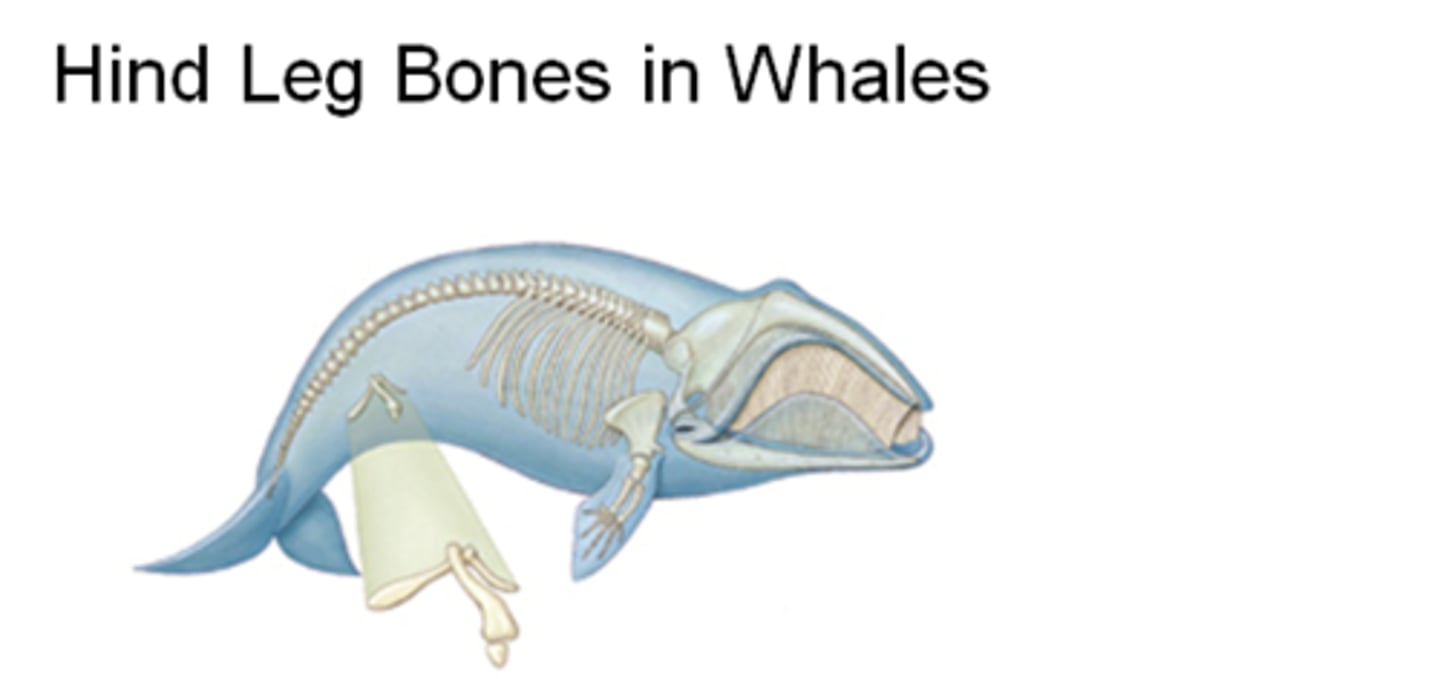
Vestigal
Not useful or functioning. Left over from inheritence (ex: human tailbone)
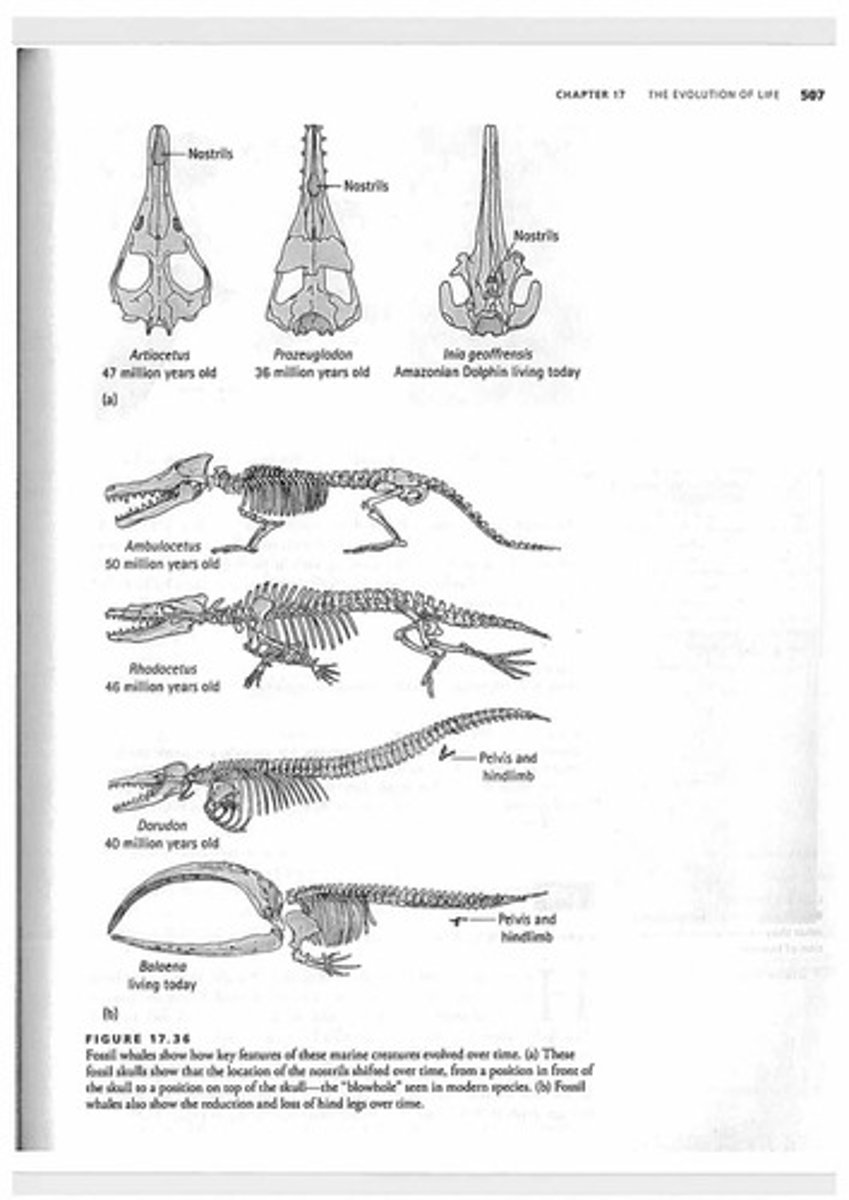
Intermediate traits
species with in between traits (ex: Tiktaalik fish with weight bearing arms has been discovered through fossils. It is the intermediate between fish and living tetrapods) Reveal the relationship between species. They do not need to be perfect or even function in the same way as more complex forms, they only need to increase fitness of the organisms that possess them at that time.
Mendelians
Focused on discrete traits and inheritance
Emphasized mutation's role in evolutionary change
Thought small, continuous variation was unimportant
Biometricians
Focused on continuous variation
Emphasized role of natural selection in evoutionary change
Rejected ideas of Mendelian inheritance as unimportant
The Modern Synthesis of Evolutionary Biology (1915-1950s)
The intellectual integration of the original ideas of Darwin and Mendel with new theoretical and empirical developments in mathematics, genetics, paleontology, developmental biology, biogeography, etc. into a coherent theoretical framework.
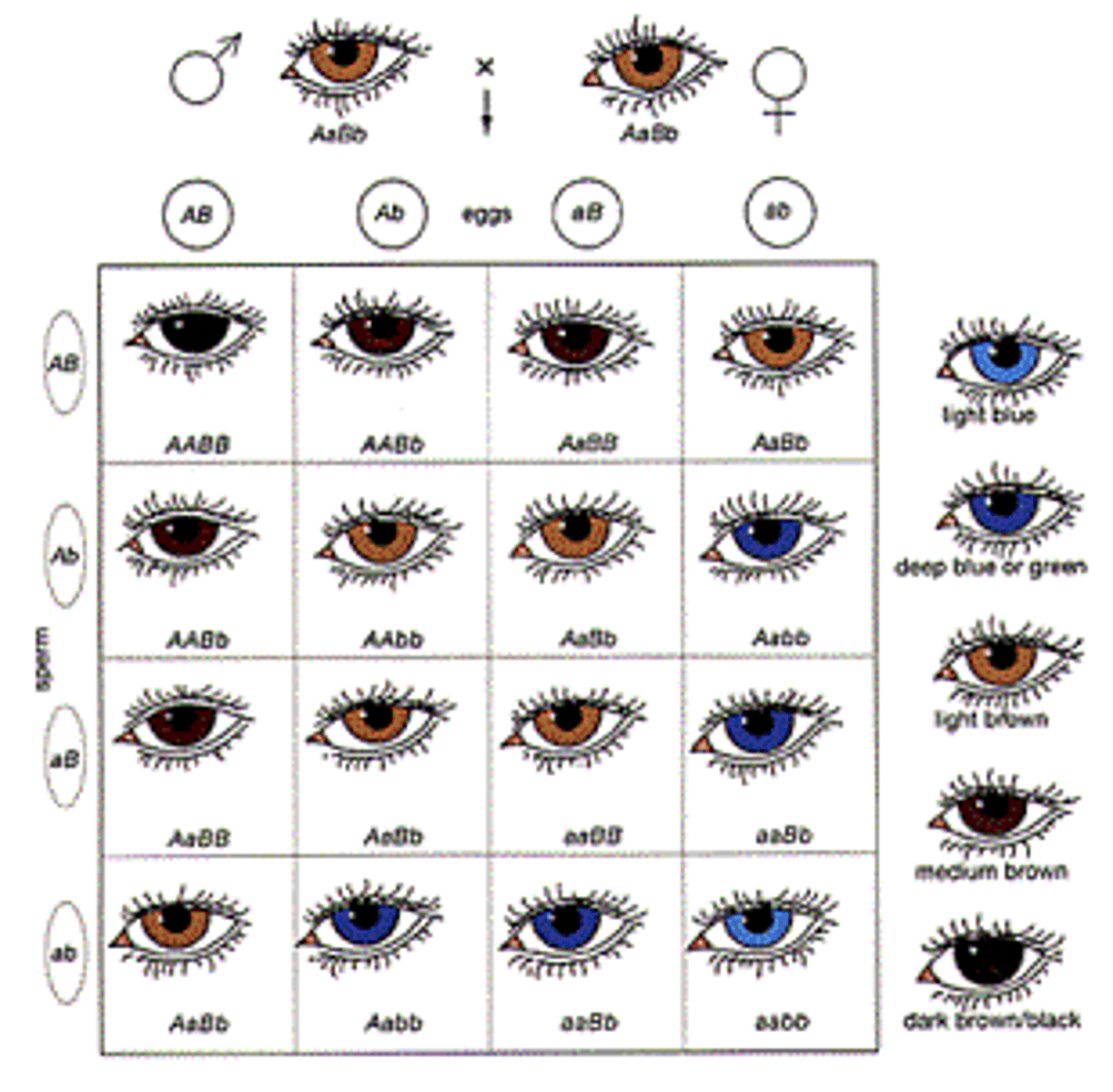
Polygenic traits
Continuous traits. Many possible genotypes and phenotypes. Combined with environmental effects, this results in a smooth distribution of the trait from one extreme to the other.
Hardy-Weinberg Principle
Observed matched expected: p^2:2pq:q^2
The H-W principle says that genotypes in a population will be present in the ratio if the allele frequencies are p and q. That is, the principle connects allele frequencies to genotype frequencies.
Allele frequencies will not change if...
1) There is no selection
2)There is no mutation
3) There is no migration
4) There is no genetic drift
5) Mating is random
How to figure out what to expect in H-W equilibrium
1)Calculate real allele freq's
2)Find expected genotype freq's
3)Find expected #'s of "mice"
4)Compare observed # to expected #
Selection
In very large populations, very strong selection can very quickly change allele frequencies. But in very large populations, even weak selection can eventually have large effects, given enough time.
Mutation/Migration Selection balance
Mutation introduces new alleles into a population. Selection then either ignores it, favors it (fitness increase) and it increases, or eliminates it (decreases fitness).
Mutation and selection can engage in a "push and pull" that will result in an equilibrium (steady state) allele frequency.
Selection vs Drift
Selection tends to win when selection is strong and/or population is large
Drift tends to win when selection is weak and/or population is small
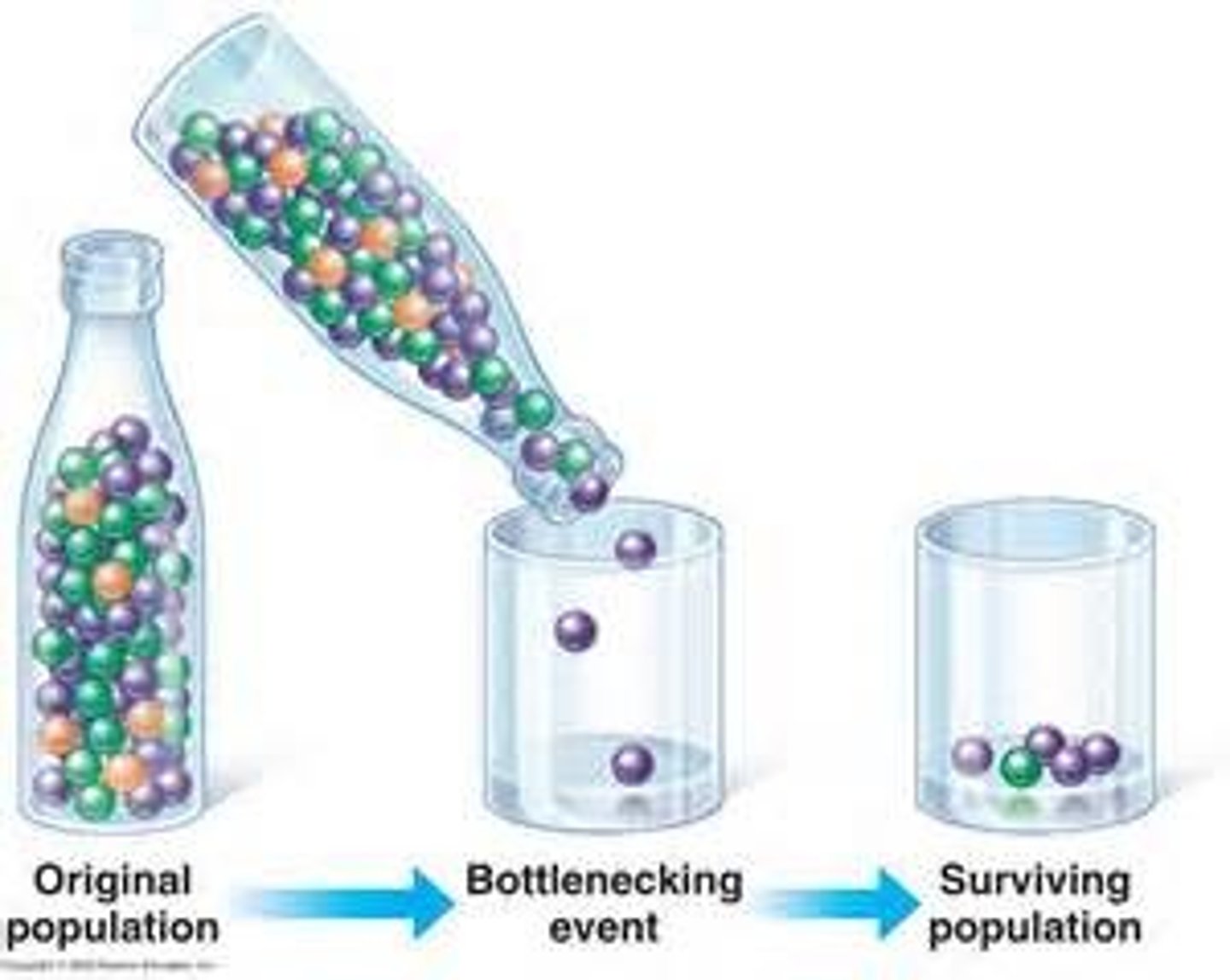
Genetic drift-Bottleneck effect
From the parent population, when there is a bottleneck, or drastic reduction in population), the surviving individals produce the next generation.
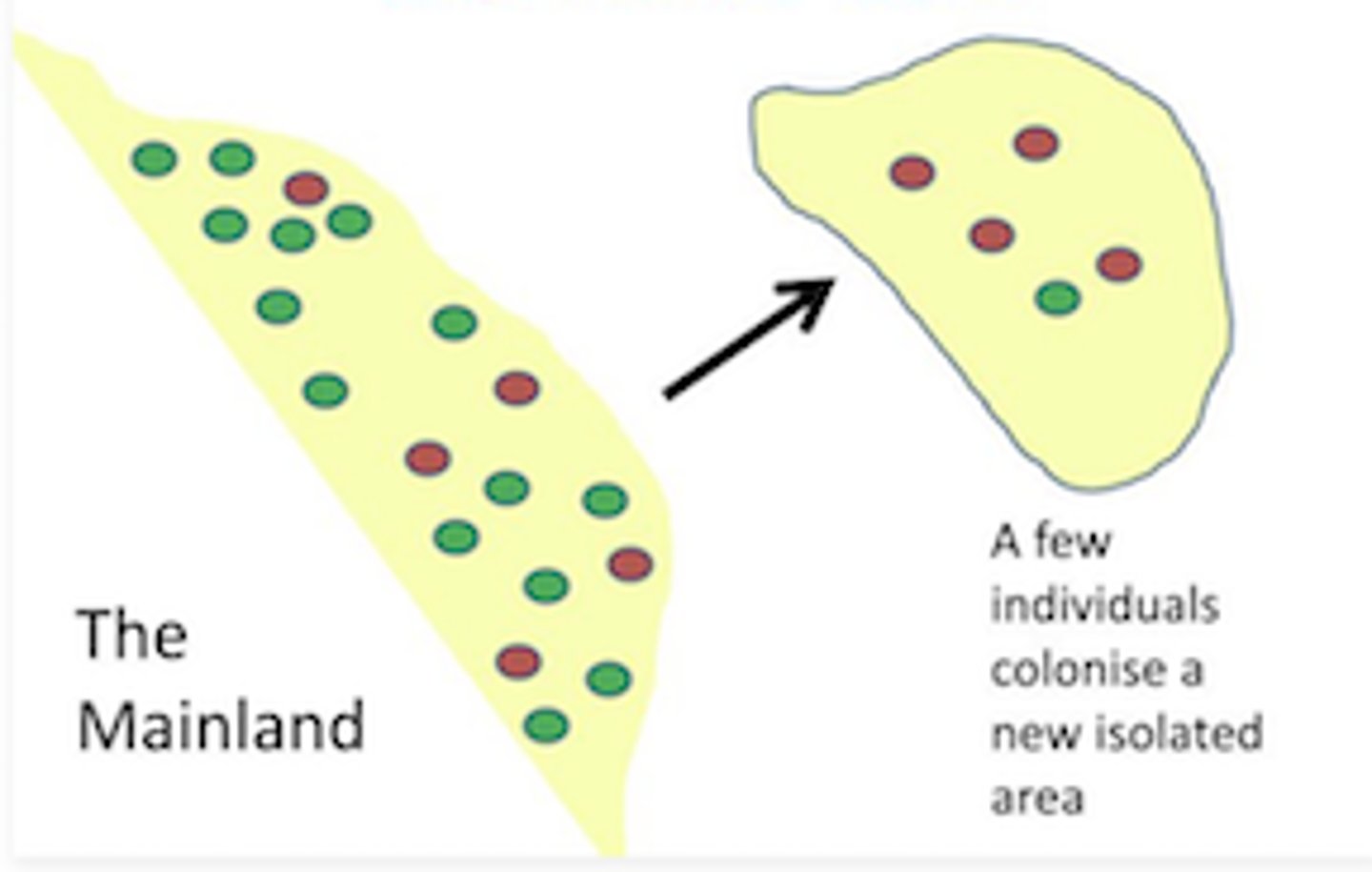
Founder effect
Individuals randomly leave the population and end up somewhere else
Nonrandom mating/Inbreeding depression
Reduction in fitness(survival & reproduction) that occurs when individuals mate with relatives. Higher inbreeding=lower survival and fewer babies.
Inbreeding increases the probability that individuals will inherit two copies ofthe same allele...even if it is pretty rare in the population which increases the chance that a previously hidden bad recessive (deleterious) allele will be exposed.
Sexual selection
Selection acting on variation among members of one sex in their abilities to obtain fertilizations of the gametes of the other sex. (i.e. if you are to successfully fertilize eggs, other individuals must fail b/c an egg isonly fertilized by one sperm!)
Darwin recongizes that sexual selection can act in opposition to natural selection because some sexually selected traits can actually decrease survivorship.
Gametes
the haploid cells that join to form a diploid zygote, which then develops into an organism
Sperm
small, numerous, motile gametes; by definition, produced by males.
Eggs
large, less numerous, usually non-motile gametes; by definition, produced by females. "expensive"
Sexual fitness
Male fitness is primarily limited by access to females, but female fitness is primarily limited by egg (and offspring) production.
If males provide parental care, they can be a resource for females which means there may be sexual selection on females.
Complete sex role reversal
Males provide all the parental care, females compete with each other for males & females are larger and more colorful than males
Species concept
The criteria that determine what constitutes a good species
Why is there uncertainty about how many species exist
1. Many groups are poorly studied
• notably microorganisms and parasites
2. Many environments are poorly sampled.
• tropical environments - both terrestrial and aquatic.
3. Molecular approaches are identifying more andmore "cryptic species".
Cryptic species
indistinguishable from another species at the morphological level, but is distinguishable genetically.
The morphological species concept
a group of individuals that differ from other groups by possessing constant diagnostic characters. Based on collecting and describing a type specimen for a given species
Pros: applicable to living and extinct organisms, to organisms no matter their reproductive mechanisms
Cons: inconsistent and not always practical (cryptic species or polymorphism within a species or between sexes)
The biological species concept
groups of actually or potentially interbreeding natural populations which are reproductively isolated from other such groups
Pros: embraces idea of lack of gene flow
Cons: how do you evaluate potential interbreeding, extinct species, or hybridization?
The phylogenetic(evolutionary) species concept
species are the smallest groups that can be distinguished as sharing a common ancestor and by unique, derived characters
Pros: widely applicable, clearly evolutionary
Cons: often not practical, could more than double current estimates of species numbers
The process of speciation
1) Geographic isolation of populations through dispersal and colonization
2) Divergence in traits
3) Reproductive isolation
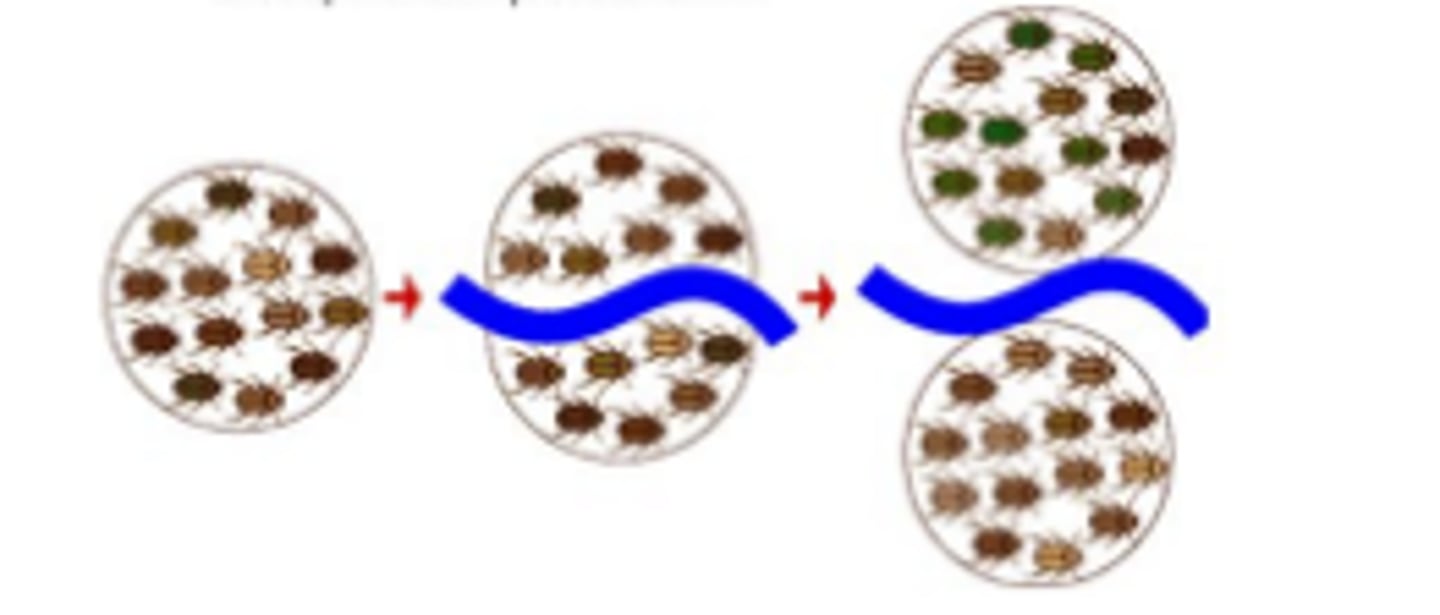
Vicariance event
Formation of mountain ranges, changes in climate that alter habitat(new rivers, drying rivers,etc.) and split populations
Allopatric
allo=other. Geographically isolated populations
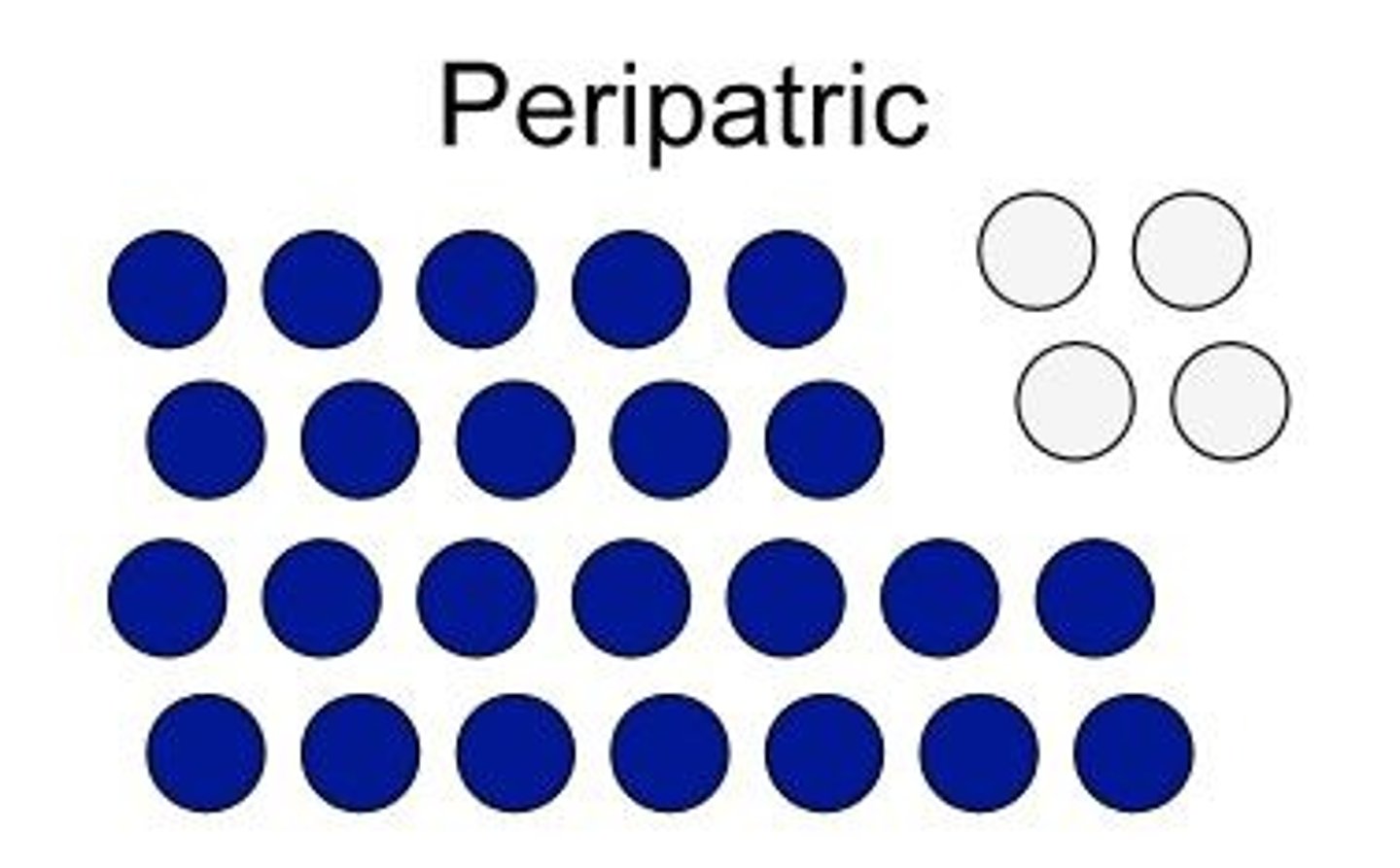
Peripatric
peri=near. A small population isolated at the edge of a larger population
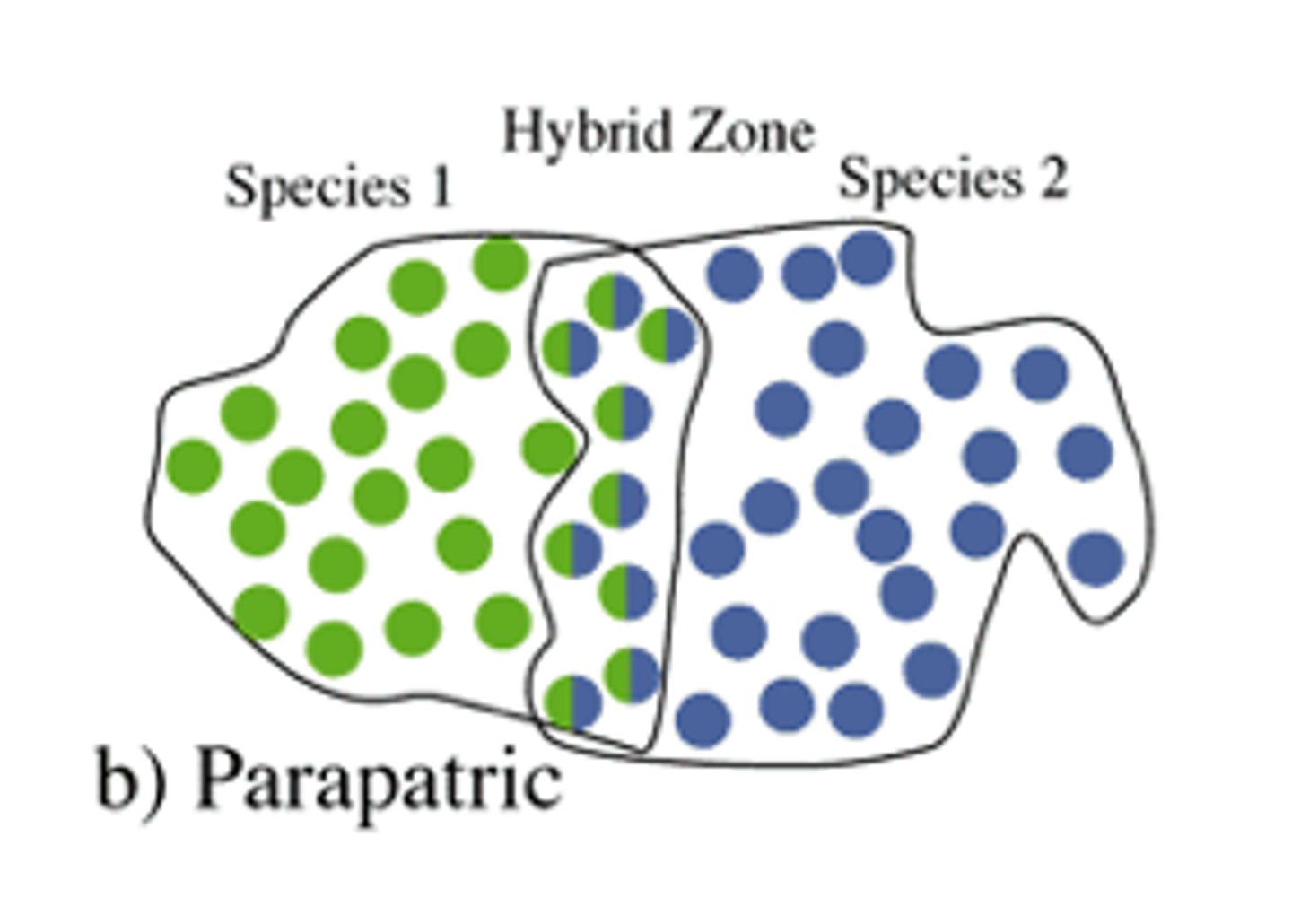
Parapatric
para=beside. A continuously distributed population. (ex: an elevational or latitudinal cline)
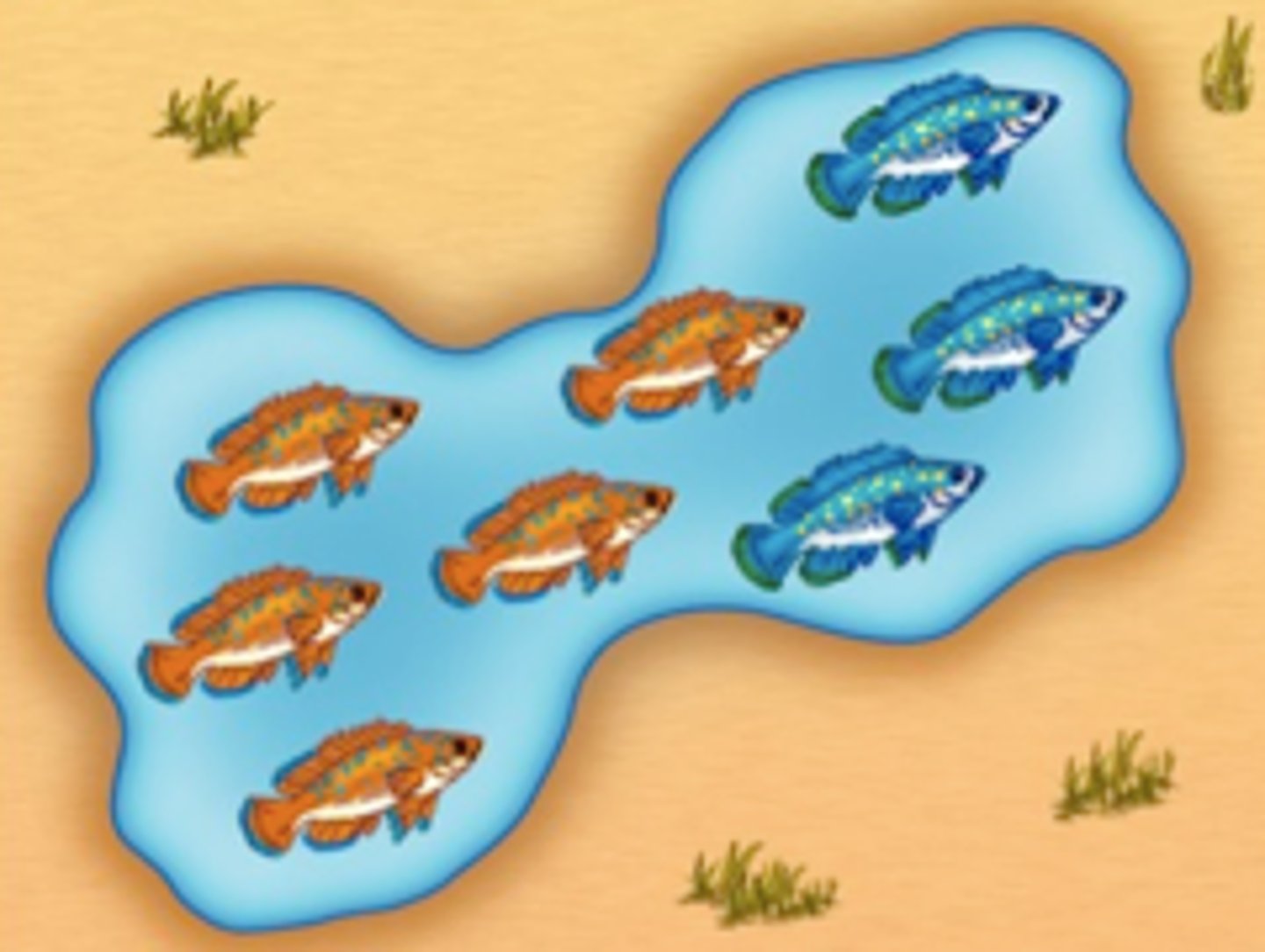
Sympatric
sym=same. Within the range of the ancestral population (ex: temporal isolation, sub-habitat isolation, polyploidy)
Fitness
genetic representation in future generations
Thomas Malthus
The struggle for existence(1830)
Secondary sexual traits
not directly involved in sex (not primary genitals) (ex:claws)
Anisogamy
different-sized gametes
Limiting factors
Females are limiting factors. Males are not limited in reproductive success by sperm. They are limited by the number of females they can attract. Females are limited by the energy it takes to reproduce