EKG Pictures
 Call Kai
 Learn
Learn Practice Test
 Spaced Repetition
 Match
Match Flashcards
 Knowt Play
1/36

There's no tags or description
Looks like no tags are added yet.
Name | Mastery | Learn | Test | Matching | Spaced | Call with Kai | Chat |
|---|
No analytics yet
Send a link to your students to track their progress
37 Terms
Atrial Fibrillation

Atrial Flutter-No P Wave!
The atrium is not conducting normally - no depolarization, no atrial contraction
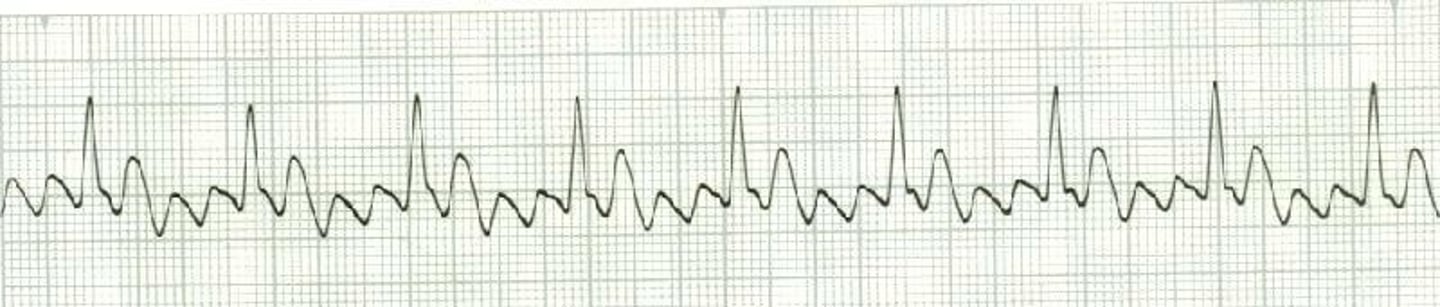
Atrial Flutter - most of the time it's tachycardia in its nature
Atrial Rate = 13 x 20 (only 3 second strip is shown above) = 260
Ventricular Rate = 6 x 20 = 120
On the test, don't call them p-waves, say they are F-waves - atria is contracting very fast in this case
In atrial flutter, the ventricular rhythm is normal! Ventricular depolarization rate will be regular.
There is a consistent contraction, it is just very fast.
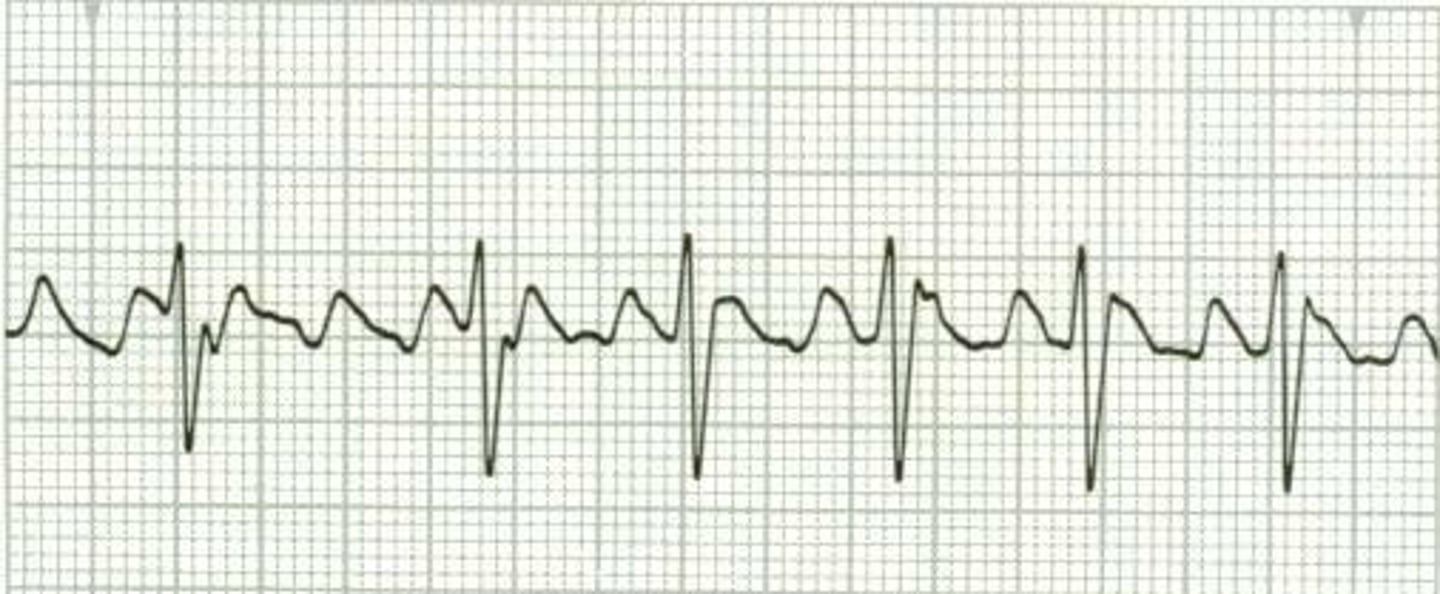
Normal sinus rhythm
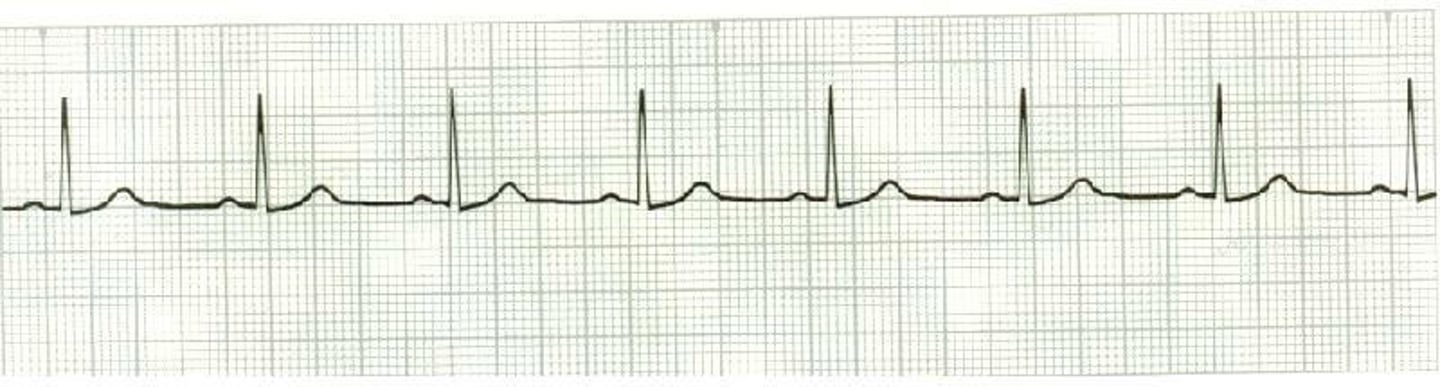
Normal sinus rhythm with bundle branch block (BBB).
Everything is normal except for the QRS interval; called Bundle Branch Block - when there is damage to the tissue in the bundle branches, conduction slows. (Damage can be due to MI, hypertrophy, failure, etc). This results in a wider QRS interval.
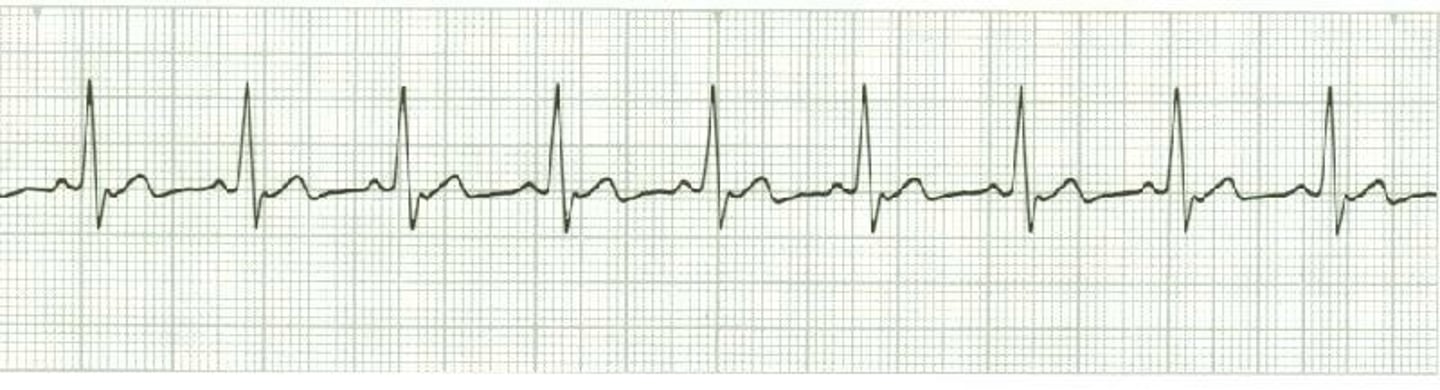
Sinus Arrhythmia - because SA node works correctly (normal p wave), but the rhythm itself is abnormal. Has to do with your breathing. Benign condition

Sinus Arrhythmia with sinus bradycardia

Sinus tachycardia - everything looks good, just fast.
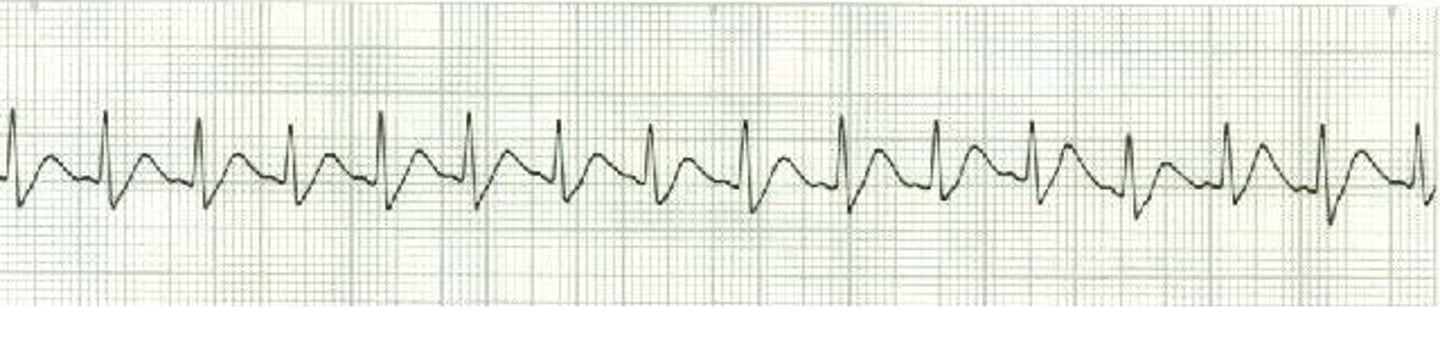
Superventricular Tachycardia
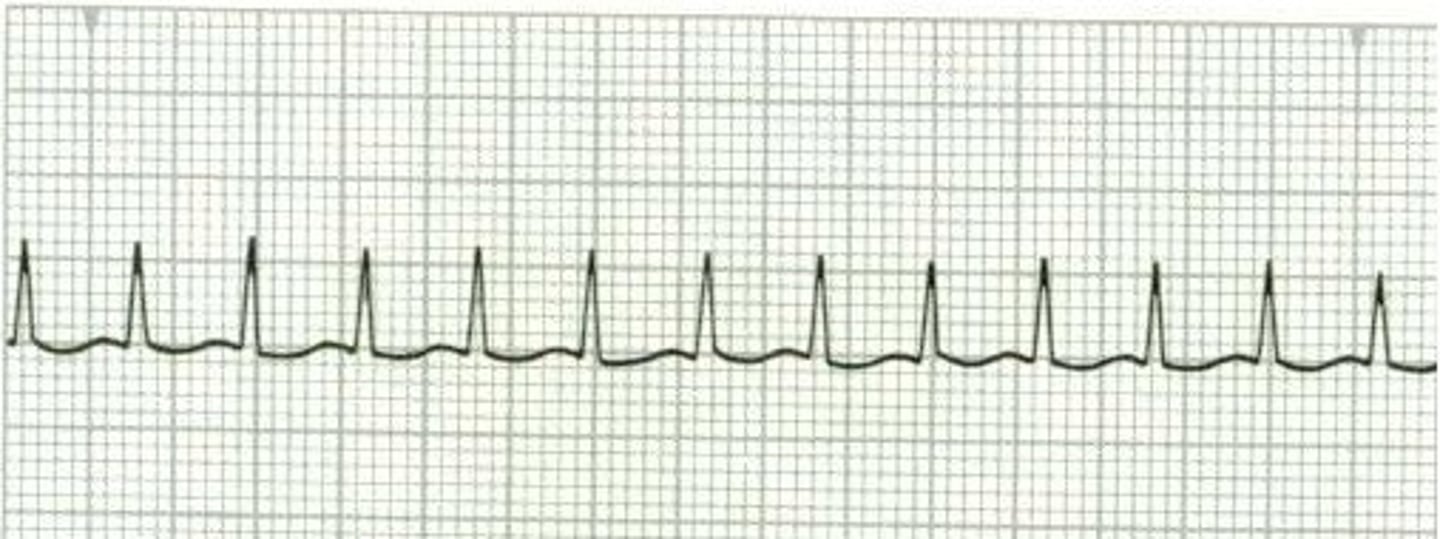
Type I second degree AV block
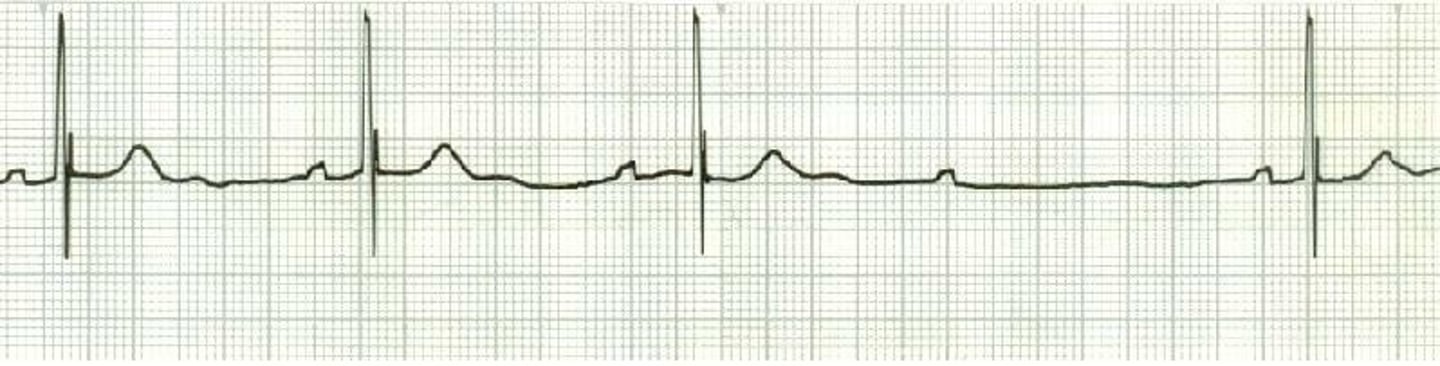
Third degree AV block intraventricular conduction defect
Considered regular Atrial because there are P waves which are buried within the QRS complex.
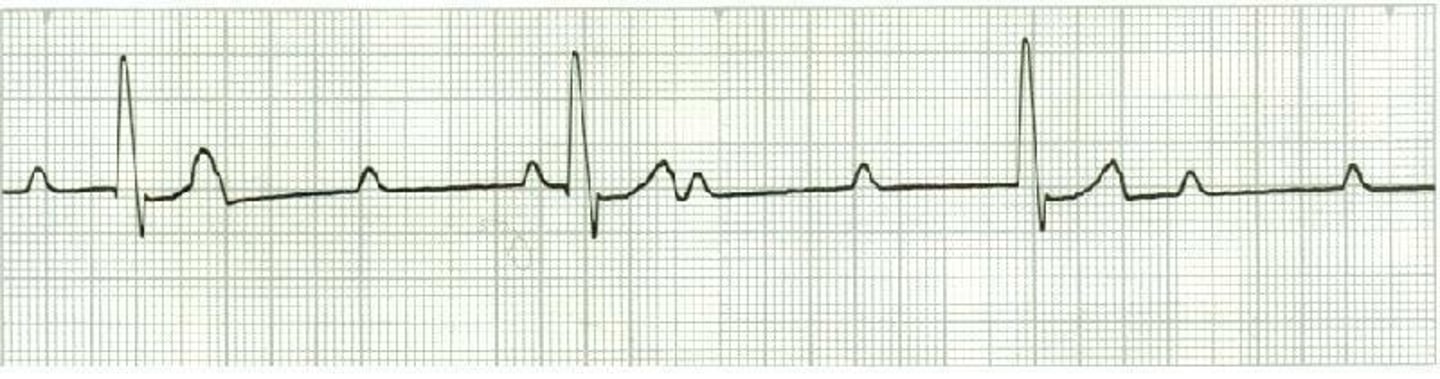
Accelerated Junctional Rhythm
QRS NOT widened that is coming from the ventricle and BBB
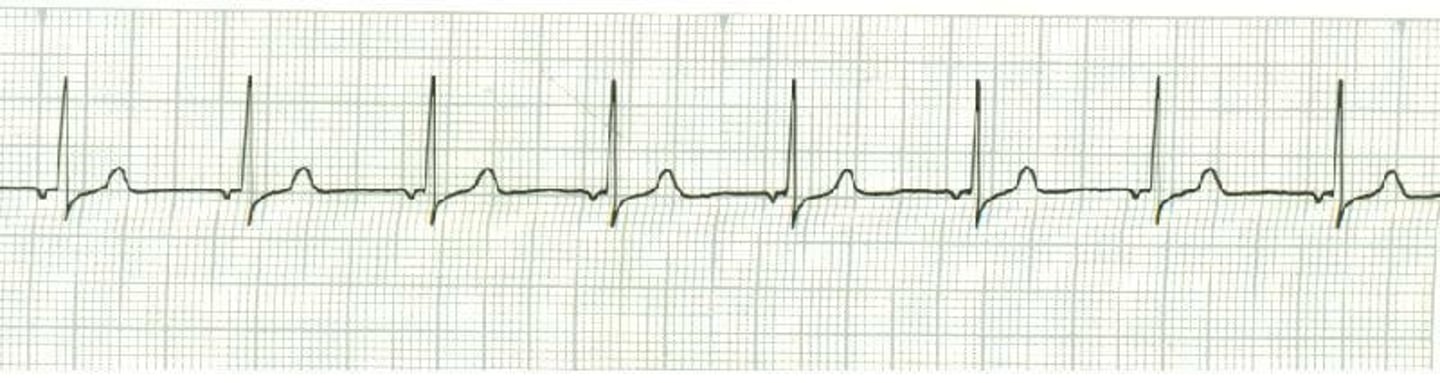
Atrial Fibrillation
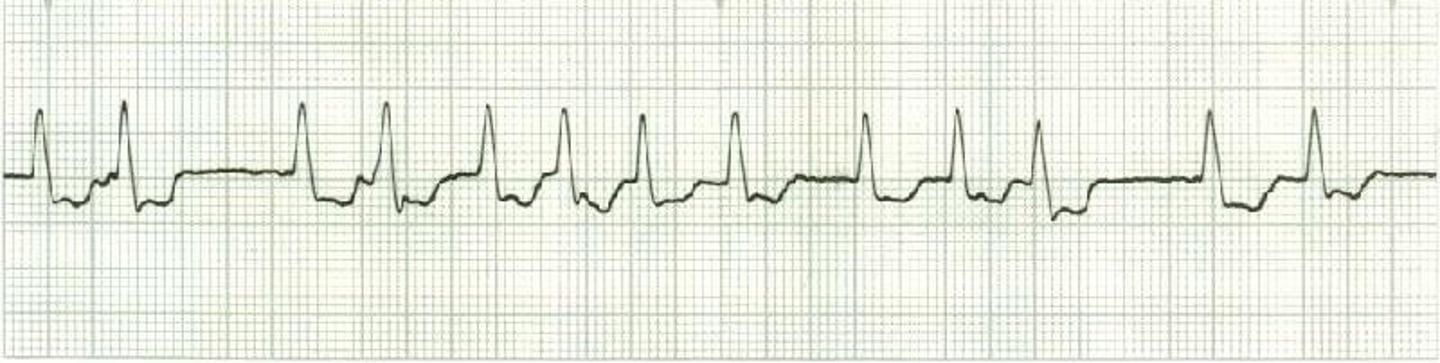
Atrial Flutter
A fibrillation has no P waves and you have abnormal rhythm and it is fast. Flutter you have F waves, and normal RR
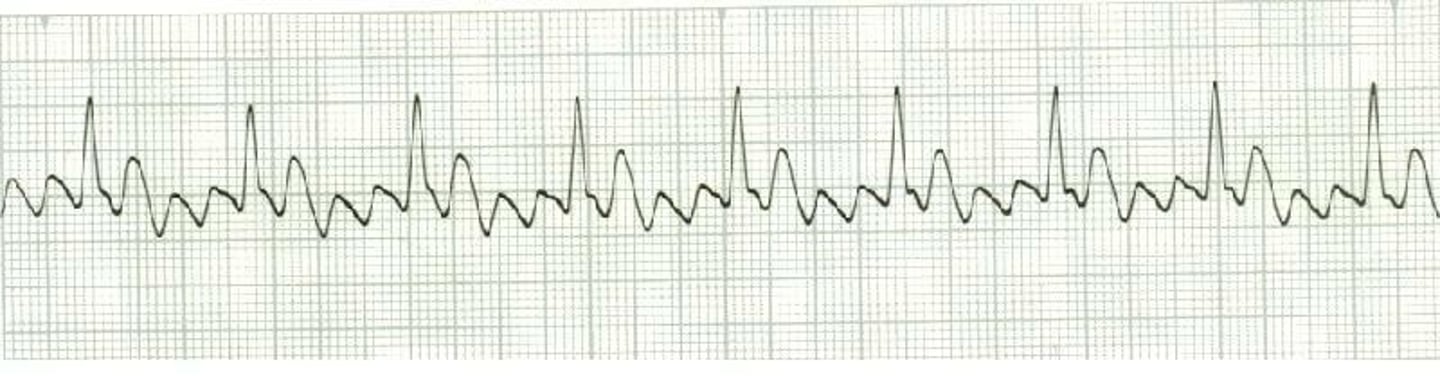
1st degree AV block with Sinus Bradycardia
LOW amplitude P waves
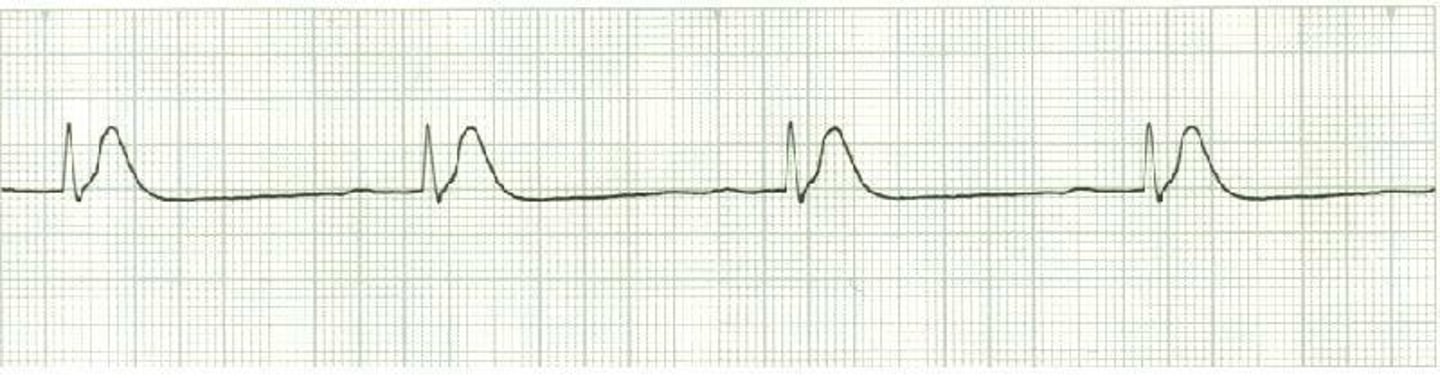
2nd Degree AV block, Type 1 Wenckebach
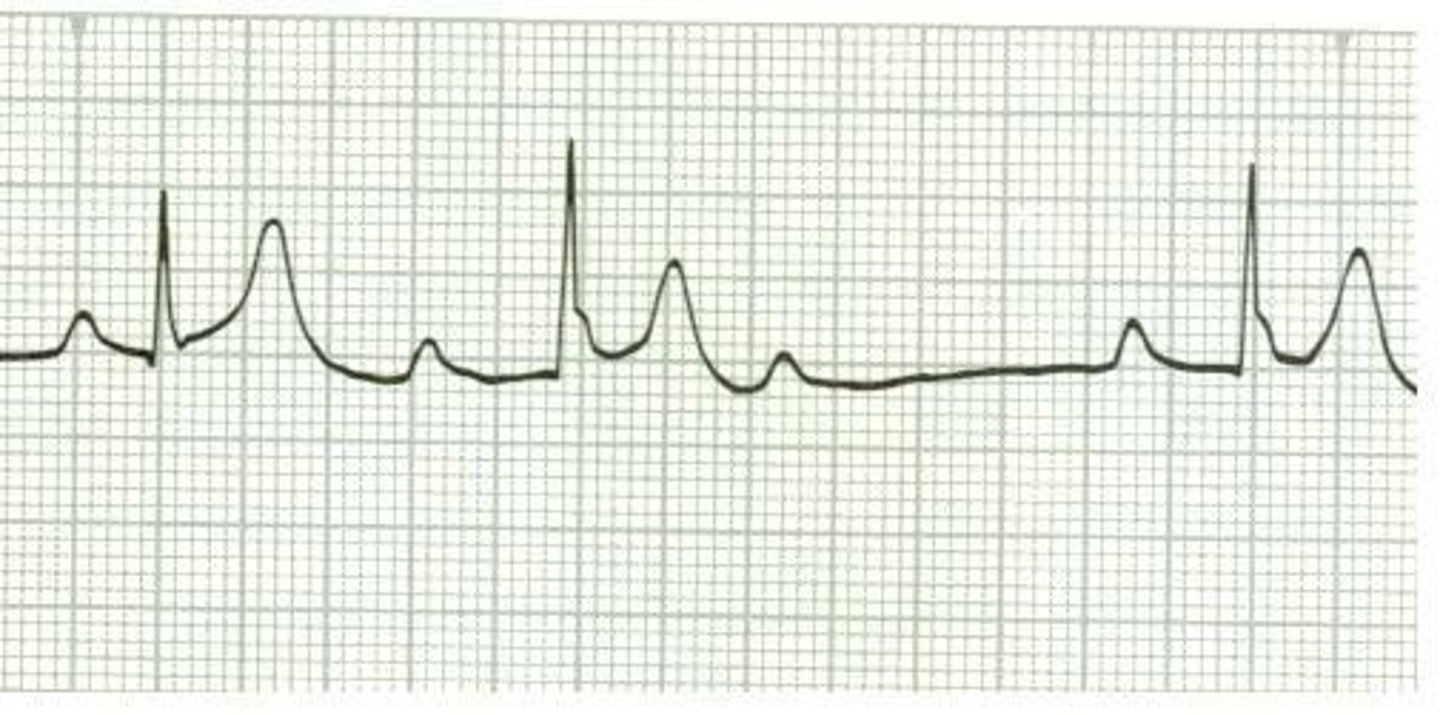
2nd Degree AV block Mobitz Type II
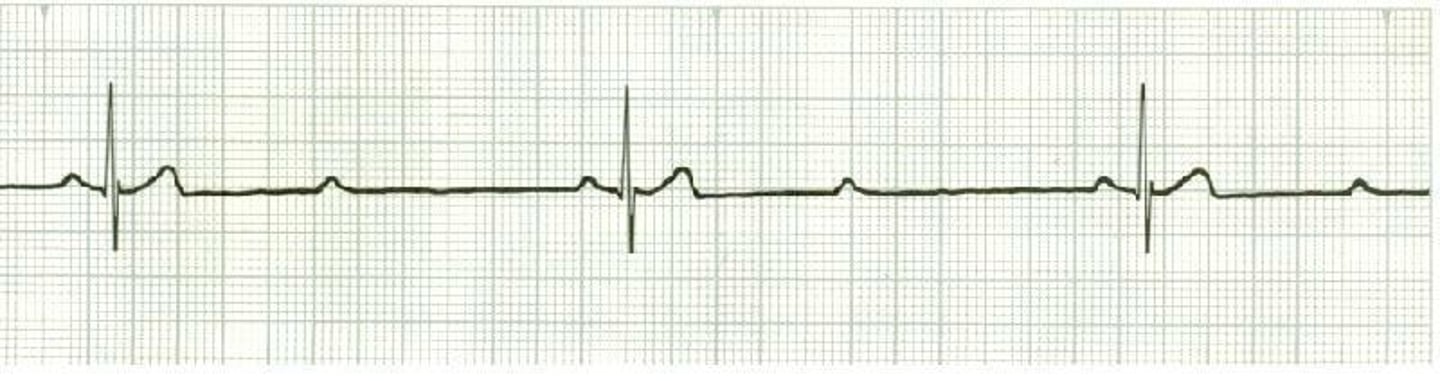
2nd degree AV block, Mobitz Type II with bundle branch block
There is an R and R prime seen which indicate the right bundle branch goes before the left or vice versa.
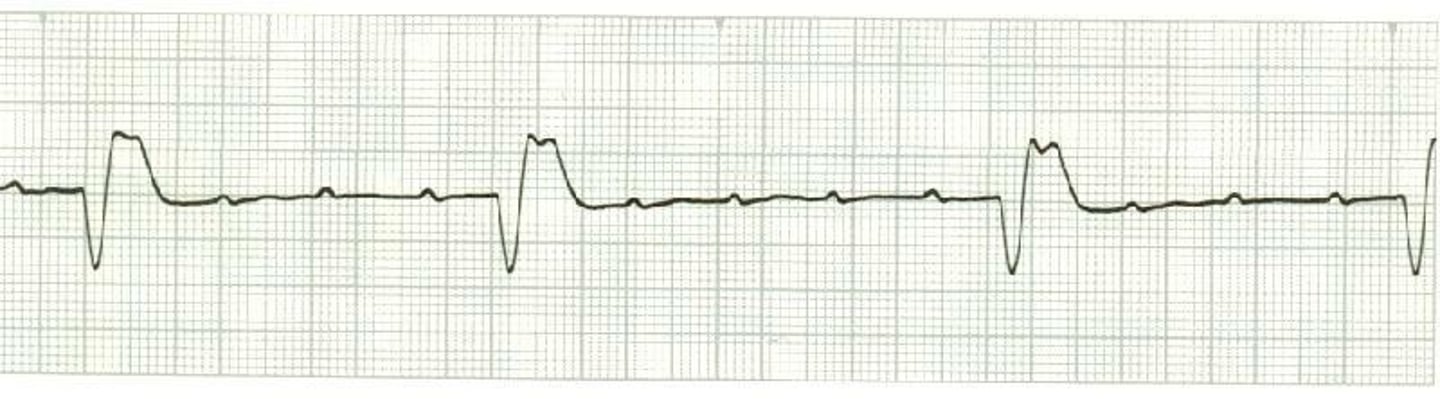
2nd degree AV block Mobitz Type II
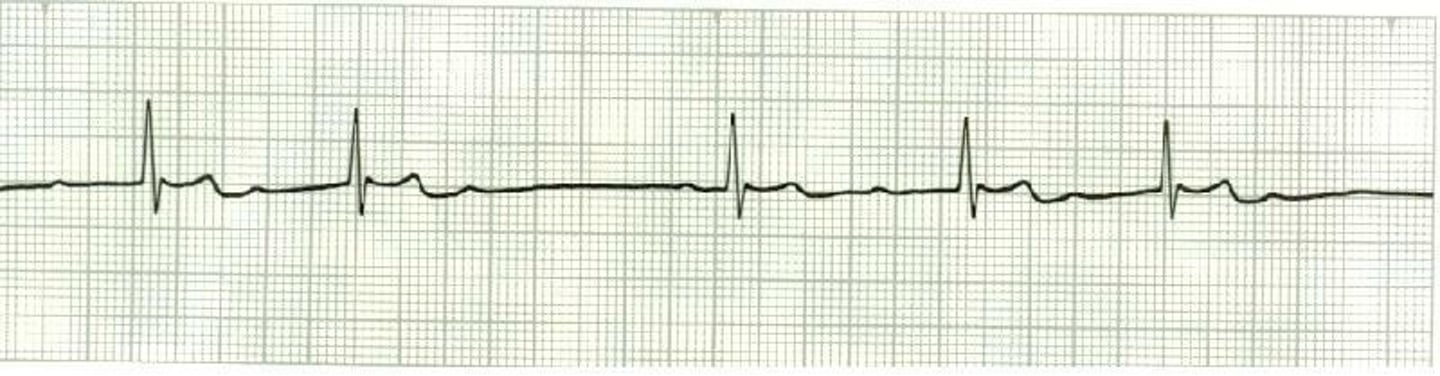
Normal Sinus Rhythm w/BBB
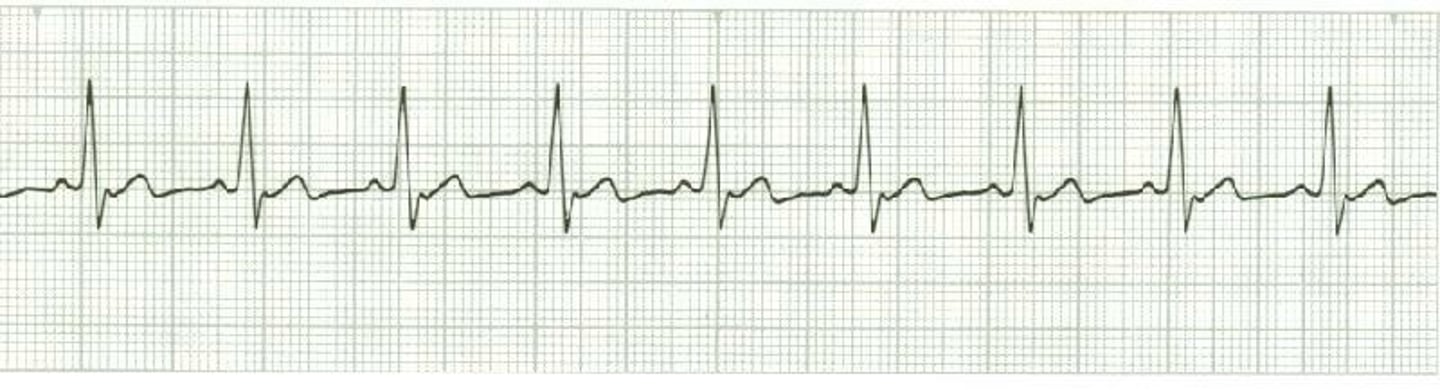
Sinus Arrhythmia with a ventricular conduction block
You would have a notched QRS if it was a bundle branch block.
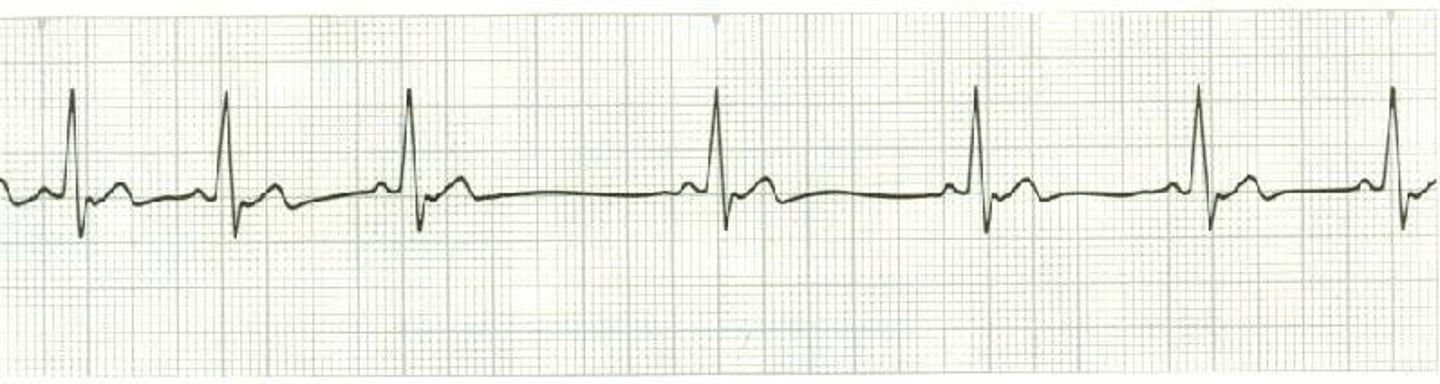
Sinus Bradycardia with ventricular conduction defect
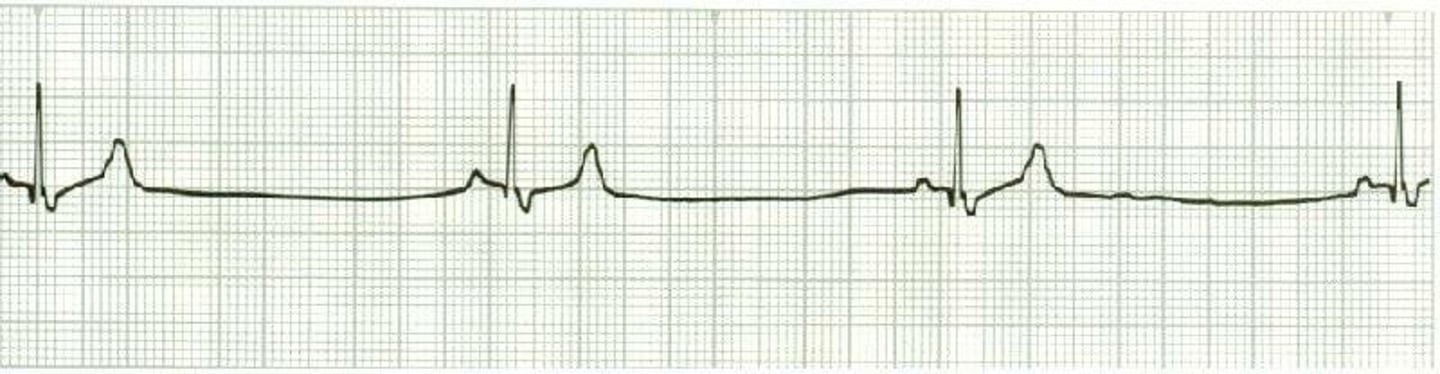
Sinus rhythm with ventricular conduction defect
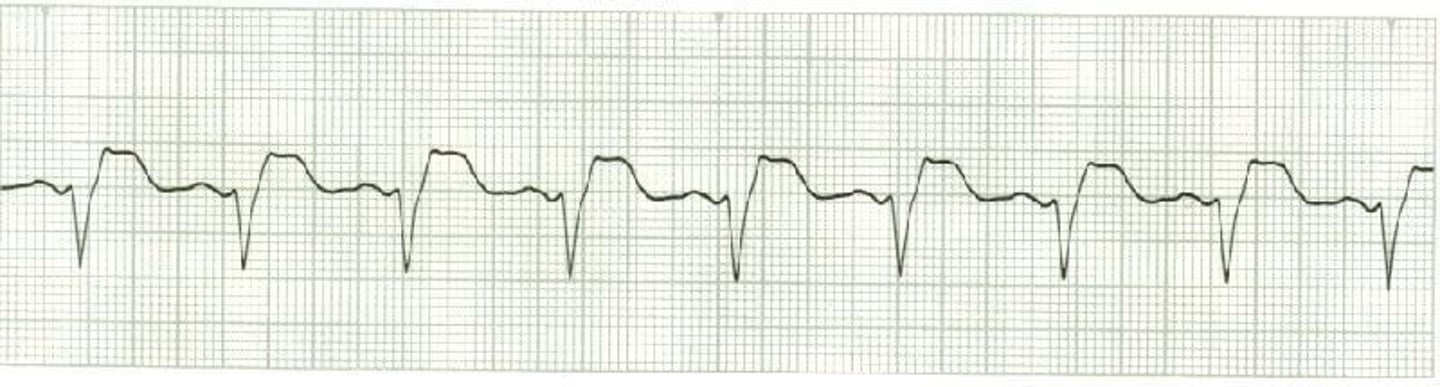
Unifocal Premature Ventricular Contraction (PVC=2 total)
Cant assume a random occurrence at that rate.
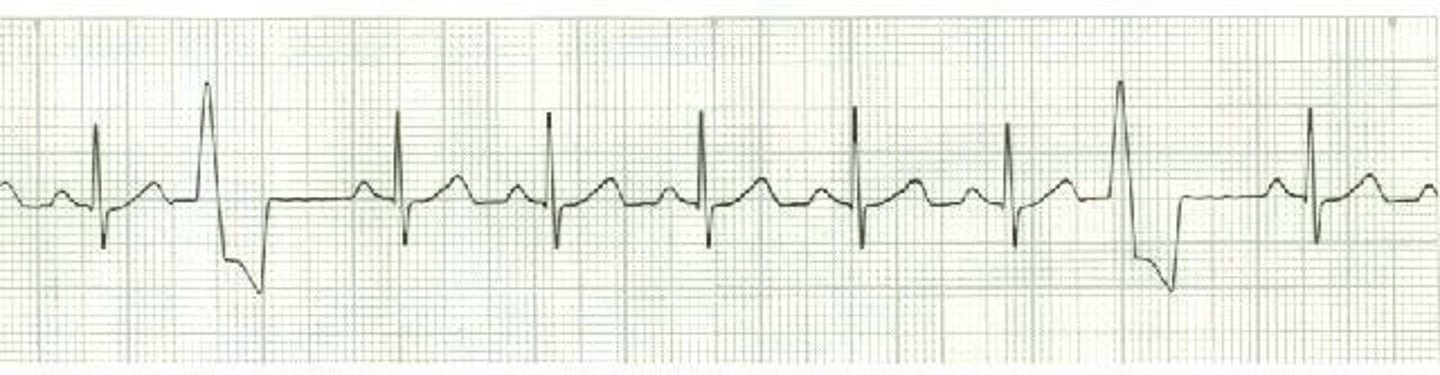
Multifocal PVC (3 Total) Ventricular Tachycardia
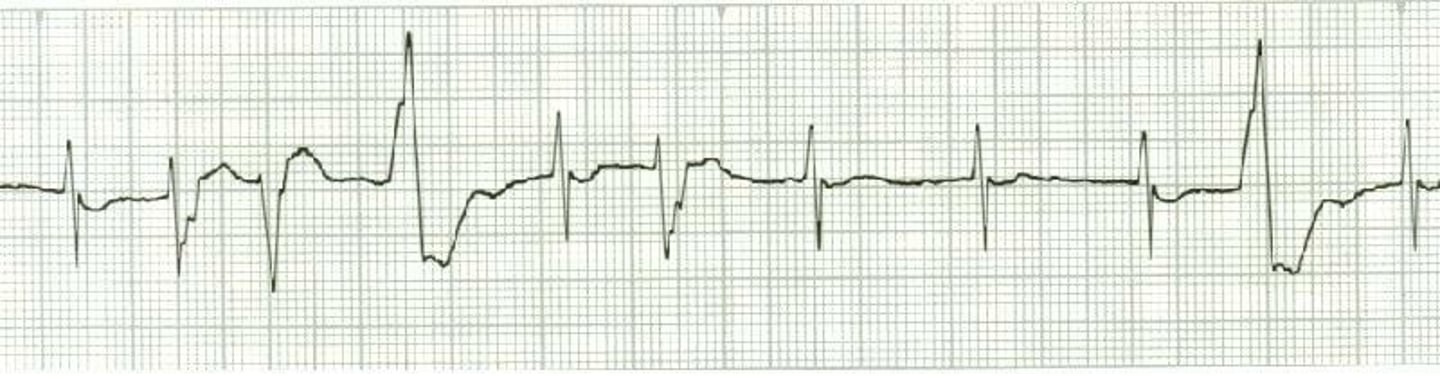
Multifocal Premature Ventricular Contractions in burst of 3 with possible R on T risk
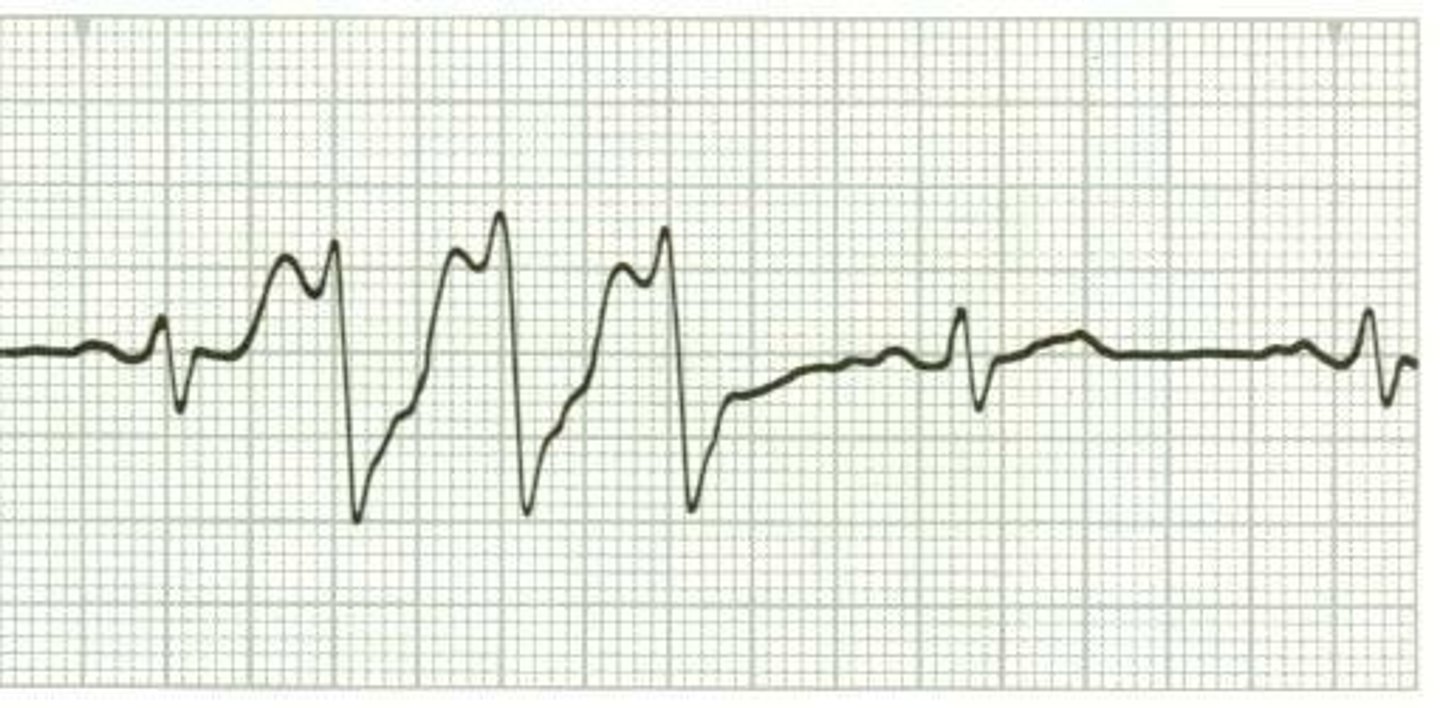
Ventricular Tachycardia
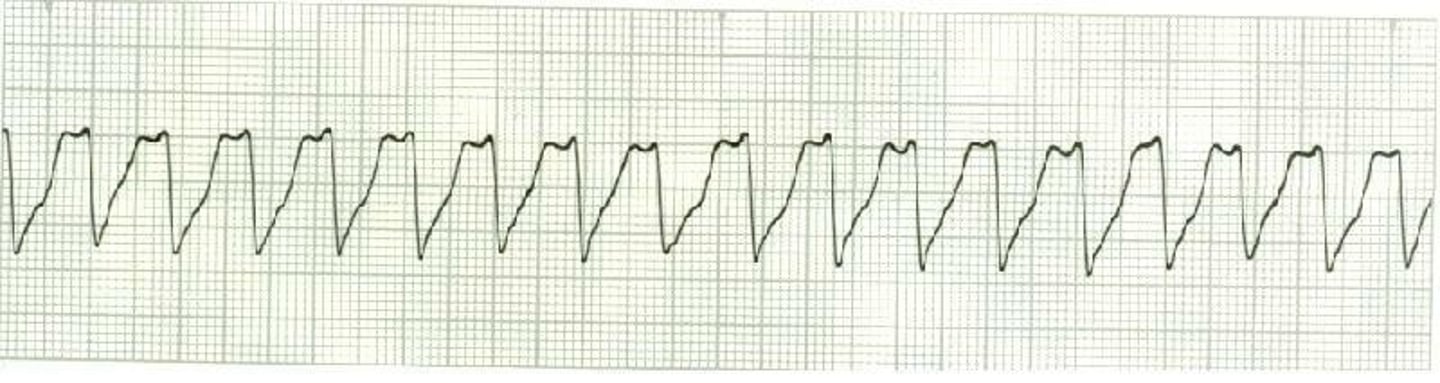
Ventricular Tachycardia
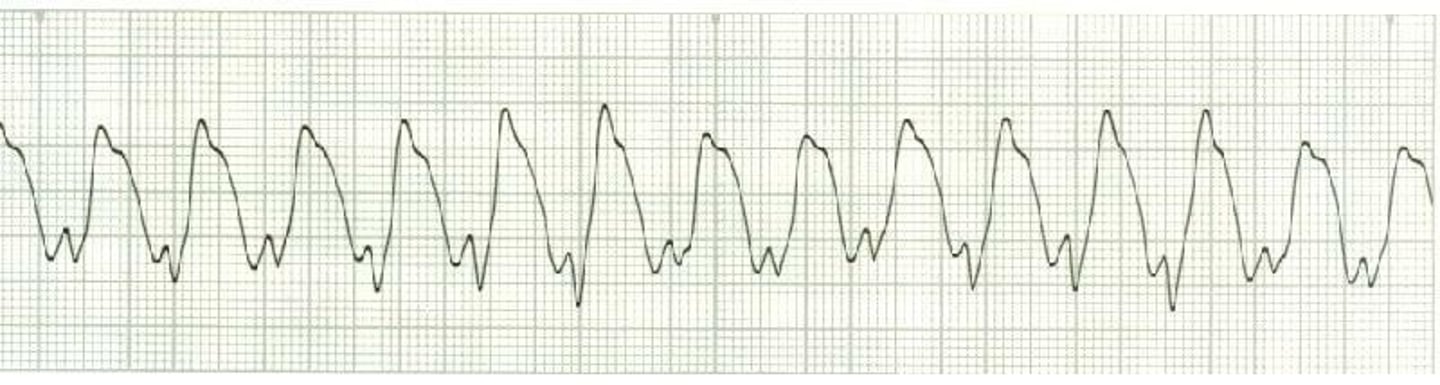
Ventricular Tachycardia
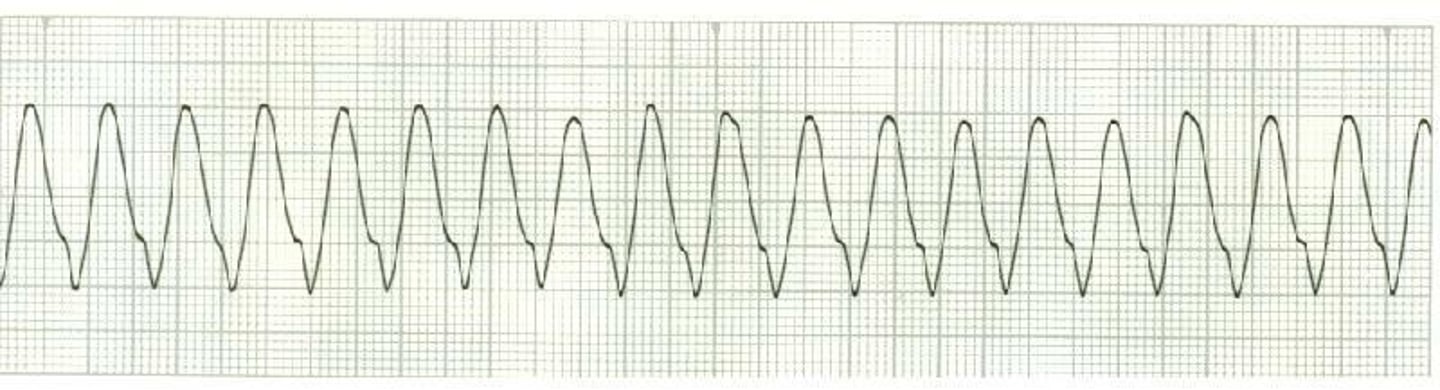
Torsade de Pointes
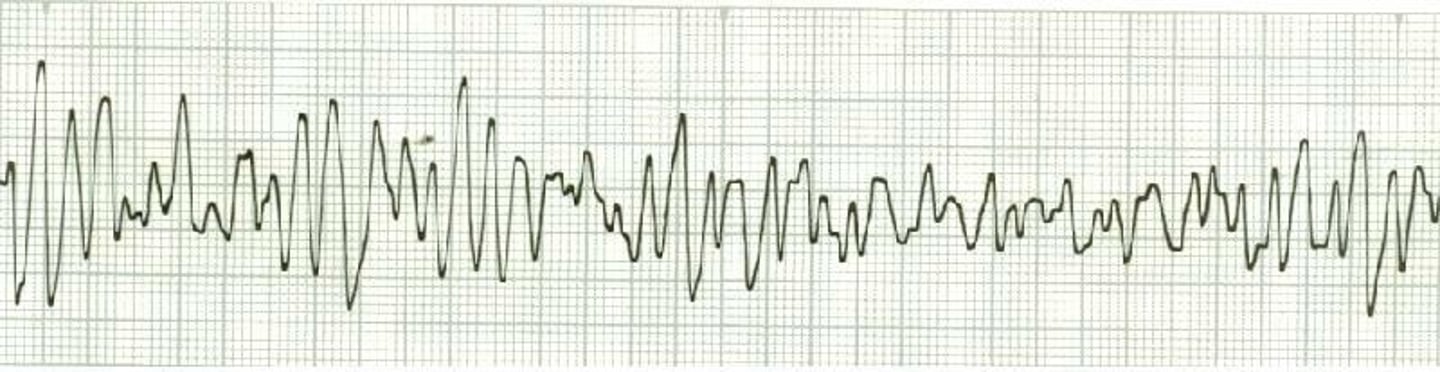
Fine Ventricular Fibrillation
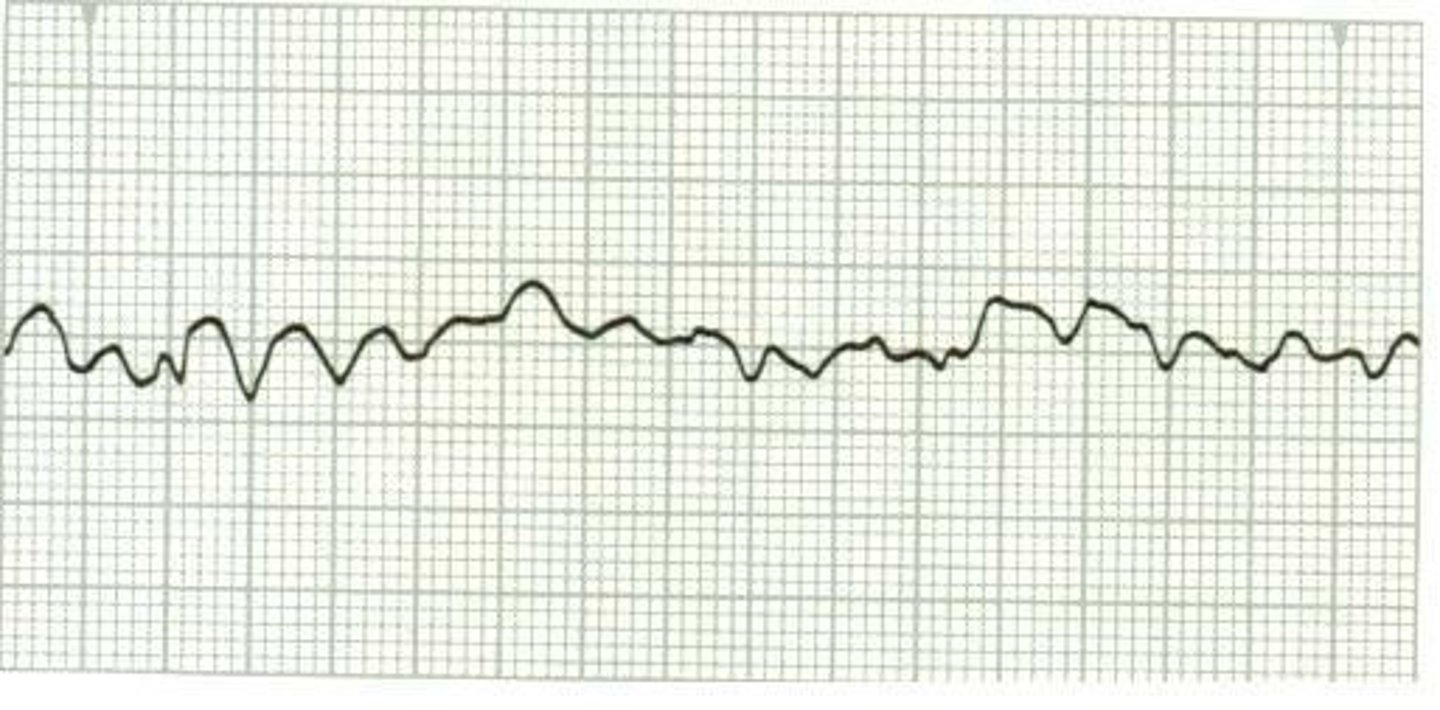
Ventricular Tachycardia Very Organized
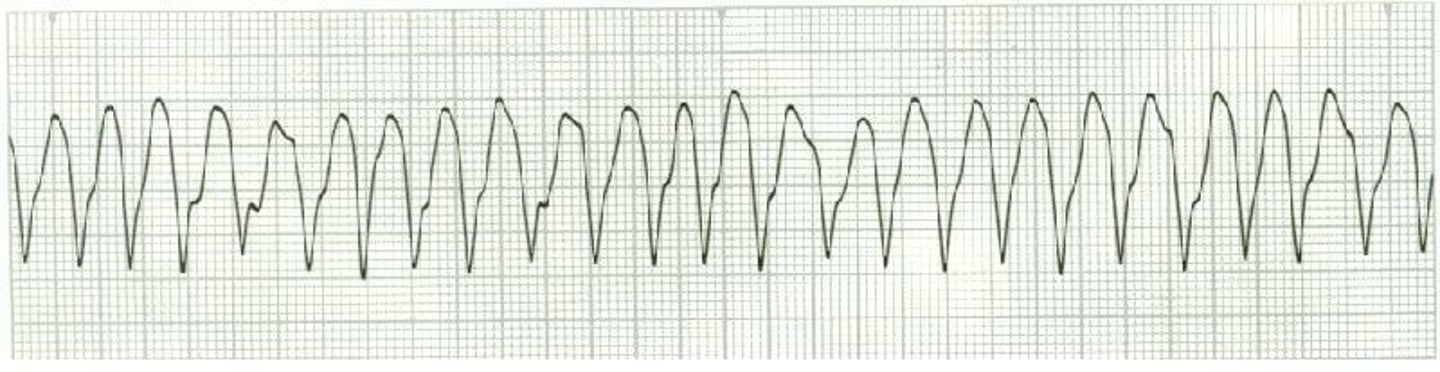
Idioventricular Rhythm (Dying Heart)
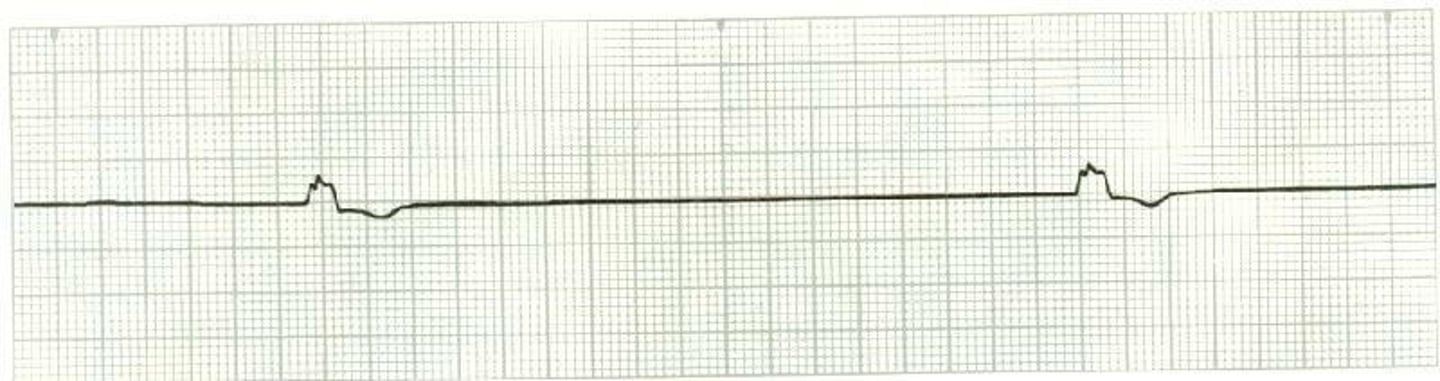
Ventricular Asystole
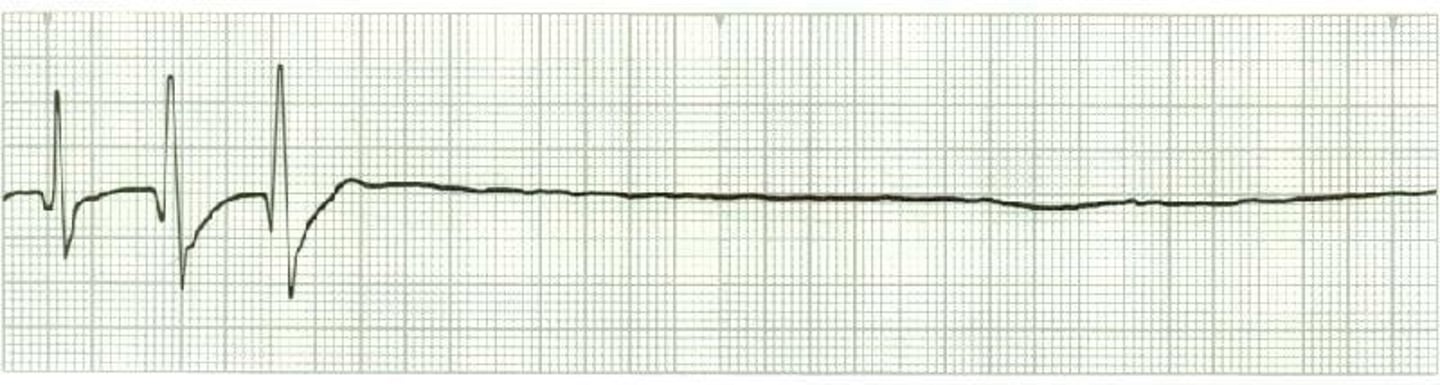
Cardiac Arrest
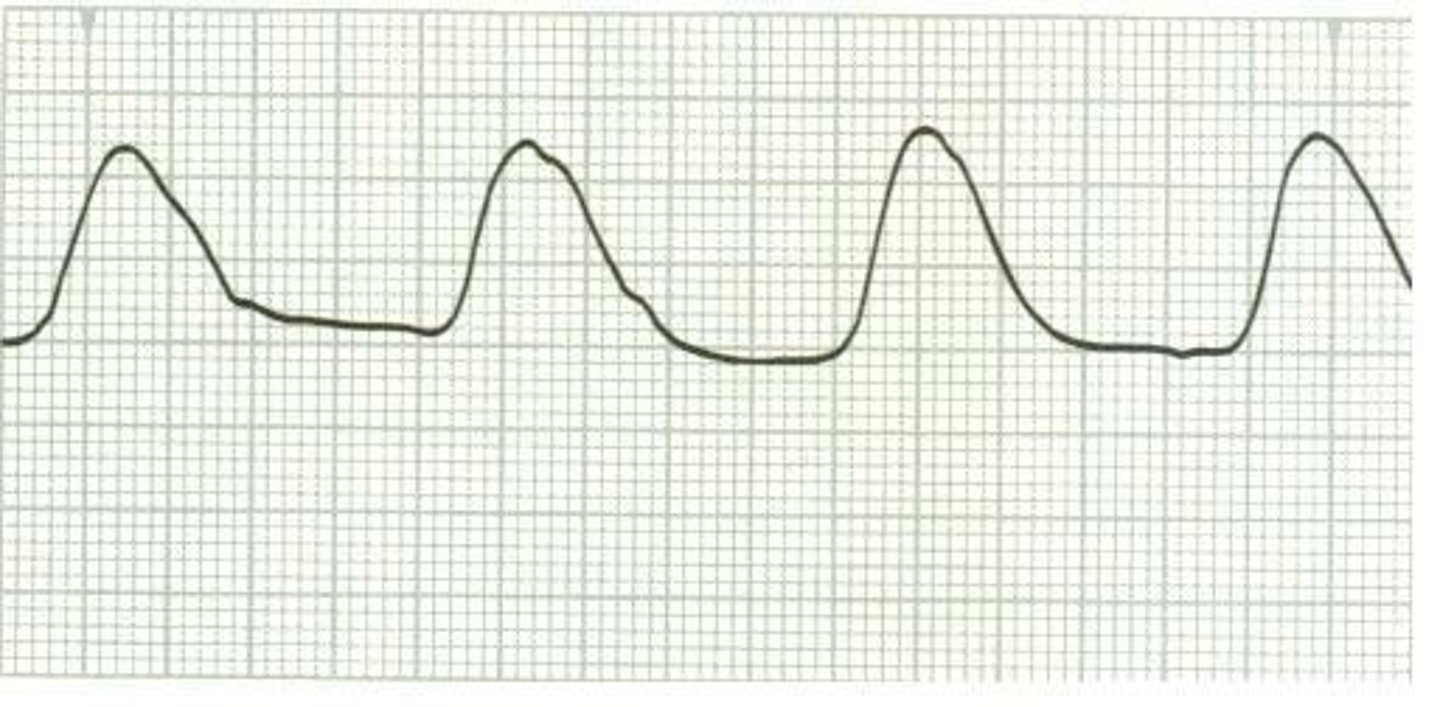
Patient receiving closed chest compressions
Demand Pacer
-Senses whether it has to fire or not, If signals working then it won't fire
-Small third QRS is when the pacemaker shot with capture (Means ventricle Depolarizes)
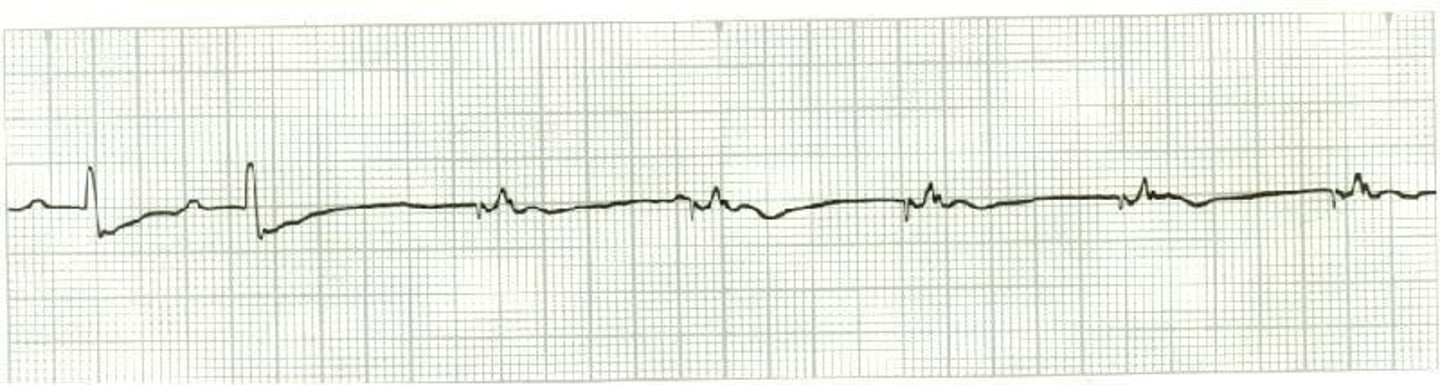
Pacer spike with Ventricular capture