DOUG BIO 1203 | Unit 10: Reproductive System - Cycles, Fertilization, and Embryonic Development
 Call Kai
 Learn
Learn Practice Test
 Spaced Repetition
 Match
Match Flashcards
 Knowt Play
1/100

There's no tags or description
Looks like no tags are added yet.
Name | Mastery | Learn | Test | Matching | Spaced | Call with Kai | Chat |
|---|
No analytics yet
Send a link to your students to track their progress
101 Terms
What is the primary function of the male reproductive system?
To produce sperm and transfer it into the female reproductive tract for fertilization.
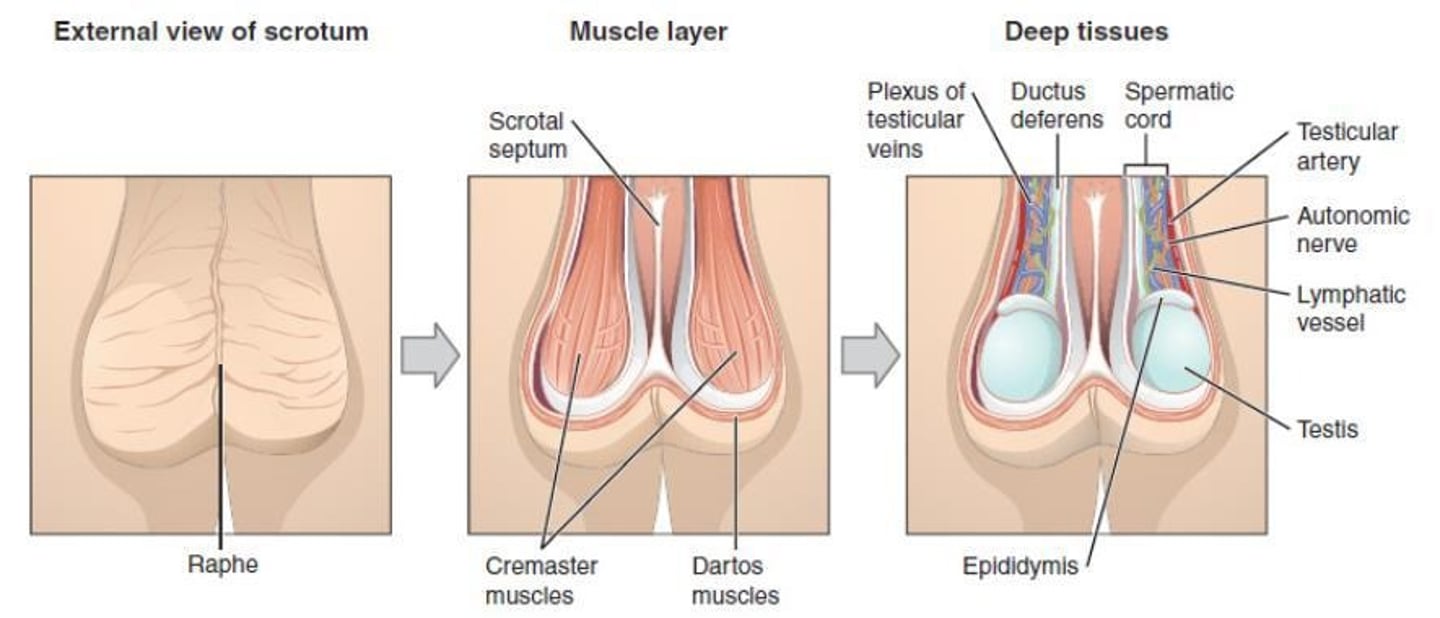
What is the role of the scrotum in the male reproductive system?
The scrotum holds the testes outside the body to maintain a temperature 2-4°C lower than body temperature, which is necessary for sperm survival.
What are Leydig cells responsible for?
Leydig cells produce testosterone, which promotes the formation of male sexual organs and the development of secondary sexual characteristics.
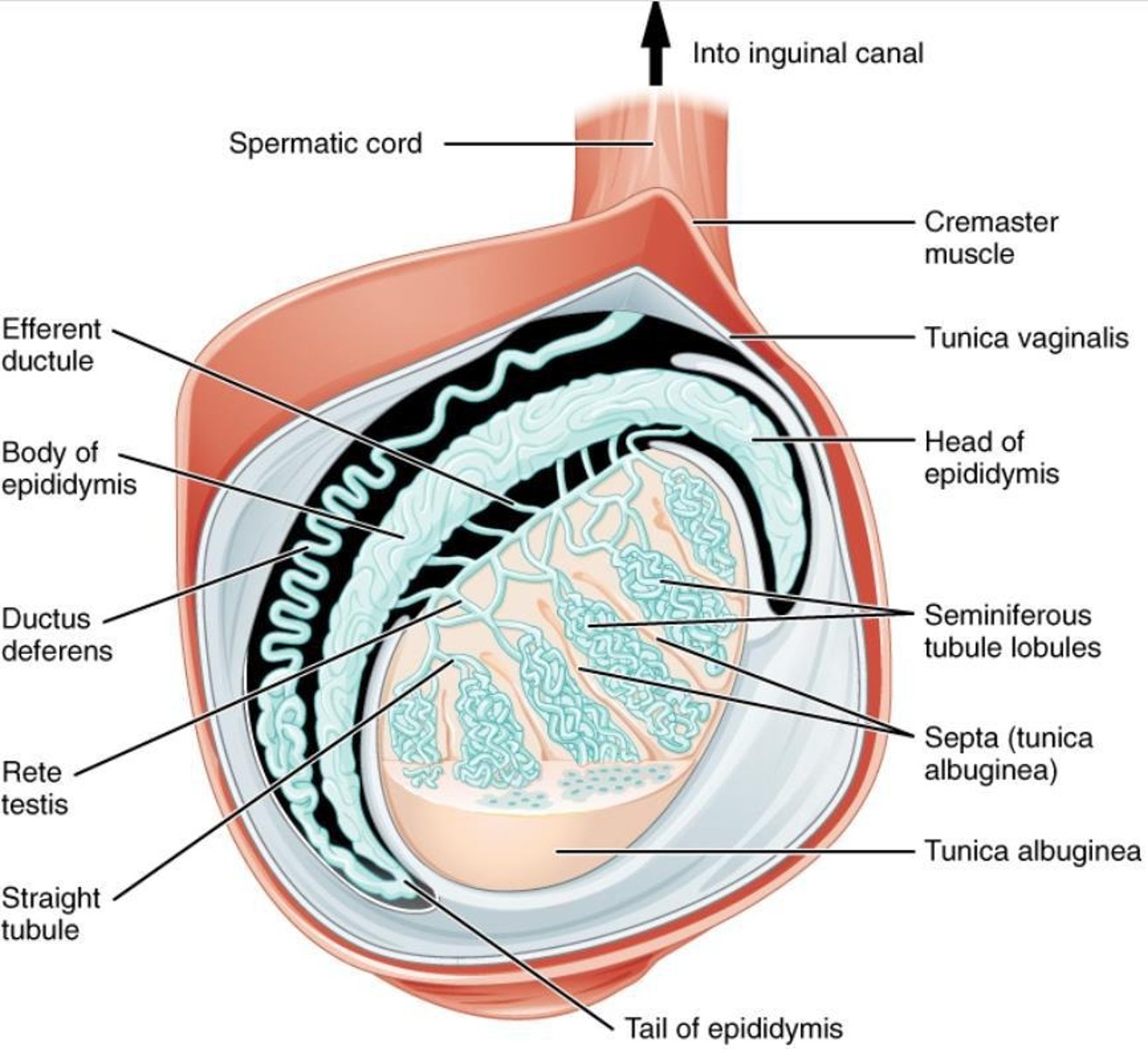
How long does spermatogenesis take?
Spermatogenesis takes 65-75 days.
How many sperm cells are produced daily?
100-300 million sperm cells are produced daily.
What are Sertoli cells and their function?
Sertoli cells are supportive cells in the testes that produce signals to promote or inhibit sperm production.
Where does sperm maturation occur?
Sperm maturation occurs in the epididymis.
What is the main function of the vas deferens?
The vas deferens transports sperm to the ejaculatory duct.
What is the ejaculatory duct?
The ejaculatory duct is a short duct where the contents from the vas deferens and seminal vesicles merge before being ejected into the prostatic urethra.
What is the function of the urethra in the male reproductive system?
The urethra carries semen out of the penis and also carries urine to the exterior.
What is the role of seminal vesicles in semen production?
Seminal vesicles secrete an alkaline, viscous fluid that makes up 60% of the total volume of semen, providing ATP for sperm.
What does the prostate gland contribute to semen?
The prostate gland produces a milky, alkaline substance that helps with sperm mobility and viability, contributing 25% of semen volume.
What is the function of the bulbourethral glands?
Bulbourethral glands secrete alkaline mucus for lubrication and to remove urine and old sperm from the urethra before ejaculation.
What is the primary function of the penis?
The penis is the male organ of copulation, delivering sperm into the vagina.
What initiates the hormonal control of spermatogenesis?
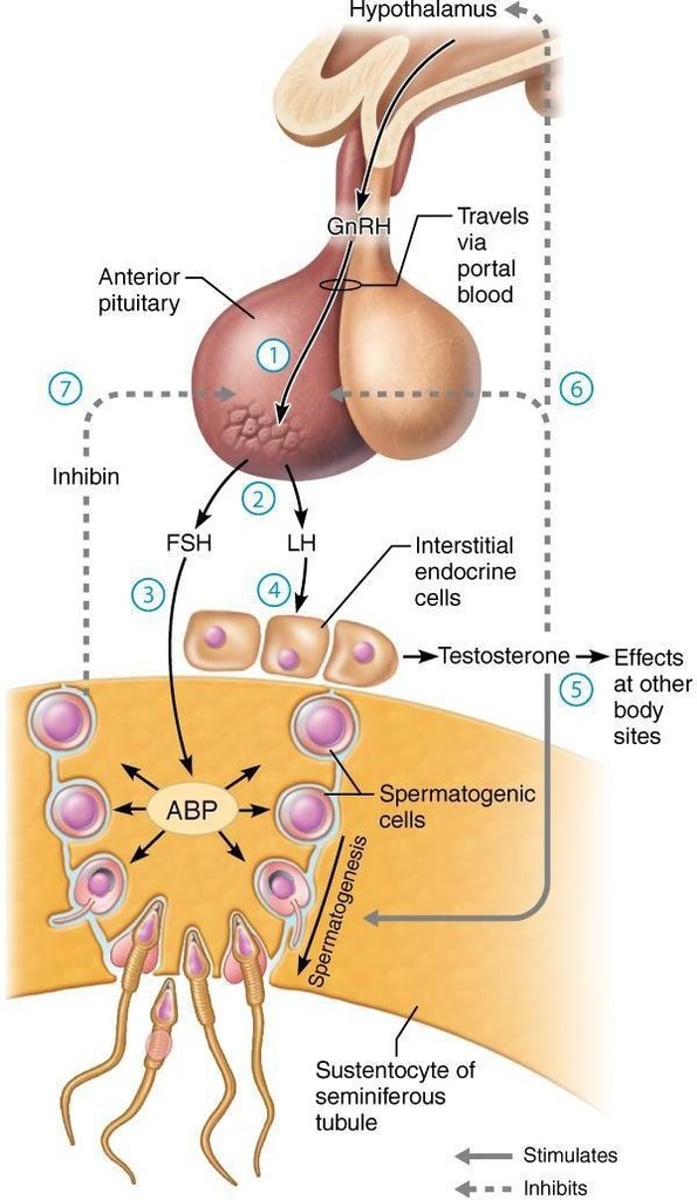
The hypothalamus releases GnRH, which stimulates the anterior pituitary to release FSH and LH.
How does testosterone affect spermatogenesis?
Testosterone stimulates the final stages of spermatogenesis and inhibits the release of GnRH, LH, and FSH through negative feedback.
What is the role of FSH in spermatogenesis?
FSH indirectly stimulates spermatogenesis by promoting the release of ABP, which maintains high local testosterone levels.
What occurs during the emission phase of ejaculation?
During emission, sperm and fluids are moved from the vas deferens, seminal vesicles, prostate, and ejaculatory duct to the urethra.
What physiological process causes an erection?
An erection is caused by a parasympathetic reflex that leads to the dilation of blood vessels, filling the erectile tissues with blood.
What is the significance of ATP for sperm?
ATP provides energy for sperm motility, which is essential for fertilization.
What is the glans penis and its significance?
The glans penis is the sensitive tip of the penis, rich in nerve endings, which promotes ejaculation.
What is the female homologous structure to the glans penis?
The clitoris is the homologous structure to the glans penis in females.
What happens to neonatal circulation after birth?
Neonatal circulation undergoes changes to adapt to breathing air and the cessation of placental blood flow.
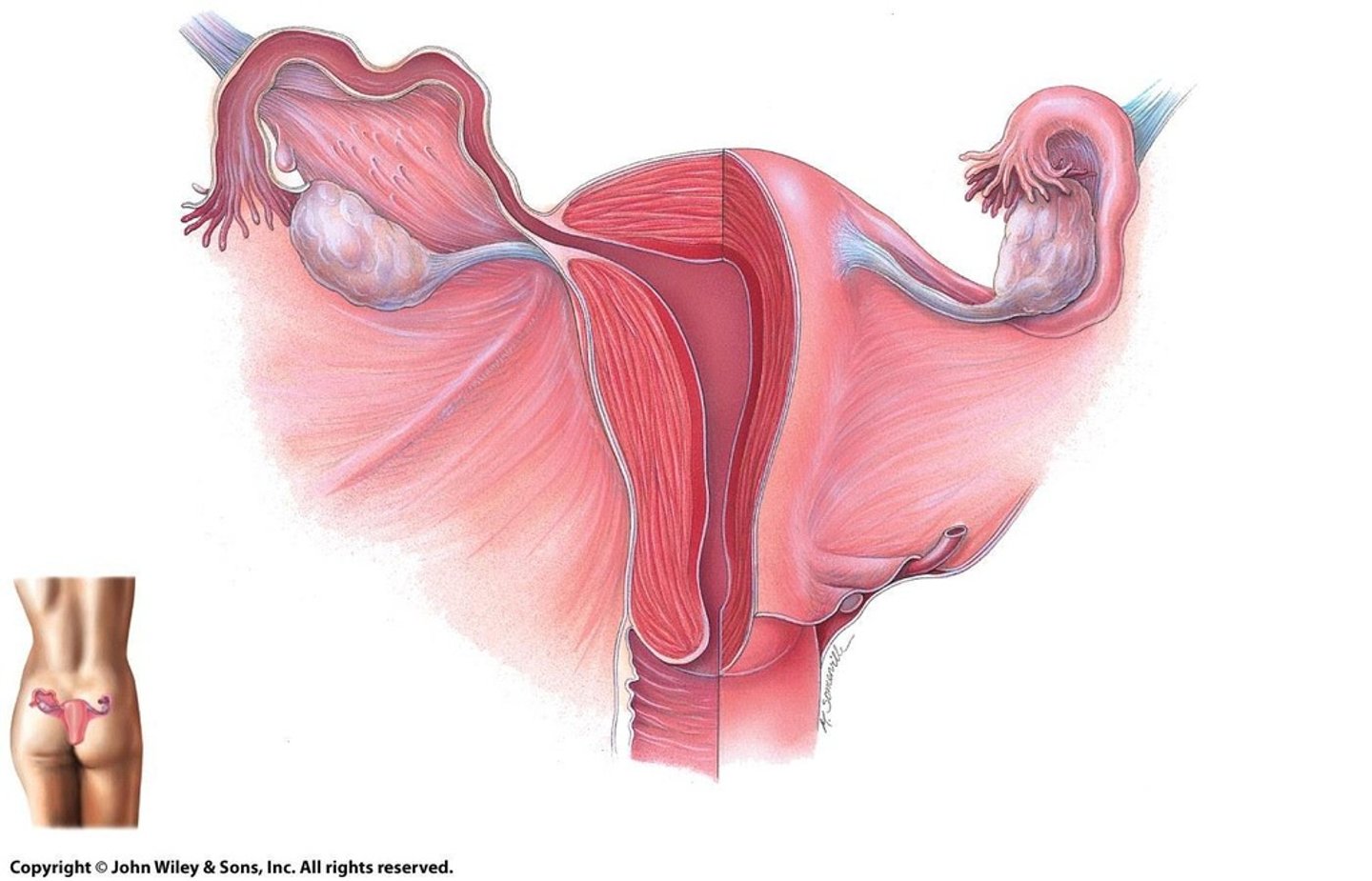
What is the primary function of the female reproductive system?
To develop ova (eggs), prepare for fertilization, produce hormones, and carry the fertilized egg through development stages.
What hormones are produced by the ovaries?
Estrogen and progesterone.
What are the stages of development from egg to fetus?
Egg → Zygote → Fetus.
What are the paired female gonads that produce ova?
Ovaries.
What is the function of the fallopian tubes?
To draw the oocyte from the ovary and serve as the site of fertilization.
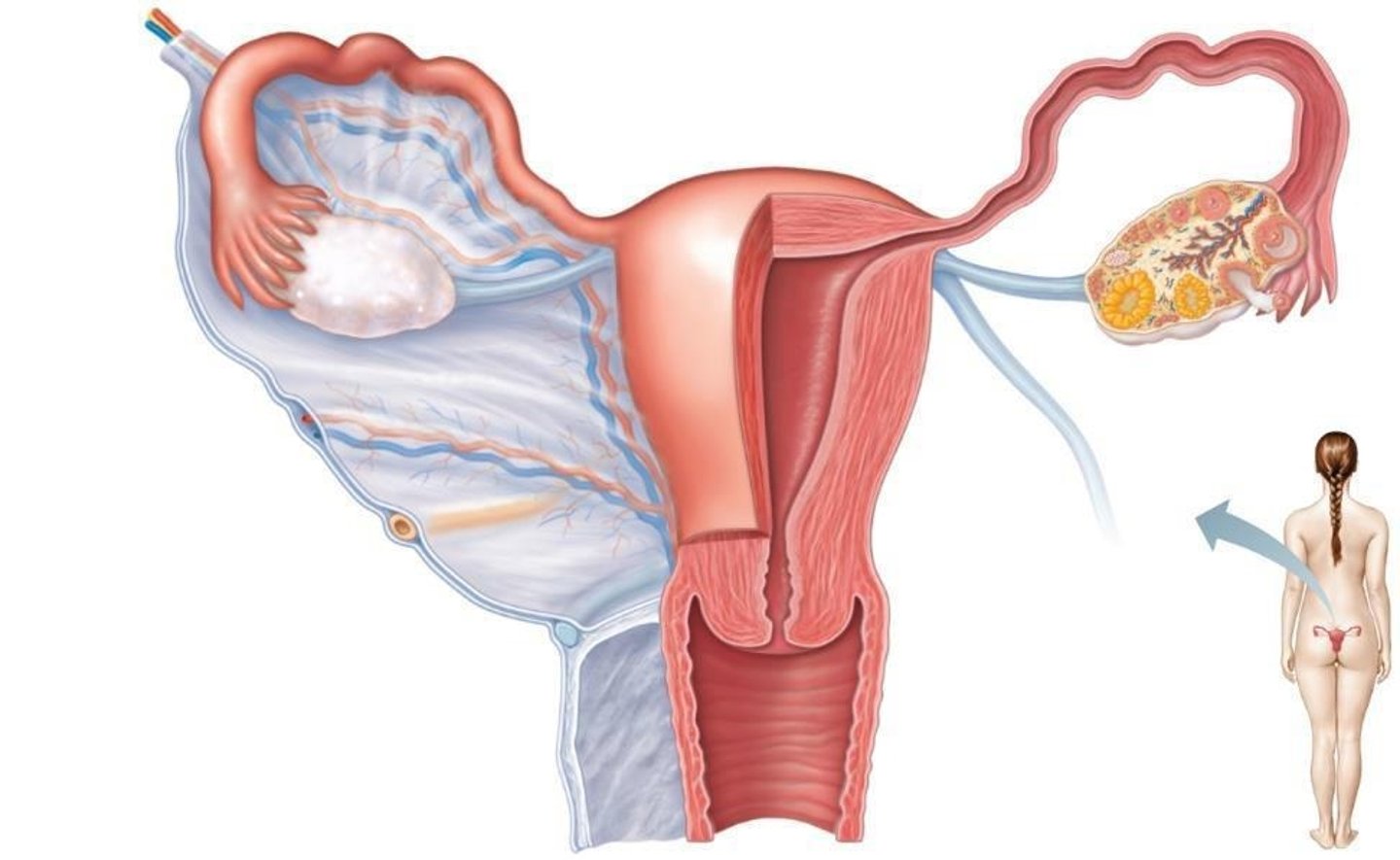
What is an ectopic pregnancy?
Implantation of the zygote in the fallopian tubes, leading to a non-viable pregnancy.
What are the functions of the uterus?
Site of menstruation, implantation of fertilized ovum, fetal development, and labor.
What are the three layers of the uterine wall?
Perimetrium, myometrium, and endometrium.
What is the role of the cervix?
It serves as the lower uterine opening to the vagina and contains three layers.
What is the stratum functionalis?
The layer of the endometrium that is shed during menstruation and changes in response to ovarian hormones.
What is the role of Bartholin's glands?
To secrete a mucous lubricant located on either side of the vaginal orifice.
What are the two main cycles in the female reproductive cycle?
The ovarian cycle and the menstrual (uterine) cycle.
What occurs during the follicular phase of the ovarian cycle?
Maturation of the ovum and development of ovarian follicles.
What is the average duration of the ovarian cycle?
Approximately 28 days.
What hormone does the hypothalamus release to regulate the ovarian cycle?
Gonadotropin releasing hormone (GnRH).
What hormones are released by the anterior pituitary during the ovarian cycle?
Follicle stimulating hormone (FSH) and luteinizing hormone (LH).
What happens during ovulation?
The secondary oocyte is released from the ovary.
What is the corpus luteum?
A temporary endocrine structure involved in the menstrual cycle and early pregnancy.
What is the function of the vagina?
To serve as the copulation organ and birth canal.
What is the role of the endometrium?
It is the mucosal lining of the uterine cavity that changes during the menstrual cycle.
What is the significance of the myometrium?
It is the middle layer of the uterine wall composed of smooth muscle, important during childbirth.
What is the perimetrium?
The outermost serous layer of the uterus, part of the visceral peritoneum.
What is the function of the fimbriae of the fallopian tube?
To help draw the oocyte into the fallopian tube.
What are the two phases of the menstrual cycle?
Development and shedding of the uterine lining (menstruation).
What hormone does the hypothalamus secrete to initiate the ovarian cycle?
Gonadotropin-releasing hormone (GnRH)
Which hormones are secreted by the anterior pituitary during the ovarian cycle?
Follicle-stimulating hormone (FSH) and luteinizing hormone (LH)
What phase occurs from Day 1 to Day 5 of the ovarian cycle?
Folliculogenesis or Follicular Phase
What happens to primary follicles during the follicular phase?
Four to five primary follicles begin development, but all except one degenerate.
What occurs on Day 14 of the ovarian cycle?
Ovulation occurs when estrogen levels peak, leading to a surge in LH.
What does the ruptured follicle transform into after ovulation?
Corpus luteum
What hormones does the corpus luteum produce?
Progesterone and estrogen
What happens to the corpus luteum if fertilization does not occur?
It degrades into the corpus albicans.
What is the role of progesterone during the luteal phase?
It inhibits GnRH, FSH, and LH secretion.
What are the three phases of the uterine (menstrual) cycle?
Menses phase, Proliferative phase, Secretory phase
What occurs during the menses phase of the uterine cycle?
The uterus sheds the stratum functionalis due to low hormone levels.
What triggers the proliferative phase of the uterine cycle?
High levels of estrogen from developing follicles.
What is the function of the endometrium during the secretory phase?
It prepares for implantation of the embryo.
What is the significance of hCG in pregnancy?
It maintains the corpus luteum and is detected in pregnancy tests.
What occurs during fertilization?
The nuclei of sperm and ovum unite to form a zygote.
Where does fertilization typically occur?
In the outer third of the fallopian tubes.
What is the first stage of cleavage after fertilization?
The two-cell stage, completed about 30 hours after fertilization.
What is a morula?
A solid ball of cells formed about 3-4 days after fertilization.
What is a blastocyst?
A hollow ball of cells formed about 4.5-5 days after fertilization.
What does the trophoblast do during implantation?
It produces enzymes to aid penetration of the endometrium.
What is the role of spiral arteries during menstruation?
They kink and go into spasms, leading to the death of endometrial cells.
What happens to the functional layer of the endometrium if fertilization does not occur?
It begins to digest itself and is sloughed off during menstruation.
What is the purpose of pregnancy tests?
To detect the presence of hCG in urine after fertilization.
What occurs during the luteal phase of the ovarian cycle?
The corpus luteum secretes hormones to maintain the endometrium.
What triggers the LH surge during the menstrual cycle?
High levels of estrogen from the almost mature follicle.
What is the function of the stratum basalis?
It is the deeper layer of the endometrium that remains after menstruation.
What occurs if fertilization does occur?
The corpus luteum is maintained by hCG and continues to secrete hormones.
What occurs about 6 days after fertilization?
Implantation
What are monozygotic twins?
Genetically identical twins that arise from the division of a single fertilized ovum.
What leads to the formation of conjoined twins?
A division of the fertilized ovum after 8 days.
What are dizygotic twins?
Fraternal twins that result from the release of 2 ova during ovulation.
What does the inner cell mass of the blastocyst develop into?
The primary germ layers that will form the fetus.
What is the function of the trophoblast?
To become the extra-embryonic membranes.
What are the three primary germ layers?
Ectoderm, Mesoderm, Endoderm.
What is the placenta formed from?
Embryonic chorion and maternal endometrium.
What is the function of the umbilical cord?
To connect the fetus to the placenta, containing 1 vein and 2 arteries.
What does the umbilical vein do?
Carries oxygenated blood from the placenta to the fetus.
What is the role of the ductus venosus in fetal circulation?
It allows most blood from the umbilical vein to drain into the inferior vena cava.
What is the foramen ovale?
An opening that allows blood to flow from the right atrium to the left atrium in fetal circulation.
What happens to the ductus arteriosus after birth?
It closes and becomes the ligamentum arteriosum.
What hormone is responsible for maintaining pregnancy?
Progesterone.
What triggers the onset of labor?
An increase in estrogen levels and a decrease in progesterone levels.
What is the role of oxytocin during labor?
It causes forceful uterine contractions.
What are the three stages of labor?
1. Stage of dilation, 2. Stage of expulsion, 3. Placental stage.
What is surfactant and its function?
A phospholipid produced by fetal lungs that reduces surface tension in alveoli.
What is colostrum?
The first milk produced after childbirth, high in proteins but low in carbohydrates and fat.
What happens to the fetal lungs during labor?
They are compressed, expelling about 33% of the fluid.
What is the significance of the fossa ovalis?
It is the remnant of the foramen ovale after birth.
What changes occur in circulation after delivery?
Structures that bypassed the lungs close off or fill with connective tissue.
What is the role of the placenta in fetal development?
It facilitates maternal-fetal exchange of nutrients and wastes.
What hormones increase during pregnancy?
Both progesterone and estrogen levels steadily increase.
What is the main purpose of fetal circulation?
To bypass the lungs, as they are not in use.
What is the role of the umbilical arteries?
They carry deoxygenated blood from the fetus back to the placenta.