U3 AOS 2 - How are biochemical pathways regulated?
 Call Kai
 Learn
Learn Practice Test
 Spaced Repetition
 Match
Match Flashcards
 Knowt Play
1/45

Earn XP
Description and Tags
U3 - How do cells maintain life?
Name | Mastery | Learn | Test | Matching | Spaced | Call with Kai | Chat |
|---|
No analytics yet
Send a link to your students to track their progress
46 Terms
Study Dotpoints for this AOS ?
Regulation of biochemical pathways in photosynthesis and cellular respiration
the general structure of the biochemical pathways in photosynthesis and cellular respiration from initial reactant to final product
the general role of enzymes and coenzymes in facilitating steps in photosynthesis and cellular respiration
the general factors that impact on enzyme function in relation to photosynthesis and cellular respiration: changes in temperature, pH, concentration, competitive and non-competitive enzyme inhibitors
Photosynthesis as an example of biochemical pathwaysinputs, outputs and locations of the light dependent and light independent stages of photosynthesis in C3 plants (details of biochemical pathway mechanisms are not required)
[Refer to ‘the process of C3 photosynthesis’ mindmap]
the role of Rubisco in photosynthesis, including adaptations of C3, C4 and CAM plants to maximise the efficiency of photosynthesis
the factors that affect the rate of photosynthesis: light availability, water availability, temperature and carbon dioxide concentration
[Refer to ‘factors affecting the rate of photosynthesis’ mindmap]
Cellular respiration as an example of biochemical pathwaysthe main inputs, outputs and locations of glycolysis, Krebs Cycle and electron transport chain including ATP yield (details of biochemical pathway mechanisms are not required)
the location, inputs and the difference in outputs of anaerobic fermentation in animals and yeasts
the factors that affect the rate of cellular respiration: temperature, glucose availability and oxygen concentration
Biotechnological applications of biochemical pathwayspotential uses and applications of CRISPR-Cas9 technologies to improve photosynthetic efficiencies and crop yields
- [Re
uses and applications of anaerobic fermentation of biomass for biofuel production.

Biochemical pathway
a series of linked biochemical reactions that start with an initial reactant that is converted in a stepwise fashion to a final product.
The product of the one reaction becomes the starting reactant for the next step, until the final product is reached.
Each step in a biochemical pathway requires the activity of a specific enzyme.
What are the two types of biochemical pathways?
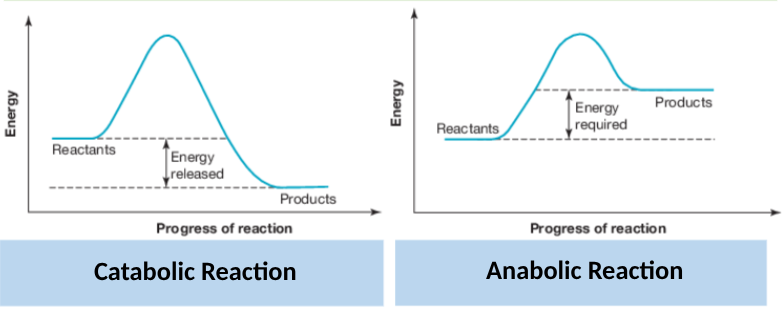
Anabolic pathways
Assemble simple molecules into more complex molecules
Require energy (endergonic)
E.g. Photosynthesis, creating glucose molecules from carbon dioxide and water
Catabolic pathways
Break down complex molecules into simple molecules
Release energy (exergonic)
E.g. Aerobic cellular respiration, glucose is broken down into carbon dioxide and water
Rubisco, a key enzyme of the photosynthesis pathway, is a relatively slow __ enzyme, acting on just 3 to 10 substrate molecules per second. Green plant cells compensate for this by having a very __ concentration of this enzyme in their chloroplasts.
slow, high
Enzymes
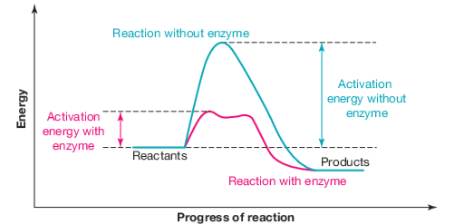
Enzymes are proteins that are biological catalysts that speed up the rate of metabolic reactions (both catabolic & anabolic) while remaining unchanged at the end of the reaction (can be reused for another reaction)
Enzymes speed up the rates at which the products of reactions are formed by lowering the activation energy needed for reactions.
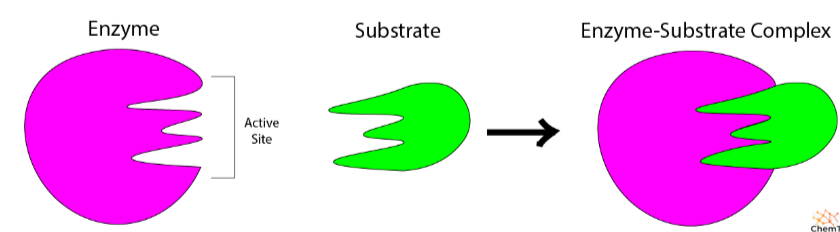
Active sites of enzymes
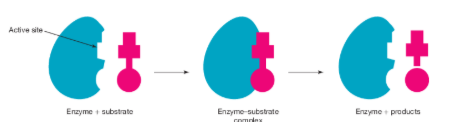
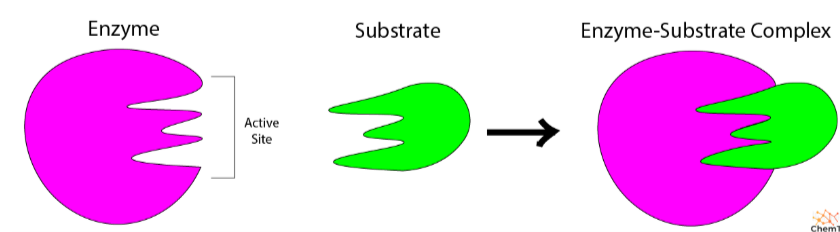
The active site of an enzyme is a small part of its structure that has a unique 3D shape.
The shape is complementary to that of its specific substrate molecule.
Factors affecting enzymes?
Temperature
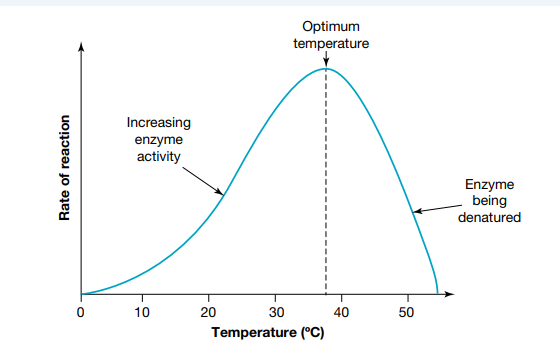
Every enzyme has an optimum temperature at which it operates most efficiently and at that point, the enzyme is operating at its maximum rate.
As the temperature falls below optimum, molecular movements slow, resulting in fewer collisions between substrates and enzyme (reduced kinetic energy)
As the temperature increases above the optimum, the reaction rate reduces sharply. This occurs because enzymes are proteins and when temperatures exceed the optimum, heat denaturation of the protein occurs
pH
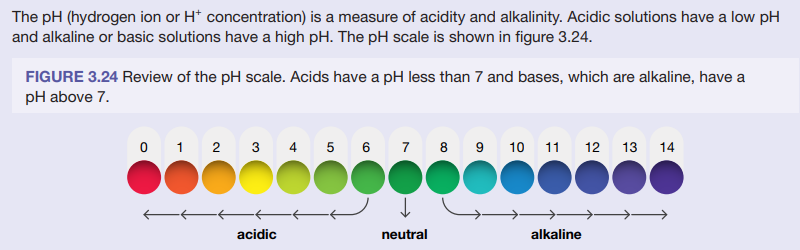
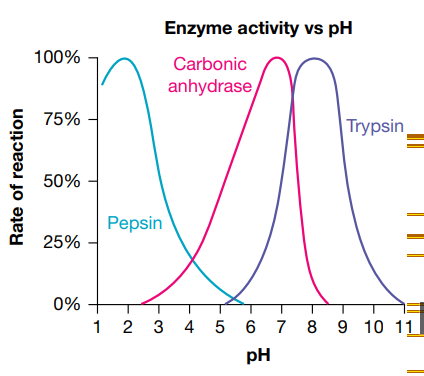
The level of acidity at which enzymes can operate varies, typically according to the environment in which the enzyme normally operates.
Different enzymes have different optimal pH
When outside of this pH range the enzyme is considered to have denatured
.
Substrate concentration
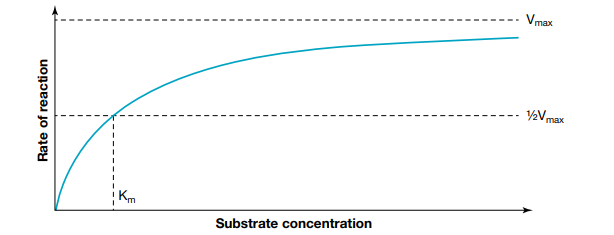
The increasing concentration of substrate would be expected to result in an increase in the rate of an enzyme reaction. However, after a point all the enzyme is occupied with substrate, meaning the substrate cannot find an enzyme to bind to. Therefore, the reaction plateaus. (enzymes become saturated)
Cofactors & Coenzymes
Cofactors
Are inorganic molecules e.g. Mg3+, Zn2+
Coenzymes
-Are non-protein organic substances.
-They can be loaded and unloaded e.g. NADP+ and NADPH
Cofactor
non-protein molecule or ion that is essential for the normal functioning of some enzyme
Can be organic (comprise prosthetic groups, e.g. heme molecules, coenzymes e.g. NAD, NADP, FAD, ATP, Coenzyme A - CoA) or inorganic (do not cointain carbon and include metal ions e.g. Mg2+, Cu2+, Ca2+)
loaded
the form of coenzymes that can act as electron donors (e.g. NADH, FADH2)
unloaded
a form of coenzymes that can act as electron acceptors (e.g. NAD+, FAD)
Optimum temeperature
the temperature at which the rate of reaction catalysed by an enzyme is at its highest
denaturation
the loss of enzyme structure due to the breaking of bonds upon heating, irreversibly changing the shape of the active site
competitive inhibition
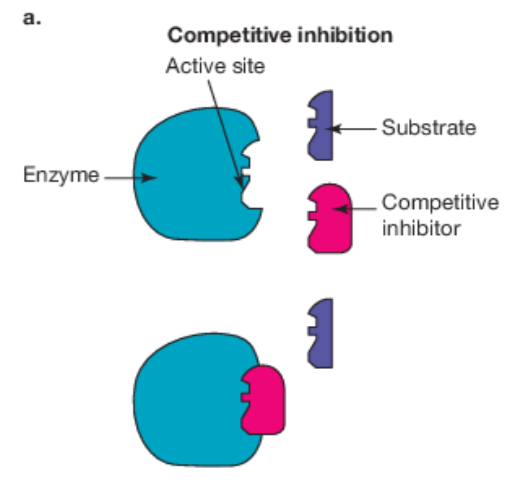
inhibition in which a molecule binds to the active site of a molecule instead of the usual substrate
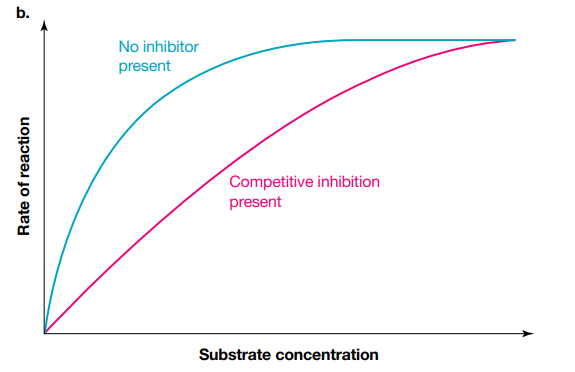
Competitive inhibitors
A competitive inhibitor of an enzyme is a molecule that contains a region with a shape that is similar to that of the substrate
Therefore it competes to bind to the enzyme with the substrate, lowering the enzyme reaction
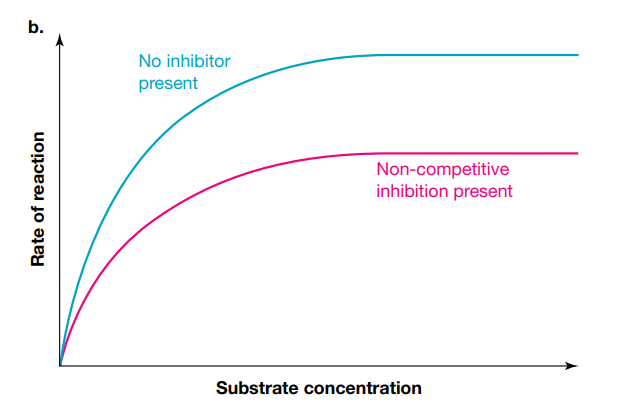
non-competitive inhibition
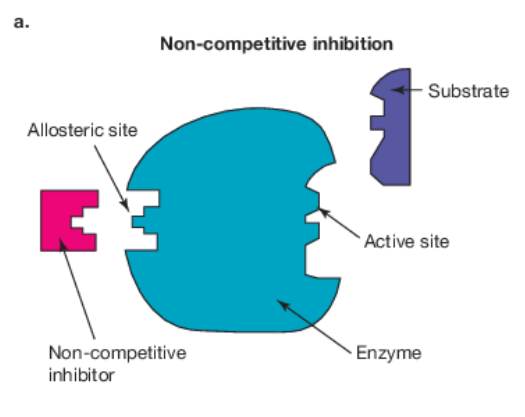
inhibition in which a molecule binds to the allosteric site of an enzyme causing a conformation change in the active site
Non-competitive inhibitors
In non-competitive inhibition, the inhibitor molecule binds with the enzyme but at a site that is NOT the active site (this region is termed an allosteric site)
This binding causes a conformational change in the enzyme so the substrate cannot bind to the enzyme anymore
allosteric site
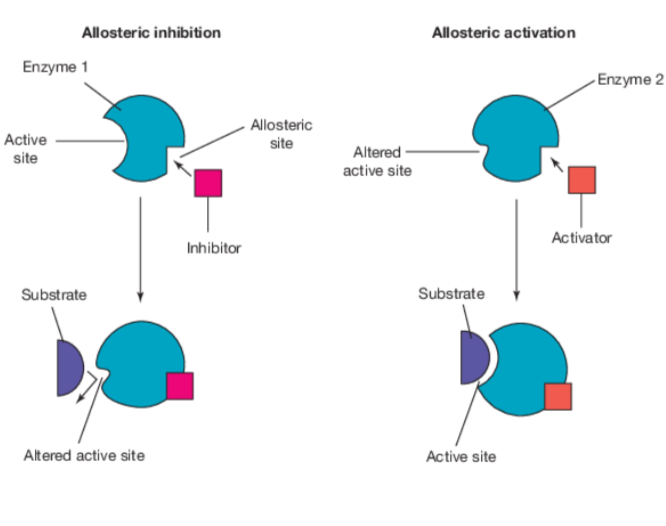
location on an enzyme molecule where a compound can bind and alter the shape of the enzyme
allosteric regulation
the control of the reaction rate of enzymes through conformational changes in enzymes
Allosteric sites can also be used to regulate biochemical pathways. Two ways allosteric sites can be used are:
Allosteric inhibitors: their binding produces a change of shape in the enzyme that stops enzyme activity; they act like an OFF switch.
Allosteric activators: the shape change resulting from the binding produces an increase in enzyme activity; they act like an ON switch
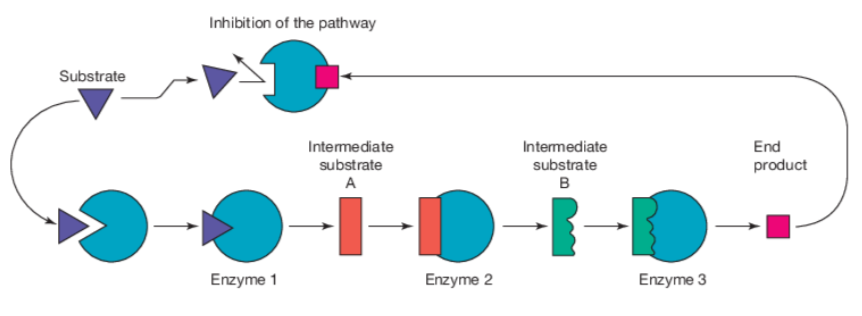
feedback inhibition
inhibition occurs when the end product of a pathway inhibits an enzymes earlier in the pathway as a negative feedback mechanism; also known as end-product inhibition
allosteric inhibitors
molecules that bind to the allosteric site of an enzyme and stop enzyme activity
allosteric activators
molecules that bind to the allosteric site of an enzyme and increase enzyme activity
Study Dotpoints for Photosynthesis?
Photosynthesis as an example of biochemical pathways
The general structure of the biochemical pathways in photosynthesis and cellular respiration from initial reactant to final product
inputs, outputs and locations of the light dependent and light independent stages of photosynthesis in C3 plants (details of biochemical pathway mechanisms are not required)
the role of Rubisco in photosynthesis, including adaptations of C3, C4 and CAM plants to maximise the efficiency of photosynthesis
the factors that affect the rate of photosynthesis: light availability, water availability, temperature and carbon dioxide concentration
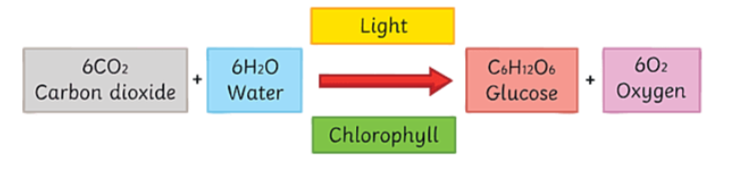
Equation for photosynthesis
Two stages of photosynthesis
Light Dependent Stage
Light Independent Stage
Chloroplast strucuture
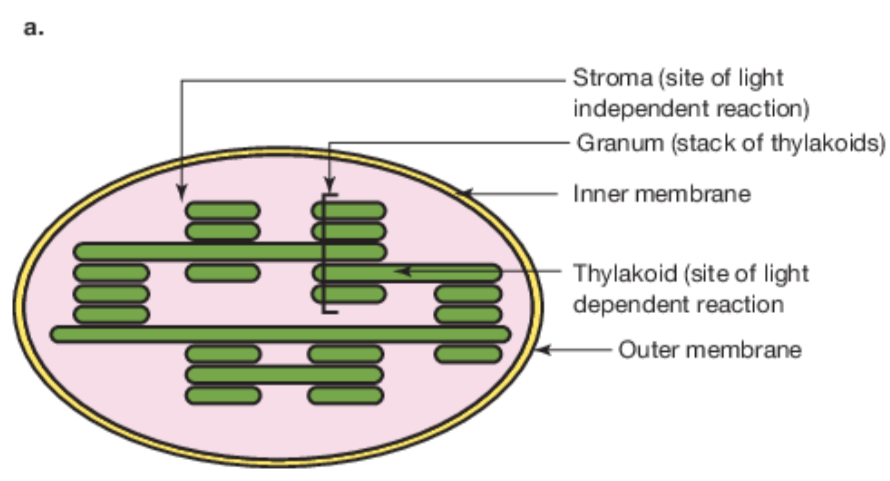
Light Dependent Stage - location, inputs and outputs
Location
Thylakoid membranes
Inputs:
12 H2O
12 NADP+
18 ADP + Pi
Outputs:
6 O2
12 NADPH
18 ATP
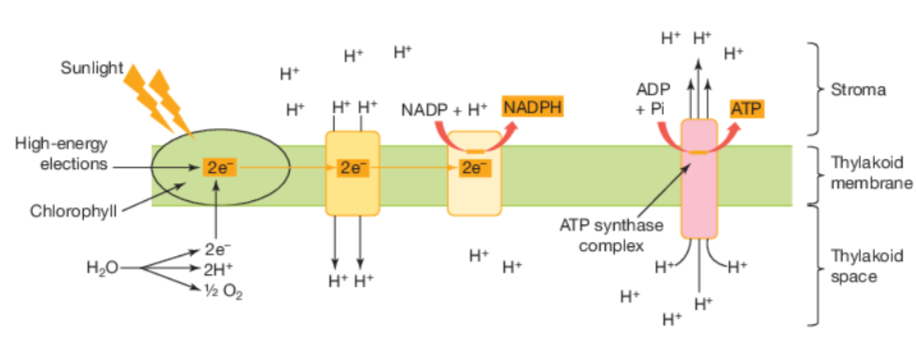
Light Dependent Stage - Description
The capture of the radiant energy of sunlight by chlorophyll in the thylakoids
The absorption of this energy by electrons in the chlorophyll to become high-energy or ‘excited’ electrons
The splitting of water molecules, that produces electrons, hydrogen ions (H+) (also known as protons) and oxygen
The passage of high-energy of electrons down a chain of electron acceptors during which electrons release their energy
The loading of electrons and hydrogen ions onto NADP+ to form NADPH
Use of this energy to pump protons from the stroma to inside the thylakoid, creating a proton gradient
Passive movement of protons down this gradient back into the stroma produces kinetic energy that is used by the ATP synthase enzyme to produce ATP from ADP and Pi.
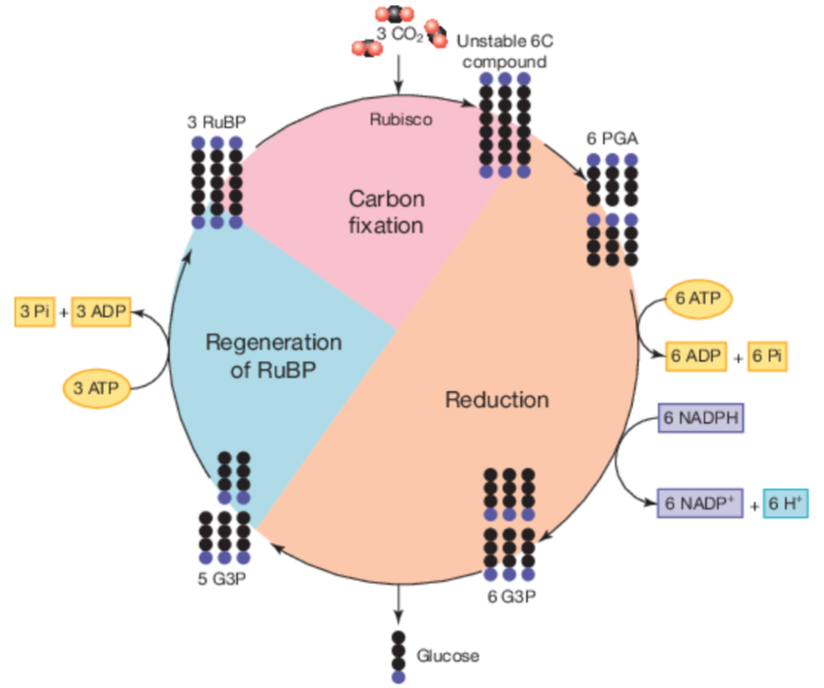
Light Independent Stage - Location, inputs and outputs
Location:
Stroma
Inputs:
6CO2
12 NADPH
18 ATP
Outputs:
C6H12O6
12 NADP+
18 ADP + Pi
6 H2O
Light Independent Stage
Inorganic CO2 is converted into the carbon in organic molecules, a process termed carbon fixation.
Carbon dioxide molecules are accepted into the Calvin cycle by organic 5C acceptor molecules.
Loaded NADPH coenzymes donate hydrogens and electrons.
ATP supplies energy for the anabolic steps of this cycle.
Glucose is formed as an output.
Factors that Affect the Rate of Photosynthesis
Light availability
Water availability
Temperature
Carbon Dioxide (CO2) Concentration
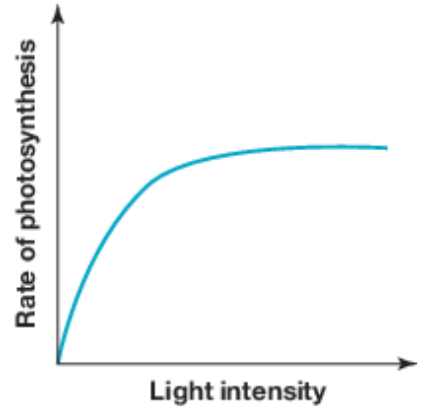
Light Intensity (as a factor affecting the rate of photosynthesis)
LOW: With decreased light intensity the rate of photosynthesis decreases
The optimal light intensity is the one at which the rate of photosynthesis is the greatest.
HIGH: With increased light intensity the rate of photosynthesis increases, Beyond the optimal light intensity, further increases in light intensity have no effect and the rate of photosynthesis stays constant. This is called the light saturation point and it is marked by the flattening or plateauing of the graph. At this point, some other factor is limiting the rate of photosynthesis.
Plateaus where further increase in light will not increase rate
Water availability (as a factor affecting the rate of photosynthesis)
LOW: If soils dry out and the water supply becomes too little, the rate of photosynthesis declines and then stops because closed stomata prevent the uptake of carbon dioxide needed for the Calvin cycle.
HIGH: If the water supply increases too much causing waterlogging of the soil, the rate of photosynthesis will also decline and stop because the lack of oxygen for cellular respiration in root cells stops water uptake.
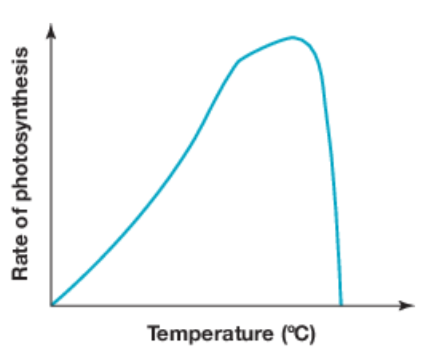
Temperature (as a factor affecting the rate of photosynthesis)
LOW: At low temperatures, low collision rates produce a low rate of photosynthesis.
HIGH: As the temperature rises, the rate of photosynthesis initially increases as the rate of molecular collisions increases.
Once the optimal temperatures of the enzymes involved are exceeded, the rate of photosynthesis decreases rapidly as heat denaturation of enzymes begins.
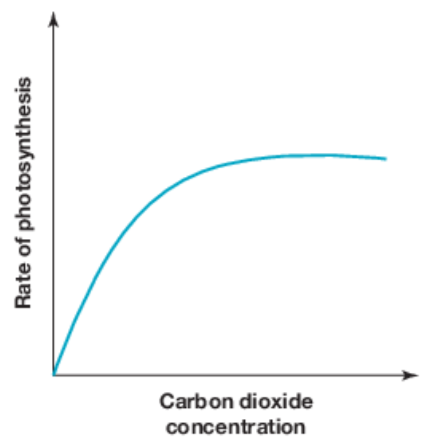
Carbon Dioxide (CO2) Concentration (as a factor affecting the rate of photosynthesis)
As the concentration of carbon dioxide is progressively increased, the rate of photosynthesis will increase until it plateaus off due to limiting factors.
Potential Limiting Factors
The enzymes involved in carbon fixation are working at their maximum rate so that no further increase in rate is possible
Availability of essential coenzymes, such as NADPH
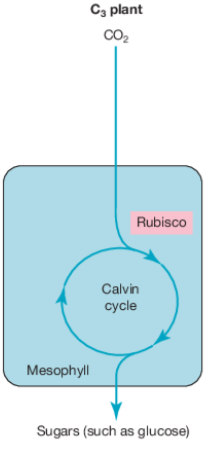
C3 Plants
plants that carry out the original Calvin cycle using Rubisco and are prone to photorespiration
85% of all terrestrial plants in the world
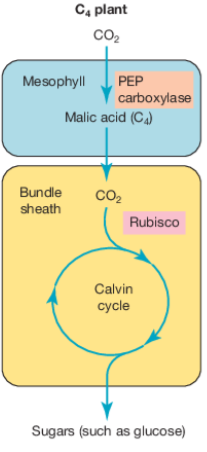
C4 Plants:
plants that carry out an adapted Calvin cycle, in which carbon fixation and glucose production occur in different cells (Carbon fixation occurs in the mesophyll cells and glucose production in the bundle sheath cells)
3% of all terrestrial plants in the world
Mechanism:
Carbon fixation in mesophyll cells
Uses enzyme PEP carboxylase to join CO2 to PEP
PEP carboxylase can only bind to CO2
Product is malic acid
Calvin cycle in bundle sheath cells
Malic acid is converted to pyruvate and CO2
Rubisco fixes this CO2 for glucose production via the Calvin cycle
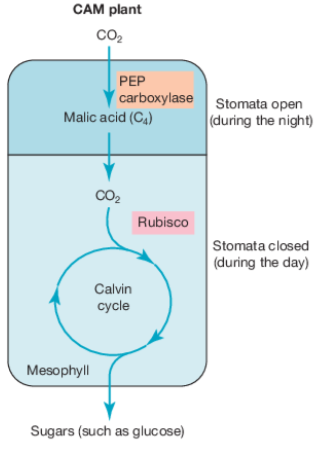
CAM (crassulacean acid metabolism) Plants:
plants that thrive in arid conditions and have their two stages of the Calvin cycle occurring at different times (carbon fixation occurring only during the night, glucose production occurring only during the day)
8% of all terrestrial plants in the world
Mechanism
Carbon fixation only occurs at night
Stomata only open at night
Uses enzyme PEP carboxylase to join CO2 to PEP
Products (including malic acid) are stored in vacuoles
Occurs in mesophyll cells
Calvin cycle in only occurs in the day
Stomata are closed
Products are released from storage and broken down into CO2
Rubisco fixes this CO2 for glucose production via the Calvin cycle
Occurs in mesophyll cells
What conditions is photorespiration likely to occur in?
As temperature increases
At low temperatures, Rubisco preferentially binds carbon dioxide.
As temperatures increase, the ability of the Rubisco enzyme to distinguish between CO2 and O2 decreases
Therefore, Rubisco will increasingly bind oxygen.
As conditions dry out
C3 plants close their stomata to prevent water loss.
This blocks the entry of CO2 needed as input to the Calvin cycle and limits the exit of O2 produced in the light-dependent stage of photosynthesis.
Results in high concentration of oxygen.
Study Design Dotpoints for Cellular Respiration?
The general structure of the biochemical pathways in photosynthesis and cellular respiration from initial reactant to final product
the main inputs, outputs and locations of glycolysis, Krebs Cycle and electron transport chain including ATP yield (details of biochemical pathway mechanisms are not required)
the location, inputs and the difference in outputs of anaerobic fermentation in animals and yeasts
the factors that affect the rate of cellular respiration: temperature, glucose availability and oxygen concentration
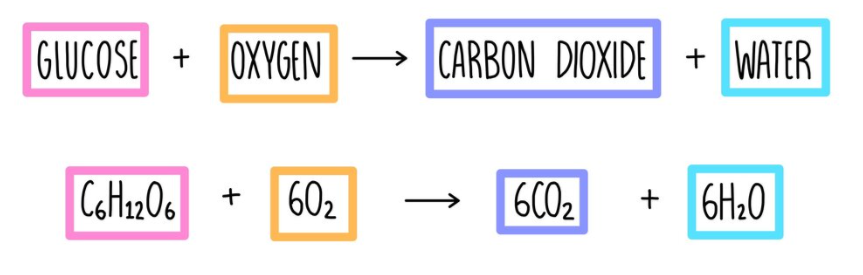
Cellular respiration - Chemical & Word equation
The two types of cellular respiration
Aerobic and anaerobic
Aerobic cellular respiration: Glycolysis - Location, Inputs and Outputs
Location:
Cytosol
Inputs:
C6H12O6
2 ADP + 2 Pi
6 NAD+ + 2H+
Outputs:
2 pyruvate (2 × 3C)
2 ATP
2 NADH
Aerobic cellular respiration: Krebs Cycle - Location, Inputs and Outputs
Location:
Mitochondrial matrix
Inputs:
2 AcetylcoA
2 ADP +
Anaerobic fermentation
Occurs without the presence of oxygen
Takes place entirely in the cytosol
Significantly less ATP produced
ATP is produced significantly faster that aerobic cellular respiration
Both pathways start with glycolysis – creating 2 ATP
Two pathways for anaerobic fermentation
Lactic acid fermentation (For lactic acid fermentation, the reaction, catalysed by the enzyme lactate dehydrogenase, produces lactic acid)
Alcohol fermentation (For alcohol fermentation, the end product is the alcohol, ethanol, that is produced in a two-step reaction, each catalysed by a specific enzyme.)