Muscle Types and Physiology: Skeletal, Smooth, and Contraction Mechanics
 Call Kai
 Learn
Learn Practice Test
 Spaced Repetition
 Match
Match Flashcards
 Knowt Play
1/20

There's no tags or description
Looks like no tags are added yet.
Name | Mastery | Learn | Test | Matching | Spaced | Call with Kai | Chat |
|---|
No analytics yet
Send a link to your students to track their progress
21 Terms
What are the four characteristics of muscle?
Excitability, Contractility, Extensibility, Elasticity
What are the main functions of muscle?
Produce movement, maintain posture, stabilize joints, generate heat
What type of muscle is characterized by striations and voluntary control?
Skeletal muscle
What is the role of connective tissue sheaths in skeletal muscle?
Support and reinforce muscle
What is the difference between direct and indirect muscle attachment?
Direct: epimysium to periosteum; Indirect: tendon or aponeurosis to bone
What is a sarcomere?
The functional unit of a muscle, consisting of bands and lines that define muscle contraction
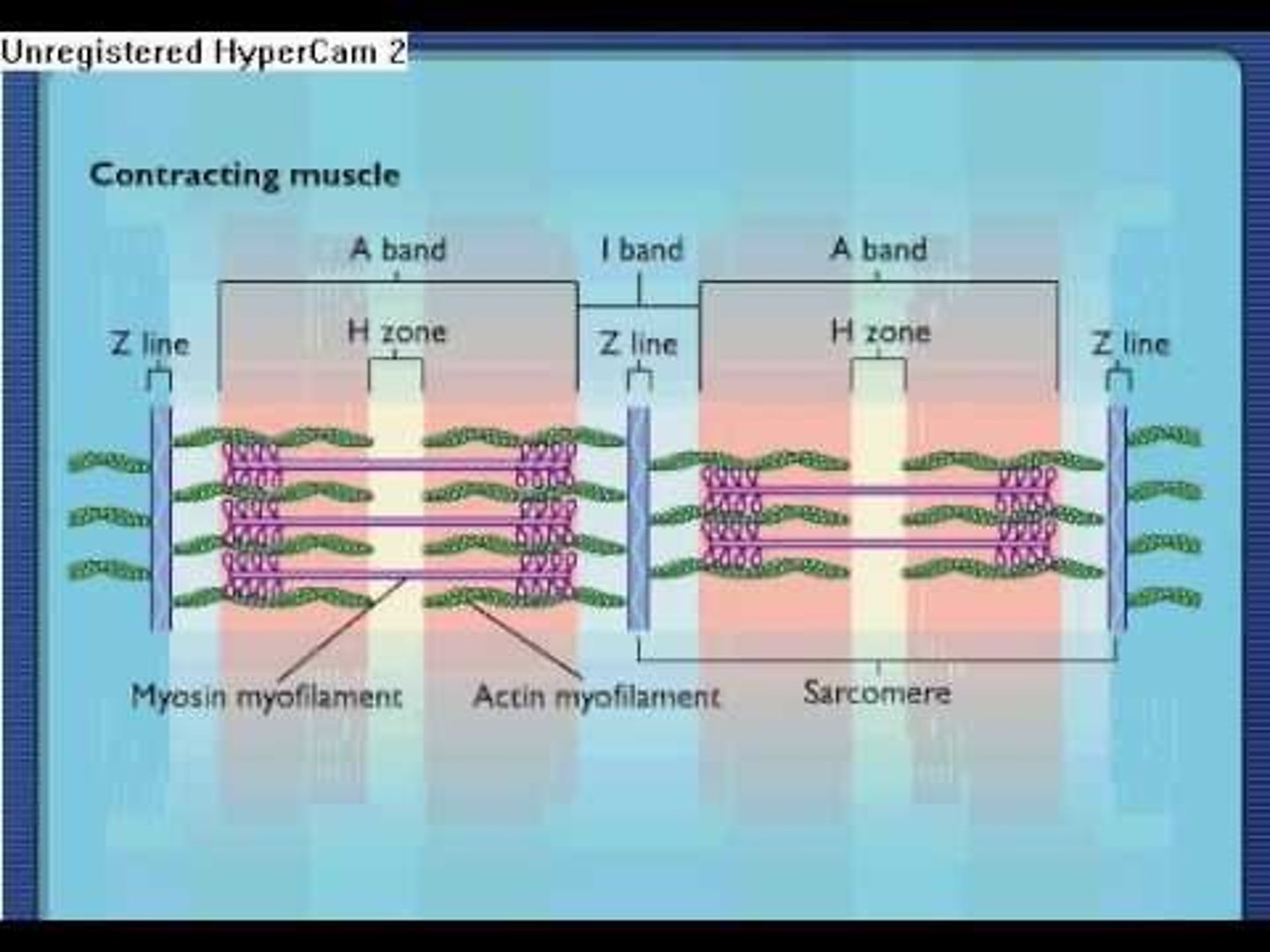
What genetic condition is associated with muscle dysfunction and weakness?
Duchenne's muscular dystrophy
What is muscle tone?
The continuous and passive partial contraction of the muscles
What is the difference between isotonic and isometric contractions?
Isotonic: muscle changes length and moves load; Isometric: muscle does not change length
What is the role of ATP in muscle contraction?
ATP is needed to break the bond and provide energy for muscle fibers
What are the two pathways for energy production in muscles?
Anaerobic pathway (without oxygen) and aerobic pathway (with oxygen)
What causes muscle fatigue?
Inability to contract despite continued stimulation, often due to ionic imbalances and decreased ATP
What factors influence muscle contraction strength?
Number of muscle fibers stimulated, relative size of fibers, frequency of stimulation, degree of muscle stretch
What is the difference between slow oxidative fibers and fast glycolytic fibers?
Slow oxidative fibers use aerobic pathways; fast glycolytic fibers use anaerobic glycolysis
What are the adaptations of aerobic exercise?
Increased muscle capillaries, mitochondria, myoglobin synthesis, leading to greater endurance and strength
What is muscle hypertrophy?
The increase in muscle size and strength due to resistance exercise
Where is smooth muscle primarily found?
In the walls of most hollow organs, such as the bladder and uterus
What are the two types of smooth muscle?
Unitary (visceral) smooth muscle and multiunit smooth muscle
What characterizes unitary smooth muscle?
Synchronizes contractions and is found in visceral organs
What are varicosities in smooth muscle?
Enlarged areas of nerve fibers that release neurotransmitters to stimulate muscle contraction
What is the role of the sarcoplasmic reticulum in muscle cells?
Houses calcium ions necessary for muscle contraction