AP Calculus BC - Derivatives Formulas
 Call Kai
 Learn
Learn Practice Test
 Spaced Repetition
 Match
Match Flashcards
 Knowt Play
1/31

There's no tags or description
Looks like no tags are added yet.
Name | Mastery | Learn | Test | Matching | Spaced | Call with Kai | Chat |
|---|
No analytics yet
Send a link to your students to track their progress
32 Terms
Limit definition of derivative
lim x→0 f(x+h) - f(x) / h
lim x→c f(x) - f(c)/x -c

Average rate of change
f(b) - f(a)/b-a
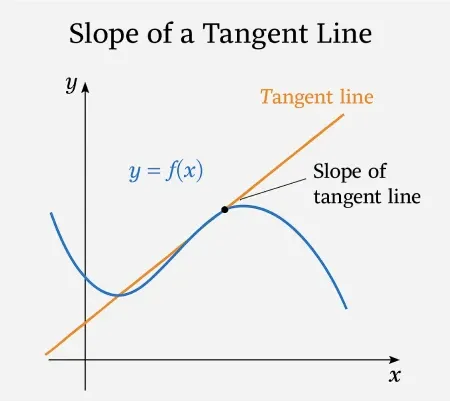
Slope of the secant line

Instantaneous rate of change
Derivative (f’(c))
Slope of tangent line
Derivatives fail to exist
1. If f is not continuous at x=c, then f'(c) is undefined.
2. Cusp (lim x->c f'(x) ≠ x->c f'(x))
3. Vertical tangent line, dy/dx = undefined

Normal line
Perpendicular to tangent line
Critical points
f’(x) = 0/undefined
Constant rule
d/dx [c] = 0
Constant multiple rule
d/dx [cf(x)] = cf’(x)
Power rule
d/dx [xⁿ] = nxⁿ−¹
d/dx [xu] = u’x(u-1)
Sum rule/difference rule
d/dx [f(x)±g(x)] = f’(x) ± g’(x)
Product rule
d/dx [f(x)*g(x)] = fg’+gf’
Quotient rule
d/dx [f(x)/g(x)] = gf’-fg’/[g²]
Chain rule
d/dx [f(g(x))] = f’(g(x))g’(x)
d/dx [ex]
ex
u’eu
d/dx [ax]
axlna
aulna*u’
d/dx [lnx]
1/x
u’/u
d/dx [logax]
1/xlna
u’/ulna

d/dx [sinx]
cosx
u’cosu
d/dx [cosx]
-sinx
u’*-sinu
d/dx [tanx]
sec2x
u’(sec2u)
d/dx [secx]
secxtanx
u’(secutanu)
d/dx [cscx]
-cscxcotx
u’(-cscucotu)
d/dx [cotx]
-csc2x
u’(-csc2u)
d/dx [arcsinx]
1/√1-x²
u’/√1-u²

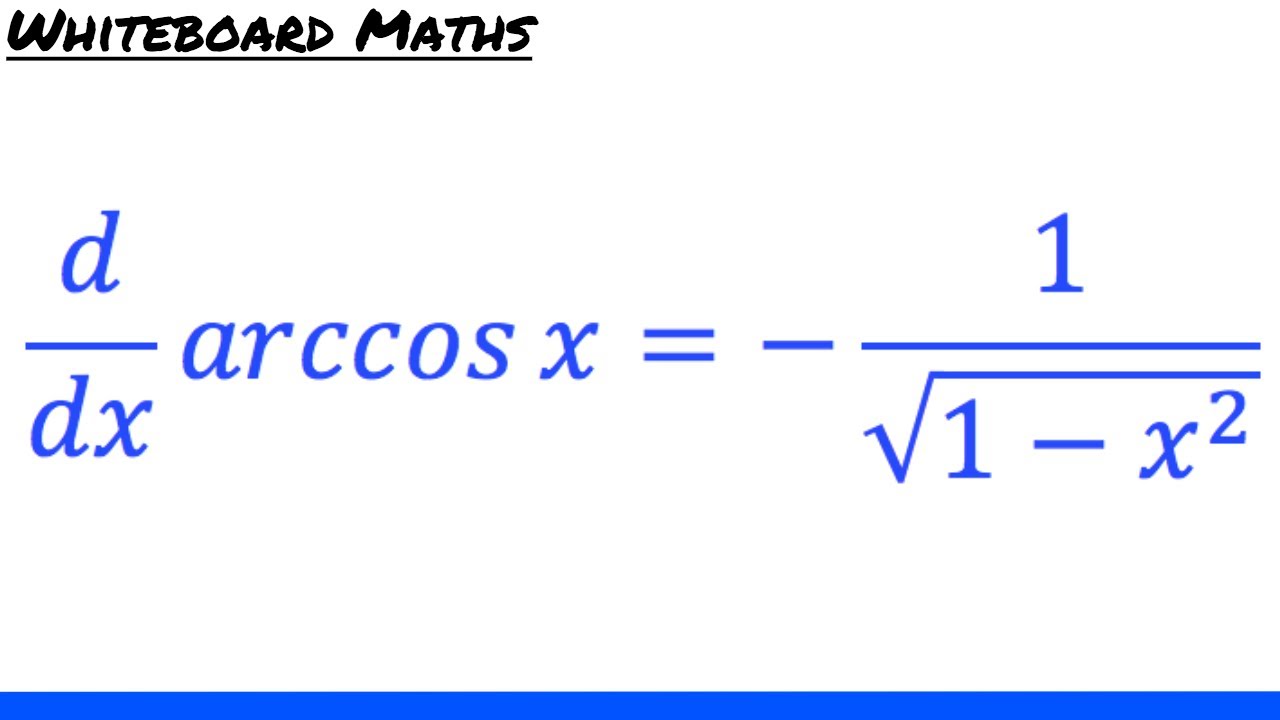
d/dx [arccosx]
-1/√1-x²
-u’/√1-u²
d/dx [arctanx]
1/1+x²
u’/1+u²

d/dx [arccotx]
-1/1+x²
-u’/1+u²

d/dx [arcsecx]
1/|x|√x²-1
u’/|u|√u²-1

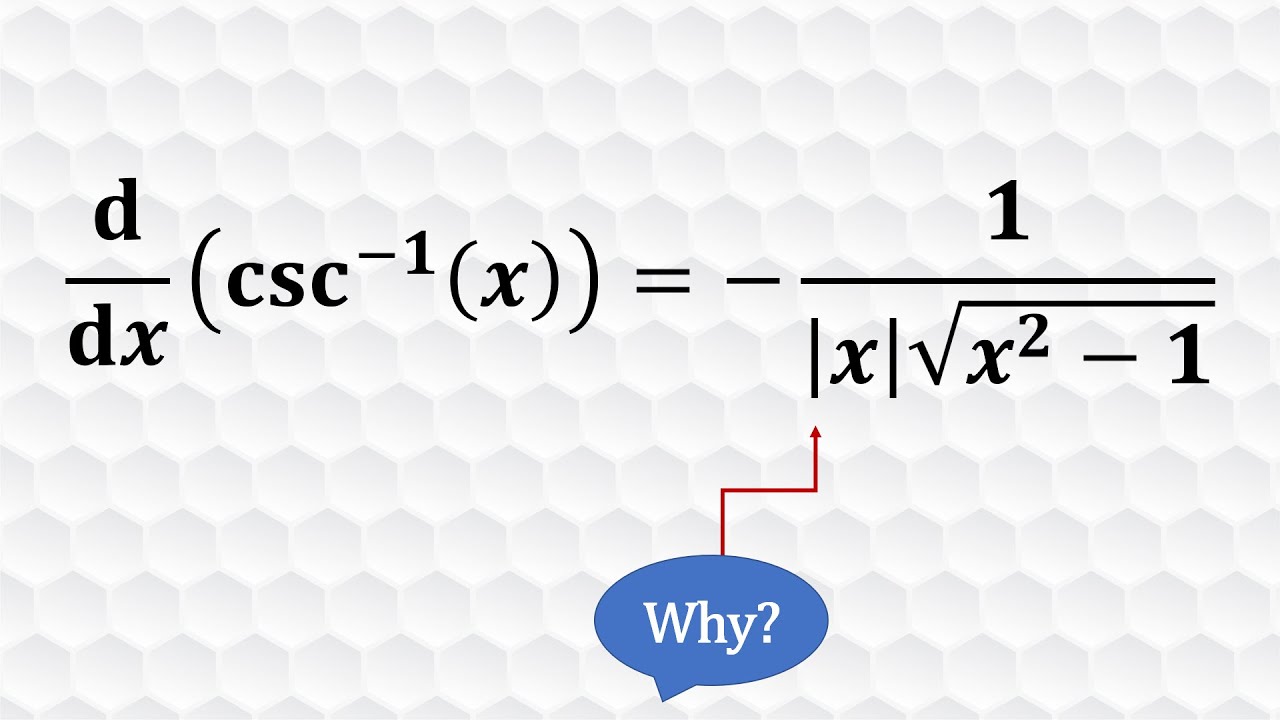
d/dx [arccscx]
-1/|x|√x²-1
-u’/|u|√u²-1
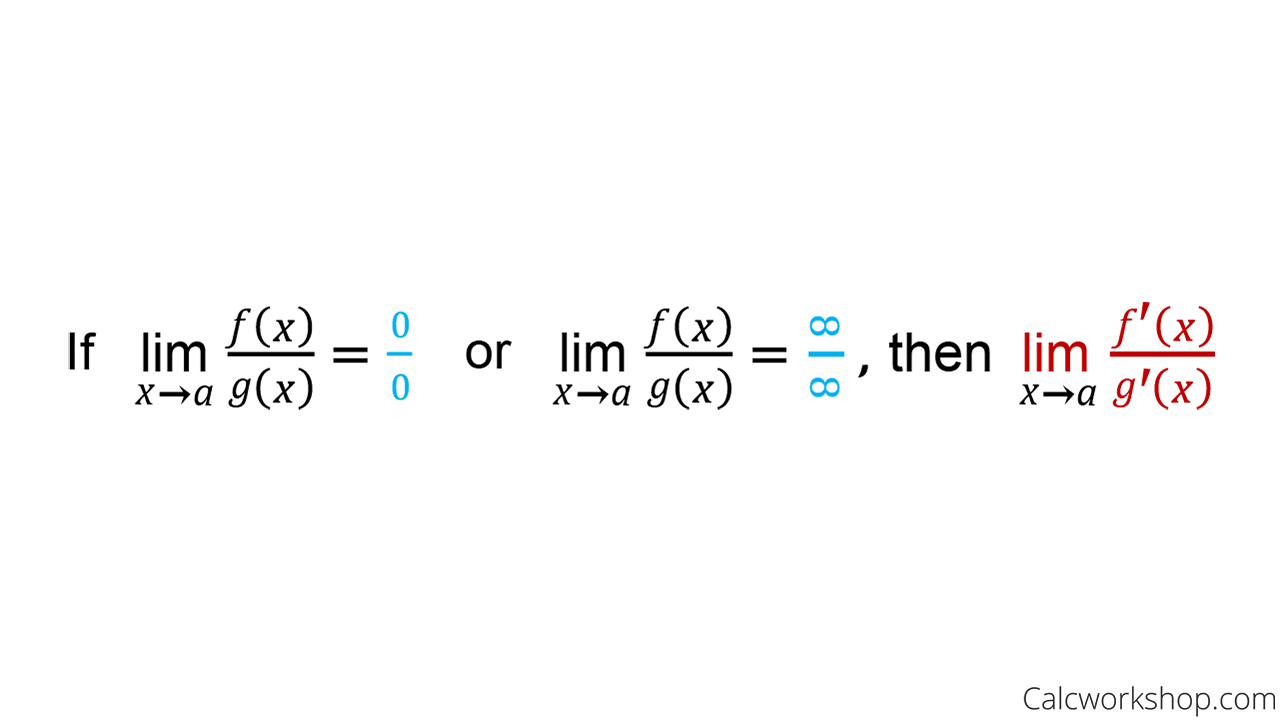
L’hospital rule
lim x→a f(x)/g(x)=0/0 or ∞/∞, then lim x→a f’(x)/g’(x)
Mean Value Theorem
f(x) is continuous on [a,b] and differentiable on (a,b)
f(b)-f(a)/b-a = N
Therefore, by MVT there must exist be some value “c” such that f’(c) = N on (a,b)
![<ol><li><p>f(x) is continuous on [a,b] and differentiable on (a,b)</p></li><li><p>f(b)-f(a)/b-a = N</p></li><li><p>Therefore, by MVT there must exist be some value “c” such that f’(c) = N on (a,b)</p></li></ol><p></p>](https://assets.knowt.com/user-attachments/9d4e0376-b30f-4b18-a02a-085ade7c3425.png)
Rolle’s Theorem
f(x) is continuous on [a,b] and differentiable on (a,b)
f(a) = f(b)
Therefore, by Rolle’s there must be some value “c” such that f’(c) = 0 on (a,b)