Driving test study 1
 Call Kai
 Learn
Learn Practice Test
 Spaced Repetition
 Match
Match Flashcards
 Knowt Play
1/267

There's no tags or description
Looks like no tags are added yet.
Name | Mastery | Learn | Test | Matching | Spaced | Call with Kai | Chat |
|---|
No analytics yet
Send a link to your students to track their progress
268 Terms
No matter your age, you need _____ to drive.
a valid license or permit
Your application fee allows you:
up to one year to get your license
if your license expires:
It is against the law to drive
With a Class C driver’s license you may:
Pull a trailer behind a car
With a class C driver’s license you may:
Drive a 2 axle vehicle weighing 26,000 lbs or less
To obtain a original ID card you:
Need to prove your identity
A driver that is under 18
must get a provisional permit
A provisional permit allows you to:
drive with a licensed California driver 25 years old or older
For the provisional permitted driver:
The permit is not valid until All star signs it
if you are under 18 and drive:
Your parents are responsible for you
To get a provisional license:
You must have 50 hours of practiced driving
For the first year, the provisional driver:
Both statements are true
If you have 2 collisions or you get 2 traffic tickets with your provisional license:
You cannot drive for 30 days
Persons between the ages of 13-21 convicted of alcohol or drug abuse:
will have their license suspended for one year
Remember, when your license is suspended, you may:
Not drive with any license or permit
The court can suspend your driver’s license:
if you have 3 traffic violations
the agency that will keep track of your driving record is:
The Department of Motor Vehicles
Teens (under the age of 18) are not permitted to:
use mobile phones while driving
when you apply for for an original DL/ID
you must present legal documents
when a provisional driver becomes 18:
they will lose the provisional part of your license
the DMV will require you to:
prove your residency
During the behind the wheel test, seat belts
if not worn will postpone the test
A driving test for license renewal:
might be required by the DMV
A minor who fails the behind the wheel test:
Must wait 2 weeks before being retested
before your driving test, you will be asked:
locate vehicle headlights, wipers, and defroster
If you move you must:
notify the DMV within 10 days
if you must take medicines and drive, remember
all medicines are potentially dangerous
although not required by law, your doctor:
may report any condition affecting your ability to drive
Most drugs taken for colds or allergies:
can make a person drowsy
Any drug that may cause drowsiness or dizziness:
Should not be taken before driving
Wearing a headset or earplugs in both ears while driving:
is something you should not do
If you are going to turn you must signal:
During the last 100 feet before turning
at freeway speeds it is best to signal:
at least 5 seconds before changing lanes
if you plan to turn beyond an intersection:
start signaling when you are in the intersection
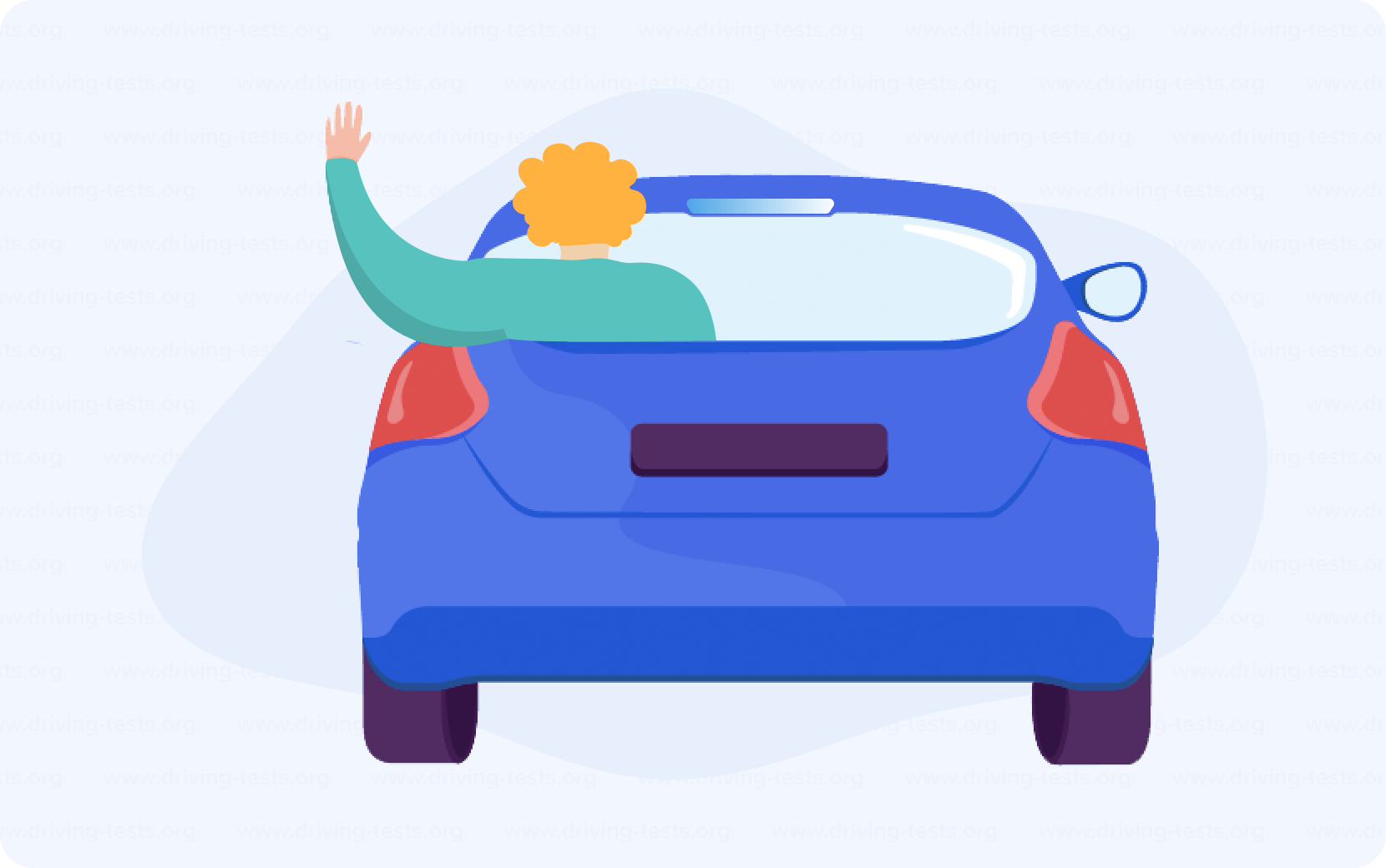
This hand/arm signal means:
Right turn
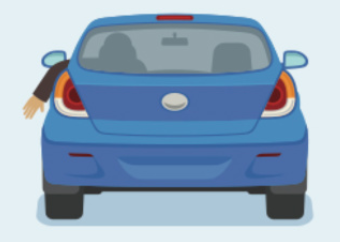
This hand/arm signal means:
slow or stop

This hand/arm signal means:
left turn
use you horn:
to avoid an accident
Use your horn on a narrow mountain road:
where you cant see 200 feet ahead
you must turn on your headlights
if the use of the windshield wipers is required
If you see an accident ahead:
both of the following answers are correct:
if you have car trouble and need to stop:
pull off the road, if safe, away from traffic
To notify drivers you have you have an emergency or car trouble:
lift the hood of your car, turn on emergency flashers
you cannot cross the solid double lines in the middle of the road:
To overtake and cross another car
you may cross solid, double yellow lines
to make a left turn
Two sets of solid double yellow lines mean:
the same as a barrier, no crossing
you may cross the double lines in the middle of the road to pass another vehicle if the:
line on your side is dashed or broken
on roads with two or more lanes in your direction:
The lanes will be separated by broken white lines
Lanes marked by large broken white lines means
This lane will be ending
Sharks teeth on the road refers to:
white yield lines at intersection
Lane referred to by number, the “fast” lane is:
lane #1
Usually you pass another ca:
on the left side
carpool lanes require
you have a certain amount of passengers
With the proper number of people for the carpool lane:
you may not cross the double parallel lines
you may drive in the center left turn lane
for only 200 feet
if you are driving too slow on a two lane road, where passing is unsafe:
use designated turn out area when 5 or more cars are behind you
the bike lane is used:
for bicyclists only
a sharrow is:
A portion of the roadway shared by bicyclists
you may legally park your car:
in the bicycle lane if there is no sign forbidding it
a right turn against a red light:
is permitted, as long as no sign is forbidding it
right turns normally begin
at the lane nearest the right-hand edge of the road
The expression “cut the corner” means:
turning too soon on a left turn
While waiting to turn left:
Keep your wheels pointed straight
on a one-way street, a left turn against a red light is permitted:
If you turn into a left moving one way street
left turns on a two way street normally begin in
the lane nearest the middle of the road
you may make a safe, legal U-turn:
across double yellow lines
you may not make a U-turn
if you cant see 200 feet in each direction
you may not make a u turn
on a curve or hill
you may not make a U-turn
in front of a fire station
Left turns, started near the center divider, end:
In the lane closest to the middle of the road
Right turns begin in the right lane and end
in the lane closest to the curb
when turning from the center lane of a “T” intersection
you may turn left or right
when you enter a freeway, you should be driving:
at or near the same speed as the freeway traffic
when entering a free, remember
freeway has the right of way
A good safety rule in leaving space to merge is:
leave a 3 second gap
if you have to cross several freeway lanes:
cross them one lane at a time
when entering city streets from a full stop:
you will need a gap of a full block to enter
if you are changing lanes or turning make sure:
no cars are blocking your path
drivers who present dangers are:
drivers who pass you on a curve
when you plan to exit a freeway
be sure you are at the proper speed for leaving traffic
do not pass another car:
if you are approaching a curve or hill
when can you pass on the right, using the unpaved shoulder?
never
passing on the right is permitted if:
there are at least two lanes moving in your direction
to pass a vehicle, you should:
only pass when you know you have enough space to return to your lane
if a vehicle is passing you, you should
maintain your lane position
when parking alongside a curb, the front and back tires should
be within 18 inches of the curb
when parked on a hill always
set your parking brake and put your vehicle in gear
when parked headed downhill:
Your front wheels should turn toward from the curb
when parked headed uphill:
your front wheels should turn away from the curb
when parking uphill or downhill with no curbs:
turn your wheels away from center of street
a green painted curb means:
parking for a limited time
a red curb means:
Do not park or stop
never park
in a crosshatched space
the blue parking area of a curb means:
only cars with a placard or special plates may park here

this parking place symbol means:
only cars with placards or plates may park here
you may legally park in front of a driveway;
under no circumstances
double parking is
illegal at any time
parking on the wrong side of the street is:
illegal at any time
during an enforcement stop
turn on your right turn signal
when being pulled over on the road:
move your vehicle to the right shoulder