BIOCHEM chapter 1-4

0.0(0)
Studied by 0 people
call kaiCall Kai
Locked
learnLearn
examPractice Test
spaced repetitionSpaced Repetition
heart puzzleMatch
flashcardsFlashcards
GameKnowt Play
Card Sorting

1/107

encourage image

There's no tags or description

Looks like no tags are added yet.

Last updated 7:44 PM on 8/11/26
Name
Mastery
Learn
Test
Matching
Spaced
Call with Kai
Chat

No analytics yet

Send a link to your students to track their progress

108 Terms

1
New cards
Stereochemistry of chiral α-carbon in amino acids
L-configuration
2
New cards
All chiral amino acids have which configuration?
S-configuration — except cysteine, which is R
3
New cards

Aspartic acid

Polar amino acid. Negatively charged. Acidic. [Asp, D]

<p><span>Polar amino acid. Negatively charged. Acidic. [Asp, D]</span></p>
4
New cards

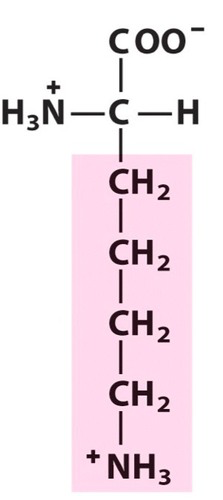
Lysine

Polar amino acid. Positively charged. Basic. [Lys, K
<p><span>Polar amino acid. Positively charged. Basic. [Lys, K</span></p>
5
New cards

Arginine

Polar amino acid. Positively charged. Basic. [Arg, R]

<p><span>Polar amino acid. Positively charged. Basic. [Arg, R]</span></p>
6
New cards

Glutamic acid

Polar amino acid. Negatively charged. Acidic. [Glu, E]

<p><span>Polar amino acid. Negatively charged. Acidic. [Glu, E]</span></p>
7
New cards

Cysteine

Polar amino acid. Uncharged. [Cys, C]

<p><span>Polar amino acid. Uncharged. [Cys, C]</span></p>
8
New cards

Threonine

Polar amino acid. Uncharged. [Thr, T]

<p><span>Polar amino acid. Uncharged. [Thr, T]</span></p>
9
New cards

Tyrosine

Polar amino acid. Uncharged. [Tyr, Y]

<p><span>Polar amino acid. Uncharged. [Tyr, Y]</span></p>
10
New cards

Asparagine

Polar amino acid. Uncharged. [Asn, N]

<p><span>Polar amino acid. Uncharged. [Asn, N]</span></p>
11
New cards

Glutamine

Polar amino acid. Uncharged. [Gln, Q]

<p><span>Polar amino acid. Uncharged. [Gln, Q]</span></p>
12
New cards

Serine

Polar amino acid. Uncharged. [Ser, S]

<p><span>Polar amino acid. Uncharged. [Ser, S]</span></p>
13
New cards

Glycine

Nonpolar amino acid. [Gly, G]

<p><span>Nonpolar amino acid. [Gly, G]</span></p>
14
New cards

Tryptophan

Nonpolar amino acid. [Trp, W]

<p><span>Nonpolar amino acid. [Trp, W]</span></p>
15
New cards

Proline

Nonpolar amino acid. [Pro, P]

<p><span>Nonpolar amino acid. [Pro, P]</span></p>
16
New cards

Methionine

Nonpolar amino acid. [Met, M]

<p><span>Nonpolar amino acid. [Met, M]</span></p>
17
New cards

Alanine

Nonpolar amino acid. [Ala, A]

<p><span>Nonpolar amino acid. [Ala, A]</span></p>
18
New cards

Phenylalanine

Nonpolar amino acid. [Phe, F]

<p><span>Nonpolar amino acid. [Phe, F]</span></p>
19
New cards

Isoleucine

Nonpolar amino acid. [Ile, I]

<p><span>Nonpolar amino acid. [Ile, I]</span></p>
20
New cards

Leucine

Nonpolar amino acid. [Leu, L]

<p><span>Nonpolar amino acid. [Leu, L]</span></p>
21
New cards

Valine

Nonpolar amino acid. [Val, V]

<p><span>Nonpolar amino acid. [Val, V]</span></p>
22
New cards

Histidine

Polar amino acid. Positively charged. Basic. [His, H]

<p><span>Polar amino acid. Positively charged. Basic. [His, H]</span></p>
23
New cards
Which amino acid is NOT chiral?
Glycine (no chiral center)
24
New cards
Non-polar amino acids
Glycine, Alanine, Valine, Leucine, Isoleucine, Methionine, Proline
25
New cards
Amino acids with aromatic side chains
Tryptophan, Phenylalanine, Tyrosine
26
New cards
Polar (uncharged) amino acids
Serine, Threonine, Asparagine, Glutamine, Cysteine
27
New cards
Negatively charged amino acids
Aspartic acid, Glutamic acid
28
New cards
Positively charged amino acids
Arginine, Lysine, Histidine
29
New cards
30
New cards
pKa
The pH at which [HA] = [A⁻]; exactly half the molecule is deprotonated
31
New cards
Isoelectric point (pI)
The pH at which an amino acid has no net charge; average of two flanking pKa values
32
New cards
pI formula for neutral amino acids
(pKa1 + pKa2) / 2 — using COOH and NH₂
33
New cards
pI formula for basic amino acids
(pKa2 + pKa3) / 2 — using NH₂ and R group
34
New cards
pI formula for acidic amino acids
(pKa1 + pKa3) / 2 — using COOH and R group
35
New cards
How are peptide bonds formed?
Dehydration synthesis — releases H₂O
36
New cards
How are peptide bonds broken?
Hydrolysis — addition of H₂O
37
New cards
Primary protein structure
Linear sequence of amino acids
38
New cards
Secondary protein structure
α-helix and β-pleated sheets; proline disrupts these structures
39
New cards
Tertiary protein structure
3D shape; stabilized by hydrophobic interactions and disulfide bonds
40
New cards
Disulfide bond
Bond between two cysteine residues; the resulting molecule is called cystine
41
New cards
Quaternary protein structure
Assembly of multiple subunits
42
New cards
Conjugated protein
Protein with a covalently attached non-protein molecule (prosthetic group — e.g., vitamin, ion, lipid)
43
New cards
Denaturation
Loss of 3D protein structure caused by heat or high solute concentration
44
New cards
What do enzymes do?
Biological catalysts — increase reaction rate without changing ΔG or ΔH
45
New cards
Oxidoreductase
Catalyzes oxidation-reduction reactions (e.g., dehydrogenase, reductase)
46
New cards
Transferase
Transfers functional groups between molecules (e.g., kinase transfers phosphate from ATP)
47
New cards
Hydrolase
Cleaves bonds using water
48
New cards
Lyase
Cleaves bonds without water
49
New cards
Isomerase
Catalyzes rearrangement of bonds to form isomers
50
New cards
Ligase
Catalyzes joining of two molecules
51
New cards
Lock and Key model
Enzyme and substrate are a perfect, rigid match
52
New cards
Induced fit model
Enzyme changes shape to match the substrate upon binding
53
New cards
Cofactor vs. coenzyme
Cofactor = metal cation; Coenzyme = organic molecule
54
New cards
Enzyme saturation
As [S] increases, reaction rate increases until Vmax is reached, then plateaus
55
New cards
Michaelis-Menten equation
Vo = Vmax[S] / (Km + [S])
56
New cards
Cooperative coefficient > 1
Positive cooperative binding
57
New cards
Cooperative coefficient < 1
Negative cooperative binding
58
New cards
Cooperative coefficient = 1
No cooperative binding
59
New cards
Effect of temperature on enzyme activity (in vivo)
Activity increases with temperature; doubles every 10°C; optimal temp is 37°C
60
New cards
Effect of salinity on enzyme activity (in vitro)
Changes in salinity can alter enzyme action
61
New cards
Structural proteins (examples)
Collagen (strength & flexibility), Elastin (strength & recoil), Keratin (cell integrity), Actin (polar)
62
New cards
Motor proteins
Use ATPase activity for movement; examples: Myosin, Kinesin, Dynein
63
New cards
Kinesin direction
Moves vesicles toward the positive end (e.g., delivering neurotransmitters)
64
New cards
Dynein direction
Moves vesicles toward the negative end (e.g., waste/recycling)
65
New cards
Cell adhesion molecules
Cadherins (calcium-dependent), Integrins (link to extracellular matrix), Selectins (bind carbohydrates on immune cells)
66
New cards
Antibody functions
Neutralize antigens; mark pathogens for destruction; agglutinate pathogens for phagocytosis
67
New cards
Ungated ion channels
Always open
68
New cards
Voltage-gated ion channels
Open in response to changes in membrane potential
69
New cards
Ligand-gated ion channels
Open when a hormone or neurotransmitter binds
70
New cards
G protein-coupled receptor mechanism
Ligand binds → GDP replaced by GTP on Gα → Gα dissociates and activates adenylate cyclase or phospholipase C → GTP hydrolyzed back to GDP → Gα rejoins Gβγ
71
New cards
Homogenization
Crushing/blending tissue into a uniform mixture
72
New cards
Centrifugation
Uses speed to isolate proteins from smaller particles
73
New cards
Native PAGE
Separates proteins by mass-to-charge ratio; hard to compare across proteins
74
New cards
SDS-PAGE
Denatures proteins and masks native charge; separates by size only for accurate comparison
75
New cards
Isoelectric focusing
Separates proteins by pI; protein migrates until pH equals its pI
76
New cards
Column chromatography
Polar stationary phase + nonpolar mobile phase separates by polarity
77
New cards
Ion-exchange chromatography
Charged column + salt gradient separates proteins by charge
78
New cards
Size-exclusion chromatography
Porous beads — large proteins pass around beads (fast); small proteins enter beads (slow)
79
New cards
Affinity chromatography
Beads coated with a specific receptor or antibody that binds the target protein
80
New cards
Bradford protein assay
Most common protein concentration assay; dye shifts from brown-green to blue
81
New cards
Edman degradation
Sequential method for determining amino acid sequence
82
New cards
X-ray crystallography
Used to determine 3D protein structure
83
New cards
Aldose
A sugar whose most oxidized group is an aldehyde
84
New cards
Ketose
A sugar whose most oxidized group is a ketone
85
New cards

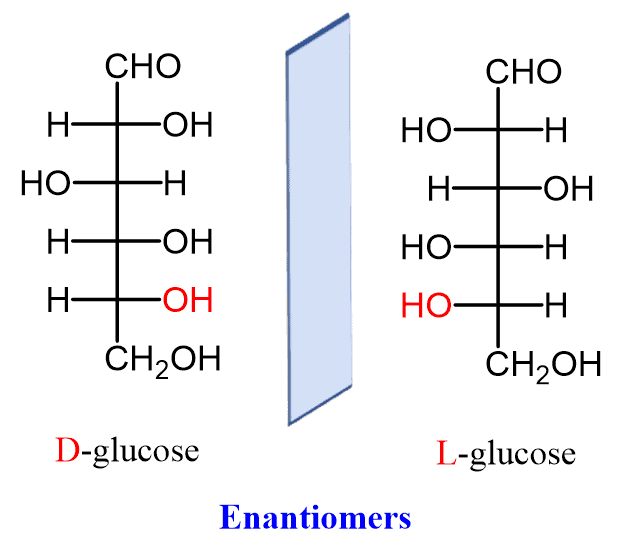
D-sugar

The highest-numbered chiral carbon has its -OH group on the right
<p>The highest-numbered chiral carbon has its -OH group on the right</p>
86
New cards
L-sugar
The highest-numbered chiral carbon has its -OH group on the left
87
New cards
Enantiomers (in sugars)
D- and L- forms of the same sugar — mirror images of each other
88
New cards
Diastereomers
Sugars that differ at one or more — but not all — chiral carbons
89
New cards
Epimers
Diastereomers that differ at exactly ONE chiral carbon
90
New cards
Anomers
Epimers that differ specifically at the anomeric carbon (α vs β forms)
91
New cards
Anomeric carbon
The new chiral center created when a sugar undergoes ring closure
92
New cards
α anomer
OH group at the anomeric carbon is axial (pointing down); trans configuration
93
New cards
β anomer
OH group at the anomeric carbon is equatorial (pointing up); cis configuration
94
New cards
Mutarotation
The interconversion of a cyclic sugar between its α and β anomeric forms
95
New cards
Which anomer is favored?
β anomer is favored (equatorial position is more stable)
96
New cards
Monosaccharide
A single carbohydrate unit; can undergo oxidation/reduction, esterification, and glycoside formation
97
New cards

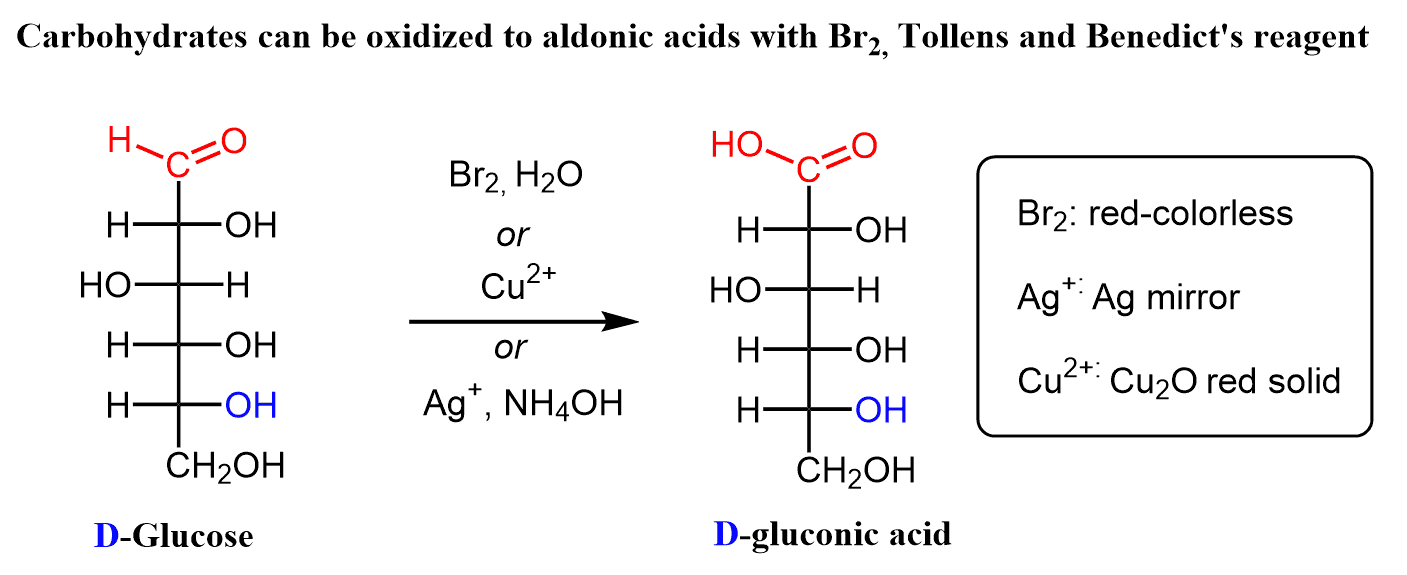
Oxidation of aldoses

Aldoses can be oxidized to aldonic acids
<p>Aldoses can be oxidized to aldonic acids</p>
98
New cards

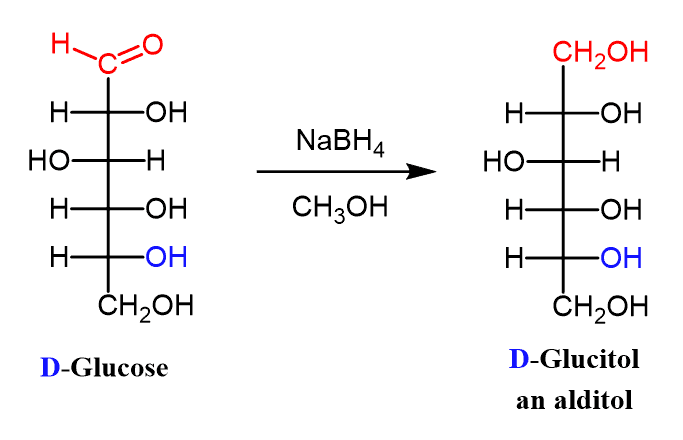
Reduction of aldoses

Aldoses can be reduced to alditols
<p>Aldoses can be reduced to alditols</p>
99
New cards
Benedict's reagent
Tests for a free aldehyde group in aldoses; a positive result is a red precipitate
100
New cards
Tollens' reagent
Reduced by aldehydes to produce a silvery mirror — indicates aldehyde presence



