Chemistry Organic synthesis topic 16
 Call Kai
 Learn
Learn Practice Test
 Spaced Repetition
 Match
Match Flashcards
 Knowt Play
1/40

Earn XP
Description and Tags
16.1 -16.2
Name | Mastery | Learn | Test | Matching | Spaced | Call with Kai | Chat |
|---|
No analytics yet
Send a link to your students to track their progress
41 Terms
What are the main components and their functions of a reflux? (6)
Verticle condensor that allows liquid vapour to renter the reaction mixture
Open space on the top of the condensor attached with a clamp stand to prevent explosion
A pear shaped flask that allow every drop of the solution to be heated up evenly- avoid sudden bumping
Anti-bumping granules to prevent glasswear from vibrating violently- boil smoothly
Heating mantle that provides even heat
Rubber tubing to connect apparatus
What happens inside a reflux?
Reaction mixture is heated up and evaporated up the condensor
Vapours condenses into liquid before it reaches the top and escape
The liquid vapour drops back into the pear shaped flask and continue to boil
What are the 3 main benefits of using a reflux?
It allows reaction mixture to be heated for a long period
It prevents the loss of volatile substances
It allows reactions to occur faster
Compare the two types of distilation.
Simple distilation is used for seperating a soluble solid and liquid
Fractional distilation is used for seperating a mixture of miscible liquids with different boiling points
They are both useful for:
purifying a liquid- removes impurities
Seperate liquids with different boiling points
What are the main components and their functions in a distilator? (11)
Horizontal condensor that prevents liquid vapours from rentering the reaction mixture
Round-bottomed flask (attached with a fractional column for fractional distilation)
Thermometer- moniter the temperature to ensure only the wanted liquid turns into vapours (identify the substance)
Clamp and a stand for holding the flask
Still head that attaches the condensor with the flask
Receiver - leads liquid to the conical flask
Conical flask- collect product
Second clamp for the receiver and conical flask
Heating source- bunsen burner in blue flame
Tripod and wire gauze
Screw- cap adaptor that connects thermometer and flask
What happens inside a distilator?
Mixture is heated up and the liquid with the lowest boiling point evaporates first and reach the thermometer
The vapour flows into the condensor through the still head and cools down
When it turns into liquid , the distlate is collected in the conical flask through a receiver
What are the main components and their functions of a seperating funnel? (4)
Stopper- stop or allow liquid to flow through the tap
Clamp and stand
Tap- stop or allow liquid to flow to the beaker
beaker- collect liquid
How do we use a seperating funnel?
Ensure the tap is closed
Pour immiscible mixture in the container
Put on the stopper and invert to mix
Let the layers to settle and add water to identify aqueous layer
Place a beaker underneath and remove the stopper and open the tap until one of layer leave and collected by the beaker
What is the purpose of redistilation?
To further purify an original liquid as the original liquid may contain impurities, side products and unreacted reactants.
How do we identify a pure and impure liquid.
Pure substances have a sharper boiling point and a narrower boiling range.
Impurities alter the boiling point of the original substance because the intermolecular forces are distrupted
What are the two examples of drying agents?
MgSO4 and CaCl2
What are drying agents and what do they do?
Drying agents are anhydrous inorganic salt that remove water from organic liquids.
Solid hydrated salt formed can be filtered off
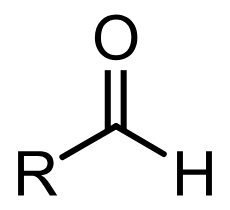
Identify this functional group: R-CH(=O)
Aldehyde
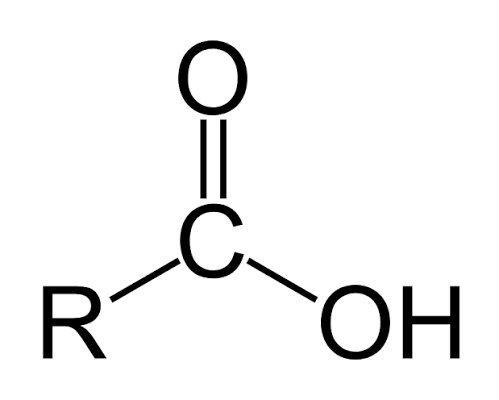
Identify this functional group: R- C(=O)OH
Carboxylic acid
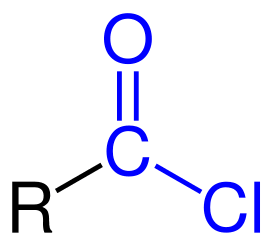
Identify this functional group: R- C(=O)Cl
Acyl chloride
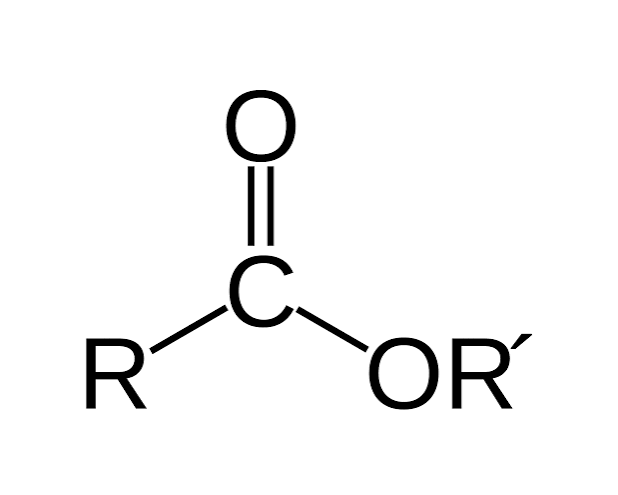
Identify this functional group: R- COO-R
Ester
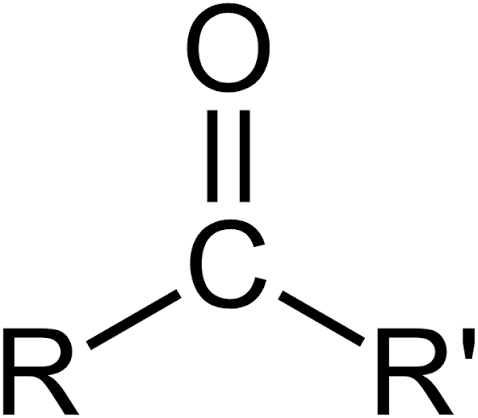
Identify this functional group: R- C(=O) -R
Ketone
Identify this functional group: -NH2
Amine
Identify this functional group: -CN
Nitrile
List and describe the 4 kinds of mechanisms.
Electrophilic addition is when a pi (double) bond breaks to form 2 new sigma bonds. Electron pair in the double bond attacks an electrophile to make unsaturated hydrocarbons saturated.
Elimination- when a 2 functional groups leave the main molecule, forming a double bond, turning a saturated hydrocarbon into an unsaturated one
Free radical substitution- where a halogen replaces a hydrogen atom in an alkane and are split into 3 stages including initiation, propagation and termination
Nucleophilic substitution- Where a nucleophile (electron donar) attacks a carbon atom (electrophile intermediate) and replace the old, leaving group. There could be 1 or 2 steps mechanism for different classification of the organic molecule.
What is the mechanism and process called when alkene turns into dihaloalkanes (include conditions needed)?
Electrophillic addition
Halogenation
Halogen at room temp
What is the mechanism called when alkene turns into haloalkanes (include conditions needed)?
Electrophilic addition
hydrogen halide
What is the process called when alkene turns into polymers ?
Additional polymerisation
What is the mechanism called when haloalkanes turns into alkenes (include conditions needed)?
Elimination
NaOH in ethanol under reflux
What is the mechanism and process called when alkene turns into alkanes (include conditions needed)?
Electrophilic addition
Hydrogenation
H2 and nickel
What is the process called when alkane turns into alkenes (include conditions needed)?
Cracking
High heat/ catalyst
What is the mechanism called when alkane turns into haloalkanes (include conditions needed)?
Free radical substitution
UV light and halogens/ halide radicals
What is the mechanism and process called when alkene turns into alcohol (include conditions needed)?
Electrophilic addition
Hydration
Steam and H3PO4 or H2SO4 phosphoric acid or sulfuric acid
What is the mechanism and process called when alcohol turn into alkene (include conditions needed)?
Elimination
Dehydration
H2SO4 + heat
What is the mechanism called when alcohol turns into haloalkanes (include conditions needed)?
nucelophilic substitution
NaBr or NaX and H2SO4 under reflux
What is the mechanism and process called when haloalkanes turns into alcohol (include conditions needed)?
Hydrolysis
nucelophilic substitution
warm OH- or H2O under reflux
What is the process called when alcohol turns into aldehyde (include conditions needed)?
Partial oxidation
Primary alcohols under distilation + oxidising agents like acidified potassium dichromate K2Cr2O7
What is the process called when alcohol turns into carboxylic acid (include conditions needed)?
Full oxidation
Primary alcohols and under reflux + oxidising agents like acidified potassium dichromate K2Cr2O7
What is the process called when alcohol turns into ketone (include conditions needed)?
Full oxidation
Secondary alcohols under reflux + oxidising agents like acidified potassium dichromate K2Cr2O7
Name the typical reactions/ mechanism for alkanes. (1)
Free radical substitution
Name the typical reactions/ mechanism for alkenes. (2)
Electrophilic addition
Addition polymerisation
Name the typical reactions/ mechanism for alcohol. (3)
Nucleophilic substitution
Dehydration/ elimination
Oxidation
Name the typical reactions/ mechanism for haloalkanes. (1)
Nucleophilic substitution
Name the typical reactions/ mechanism for aldehyde. (1)
Oxidation (further)
Name the typical reactions/ mechanism for carboxylic acids. (2)
Neutralization
Esterification (with alcohol)
How can we find a target molecule using two stage synthesis when the starting molecule doesn’t react directly? (3)
Identify both functional groups in both starting and target molecule
Identify intermediate that links reactions
State reagents and conditions for each step.