Pathology of the Ear
 Call Kai
 Learn
Learn Practice Test
 Spaced Repetition
 Match
Match Flashcards
 Knowt Play
1/29

There's no tags or description
Looks like no tags are added yet.
Name | Mastery | Learn | Test | Matching | Spaced | Call with Kai | Chat |
|---|
No analytics yet
Send a link to your students to track their progress
30 Terms
Understand the anatomy of the ear
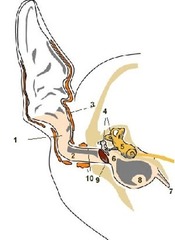
What are vascular disorders the external ear can get?
1. ischemia
2. auricular hematoma
Describe ischemia in the ear (causes, pigs)
- ear tips prone to ischemia
-causes: frostbite, septicemia, cold-agglutinin dz, & ergot poisoning
- misshapen ears common in pigs resulting from septicemia, sarcoptic mange, and cannabilism
Describe auricular hematoma (cause, who)
- In dogs, 2ndary to trauma: especially shaking from otitis externa
- on the inner surface of the pinnae (concave surface)
- also occurs in cats and pigs (less common)
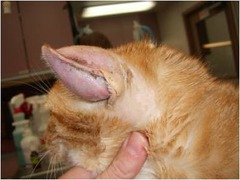
Inflammation is common in the ____ of the pinna and is often part of generalized ___ disorders.
Skin!
(some skin diseases can affect the pinna predominantely or exclusively, ex: sarcoptic mange in pigs)
Dermatitis of any kind can include the pinna

What is ear margin seborrhea? who gets it?
- idiopathi dermatitis of the pinnal margins
- short haired dogs with pendulous ears, especially daschunds

Describe feline solar dermatitis and how it can progress
White cats often develop dermatitis on ears chronically exposed to sun (feline solar dermatitis), which cand progress from crusting and ulceration to squamous cell carcinoma
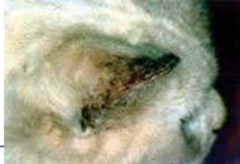
Inflammmation within the outer ear canal is very common in what species?
dogs, cats, goats
What agents typically cause ear canal inflammation in dogs? What dogs are prone to this?
Ear mites (otodectes cyanotis)
Bacteria (staphylococcus spp, pseudomonas spp)
Yeast (malassezia pachydermatis)
Frequent in pendulous ears or abundant hair = poor air circulation and traps moisture

What parasite is often assoicated with otitis externa in cats?
Otodectes cyanotis

What parasite is often assoicated with otitis externa in rabbits?
Psoroptes cuniculi

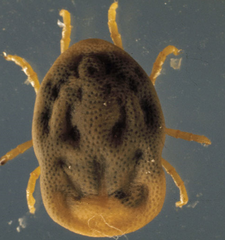
The spinose ear tick, ________, parasitizes a variety of species
Otobius megnini
Otitis externa lesions can be characterized by?
- hyperemia and accumulation of serum protein
- cerumen
- leukocytes
- epithelial debris
Bacterial infections can produce suppurative exudate
Crusts of inflammatory debris can adhere (P.cuniculi)
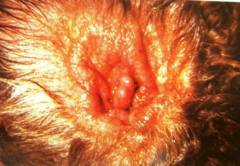
Chronic otitis externa results in?
1. ceruminous gland hyperplasia
2. dermal fibrosis
3. epithalial hyperplasia
4. lymphocyte & plasma cell accumulations
Chronic proliferative lesions can resemble neoplasia

Describe cutaneous histiocytoma (who, where, what is it)
- most common tumor of canine pinna (of anywhere on skin)
- benign self limiting tumor often in young dogs
- domeshaped, hairless, sheets of histiocytes

Describe squamous cell carcinomas (who, where, developement)
- White cats exposed to UV are prone to actinic dermatitis of pinna which can progress to squamous cell carinoma
- can also be on other sparsely haired areas
- lesion begins with inflammation and ulceration, leasing to hyperplasia, then dysplasia, carcinoma in situ, and eventually invasive

Describe nasopharyngeal polyps
- arise in middle ear
- NOT a neoplasm, but are inflammatory polyps
- extend into nasopharynx or external ear canal
- composed of inflamed grnaulation tissue lines by ciliated epithelium

Describe ceruminous gland neoplasms (what is it, who, severity)
- ceruminous gland: modified aporcrine glnads in external ear canal
- dogs and cats
- most are benign in dogs
- about half are malignant in cats
Inflammation of the middle ear is called
otitis media
Infections reach the middle ear via what routes?
tympanic membrane, the eustachian tube, or the blood

In feeder pigs, otitis media caused by _______ is relatively common.
streptococcus spp
bacterial otitis media generally results in accumulation of purulent exudate within the tympanic cavity
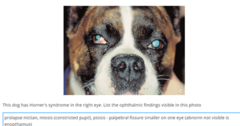
Otitis media can result in damage to cranial nerves and thus Horner's Syndrome which has what symptoms?
Loss of sympathetic stimulation
- miosis (small pupil)
- 3rd eyelid prolapse
- enophthalmus (eye sinks)
- ptosis (drooping upper eyelid)
+ otitis media can also lead to otitis interna, and extension to brainstem
How does otitis interna occur
almost always result from extension of infection from middle ear
Otitis interna can result in what signs
Peripheral vestibular signs (head tilt, circling, ataxia, nystagmus)

Otitis interna can progress and lead to?
infection can reach the meninges vie the 8th cranial nervs and result in meningitis and encephalitis

Describe hereditary chochleosaccular degeneration (what is it, who, species, breeds, lesion)
- hereditary deafness associated w incomplete pigmentation of the hair coat and uvea
- dogs, cats, mink, and mice
- Aust shepherd, aust blue heeler, old english sheepdog, great dane
- lesions include degentaion of cells in organ of corti and spiral ganglion (melanin containing cells affected)

Describe senile deafness (other name, lesion)
- aka presbyacusis
- due to degenation of hair cells in the organ of corti and loss of neurons in the spiral ganglion

How can noise cause ototoxicity?
sudden loud noise or moderate and prolonged environmental background noise causes degeneration of the sensory hair cells within the organ of corti

What kind of antibiotics can potentially be ototoxic?
Aminoglycosides
- cats are particularly susceptible
- lesion is degneration of the apical portions of the cochlear hair cells
What drugs can potentially be ototoxic?
Cyclosporin (immunosuppressive drug)
Furosemide (commonly used diruretic)