Chapter 5 Study Guide: Cell Structure, Function & Microorganisms
 Call Kai
 Learn
Learn Practice Test
 Spaced Repetition
 Match
Match Flashcards
 Knowt Play
1/30

Earn XP
Description and Tags
Vocabulary flashcards covering core cellular organelles, comparative cellular organization, microorganisms, locomotive structures, and diagnostic slide identification criteria.
Name | Mastery | Learn | Test | Matching | Spaced | Call with Kai | Chat |
|---|
No analytics yet
Send a link to your students to track their progress
31 Terms
Nucleus
The membrane-bound organelle that houses genetic material (DNA) and directs cellular activities through gene expression.
Nucleolus
A dense region within the nucleus responsible for ribosomal RNA (rRNA) synthesis and ribosome assembly.
Plasma Membrane (Cell Membrane)
A selectively permeable phospholipid bilayer enclosing the cytoplasm, regulating the passage of substances into and out of all cells.
Cell Wall
A rigid exterior layer surrounding the cell membrane that provides structural support, protection, and shape (composed of cellulose in plants, chitin in fungi, and peptidoglycan in bacteria).
Cytoplasm / Cytosol
The fluid-like cellular material bounded by the plasma membrane containing suspended organelles, dissolved ions, and nutrients.
Mitochondria
Double-membraned organelles known as the "powerhouses of the cell," producing ATP through cellular respiration.
Chloroplasts
Double-membraned organelles found in plant and algal cells containing chlorophyll; site of photosynthesis.
Central Vacuole
A large membrane-bound sac in plant cells storing water, nutrients, and waste while maintaining cell turgor pressure.
Ribosomes
Non-membrane-bound complexes of RNA and proteins that synthesize polypeptides during translation.
Rough ER
Part of the endoplasmic reticulum studded with ribosomes; synthesizes and processes membrane/secretory proteins.
Smooth ER
Part of the endoplasmic reticulum lacking ribosomes; synthesizes lipids, metabolizes carbs, and detoxifies chemicals.
Golgi Apparatus
A stack of flattened membranous sacs that modifies, sorts, and packages proteins/lipids into vesicles for transport.
Lysosomes
Membrane-bound vesicles packed with hydrolytic digestive enzymes that break down macromolecules, old organelles, and foreign substances.
Unicellular
Solitary, independent single-celled organisms carrying out all life functions independently (e.g., Amoeba, Paramecium).
Colonial
Clusters of individual cells living cooperatively without specialized tissue differentiation (e.g., Spirogyra filaments).
Multicellular
Complex organisms composed of specialized cells organized into tissues, organs, and organ systems.
Amoeba
A unicellular heterotrophic protist that moves and feeds via cytoplasmic streaming. They move via Pseudopods and have a nucleus

Pseudopodia
Temporary cytoplasmic extensions ("False Feet") help the amoeba move and engulf food via phagocytosis.
Contractile Vacuole
Organelle that pumps excess water out to maintain osmotic balance.
Paramecium
A unicellular, ciliated heterotrophic protist possessing an oral groove and a dual-nucleus system (micronucleus and macronucleus) for reproduction and metabolic regulation. It moves by CIilia and has a nucleus
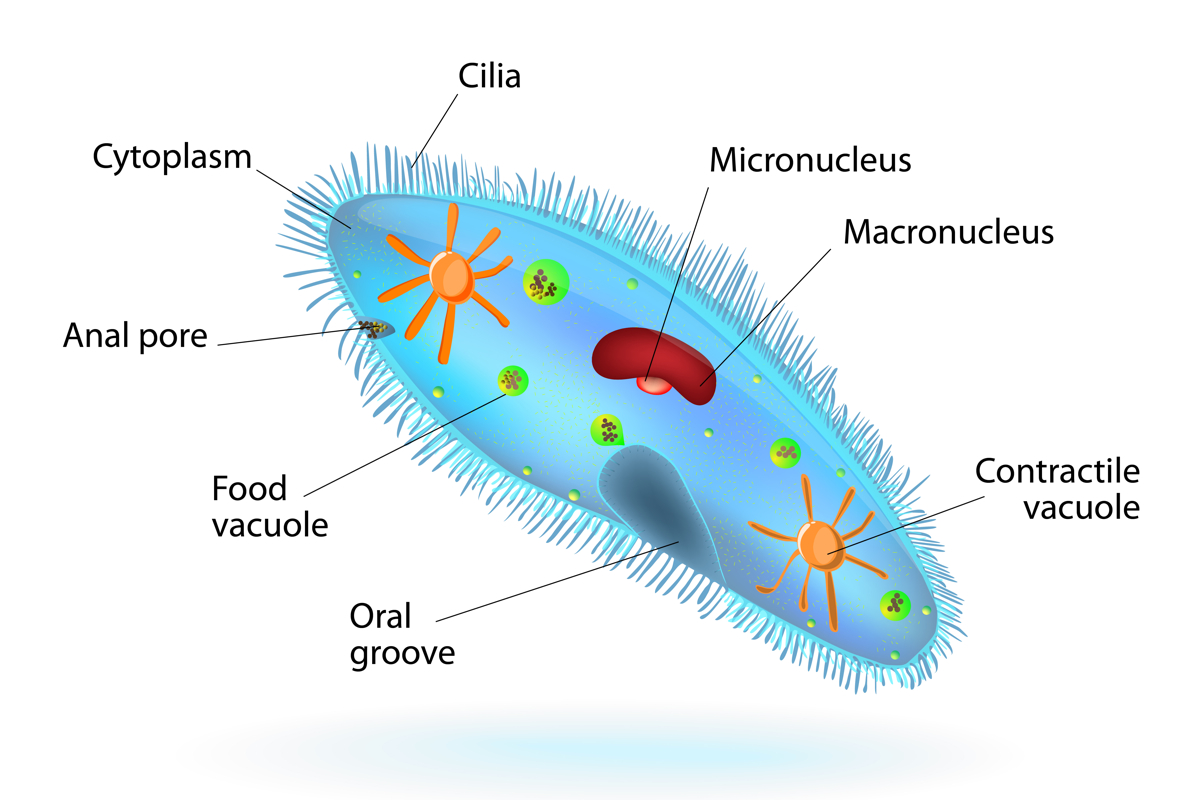
Cilia
Numerous short, hair-like projections cover the cell surface and beat rhythmically to move and take in food. They help the Paramecium move
Euglena
A unicellular protist capable of both autotrophy (photosynthesis) and heterotrophy. They move via Flagellum and have a Nucleus
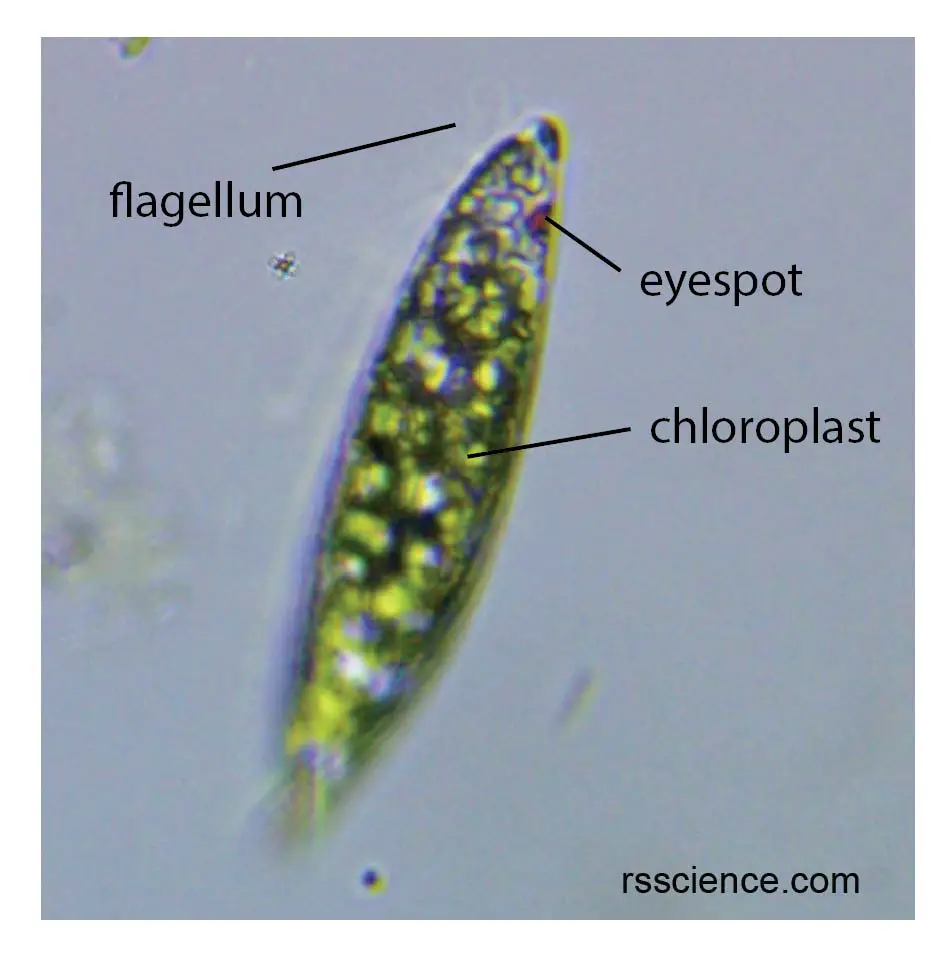
Flagellum
A long, whip-like appendage used to propel Euglena through liquid environments.
Eyespot (Stigma)
A colored photoreceptive structure that senses light direction and guides phototaxis toward light sources.
Spirogyra
A photosynthetic, filamentous green algae (colonial) easily recognized under a microscope.They cannot move, but they have a Nucleus

Pyrenoids
Small dense structures within chloroplasts involved in starch synthesis and storage.
Ribbon-like Spiral Chloroplasts
Distinctive green helical chloroplast bands extending along each cylindrical cell.
Plant Cells
Have cell wall and a cell membrane via cellulose, chloroplasts, and a central vacuole; usually rectangular/fixed shape, and do not have centrioles
Animal Cells
Lack cell wall, chloroplasts, and central vacuole, contain small lysosomes/centrioles, usually flexible/irregular shape, and only has a cell membrane
Fungal Cells
Have a cell wall and cell membrane made of chitin
Bacterial cells
Have a cell wall and membrane made of peptidoglycan