UGA CBIO 2200L Practical 1
 Call Kai
 Learn
Learn Practice Test
 Spaced Repetition
 Match
Match Flashcards
 Knowt Play
1/185

There's no tags or description
Looks like no tags are added yet.
Name | Mastery | Learn | Test | Matching | Spaced | Call with Kai | Chat |
|---|
No analytics yet
Send a link to your students to track their progress
186 Terms
Superior
Highest position or toward the head
Inferior
Lowest position or toward the feet
Medial
Toward the midline of the body
Lateral
Away from the midline of the body
Superficial
Closer to the surface of the body
Deep
Farther internal from the surface of the body
Anterior/ventral
Toward the front of the body
Posterior/dorsal
Toward the back of the body
Proximal
Closer to the point of attachment or trunk
Distal
Farther from the point of attachment or trunk
Ipsilateral
On the same side of the body
Contralateral
On the opposite side of the body
Frontal (coronal)
Divides body into anterior and posterior portions
Transverse (horizontal)
Divides body into superior and inferior portions
Midsagittal (median)
Divides body into equal right and left halves
Parasagittal
Divides body into unequal right and left portions
Oblique
Cuts diagonally between horizontal and vertical planes
Cranial
Encloses the brain within the skull
Vertebral
Encloses the spinal cord
Thoracic
Chest cavity housing heart and lungs

Pleural
Sub-cavity surrounding each individual lung
Pericardial
Sub-cavity surrounding the heart
Abdominal
Cavity containing digestive viscera
Pelvic
Cavity containing urinary bladder reproductive organs and rectum
Nucleus
Contains genetic material and controls cellular activities
Mitochondrion
Site of ATP production and cellular respiration
Ribosome
Site of protein synthesis
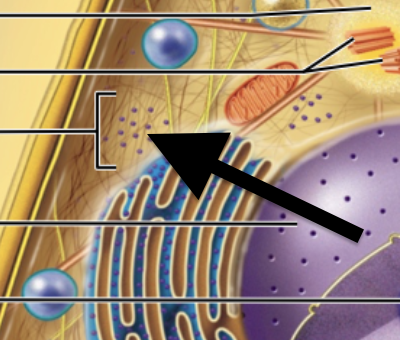
Rough ER
Network studded with ribosomes for protein modification
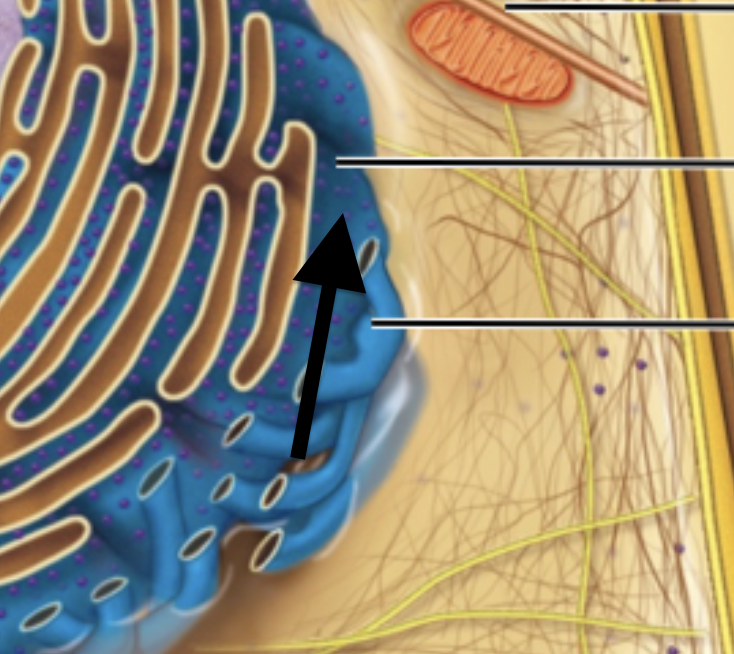
Smooth ER
Site of lipid synthesis and detoxification
Golgi complex
Modifies sorts and packages proteins and lipids

Lysosome
Contains digestive enzymes to break down waste
Peroxisome
Neutralizes toxic substances and breaks down fatty acids
Interphase
Phase of cell growth and DNA replication before division
Mitosis
Division of the nuclear material
Prophase
Chromatin condenses into visible chromosomes
Metaphase
Chromosomes line up along the equatorial plate
Anaphase
Sister chromatids separate and move to opposite poles
Telophase
Nuclear envelopes reform around separated chromosomes
Cytokinesis
Division of the cytoplasm into two daughter cells
Epithelial
Covers body surfaces and lines hollow organs and cavities
Connective
Protects supports and binds organs together
Muscle
Generates force and produces physical movement
Nervous
Excitable tissue that propagates electrochemical signals in the form of nerve impulses, enabling rapid communication between different regions of the body
Simple squamous
Single layer of flat scale-like cells

Simple cuboidal
Single layer of cube-shaped cells
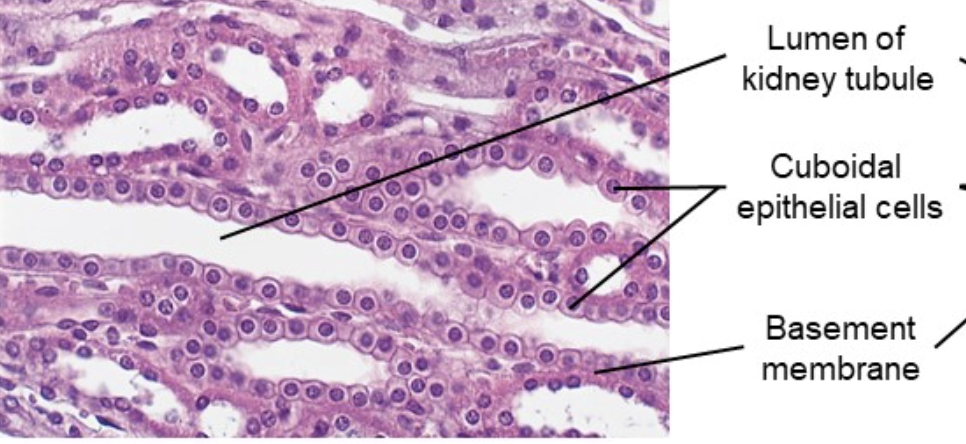
Simple columnar
Single layer of tall column-shaped cells
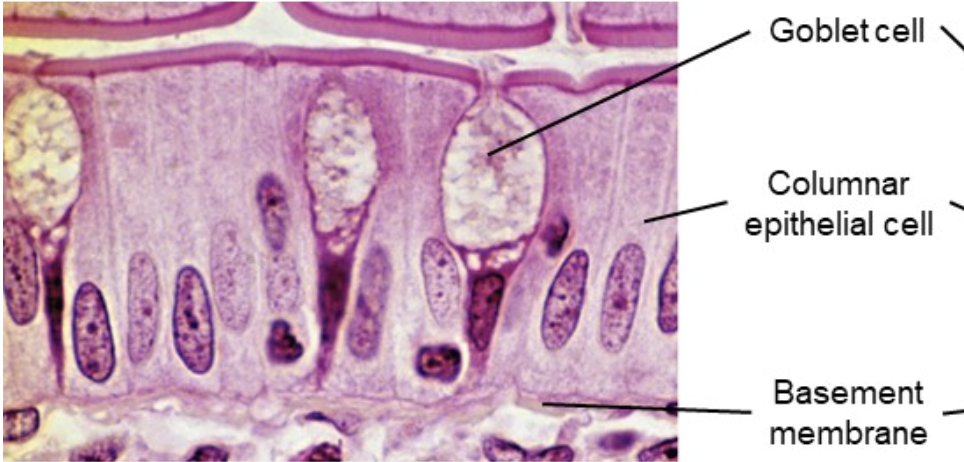
Pseudostratified columnar
Single layer appearing stratified due to nuclei at varying heights

Keratinized stratified squamous
Multiple layers with tough surface layer of dead keratin-filled cells
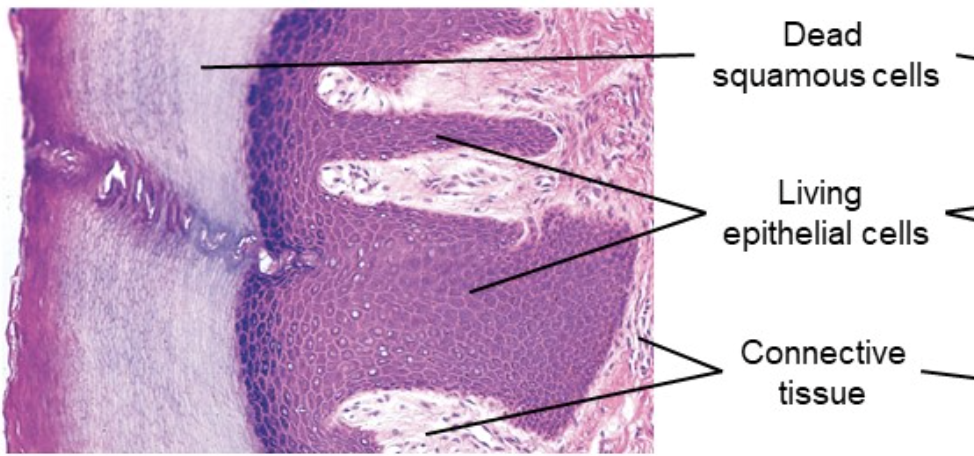
Non-keratinized stratified squamous
Multiple layers of moist flat cells lacking keratin surface layer

Stratified cuboidal
Two or more layers of cube-shaped cells

Transitional
Stratified tissue that stretches and changes shape in urinary structures

Dense regular
Parallel collagen bundles providing high tensile strength in one direction
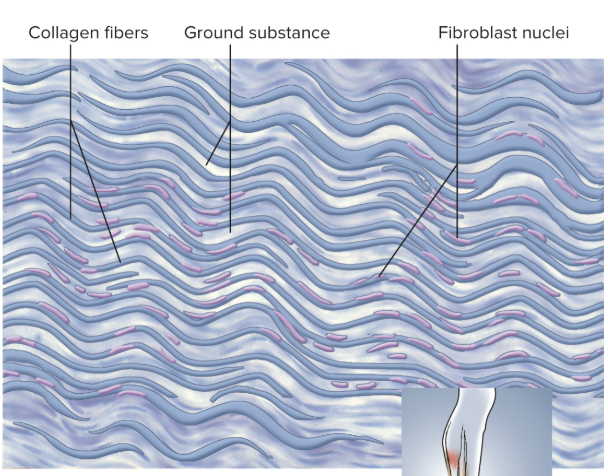
Dense irregular
Randomly arranged collagen fibers resisting multidirectional tension

Elastic
Rich in elastic fibers allowing recoil after stretching

Areolar
Gel-like matrix with loose fiber arrangement cushioning organs

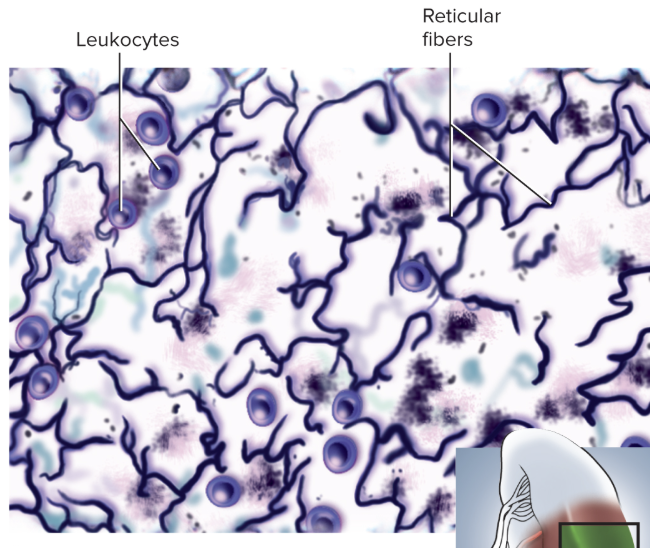
Reticular
Network of fibers forming supportive stroma for lymphatic organs
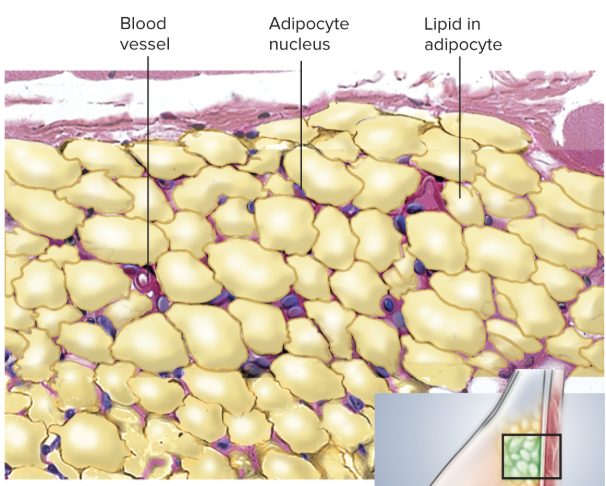
Adipose
Specialized for triglyceride storage and thermal insulation
Hyaline cartilage
Smooth matrix supporting respiratory structures and joint surfaces

Fibrocartilage
Tough matrix with thick collagen fibers resisting compression
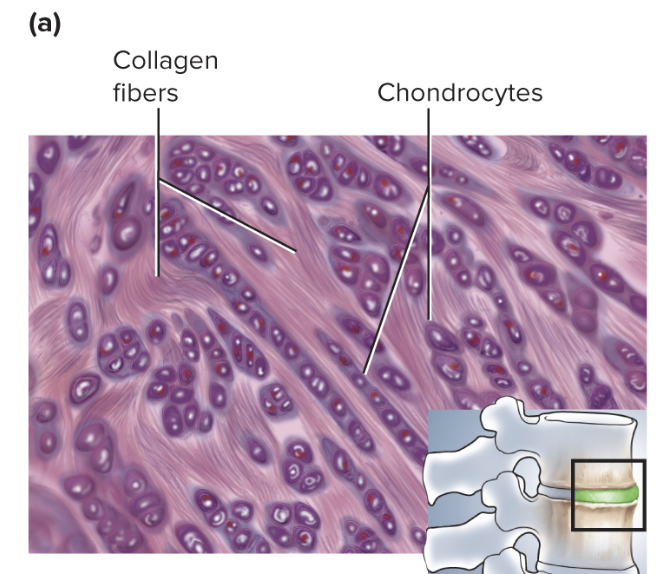
Elastic cartilage
Flexible matrix rich in elastic fibers maintaining structural shape

Bone
Hard calcified matrix supporting and protecting body structures
Blood
Liquid matrix containing formed elements like erythrocytes and leukocytes

Skeletal
Striated voluntary muscle attached to bones
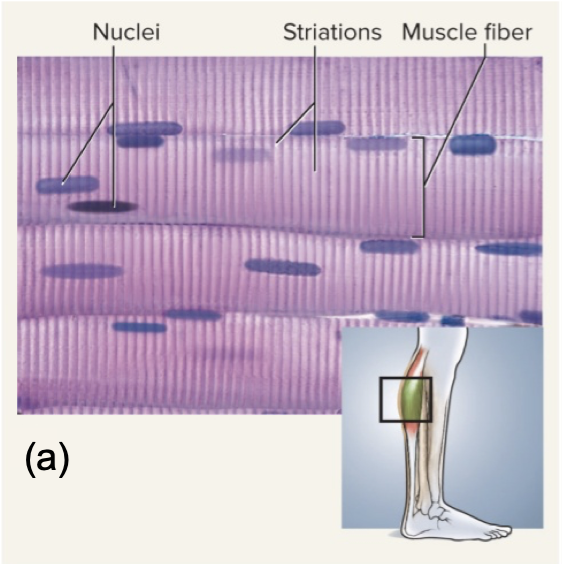
Cardiac
Striated involuntary muscle found exclusively in the heart wall

Smooth
Non-striated involuntary muscle lining walls of hollow organs

Skeletal muscle organ
Complete muscle unit surrounded by epimysium
Muscle fascicles
Bundle of muscle fibers wrapped by perimysium
Muscle fiber
Individual elongated muscle cell wrapped by endomysium
Deep fascia
Dense connective tissue layer binding functional muscle groups
Epimysium
Connective tissue sheath surrounding the entire muscle organ
Perimysium
Connective tissue sheath surrounding individual muscle fascicles
Endomysium
Delicate connective tissue layer surrounding individual muscle fibers
Fusiform
Thick in middle and tapered at both ends; biceps brachii
Parallel non-fusiform
Uniform width with fascicles running parallel to long axis; sartorius

Convergent
Broad origin fan-shaped down to a narrow insertion point; pectoralis major
Unipennate; extensor digitorum
Fascicles insert into one side of a single tendon
Bipennate; rectus femoris
Fascicles insert into two sides of a central tendon
Multipennate
Fascicles insert into multiple central branches of a tendon; deltoid
Circular
Rings of muscle surrounding orifices to act as sphincters; orbicularis oris
Nerves
Cable-like bundle of axons in the peripheral nervous system
Fascicle
Bundle of nerve fibers enclosed by perineurium
Nerve fiber
Axon surrounded by its neurolemmal sheath
Epineurium
Outer protective fibrous covering of a whole nerve
Perineurium
Connective tissue sleeve surrounding a nerve fascicle
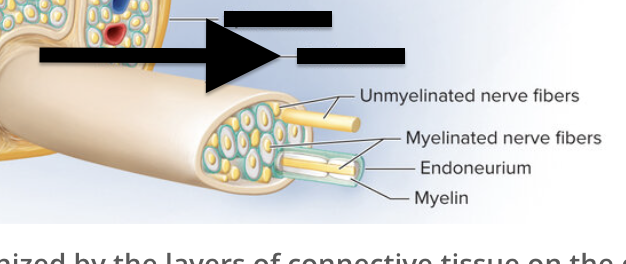
Endoneurium
Delicate inner layer wrapping individual nerve fibers
Cell body soma
Control center containing nucleus and organelles
Dendrites
Branching extension receiving incoming chemical signals
Axon
Long process conducting electrical impulses away from soma
Axon terminal
Specialized end structure releasing neurotransmitters into synapse
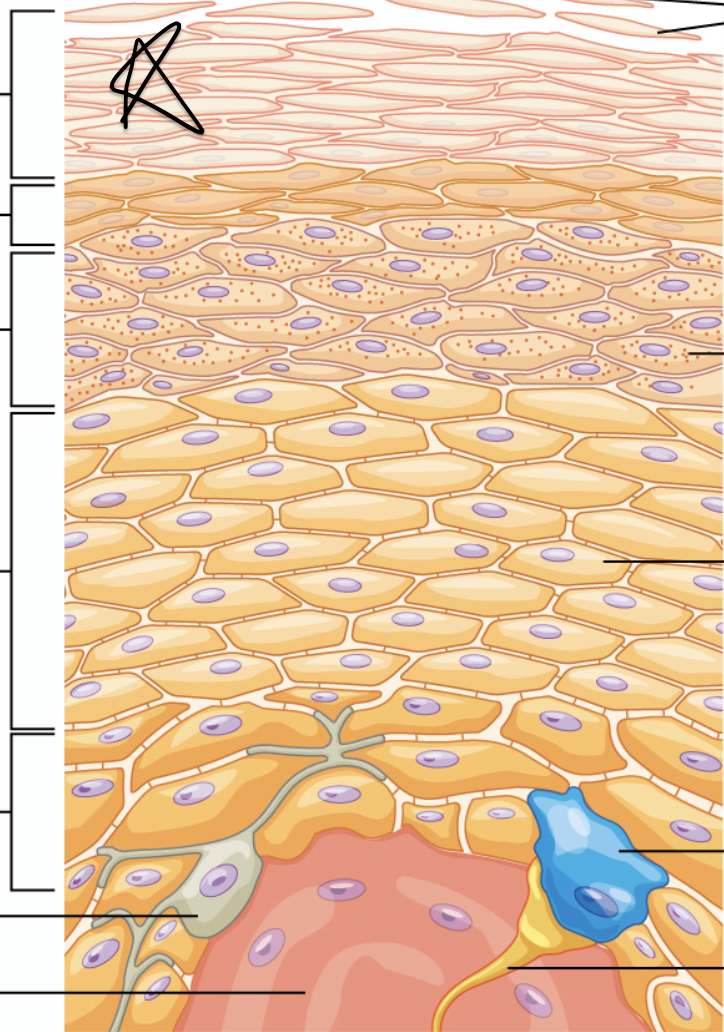
Epidermis
Outermost avascular epithelial layer of skin
Dermis
Vascular connective tissue layer beneath epidermis
Hypodermis
Subcutaneous layer consisting primarily of adipose and loose connective tissue
Stratum basale
Deepest single-cell layer of actively dividing basal cells

Stratum spinosum
Layer of spiny-looking keratinocytes joined by desmosomes
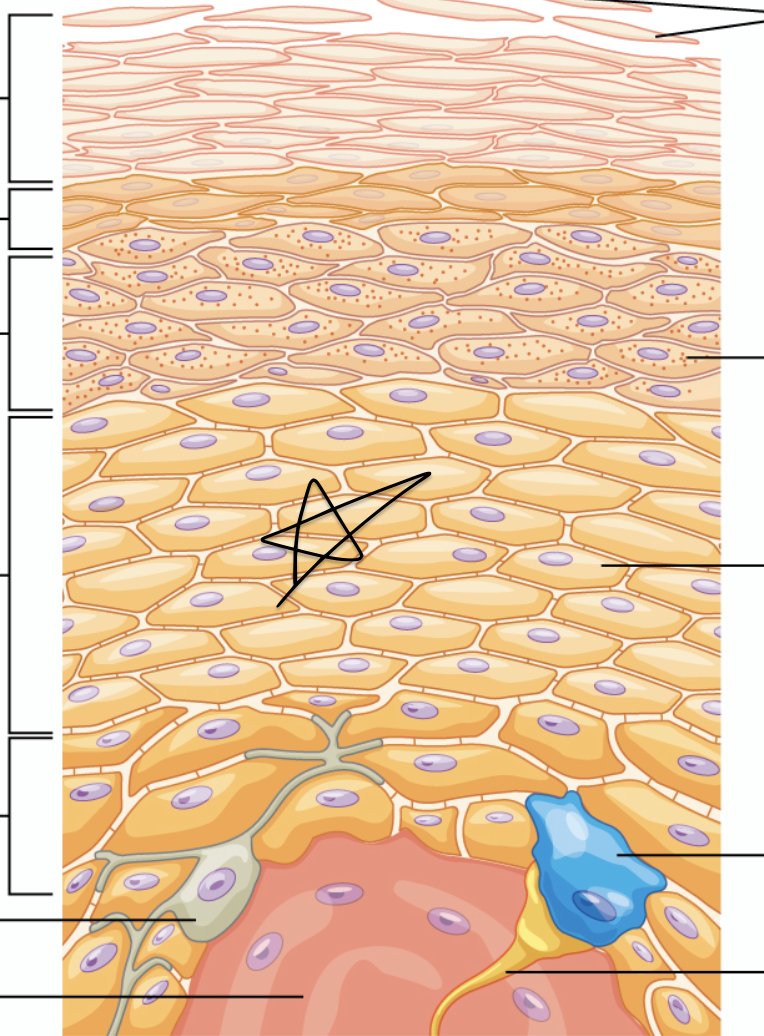
Stratum granulosum
Layer where keratinocytes accumulate protein granules and die

Stratum lucidum
Clear thin layer present only in thick skin

Stratum corneum
Outermost protective layer of dead keratinized squames
Papillary
Superficial dermal region composed of areolar connective tissue

Reticular
Deep dermal region composed of dense irregular connective tissue

Hair shaft
Portion of hair projecting above the skin surface