10 Identifying and Classifying Microorganisms
 Call Kai
 Learn
Learn Practice Test
 Spaced Repetition
 Match
Match Flashcards
 Knowt Play
1/17

There's no tags or description
Looks like no tags are added yet.
Name | Mastery | Learn | Test | Matching | Spaced | Call with Kai | Chat |
|---|
No analytics yet
Send a link to your students to track their progress
18 Terms
Taxonomy
Science of classifying organisms into taxa (groups)
Divided into groups based on phenotypic and genotypic relatedness
Identification
Process of characterizing in order to group
Classification
Arranging organisms into similar or related groups
Nomenclature
System of assigning names. Provides universal names for organisms
Taxonomic Hierarchies
[__]: classification categories arranged in hierarchical order.
From the most basic unit to the most complex:
Species » a group of closely related strains or individuals
(different definitions under different domains)
(Eukaryotes) group of organisms capable of producing fertile offspring
(Prokaryotes) group of closely related isolates or strains: genetic variant or subtype of a species
Genus » a collection of similar species
Family » a collection of similar genera. Suffix -aceae
Order » a collection of similar families. Suffix -ales
Class » a collection of similar orders. Suffix -ia
Phylum » “division.” A collection of similar classes. Sufffix -ota
Kingdom » a collection of similar phyla or divisions
Domain » 3 » Eukarya, Bacteria, Archaea
![<p><strong><mark data-color="purple" style="background-color: purple; color: inherit;">[__]</mark></strong>: <mark data-color="yellow" style="background-color: yellow; color: inherit;">classification categories arranged in hierarchical order.</mark></p><p></p><p><u>From the most </u><em><u>basic unit</u></em><u> to the most complex:</u></p><p><strong><em><mark data-color="purple" style="background-color: purple; color: inherit;">Species</mark> </em></strong>» a group of closely related strains or individuals</p><p>(different definitions under different domains)</p><p>(Eukaryotes) group of organisms capable of producing fertile offspring</p><p>(Prokaryotes) group of closely related isolates or <strong><mark data-color="blue" style="background-color: blue; color: inherit;">strains</mark></strong>: genetic variant or subtype of a species</p><p><strong><mark data-color="purple" style="background-color: purple; color: inherit;">Genus</mark></strong> » a collection of similar species</p><p><strong><mark data-color="purple" style="background-color: purple; color: inherit;">Family</mark></strong> » a collection of similar genera. Suffix <em>-aceae</em></p><p><strong><mark data-color="purple" style="background-color: purple; color: inherit;">Order</mark></strong> » a collection of similar families. Suffix <em>-ales</em></p><p><strong><mark data-color="purple" style="background-color: purple; color: inherit;">Class</mark></strong> » a collection of similar orders. Suffix <em>-ia</em></p><p><strong><mark data-color="purple" style="background-color: purple; color: inherit;">Phylum</mark></strong> » “division.” A collection of similar classes. Sufffix <em>-ota</em></p><p><strong><mark data-color="purple" style="background-color: purple; color: inherit;">Kingdom</mark></strong> » a collection of similar phyla or divisions</p><p><strong><mark data-color="purple" style="background-color: purple; color: inherit;">Domain</mark></strong> » 3 » Eukarya, Bacteria, Archaea</p><p></p>](https://assets.knowt.com/user-attachments/ce153078-09a9-4619-a458-b889e0d3204c.png)
Phylogeny
Evolutionary relatedness
A three-domain system based on rRNA sequence by Carl Woese et. al; how close they are show how related they are
Fun fact: Eukarya are more closely related with Archaea than Archaea are with Bacteria
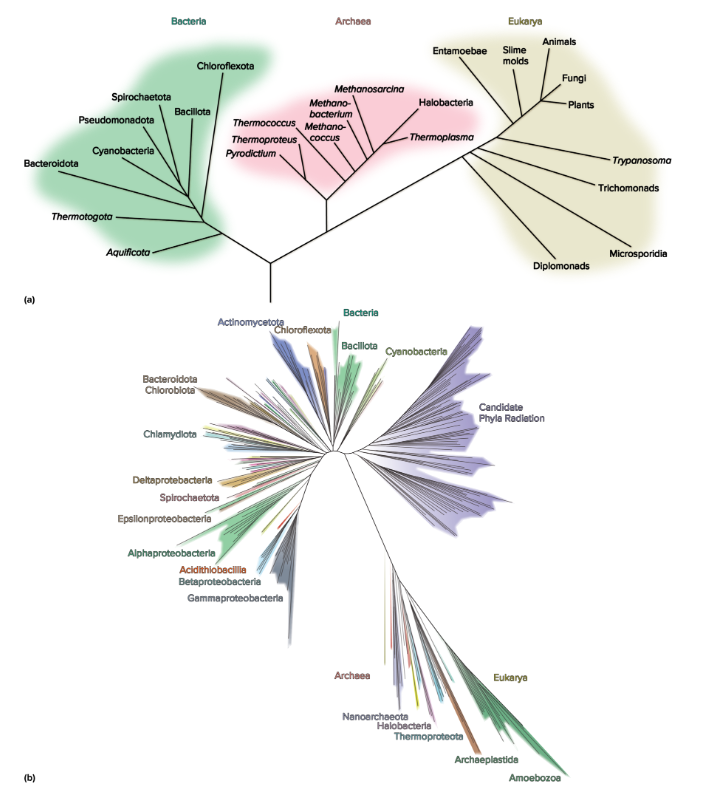
a. based on ribosomal RNA data
b. based on ribosomal protein sequence data
morphology
Classification was historically based on physiology (phenotype) and
[__]: size, shape, staining characteristics, and metabolic capabilities
Current techniques are more accurate with molecular techniques
comparison of molecular sequences of DNA, RNA, and protein
accurate construction of phylogenetic tree: tree that shows divergence and relationships of organisms
transfer mechanism of prokaryotes
horizontal and lateral transfer of DNA
![<p>Classification was historically based on physiology (phenotype) and</p><p><mark data-color="purple" style="background-color: purple; color: inherit;">[__]</mark>: <mark data-color="yellow" style="background-color: yellow; color: inherit;">size, shape, staining characteristics, and metabolic capabilities</mark></p><p></p><p></p><p><u><mark data-color="yellow" style="background-color: yellow; color: inherit;">Current techniques are more accurate with </mark></u><strong><u><mark data-color="yellow" style="background-color: yellow; color: inherit;">molecular techniques</mark></u></strong></p><ul><li><p>comparison of molecular sequences of DNA, RNA, and protein</p></li><li><p>accurate construction of<strong><mark data-color="purple" style="background-color: purple; color: inherit;"> phylogenetic tree</mark></strong>: <mark data-color="yellow" style="background-color: yellow; color: inherit;">tree that shows divergence and relationships of organisms</mark></p></li><li><p>transfer mechanism of prokaryotes</p><ul><li><p>horizontal and lateral transfer of DNA</p></li></ul></li></ul><p></p>](https://assets.knowt.com/user-attachments/f736b47c-3879-4688-9de2-d1b5b78a7de1.png)
microscopic morphology
Method used to identify microorganisms. Involve analysis of size, shape, and staining characteristics; looking at things under the microscope
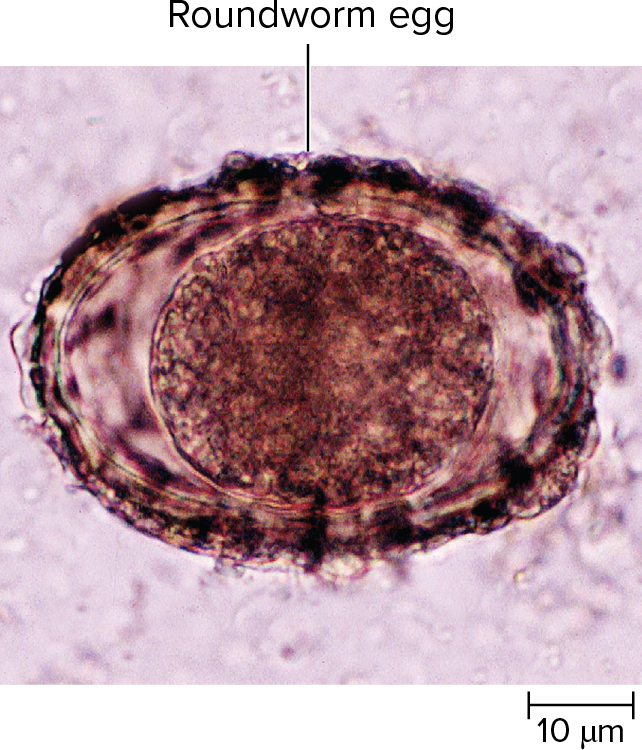
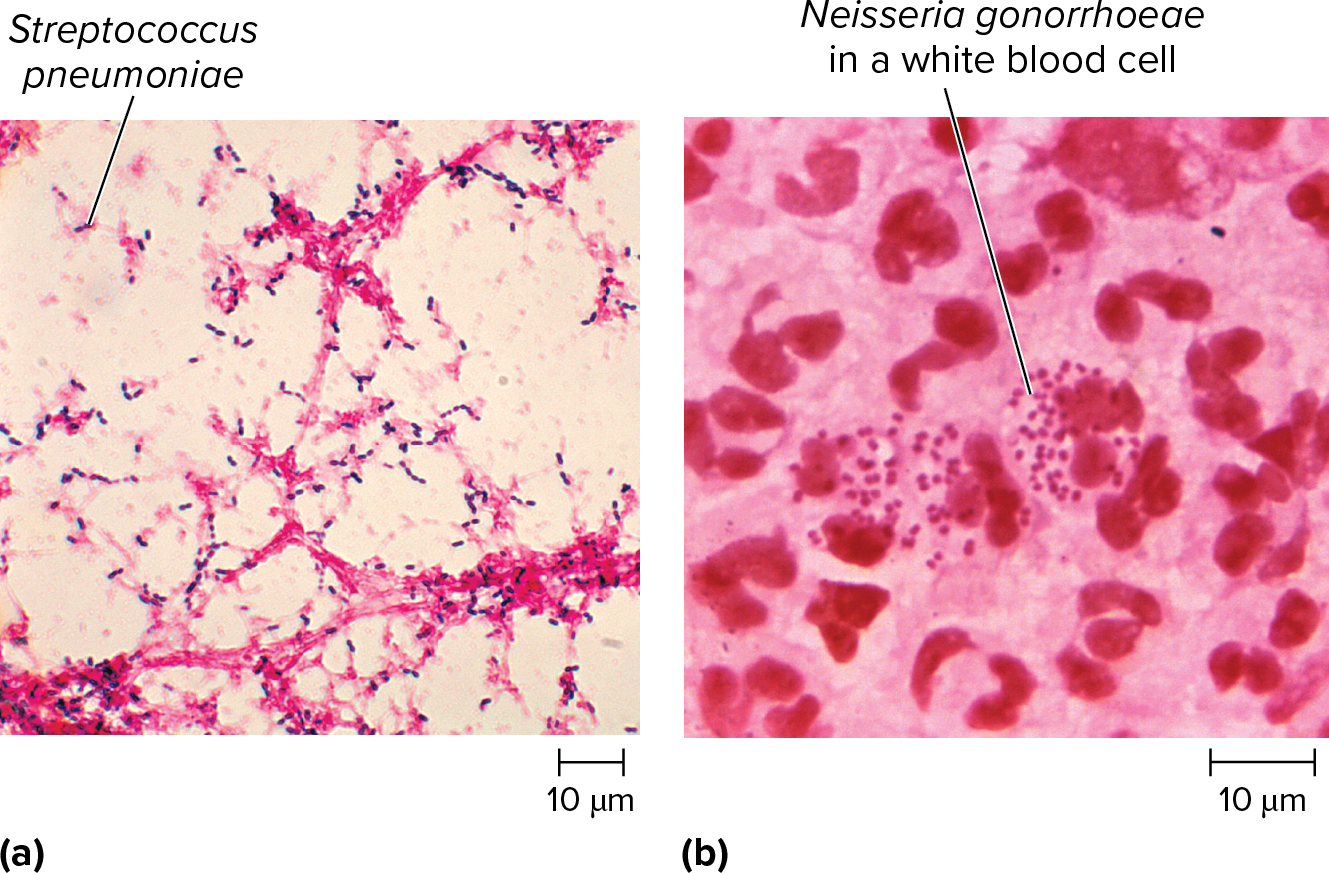
eg.
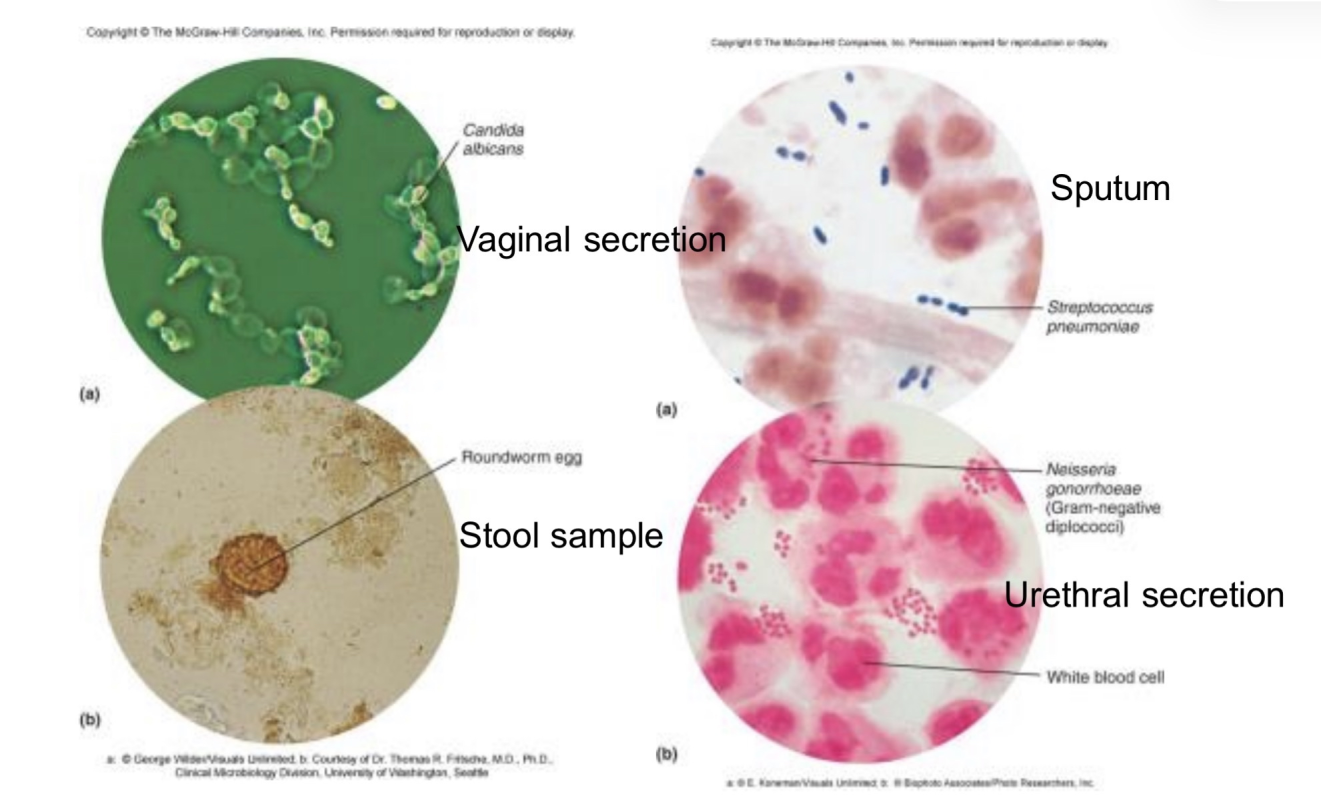
Gram stain: distinguishes between Gram-positive (purple) and Gram-negative bacteria (pink)
may provide sufficient information to start appropriate therapy
Special stains → useful providing additional info (acid-fast, endospore, capsule)
Can diagnose infections:
Culture Characteristics
Method used to identify microorganisms.
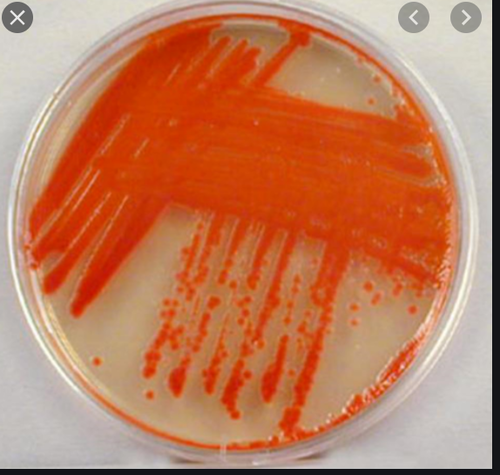
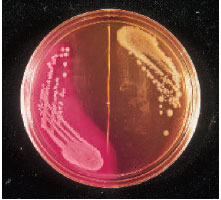
Growing bacteria/culturing them to see their colony morphology, or [__] → gives initial clues to the identity of an organism
Serratia marcescens has red pigment at 22C
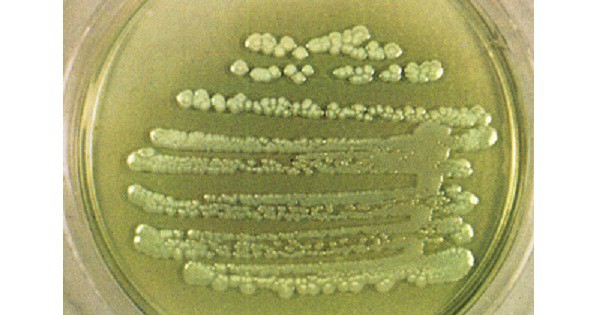
Pseudomonas aeruginosa produces green pigment and a distinct fruity odor
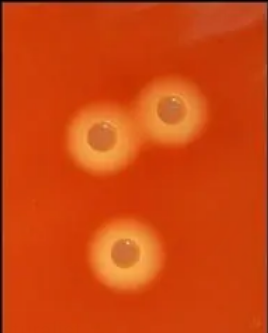
Differential media: culture media that contains a substance that can be changed by a specific bacteria, helps as well
Streptococcus pyogenes » strep throat. has beta-hemolytic colonies on blood agar
E.coli » urinary tract infection. ferments lactose, creating pink colonies on MacConkey agar
Metabolic capabilities
Method used to identify microorganisms.
A series of biochemical tests performed to identify the organism.
Identifies the presence of enzymes
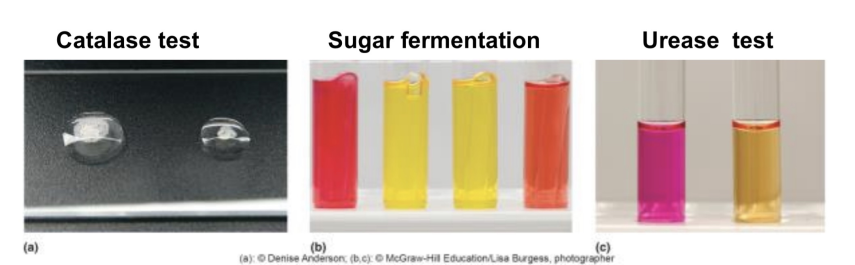
Catalase test: detect if organism produces catalase to protect against hydrogen peroxide
adding hydrogen peroxide and formation of O2 and water = catalase-positive
pH indicators
Sugar Fermentation: detects fermentation of sugar and lowers pH if so
yellow - positive
red - negative
orange - control / uninoculated
Urease Production: detects urease (enzyme that degrades urea to CO2 and ammonia)
pink = positive
yellow = control / un-inoculated
When commercialized, allow for rapid identification
can run series of test with single inoculation
standardized and uniform tests are easier for comparison
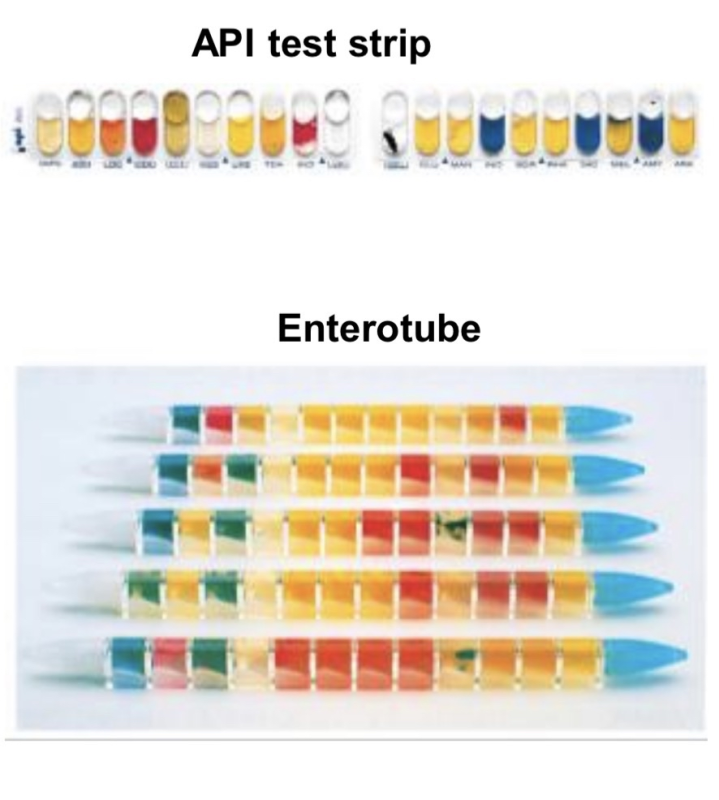
enterotube → each chamber has 1-2 tests. single needle can inoculate all of the chambers = multiple test results
Dichotomous key
Flowchart of tests with positive and negative results.
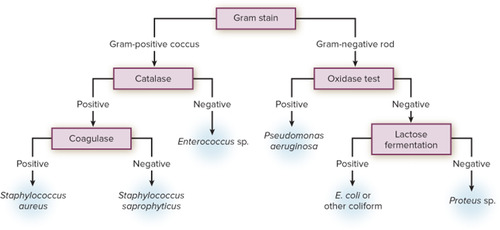
Used to identify bacteria by asking successive questions that relate to morphological or biochemical characteristics
Last question should differentiate between two species
Serology
Method used to identify microorganisms.
Uses antibodies to detect and identify antigens found on proteins and polysaccharides that make up a microorganism.
since specific antigens stimulate specific antibodies, it relies on that specific interaction to identify an organism
commercial antibodies available for specific bacteria → rapid detection of organism
eg. Streptococcus pyogenes - causative agent of strep throat
Serological typing
Uses antibodies to identify antigen differences among strains as distinguishing markers
eg. → E.coli O157:H7
E.coli distinguished by antigenic type of flagella (H antigen), capsules, and lipopolysaccharide (O antigen)
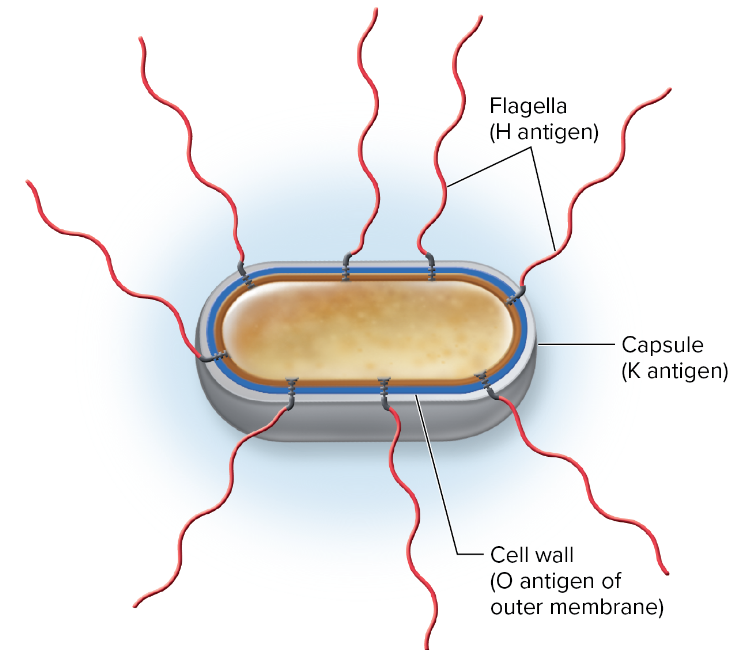
leads to groupings like serovar or serotype
Serovar: group of strains that have a characteristic antigenic structure that differs from other strains
Genotyping
Determines nucleotide sequences
identifies species or group based on unique sequences
identifies organisms that cannot be grown in culture
Sequencing RNA Genes
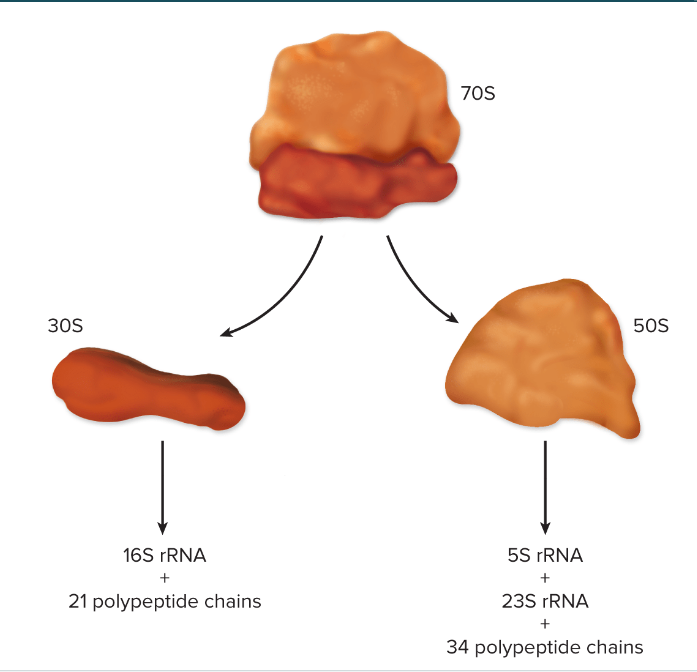
The amplification and sequencing of 16S (prokaryotes) / 18S (eukaryotes) rRNA
This is due to the little genetic variation in rRNA (highly preserved)
→ can compare sequence to database to show the nearest relative and what organism it is
→ can identify organisms that cannot be grown in culture
Nucleic acid amplification tests
also known as NAATs, they amplify specific sequences for detection and or identification of
small numbers of organisms (eg. organisms in body fluids, soil, food, water)
organisms that grow slowly
→ eg. Mycobacterium tuberculosis
» much faster (3-4h vs. 6 weeks for cultures)
organisms that cannot be cultured
Polymerase chain reaction (PCR) is a common technique
Molecular Typing
Uses differences in DNA sequences to distinguish phenotypically identical strains
Used to trace epidemics and outbreaks
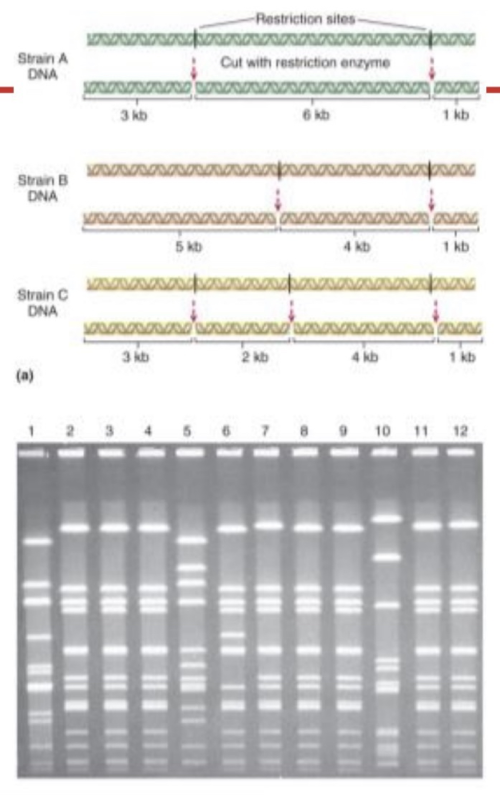
eg. DNA fingerprinting
cut all DNA samples with the same restriction enzyme
separate via gel electrophoresis » bands migrate according to size
use restriction fragment length polymorphisms (RFLPs): method that compares patterns of DNA fragment sizes, to identify
different RFLPs = different strains
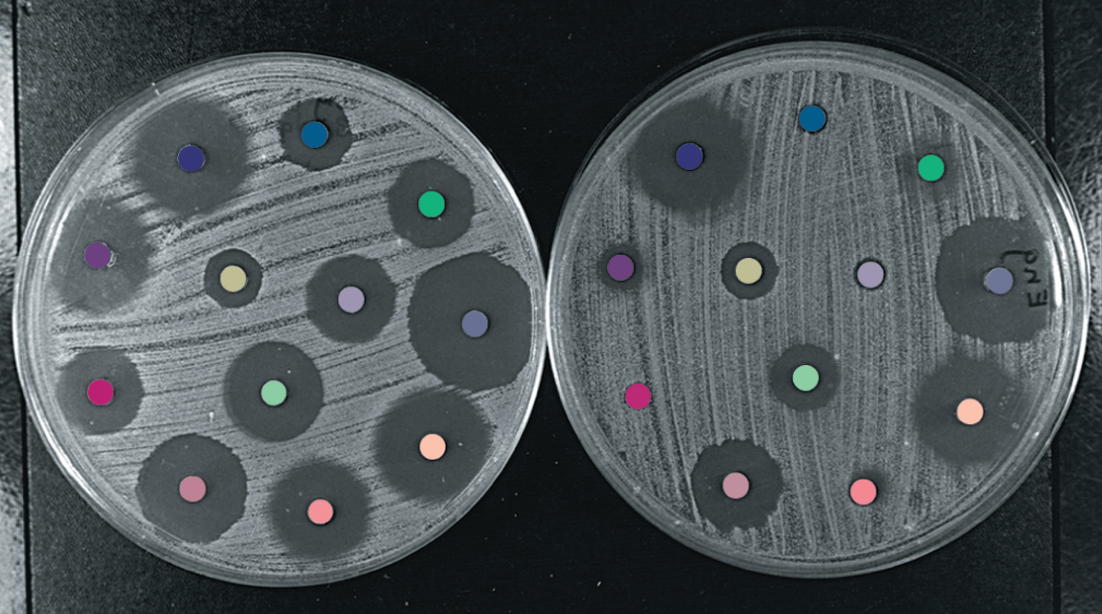
Antibiograms
Identifies organisms based on antibiotic susceptibility patterns; used to distinguish between different bacterial stains
disc impregnated with antimicrobials placed on inoculated plate
zone of inhibition → area that clears. we look at this for susceptibility patterns
large area tells microbial susceptibility » lack of ability to resist microbial infections/disposition to disease
different strains = different susceptibility patterns