Biomechanics
 Call Kai
 Learn
Learn Practice Test
 Spaced Repetition
 Match
Match Flashcards
 Knowt Play
1/67

There's no tags or description
Looks like no tags are added yet.
Name | Mastery | Learn | Test | Matching | Spaced | Call with Kai | Chat |
|---|
No analytics yet
Send a link to your students to track their progress
68 Terms
Biomechanics definition
The study of motion and the effects of forces relative to the body.
Motion definition
Movement that occurs when an object has changed position in space and time due to the application of forces.
Internal force definition + example
Structures of the body that interact to produce movement, e.g. muscle contraction forces.
External force definition + examples
A result of the interaction between the body and the environment, including contact and non-contact forces, e.g. gravity, friction.
Linear motion definition + example
Where movement is along a straight or curved line, there is no rotation, and all body parts move in the same direction at the same speed, e.g. gliding on ice skates.
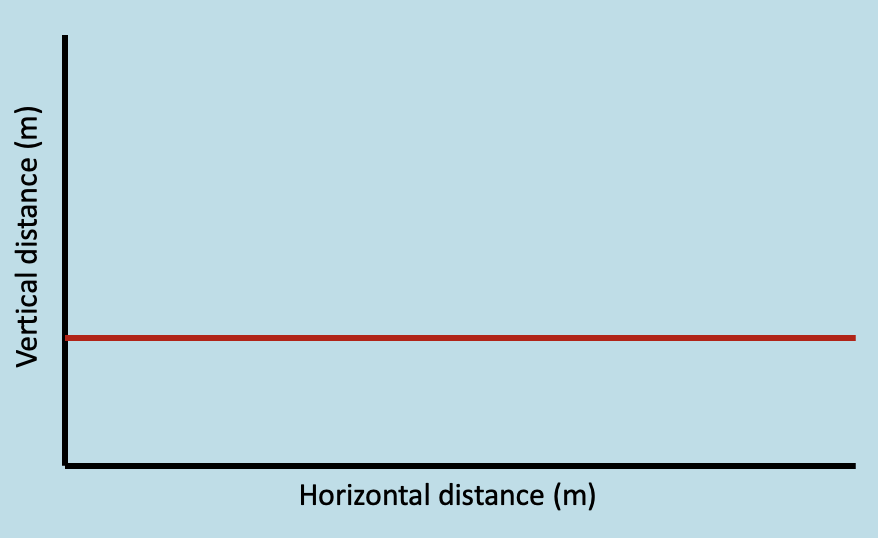
Rectilinear motion definition + example
Movement which is linear and occurs through a straight line, e.g. chest pass.
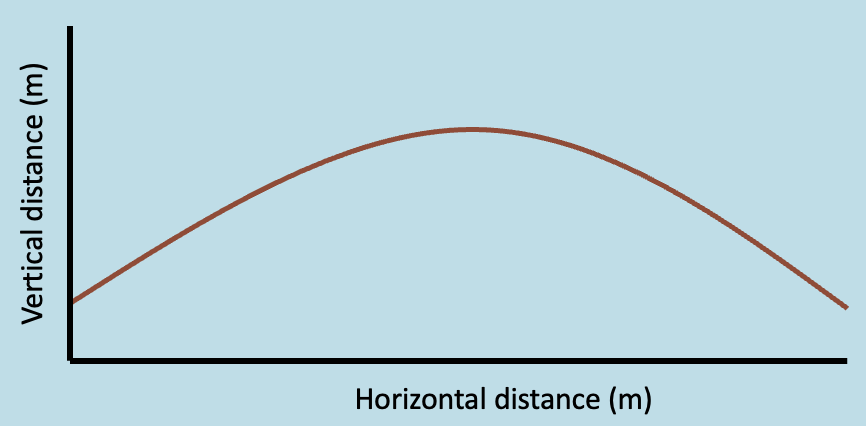
Curvilinear motion definition + example
Movement which is linear and occurs through a curved trajectory, e.g. netball shot.
Angular motion definition and example
Movement in which all parts of the body move through a rotational pathway, through the same angle, in the same direction, and at the same time, e.g. giant circle on the bar.
General motion definition + example
Movement that combines both linear and angular motion, e.g. cyclist moving in a straight line due to rotation of legs.
Distance definition
How far an object/person has travelled from start position to end position, regardless of direction.
Displacement definition
The overall change in position of a person/object, measured in magnitude and direction.
Speed definition
A measure of the distance an object travels per unit of time.
Velocity definition + how it is calculated
A measure of an object’s speed in a given direction (total displacement / total time)
Acceleration definition
The rate at which the velocity of a body changes with respect to time.
Angular displacement definition
The difference in the angles between the start and end position of the body.
Angular distance definition
The sum of all angles as a body moves from its start position to its end position.
Projectile definition
An object propelled into the air or water, affected only by the forces of gravity and air resistance.
Gravity definition + example
The force of attraction which pulls objects towards each other, e.g. projectiles back down to the ground.
Angle of release definition
The specific angle at which a projectile is propelled into the air, measured relative to the positive horizontal axis.
Height of release definition
The vertical distance from the ground to the point from which a projectile is propelled into the air.
Speed of release definition
The exact velocity at which a projectile is launched
3 benefits of biomechanics
Technique efficiency, injury reduction, development of equipment to improve performance.
What are the 3 types of motion?
Linear, angular and general.
What are the 3 axes of rotation around which angular motion can take place?
Medial - navel to lower back
Longitudinal/Sagittal - head to toe vertically
Horizontal - hip to hip
What is an example of rotation around the medial axis?
Cartwheel
What is an example of rotation around the longitudinal/sagittal axis?
Ice skater spinning
What is an example of rotation around the horizontal axis?
Somersault.
How to calculate velocity
displacement / time
How to calculate acceleration
(Final velocity - initial velocity) / time
When are speed and velocity equal?
When movement occurs in a straight line and in the same direction.
What is uniform acceleration?
When a body accelerates at a constant rate in both magnitude and direction, e.g. dropping a tennis ball.
How do athletes maximise angular velocity?
Maximising angular displacement by maximising the length of the lever, while minimising time taken.
What is average velocity?
How fast an object changes its position in a specific direction over a period of time.
What is positive acceleration?
When velocity is increasing - speeding up in a positive direction or slowing down in a negative direction.
What is negative acceleration?
When velocity is decreasing - slowing down in a positive direction or speeding up in a negative direction.
Give an example of positive, negative and zero acceleration.
Positive - start of a 100m sprint
Negative - dropping backwards to lead in netball
Zero - running a marathon
What is projectile motion?
The movement of an object thrown or projected into the air/water, subject only to gravity and air resistance.
What is trajectory?
The path of a projectile, influenced by 2 components - vertical and horizontal.
What is the vertical component of projectile motion?
The vertical velocity change due to the acceleration caused by gravity.
How does gravity affect the vertical component of projectile motion?
It causes the vertical acceleration of a projectile, making it follow a curved path. Without it, a projectile would continue in a straight line.
3 sporting examples of maximising the vertical component of trajectories?
Pole vault, high jump, trampolining.
What is the horizontal component of projectile motion?
The horizontal velocity change of a projectile due to the effects of air resistance.
What is air resistance?
The force acting on an object that is moving through the air flowing in the opposite direction.
How does air resistance affect the horizontal component of projectile motion?
It creates friction between the projectile and the air molecules, reducing its horizontal velocity over time.
3 Sporting situations where air resistance negatively affects the horizontal distance covered by a projectile?
Shotput, baseball, javelin.
2 Sporting situations where air resistance positively affects the horizontal distance covered by a projectile?
Frisbee, ski jumping.
How does the shape of a projectile affect its vertical and horizontal trajectories?
Stream-lined shapes increase horizontal distance by reducing drag
Asymmetrical shapes increase vertical height by generating lift
Blunt/spherical shapes compress both trajectories.
How does the spin of a projectile affect its vertical and horizontal trajectories?
Backspin elongates both axes bc the top of the projectile moves in the same direction as the air, generating lift.
Topspin does the opposite.
Sidespin causes lateral forces, curving or deviating the horizontal trajectory.
What is optimal projection?
The ideal combination of release variables which maximise a specific outcome.
What are the 3 types of trajectory, and 3 sporting examples of each?
High - high jump, pole vault, trampolining
Parabolic - javelin, basketball, shotput
Flat - long jump, golf, ice hockey slap shot.
What 3 factors determine the path of a projectile?
Speed, angle and height of release.
Which is the most critical factor when maximising distance and why?
Velocity of release because it can have the greatest impact on the distance covered by the projectile.
What does angle of release determine (when all other factors are constant)?
The trajectory shape, the time the object stays in the air, and the horizontal distance it moves.
What are the 3 effects of an angle of release greater than 45 degrees?
Shorter horizontal distance, greater vertical distance, longer flight time
What are the 3 effects of an angle of release less than 45 degrees?
Shorter horizontal distance, shorter vertical distance, shorter flight time.
What is the optimum angle of release when the height of release is the same as the height of landing? (give a sporting example)
45 degrees, e.g. kicking a soccer ball from the ground
What is the optimum angle of release when height of release is greater than height of landing (give sporting examples)
<45 degrees, e.g. shot put, javelin, discus
What is the optimum angle of release when height of release is less than height of landing (give a sporting example)
>45 degrees, e.g. hitting a golf ball onto an elevated green.
Balance definition
An even distribution of weight enabling someone or something to maintain a steady position.
Stability definition
A body’s resistance to movement from a balanced position.
Equilibrium definition
A state in which there is a balance of forces or influences in opposition to each other acting on a person or object.
Static balance definition + example
The ability to control body position while stationary, e.g. a gymnast holding a handstand.
Dynamic balance definition
The ability to control the body while in motion, e.g. cycling/sprinting.
Centre of gravity definition
The central point of an object, about which all of a body’s weight is evenly distributed and balanced.
Base of support definition
The area that is bounded by body parts in contact with a surface.
Height of centre of gravity definition
How high the centre of gravity is above the base of support.
Line of centre of gravity definition
An imaginary vertical line passing down through the centre of gravity to the ground or surface the person is on.
Ways in which stability can be increased
Increase the area of the base of support, lower the centre of gravity, align centre of gravity with base of support.