Terrestrial Biomes

0.0(0)
Studied by 6 people
call kaiCall Kai
Locked
learnLearn
examPractice Test
spaced repetitionSpaced Repetition
heart puzzleMatch
flashcardsFlashcards
GameKnowt Play
Card Sorting

1/19

flashcard set

Earn XP

Description and Tags

Half of this set includes the climate charts while the other half are biome descriptions; answer with terms

Last updated 12:19 AM on 9/2/26
Name
Mastery
Learn
Test
Matching
Spaced
Call with Kai
Chat

No analytics yet

Send a link to your students to track their progress

20 Terms

1
New cards

tropical rainforest

what biome does this climate chart represent?

<p>what biome does this climate chart represent?</p>
2
New cards

tropical dry forest

what biome does this climate chart represent?
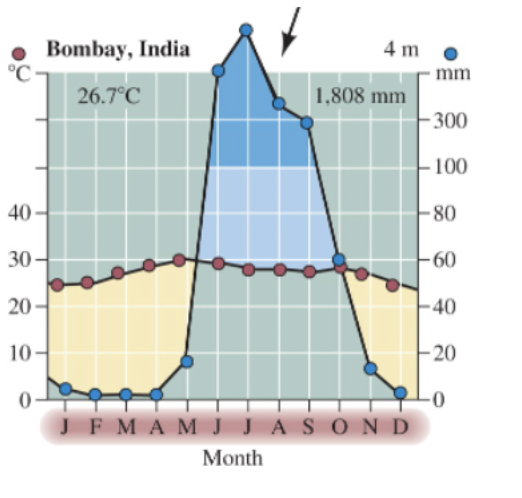
<p>what biome does this climate chart represent?</p>
3
New cards

Tropical Seasonal Forest/Savanna

what biome does this climate chart represent?
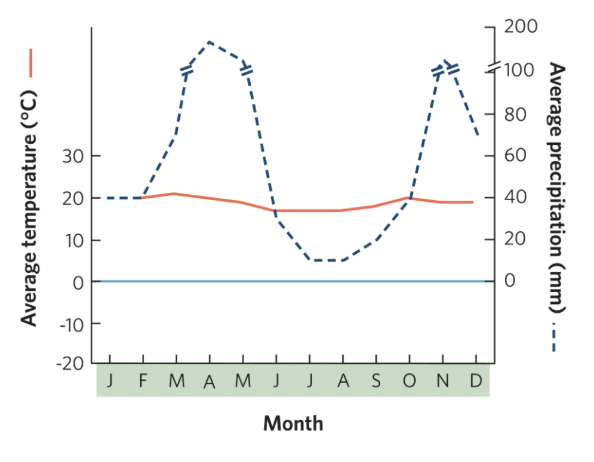
<p>what biome does this climate chart represent?</p>
4
New cards

subtropical desert

what biome does this climate chart represent?
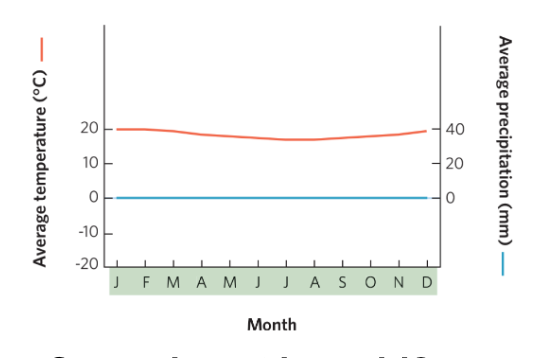
<p>what biome does this climate chart represent?</p>
5
New cards

cold desert

what biome does this climate chart represent?

<p>what biome does this climate chart represent?</p>
6
New cards

Mediterranean Woodland, Shrubland, Chaparral

what biome does this climate chart represent?
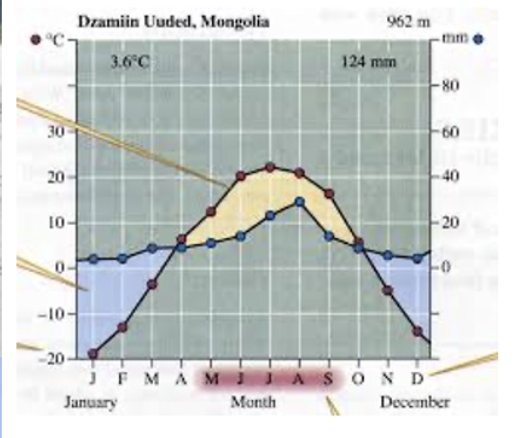
<p>what biome does this climate chart represent?</p>
7
New cards

temperate grasslands

what biome does this climate chart represent?
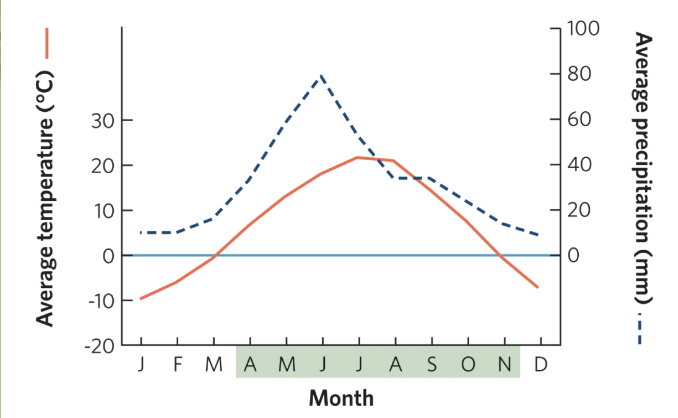
<p>what biome does this climate chart represent?</p>
8
New cards

temperate forest

what biome does this climate chart represent?

<p>what biome does this climate chart represent?</p>
9
New cards

Boreal forest or taiga

what biome does this climate chart represent?
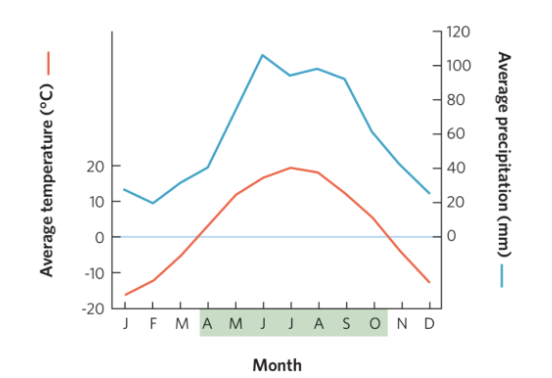
<p>what biome does this climate chart represent?</p>
10
New cards

tundra

what biome does this climate chart represent?
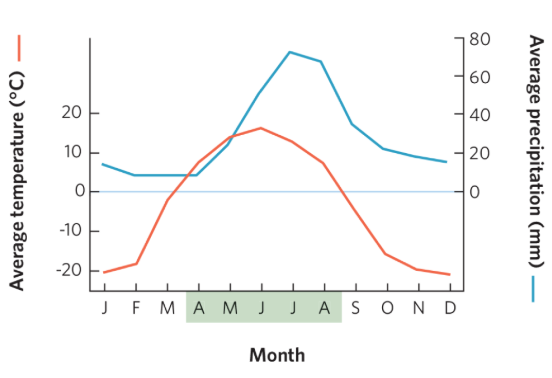
<p>what biome does this climate chart represent?</p>
11
New cards

tropical rainforest

what biome is this based off the description?

  • vertically layered (creates different layers of nutrients); competition for light is intense

  • animal diversity is high compared to the other terrestrial biomes

  • equatorial with little fluctuation in temperature (helps maintain diversity)

  • rapid nutrient cycling (causes poor soil with very low nutrients)
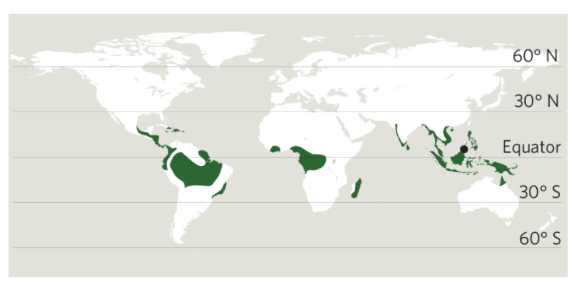

<p>what biome is this based off the description?</p><ul><li><p>vertically layered (creates different layers of nutrients); competition for light is intense</p></li><li><p>animal diversity is high compared to the other terrestrial biomes</p></li><li><p>equatorial with little fluctuation in temperature (helps maintain diversity)</p></li><li><p>rapid nutrient cycling (causes poor soil with very low nutrients) </p></li></ul><p></p>
12
New cards

tropical dry forest

what biome is this based off the description?

  • equatorial(-ish) with constant temperatures

  • strong wet season (monsoon) and dry seasons

  • huge fluctuation in precipitation

  • leaves are small and deciduous

  • soil is generally richer than wet forests with slower nutrient cycling (lower diversity allows more accumulation of nutrients in the soil)


<p>what biome is this based off the description?</p><ul><li><p>equatorial(-ish) with constant temperatures </p></li><li><p>strong wet season (monsoon) and dry seasons </p></li><li><p>huge fluctuation in precipitation</p></li><li><p>leaves are small and deciduous</p></li><li><p>soil is generally richer than wet forests with slower nutrient cycling (lower diversity allows more accumulation of nutrients in the soil)</p></li></ul><p></p>
13
New cards

tropical seasonal forests/savanna

what biome is this based off the description?

  • seasonal climate where drought is common

  • consistent temperature (averaging around 24-29ºC)

  • grasses, sedges, other herbs;

  • occasional trees (soil has low water permeability—eh soil nutrients); often diciduous s and less than 20m tall

  • vegetation is drought, fire, and grazing tolerant

  • often adjacent to tropical rainforests


<p>what biome is this based off the description?</p><ul><li><p>seasonal climate where drought is common</p></li><li><p>consistent temperature (averaging around 24-29ºC)</p></li><li><p>grasses, sedges, other herbs;</p></li><li><p>occasional trees (soil has low water permeability—<em>eh</em> soil nutrients); often diciduous s and less than 20m tall</p></li><li><p>vegetation is drought, fire, and grazing tolerant</p></li><li><p>often adjacent to tropical rainforests</p></li></ul><p></p>
14
New cards

subtropical desert

what biome is this based off the description?

  • precipitation is low and highly variable (<30cm per year); water loss exceeds how much water accumulates

  • temperature varies seasonally but typically consistently warm during the day and cold at night

  • soil devoid of organic matter due to low nutrients

  • diversity in plants: cacti, succulents, shrubs
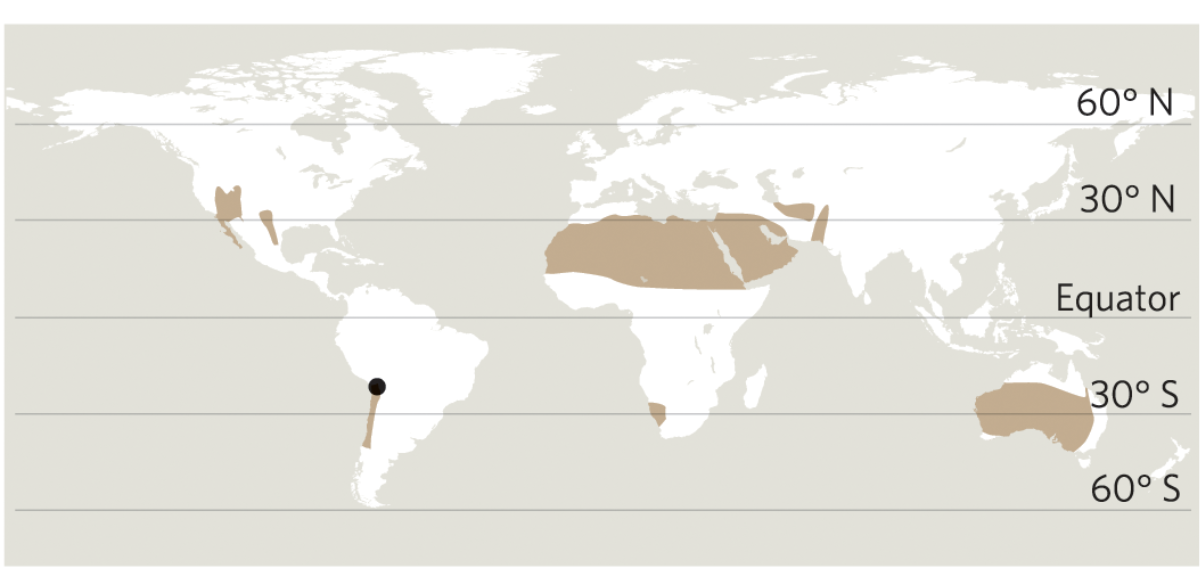

<p>what biome is this based off the description?</p><ul><li><p>precipitation is low and highly variable (&lt;30cm per year); water loss exceeds how much water accumulates</p></li><li><p>temperature varies seasonally but typically consistently warm during the day and cold at night</p></li><li><p>soil devoid of organic matter due to low nutrients </p></li><li><p>diversity in plants: cacti, succulents, shrubs</p></li></ul><p></p>
15
New cards

cold desert

what biome is this based off the description?

  • while there is signifiant precipitation, most of it is not accessible to animals due to is being snow

  • grasses, shrubs, diverse animals

  • characterized by cold winters with high snowfall throughout the winter and short, moist, and moderately warm summers

  • occur in mid-latitudes (20-30º N or S)

  • example: mongolia


16
New cards

Mediterranean woodland, shrubland, chaparral

what biome is this based off the description?

  • hot, dry summers and mild wet winters

  • prone to torrential rain and hot fires; moderate temperatures

  • shrubs, small trees (grow low), and grasses—adapted to fires

  • soil is hydrophobic due to the waxy resin from plants after they burn (creates run-off)

  • unstable slopes (not flat terrain) causes mud and landslides (“debris flow”)
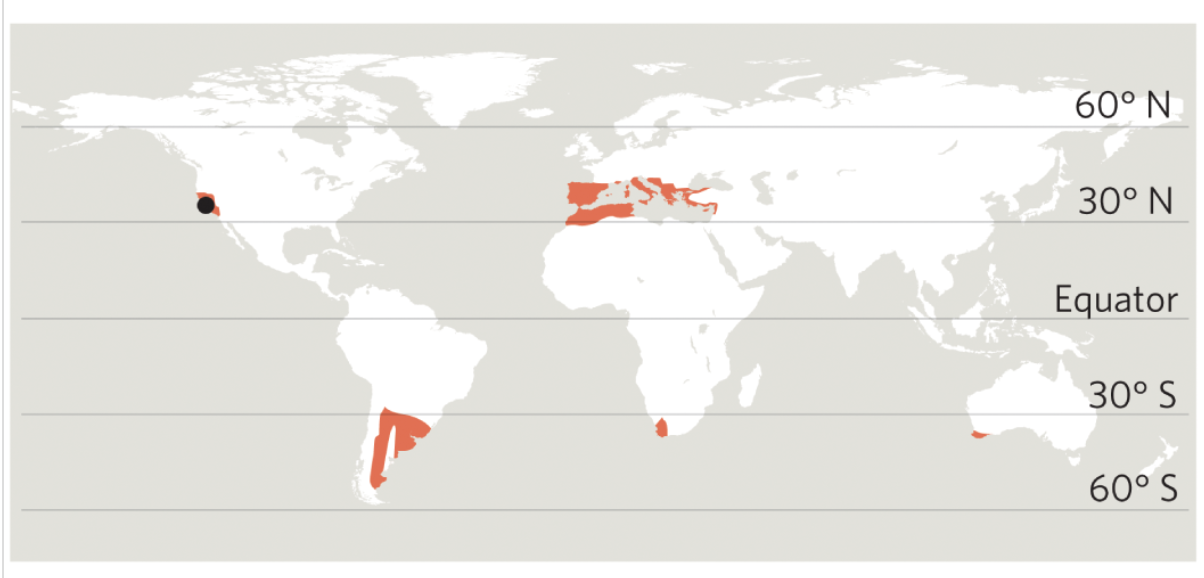

<p>what biome is this based off the description?</p><ul><li><p>hot, dry summers and mild wet winters </p></li><li><p>prone to torrential rain and hot fires; moderate temperatures </p></li><li><p>shrubs, small trees (grow low), and grasses—adapted to fires </p></li><li><p>soil is hydrophobic due to the waxy resin from plants after they burn (creates run-off) </p></li><li><p>unstable slopes (not flat terrain) causes mud and landslides (“debris flow”)</p></li></ul><p></p>
17
New cards

temperate grasslands

what biome is this based off the description?

  • temperature and precipitation is highly seasonal; precipitation mostly occurs in spring

  • summers are hot and dry

  • plants are adapted to droughts, fire, and grazing

  • few trees

  • soil is rich in organic material and nutrients
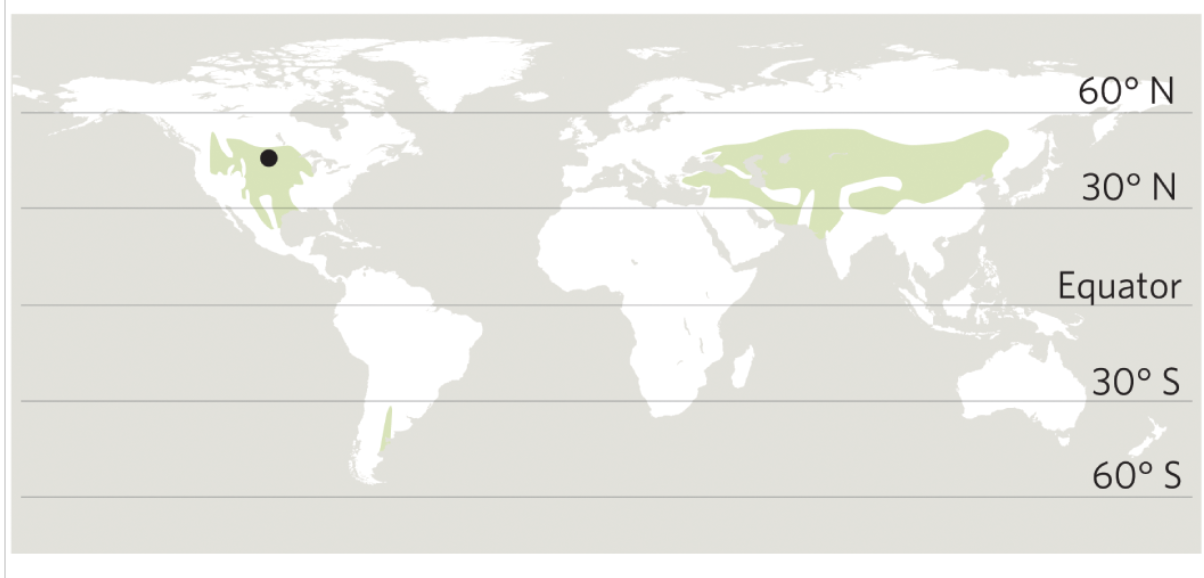

<p>what biome is this based off the description?</p><ul><li><p>temperature and precipitation is highly seasonal; precipitation mostly occurs in spring </p></li><li><p>summers are hot and dry</p></li><li><p>plants are adapted to droughts, fire, and grazing</p></li><li><p>few trees </p></li><li><p>soil is rich in organic material and nutrients </p></li></ul><p></p>
18
New cards

temperate forests

what biome is this based off the description?

  • precipitation is year round (droughts occur randomly, but not significant enough to be considered the normal climate)

  • winters are 0ºC; summers are hot and humid

  • animals have adapted to fluctuating temperatures (hibernation or migration)

  • in the Northern Hemisphere, the dominant plants are deciduous; in Australia, they are evergreen

  • a lot of nutrients in the soil (high diversity)
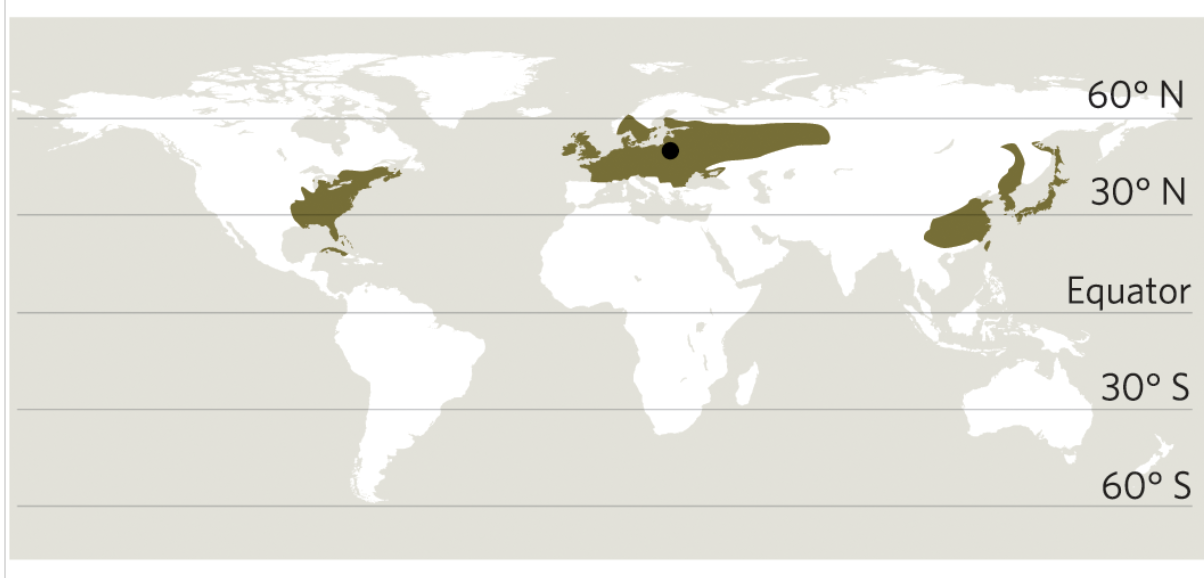

<p>what biome is this based off the description?</p><ul><li><p>precipitation is year round (droughts occur randomly, but not significant enough to be considered the normal climate) </p></li><li><p>winters are 0ºC; summers are hot and humid</p></li><li><p>animals have adapted to fluctuating temperatures (hibernation or migration)</p></li><li><p>in the Northern Hemisphere, the dominant plants are deciduous; in Australia, they are evergreen</p></li><li><p>a lot of nutrients in the soil (high diversity)</p></li></ul><p></p>
19
New cards

boreal forests or taiga

what biome is this based off the description?

  • one of the largest terrestrial biomes on Earth

  • precipitation varies; most precipitation is not available to animals due to low temperatures

    • some have periodic droughts; coastal forests can be very wet

  • winters can be very cold while summers are moderate

    • cold winters slows the decomposition process which captures a lot of Carbon in the soil

  • acidic, low nutrient soil

  • dominated by large conifer trees, mosses, and lichens
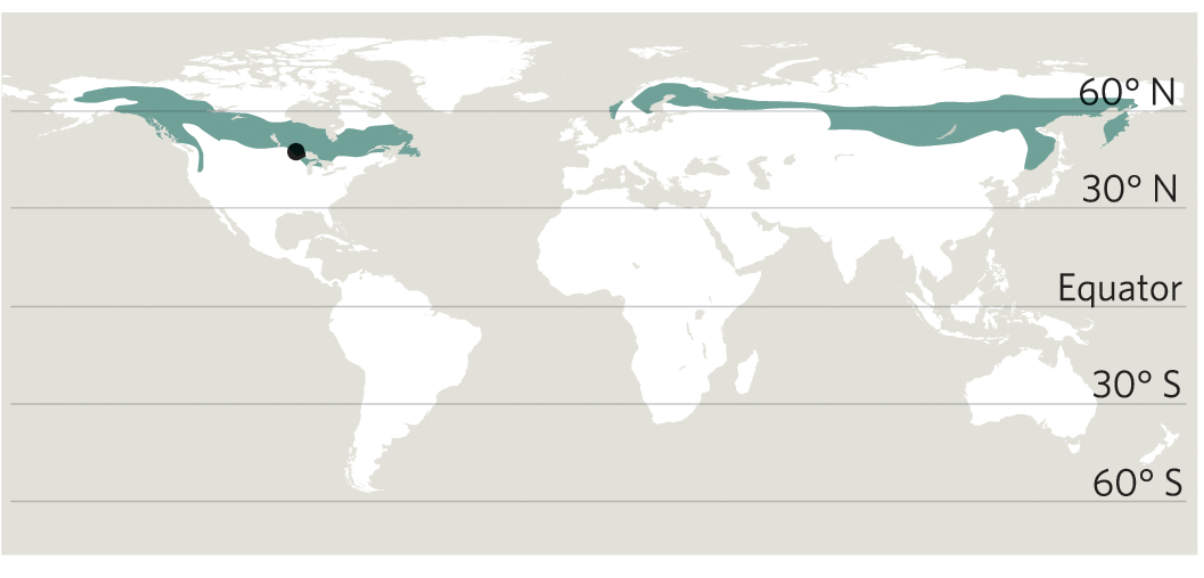

<p>what biome is this based off the description?</p><ul><li><p>one of the largest terrestrial biomes on Earth </p></li><li><p>precipitation varies; most precipitation is not available to animals due to low temperatures</p><ul><li><p>some have periodic droughts; coastal forests can be very wet </p></li></ul></li><li><p>winters can be very cold while summers are moderate </p><ul><li><p>cold winters slows the decomposition process which captures a lot of Carbon in the soil</p></li></ul></li><li><p>acidic, low nutrient soil </p></li><li><p>dominated by large conifer trees, mosses, and lichens</p></li></ul><p></p>
20
New cards

tundra

what biome is this based off the description?

  • two areas: Arctic and Alpine (aka mountaintops)

    • alpines have a little less harsh conditions; higher precipitation

  • winters are cold (below 30ºC); summer relatively cool (<10ºC)

  • premafrost restricts plant growth (likely to see moss/lichens due to no root structures)

  • no trees with acidic and low nutrient soil
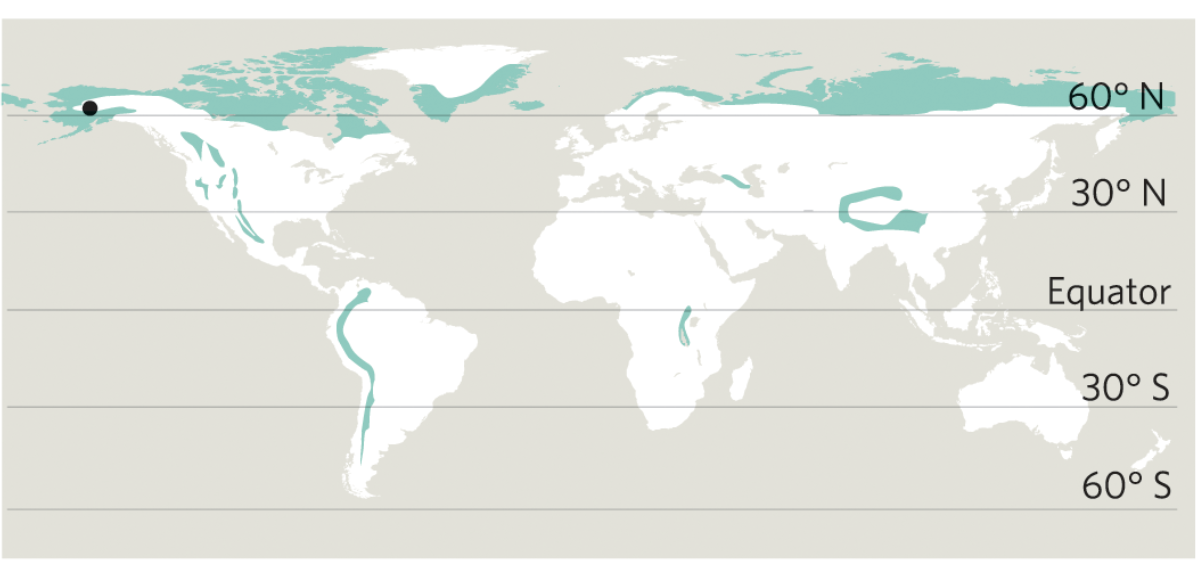

<p>what biome is this based off the description?</p><ul><li><p>two areas: Arctic and Alpine (aka mountaintops) </p><ul><li><p>alpines have a little less harsh conditions; higher precipitation</p></li></ul></li><li><p>winters are cold (below 30ºC); summer relatively cool (&lt;10ºC)</p></li><li><p>premafrost restricts plant growth (likely to see moss/lichens due to no root structures) </p></li><li><p>no trees with acidic and low nutrient soil </p></li></ul><p></p>



