Accounting Quiz 1
 Call Kai
 Learn
Learn Practice Test
 Spaced Repetition
 Match
Match Flashcards
 Knowt Play
1/12

There's no tags or description
Looks like no tags are added yet.
Name | Mastery | Learn | Test | Matching | Spaced | Call with Kai | Chat |
|---|
No analytics yet
Send a link to your students to track their progress
13 Terms
The general journal
chronological list of all transactions
double-entry follows the rule that every transaction affects two accounts
debits = credits
a date is recorded for every entry

General ledger/T-accounts
groups entries into separate accounts
shows current balances for assets, liabilities, equity, revenue, expenses
debits are always on the left, credits are always on the right
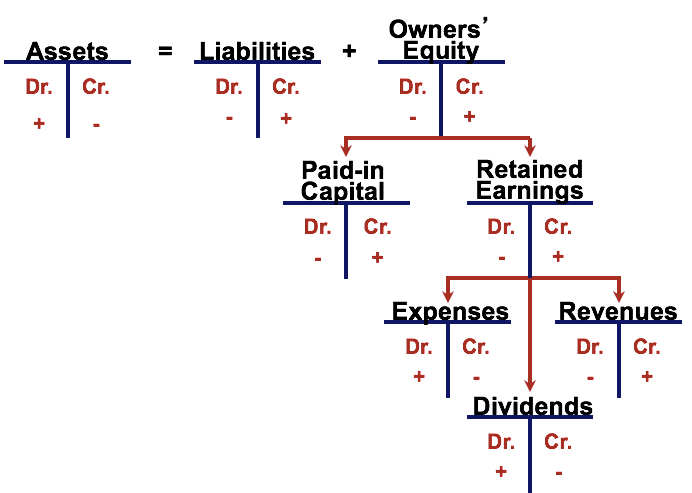
Trial balance
generated by the ending balance in T-accounts
make sure credits = debits
balances of all ledgers are compiled into debit and credit account column totals that are equal

Assets = Liabilities + Stockholder’s Equity
Equation for Balance Sheets
Revenue - Taxed Expenses = Net Income
Equation for Income Statement
“At XX/XX/XXXX, Current Year”
Balance Sheet dated
“at” because think of it like a snapshot done once a year
“For the Month of XXXX, Current Year”
Income Statement Dated
Income statements are done multiple times during the year so you won’t get a specific date
Pretax income = Total revenue - Total expenses (excluding tax)
Pretax income equation
Net income = Pretax income - Income tax expense
Net income equation
ASSETS
Current Assets
Noncurrent Assets
Total Assets
LIABILITIES
Current Liabilities
Noncurrent Liabilities
Total liabilities
STOCKHOLDER’S EQUITY
Stockholder’s Equity
Total Stockholder’s Equity
Total Liabilities and Stockholder’s Equity
format of balance sheets
Retained Earnings = Net Income - Dividends
Retained earnings equation
Current Ratio = Current Assets / Current Liabilities
Current Ratio equation
Current ratio
the higher this is, the more able a company is to satisfy short-term obligations with current assets