Giant Covalent Structures and Simple Molecular Structures
 Call Kai
 Learn
Learn Practice Test
 Spaced Repetition
 Match
Match Flashcards
 Knowt Play
1/5

Earn XP
Description and Tags
https://www.youtube.com/watch?v=WAA08FzArw8
Name | Mastery | Learn | Test | Matching | Spaced | Call with Kai | Chat |
|---|
No analytics yet
Send a link to your students to track their progress
6 Terms
Whats a giant covalent structure
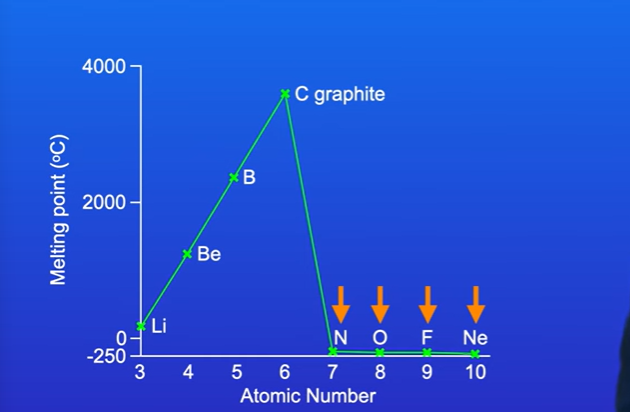
Boron and carbon have them
Billions of atoms are joined by strong covalent bonds, these atoms form a giant covalent lattice
They have high melting / boiling points as its hard to break these covalent bonds
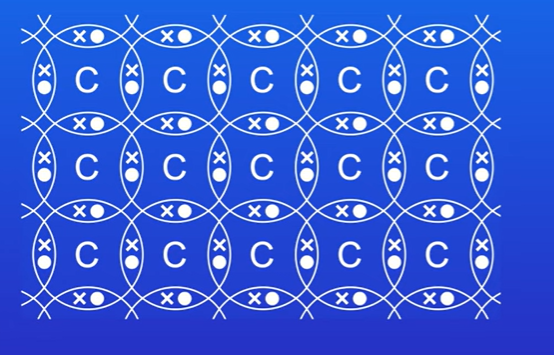
What does carbon do to achieve full outer shell
They covalent bond to four other carbon atoms, by doing this a giant covalent lattice is formed.
When this takes place, carbon has formed diamond.
Explain structure of diamond
The atoms arranged in tetrahedral structure with bond angle of 109.5 degrees.
They have high melting / boiling points due to large amount of energy required to break covalent bonds
Diamond does not conduct electricity, this is because every electron is in a covalent bond, there are no delocalised electrons to act as charge carriers
Giant covalent lattices are insoluble, this is because solvents cannot disrupt the large number of strong covalent bonds.
How is graphite formed
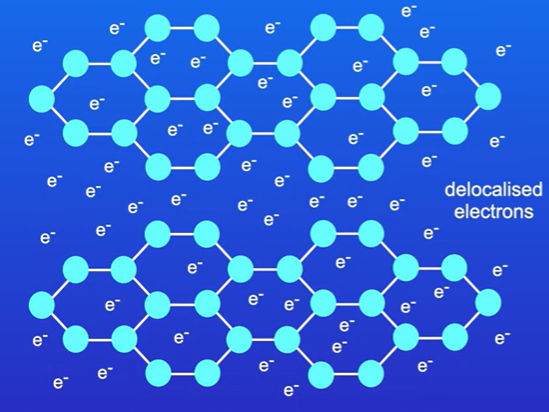
When carbon atoms form 3 covalent bonds
The carbon atoms form layers of planar hexagonal structures, with bond angle of 120
One electron from each carbon atom is delocalised, and can act as a mobile charge carrier
Because of these delocalised electrons, graphite is a good conductor of electricity.
Whats a single layer of graphite called
Graphene, because of its delocalised electrons, graphene is also a good conductor of electricity.
What are neon, oxygen fluorine and neon
Simple molecular structures, have low melting boiling points due to weak intermolecular forces.