Med Chem Exam 4 (ALL 100+ HU DRUGS😭)
 Call Kai
 Learn
Learn Practice Test
 Spaced Repetition
 Match
Match Flashcards
 Knowt Play
1/125

There's no tags or description
Looks like no tags are added yet.
Name | Mastery | Learn | Test | Matching | Spaced | Call with Kai | Chat |
|---|
No analytics yet
Send a link to your students to track their progress
126 Terms
Begins in one hemisphere of the brain, may involve jerking of an extremity for a period of 60-90 seconds with or without loss of consciousness
Partial seizures
Whole body is involved, and attack begins in both hemispheres. Consciousness usually impaired
Grand mal = sudden loss of consciousness, general muscle spasms lasting 2-5 minutes
Petit Mal (absence) = sudden brief loss of consciousness, minor movements of head, eyes, and, extremities lasting 5-30 seconds; tend to occur many times a day and are particularly disabling; more common in children than adults
Generalized Seizures
A condition marked by a single prolonged seizure lasting more than 30 min or insufficient time between multiple seizures to permit recovery
Treatment must be IV
Status Epilepticus
Increasing the synthesis of GABA
Inhibiting the destruction of GABA
Potentiating the action of GABA at its receptor
Inhibition of the excitatory neurotransmitter Glutamate binding at its NMDA and AMPA receptors
Strategies for controlling Epilepsy
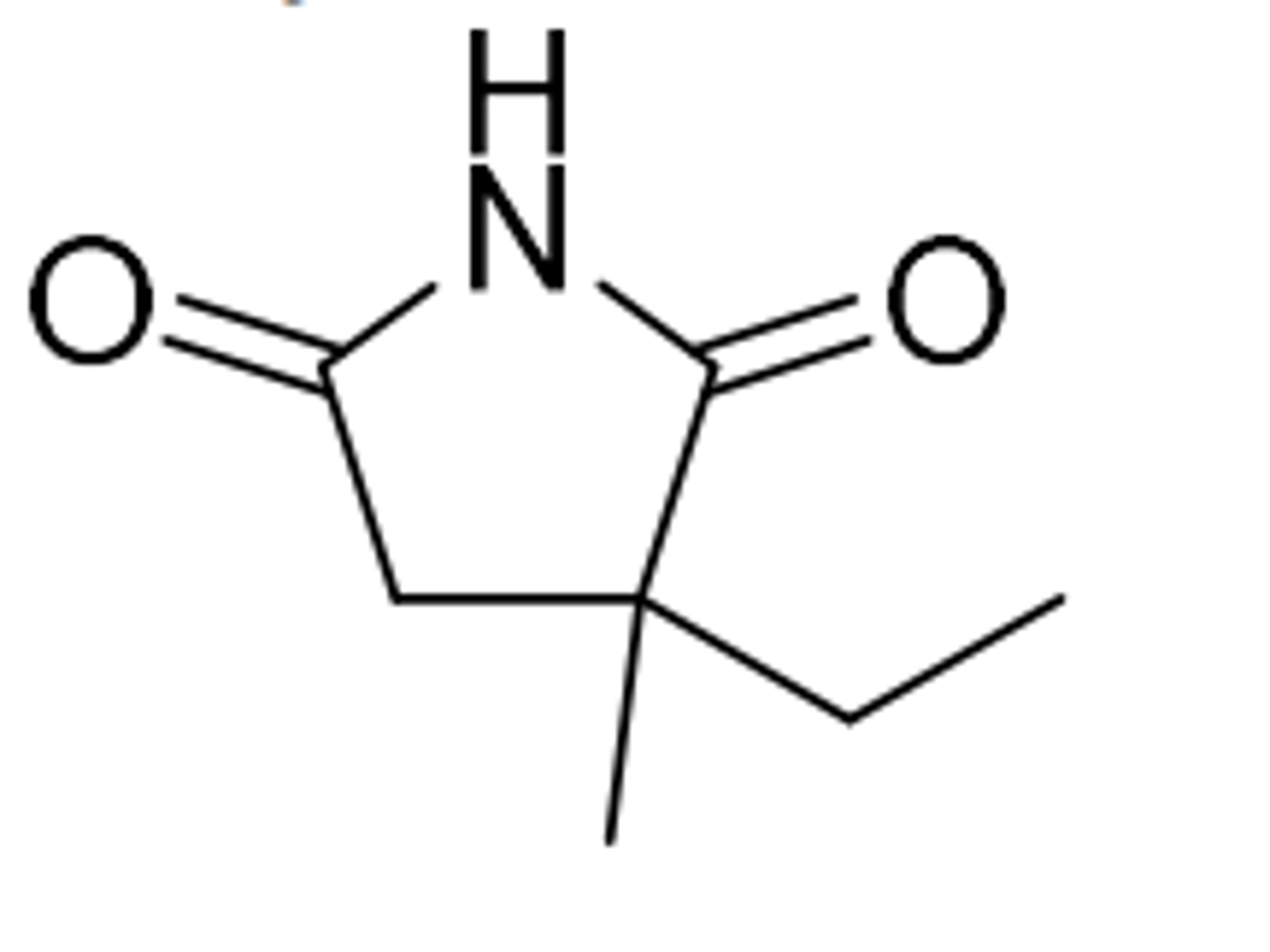
Ethosuximide
-succinimide, MOA unknown
-for absence seizures (petit mal)
-t1/2 = 30h
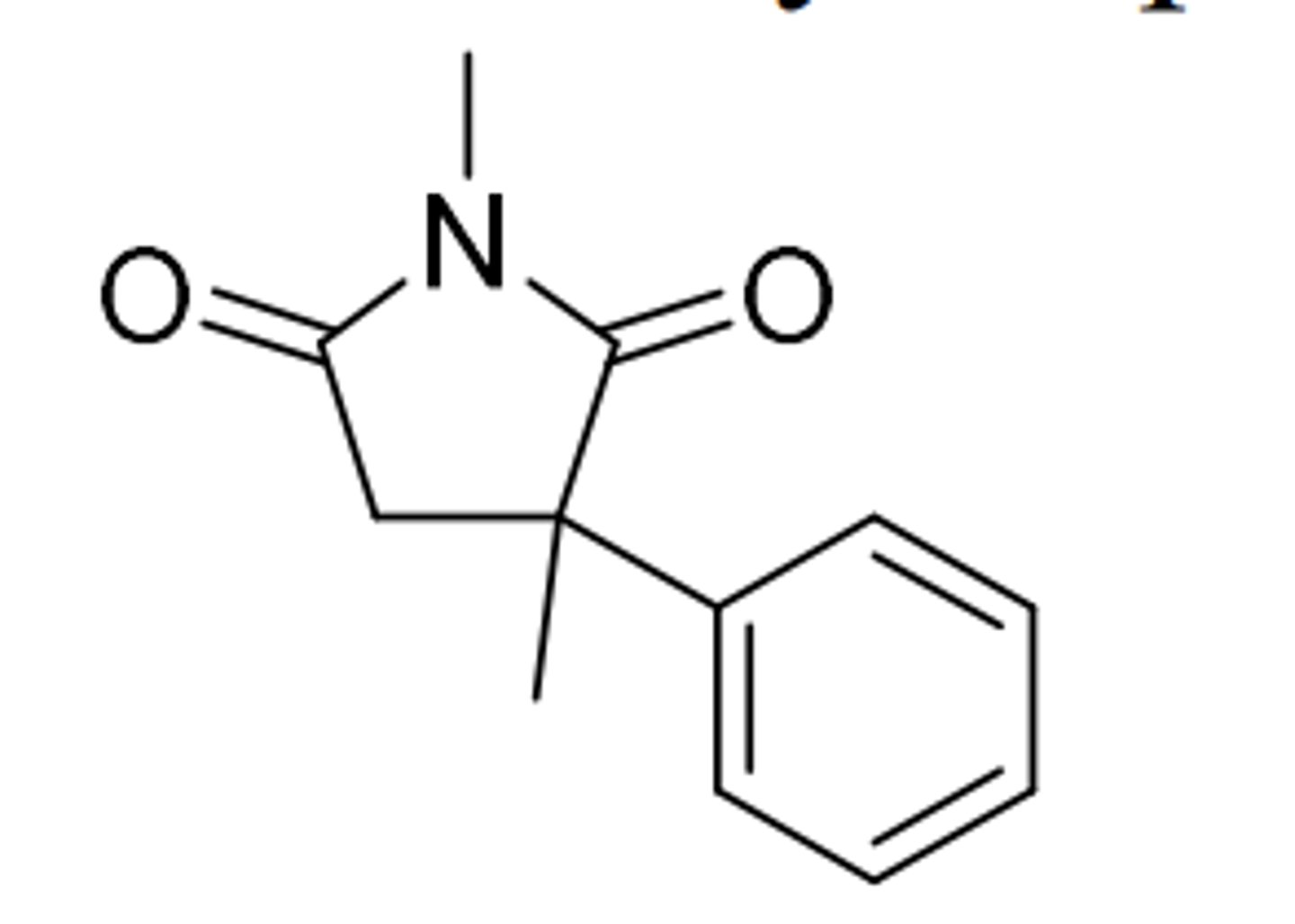
Methsuximide
-succinimide, MOA unknown
-for absence seizures (petit mal)
-t1/2 = 2-4h (due to metabolism - demethylation and hydroxylation)
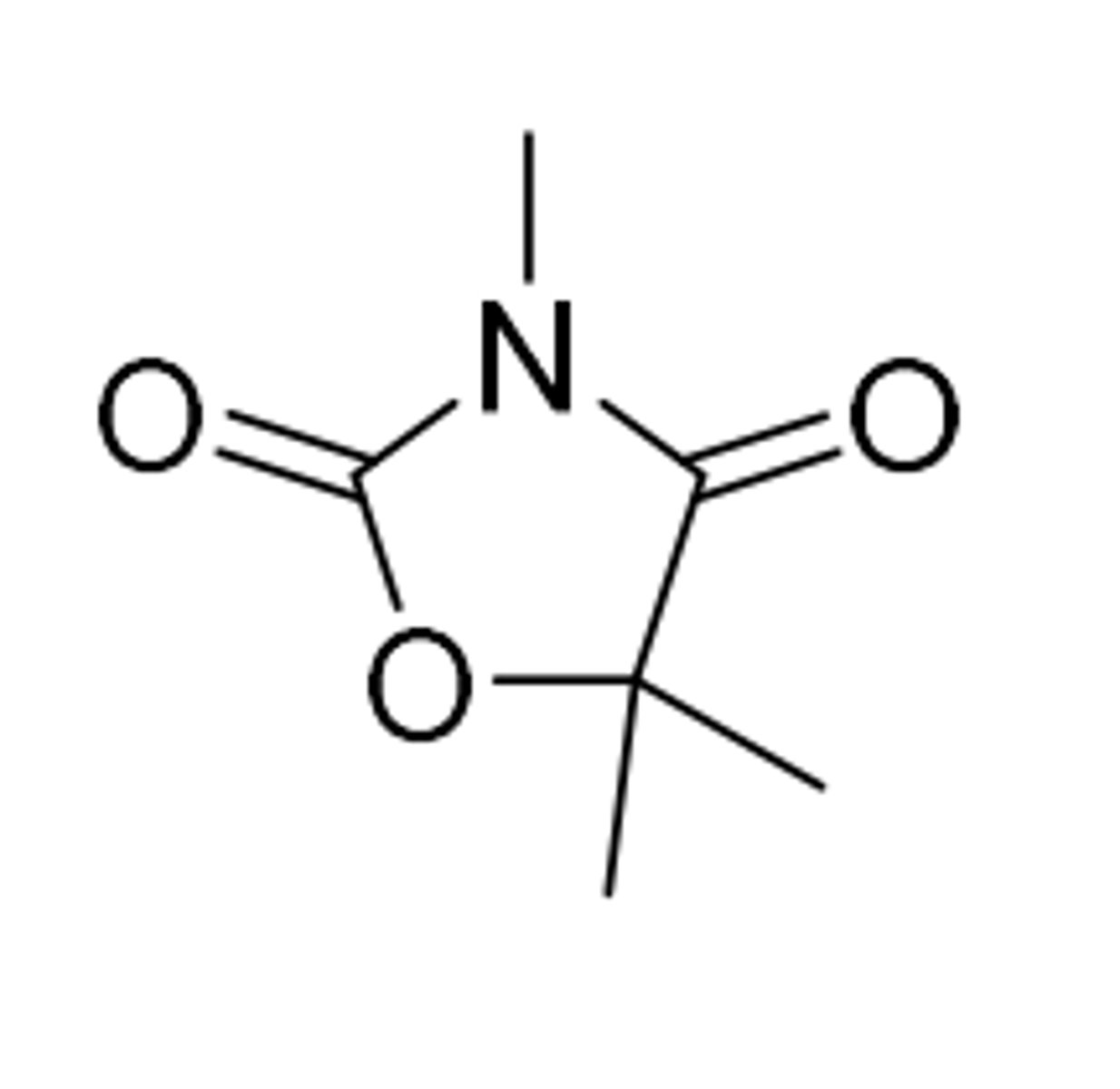
Trimethadione
-Oxazolidinedione
-for absence seizures (petit mal)
-toxic: can cause skin problems or fetal malformations
-t1/2=16-24h
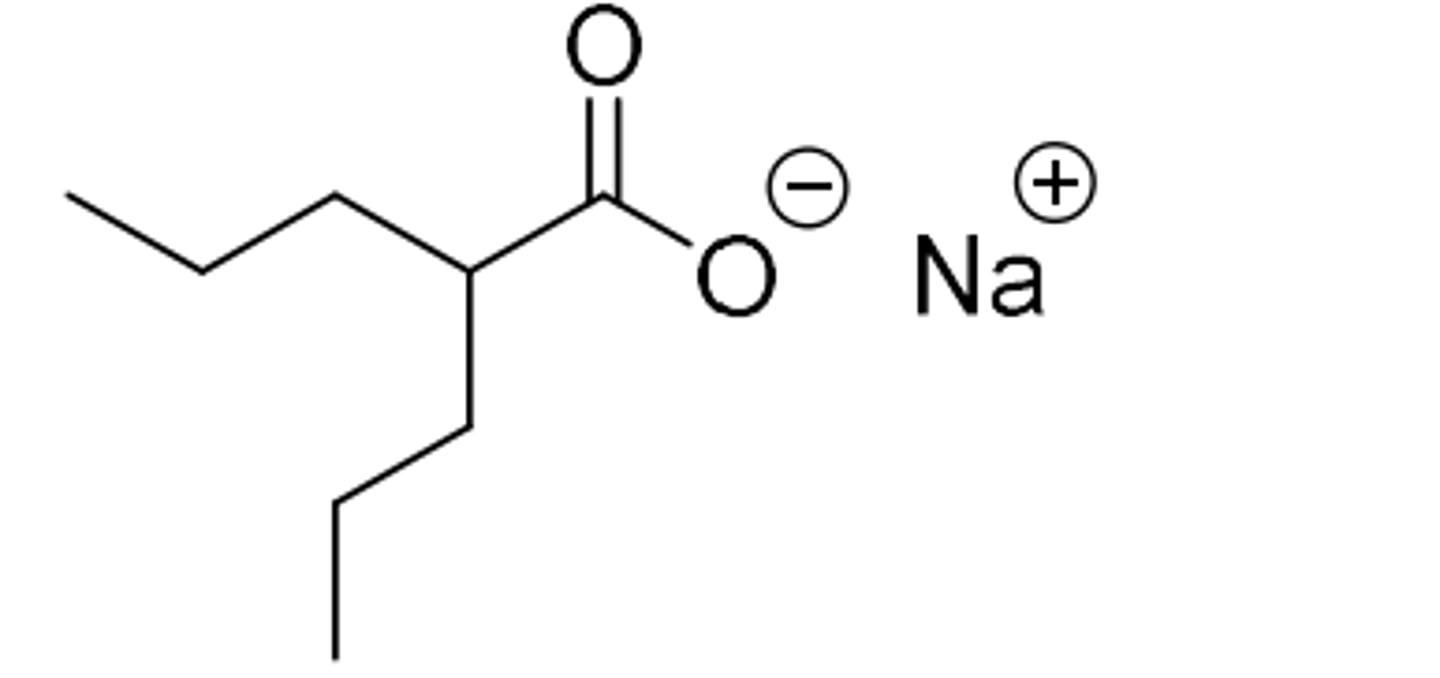
Valporic acid (valproic acid+sodium salt,1:1)
-useful for treatment of absence seizures (petit mal), partial seizures, or bipolar disorder
-high incidence of hepatotoxicity
-BBW for teratogenicity
-omega and beta oxidation metabolism
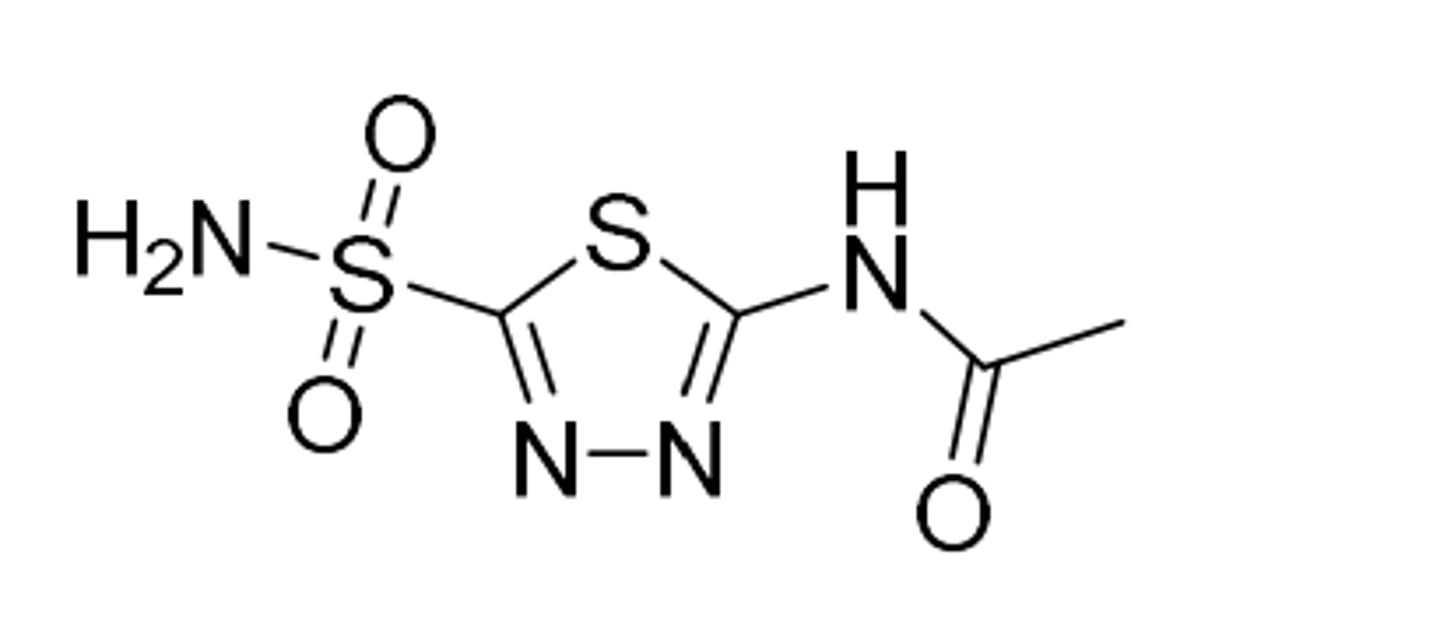
Acetazolamide
-for treatment of petit mal seizures, glaucoma (high pressure in eye), and acute mountain sickess
-MOA: carbonic anhydrase inhibitor
-increases pH of urine (more elimination of carbonic acid in urine, brings sodium with it) (can help L-cysteine in cysteine urea patients)
-increases HCO3- in eye (decreases secretions in eye and decrease eye pressure)
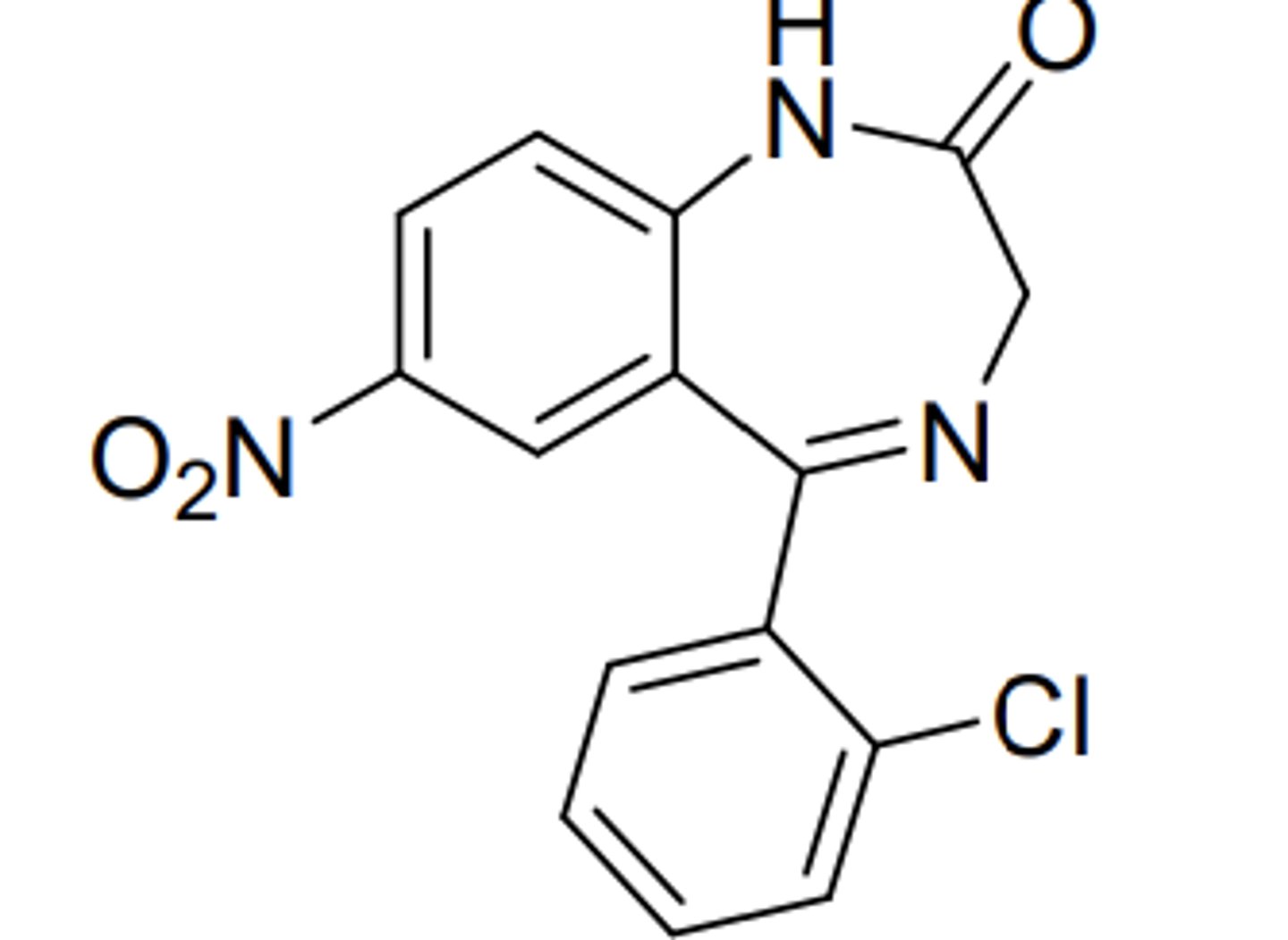
Clonazepam
-benzodiazepine used for petit mal seizures
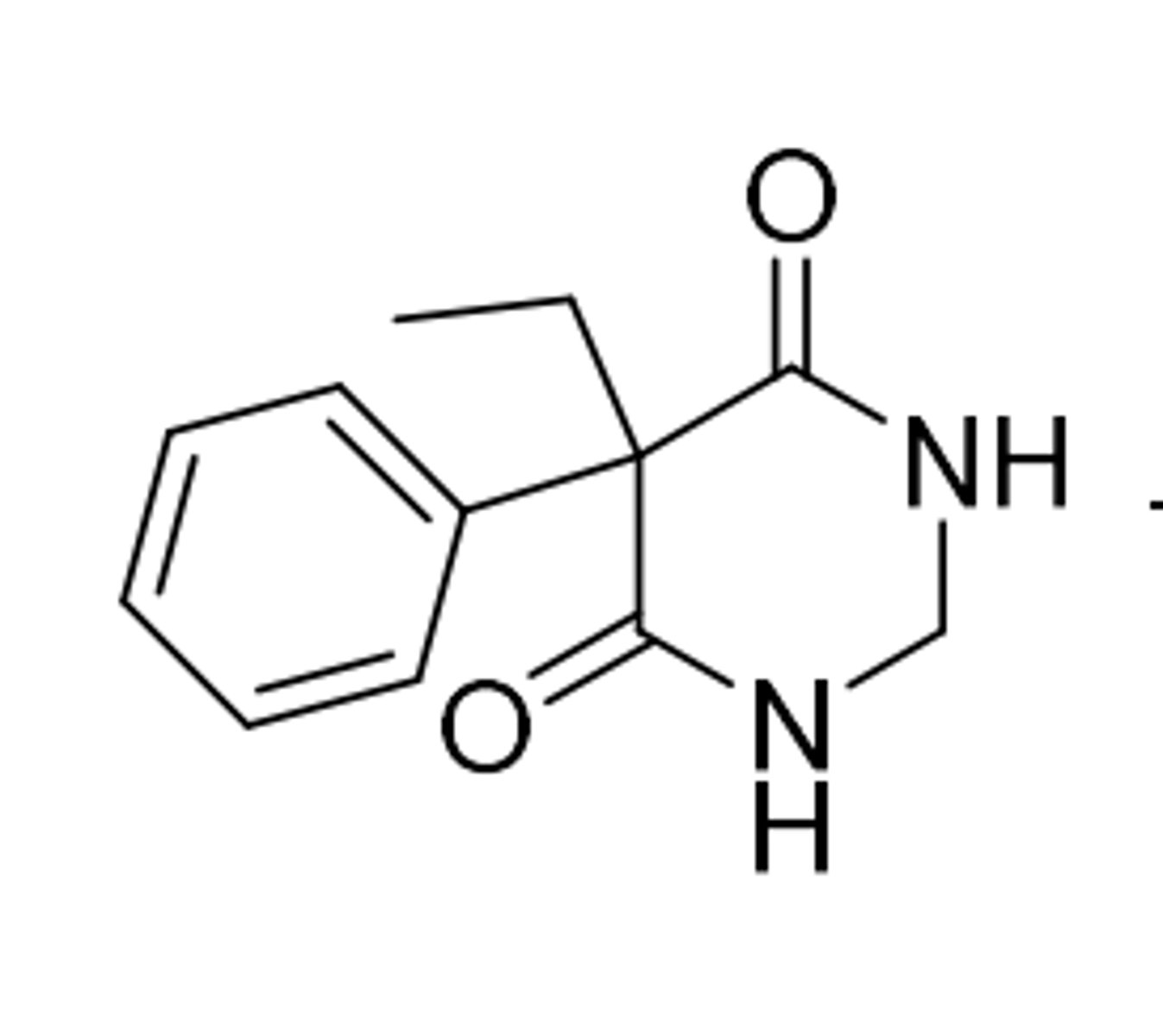
Primidone
-isosteric barbituate for partial and grand mal seizures
-di-amide major metabolite is active
-CH2 in ring is hydroxylated and then further oxidized to ketone (forming phenobarbital - minor metabolite)
-40% elimianted unchanged, other 60% is meatbolized
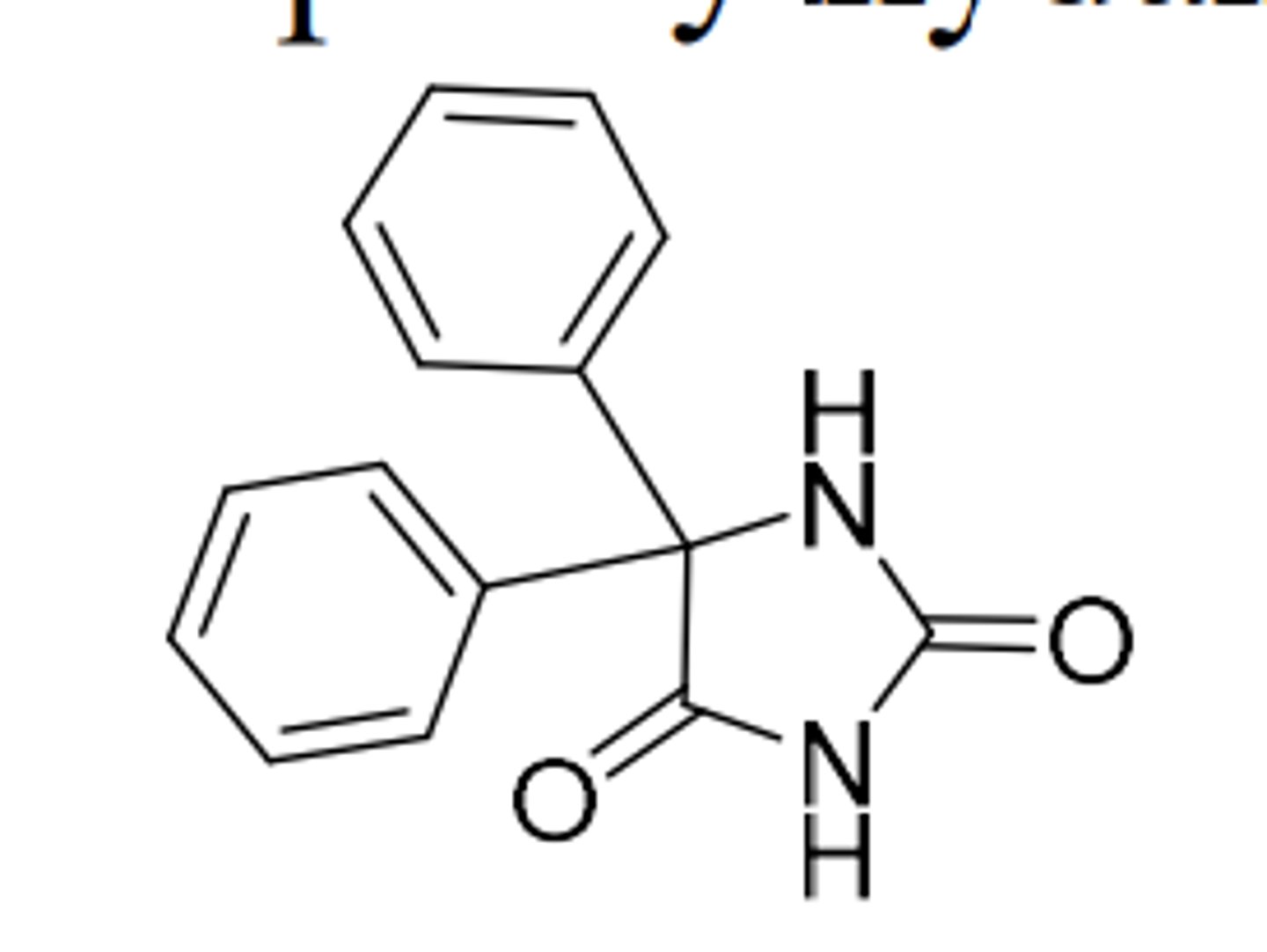
Phenytoin
-hydantoin
-indicated for status epilepticus and for prevention of seizures during surgery
-only 1 phenyl ring is hydroxylated it creates chiral center with S configuration
-MOA not well understood (related to sodium channels and altering seizure threshold)
-t1/2 = 22h
-F=57-86% (variable BA)
MUST BE IV Formulation required for status epilepticus:
40% propylene glycol and 10% ethyl alcohol and pH of 12 to keep in solution for NH to be protonated (very hard injection)
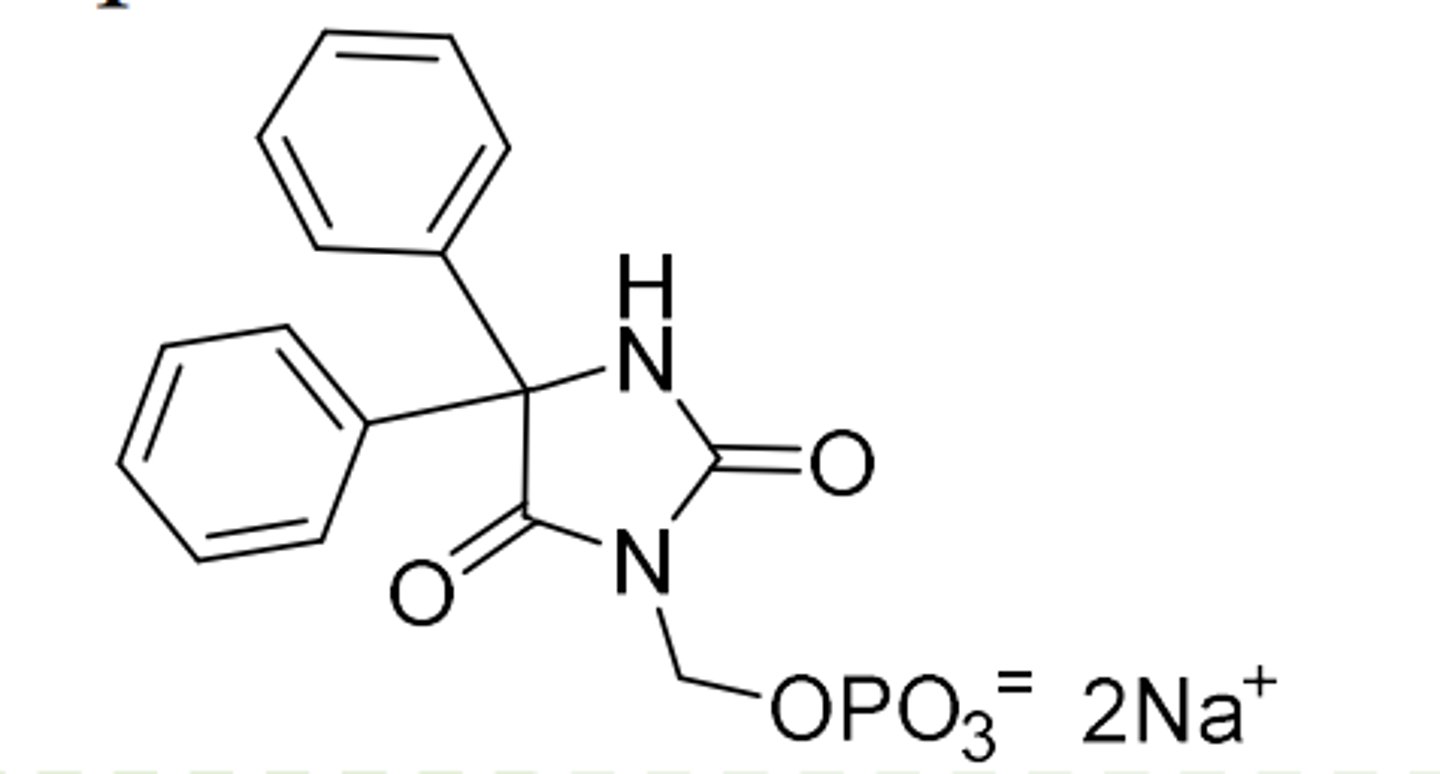
Fosphenytoin
-hydantoin
-alkaline phosphatase creates parent drug (phenytoin)
-drug for status epilepticus and for seizures during surgery
-increased water solubility for easier injection
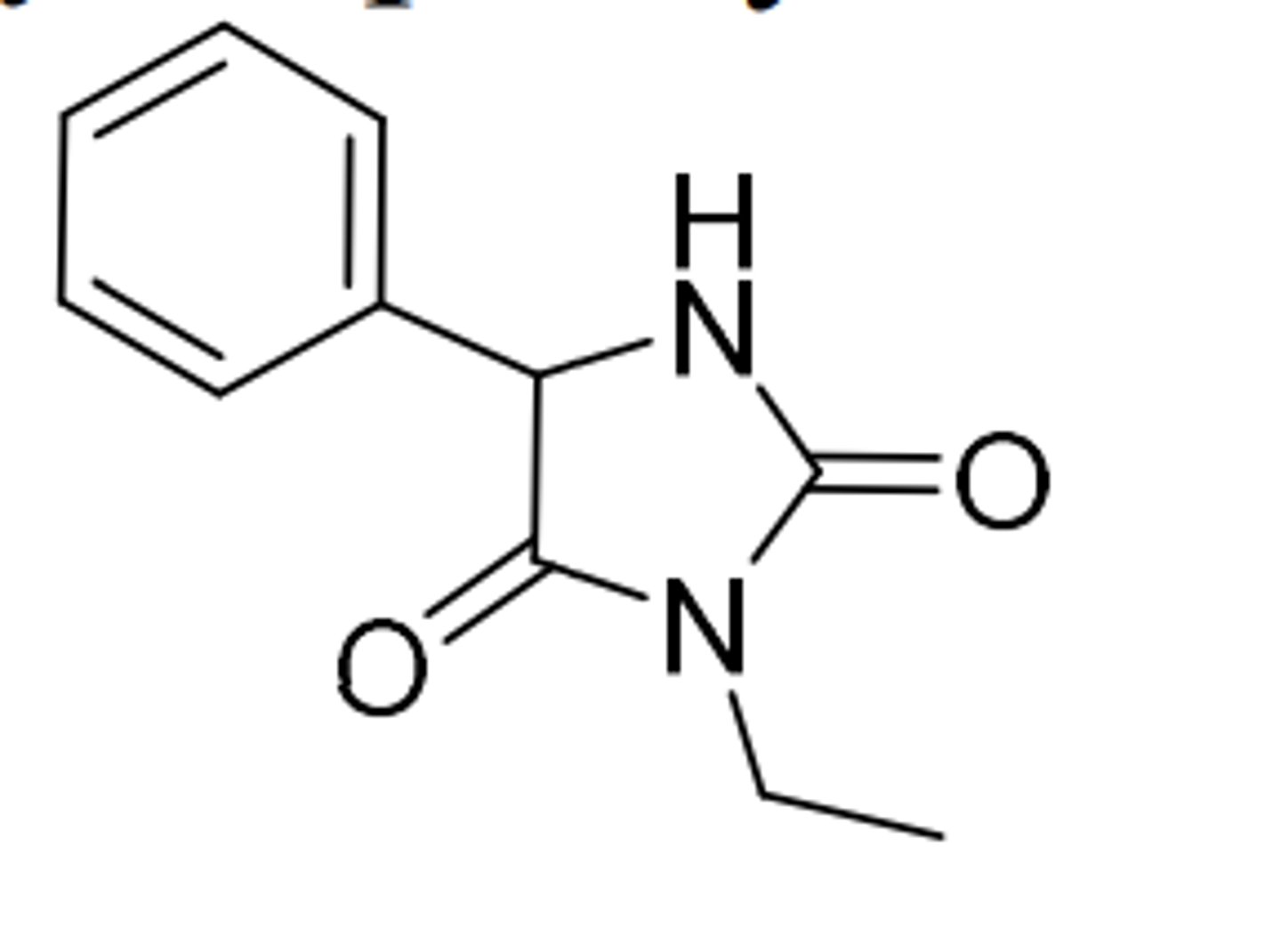
Ethotoin
-hydantoin
-used for grand mal seizures and psychomotor seizures
-hydroxylation and demethylation metabolism
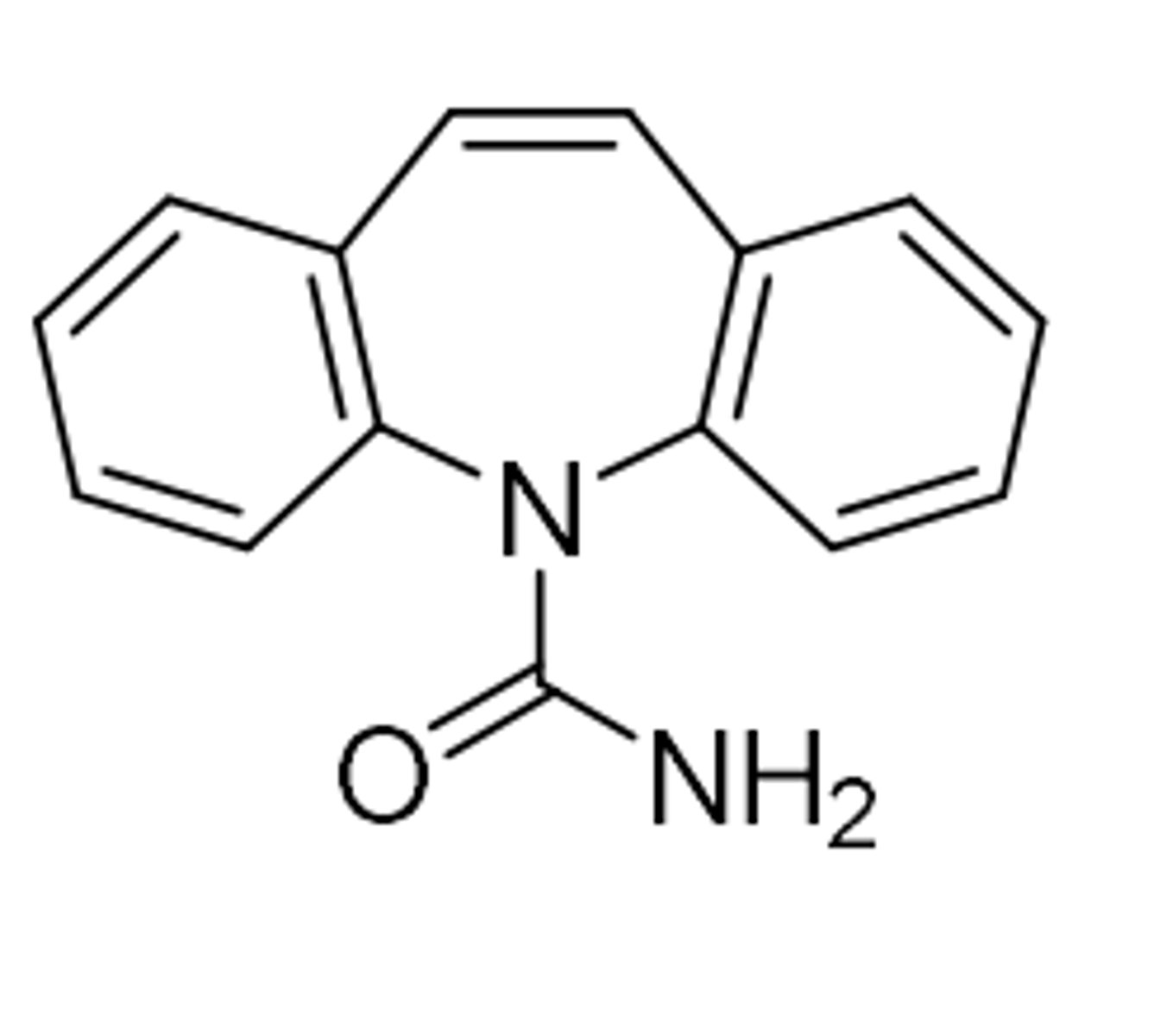
Carbamazepine
-MOA not wellknown
-used for grand mal, partial seizures, and bipolar disorder
-CYP3A4 metabolism to epoxide (active) further metabolized (hydrolysis) to diol (inactive)
-t1/2 of epoxide is great than 30h
-t1/2 of parent is 25-65h
-can induce its own metabolism
-Problem: agranulocytosis and aplastic anemia
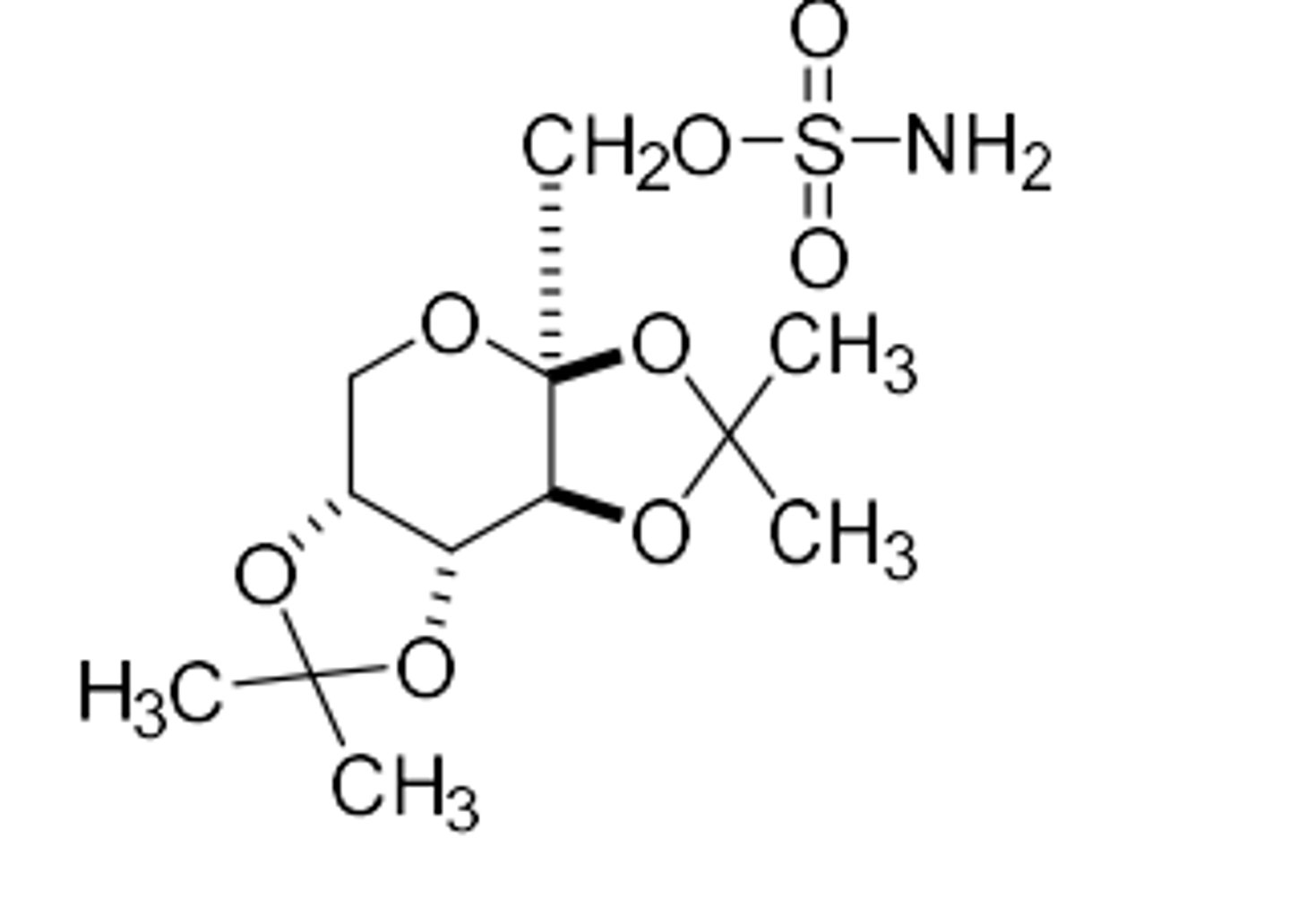
Topiramate
-"protected sugar"
-used to treat partial and grand mal seizures
-MOA unknown (related to sodium channels)
-not extensively metabolized (mostly eliminated unchanged)
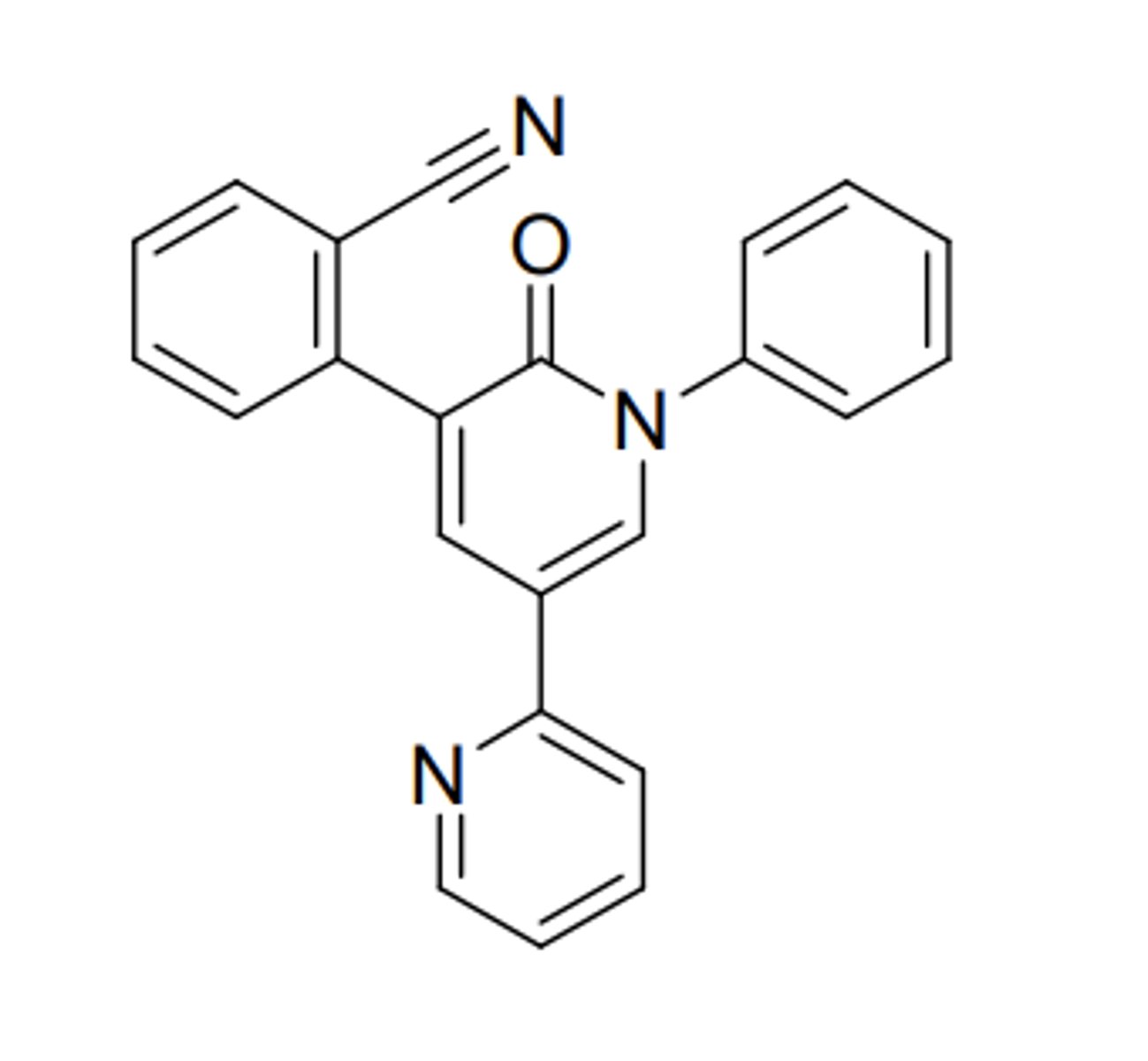
Perampanel (Fycompa)
-noncompetitive AMPA antagonist
-QD dosing (t/2 = 105h)
-used for partial onset seizures (for 4 years and older) and for grand mal seizures (for 12 years and older)
-newer agent
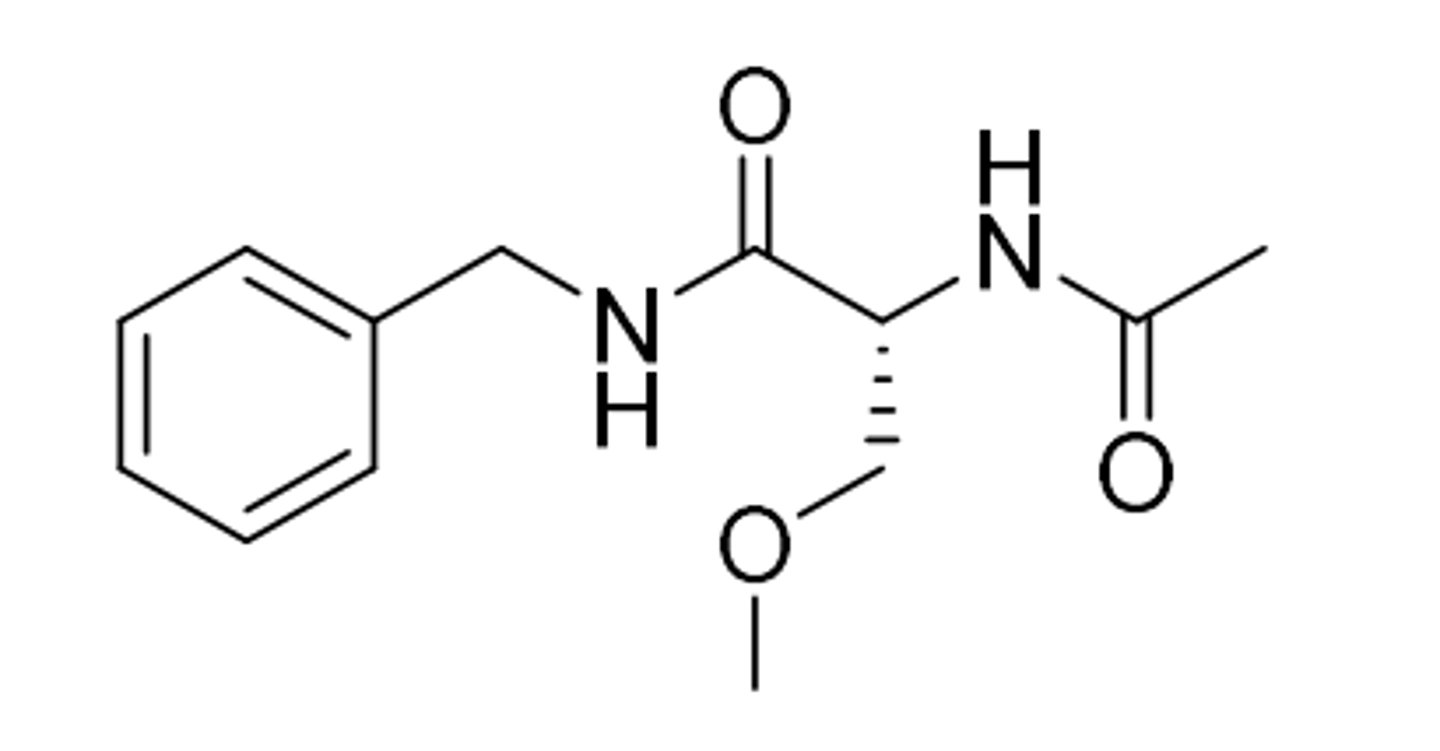
Lacosamide
-"protected" D-serine
-very high BA (basically 100%)
-BID dosing (t1/2 = 12-16h)
-used for partial onset seizures and treatment of grand mal seizures
-MOA not well known
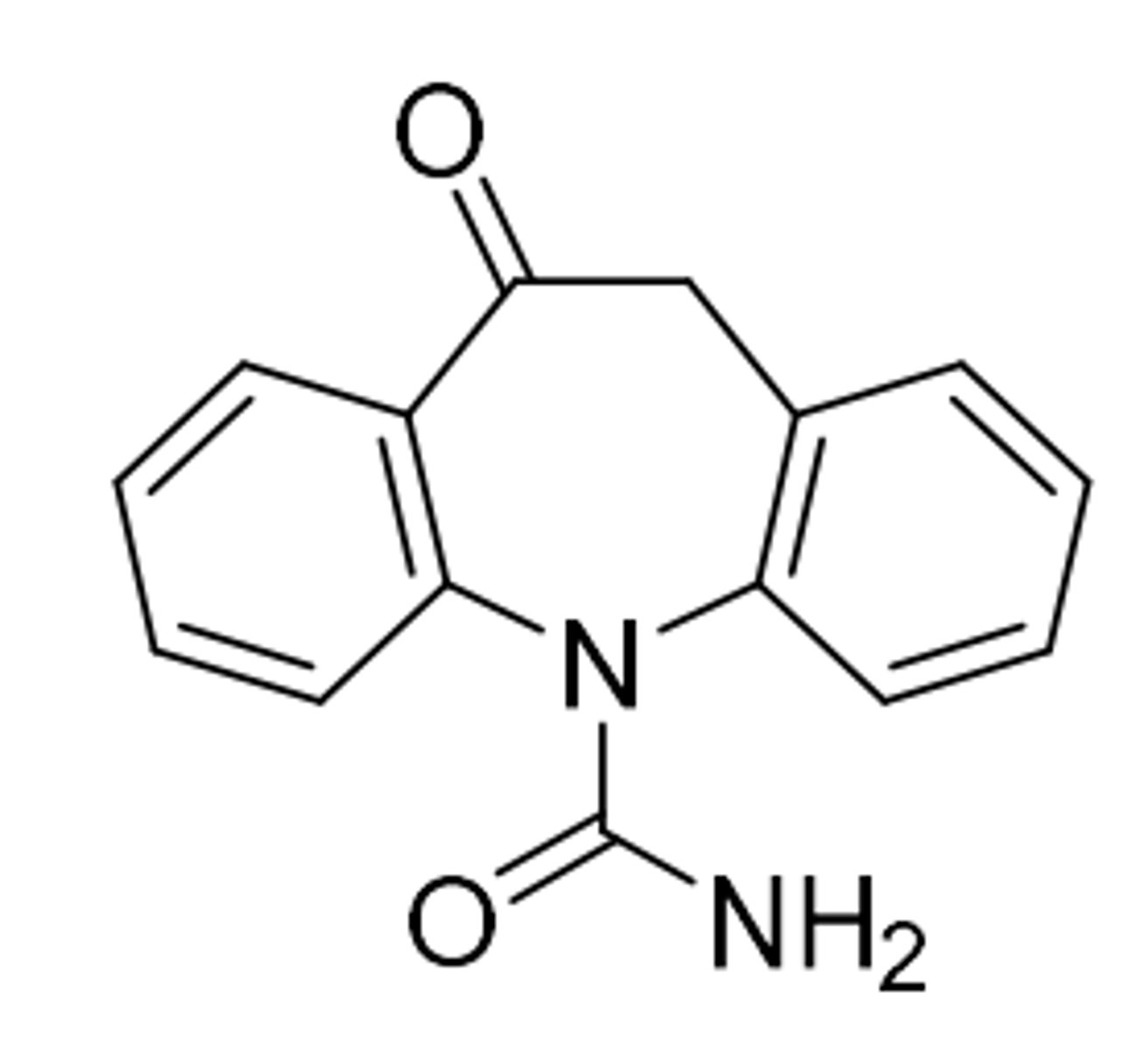
Oxcarbazepine
-prodrug (addition of ketone to carbamazepine instead of double bond)
-MOA unkown
-reductive activation to alcohol for ative metabolite (Licarbazepine)
-used to treat partial seizures
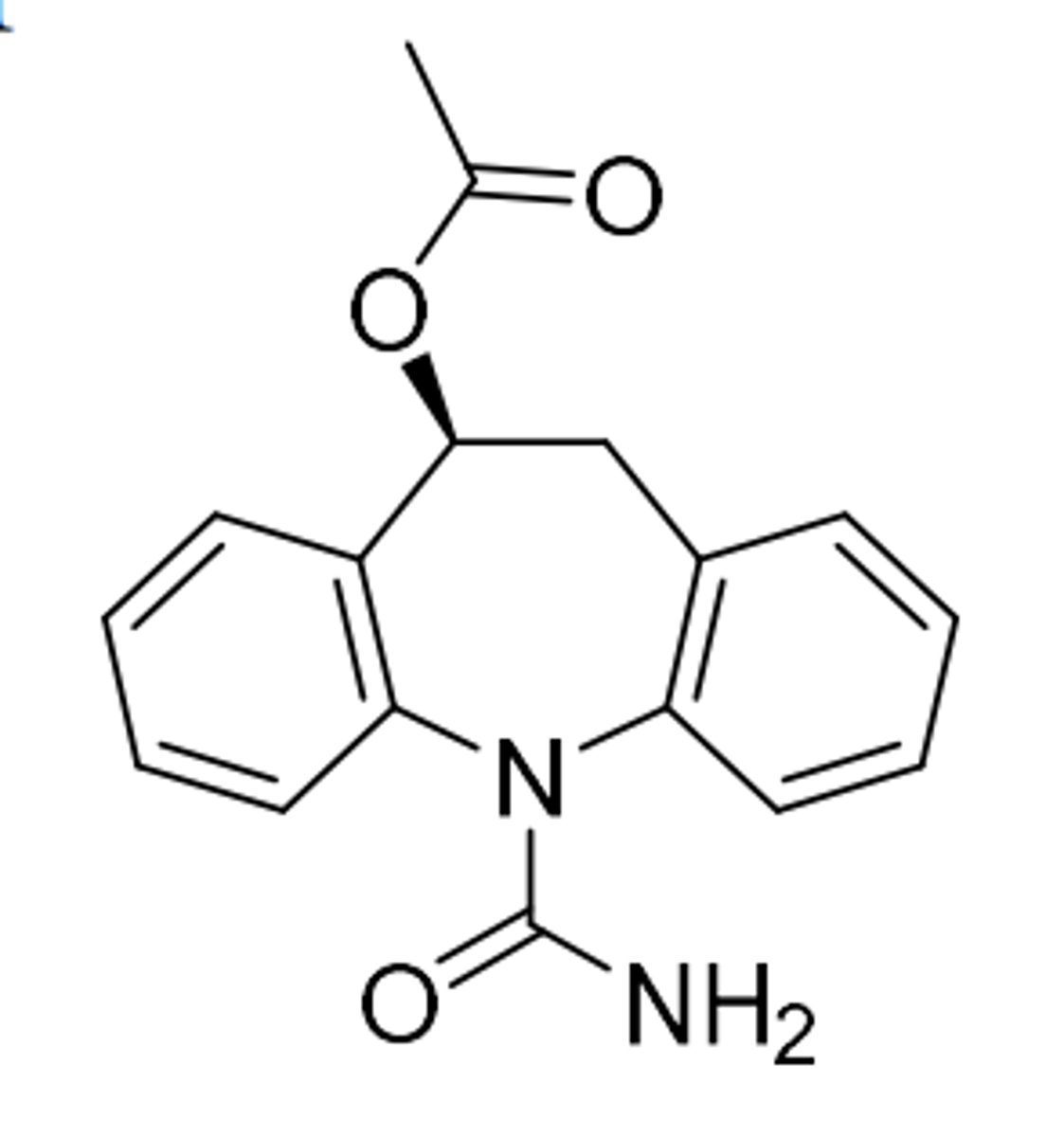
Eslicarbazepine
-prodrug (acetyl attached to hydroxy) --> hyrdolysis of ester to active metabolite (licarbazepine, same as oxcarbazepine)
-QD dosing
-used to treat partial seizures
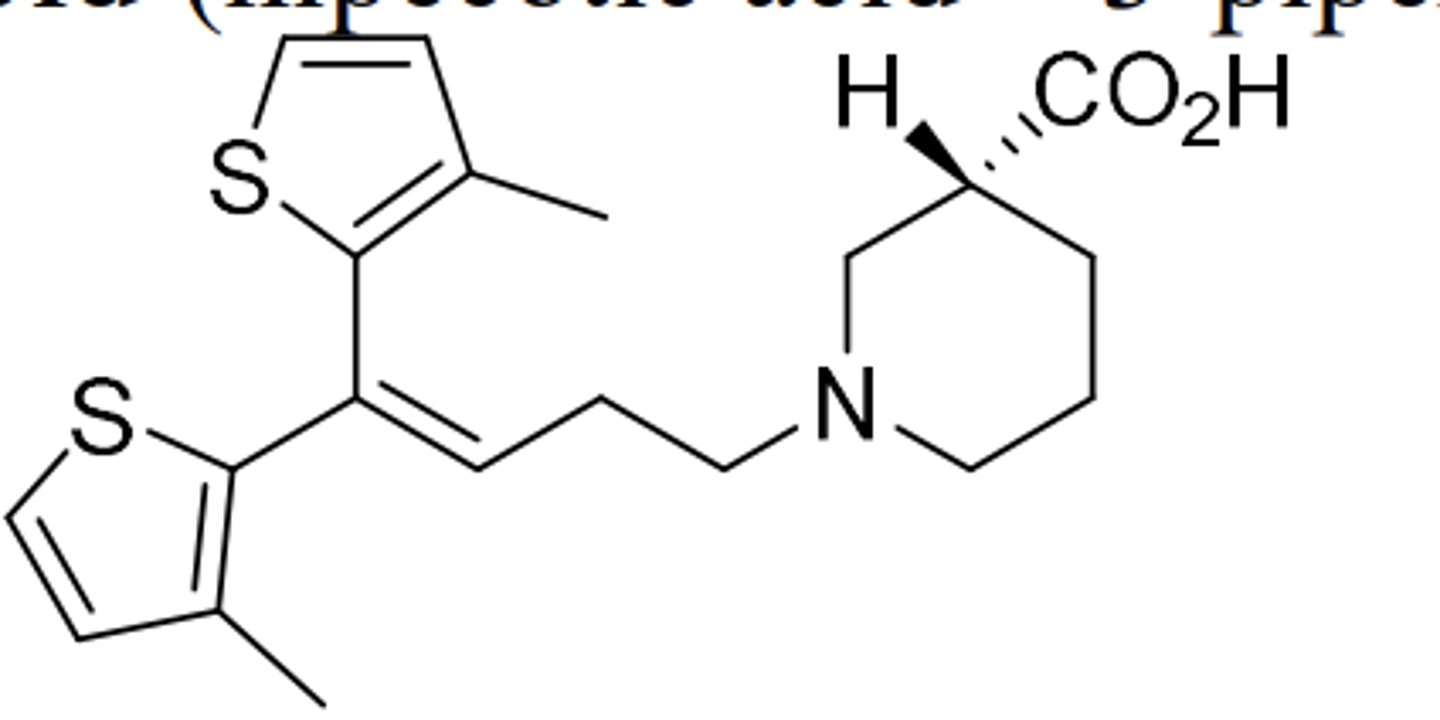
Tigabine
-unique MOA: inhibits reuptake of GABA (more GABA in synapse, more inibition)
-used to treat partial seizures
-extensively metabolized (glucuronidation., hydroxylation)
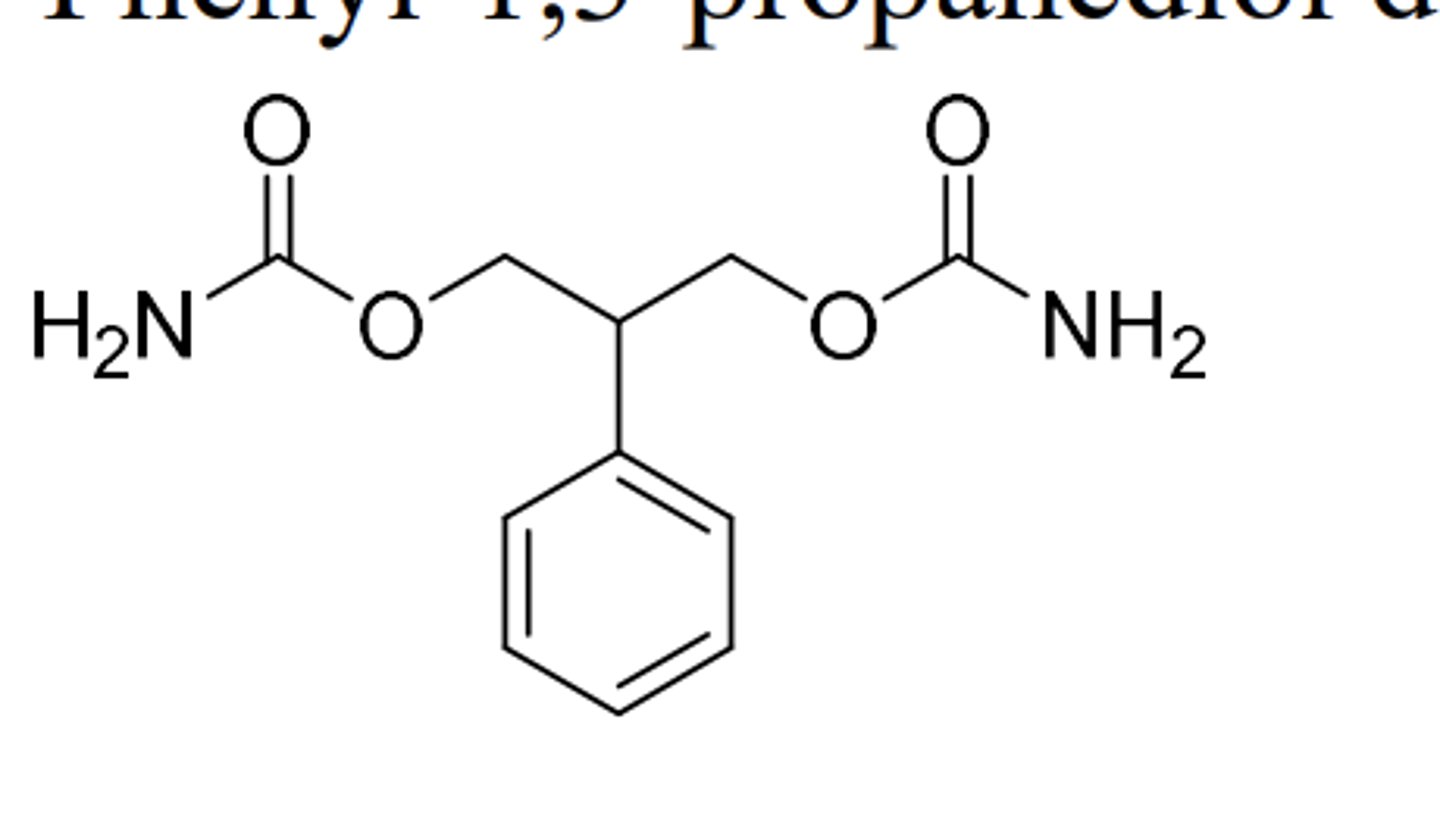
Felbamate
-resembles meprobamate
-used for partial seizures
-NOT a controlled substance (unlike mepobramate)
-risks: aplastic anemia, acute liver failure (not first line)
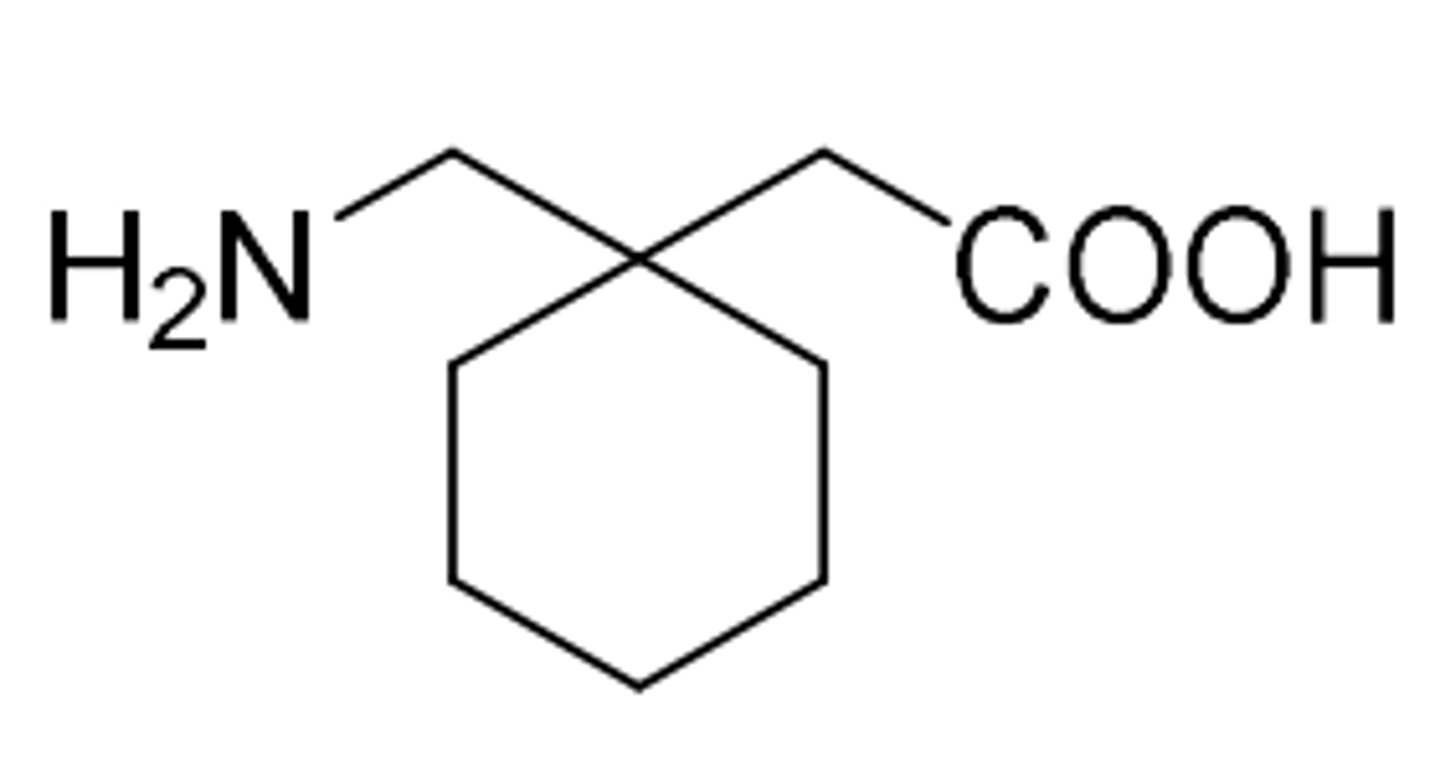
Gabapentin
-GABA derivative
-used for partial seizures and post hepatic neuralgia (neuropathic pain)
-very little metabolism
Gabapentin enacarbril (Horizant)
-indicated for moderate to severe restless leg syndrome and post hepatic nerualgia
-CASCADE PRODRUG (series of reaction to get active drug)
-attaches carbon chain with 2 esters group to amide
Pregabalin
-GABA derivative
-well absorbed after oral administration
-limited metabolism
-for partial seizures, neuropathic pain, post hepatic neuralgia
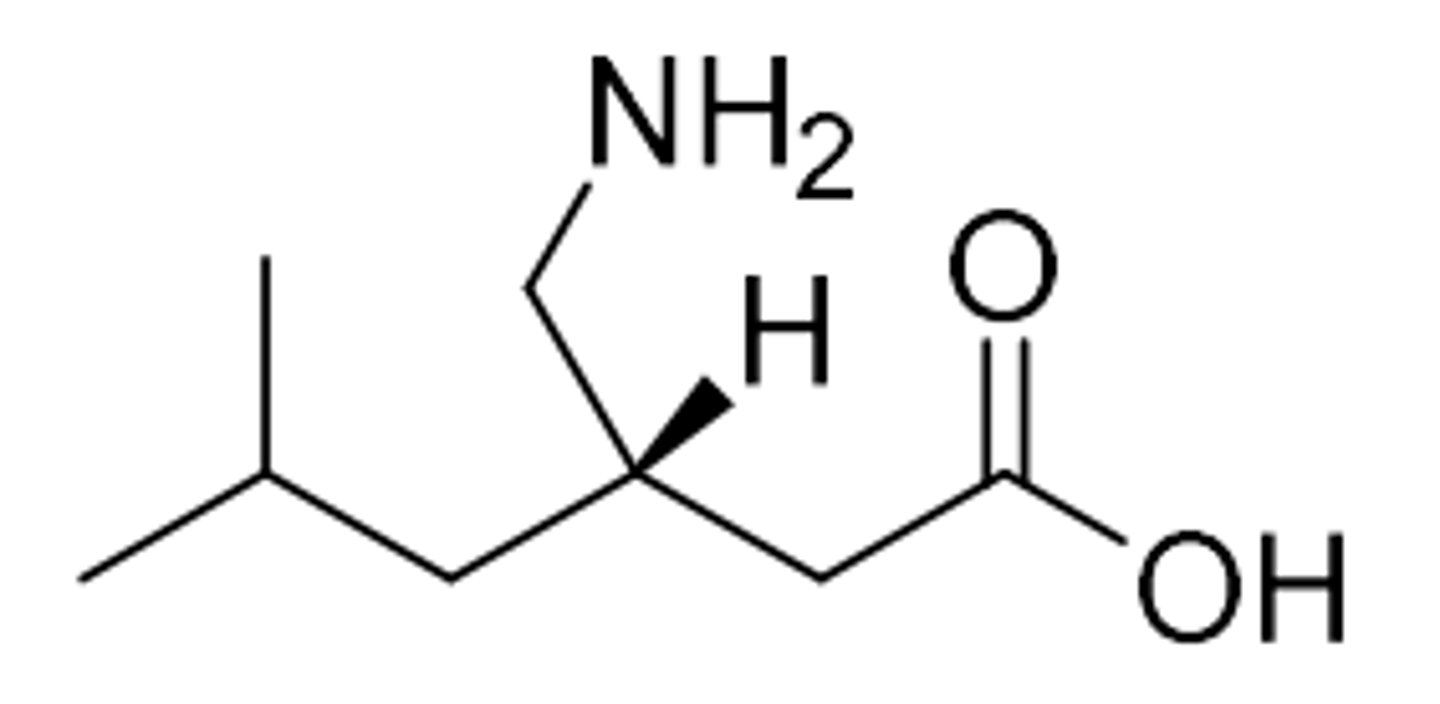
Levetiracetam (Spritam)
-3-D printed drug molecule
-quickly dissolved in mouth to CNS
-unknown mechanism, but works on synaptic SV2A (synaptic vesicle protein 2A)
-inhibition of presynaptic calcium transporters to decrease neurotransmitter release
-IV and Oral for partial seizures
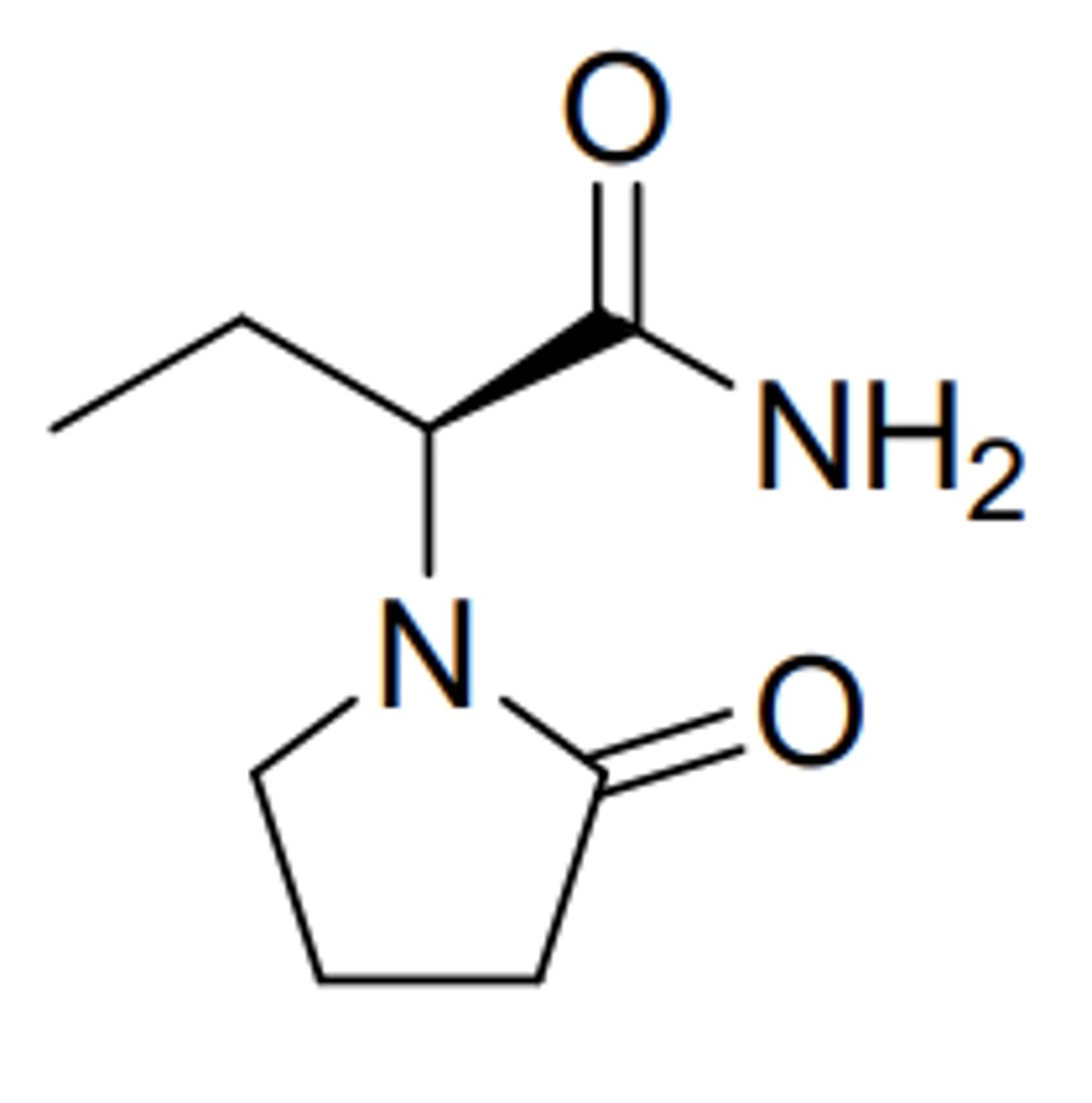
Brivaracetam
-works on synaptic SV2A (synaptic vesicle protein 2A)
-for partial seizures
-propyl addition to levetiracetam
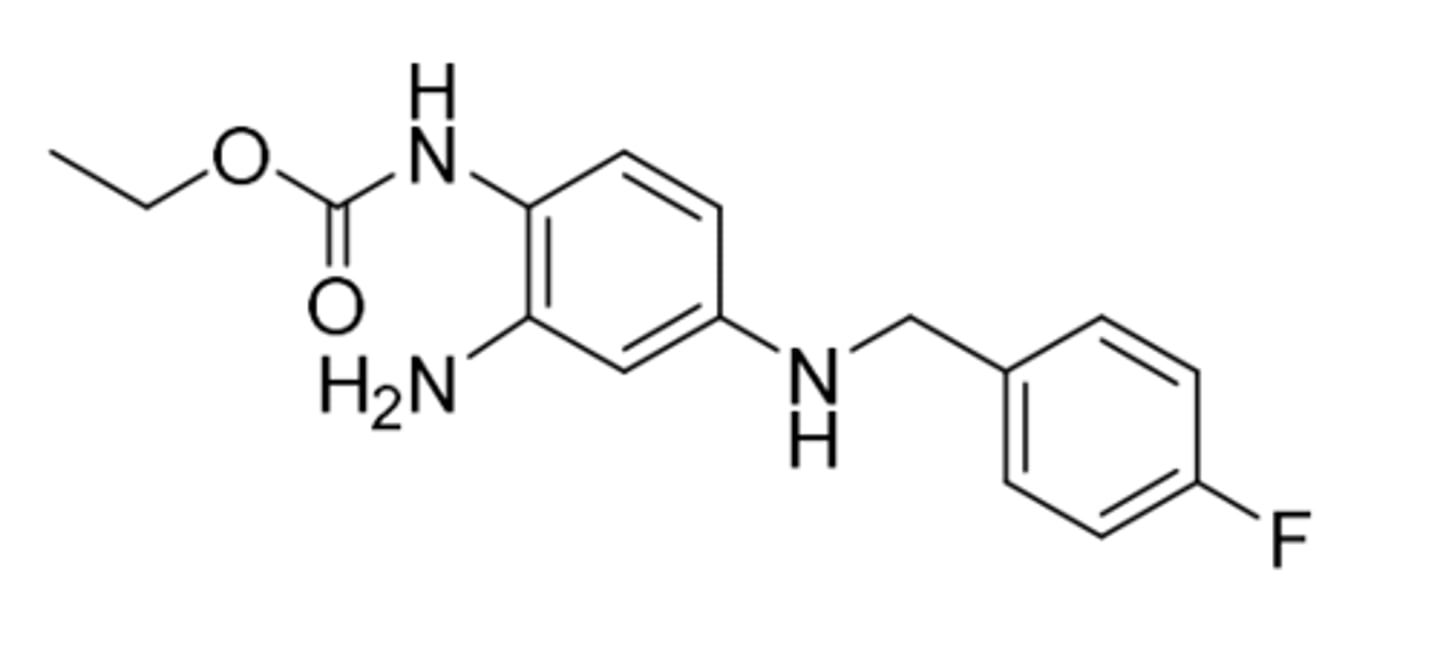
Ezogabine/retigabine
-K+ channel opener
-add on treatment to treat partial seizures (very different MOA)
-acetylation, glucuronidation
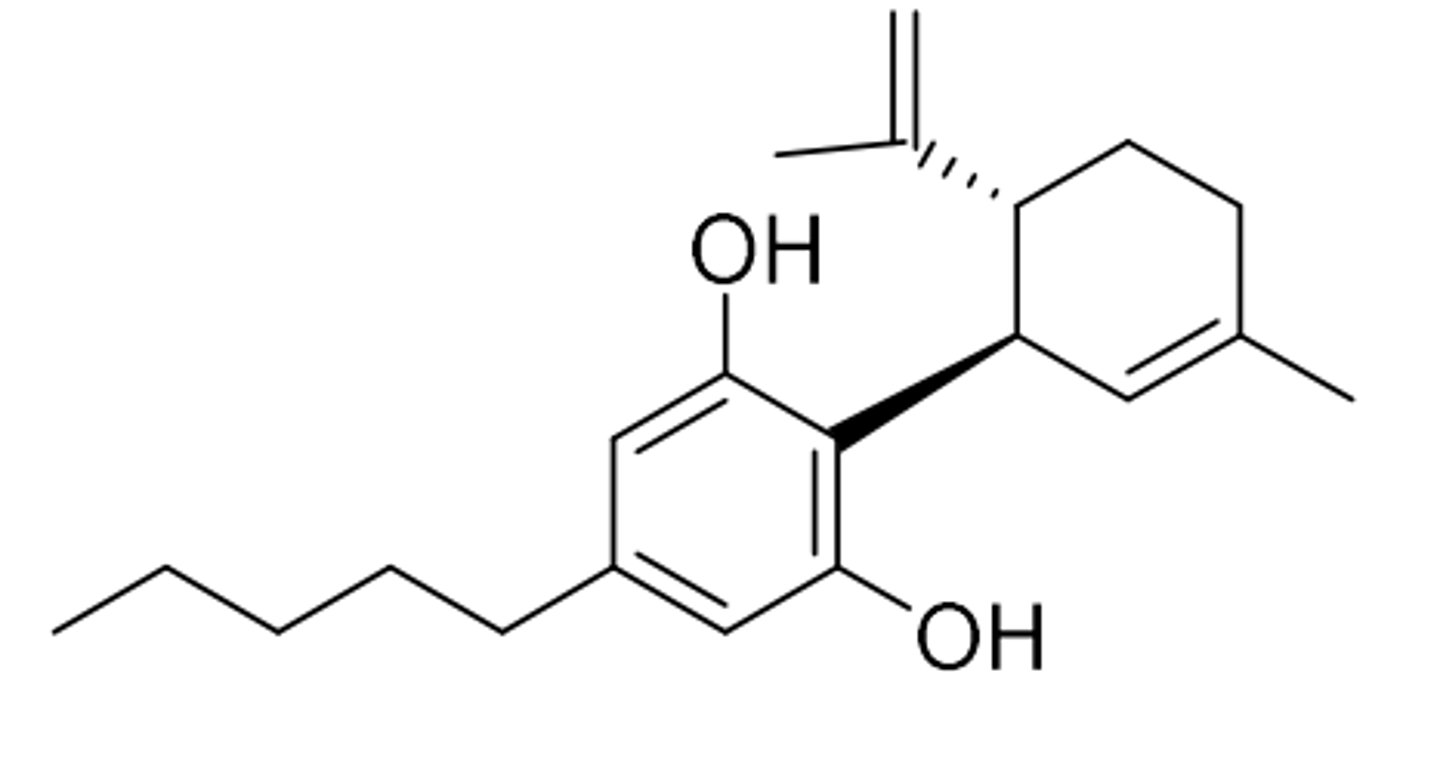
Cannabidiol
-Treats: Durevet syndrome. Lennox-Gastrout Syndome, Tuberous Sclerosis complex syndrome
injection only (IV or IM, but IM painful)
for eclampsia (rare condition, effects women at end of pregnancy or after childbirth where body involved in convulsions, can go into coma)
Magnesium Sulfate (MgSO4)
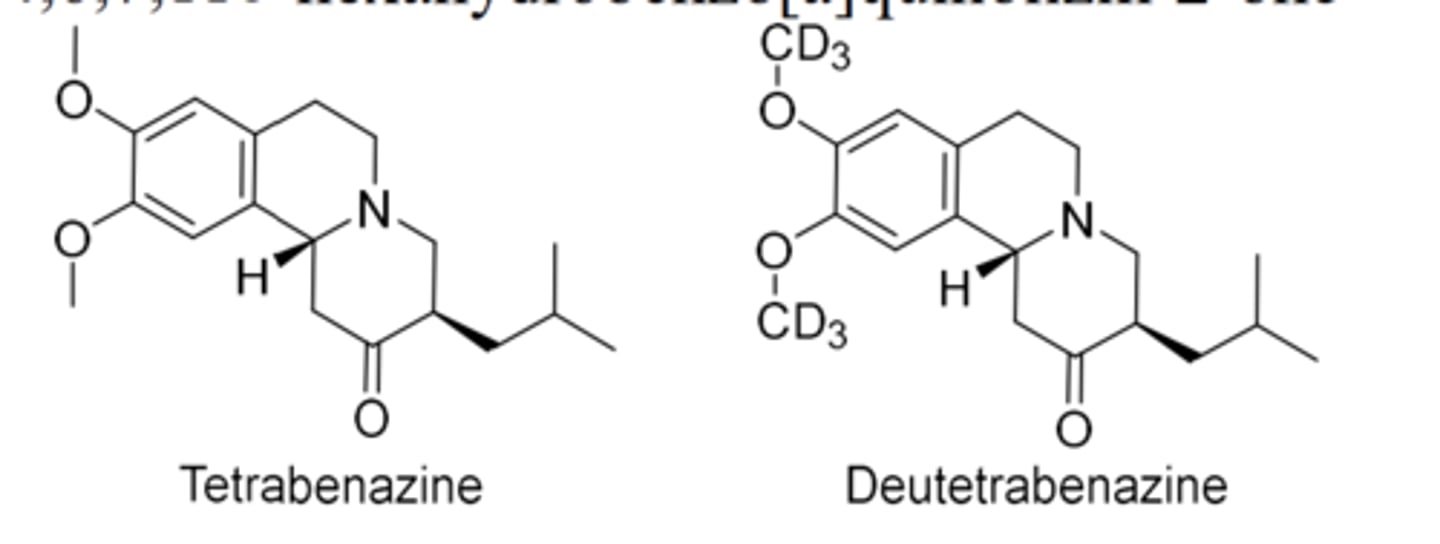
Tetrabenazine
-problem: demethylation inactivates it
Deutetrabenazine
-replaces H with D (first D drug approved in clinic)
-approved for Huntingtons disease, Tourettes, and Tardine Dyskinesia (TD)
-metabolism switching (reduction now more likely to happen, leading toa ctive metabolite)
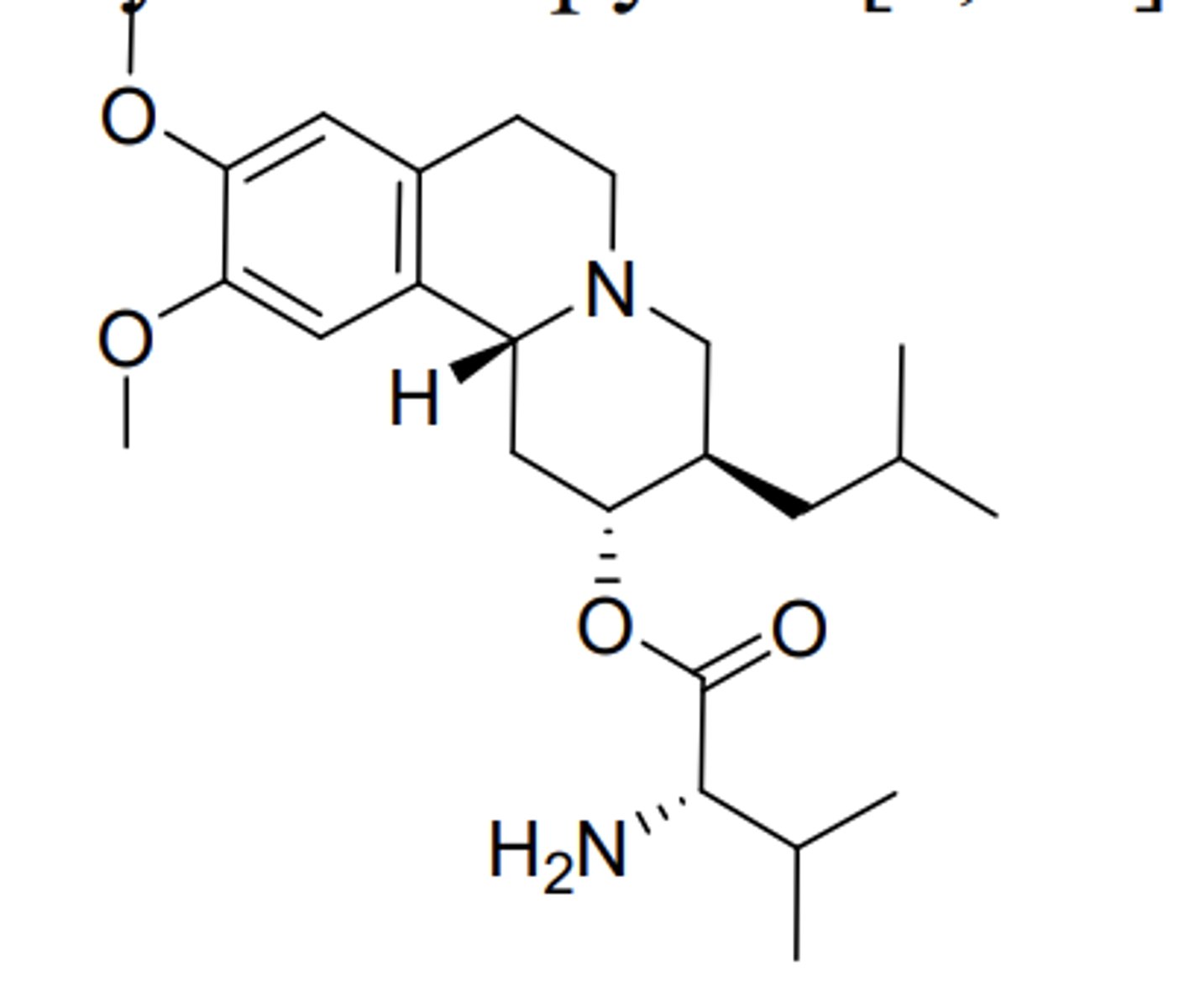
Valbenazine
-treatment of tardine dyskinesia (TD)
-prodrug, esterase catalyzed hydrolysis to active metabolite
-don't need to worry about demethylation because already through first mass metabolism and active
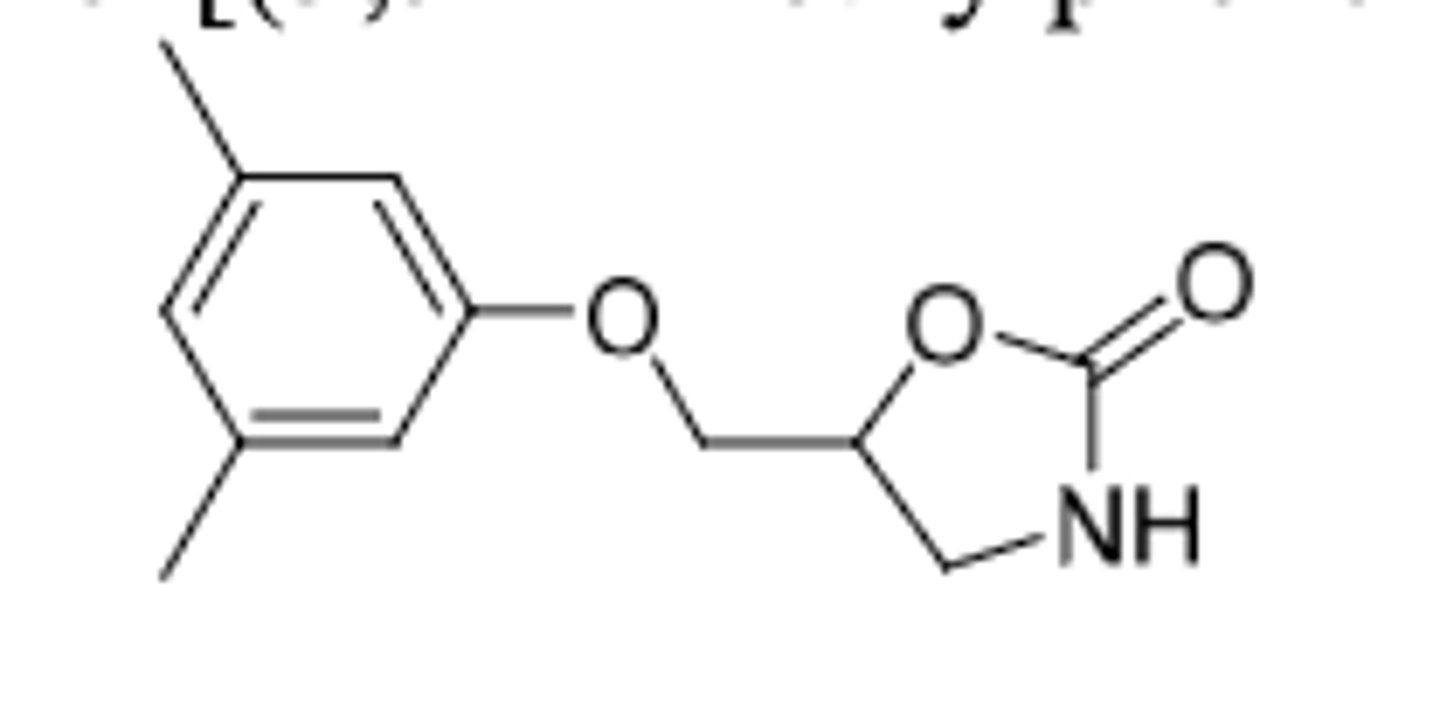
Metaxalone
-skeletal muscle relaxant
-used as adjunct to relieve discomfort associated with acute and painful musculoskeletal conditions
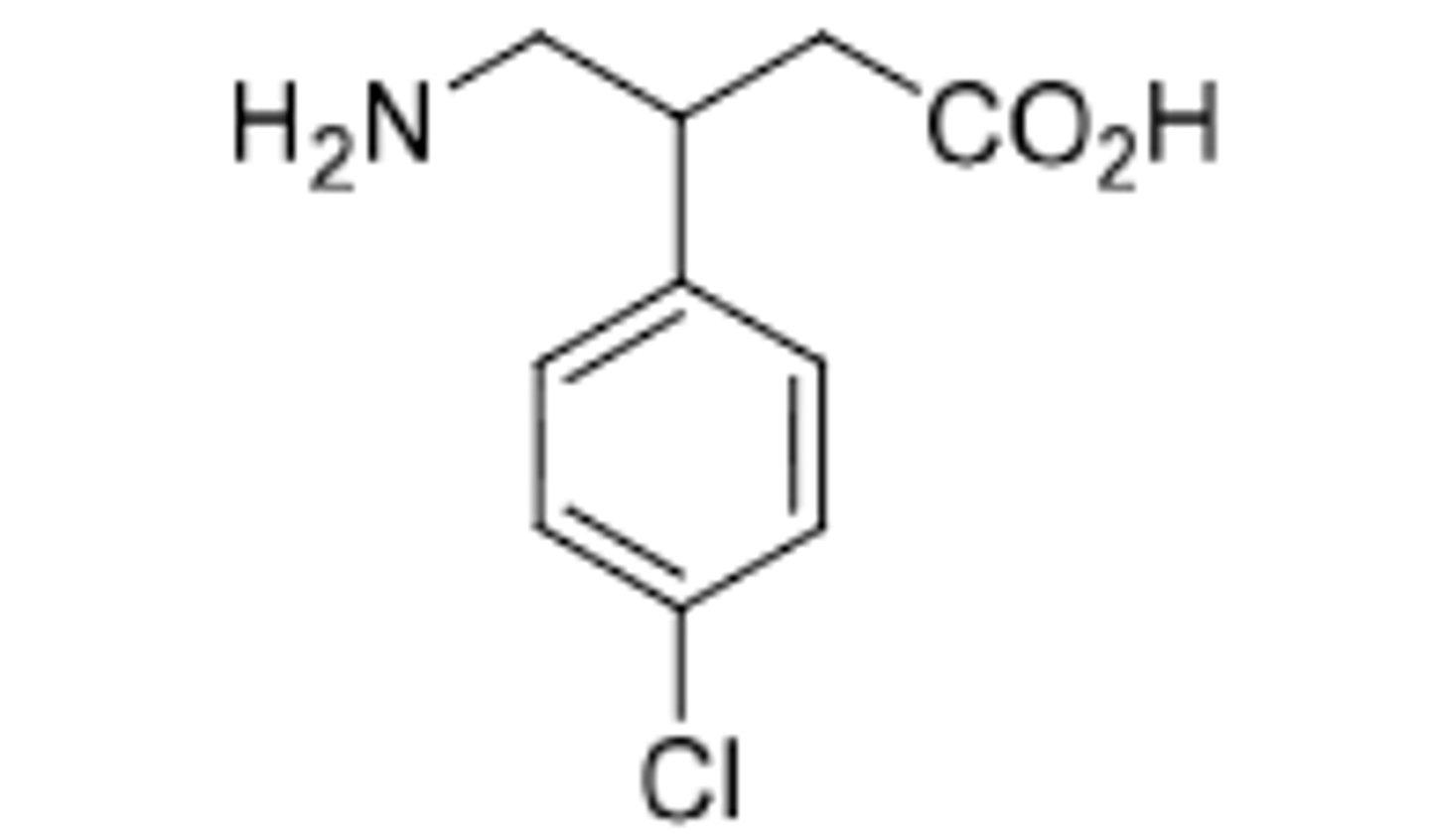
Baclofen (Liorseal)
-skeletal muscle relaxant
-GABA-B agonist (pre-synaptic) --> Decrease release of excitatory neurotransmitters
-structure: GABA with phenyl ring attached (Cl on phenyl blocks hydroxylation)
-rapidly absorbed, little metabolism (most eliminated unchanged)
-less sedation than diazepam
-used to treat spasticity associated with MS and trauma to spinal cord
Cyclobenzaprine
-skeletal muscle relaxant for muscle spasms
-Amrix: ER formulation for QD dosing
-extensive metabolism: tertiary amine demethylation (Active metabolites), epoxide formation in middle ring double bond
-MOA unknown
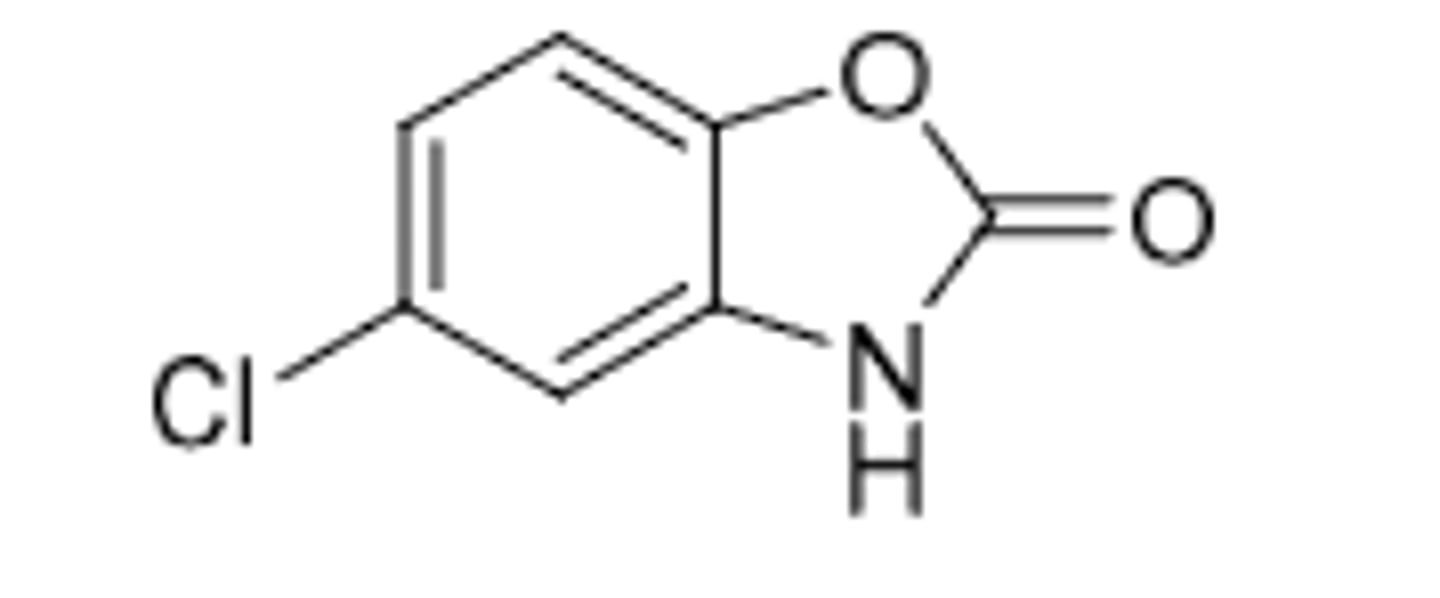
Chlorzoxazone
-acts on spinal cord by expressing reflexes
-skeletal muscle relaxant used for treatment of muscle spasm, strains, sprains, or back pain
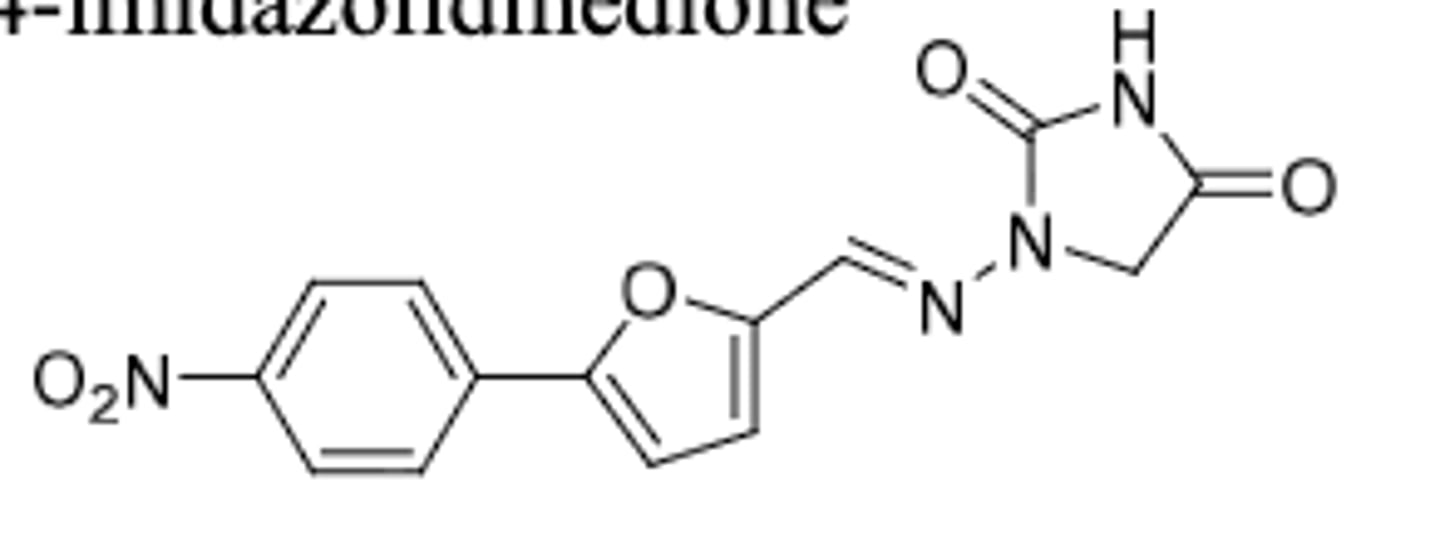
Dantrolene
-ryanodine receptor (RyR) antagonist --> slowed neurotransmission by controlling calcium release
-used for Malignant Hypothermia (MH) --> deadly condition where skeletal muscle increases oxidative metabolism, too much CO2 produces, and body fails to regulate temperature
-IV first for initial dose, followed by oral
-side effect: can cause muscle weakness and hepatic toxicity
-PO can also be used to treat spasticity from stroke, MS, spinal cord injury, and cerebral palsy
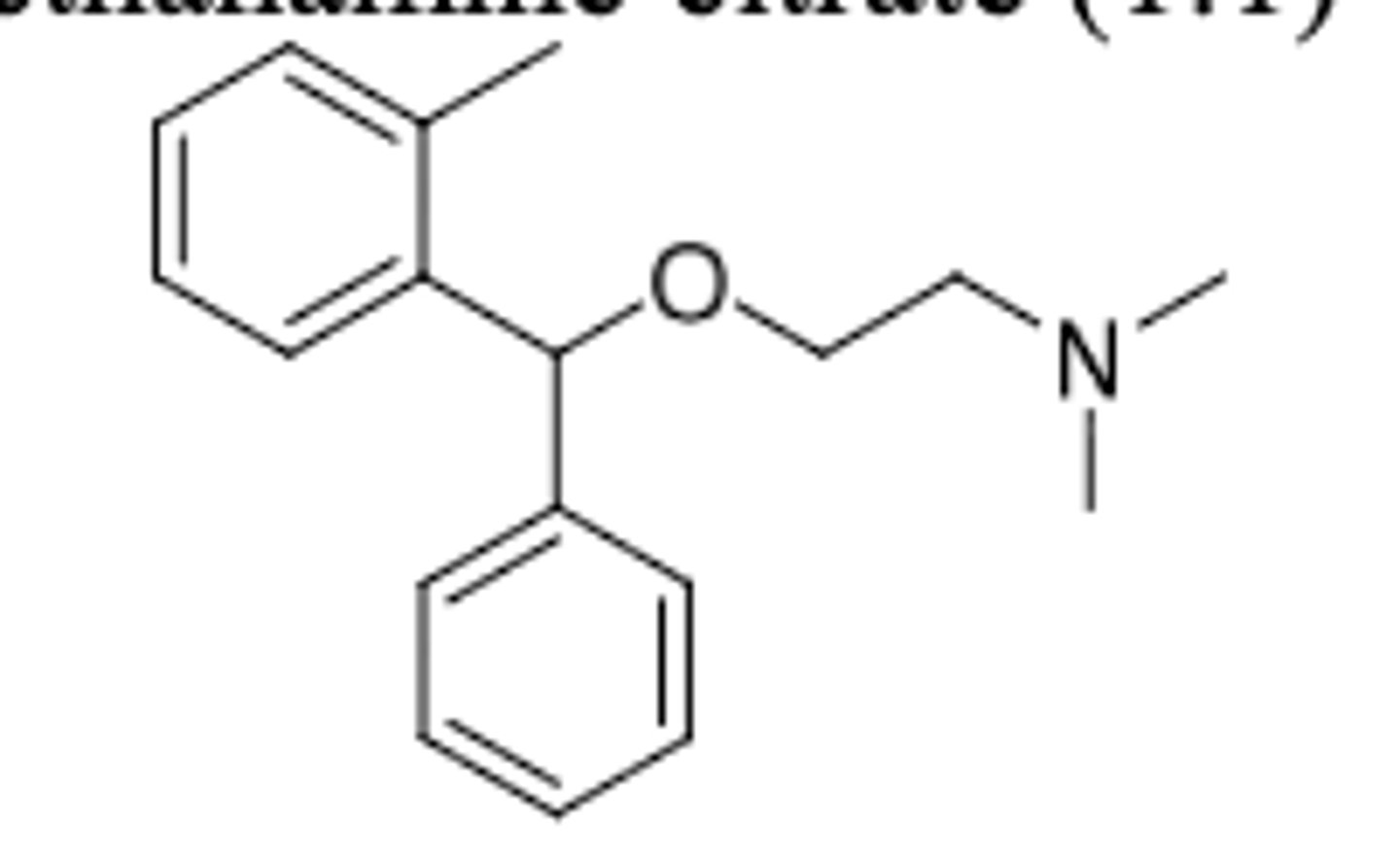
Orphenadrine
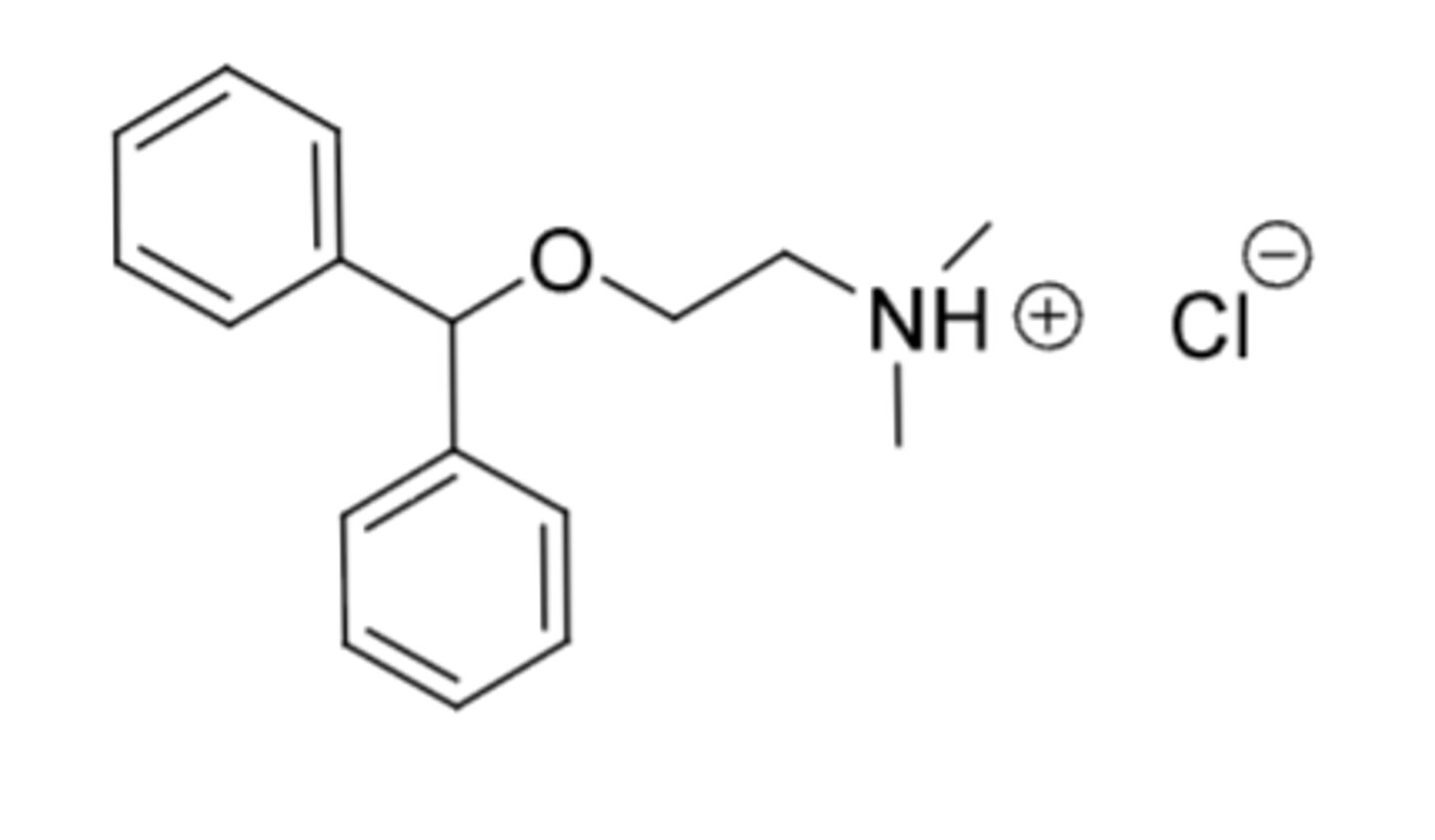
-very similar structure to diphenhydramine (with additional methyl on top benzene)
-skeletal muscle relaxant as adjunct to relieve discomfort with acute and painful musculoskeletal conditions
-may also be used to treat leg cramps
-has anticholinergic effects
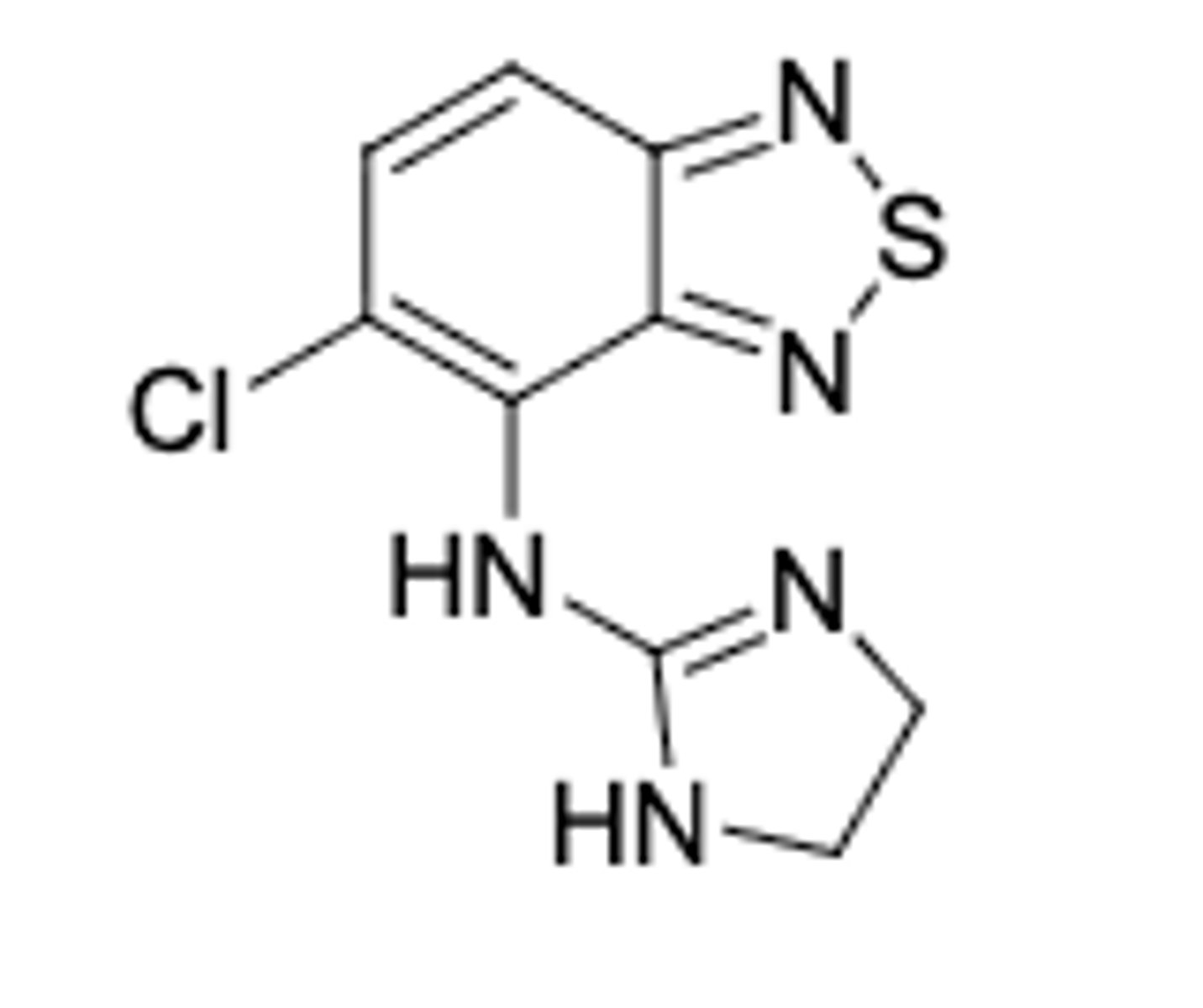
Tizanidine
-Alpha 2 agonist
-skeletal muscle relaxant for acute and intermittent management of increased muscle tone associated with spasticity
-1/10 - 1/50 the activity of clonidine BP lowering effects
Schizophrenia: a severe mental disorder characterized by distortions in thinking, perception, emotions, language, sense of self and behavior
These agents produce a calming effect in agitated individuals and they induce a lessening of reactivity to emotional stimuli without affecting consciousness
Many of the conditions are believed to be due to imbalances of monoamine neurotransmitters such as dopamine, norepinephrine, and serotonin in the brain. These imbalances lead to mood and behavioral alterations.
Much evidence suggests that the antipsychotic agents function by blocking dopamine at the post-synaptic D-2 receptors. This is how the phenothiazines and
butyrophenones work.
Antipsychotic agents
-X: EWG at 2 position to increase activity (more EW = hihger neuroleptic potency)
-3-Carbon chain between two N's is optimal for maximum neuroleptic activity
-R's should be dimethyl or alkyl groups of <2 linear C's
-A piperazine or piperazineethanol group as side chain gives enhanced activity (piperazineethanol > piperazine > dimethylamino)
Phenothiazines have antiemetic and anticholinergic effects
Packed in dark container to prevent oxidation --> increases shelf life for all phenothiazines (prevent oxidation from air)
Phenothiazine SAR
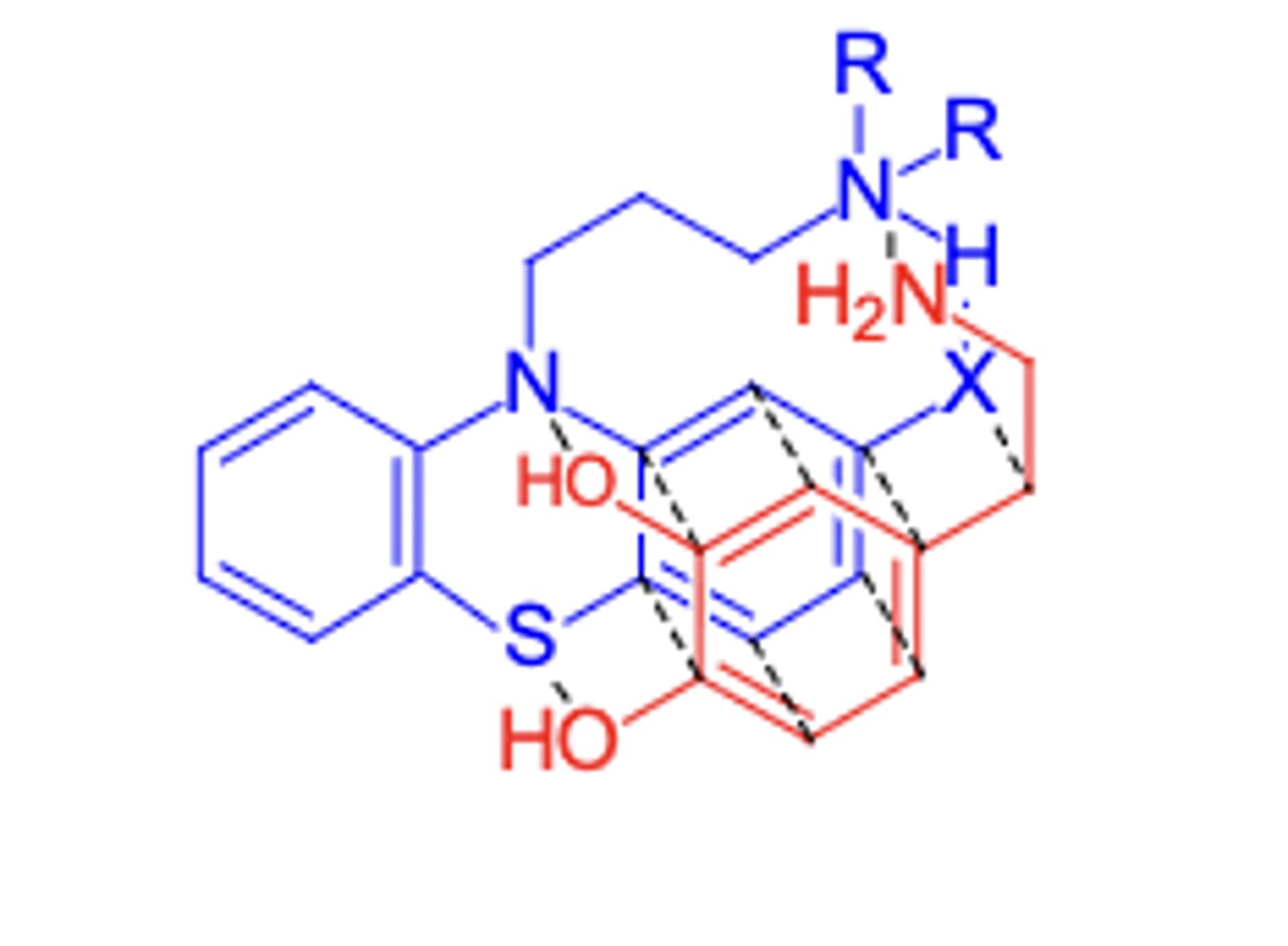
Chlorpromazine
-aliphatic phentothiazine
-D2 antagonist --> Antipsychotic and control of N/V
Metabolism:
-sulfur oxidized to sulfoxide (one double bond to O) then further oxidized to sulfone (2 double bonds to O) leading to inactivation
-7-hydroxy metabolite
-demethylation on tertiary amine
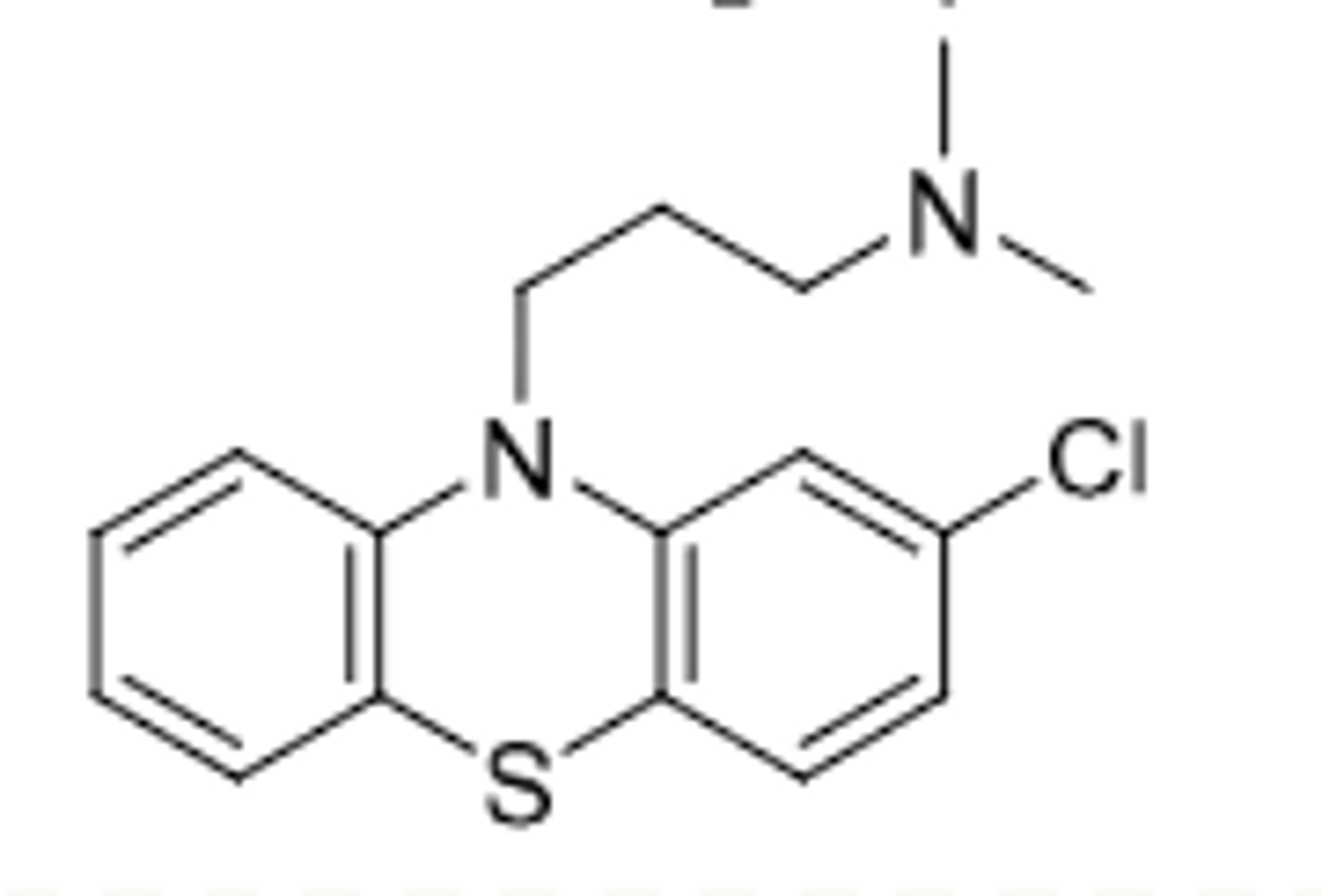
Triflupromazine
-aliphatic phenothiazine
-D2 antagonist --> Antipsychotic and control of N/V (same as chlorpromazine)
-only difference from chlorpromazine is EWG --> the CF3 (increased lipophilicity)
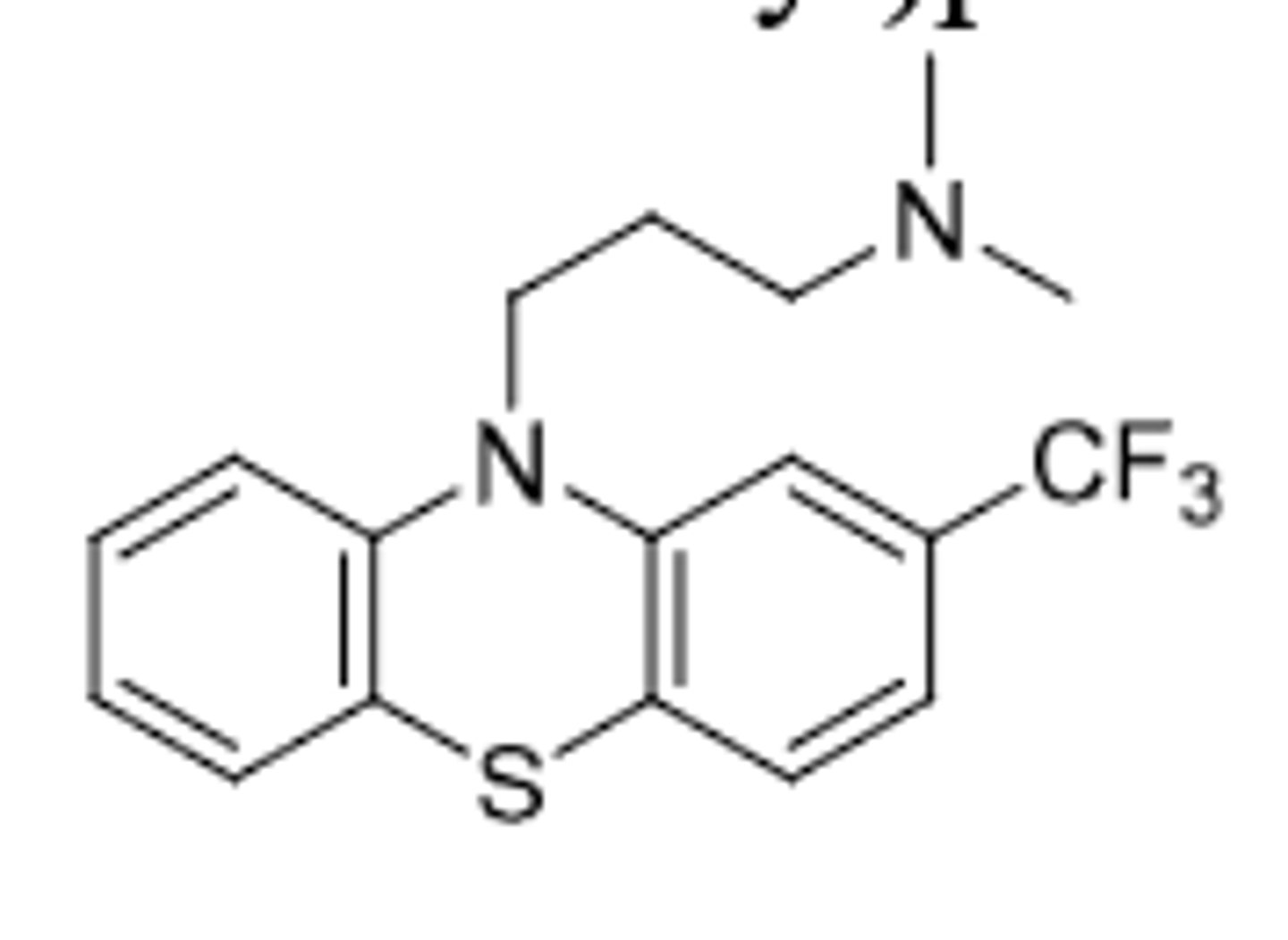
Promethazine
-aliphatic phenothiazine
-Very weak antipsychotic (missing structural features including only 2C linker and no EWG)
-1/10 activity of chlorpromazine
-used for control of motion sickness and post operative patients (anti emetic effects); also has antihistamine activity
-NOT used for psychosis as antipsychotic
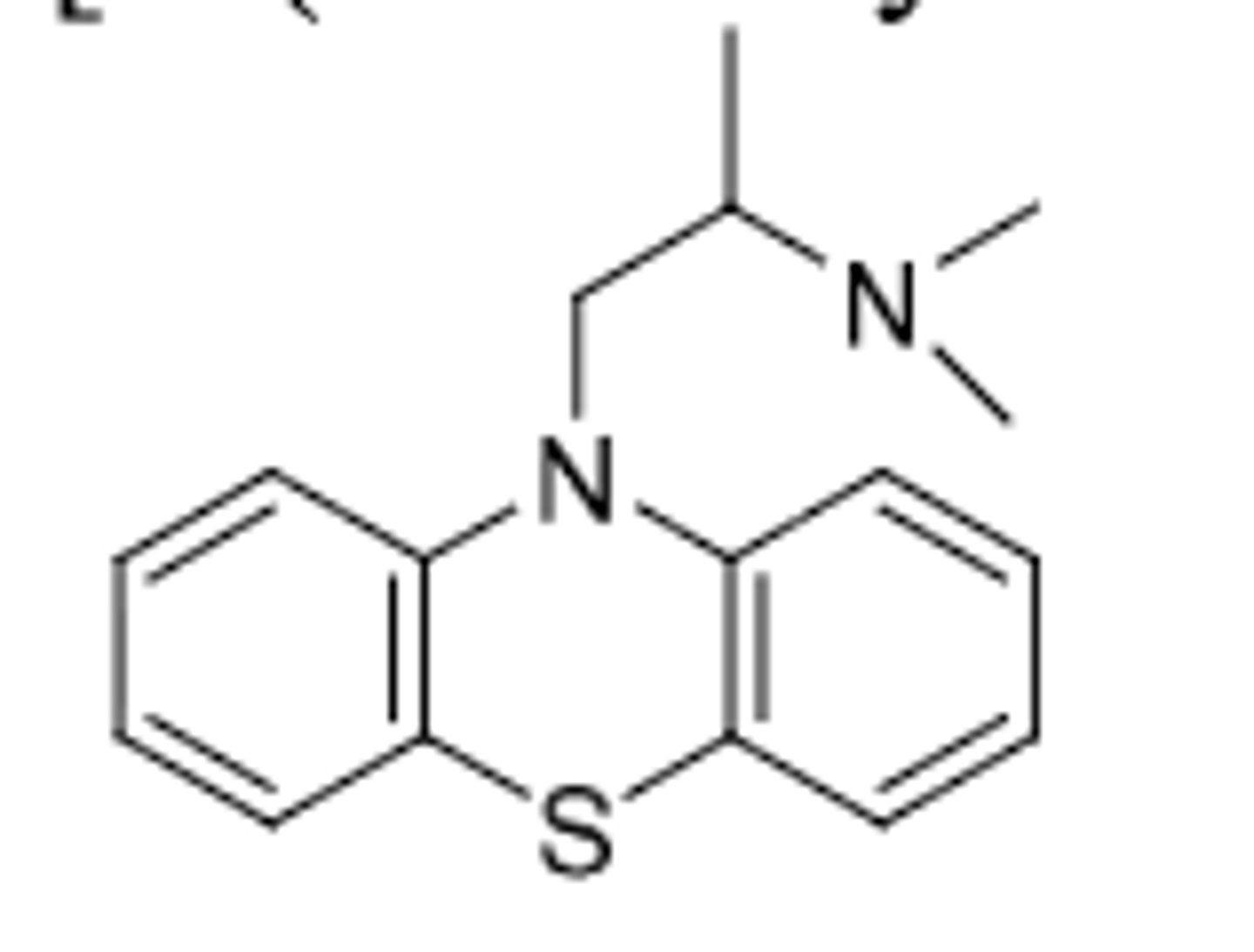
Thioridazine
-Piperidine phenothiazine
-weak antipsychotic (EWG is not strong) but can be oxidized --> metabolites are more potent antipsychotics (they are their own drugs too)
-NOT A PRODRUG THOUGH B/C PARENT IS ACTIVE
-CYP2D6 metabolized
-Sulfoxide (mesoridazine), 8x more potent than parent; still clinically used today
-Sulfone (sulfuridazine) is 2x more potent thamn parent; withdrawn due to cardiac side effects
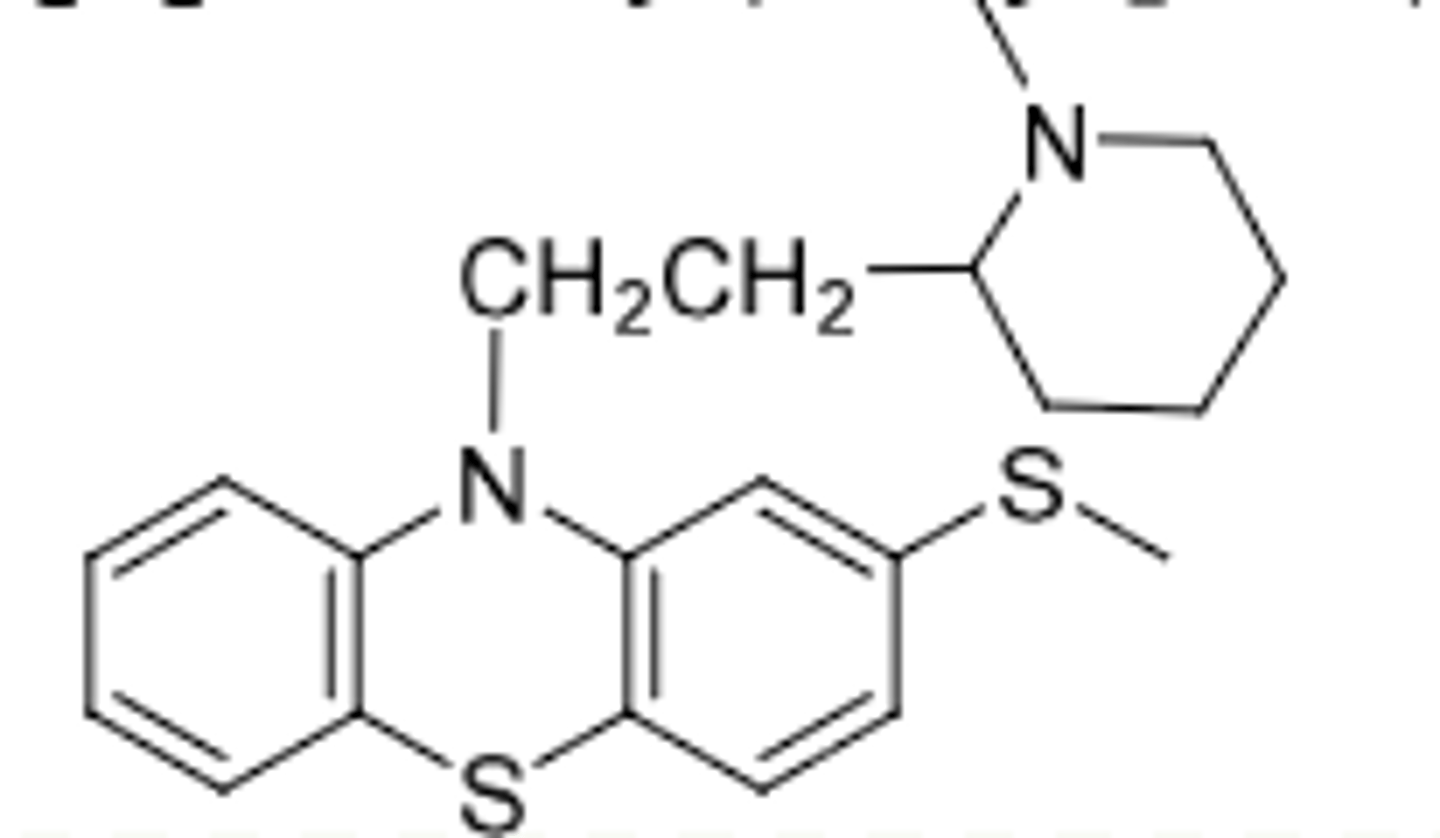
Trifluoperazine
-piperazine phenothiazine (more potent than diethyl amine side chain due to more CNS activity)
-used for antipsychotic
-used for schizophrenia and short term treatment of non psychotic anxiety
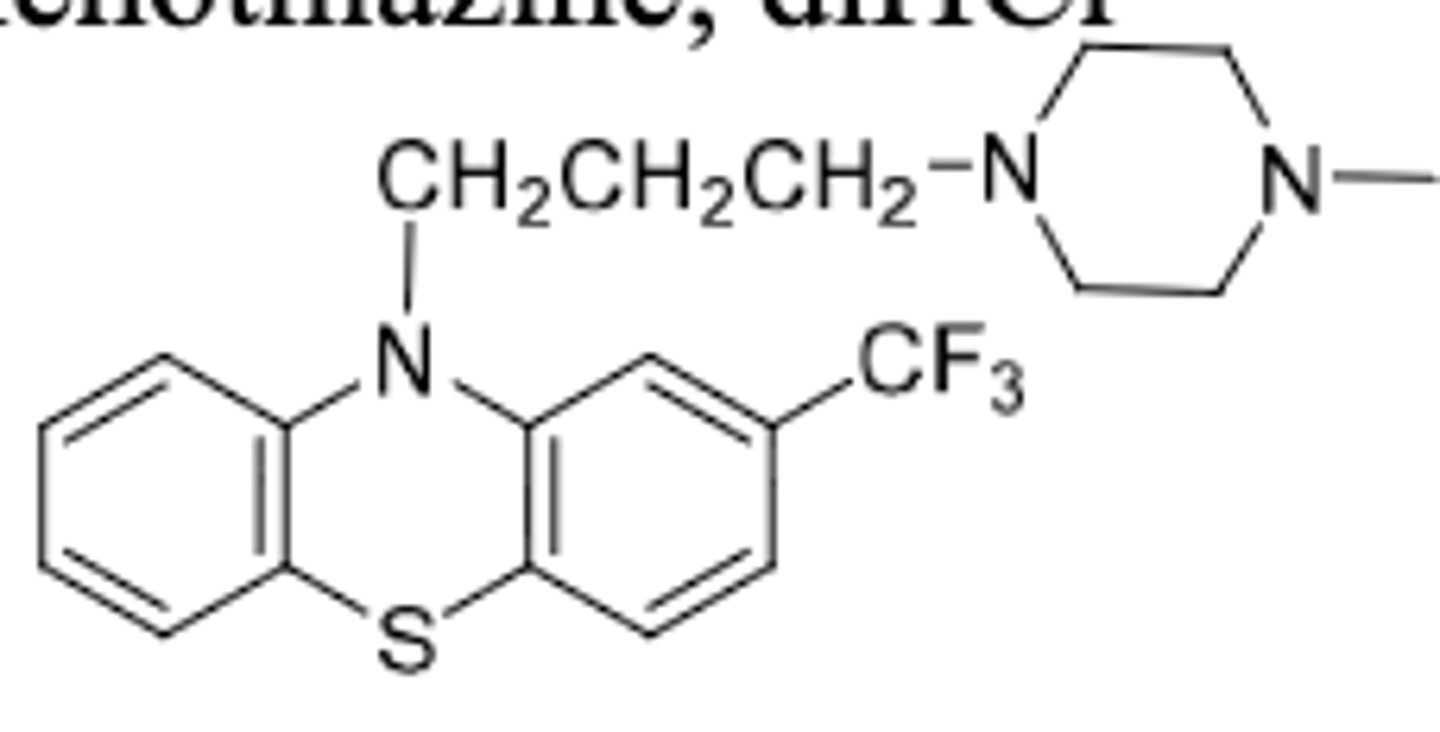
Prochlorperazine
-piperazine phenothiazine
-antipsychotic and antiemetic
-also has N/V use (unlike trifluoperazine)
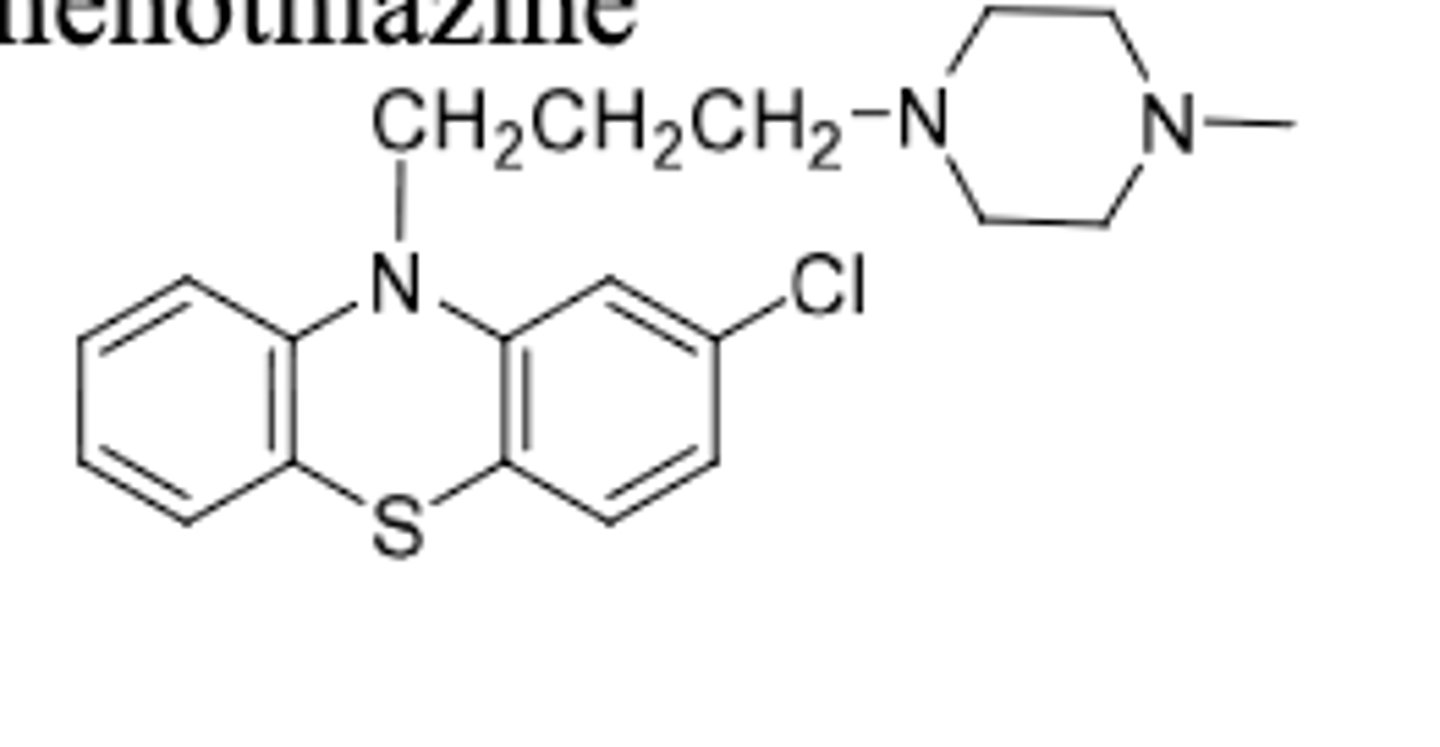
Perphenazine
-piperazineethanol phenothiazine
-antipsychotic
-can be given IV to control N/V
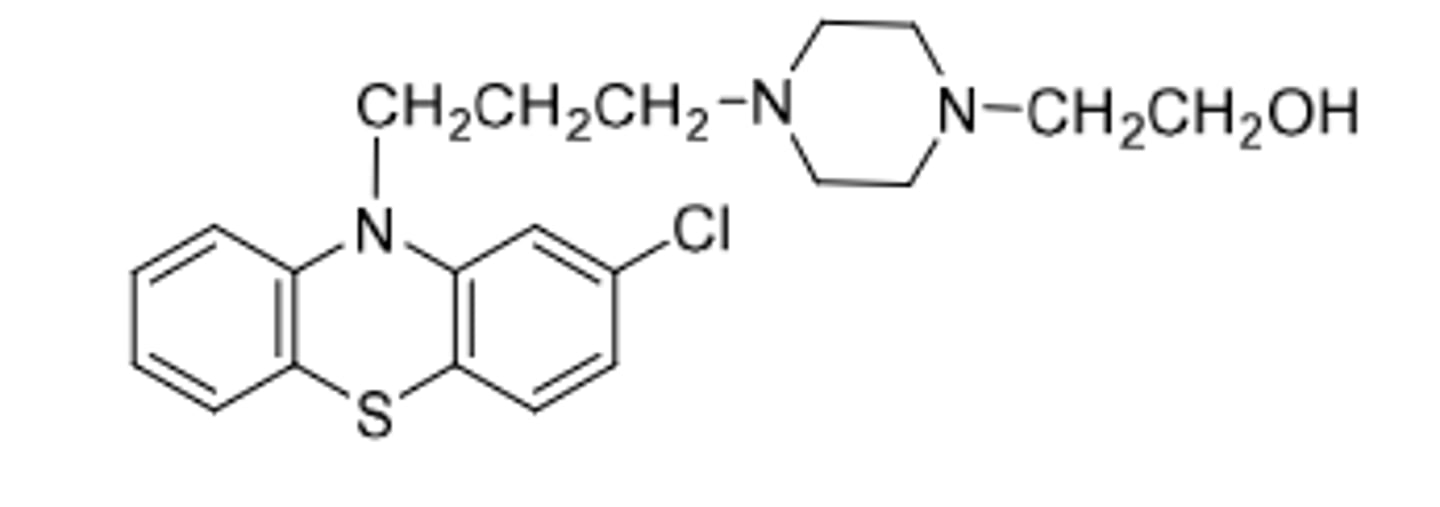
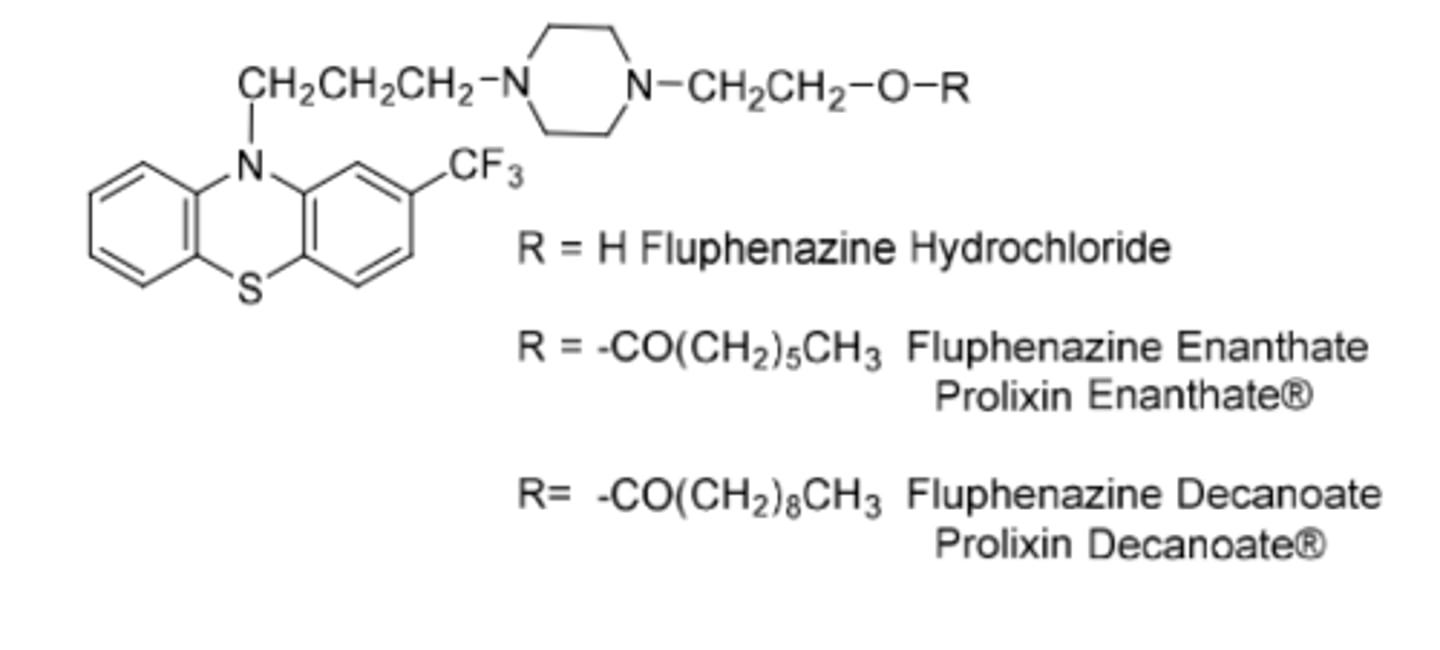
Fluphenazine
-piperazineethanol phenothiazine
-to treat schizophrenia
Original: (R=H)
-needs to be adminsitered 3-4x per day
-t1/2 = 33h
Enenthate:
-R=7 carbon fatty acid
-once every 2 weeks
Decanoate:
-R=10 carbon fatty acid
-once every 3-4 weeks
Prodrug forms: Suspend in oil, inject into patients muscles, drug slowly releases from injection site into blood --> fatty acid is attached to hydroxy by ester functional group --> esterases in blood release fluphenazine over time
-t1/2 = 163-132h
-used for chronic treatment of schizophrenia
-long acting parenteral that solved the initial adherence problem
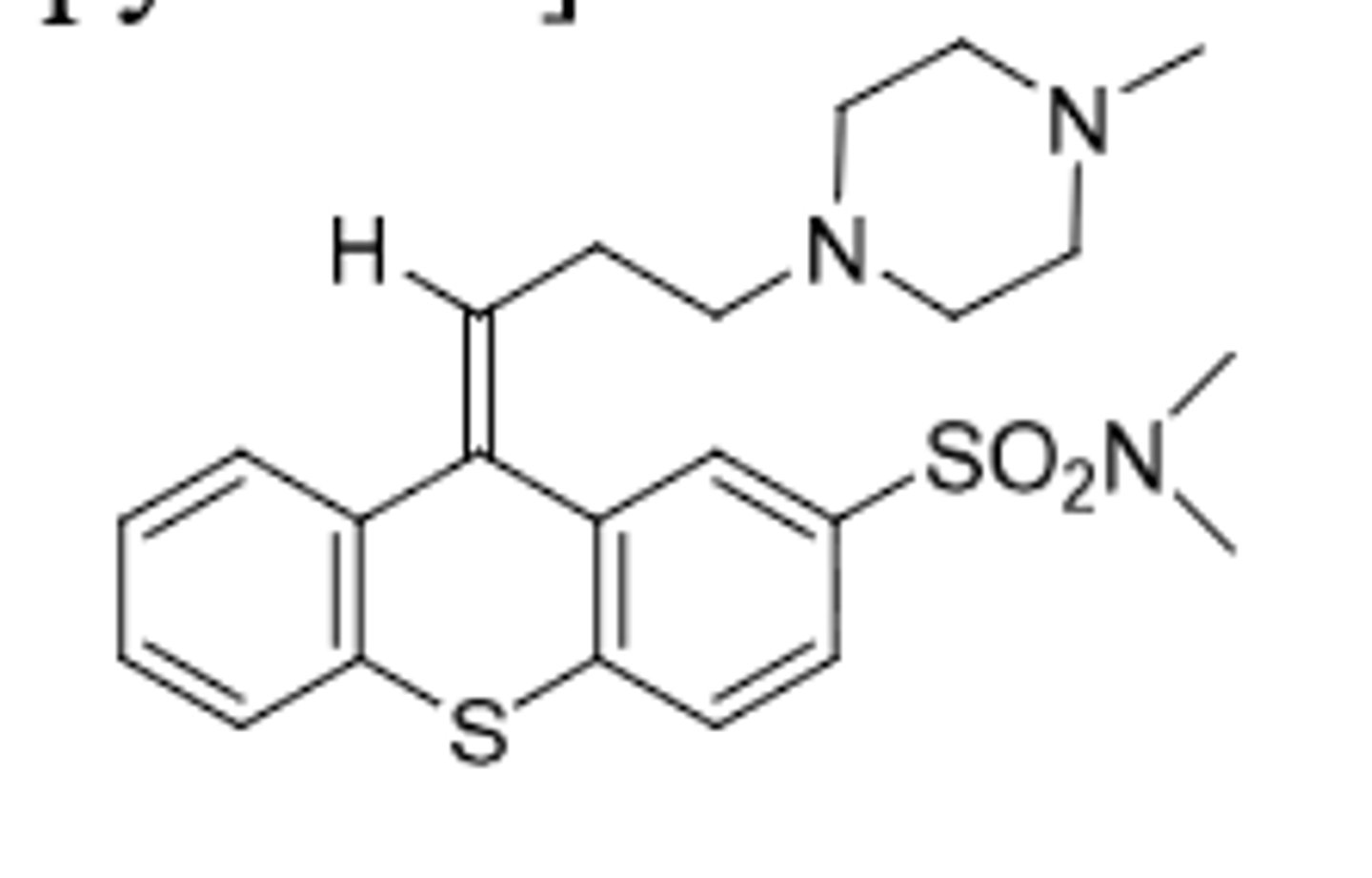
Thiothixene
-isosteric phenothiazine
-double bond is bioisosteric replacement
-work on D2 receptors
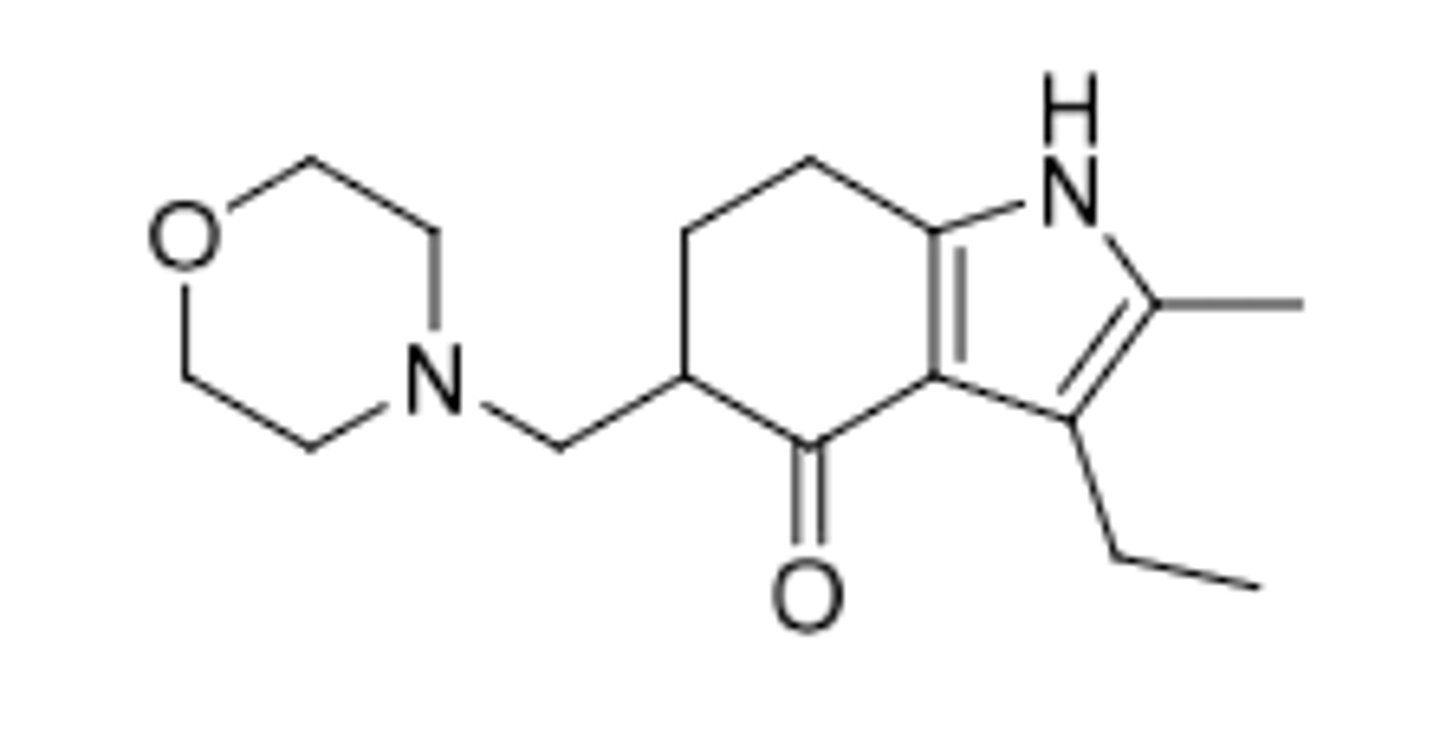
Molindone
-indole antipsychotic for management of schizophrena
-unknown MOA
-clinical profile similar to piperazine phenothiazines
-very extensive metabolism
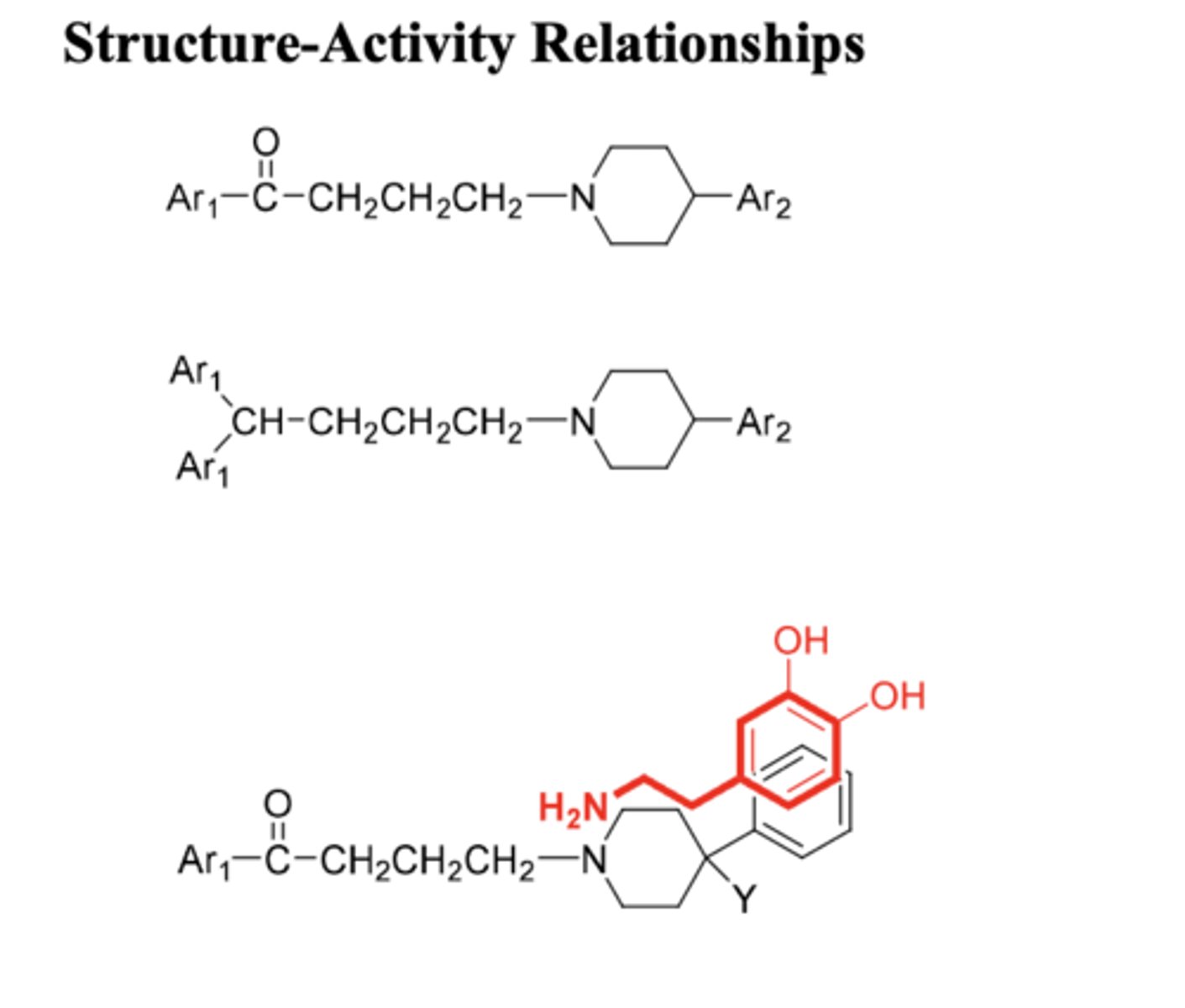
-Are in general more potent than the phenothiazines and isosteric phenothiazines
-Cause greater CNS side-effects but less peripheral anticholinergic side-effects than the phenothiazines
Mimicking dopamine to block D2 for antipsychotic and antiemetic effects
Butyrophenones
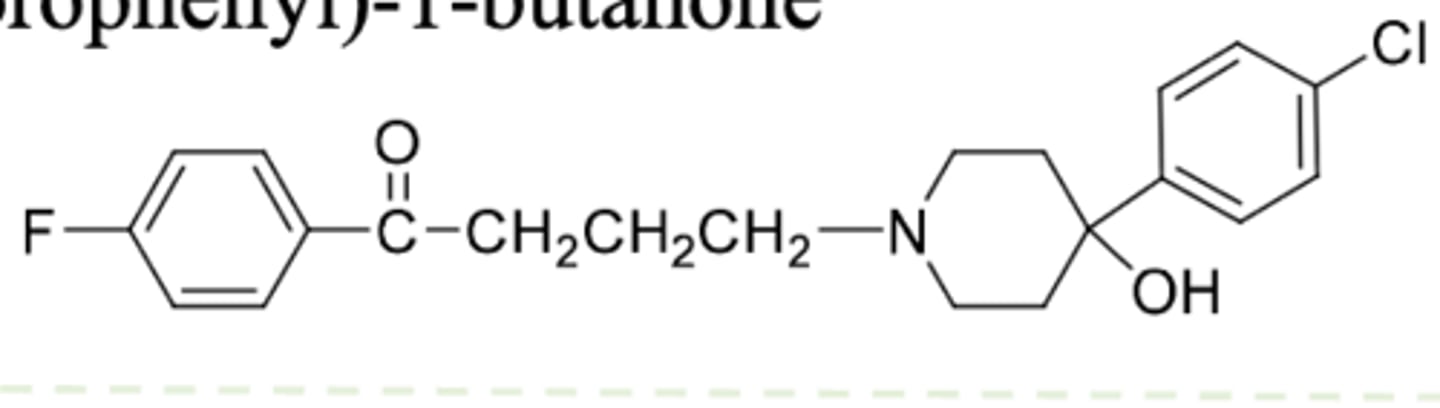
Haloperidol
-butyrophenone
-D2 inverse agonist
-antipsychotic used for schizophrenia and tourettes syndrome
-Attaching 10 carbon fatty acid (decanoate) to OH creates prodrug --> dissolve in sesame oil, IM injection given monthly (drug slowly released from injection site by estereases to remove fatty acid in blood and produce haloperidol)
metabolism:
-OH conjugation (50-60%)
-dealkylation (20-30%)
-reduction of ketone to alcohol (23%)
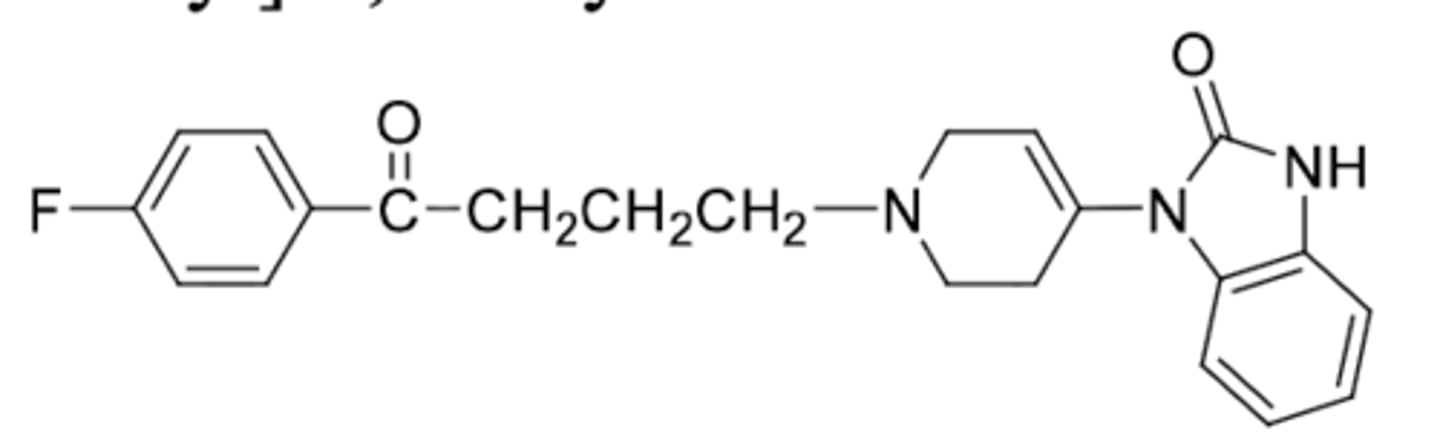
Droperidol
-butyrophenone
-Potent D2 antagonist
-half life only 2 hours --> not used for schizophrenia
-used as antiemetic for N/V in surgical procedures or diagnostic procedures or chemotherapy
-injection only
Metabolism: reduction, double bond, hydroxylation
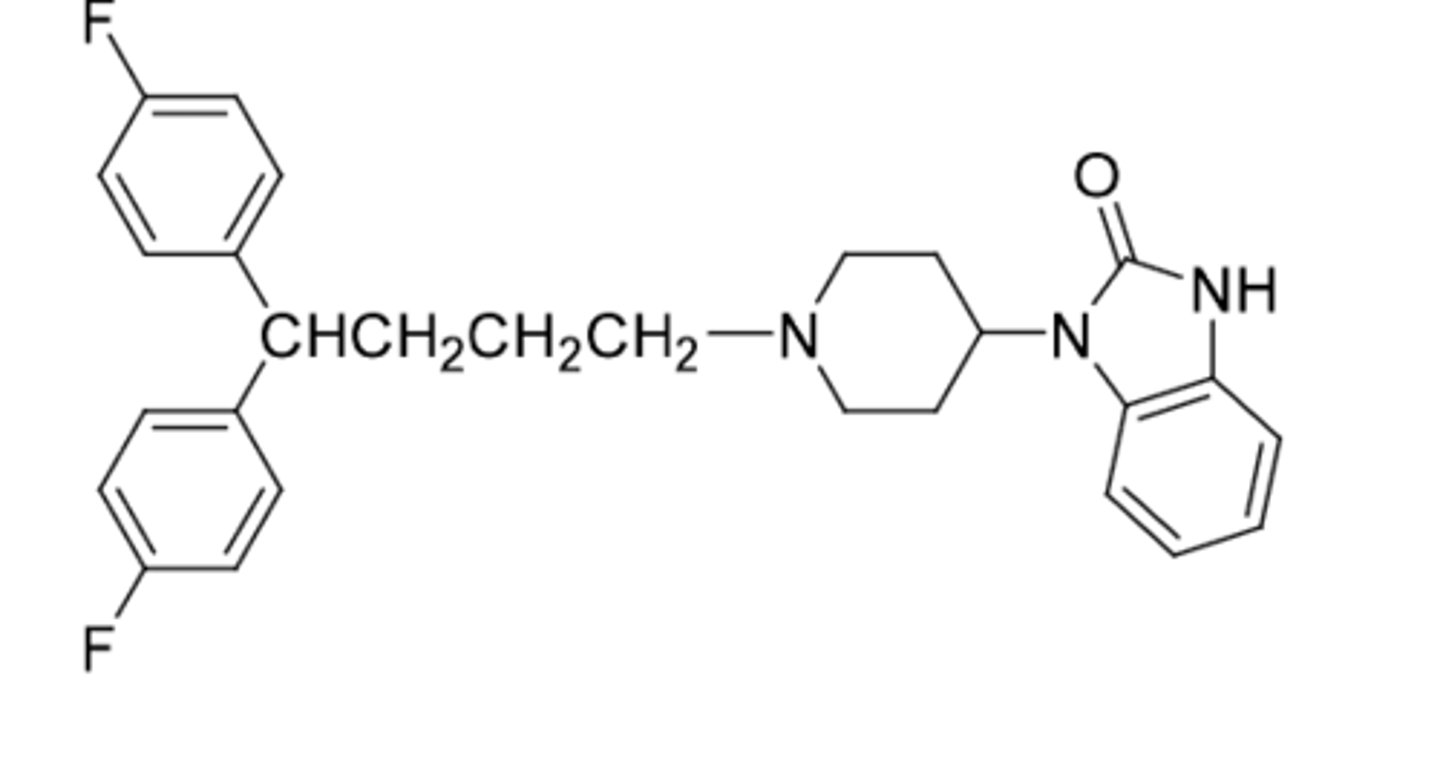
Pimozide
-butyrophenone (with diphenyl methyl instead of phenyl ketone)
-used for suppression of ticks in tourettes disorder
-Lithium ion can be absorbed and distributed into CNS
-works by inhibiting NE reuptake and increasing serotonin receptor sensitivity
-Positively charged cation eliminated in urine (similar to sodium ions) --> risk of sodium ion depletion because it inhibits reabsorption of sodium ions
-treatment of manic episodes in bipolar disorder
Lithium Carbonate, Lithium Citrate
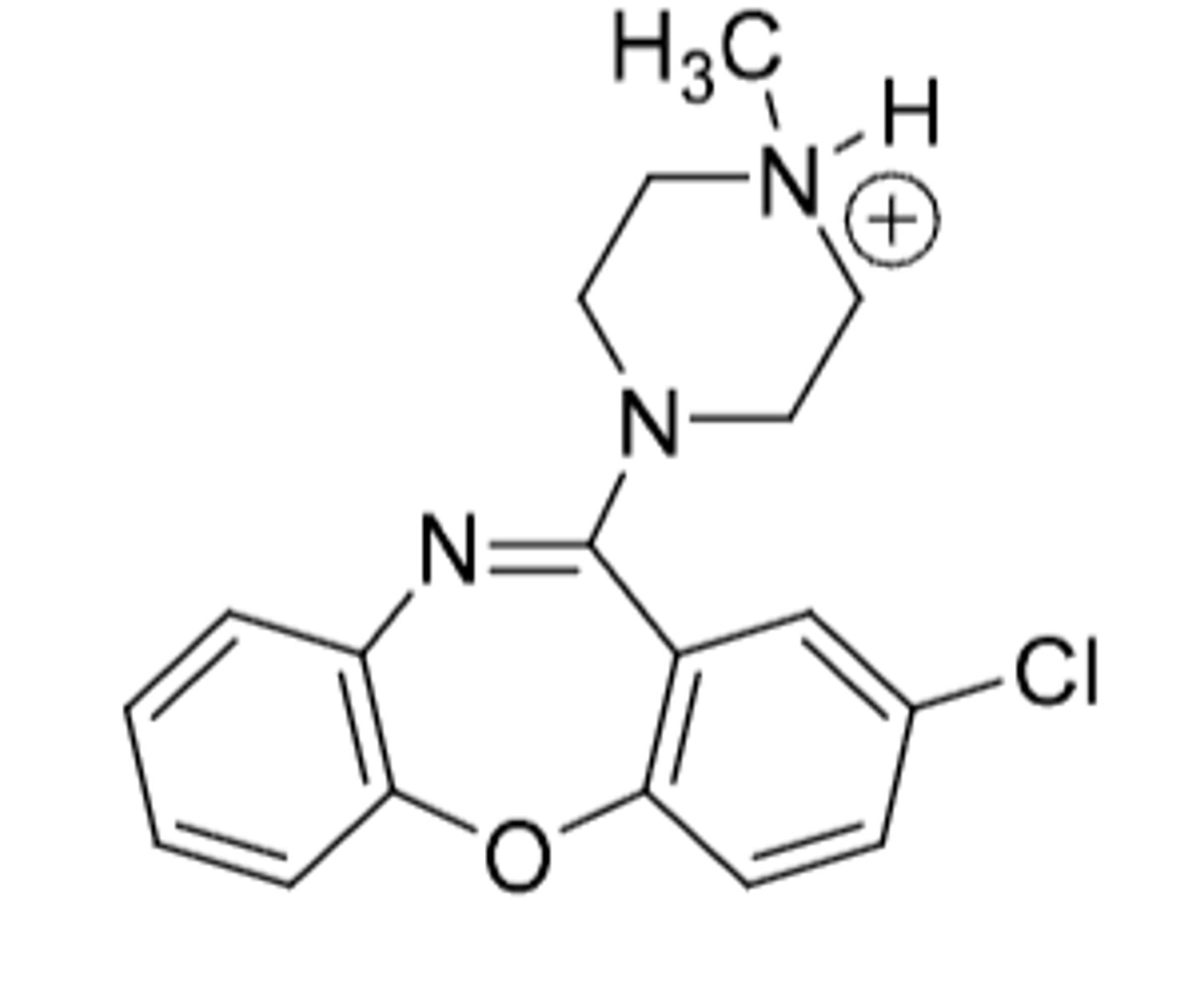
Loxapine
-used for schizophrenia (unknown MOA of how)
-demethylated on quaternary N to form TCA amoxapine
First generation antipsychotics only treat positive aspect of schizophrena (hallucinations)
First generation antipsychotics have extrapyrimidal symptoms (EPS) side effects and movement disorders such as TD (tardine dyskinesia)
The negative aspects of schizophrenia, such as withdrawal from society and depression are NOT treated with 1st gen drugs
All second generation antipsychotics have 5HT1 agonist activity to help with the treatment of the negative aspects of schizophrenia and help reduce the EPS side effects
First-gen vs. Second-gen antipsychotics
Clozapine was the first available drug to treat both positive and negative aspects of schizophrenia, but the significant risk for agrunulocytosis (drop in WBC, can be fatal)
Lower risk of EPS of TD symptoms
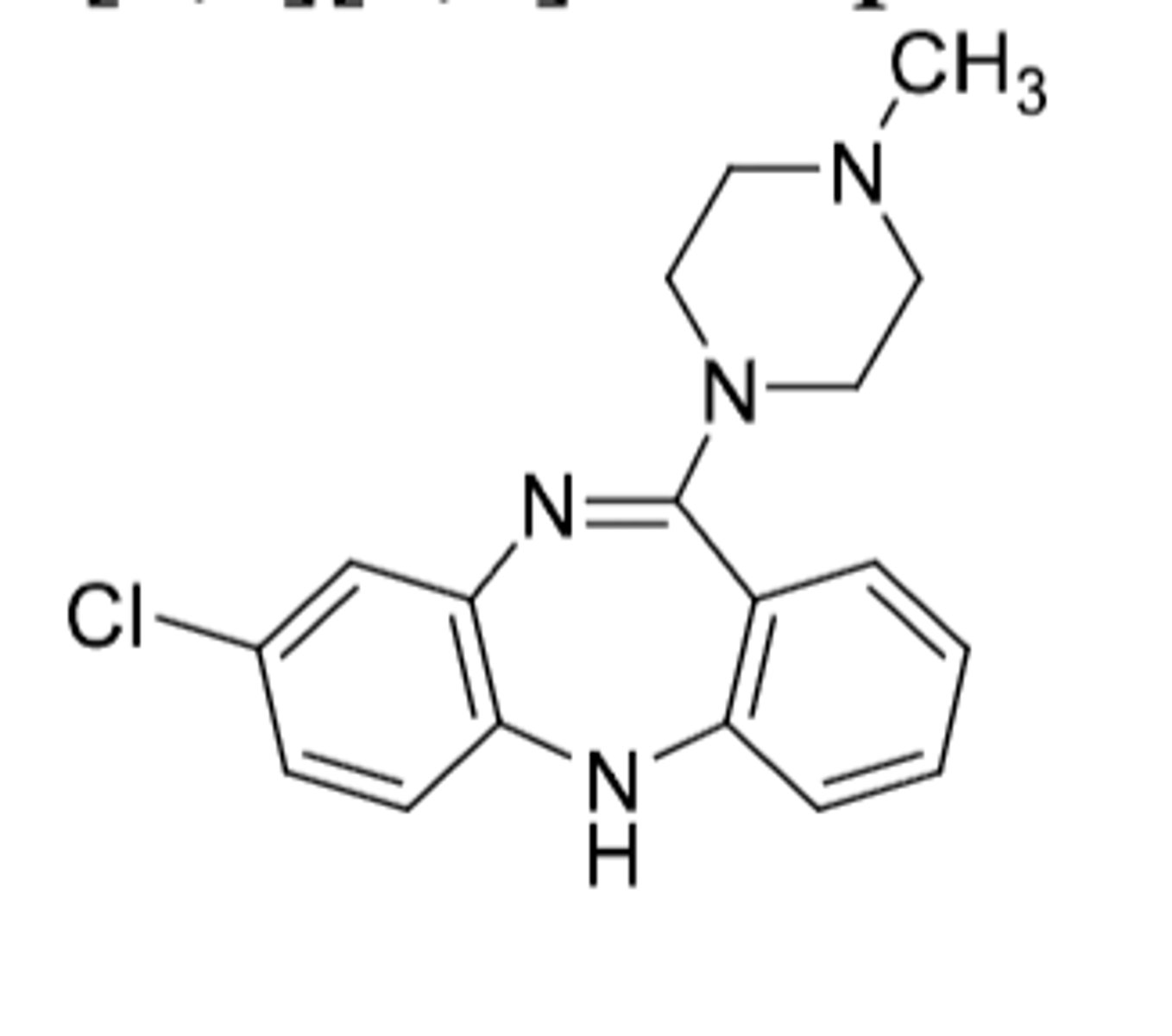
Risperidone (Risperidal)
-second generation antipsychotic
-oral solution or disintegrating tablet
-t1/2=3-14h (taken multiple times per day)
-microencapsulated polymeric formulation (encapsulated in PLG copolymer) --> Risperidal consta - extends half life of risperidone by crosslinked ester bonds to be slowly hydrolyzed and released over time
Hydroxy metabolite of risperidone (OH on rightmost ring) is active --> Paliperidone (Invega)
-t1/2 = 23-30h
-hard shell, nonabsorbable tablet for once daily dosing
Invega hydroxy group can be metabolized (acetylation)
-Palmitate --> 16 Carbon fatty acid --> prodrug form
-Palmitate forms nanocrystals to suspend in aqueous solutions
-increase size of nanocrystal = more drug in injection = less frequent dosing
1. Invega sustena = once per month
2. Invega trinza = once every 3 months
3. Invega halfyera = once every 6 months
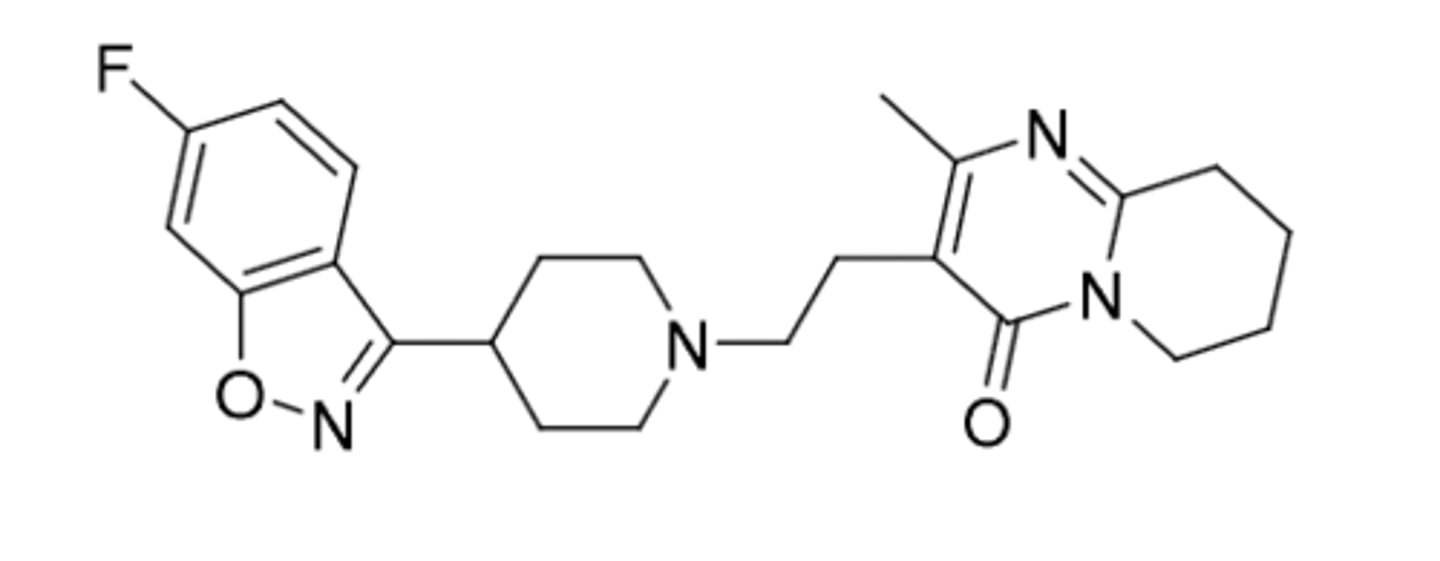
Iloperidone
-second generation antipsychotic
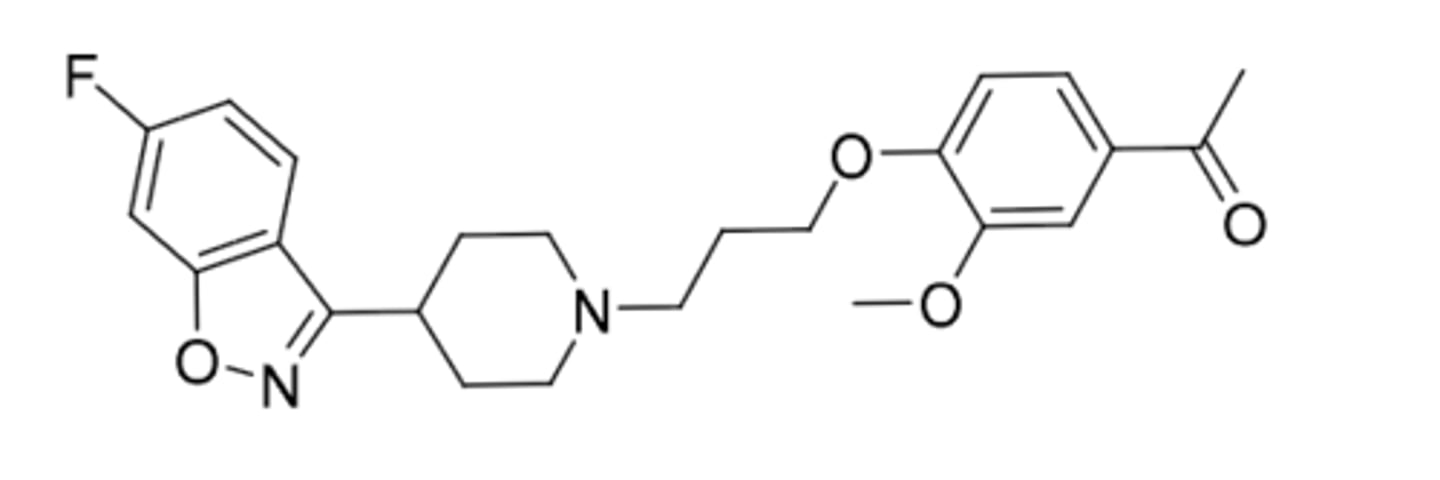
Ziprasidone
-second generatioon antipsychotic
-benzoisothiazole bioisosteric replacement for benzoisoxazole in risperidone
-blocking D2, 5HT2 antagonist, 5HTA1 agonism
-food effect(can increase absorption when taken with food)
-indicated for schizophrenia and bipolar disorder
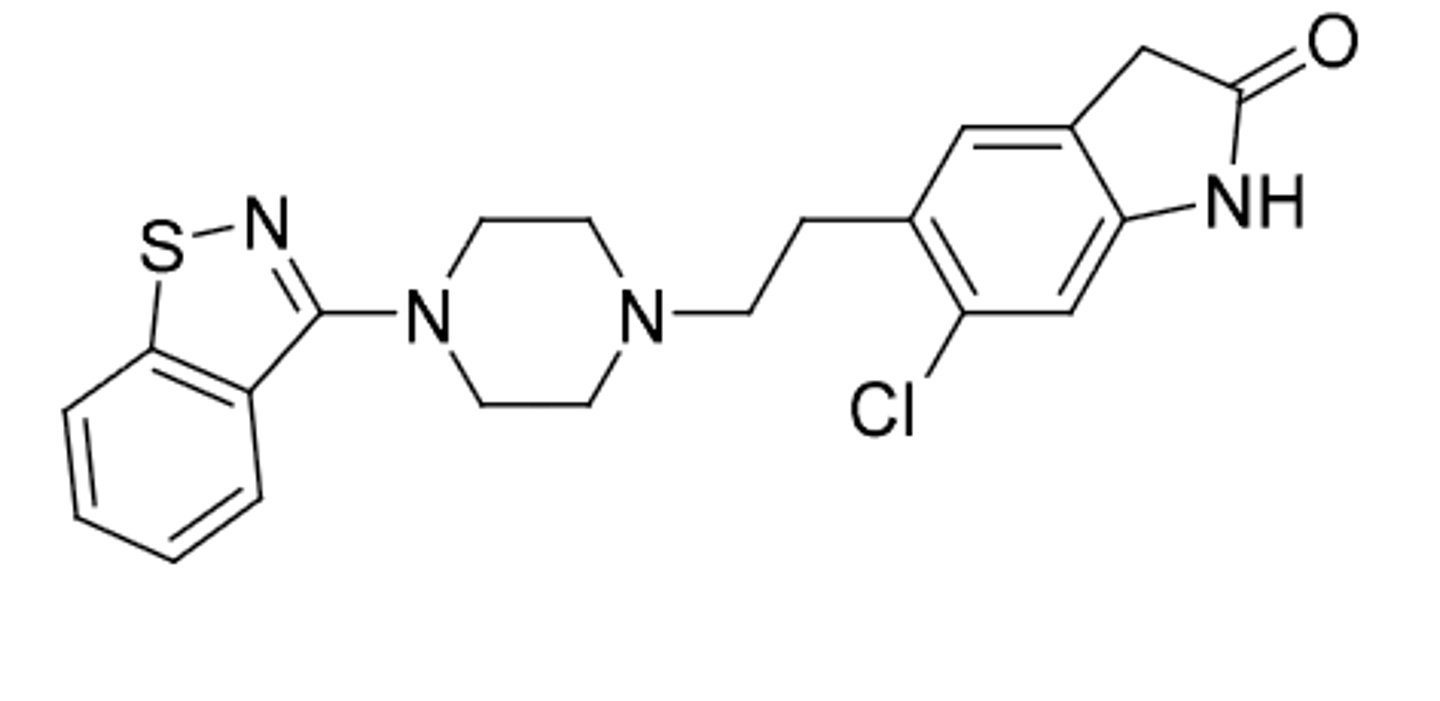
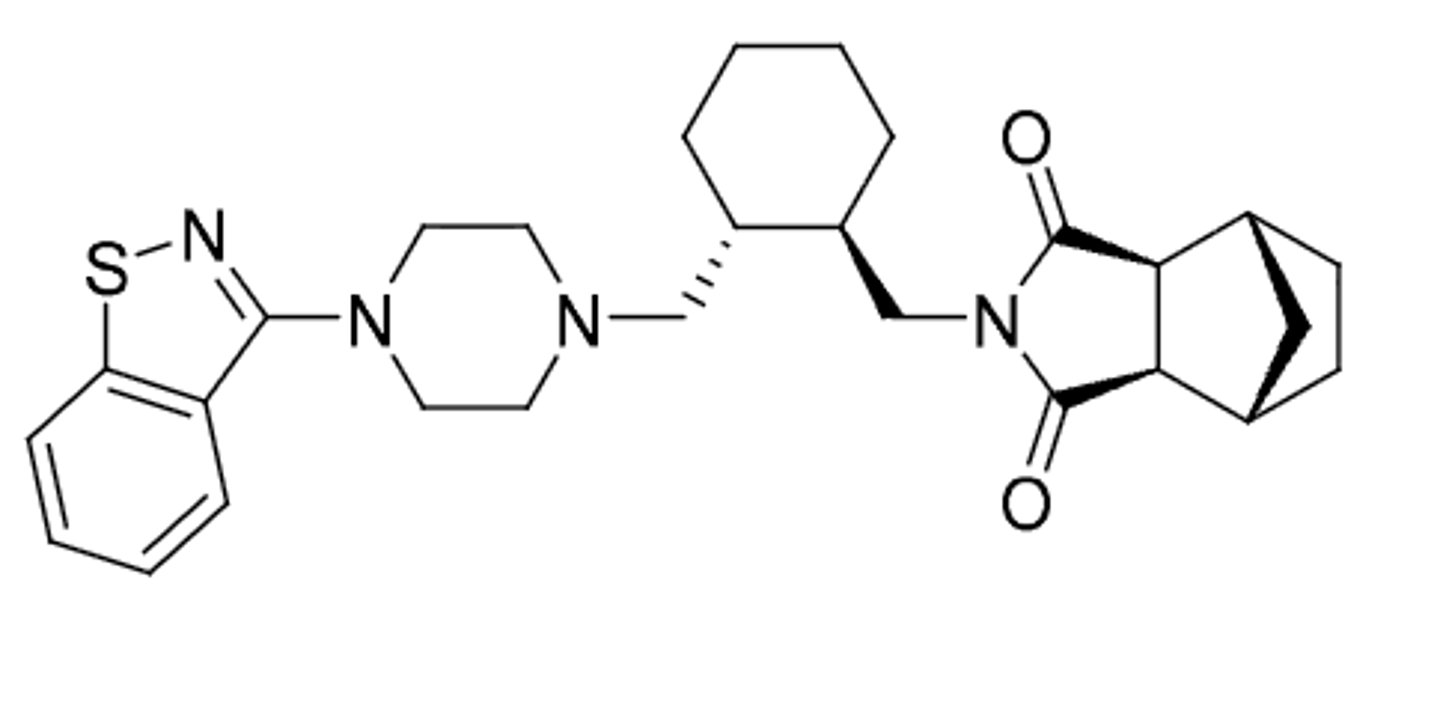
Lurasidone (same as ziprasidone)
-second generatioon antipsychotic
-benzoisothiazole bioisosteric replacement for benzoisoxazole in risperidone
-blocking D2, 5HT2 antagonist, 5HTA1 agonism
-food effect(can increase absorption when taken with food)
-indicated for schizophrenia and bipolar disorder
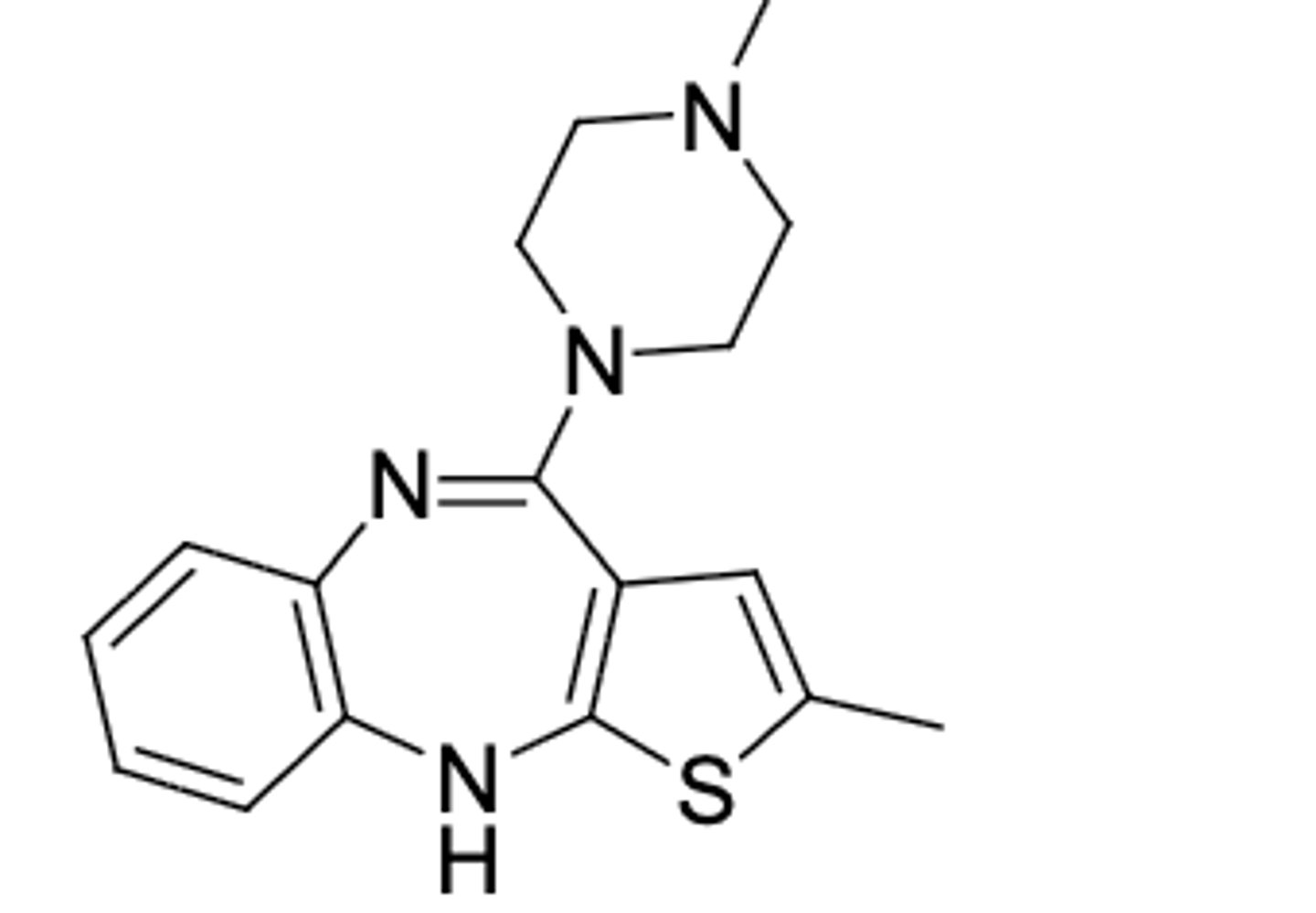
Olanzapine
-treats + and - aspects of schizophrenia (second gen antipsychotic)
-similar structure to clozapine (bioisosteric replacement of phenyl ring on right) but NO agranulcytosis
-used for bipolar disorder
-fewer Parkinson-like symptoms
-produces very little sedation
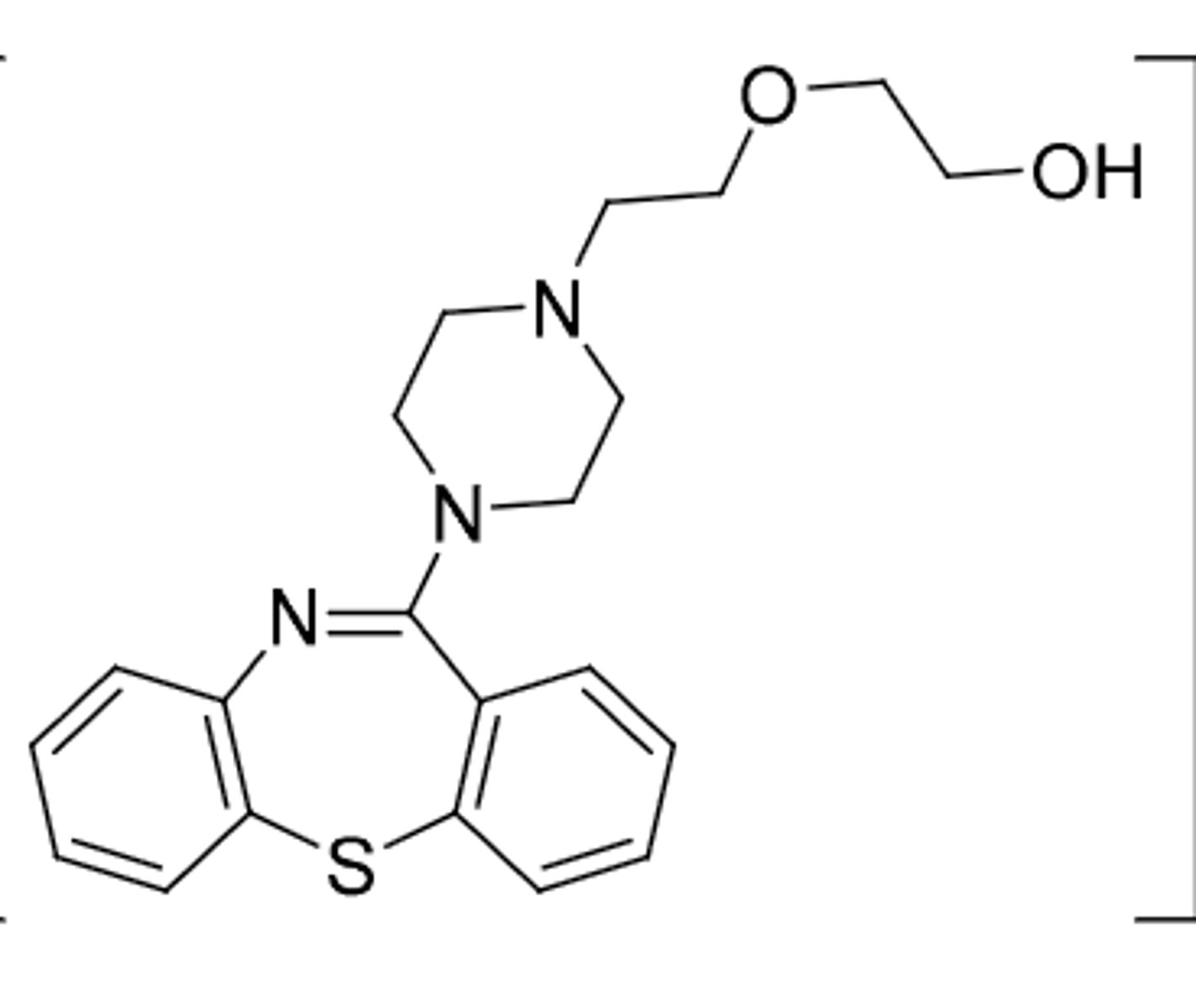
Quetiapine
-second gen antipsychotic (dopamine and serotonergic activity)
-used for management of psychotic disorders including schizophrenia
-can be oxidized at S or OH leading to inactivation
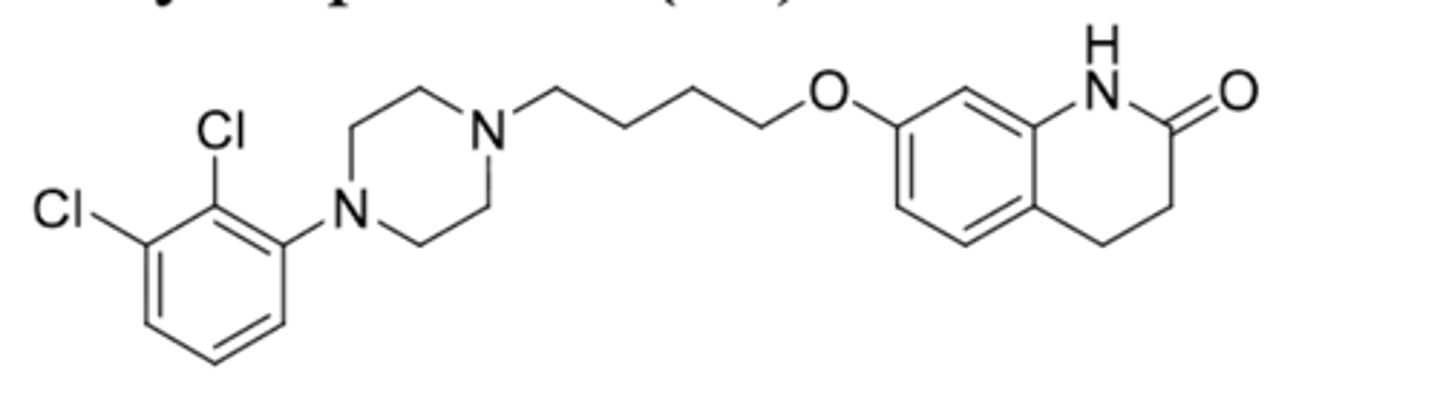
Apriprazole (Abilify)
-2nd gen antipsychotic
-partial agonist at D2, partial agonist at 5HT1A, antagonist at 5HT2A
-used to treat schizophrenia, bipolar disorder, and tourettes (2nd gen antipsychotic)
-requires 1-2 weeks of administration before effect is seen
-t1/2 = 75h
Metabolism:
1. inative dealkylation
2. ACTIVE - can be oxidized to remove 2H on rightmost ring to form active didehydro metabolite (t1/2 = 94h)
3. hydroxylation
Prodrug form: Apriprprazole Lauroxil (Aristada)
-ester + 12C fatty acid linker
-long duration of action, lipid soluble prodrug in sterile emulsion
-injected into patient every 4-6 weeks
Apriprazole mantena
-ER formulation of parent drug molecule in micron particle size in aqeuous solution for monthly IM injection
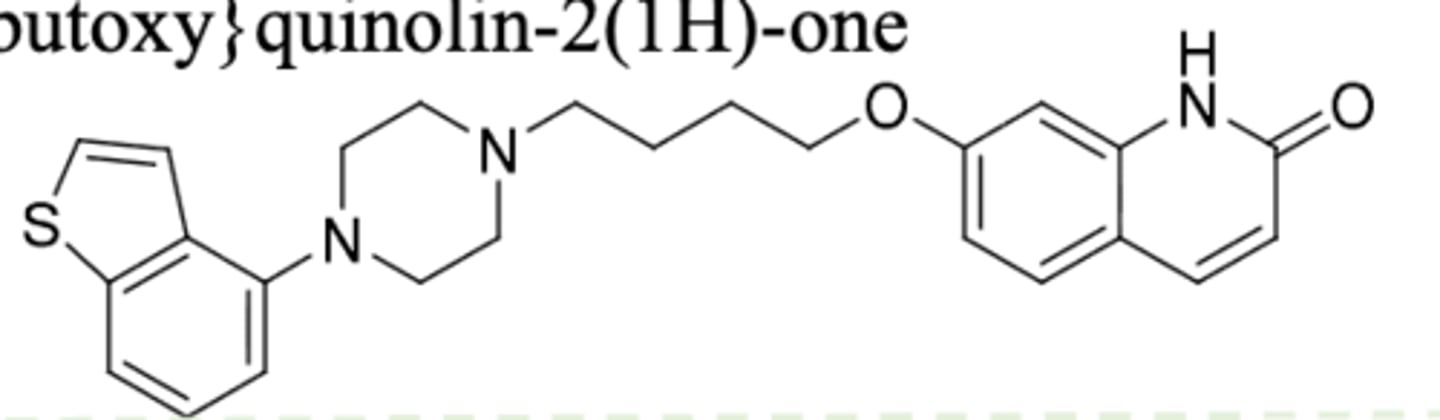
Brexpiprazole
-2nd gen antipsychotic
-very similar to apriprazole
-partial agonism at D2, partial agonism at 5HT1A, and antagonism at 5HT2A
-used for MDD, schizophrenia, and agitation in Alzheimers
-t1/2 = 91h, F=95%
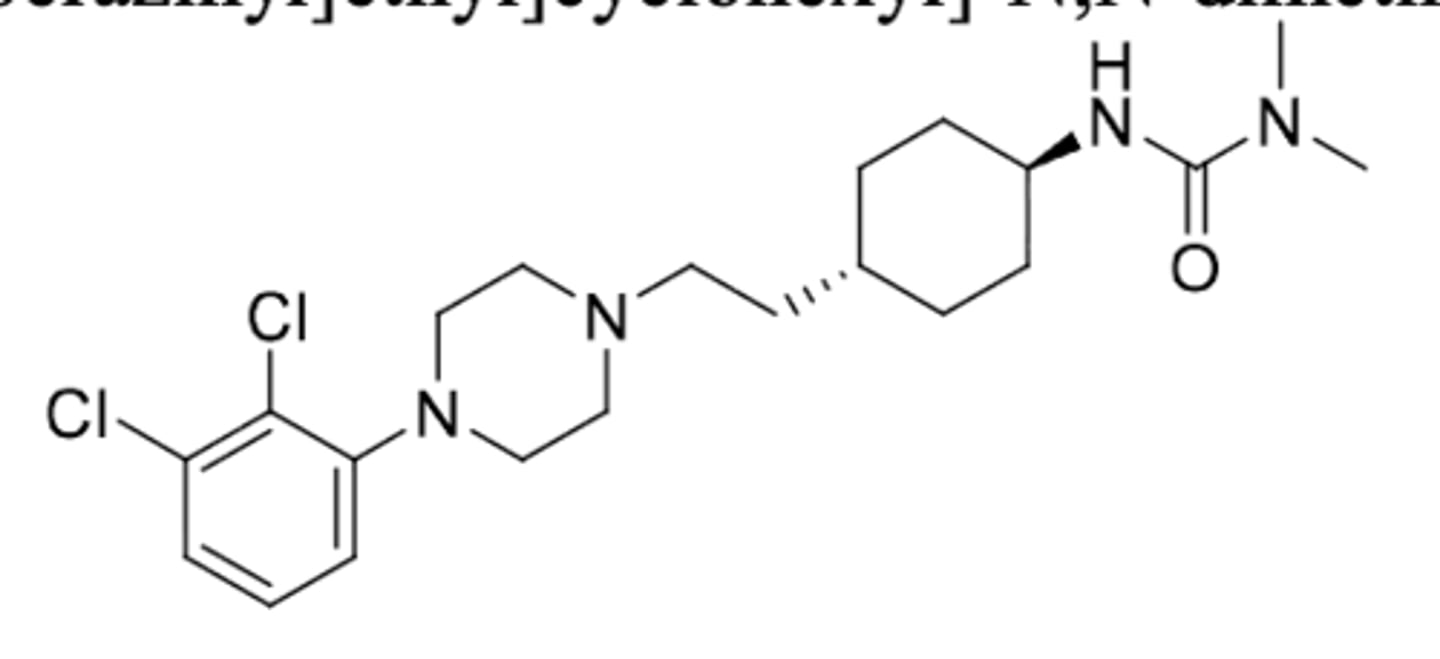
Cariprazine (Vraylar)
-2nd gen antipsychotic
-partial agonist at D2 and 5HT1A, antagonist at 5HT2A, AND 5HT2B antagonist activity
-demethylation on tertiary N to give active metabolites
-t1/2 = 2-4 days
= approved for schizophrenia, bipolar disorder, and MDD
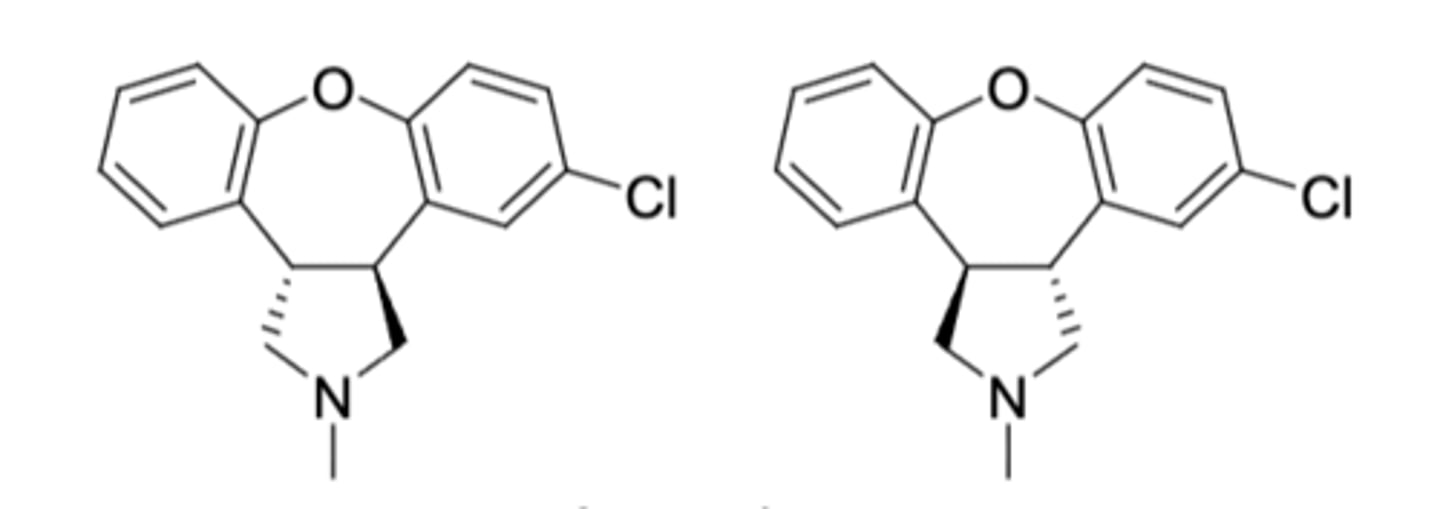
Asenapine (Saphris)
-2nd gen antipsychotic with dopaminergic and serotonergic activity
-mixture of 2 enantiomers for reatment of acute manic and mixed episodes associaed with bipolar disorder and schizophrenia
-sublingual tablet (nota bsorbed through GI tract --> avoids first pass metabolism)
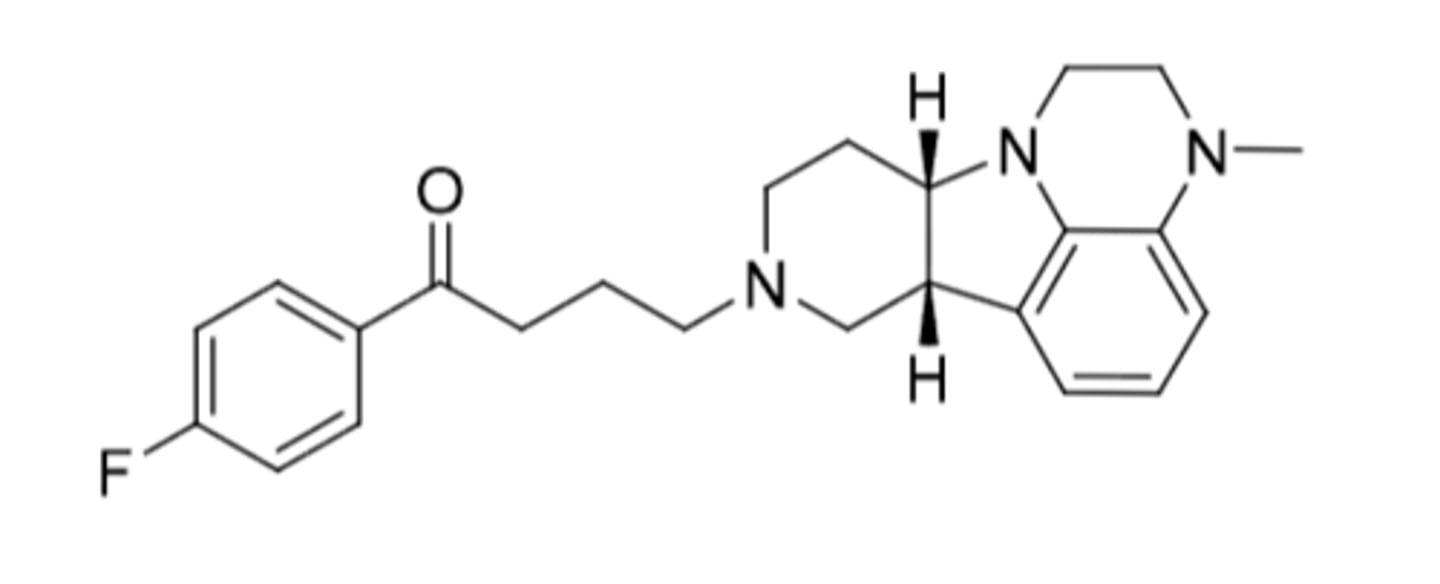
Lumateperone
-2nd gen butyrphenone (added serotonergic activity)
-metabolized by CYP3A4 to 20+ different metabolites
-CI: cannot drink grapfruit juice (CYP3A4 inhibition --> extends half life)
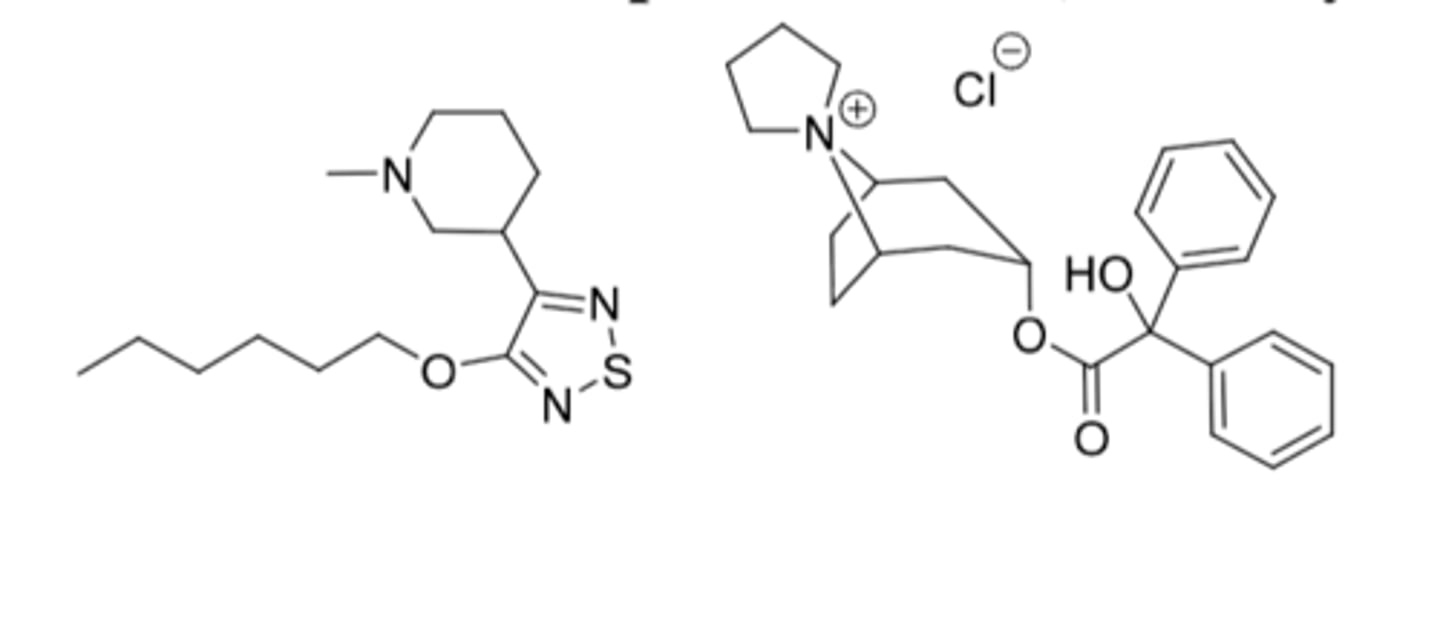
Xanomeline and trospium chloride, Cobenfy®
-Approved for schizophrenia in adults
-take 1 hour before or 2 hours after to combat foot effect
Xanomeline
-Muscarinic receptor agonist at M1 and M4 receptors
-6C alkyl chain to cross BBB
-M1: improve cognitive function and negative aspects of schizophrenia
-M4: decrease release of dopamine and improve positive aspect of schizophrenia
-side effects: GI (N/V, indigestion, constipation) and CV (increase BP and HR)
Trospium
-Muscarinic receptor antagonist
-Doesn't get into CNS because it has a permanent positive charge
-counters periphery effects of xanomeline because trospium only stays in periphery
Nonflammable
Good chemical and metabolic stability
Low incidence and myocardial effects
Low incidence of hepatic and renal damage
Rapid induction and emergence from anesthesia
Adequate skeletal muscle relaxation
Wide margin of sefy
Ideal inhalation anesthetic
Related to duration of action
-smaller bgpc (<1) = shorter duration of action (partitions more into gas phase, breathed out)
-larger bgpc (greater than 1) = longer duration fo action for general anasthetic (partitions more into blood)
Blood-gas partition coefficient (bgpc)
"potency value" --> concentration required to produce desired anesthetic effect for 50% of patients
Higher MAC = weaker general anasthesia
Lower MAC = more potent
ex) 10% MAC = drug concentration in vapor needs to be 10% in 50% of patients
Minimum alveolar concentration (MAC)
-Inhalation anesthetic (gas at room temp)
-bgpc = 0.47 (more in gas, shorter duration)
-MAC = 104% (will not produce sufficient enough general anesthetic effect
-good analgeisa property but WEAK anesthesia property
-safe, quick onset (20 seconds)
-fast recovery (NO hangover effect)
-does NOT produce skeletal muscle relaxation
-"laughing gas"
Nitrous oxide (N20)
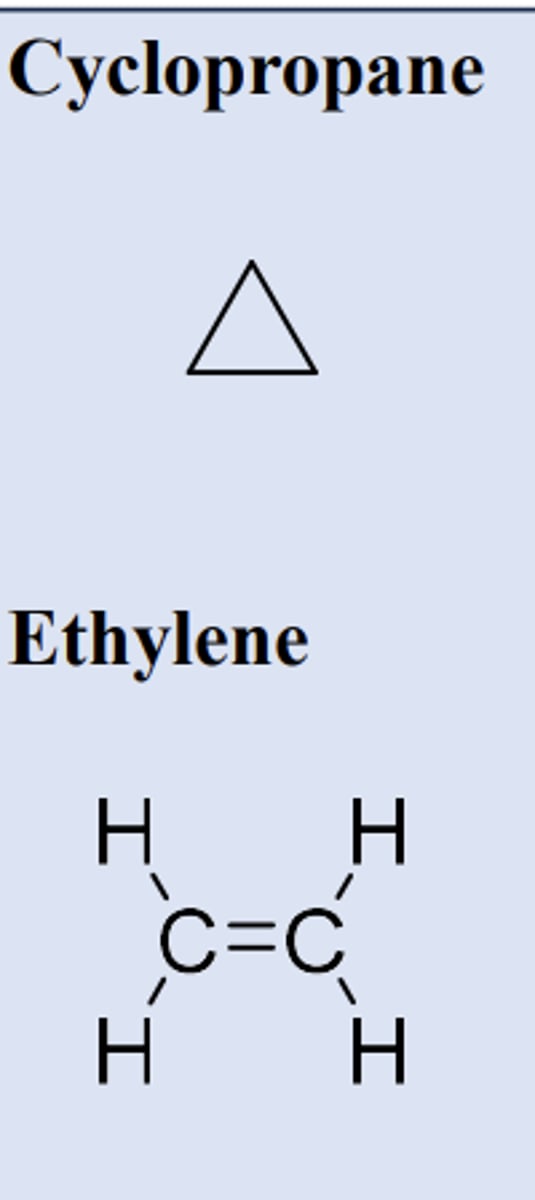
Cyclopropane MAC = 17.5%
Ethylene MAC = 80%
Cyclopropane is a stronger general anesthetic, produces skeletal muscle relaxation (ethylene does not)
Need to be stored in gas cylinder and both are flammable
How to improve? --> make them heavier (replace H with halogens) so they stick together and are liquid at room temp
Cyclopropane and Ethylene
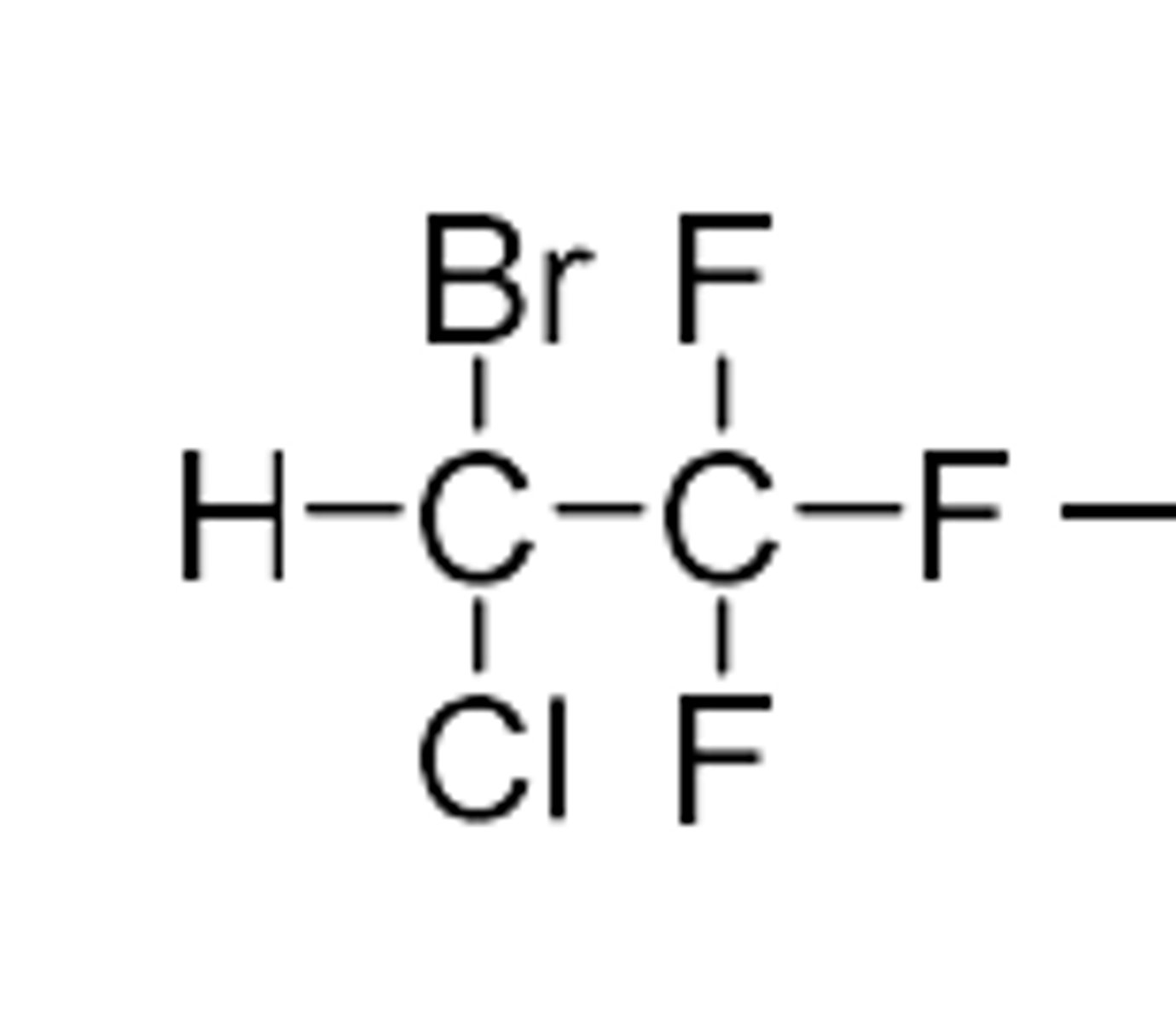
Halothane
-volatile liquid general anesthetic (can be quickly swept away by gases)
-Hydrogen replaced by halogens in ethane
-Polar dipole-dipole interactions, stick to each other --> liquid
-Boiling point is about 50 degrees Celsius
-high vapor pressure
-bgpc = 2.5
-MAC = 0.74% (one of the most potent inhalation general anesthetics)
Problem: major metabolism issue
-20% metabolized in fluorides (kidney effects), trifluouro acetic acid (cardiovascular problems). and halides (cardiac effects)
NO longer used due to hepatic necrosis and cardiac arrhythmias
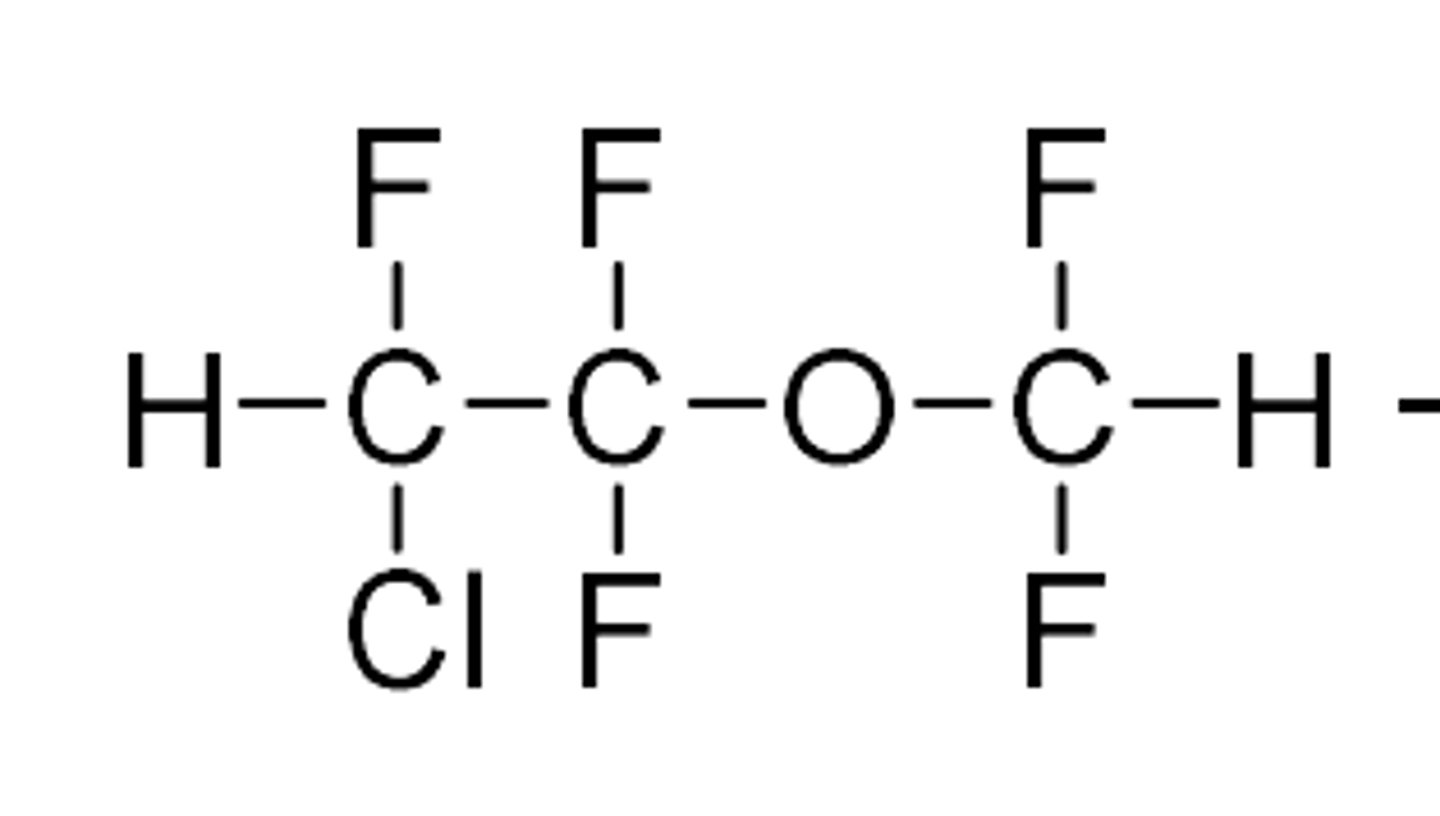
Enflurane
-volatile liquid general anesthetic (inhalation)
-BP = 56.5 C
-bgpc = 1.9
-MAC = 1.7%
-discontinued due to higher metabolism and side effects
-all fluranes are racemic and have skeletal muscle relaxant properties
-fluranes replace the H's in methyl ethyl ether to decrease boiling point and increase interactions
-store cool place, room temp
Bromide and chloride metabolites sensitize heart to NE and epi, causing VFib and arrhythmia
Fluoride metabolites cause kidney and liver damage
Isoflurane
-volatile liquid general anesthetic (inhalation)
-isomer of enflurane - better drug - most widely used general anesthetic in U.S.
-pungent smell
-only 0.2% metabolism
-all fluranes are racemic and have skeletal muscle relaxant properties
-fluranes replace the H's in methyl ethyl ether to decrease boiling point and increase interactions
-store cool place, room temp
Bromide and chloride metabolites sensitize heart to NE and epi, causing VFib and arrhythmia
Fluoride metabolites cause kidney and liver damage
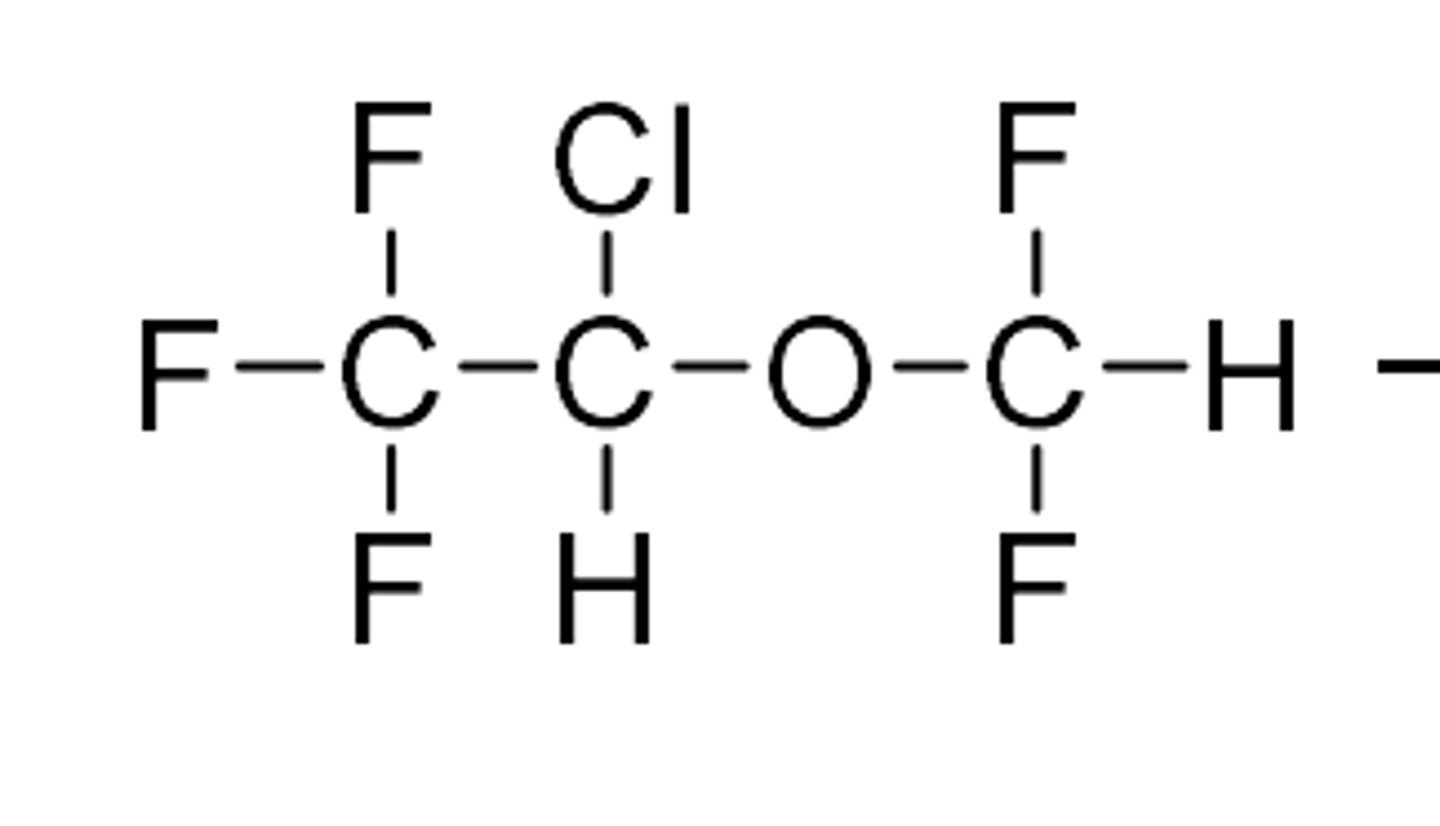
Desflurane
-volatile liquid general anesthetic (inhalation)
-onset = 2-3 minutes
-BP = 23.5 --> very different cap from other bottles because of lowest BP among fluranes (tight seal)
-bgpc = 0.42
-MAC = 6% (weakest potency of fluranes)
-less than 0.02% metabolism (safest in terms of toxicity, but have to use more to produce effects)
-irritation to airways - not useful for extended anesthesia
-all fluranes are racemic and have skeletal muscle relaxant properties
-fluranes replace the H's in methyl ethyl ether to decrease boiling point and increase interactions
-store cool place, room temp
Bromide and chloride metabolites sensitize heart to NE and epi, causing VFib and arrhythmia
Fluoride metabolites cause kidney and liver damage
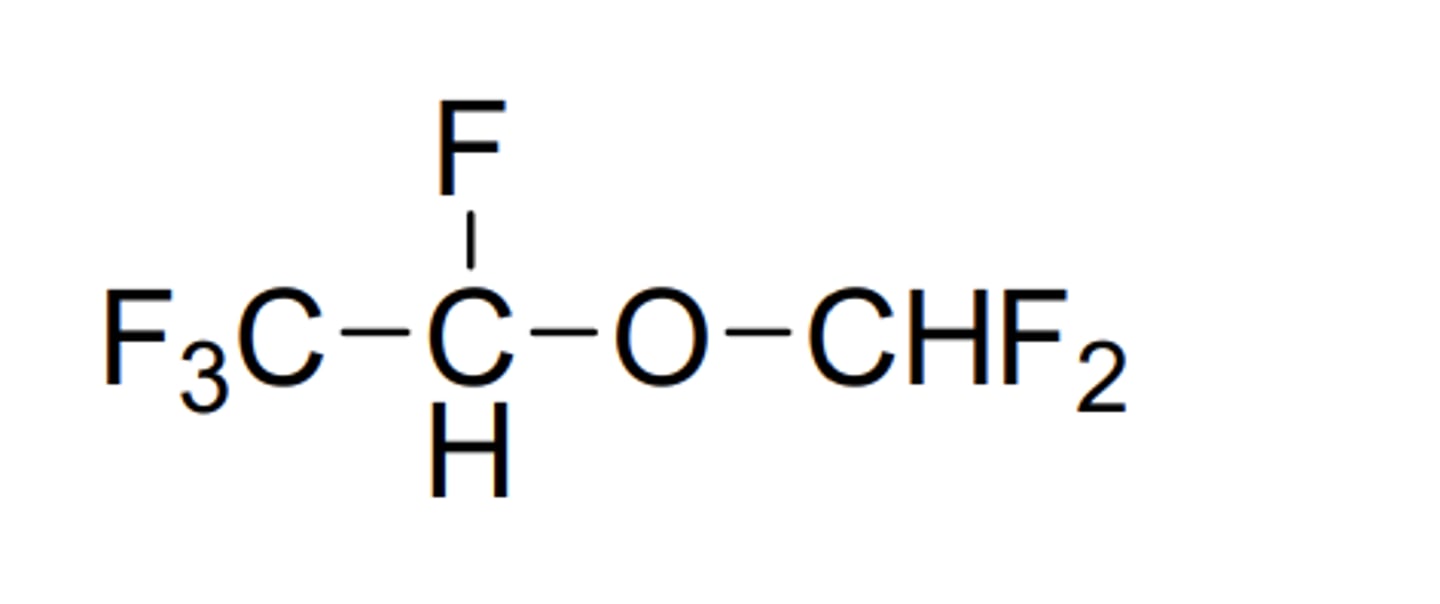
Sevoflurane
-volatile liquid general anesthetic (inhalation)
-onset = 1-2 minutes (Fastest onset)
-bgpc = 0.68
-MAC = 2.05%
-BP = 58.6 C
-pleasant smell (good for pediatrics)
-all fluranes are racemic and have skeletal muscle relaxant properties
-fluranes replace the H's in methyl ethyl ether to decrease boiling point and increase interactions
-store cool place, room temp
Bromide and chloride metabolites sensitize heart to NE and epi, causing VFib and arrhythmia
Fluoride metabolites cause kidney and liver damage
-no special equipment needed to administer
-many have faster onset than inhaled
-rapid recovery; suitable for outpatients
Advantages of injectable anesthetics
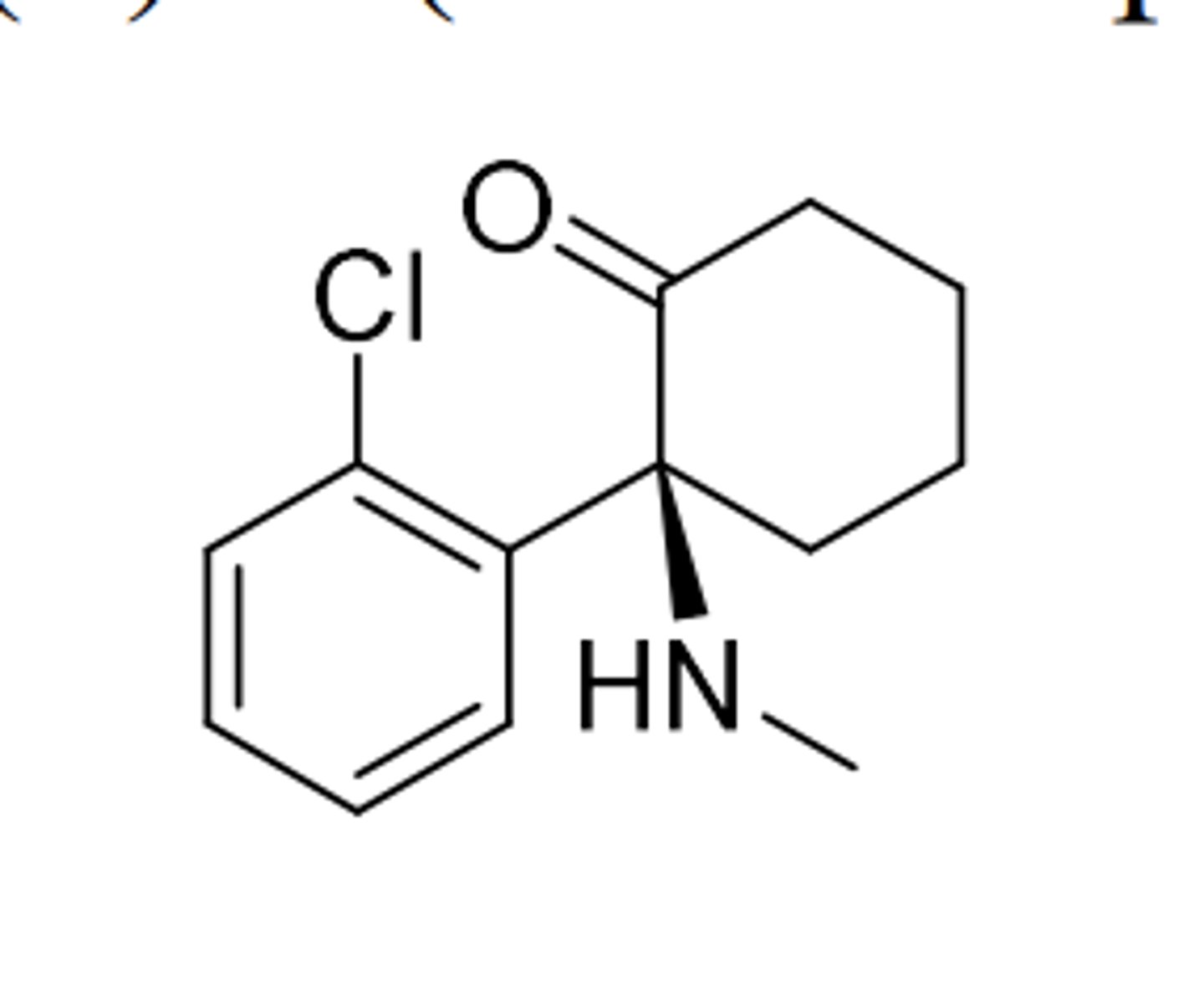
Ketamine (Ketalar)
-MOA: NMDA receptor antagonist (blocks glutamate from exciting it)
-allosteric (binds to different site than glutamate)
-C3
-S enantiomer is more potent antagonist (3-4x greater affinity), but administered as racemic
-water soluble, solid, powder, can induce anesthesia
-onset = 30-60 seconds for anesthesia
-does NOT have skeletal muscle relaxant properties
-strucutrally mimics hallucinogen (can have hallucination = abuse potential)
Extensive metabolism
-demethylation to norketamine - active metabolite (1/3-1/5 of pactivity)
-hydroxylation
-glucuronidation
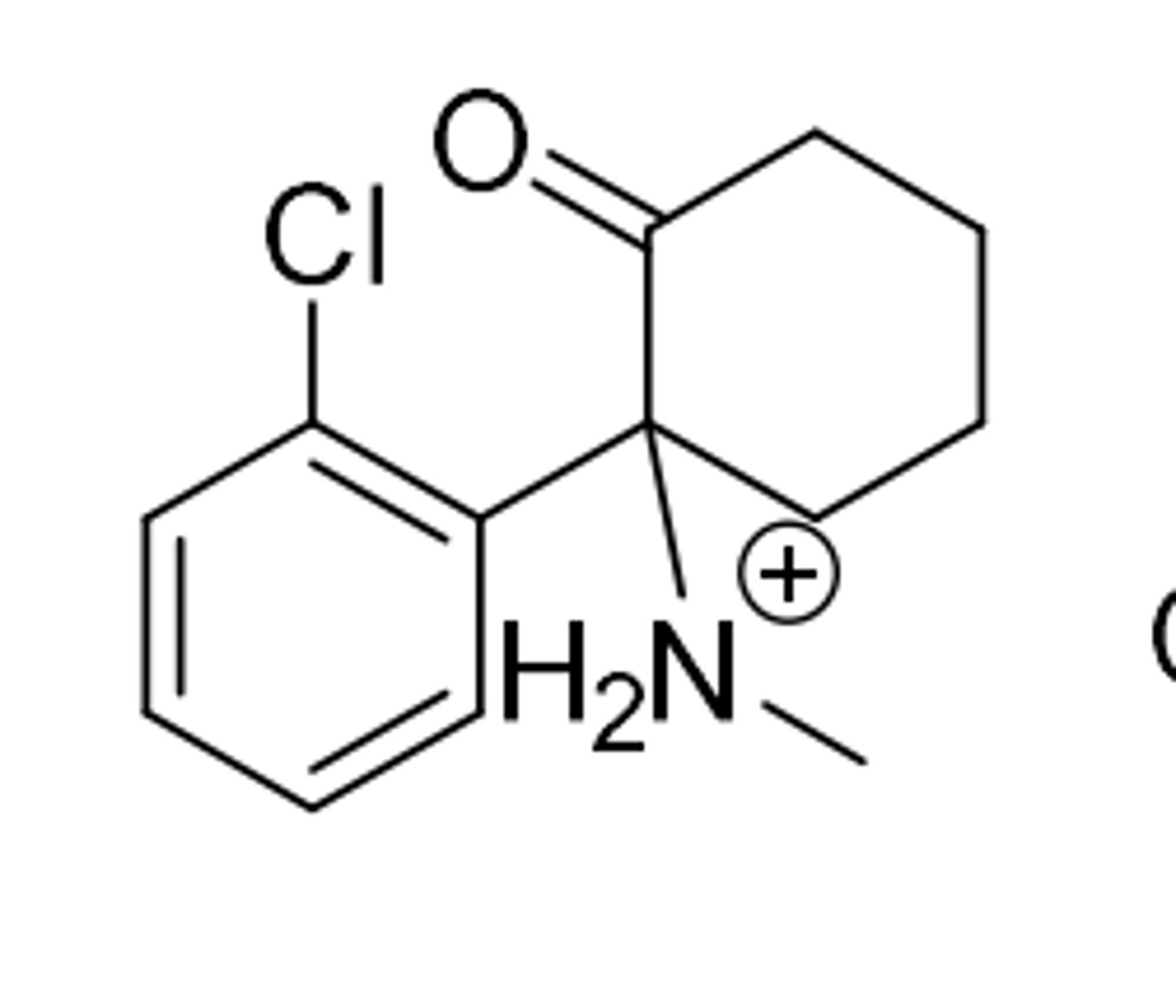
Esketamine (Spravato)
-S enantiomer of ketamine
-NOT used as IV general anesthetic - used to treat depression
-nasal spray
-onset 15-30 minutes
-needs to be monitored (used in clinic not at home)
-C3
Advantages of spray:
-goes to brain quickly
-doesn't need to cross BBB
-faster onset than oral
-bypass metabolism
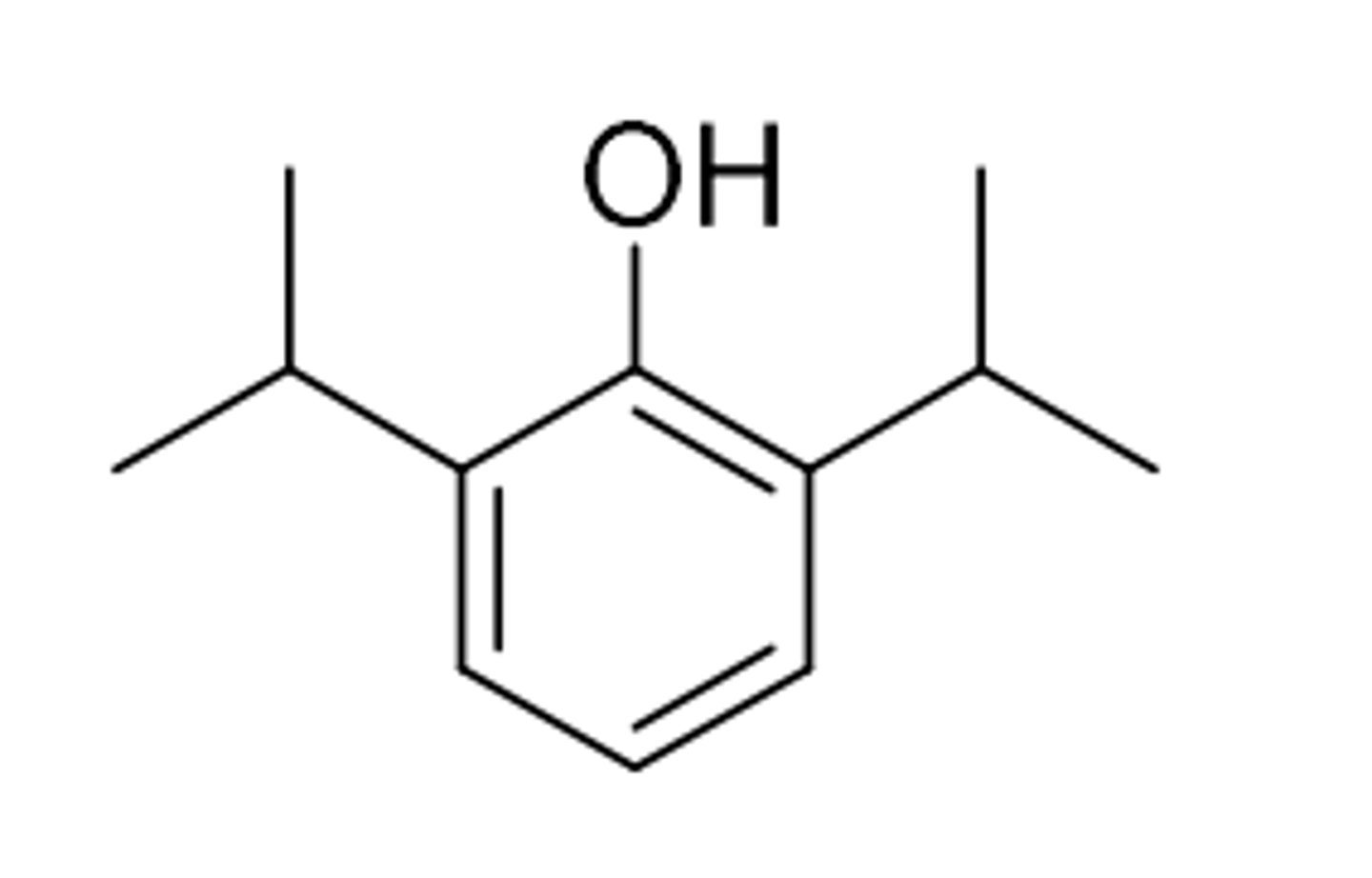
Propofol
-NOT a controlled substance
-increases GABA activity in CNS to cause depression
-used for induction or maintenance of anesthesia and continued sedation in operations
-onset = 40 seconds
-drug of choice for ambulatory surgery
-OH is handle for conjugation reactions (extensively metabolized)
Advantages:
-offers more rapid recovery - after stopping infusion patients can wake up quickly
-No N/V side effect (has anti emetic properties)
Disadvantages:
-lipophilicity so high --> need to use lipid emulsion to inject in blood (can cause pain at injection site, allergies, or microbial growth)
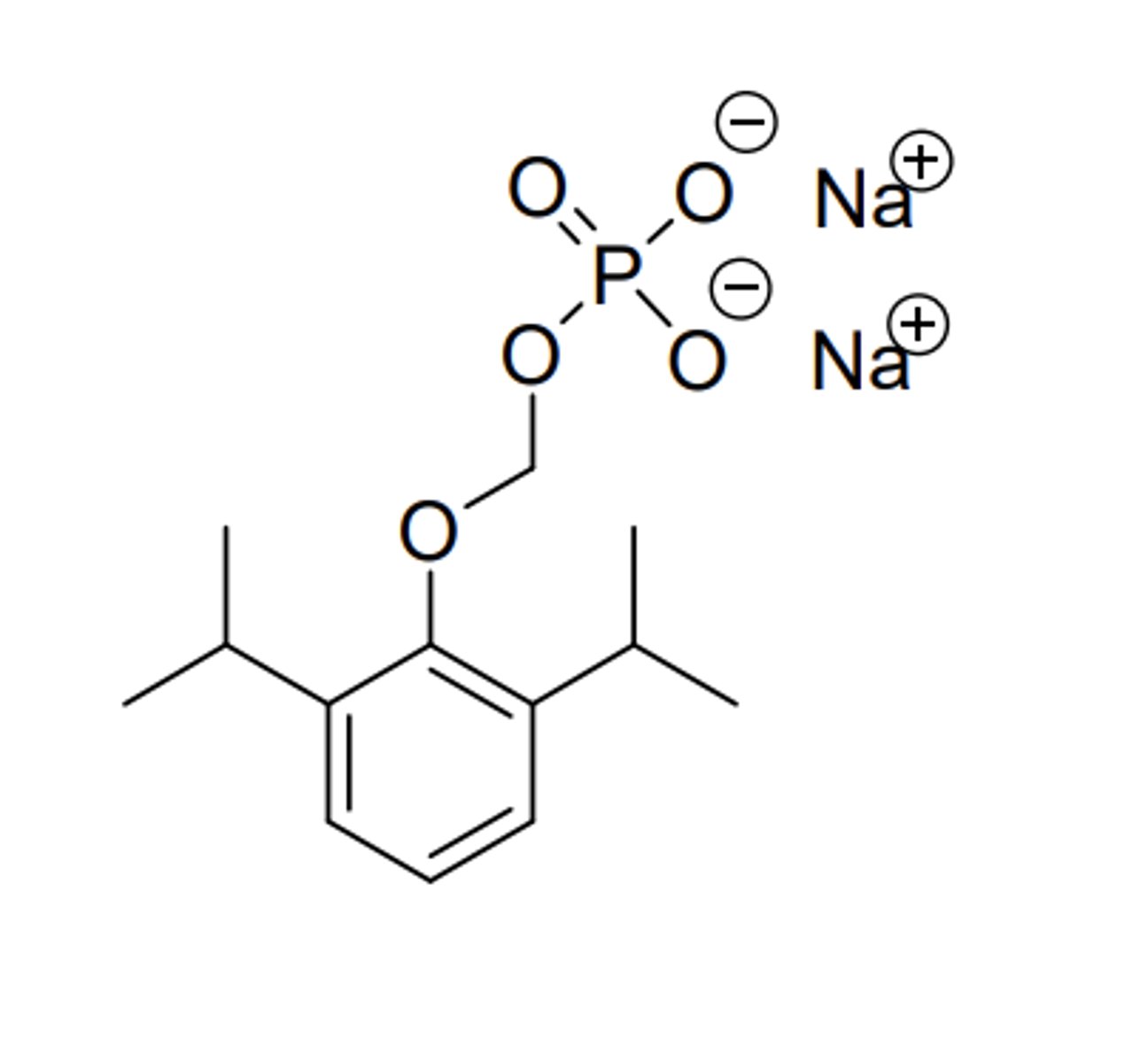
Fospropofol
-prodrug to avoid formulation problems of propofol (attatches methylene, oxygen and phosphate)
-phosphate is charged, highly water solubly, and no longer needs lipid emulsion formulation
-once injected, it is hydrolyzed by alkaline phosphatase to remove phosphate and left with propofol
-slower onset (4-8 min) due to extra step of activation
-discontinued in U.S.
-C4 (propofol is not controlled)
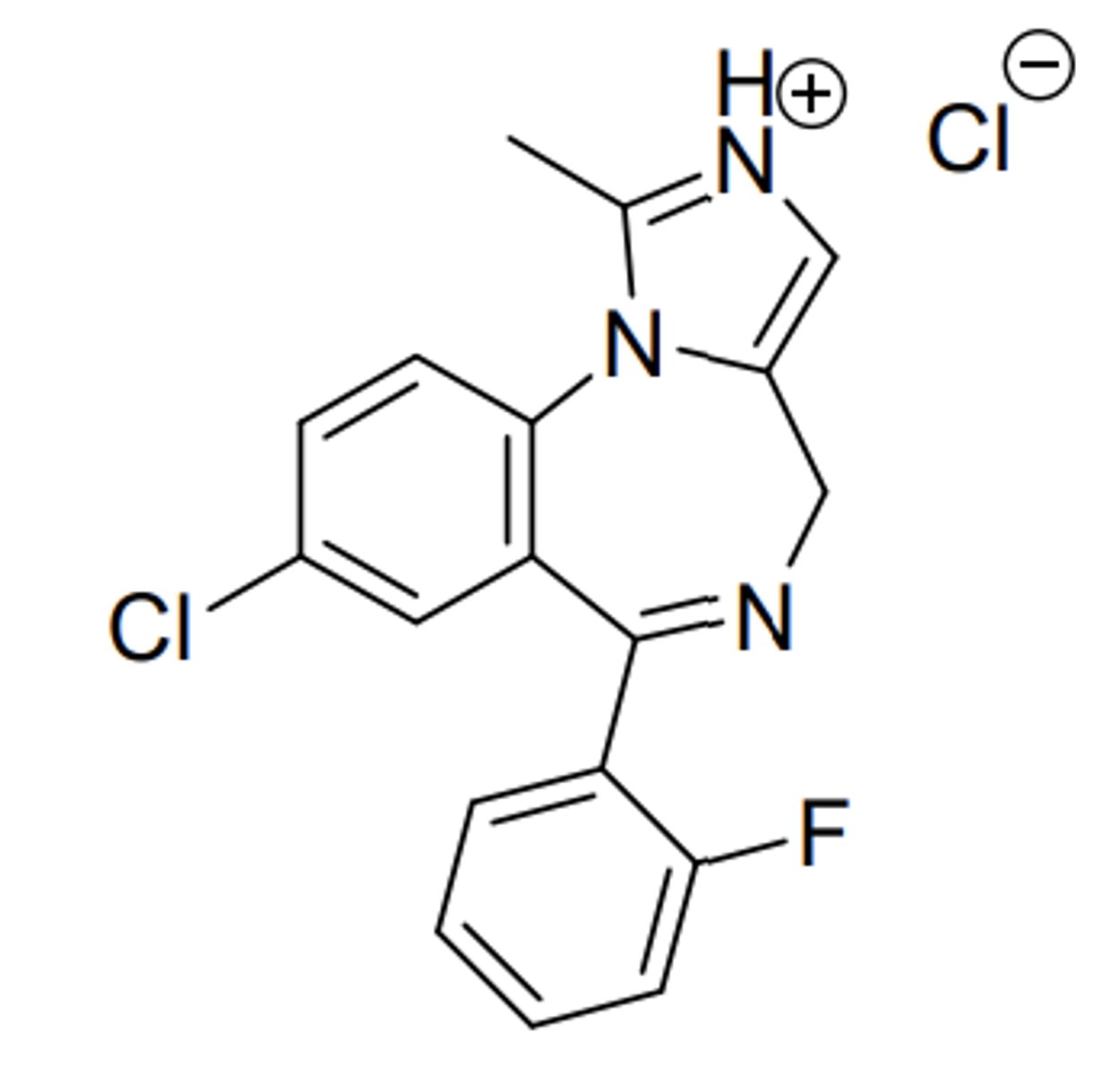
Midazolam
-Binds to GABAa receptors to enhance binding of GABA
-benzodiazepine; does produce smooth muscle relaxation
-C4
-for pre-operative sedation and induction of general anesthesia
-prolonged recovery rate, can produce amnesia and sedation
-can be hydroxylated at 1 methyl, then conjugated
Stays in system for long period - might have to wake patients up using flumazenil (benzodiazepine antagonist)
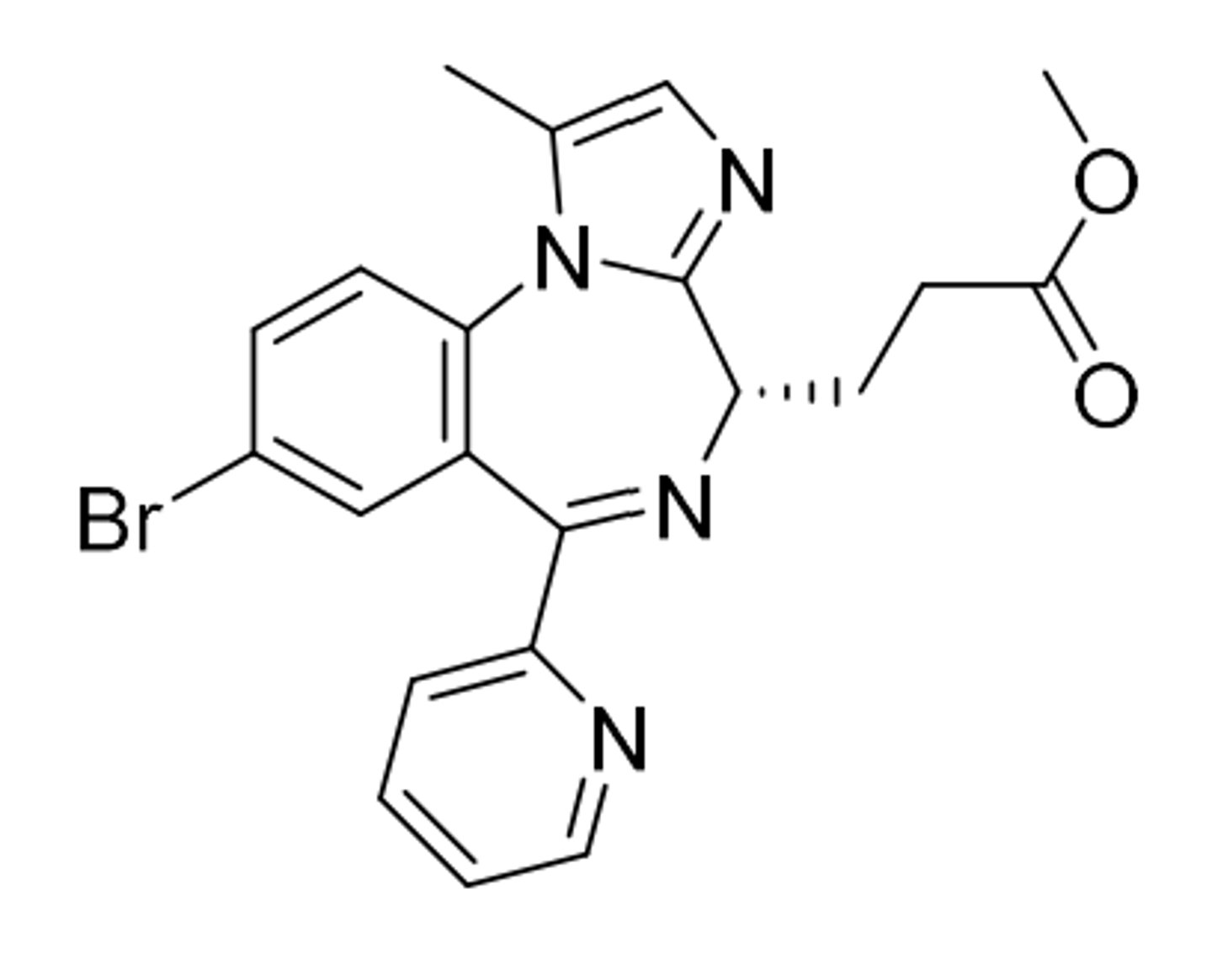
Remimazolam (Byfavo)
-SOFT DRUG (opposite concept of prodrug, parent is active and quickly gets hydrolyzed to carboxylic acid form which has 300x less affinity for benzodiazepine binding site)
-faster recovery rate
-predictable and consistent PK (everyone has esterases)
-used for induction and maintenance of procedural sedation
-for procedures 30 minutes or less (Fast acting, short duration)
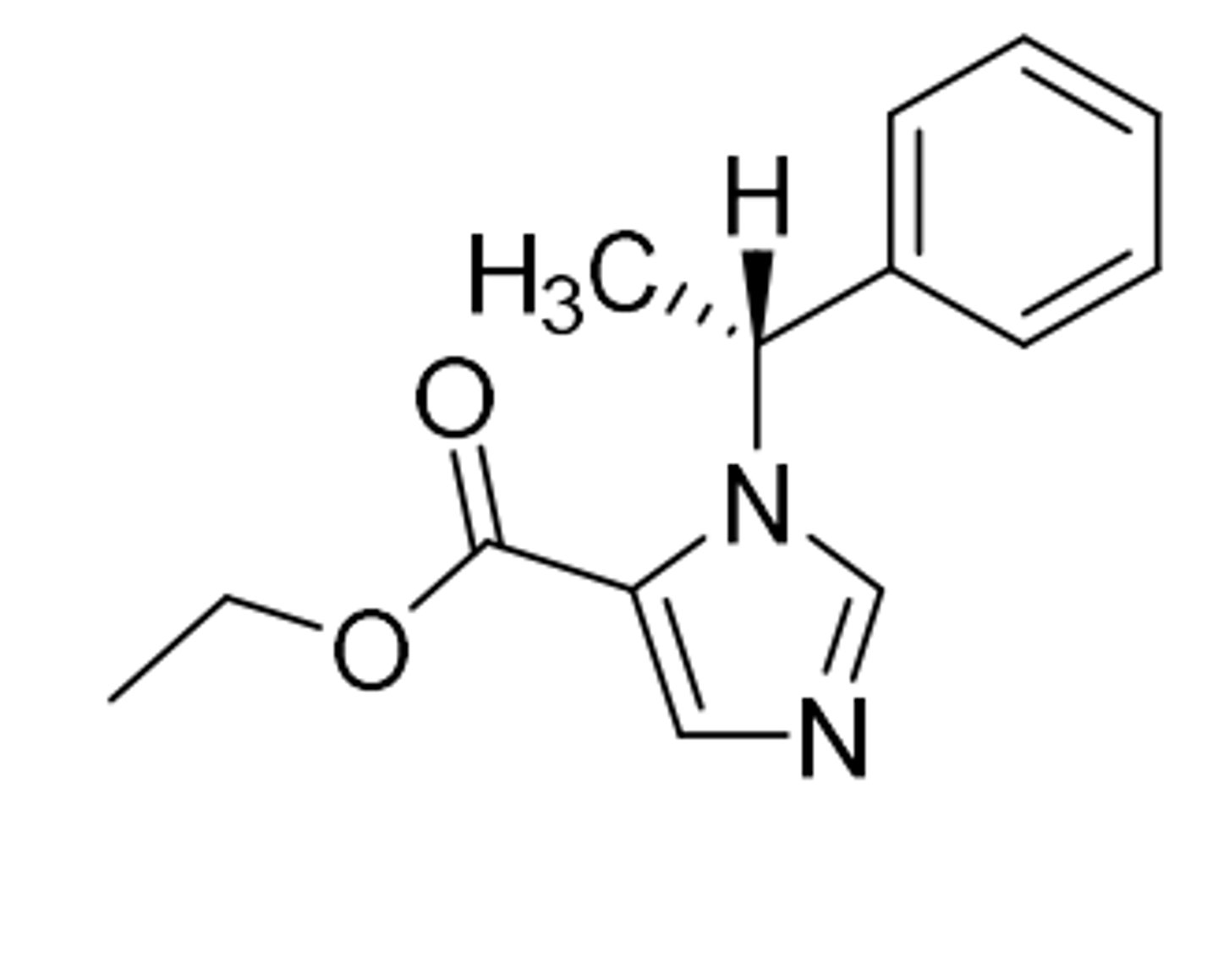
Etomidate
-R enantiomer
-IV only used to induce anesthesia
-no analgesic activity
-fewer CV and respiratory depressive effects
-used for short procedures (ex - dislocated joints, cardioversion)
-high incidence of N/V and pain at injection site
-does NOT produce skeletal muscle relaxation (for short, easy procedures)
-3-5 miute duration of action (ester quickly hydrolyzed)
-onset < 1 minute
-NOT controlled
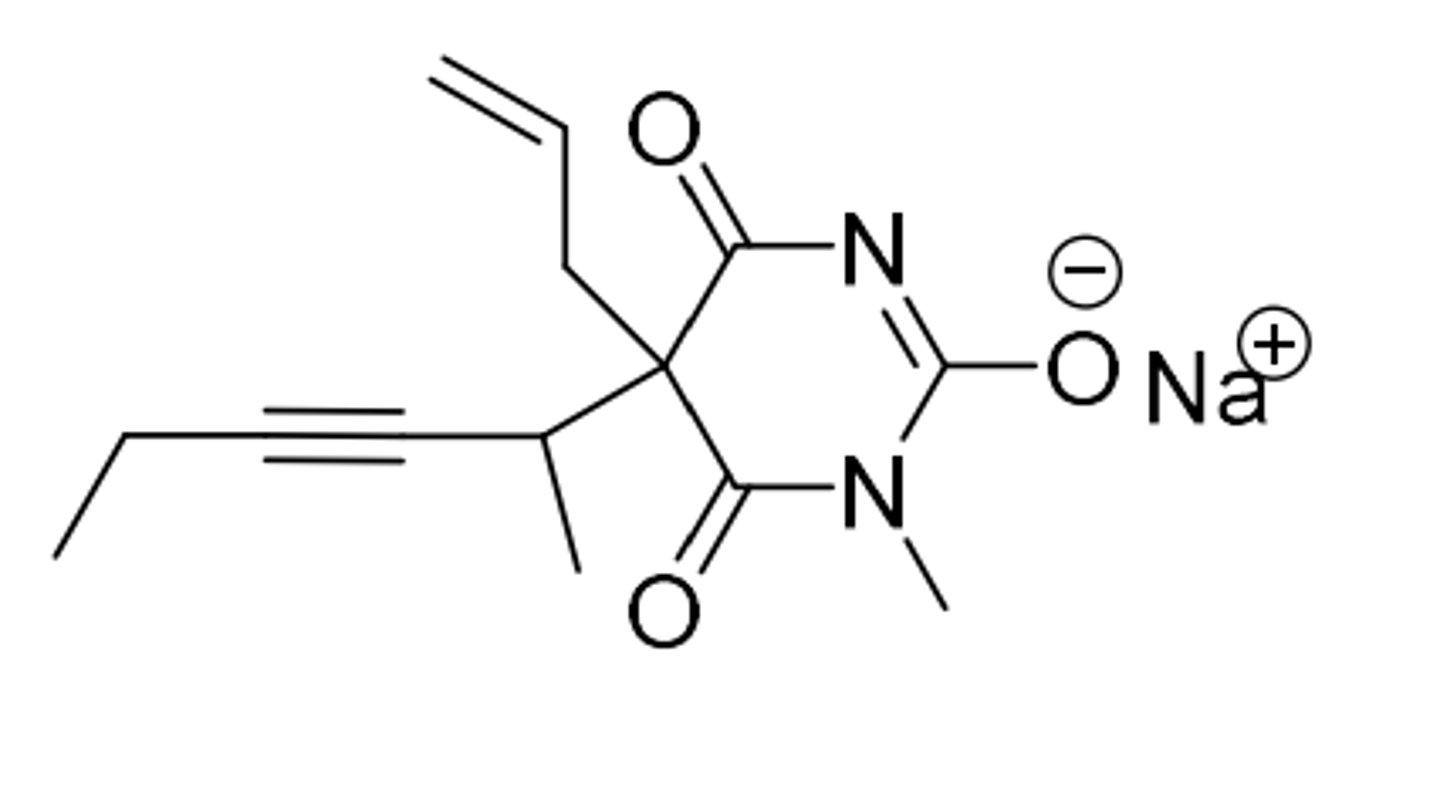
Methohexital
-ultra short acting barbituate (duration = 20 minutes)
-no muscle relaxation properties
-C4
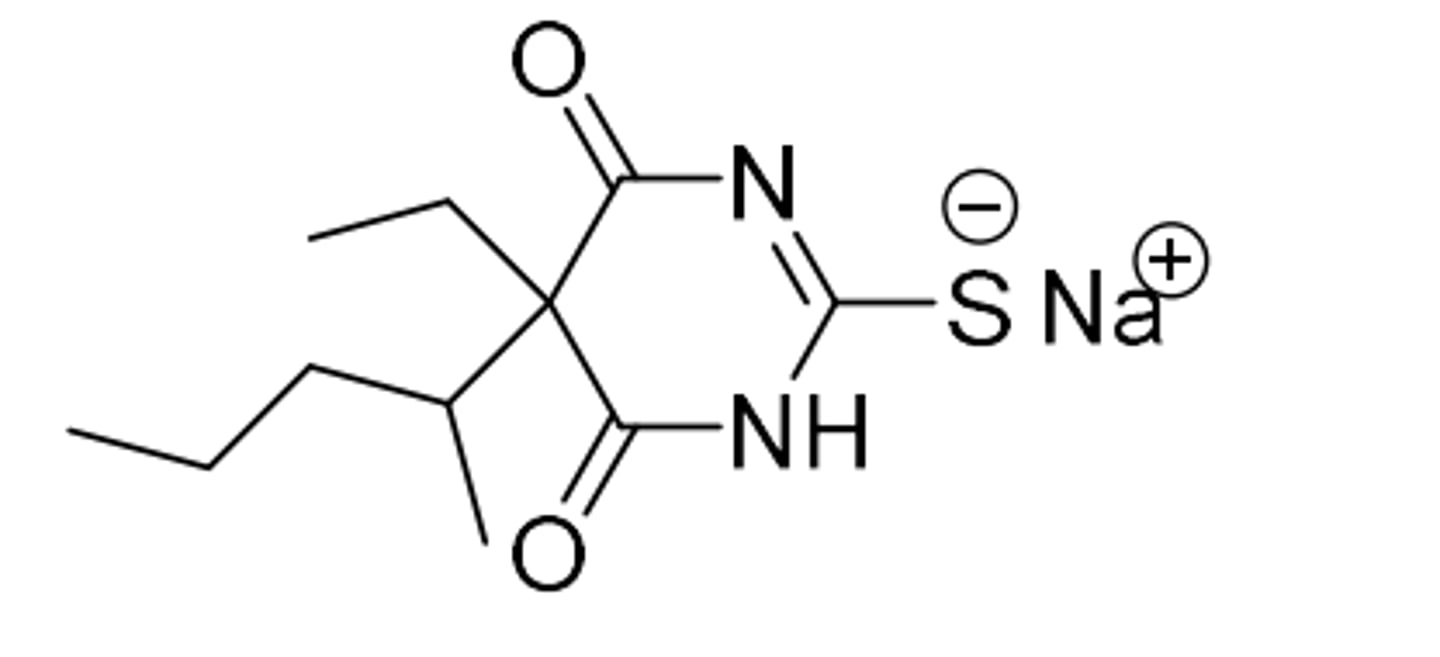
Thiopental
-ultra short acting barbituate
-metabolism removes sulfur - metabolite has longer duration of action (3-4 hours)
-Problem: sometimes has to repeat use due to diffusion out (can cause metabolite to accumulate)
-used to be used more, but replaced by propofol
-sedative = drug that exerts calming effect
-hypnotic = drug that produces drowsiness and encourages onset and maintenance of sleep
-anxiolytic = drug that relieves excessive anxiety
Barbituates have a linear relationship when increasing dose with increased CNS depression (overdose more likely, benzodiazepines taper off)
Site of binding of barbituates not well defined
Many sedatives, hypnotics, and anti-anxiety drugs also have anti-epileptic activity
GABAa = post-synaptic inhibition
GABAb = pre-synaptic inhibition (slows release of neurotransmitters)
Both A and B produce CNS depression
Sedative and Hypnotic Agents Basic Overview
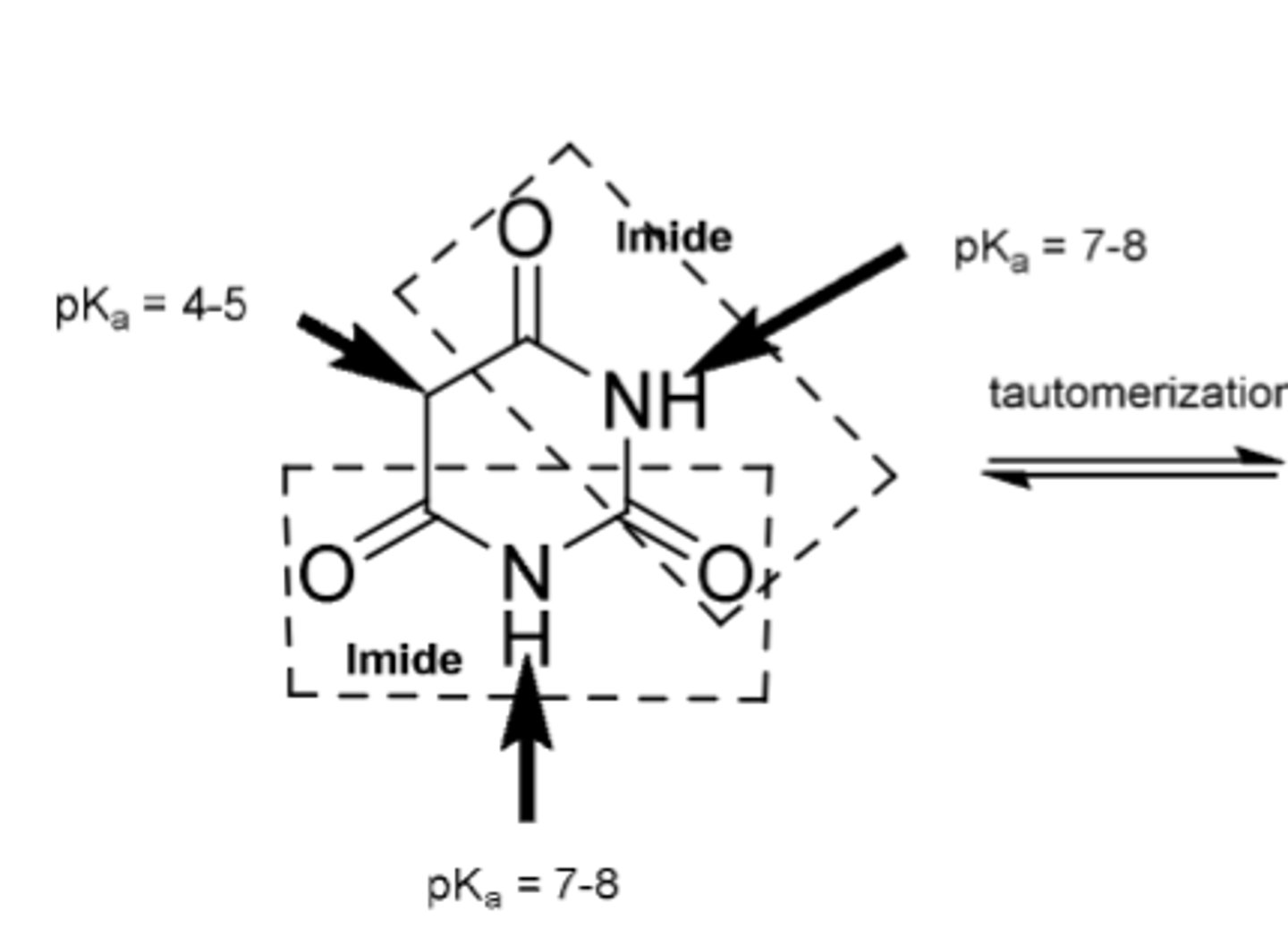
1. Two R’s at C-5-position needed for activity (replaces the 2 H's in barbituic acid)
2. ↑Number of C’s in C-5 R’s ⇒ ↑onset, ↓duration
-increase in lipophilicity (faster into CNS --> faster onset), but also permeates out of CNS quickly so metabolized quicker --> shorter duration
3. Polar groups, unsaturation, and branching on the C-5 R’s ⇒ ↑rate of metabolism, ↓duration
4. A methyl group @ N-1 position ⇒ ↑onset, ↓duration
5. Substitution on both nitrogens ⇒ loss of activity
6. Sulfur at the 2-position ⇒↑onset, ↓duration
-more lipophilic
Extra notes:
-barbituric acid has no CNS activity because its highly ionized
-tautomerizes to trihydroxy form
-NHs are acidic because they are between 2 carbonyls (so ionized)
-barbituates are enzymatic inducers
-continued use may lead to addiction
-primarily as anesthetics and anticonvulsants
SAR of barbituates
Ultra short acting (generally anasthetics) = less than 3 hours
Methohexital and Thiopental
Short acting (sedative hypnotic and preanesthetic) = 3-4 hours
Secobarbital and Pentobarbital
Intermediate Acting (sedative hypnotic) = 6-8 hours
Amobarbital and Butabarbital
Long Acting (anticonvulsant) = 10-16 hours
Phenobarbital
Barbituate Drugs
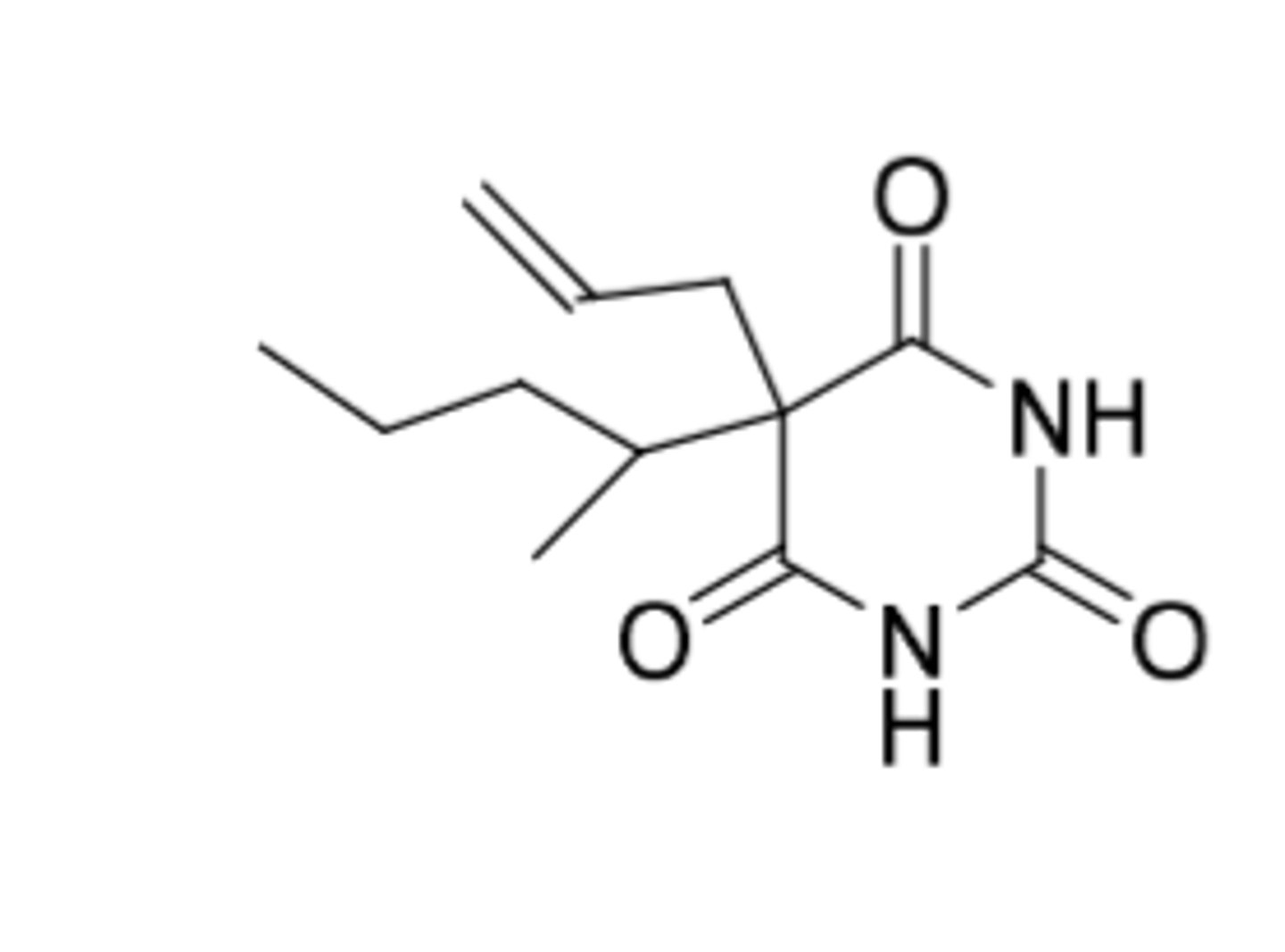
Secobarbital
-Used as hypnotic and preanesthetic
-C2
-Short-acting (duration = 3-4 hours)
-Onset = 10-15 min
-unsaturation and branching at 5 position lead to shorter duration (barbituate SAR)
Metabolism:
-alpha oxidation (allylic)
-epoxidation (can cause inactivation of CYPS) then hydrolysis
-omega-1 oxidation
Pentobarbital
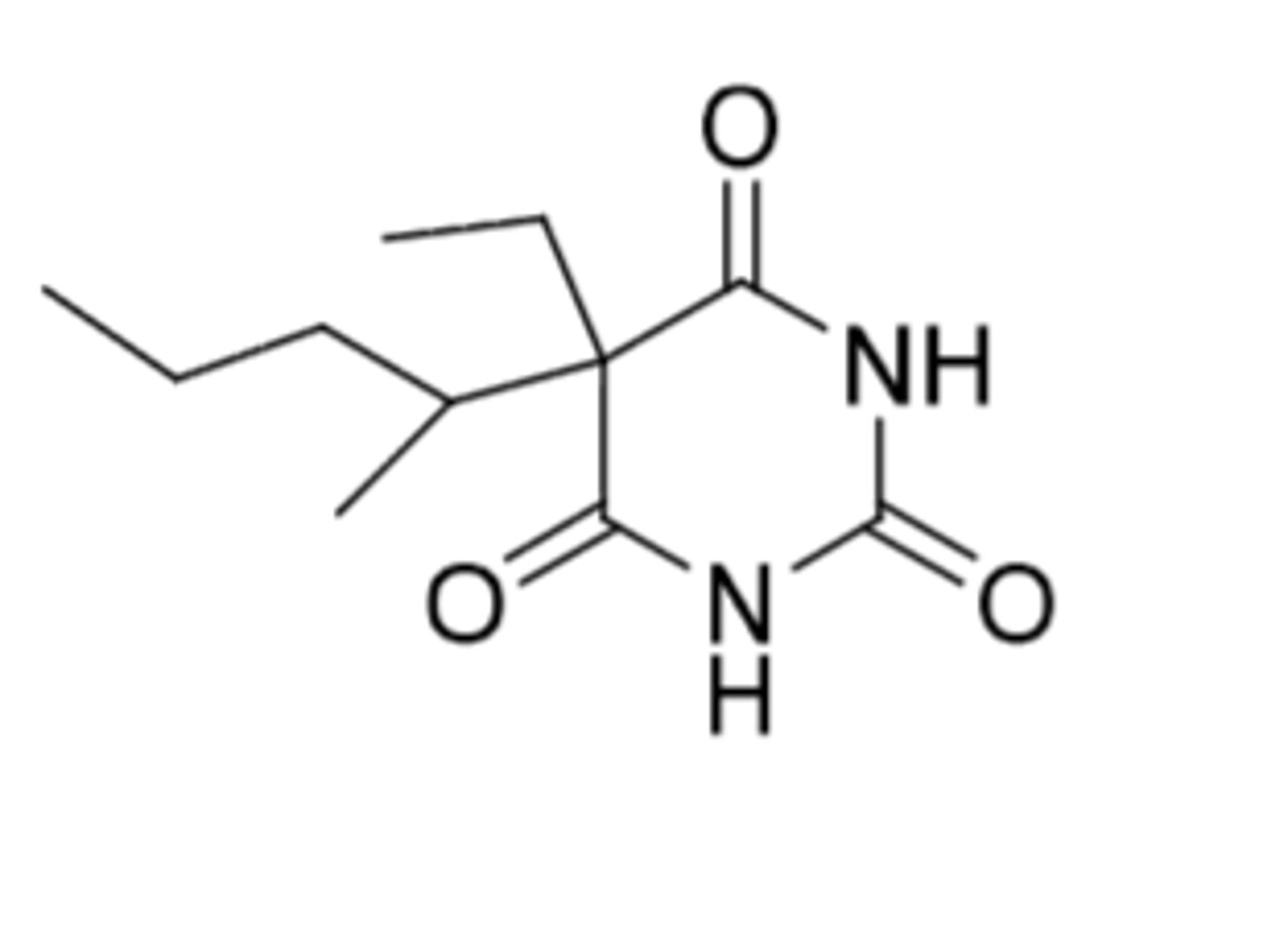
-Used as hypnotic seddative and preanesthetic
-C2
-Short-acting (duration = 3-4 hours)
-Onset = 10-15 min
-unsaturation at 5 position leads to shorter duration (barbituate SAR)
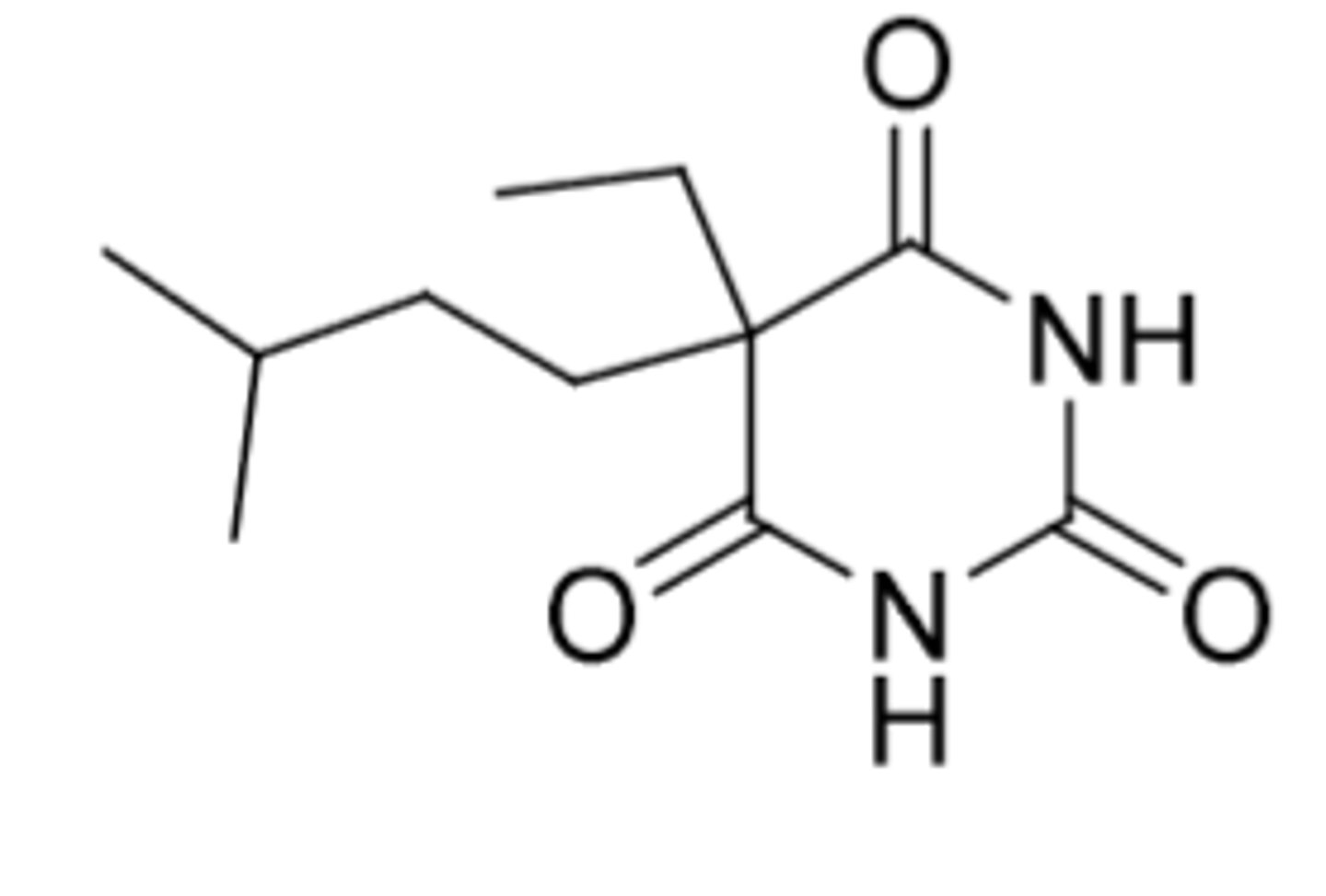
Amobarbital
-intermediate-acting (duration = 6-8 hours)
-onset = 45-60 min
-C2
-sedative and hypnotic
Metabolism (hydroxylations):
-omega-1 oxidation or omega-oxidation
Butabarbital
-intermediate-acting (duration = 6-8 hours)
-onset = 45-60 min
-C3
-sedative and hypnotic
-just has one less carbon than amobarbital
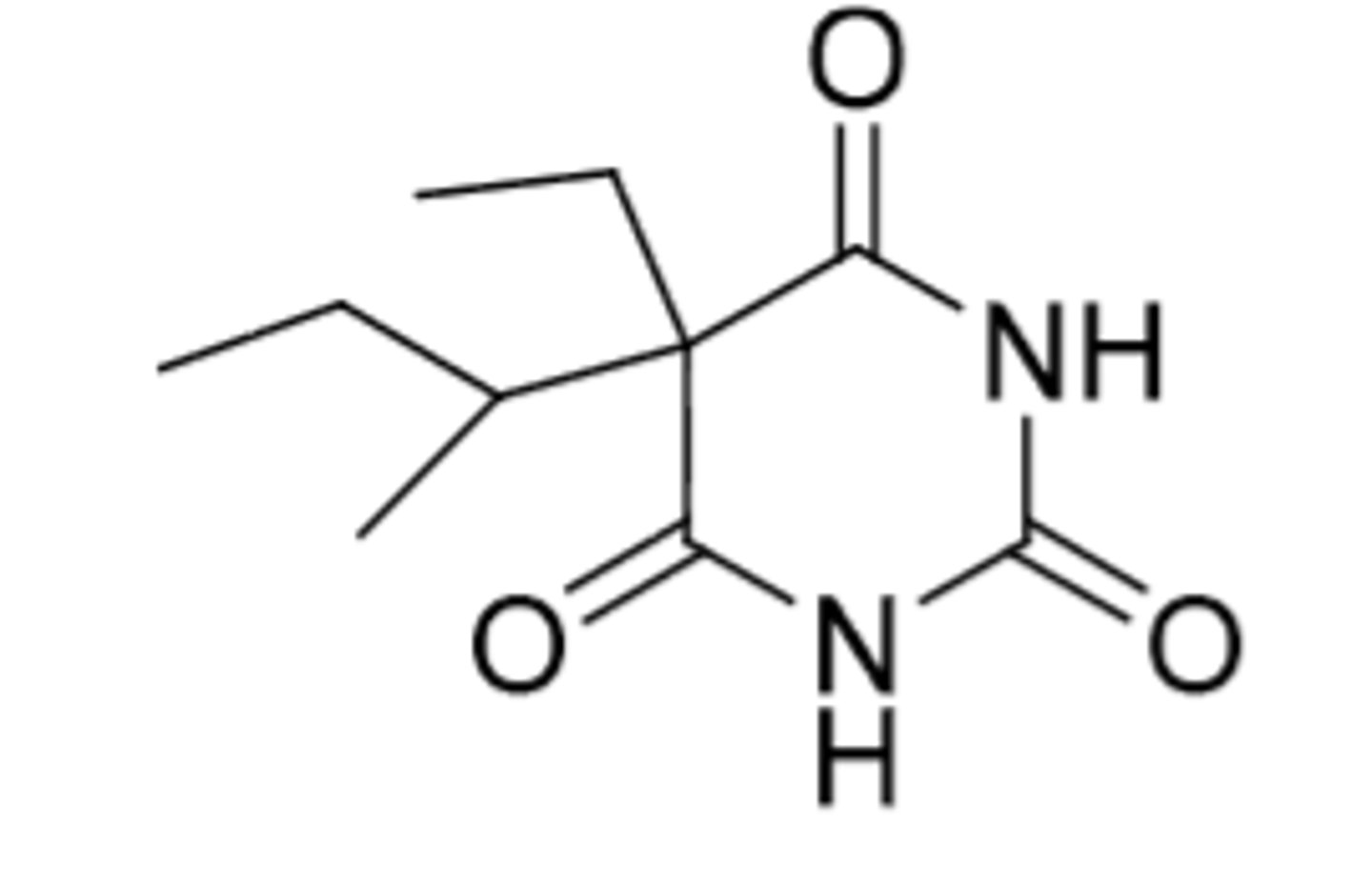
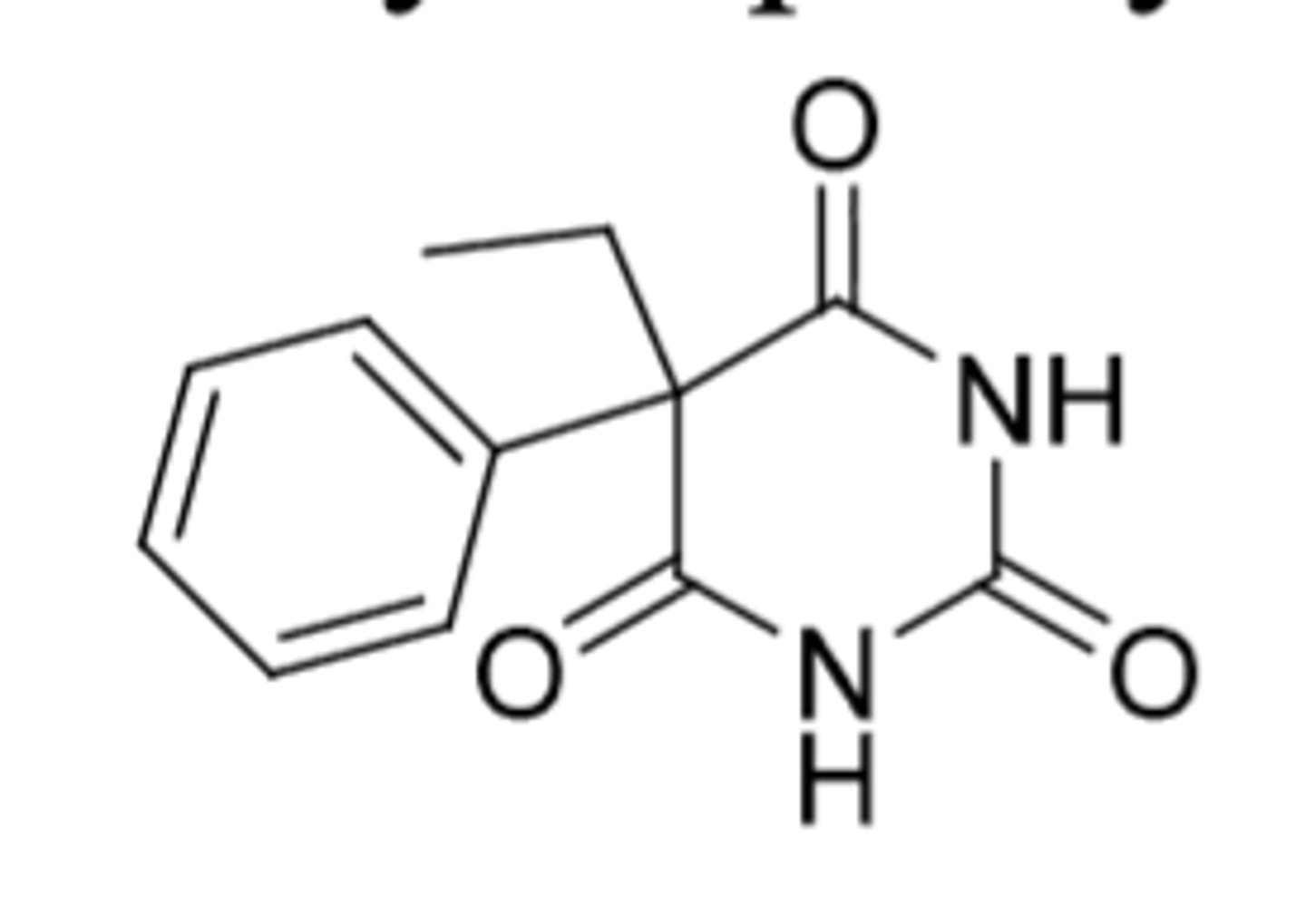
Phenobarbital
-long-acting (Duration = 10-16 hours)
-onset = 30-60 min
-used as anti-convulsant (treatment of grand mal seizures)
Metabolism:
-oxidative hydroxylation at para position on phenyl ring
-glucuronidation of one NH (turns into chiral center --> preference of S metabolite over R)
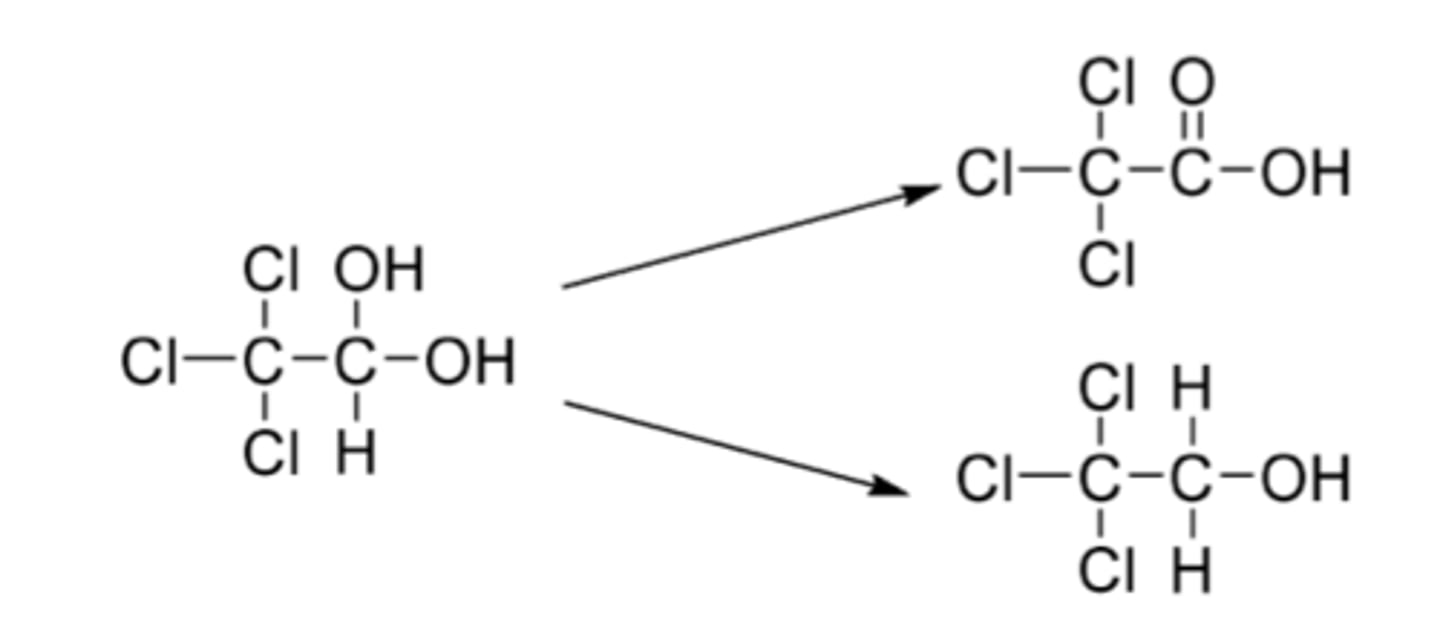
Chloral Hydrate
-C4
-weakly acidic
-Reduced to an active metabolite or oxidized to inactive metabolite
-Drawbacks: bitter taste (take w/ fruit juice) and gastric irritation
-sedative and hypnotic, can suppress and prevent alcohol withdrawal symptoms
-can be synergistic w/ alcohol (leading to misuse)
Diphenhydramine
-OTC first generation antihistamine
-safe in children over 6