Unit 10- Electric Force, Field, and Potential
 Call Kai
 Learn
Learn Practice Test
 Spaced Repetition
 Match
Match Flashcards
 Knowt Play
1/25

There's no tags or description
Looks like no tags are added yet.
Name | Mastery | Learn | Test | Matching | Spaced | Call with Kai |
|---|
No analytics yet
Send a link to your students to track their progress
26 Terms
Electric Charge
Comes from an imbalance in protons or electrons.
Having more protons gives the object positive charge, and having more electrons gives the object negative charge.
The same number of protons and electrons means the object has 0 charge, or is neutral.
Ionization
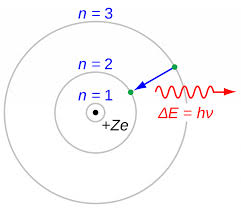
The process of either adding or removing electrons from a molecule, causing it to become charged.
Conservation of Charge
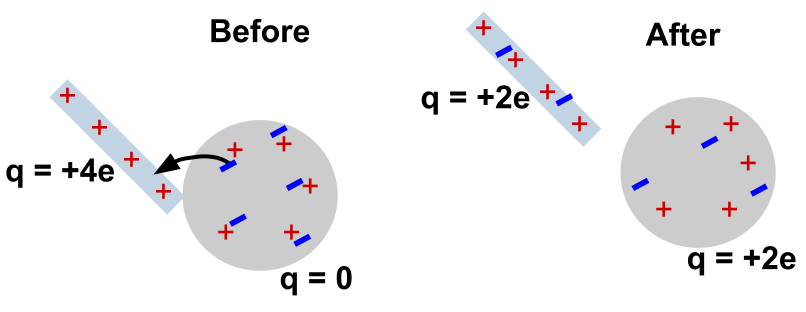
States that in a closed system, the total charge cannot change.
Elementary Charge
The magnitude of charge on an electron (and therefore on a proton) is denoted e. This stands for elementary charge because it’s the basic unit of electric charge.
Quantized
If something is quantized, then there is a smallest amount.
For example, charge is quantized because the smallest amount of charge is the elementary charge.
Coulombs
A coulomb is the SI unit for charge and is about 1018 electrons.
Electric Force
The attractive or repulsive force between two charged objects.
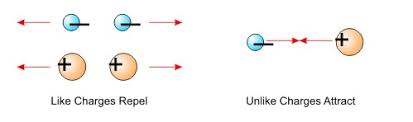
Coulomb’s Law
Gives the magnitude of the electric force between two charged objects

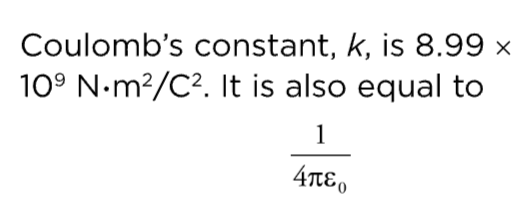
Coulomb’s Constant
Determines the strength of the electrostatic force between charges.
Fundamental for calculating electric forces.
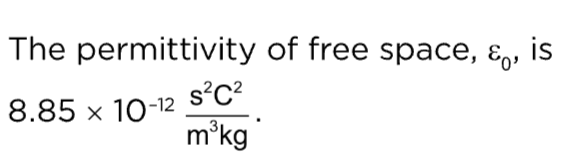
Permittivity of Free Space
A physical constant representing the capability of a vacuum to permit electric field lines or store electrical potential energy.
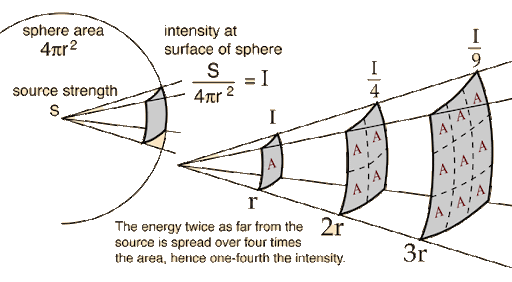
Inverse Square Laws
Applies to both electric force and gravitation force.
States that the force is inversely proportional to the distance between the center of mass of the two objects squared.
Gravitational Field
A vector field created by mass.
It determines both the magnitude and direction of the gravitational force on any mass placed in the field.
Mass always feels a force in the direction of the gravitational field.
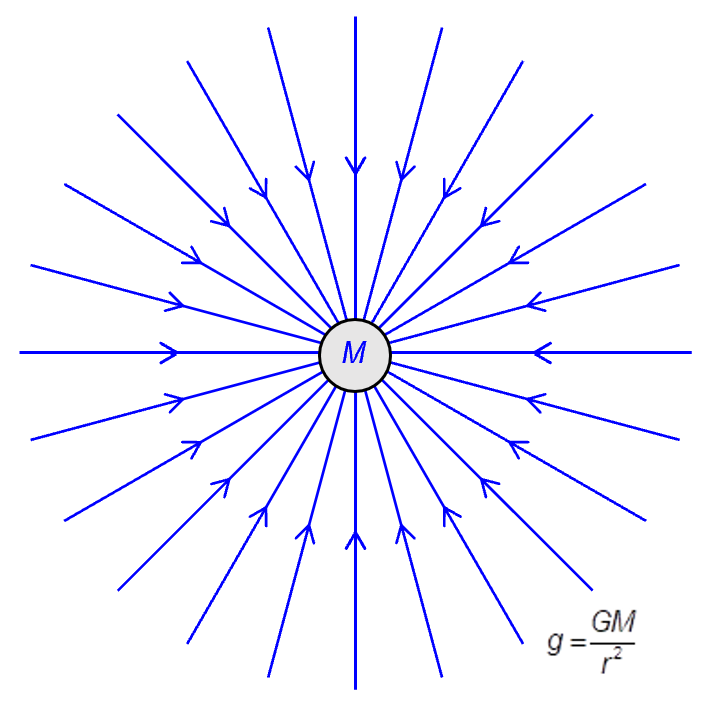
Electric Field
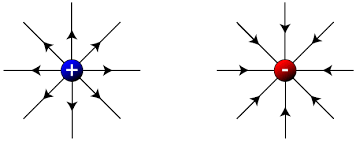
A vector field created by charge.
It determines both the magnitude and direction of the electric force on any charged object in the field.
If the object has positive charge, the force will be in the direction of the field. If the object has negative charge, the force will be opposite the direction of the field.
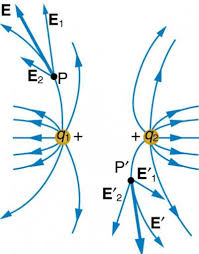
Electric Field Vector, E
The vector that describes the electric field at some specific point in space.
If a charged object is placed at that point, it will feel a force according to FE = qE, where q is the charge on the object
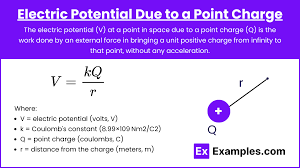
Point Charge
An object where the net charge is gathered at a single point.
Any object with charge can be estimated as a point charge as long as what is happening in the interior of the object is not considered.
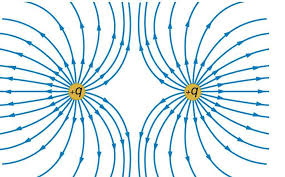
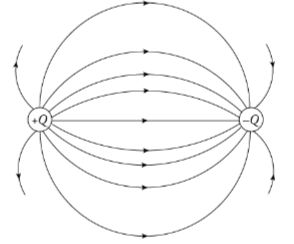
Electric Dipole
Two equal but opposite charges from a pair called an electric dipole.
Conductors
Materials that permit the flow of excess charge. They conduct electricity.
Insulators
Objects that closely guard their electrons, including extra ones that might be added.
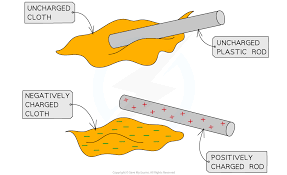
Charging by Friction
Occurs when an insulator is rubbed against another material, thereby stripping electrons off one material and depositing them on the other material.
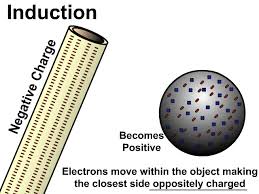
Charging by Induction
Occurs when charge is brought close to the object without touching it, which induces polarization in the object. Then some of the charge is removed, either through grounding or by separation of conductors.
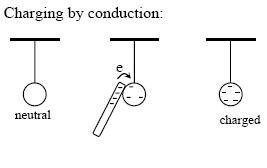
Charging by Conduction
Occurs when charges rearrange within a conductor or two conductors in direct contact.
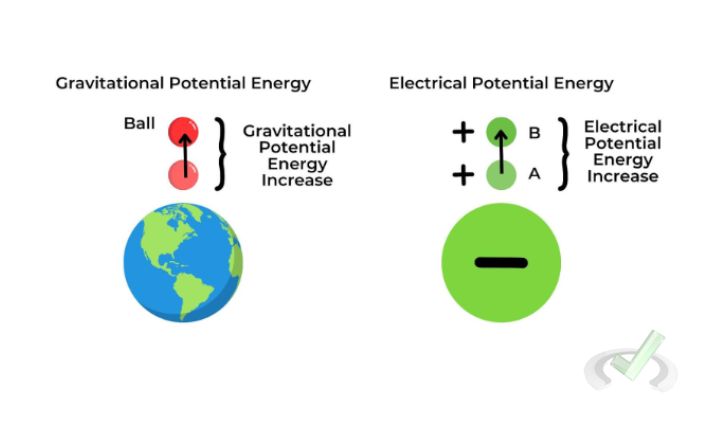
Electrical Potential Energy
The energy stored by virtue of an objects position in an electric field.
Electric Potential
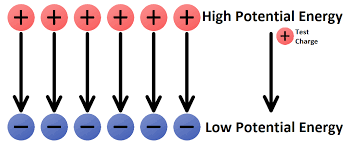
The amount of work energy needed to move a unit positive charge from a reference point to a specific point within an electric field.
Electrical potential energy per unit charge; the units of electric potential are joules per coulomb, J/C or V
Volt
One joule per coulomb is called on volt; so 1 J/C = 1V
Equipotential Surfaces
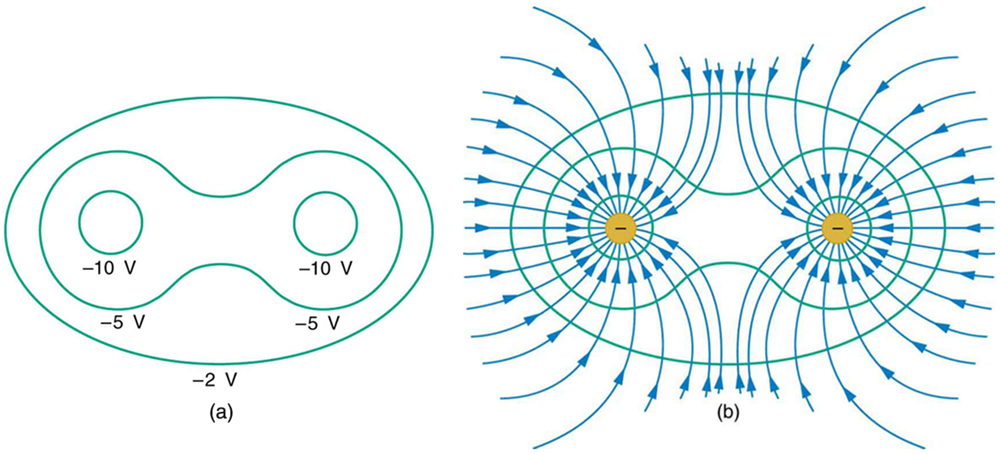
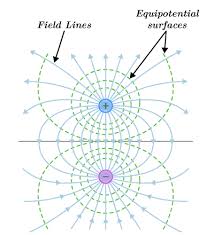
A surface in a three-dimensional space where the electric potential is constant.
Motion of a charge along an equipotential surface does not result in a change in the electric potential energy, similar to how motion of a mass at a constant height does not result in a change of gravitational potential energy
Equipotential Map
A drawing of several equipotential curves at various value of the potential for a charge distribution (which may or may not be specified)