Vertebral column
 Call Kai
 Learn
Learn Practice Test
 Spaced Repetition
 Match
Match Flashcards
 Knowt Play
1/54

Earn XP
Description and Tags
Bones that form your spine
Name | Mastery | Learn | Test | Matching | Spaced | Call with Kai | Chat |
|---|
No analytics yet
Send a link to your students to track their progress
55 Terms
Cervical Vertebrae
7 bones, in your neck
Thoracic Verterbrae
12 bones, each rib attaches to this
Lumbar
5 bones, lower back
Sacrum vs Sacrum in children
5 separate bones in kids then fuses into one going into adult hood
Coccyx
3 separate bones in kids then fuses into one going into adult hood

Identify what’s highlighted in red
Vertebral Body
Vertebral Body
Supporting the weight of body

What’s highlighted in red
Vertebral arch
Vertebral arch
Form the vertebral canal that holds the spinal cord

Identify what’s highlighted in red
Vertebral Foramen
Vertebral Foramen
Spinal cord goes throughi it

Identify what’s highlighted in red
Pedicles
Pedicles
Forming the vertebral arch

Identify what’s highlighted in red
Laminae
Laminae
forms the posterior portions of the vertebral arch

Identify what’s highlighted in red
Spinous process
Spinous process
Muscle/Ligament attachment

Identify what’s highlighted in red
Transverse processes
Transverse processes
point of muscle and ligament attachment.
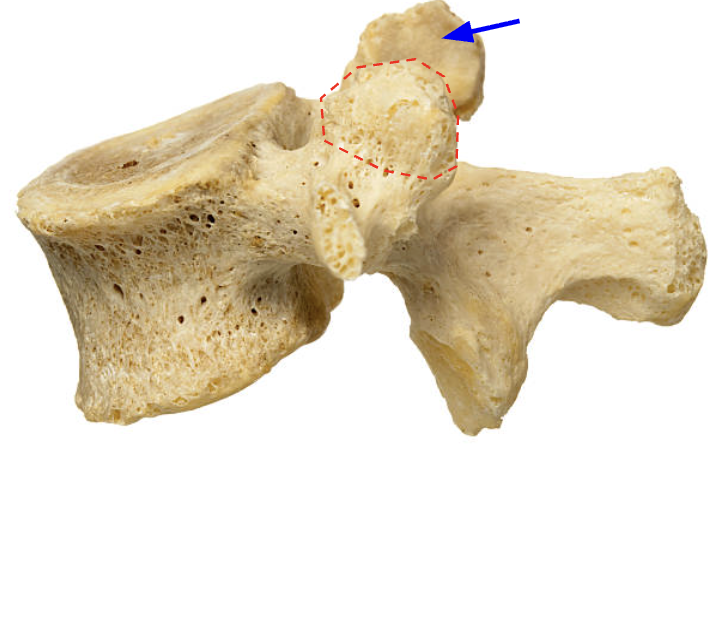
Identify what’s highlighted in red
Articular Process

Identify what’s highlighted in red
Articular Process
Articular process
Joining the vertebra together stabilizing the spine

Identify whats highlighted in red
Inferior Notch/ Intervertebral foranem
Inferior Notch
to form the intervertebral foramen
Intervertebral foramen
passageway for spinal nerves to exit the vertebral canal to get to the body
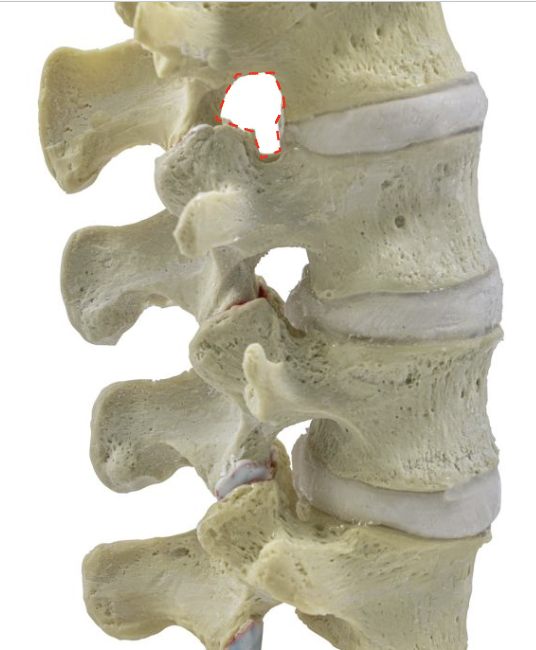
Identify what’s highlighted in red
Intervertebral Foramen/ Inferior notch

What type of vertebra is this/ what makes it that verterbra
Cervical vertebra , the two extra holes

whats the purple arrow pointing to
transverse foramina

What specific cervical vertebrae is this and why
C1 The atlas, no body or spinous process

What specific cervical vertebrae is this and why
C2 the Axis, the bump sticking off the body called the dens
How does C2 and C1 work together
allow rotation of the head

What specific vertebrae is this and why
Thoracic vertebrae, spinous process is angled downward

Describe the attachment
The head attaches to the body, the tubercle attaches to the transverse process
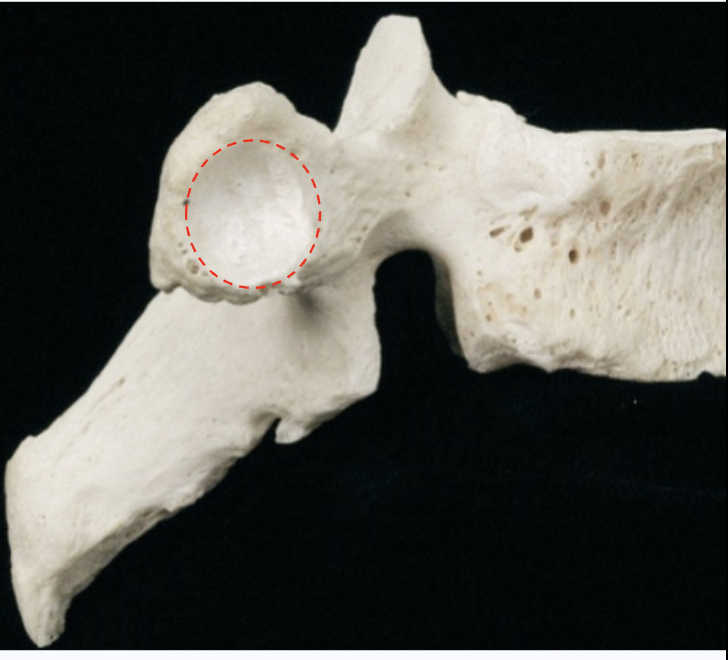
Identify what’s highlighted in red
Transverse costal facets
Transverse costal facets
site where the tubercle of the rib attaches
Costal demifacets
site where the head of the rib attaches

Identify what vertebrae this is and why
Lumbar Vertebrae, bigger in size nothing in particular just a square transverse process

Identify the bone
Sacrum

Identify the part
Sacral Foramina
Sacral Foramina
Allows spinal nerves to connect

Identify what’s highlighted in red
Sacral Promontory
Sacral Promontory
Attachment point for muscles and ligaments.
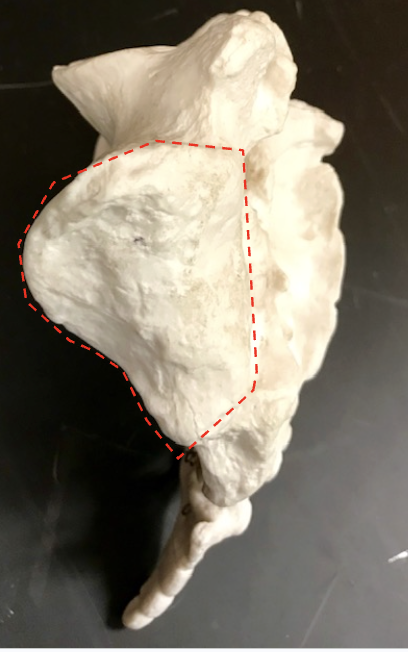
Identify what’s highlighted in red
Auricular Surface.
Auricular Surface.
site where the sacrum joins to the coccyx
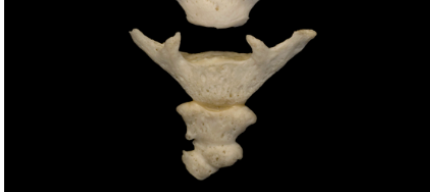
what bone is being shown
coccyx
Ribs 1-7
True, has a direct attachment to the sternum
Ribs 8-12
False, no direct attachment
Ribs 11-12
Floating rib, no attachment at all
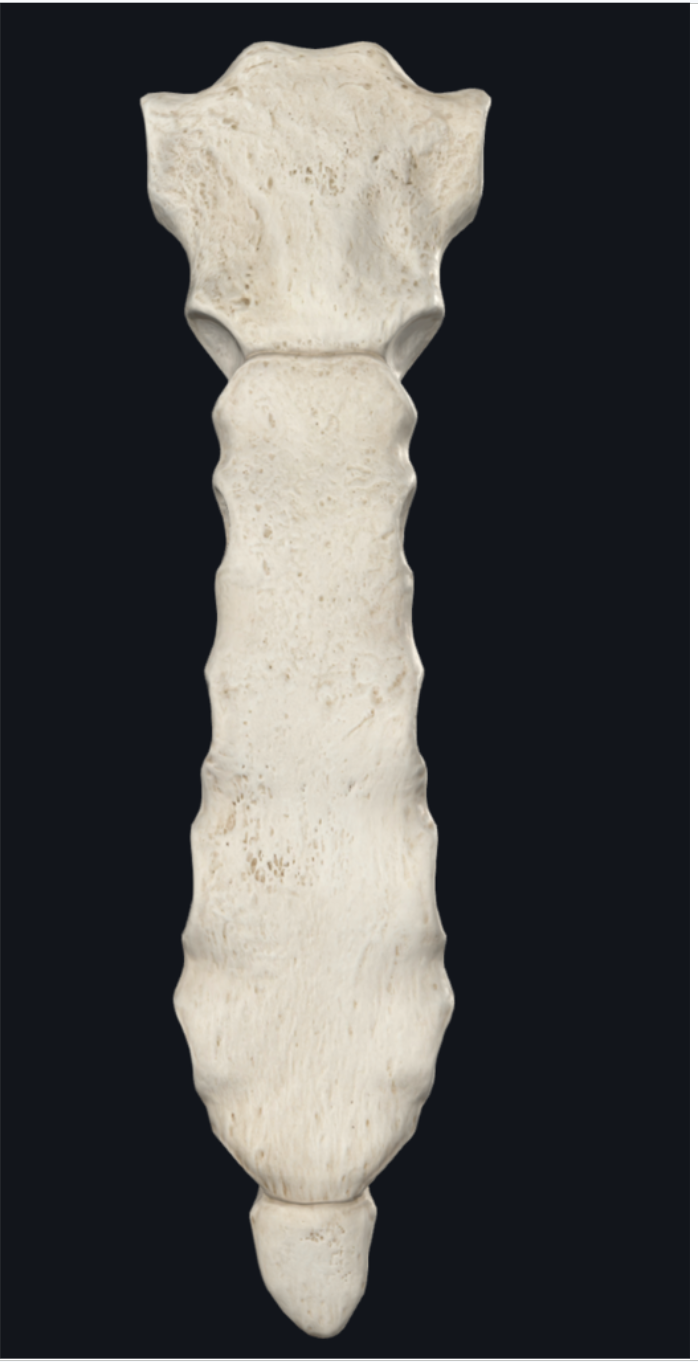
Identify the bone
Sternum

Identify what’s highlighted in red
Manubrium of the sternum
Function of Manubrium of the sternum
Articulation with ribs

Identify what’s highlighted in red
Body of the sternum
Function of the body of the sternum
Articulation with ribs

Identify what’s highlighted in red
Xiphoid process of the sternum
Function of Xiphoid process of the sternum
Muscle attachment