IB Exam (Unit 4: Ecology)
 View linked note
 Call Kai
 Learn
Learn Practice Test
 Spaced Repetition
 Match
Match Flashcards
 Knowt Play
1/38

Earn XP
Description and Tags
Name | Mastery | Learn | Test | Matching | Spaced | Call with Kai | Chat |
|---|
No analytics yet
Send a link to your students to track their progress
39 Terms
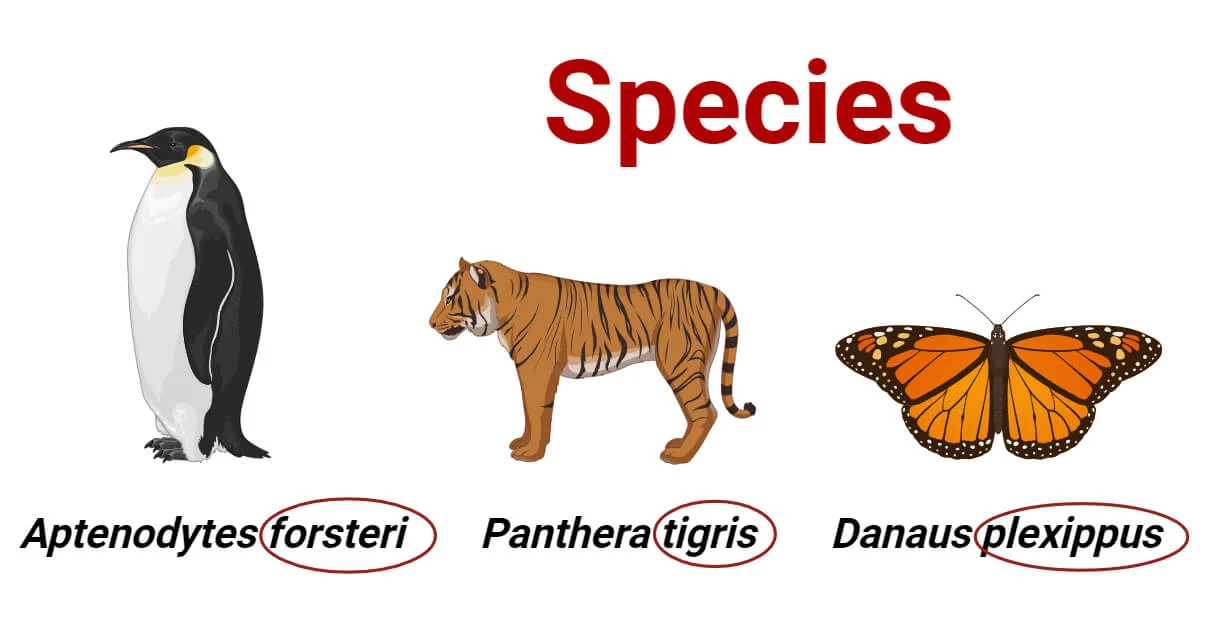
U: Define Species
groups of organisms that can potentially interbreed to produce fertile offspring
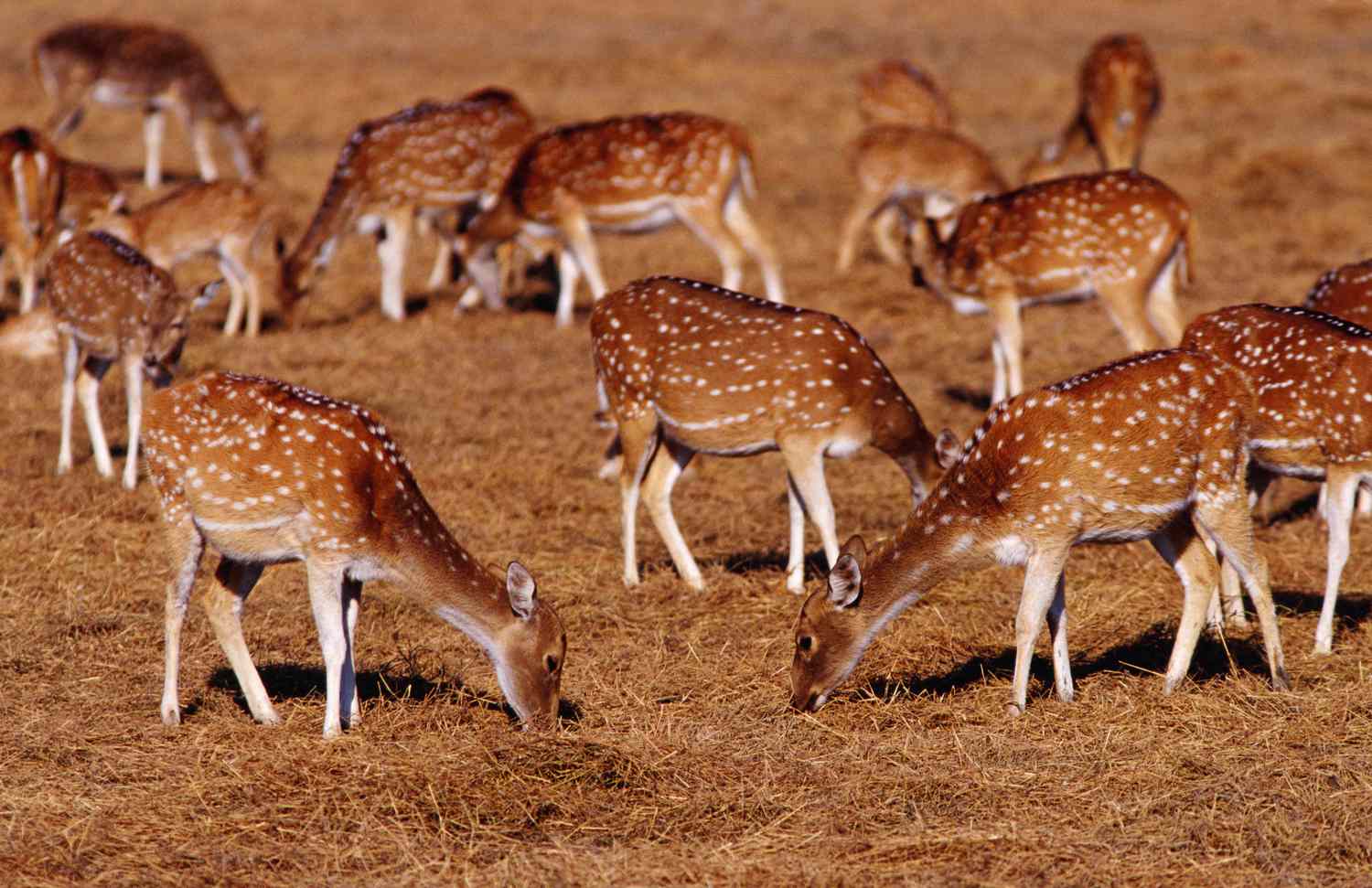
Define Population
a group of organisms of the same species, who live in the same area at the same time.
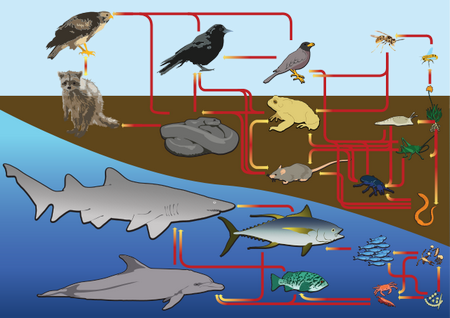
U: Define Community
populations of different species living together and interacting with each other
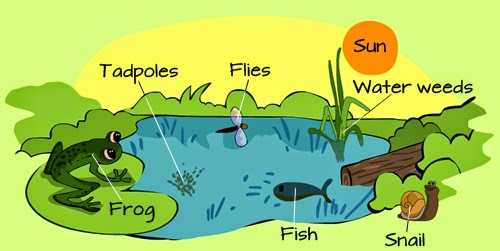
U: Define Ecosystem
the formation of interactions between community and the abiotic environment
U: What is the relationship between related species and reproduction?
Members of a species may be reproductively isolated in separate populations
simply: individuals of the same species are unable to reproduce with each other because they live in different groups or areas which tells us how one species evolve into two separate species
U: What are the two main modes of nutrition? Distinguish between them
Autotroph | Heterotroph |
|---|---|
an organism that synthesizes its organic molecules from simple, inorganic substances | an organism that obtains organic molecules from other organisms |
U: Distinguish between consumers, detritivores and saprotrophs
Consumers | Detritivores | Saprotrophs |
|---|---|---|
an organism that ingests other organic matter that is living or recently killed | an organism that ingests non-living organic matter | an organism that lives on or in non- living organic matter, secreting digestive enzymes into it and absorbing the products of digestion. |
U: Distinguish between consumers, detritivores and saprotrophs
U: Autotrophs obtain ________ ________ from their ______ _________
inorganic nutrients
abiotic environment
synthesizes all carbon compounds needed
U: Explain what happens to nutrients in an ecosystem
the supply of inorganic nutrients is maintained by nutrient recycling
U: What makes Ecosystems so important?
they have the potential to be sustainable over long periods of time
S: Classify species as autotrophs, consumers, detrivores or saprotrophs from a knowledge of their mode of nutrition.
Autotrophs | Consumers | Detritivores | Saprotrophs |
|---|---|---|---|
an organism that synthesizes its organic molecules from simple inorganic substances | an organism that ingests other organic matter that is living or recently killed
| an organism that ingests non-living organic matter think:
| an organism that lives on or in non-living organic matter, secreting digestive enzymes into it and absorbing the products of digestion. think:
|
S: Why would you use the Chi-Squared Test
The Chi-Squared Test helps you determine if any differences between what you observed and what you expected are just due to chance or if they're actually meaningful
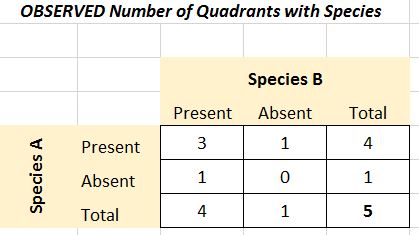
S: How to use Chi-Squared Test
Place numbers with corresponding organisms (observed frequency)
find row sum
find column sum
find total
Find expected frequency for each quadrat
e.f. = (row total × column total)÷total
calculate chi-squared (x²)
x² = ∑[(observed f - expected f) ÷ expected f]
find degrees of freedom
(# of rows - 1)(# of columns)
account of level of signifance (usually 5%)
Use the Chi-Squared values table to find the critical region
If x² is > critical region then the two organisms, do not tend to co-locate
If x² is < critical region then the two organisms, do tend to co-locate
![<ol><li><p>Place numbers with corresponding organisms (observed frequency)</p></li><li><p>find <strong><span style="color: green">row</span></strong> sum</p></li><li><p>find <strong><span style="color: yellow">column</span></strong> sum</p></li><li><p>find total</p></li><li><p>Find <strong><span style="color: red">expected frequency</span></strong> for each quadrat</p><ol><li><p><strong><span style="color: red">e.f.</span></strong> = (<strong><span style="color: green">row</span></strong> total × <strong><span style="color: yellow">column</span></strong> total)÷total</p></li></ol></li><li><p>calculate <strong><span style="color: purple">chi-squared</span></strong> (<strong><span style="color: purple">x²</span></strong>)</p><ol><li><p><strong><span style="color: purple">x²</span></strong> = ∑[(observed f - <strong><span style="color: red">expected f</span></strong>) ÷ <strong><span style="color: red">expected f</span></strong>]</p></li></ol></li><li><p>find degrees of freedom</p><ol><li><p>(# of <strong><span style="color: green">rows</span></strong> - 1)(# of <strong><span style="color: yellow">columns</span></strong>)</p></li></ol></li><li><p>account of level of signifance (usually 5%)</p></li><li><p>Use the Chi-Squared values table to find the <strong><span style="color: blue">critical region</span></strong></p></li><li><p>If <strong><span style="color: purple">x²</span> </strong>is > <strong><span style="color: blue">critical region </span></strong>then the two organisms, do not tend to co-locate</p></li><li><p>If <strong><span style="color: purple">x²</span> </strong>is < <strong><span style="color: blue">critical region</span> </strong>then the two organisms, do tend to co-locate</p></li></ol>](https://knowt-user-attachments.s3.amazonaws.com/fa71c1b8-1937-480b-896e-dd03dd54df97.png)
U: State where most ecosystems get their energy from
sunlight
U: State what happens during photosynthesis
light energy is converted to chemical energy in carbon compounds
U: What happens to Chemical energy with in a food chain?
within carbon compounds, they flow through food chains by means of feeding
U: What happens to energy released by living things? (explain)
involves:
all organisms use respiration to use release stored energy
gets:
converted to heat
the heat cannot be returned to chemical energy
leaves the system
gets replaced by sunlight (light energy)
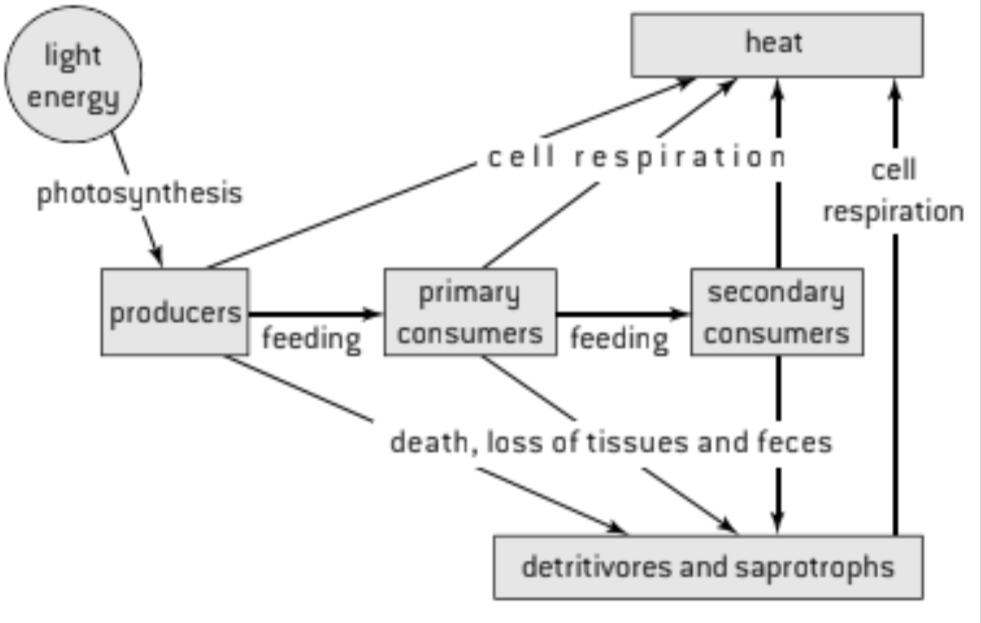
U: What restriction is placed on organisms in relation to energy?
Living organisms cannot convert heat to other forms of energy
U: What happens to heat within ecosystems?
it is lost
Define Trophic Level
position [of an organism] in the food chain
U: What is the relationship between Energy and Trophic Levels?
restricts:
length of food chain
biomass of higher trophic levels
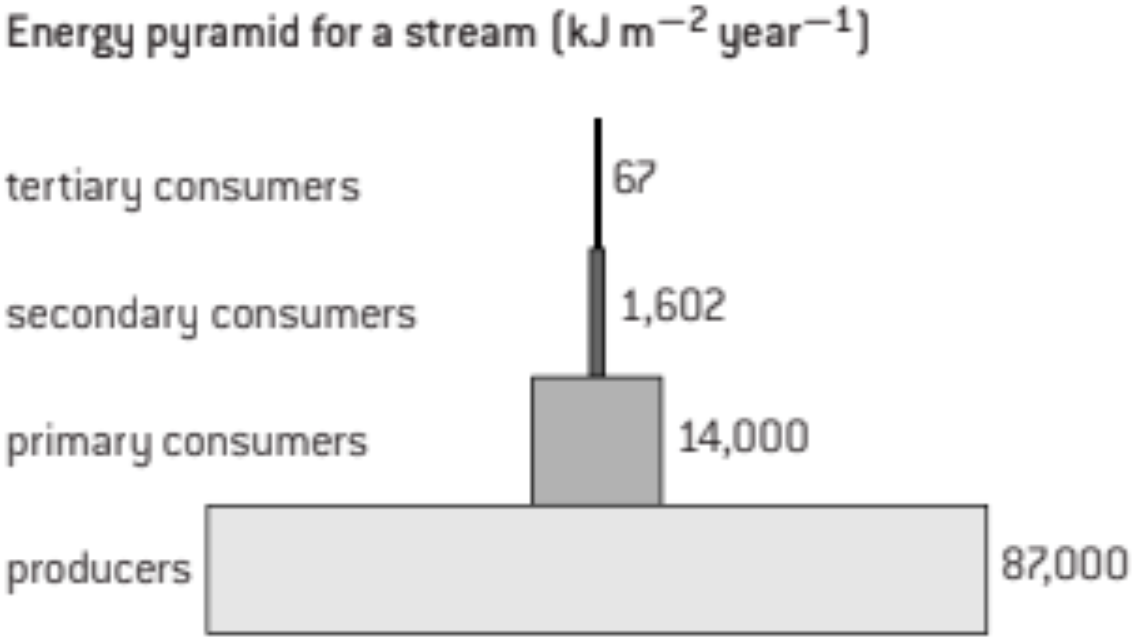
S: Quantitative representations of energy flow using pyramids of energy
show how much energy flows through each trophic level in a community
always a pyramid
units are kJ m⁻² year⁻¹
bars should all be drawn to scale
Triangular pyramids of biomass are not appropriate
Labels should indicate the trophic levels (ex. producers, primary consumer,…)
energy values alongside each bar on the pyramid
NOS: this unit can help us…
Use theories to explain natural phenomena
(ex. the concepts of energy flow explains the limited length of food chains)
U: Autotrophs convert carbon dioxide into…
carbohydrates and other carbon compounds
U: In aquatic ecosystems, carbon is present as…
dissolved carbon dioxide (CO₂) and hydrogen carbonate (H₂CO₃) ions
U: What happens to carbon dioxide (CO2) from the atmosphere or water?
it diffuses into autotrophs
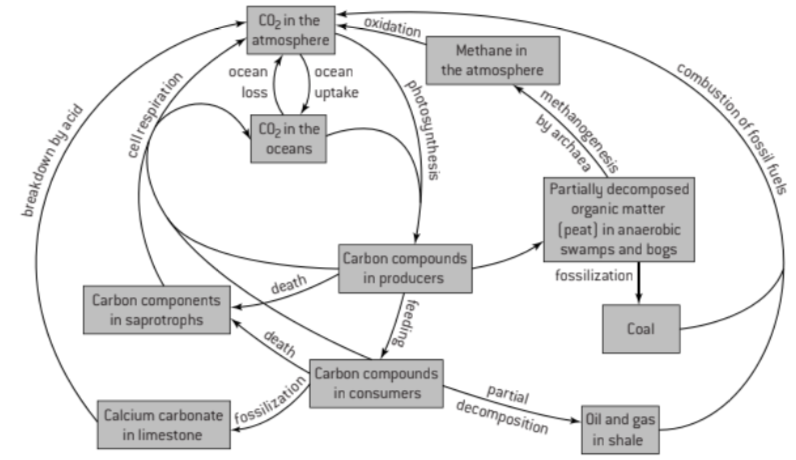
U: Tell me about Carbon Dioxide (CO2)
diffuses from atmosphere/water → autotrophs
produced by:
respiration (diffuses out of organisms → atmosphere/water)
combustion of biomass and fossilized organic matter
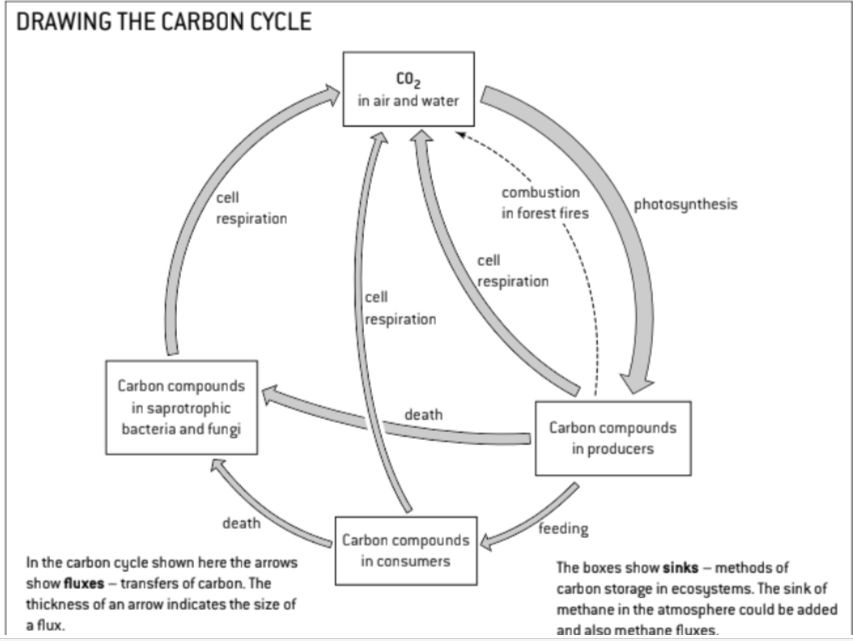
U: Tell me about Methane
produced from organic matter in anaerobic conditions by methanogenic archaeans
some diffuses into atmosphere or accumulates in ground
oxidized to carbon dioxide and water in the atmosphere
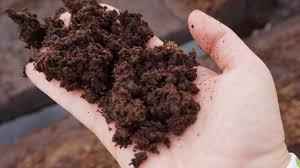
U: Tell me about Peat
forms when organic matter is not fully decomposed because of acidic and/or anaerobic conditions in waterlogged soils
U: What happens to partially decomposed organic matter from past geological eras?
accumulating in porous rocks, they become coal or oil and gases
U: What makes some animals special in terms of fossilization?
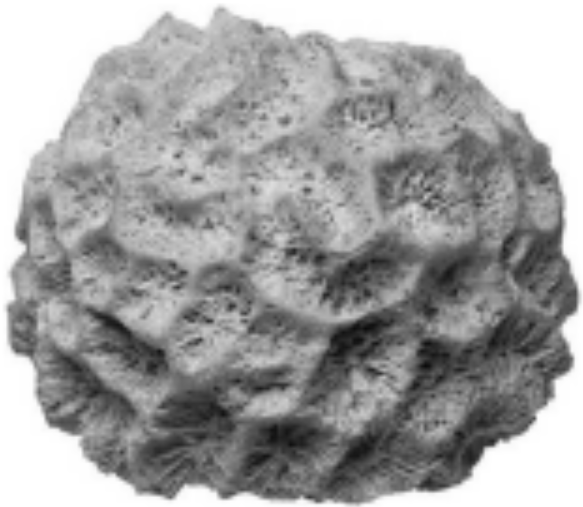
reef-building corals and Mollusca have hard parts
composed of calcium carbonate
can become fossilized in limestone
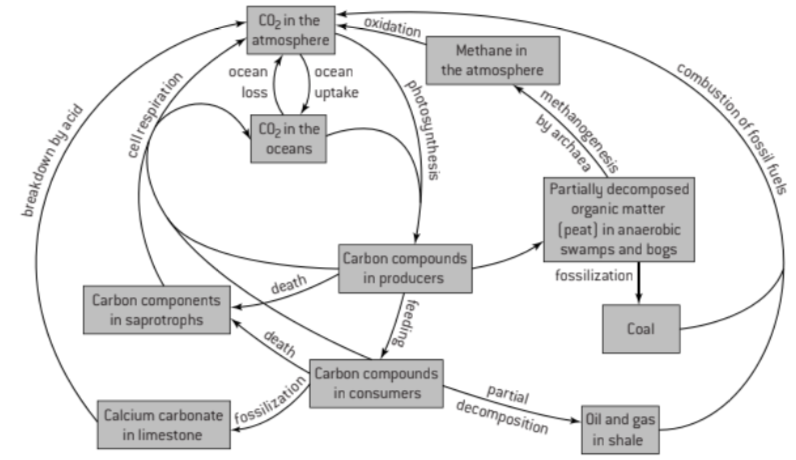
S: Draw and label a diagram of the carbon cycle to show the processes involved.
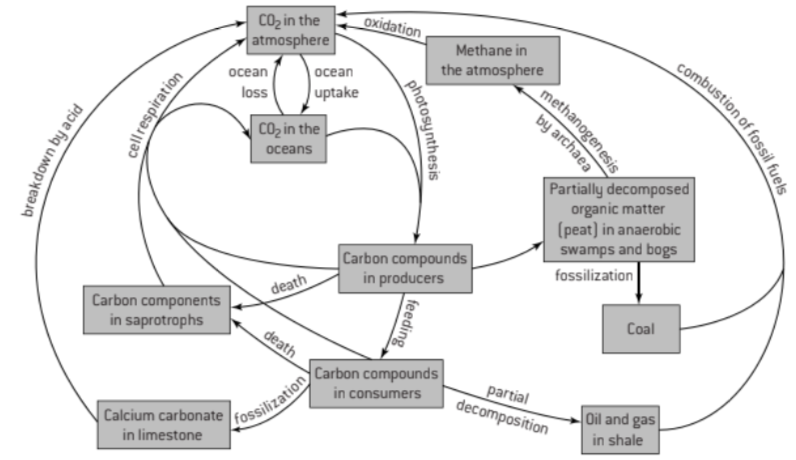
U: Explain the relationship between rises in concentrations of atmospheric carbon dioxide, methane and oxides of nitrogen and the enhanced greenhouse effect. (U1, U2, U5, U6)
Carbon Dioxide and Water Vapor are the most significant greenhouse gases
Other gases including methane and nitrogen oxides have less impact
The warmed Earth
absorbs short-wave radiation
emits longer wavelength radiation (heat)
Longer wave radiation is absorbed by greenhouse gases that retain the heat in the atmosphere.
Global temperatures and climate patterns are influenced by concentrations of greenhouse gases.
U: There is a correlation between rising atmospheric concentrations of carbon dioxide since 1800s (the Industrial Revolution) and…
average global temperatures
U: Recent increases in atmospheric carbon dioxide are largely due to…
combustion of fossilized organic matter.
A: Threats to coral reefs from increasing concentrations of dissolved carbon dioxide
A lot of CO2 has been absorbed into the ocean
pH dropped from 8.25 → 8.14
This seemingly small change represents a 30% acidification
ocean acidification = CO2 concentration
corals need carbonate ions (CO3) for calcium carbonate (CaCO₃) for their skeletons
dissolved CO2 in water→ carbonic acid
removes H+ and turns CO3 → H2CO3
low CO3 = low CaCO3
A: Correlations between global temperatures and carbon dioxide concentrations on Earth
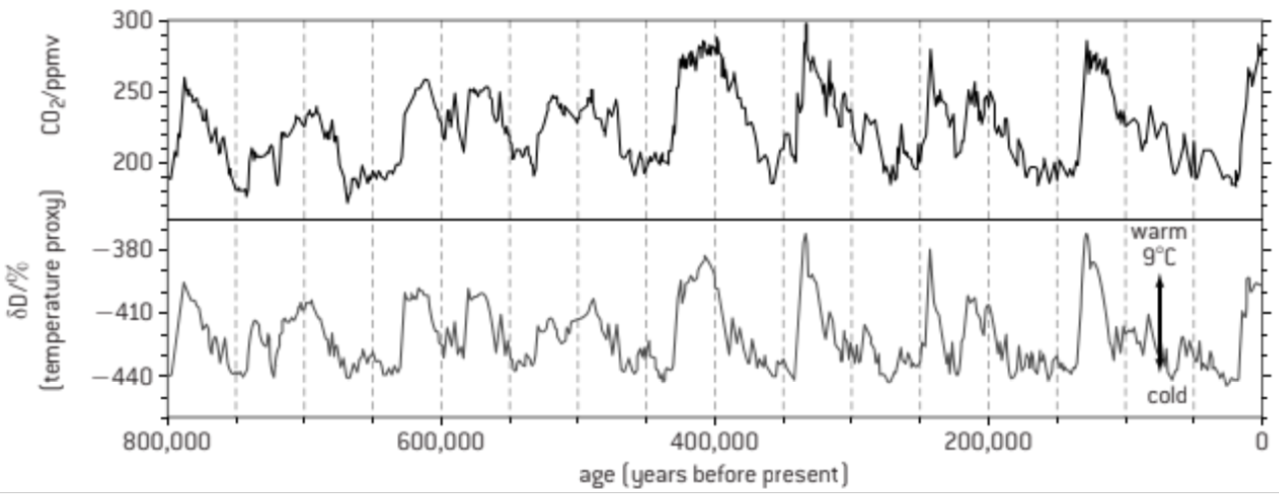
ice appears in chronological order - ice close to surface = more recent
bubbles in ice can be used to calculate CO2 concentration
temps are found via ratio of hydrogen isotopes in water
when data is plotted, there is a strong correlation between CO2 concentration and global temperature
correlation does not equal causation
data proves that CO2 is a greenhouse gas
therefore CO2 must have had some effect on temperature
A: Evaluate claims that human activities are not causing climate change
Common Counter arguments:
Natural climate variability suggests that the Earth's current warming trend may be part of a natural cycle, citing past periods of warming as evidence.
Solar activity proponents argue that variations in solar output could be driving climate change more significantly than human-induced greenhouse gas emissions.
3. Critics of mainstream climate science contend that incomplete or inaccurate climate models fail to adequately account for various factors influencing climate, such as cloud cover and ocean currents.
Things to consider:
If the greenhouse effect didn’t exist, the mean Earth temp. would be 30oC
CO2, methane and nitrous oxides are all greenhouse gases
human produce these gases in various ways
greenhouse gases trap heat
Earth’s mean temp has increased significantly in the past 200 years