Unit 3 Review
 AP Practice
 Call Kai
1/23

Earn XP
Description and Tags
Name | Mastery | Learn | Test | Matching | Spaced | Call with Kai |
|---|
No analytics yet
Send a link to your students to track their progress
24 Terms
Catabolic
the metabolic process of breaking down complex molecules into simpler ones to release energy–hydrolysis
Anabolic
the metabolic process of building up complex molecules from simpler ones to store energy–dehydration synthesis
Competitive Inhibitors
Molecules that have similar structure to a enzymes substrate and bind to the active site in order to inhibit the substrate and thus enzyme activity. This inhibitor is dependant on substrate concentration
Non-competitive inhibitors
Inhibitors that bind somewhere outside the active site, causing the active site itself to change structure thus causing the substrate to be unable to bind to the enzyme at all.
Photosynthesis
a set of reactions that use sunlight, CO2, and H2O and convert it into sugars and O2
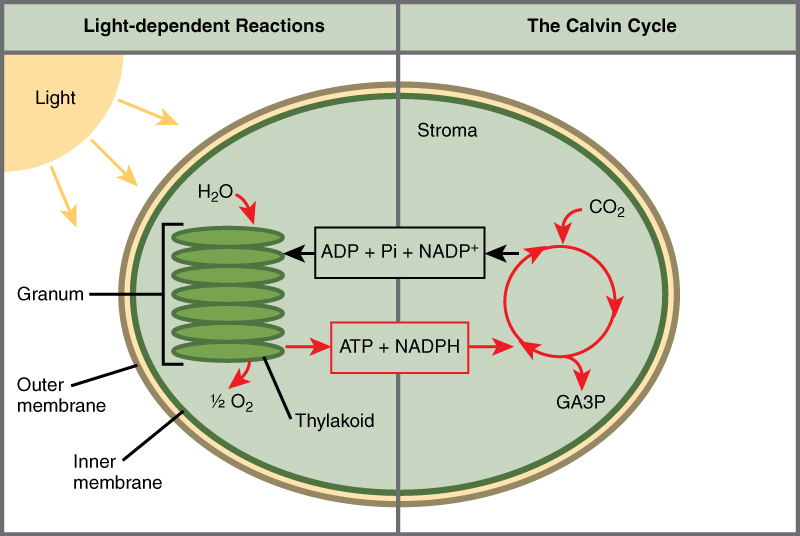
Light Dependant Reactions
a catabolic process occuring in the thylakoid where light energy is converted into chemical energy in the form of ATP and NADPH, releasing oxygen as a byproduct
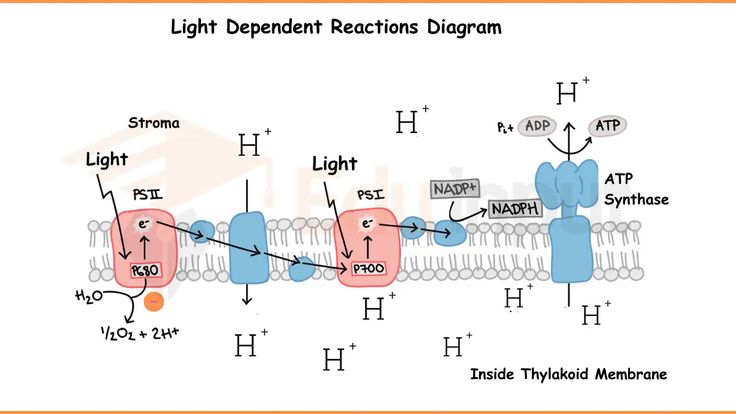
Excitation of Photosystem II
sunlight hits the electrons, exciting them and causing the electrons to orbit photosystem II faster
Photolysis
Water molecules are split in order to be oxidized
Chemiosmosis
electrons from H2O are transported through electron carriers in the thylakoid membrane to NAD+, causing it to be reduced
The Calvin Cycle
an anabolic process where a series of chemical reactions occur in the stroma, using energy from the previous reaction (ATP and NADPH) to convert carbon dioxide into glucose and other organic molecules such as ADP and NAD+
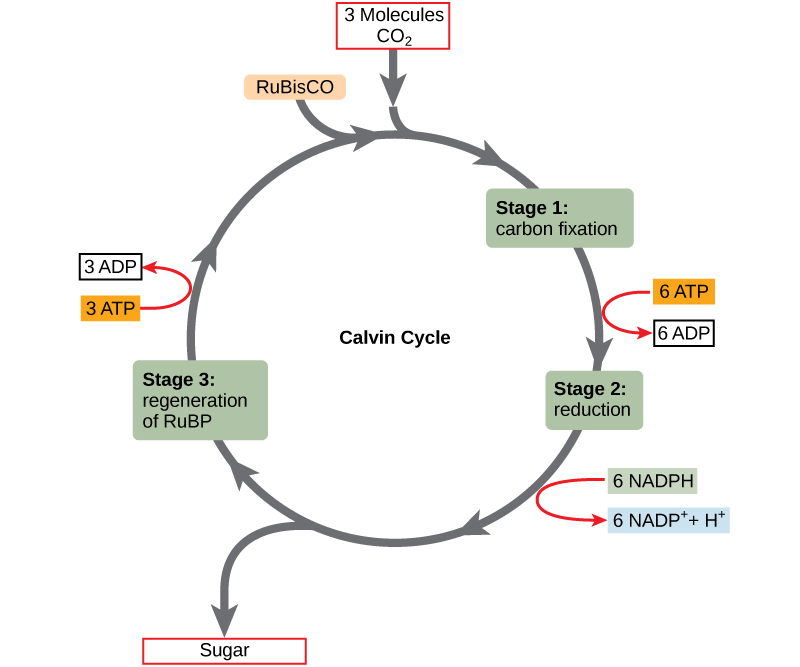
Carbon Fixation
an enzyme called RuBisCo captures carbon dioxide and attaches it to a molecule called RuBP
Reduction
ATP and NADPH are used to convert the RuBP molecules into three carbon sugar called G3P
Regenration
some of the G3P molecules are used to remake RuBP and the rest are used to build glucose and other sugars
Cellular Respiration
the process of converting chemical energy stored in glucose into ATP, the cell’s primary energy source
Glycolysis
the first state of respiration occuring in the cytosol, where glucose is converted into two molecules on pyruvate, ATP, and NAD+ is converted into NADH
Pyruvate Oxidation
the two pyruvate molecules produced in glycolysis goes into the mitochondrial matrix and his converted into Acetyl CoA
Citric Acid Cycle
the second stage of cellular respiration occuring in the mitochondrial matrix, where the 2 Acetyl CoA molecules made in pyruvate oxidation goes through a series of chemical reaction, oxidizing and producing ATP, NADH, and FADH2
Electron Transport Chain
The final stage of CR occuring in the inner mitochondrial matrix, with the energy from NADH and FADH2 being used to generate ATP by passing electrons down a series of embedded proteins that then powers the pumping of protons from into the intermembrane space. Oxygen is final electron acceptor, combining with protons in the matrix to form H2O
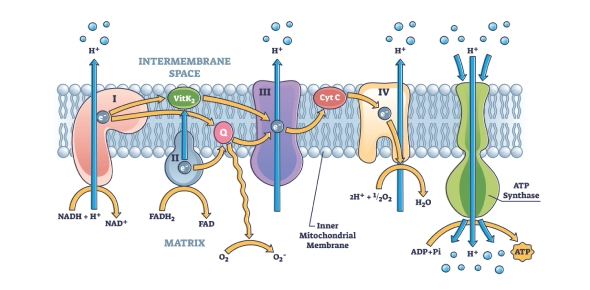
Oxidative Phosphorylation
Chemiosmosis occurs, a process where protons flow back into the mitochondrial matrix through ATP synthase. This powers powers the enzyme ATP Synthase to synthesize ATP from ADP + Pi
Oxidation
molecules lose electrons
Reduction
molecules gain electrons
Anaerobic respiration
a type of cellular respiration that occurs in the absence of oxygen, generating ATP by breaking down glucose with alternative electron acceptors instead of oxygen. Glycolysis is the only process that occurs, forming lactic acid in animals and ethanol in plants
First Law of Thermodynamics
energy cannot be created or destroyed; it simply can only be transformed from one form to another
Second Law of Thermodynamics
with every energy transformation, the quality of energy decreases because entropy (disorder) of the system increases