Biodiversity of Anura
 Call Kai
 Learn
Learn Practice Test
 Spaced Repetition
 Match
Match Flashcards
 Knowt Play
1/13

There's no tags or description
Looks like no tags are added yet.
Name | Mastery | Learn | Test | Matching | Spaced | Call with Kai | Chat |
|---|
No analytics yet
Send a link to your students to track their progress
14 Terms
What characteristics define Anura?
Saltatorial locomotion (jumping)
No tail as adult, elongated hindlimbs, fused limb bones
Buccal pumping
drink patch
What are the three suborders of Anura?
Archaeobatrachia (primitive frogs, ex: tailed frogs)
Mesobatrachia (middle frogs, ex: Surinam toad)
Neobatrachia (new frogs, ex: most other frogs, Hylidae, ranidae, and bufonidae)
How do most Anurans reproduce?
external fertilization called amplexus
Characteristics of family Ascaphidae
“tailed frogs”
Archaeobatrachia
extension of cloaca
Tympanum absent
most basal taxa— has 9th vertebrae, vestigial tail musculature
tadpoles have suction cup mouth
Coamplexus
Distribution: West coast of U.S
Characteristics of Family Microhylidae
Narrow mouthed frogs
Neobatrachia
Terrestrial, aquatic, arboreal, fossorial, and cave-dwelling
very diverse
Distribution: found all over, mainly in asia and south america
Characteristics of Family Scaphiopodida
American spadefoot toads
Neobatrachia
Keratinized “spade” like tubercle on hindfeet
Vertical pupils
Fossorial, dry environments
inguinal amplexus
Distribution: America and mexico
characteristics of Family bufonidae
True toads
Neobatrachia
diverse
warty skin, shortened and strong forelimbs, parotoid glands behind tympanum
Bidder’s organ (ovary like organ in males and females)
Lay eggs in 2 strings, contains viviparous (live young) species
Distribution: everywhere
Characteristics of Family Hylidae
Tree frogs
Neobatrachia
Very diverse
Toepads, forward facing eyes
Axillary amplexus
Distribution: high diversity in south America an Australia, other tropical places
Characteristics of Family Ranidae
True frogs
Neobatrachia
Saltatorial locomotion, toe webbing, distinct tadpole stage, smooth skin
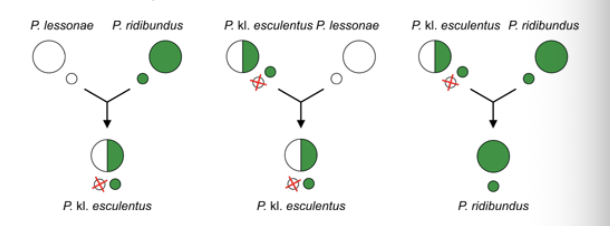
Example of hybridogenesis
Pelophylax Kl. esculentus
Form of kleptogenesis, parental species hybridize to broduce edible frog who then discards one parental genome.
Characteristics of Family Dendrobatidae
Poison Frog
Bright coloring
Carries babies on back until put them in a plant
Distibution: central America
Characteristics of Family Ceratophryidae
Horned Frogs
ambush predator
known to eat other tadpoles
Distribution: South America
Characteristics of Family Breviceptidae
Rain Frog
very round with short legs
Direct development, uses adhesive to mate
Distribution: southern Africa
Characteristics of Family Arthroleptidae
Hairy frog
Small (40mm), cartilaginous sterna, has “hair” on sides, “Breaking” finger bones
Distribution: central africa (coast)