Science Olympiad Anatomy Respiratory System
 Call Kai
 Learn
Learn Practice Test
 Spaced Repetition
 Match
Match Flashcards
 Knowt Play
1/87

There's no tags or description
Looks like no tags are added yet.
Name | Mastery | Learn | Test | Matching | Spaced | Call with Kai | Chat |
|---|
No analytics yet
Send a link to your students to track their progress
88 Terms
pulmonary ventilation
movement of air into and out of the lungs
inspiration
breathing in; active process
expiration
breathing out; passive process
external respiration
the exchange of gases between the atmosphere and the blood
internal respiration
Exchange of gases between cells of the body and the blood
guard hairs; vibrissae
guard nostrils and ear canals
nasal cilia
hair in nose; propel trapped particles towards the throat for digestion by
digestive enzymes

Function of capillaries in nose
warm the inspired air
Nasal conchae
folds in the mucous membrane that increase air turbulence and ensures that most air
contacts the mucous membranes

Olfactory mucosa
mucous membranes that contain smell receptors
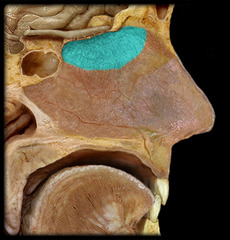
Respiratory mucosa
pseudostratified ciliated columnar epithelium containing goblet cells that secrete
mucus

goblet cells
secrete mucus
Mucus function
Stickiness traps inhaled particles and Lysozyme kills bacteria
Lysozyme
an enzyme found in saliva and sweat and tears that destroys the cell walls of certain bacteria
Lymphocytes and IgA antibodies
protect against bacteria
lymphocytes
A type of white blood cell that make antibodies to fight off infections
IgA antibodies
causes phagocytosis by WBCs and prevent pathogens from adhering to mucous membranes

Pharynx
throat

3 regions of pharynx
nasopharynx, oropharynx, laryngopharynx
nasopharynx
air passage (pseudostratified columnar epithelium)

Oropharynx
passageway for air, food, and drink (stratified squamous epithelium)
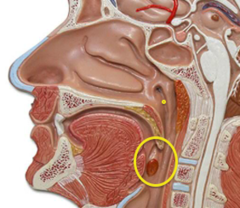
Laryngopharynx
passageway for air, food, and drink (stratified squamous epithelium)
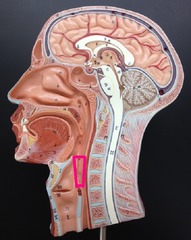
Larynx
Voice box

Larynx function
Keeps food and drink out of the airway
Sound production
Acts as a sphincter during abdominal straining (ex. During defecation and heavy lifting)
hyaline cartilage
form outer framework of larynx- 9- C rings
Glottis
the superior opening of the larynx

Epiglottis
prevents food and drink from entering airway when swallowing

False vocal cords
aid in closing the glottis when swallowing
True vocal cords
produce sound when air passes between them
Trachea
Wind pipe

Trachea functions
Air passageway
Cleans, warms, and moistens incoming air
Ciliated pseudostratified epithelium of trachea
traps inhaled debris and propels mucus up to the pharynx where it
is swallowed
Bronchi
Solely an air passageway

Left and right primary bronchi branch from?
trachea
alveoli
site of gas exchange in lungs

Type I alveolar cells
allow for diffusion of
gases (simple squamous epithelia)
Type II alveolar cells
secrete surfactant
(simple cuboidal epithelia)
Dust cells
alveolar macrophages (leukocytes)
macrophage
large phagocyte found in lymph nodes and other tissues of the body; engulf
Left Lung structure
Divided into 2 lobes; Smaller than the right lung because the cardiac notch accommodates the
heart
Right Lung structure
Divided into 3 lobes
Serous membrane
Cover entire surface of lungs
Boyle's law
at constant temperature, the
pressure of a given quantity of gas is inversely proportional to its volume
Charles' Law
the volume of
a given quantity of gas is directly proportional to its absolute temperature As the inhaled air is warmed, it
expands and inflates the lungs.
Air flow into lungs?
Air flows into the lungs when the thoracic pressure falls below atmospheric pressure.
phrenic nerves
Cause the the diaphragm to move downward and flatten for air flow
Pulmonary compliance
the ease at which lungs expand. Compliance can be reduced by
degenerative lung disease, such as tuberculosis.
Type of muscle that controls diameter of bronchioles
smooth muscle
Bronchoconstriction
reduce airflow
Bronchodialation
increase airflow
Location of Respiratory control centers
pons and the medulla
oblongata
transmits sensory signals to the respiratory centers
Vagus nerve
Inflation reflex
prevents the lungs from over-inflating
Apnea
temporary cessation of breathing (one or more skipped breaths)
Dyspnea
Shortness of breath
Eupnea
Normal, relaxed, quiet breathing
Hyperpnea
increased rate and depth of breathing in response to exercise, pain, or other conditions
Hyperventilation
increased pulmonary ventilation in excess of metabolic demand
Hypoventilation
reduced pulmonary ventilation
Orthopnea
Dyspnea that occurs when a person is lying down
Respiratory arrest
permanent cessation of breathing
Tachypnea
accelerated respiration
spirometer
determines respiratory volume

Tidal Volume (TV)
amount of air inhaled or exhaled with each breath under resting conditions
(500 mL)
Inspiratory Reserve Volume (IRV)
amount of air that can be inhaled during forced breathing in
addition to resting tidal volume (3000 to 3300 mL)
Expiratory Reserve Volume (ERV)
amount of air that can be exhaled during forced breathing in
addition to tidal volume (1000 to 1200 mL)
Residual Volume - (RV)
amount of air remaining in the lungs after a forced exhalation. (1200
mL)
Respiratory Capacities
values determined by adding two or more of the respiratory volumes
Vital Capacity (VC)
maximum amount of air that can be expired after taking the deepest breath
possible (4500 to 5000 mL) VC = TV + IRV + ERV
Inspiratory Capacity (IC)
maximum volume of air that can be inhaled following exhalation of
resting tidal volume IC = TV + IRV
Functional Residual Capacity (FRC)
volume of air remaining in the lungs following exhalation
of resting volume FRC = ERV + RV
Total Lung Capacity (TLC)
total volume of air that the lungs can hold (5700 to 6200 mL (cm3)
for adults and 2690 to 3600 mL for Junior High Youth)
§ TLC = VC + RV
Boyles Law
P1V1 = P2 V2
Chronic obstructive pulmonary diseases (COPD)
long-term obstruction of airflow and a substantial reduction in pulmonary ventilation
asthma
allergens trigger the release of histamine and other inflammatory chemicals that cause
intense bronchoconstriction
Emphysema
alveolar walls break down and the surface area of the lungs is reduced
Pneumonia
lower respiratory infection that causes fluid build up in the lungs
Sleep apnea
Cessation of breathing for 10 seconds or longer during sleep
Cystic Fibrosis
an inherited disorder that causes causes thick, sticky mucus to build up in the
lungs
Tuberculosis
pulmonary infection with Mycobacterium tuberculosis; reduces lung compliance
Pulmonary edema
excess fluid in the lungs
Pleurisy
inflammation of the pleura lining surrounding the lungs - very painful
Lung cancer
malignancy of pulmonary tissue
Hypoxia
deficiency of oxygen in a tissue or the inability to use oxygen
Oxygen toxicity
excess oxygen, causing the build up of peroxides and free radicals
Chronic bronchitis
cilia are immobilized and reduced in number; goblet cells increase their
production of mucus → mucus clogs the airways and breeds infection
Acute rhinitis
the common cold
Laryngitis
inflammation of the vocal folds