Principals of Hemostasis
 Call Kai
 Learn
Learn Practice Test
 Spaced Repetition
 Match
Match Flashcards
 Knowt Play
1/44

There's no tags or description
Looks like no tags are added yet.
Name | Mastery | Learn | Test | Matching | Spaced | Call with Kai | Chat |
|---|
No analytics yet
Send a link to your students to track their progress
45 Terms
What is the primary trigger of coagulation?
Tissue Factor (TF) exposure outside the bloodstream.
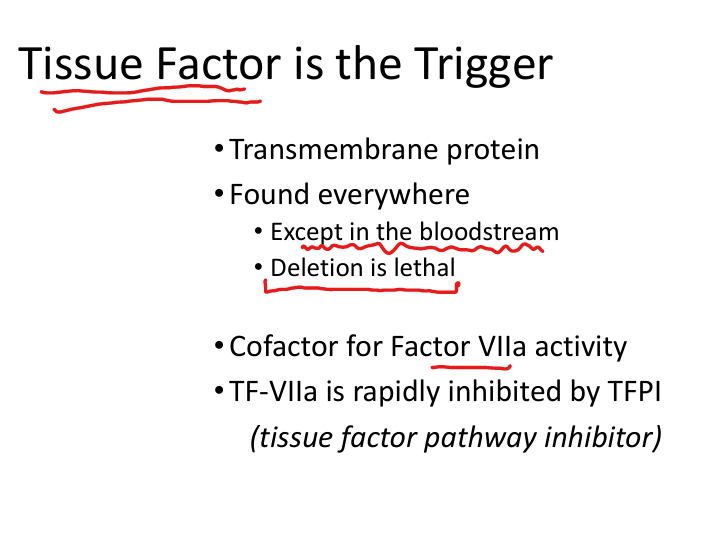
Where is Tissue Factor normally located?
Extravascular tissues (smooth muscle, fibroblasts), NOT circulating blood.
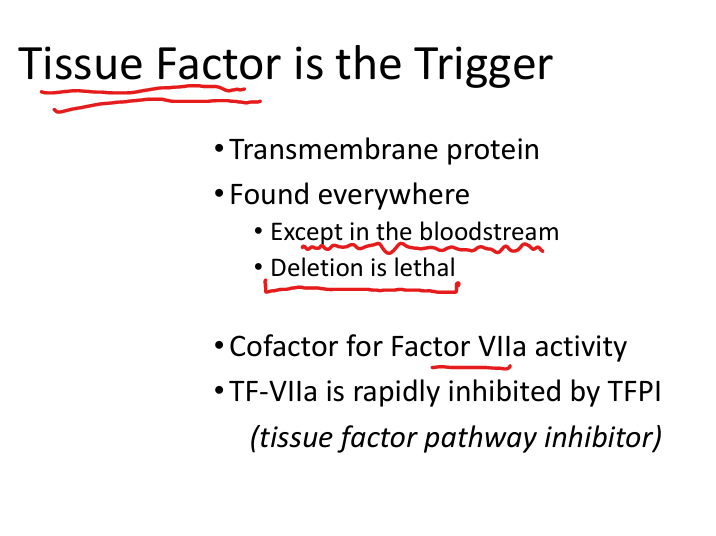
What complex initiates coagulation?
TF–FVIIa complex.
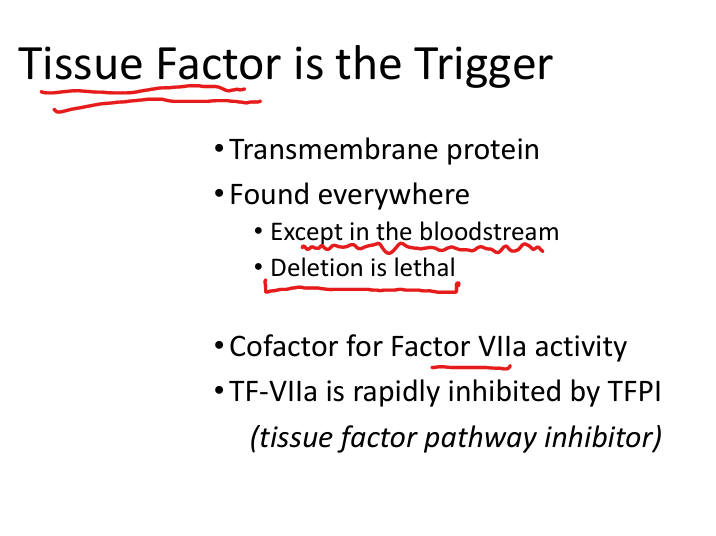
What rapidly inhibits TF–FVIIa?
Tissue Factor Pathway Inhibitor (TFPI).
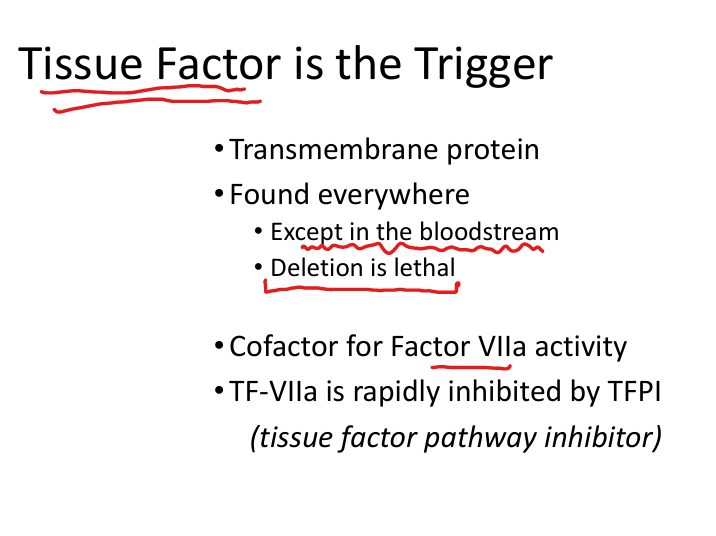
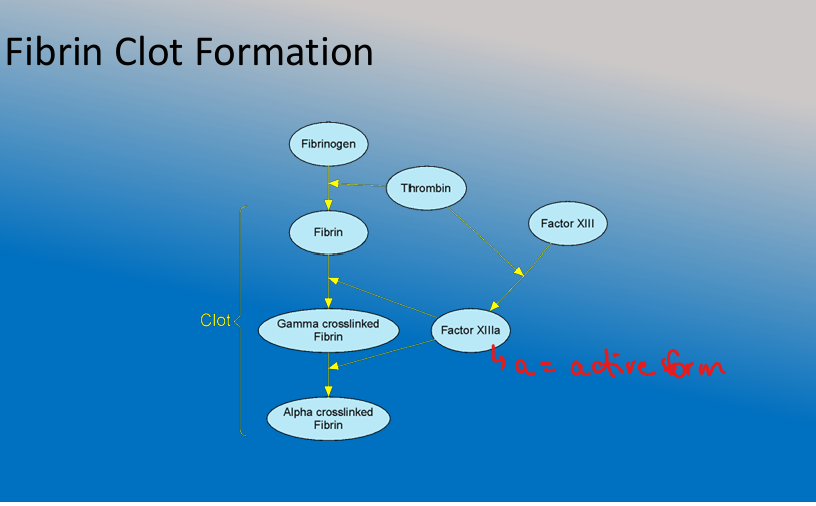
What enzyme is required for fibrin clot formation?
Thrombin (Factor IIa).
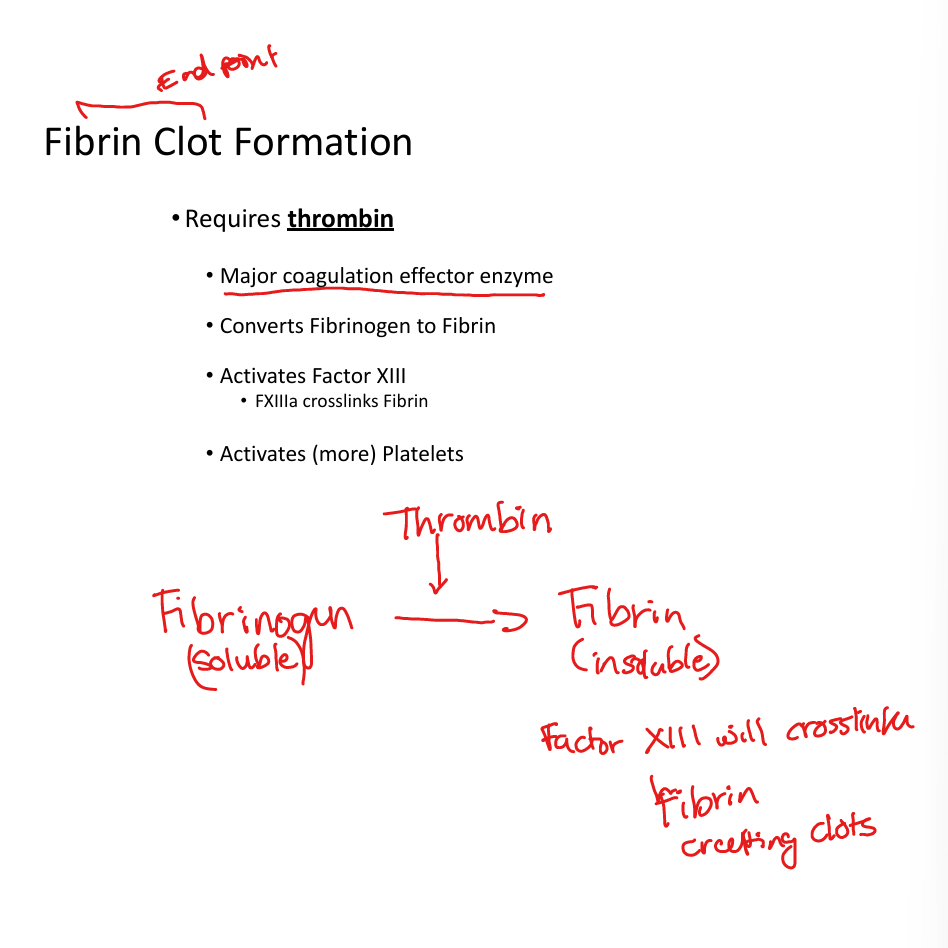
What does thrombin convert?
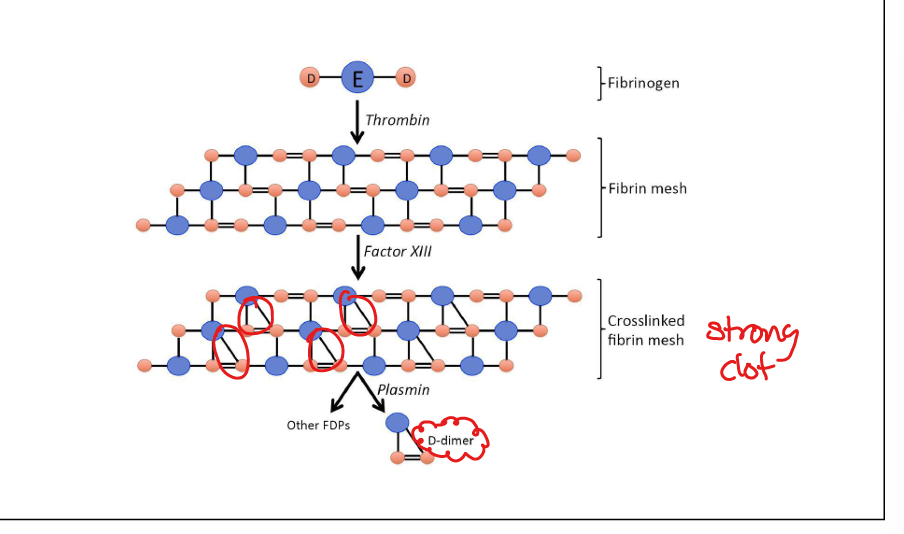
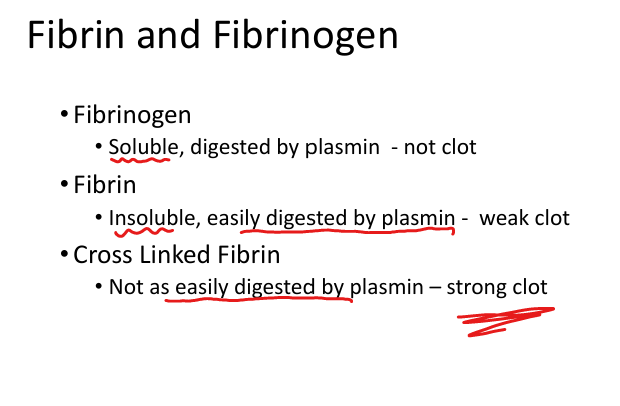
Fibrinogen → Fibrin.
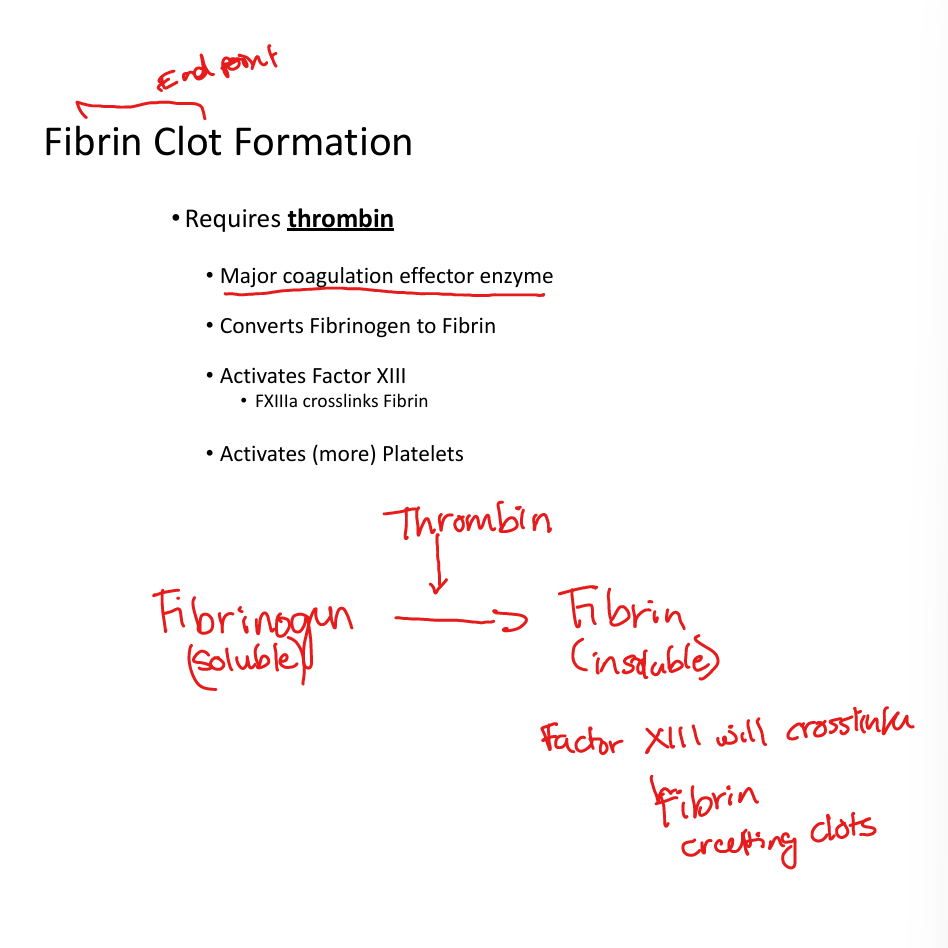
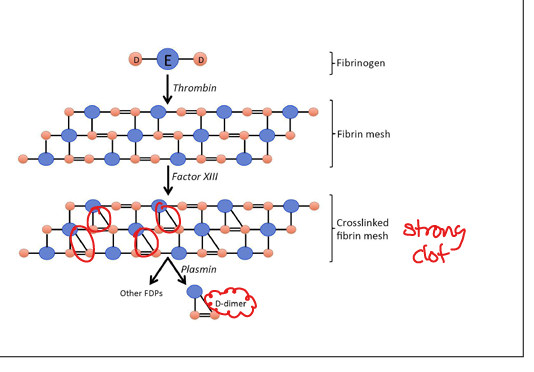
What factor crosslinks fibrin?
Factor XIII → XIIIa.
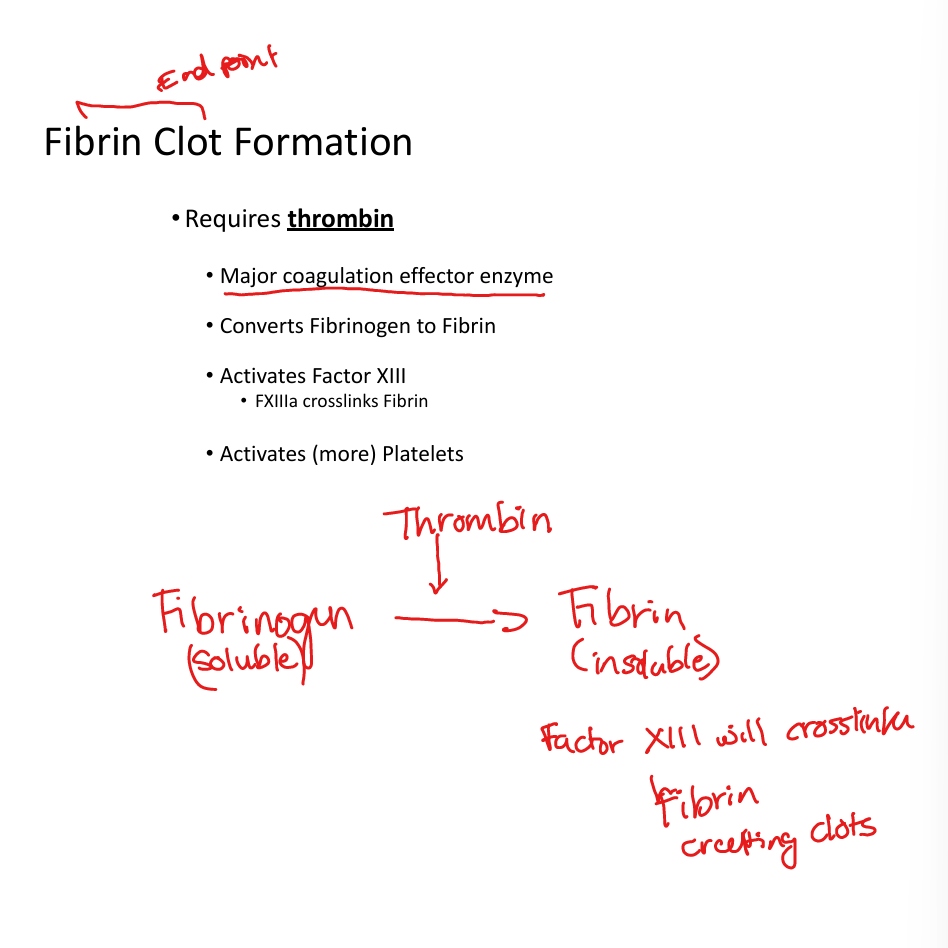
What is the strongest form of fibrin?
Cross‑linked fibrin (resistant to plasmin).
What does plasmin digest?
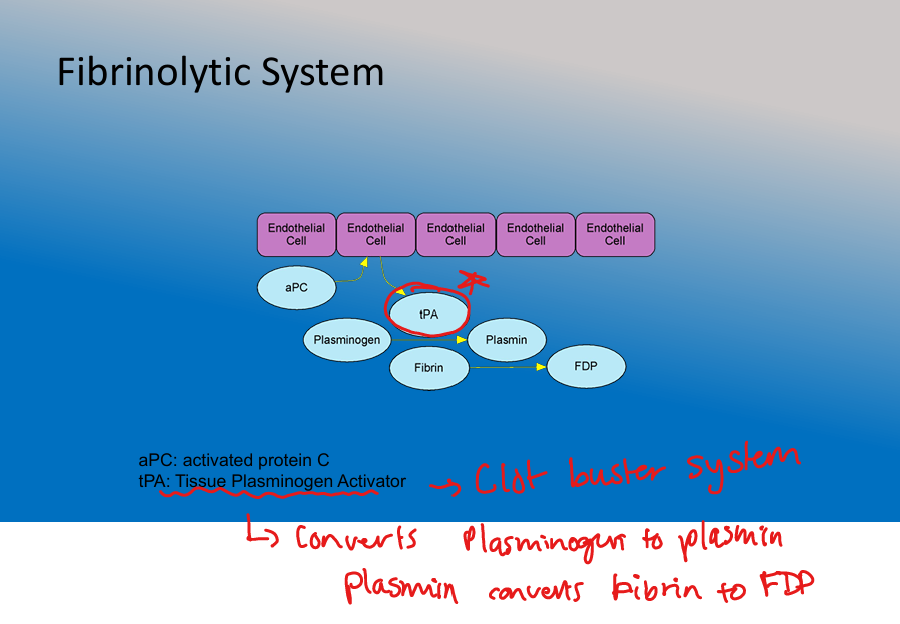
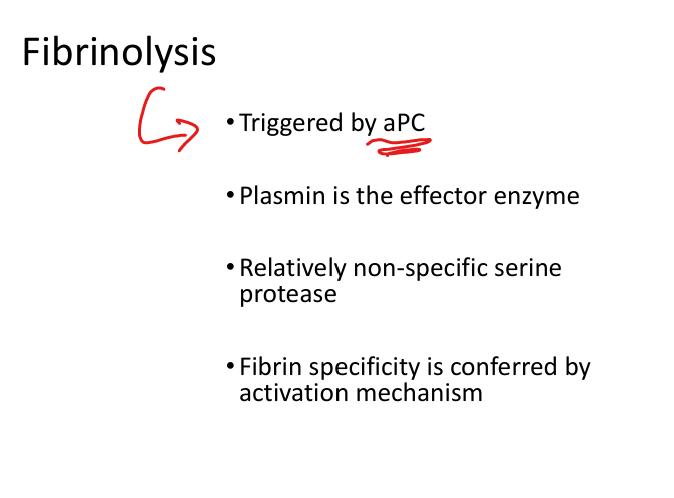
Fibrin, fibrinogen, and clot components → FDPs including D‑dimer.
What activates plasminogen?
tPA (tissue plasminogen activator).
What triggers fibrinolysis?
Activated Protein C (aPC).
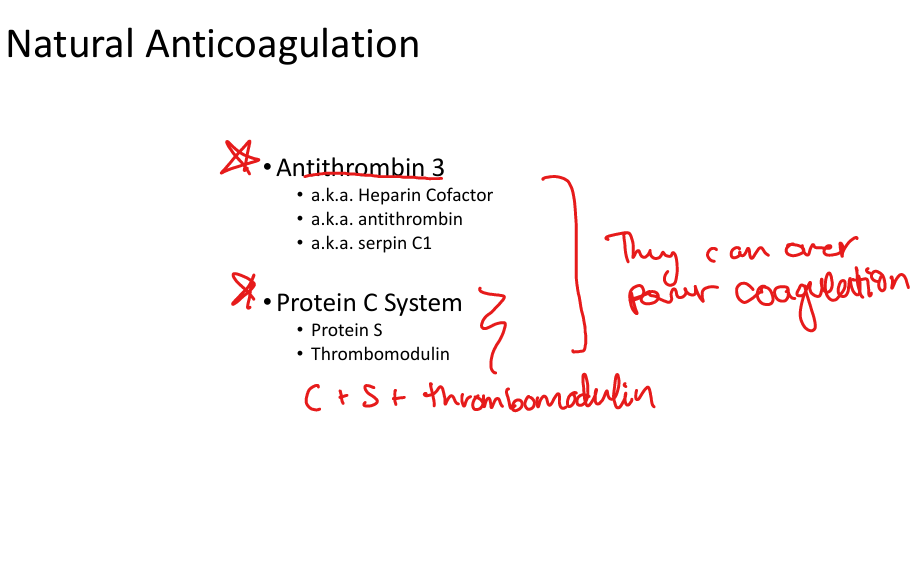
What is the role of Antithrombin III?
Inhibits thrombin and Factor Xa (heparin cofactor).
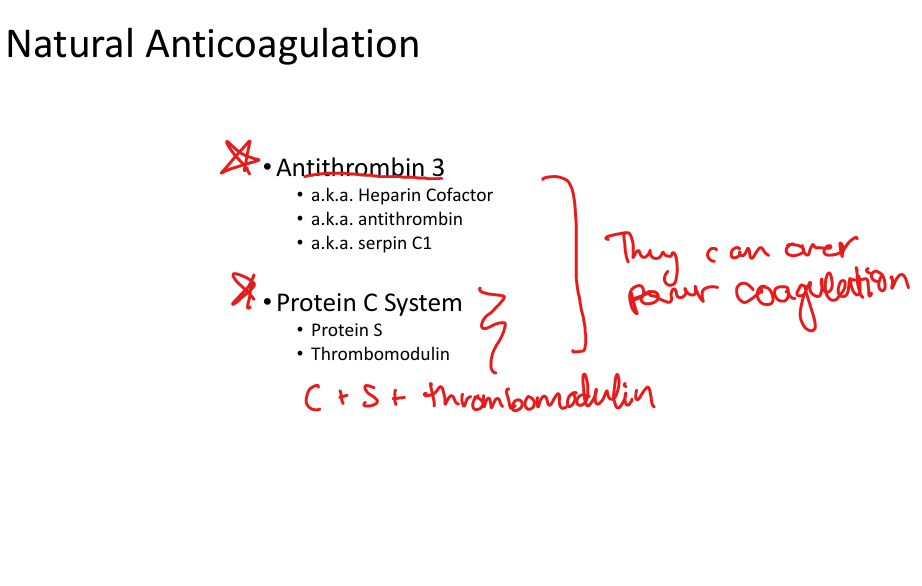
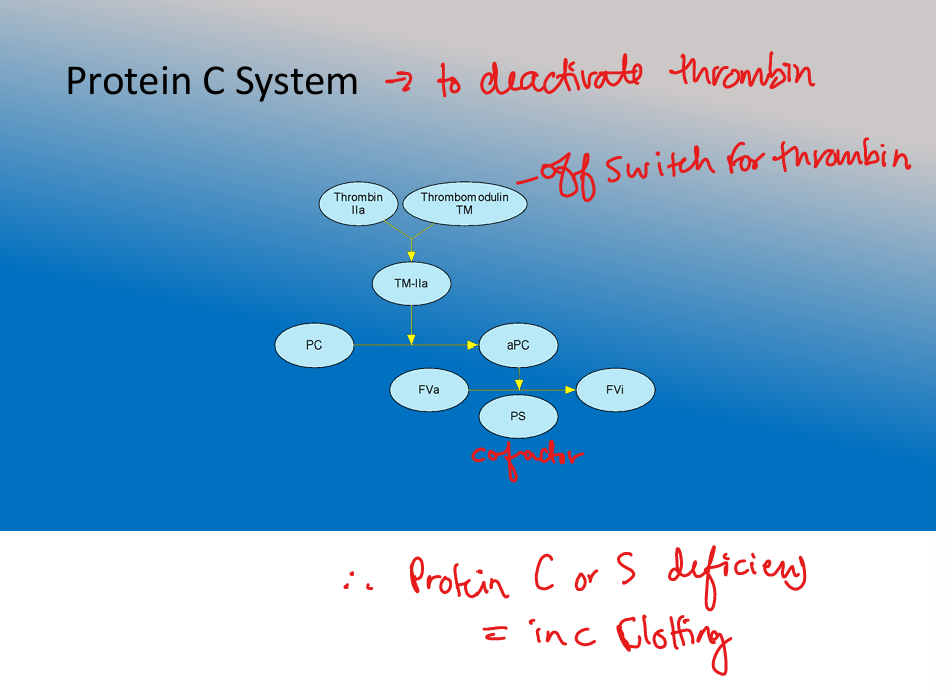
What is the Protein C system composed of?
Protein C, Protein S, thrombomodulin.
What does activated Protein C (aPC) inactivate?
Factors Va and VIIIa.
What is required for effective hemostasis?
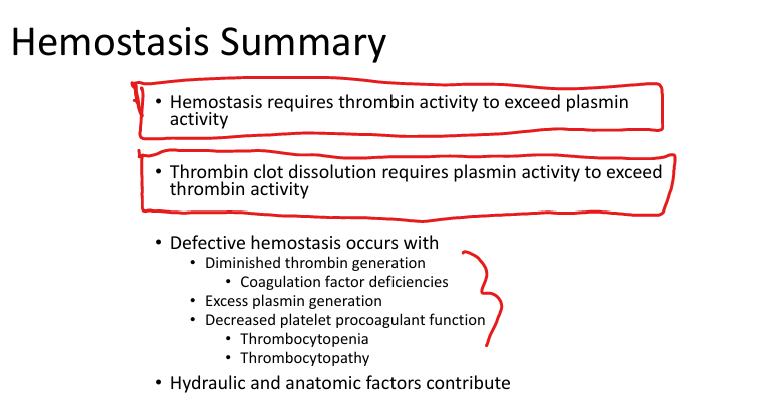
Thrombin activity > Plasmin activity.
What causes defective hemostasis?
↓ thrombin generation OR ↑ plasmin activity OR platelet dysfunction.
What factors are vitamin K–dependent?
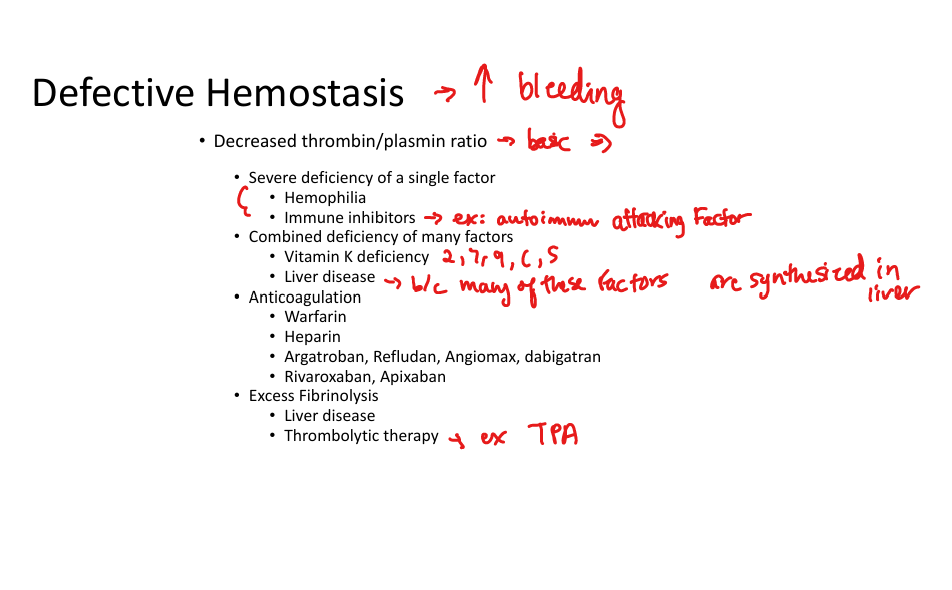
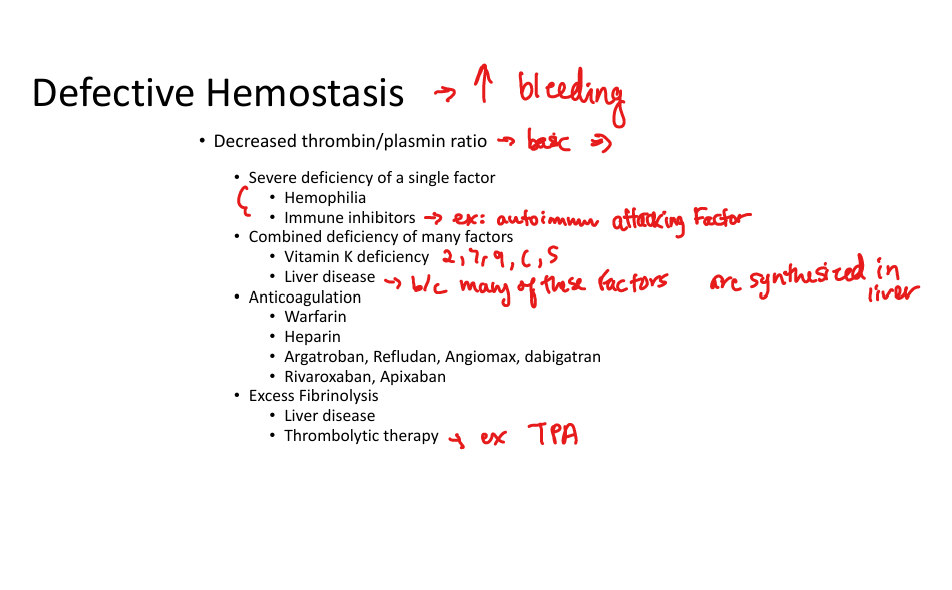
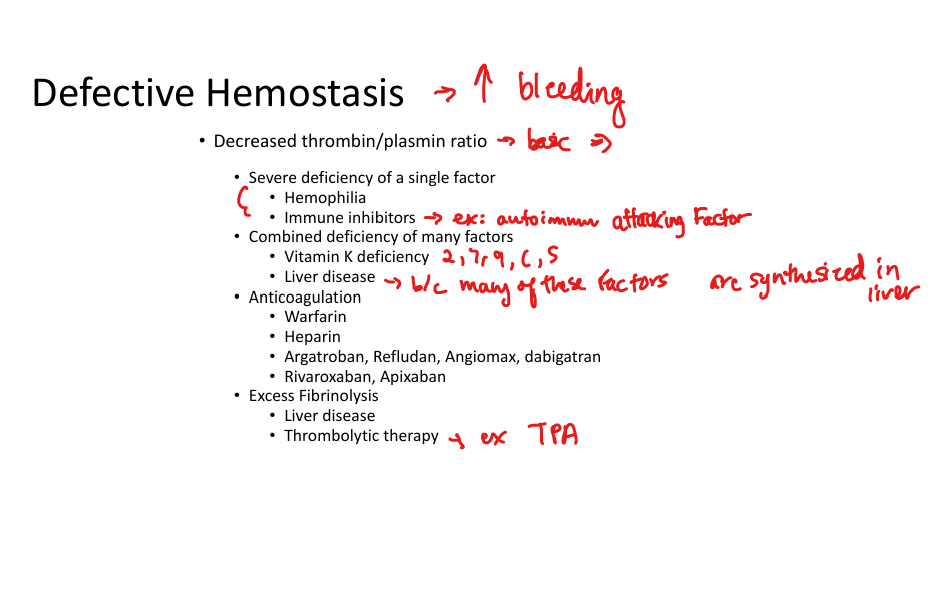
II, VII, IX, X, Protein C, Protein S.
What conditions reduce multiple clotting factors?
Liver disease, vitamin K deficiency, DIC.
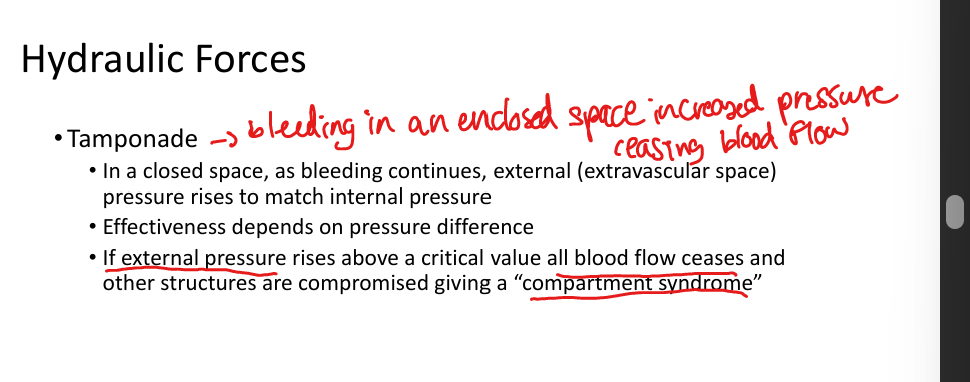
What is tamponade?
External pressure rises to match vessel pressure → stops blood flow/bleeding.
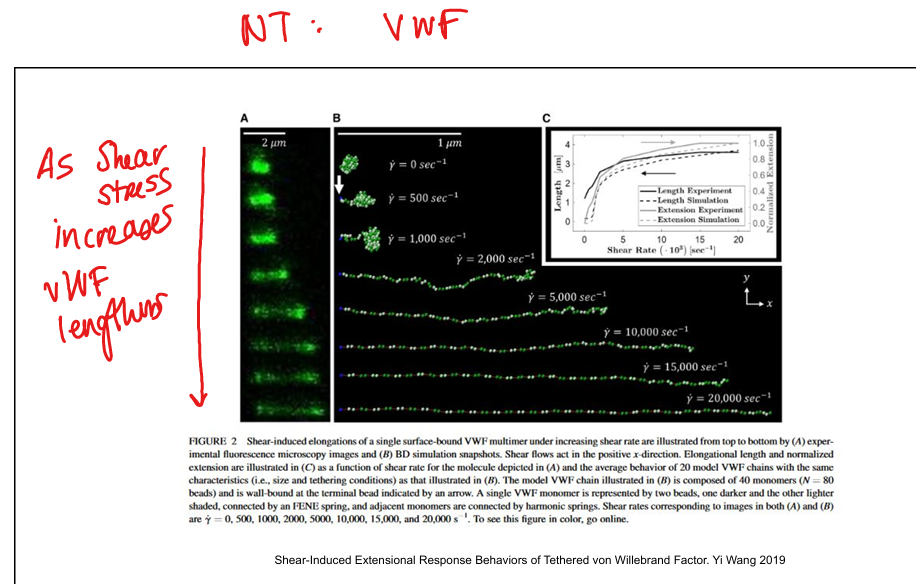
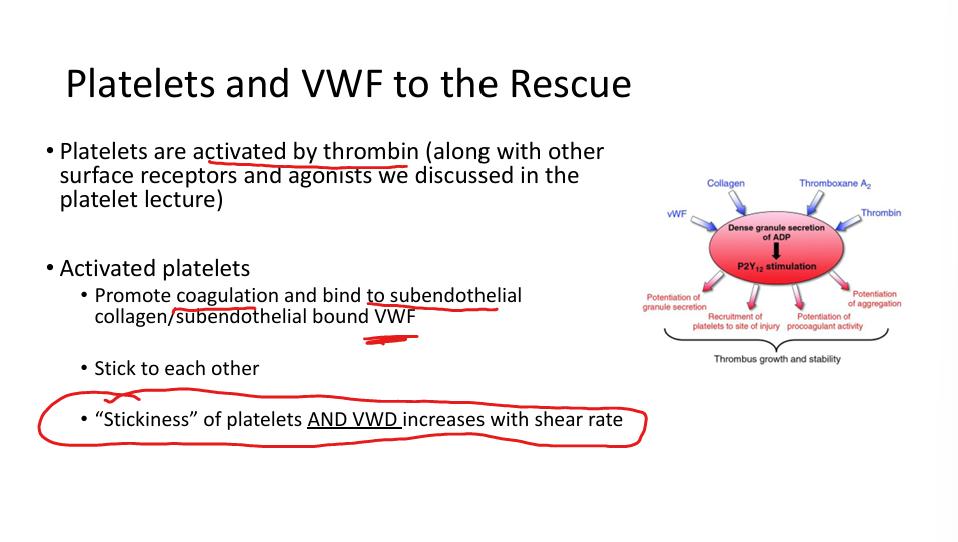
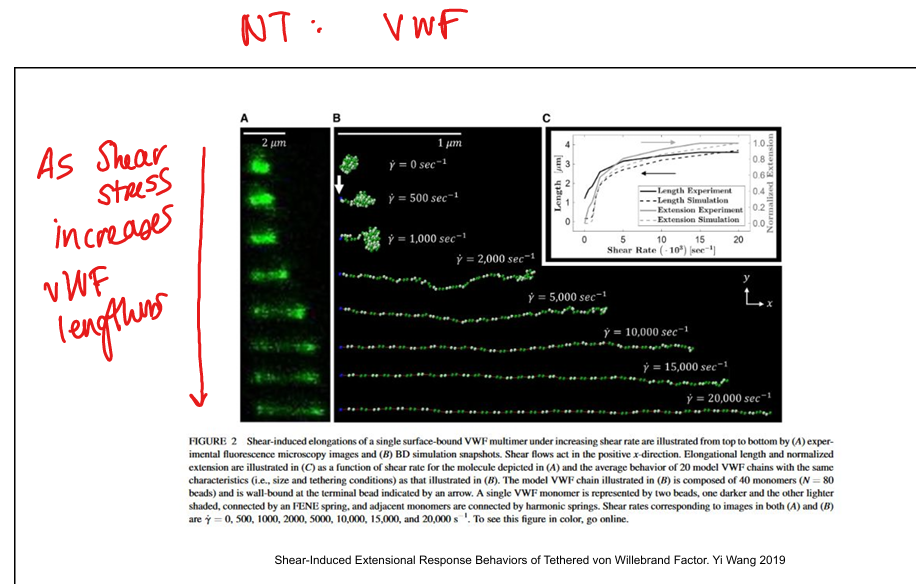
What molecule becomes more adhesive under shear?
von Willebrand Factor (VWF).
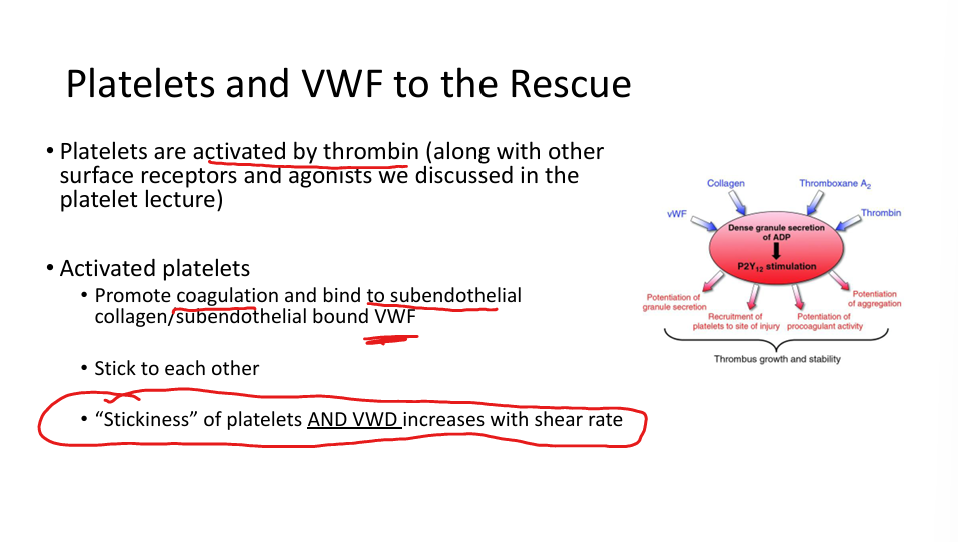
What do platelets bind to during injury?
Subendothelial collagen + VWF.
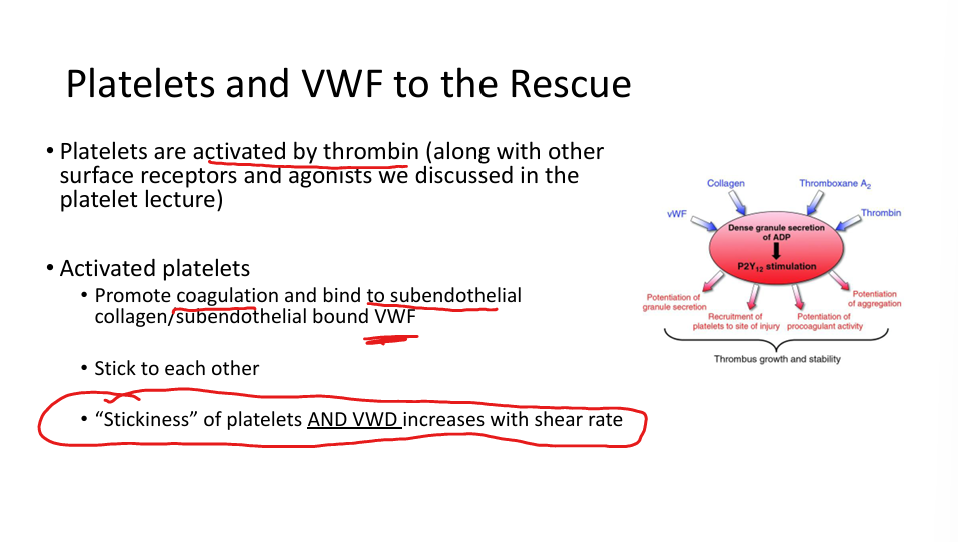
What increases platelet “stickiness”?
High shear rate.
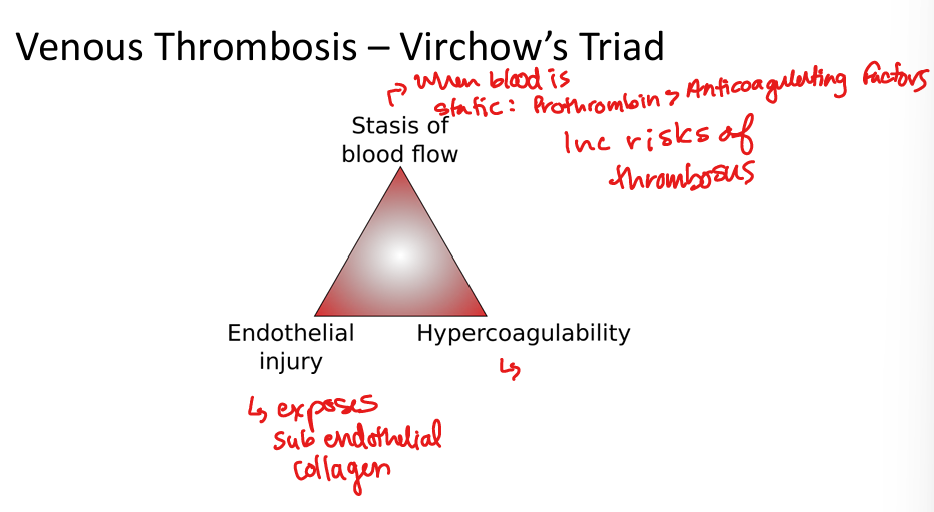
What is Virchow’s Triad?
Stasis, endothelial injury, hypercoagulability.
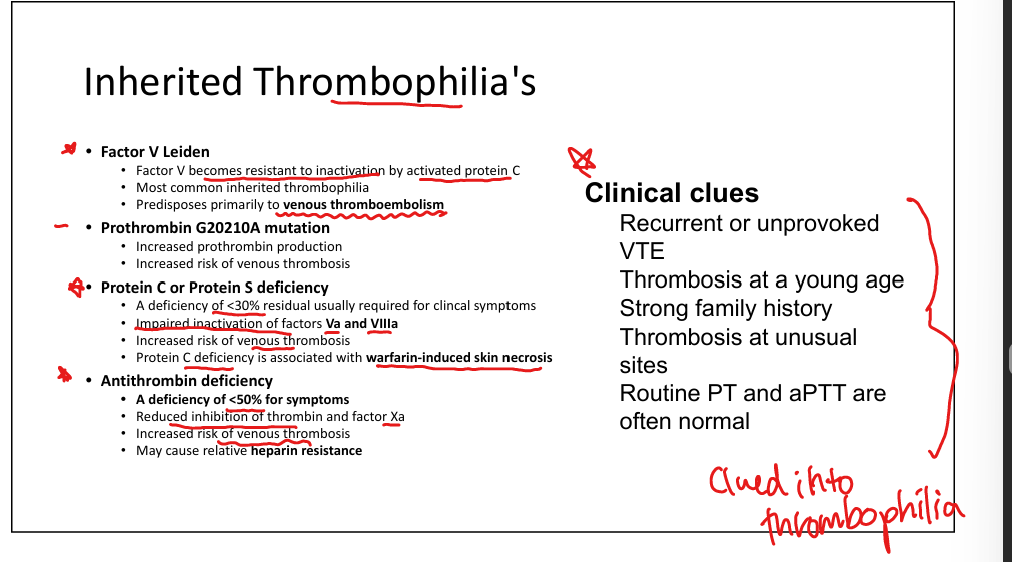
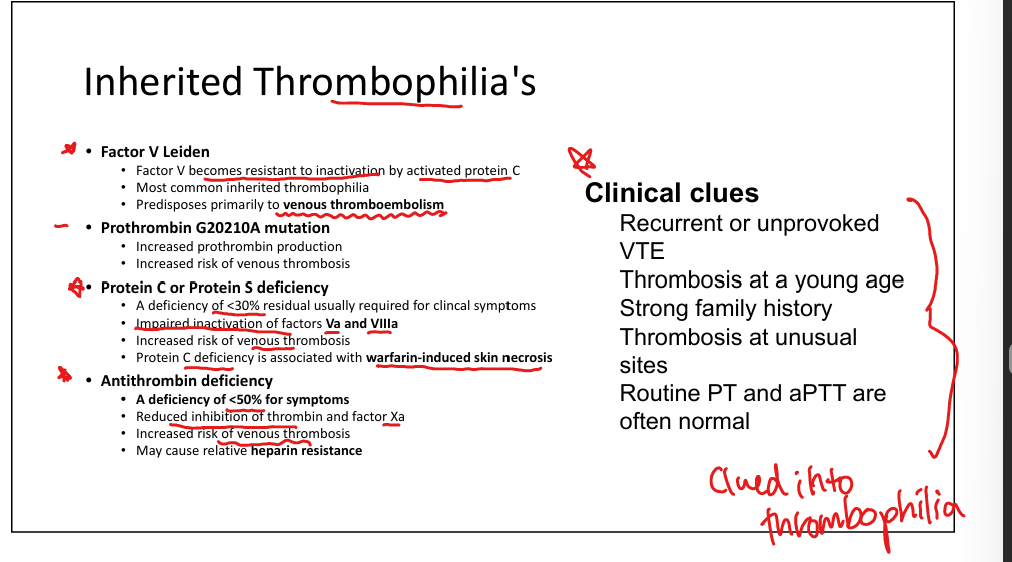
What inherited thrombophilia is most common?
Factor V Leiden. Where Factor V gets resisitant to inactivation by Protein C»predisposes to venous thromboembolism
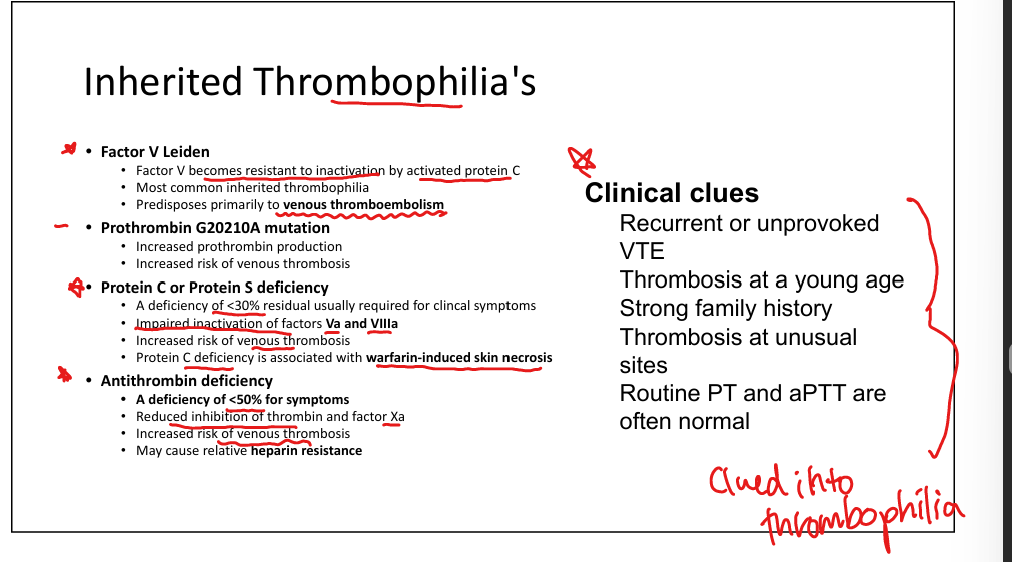
What does Factor V Leiden cause?
Resistance to inactivation by activated Protein C»inc in venous thromboembolism
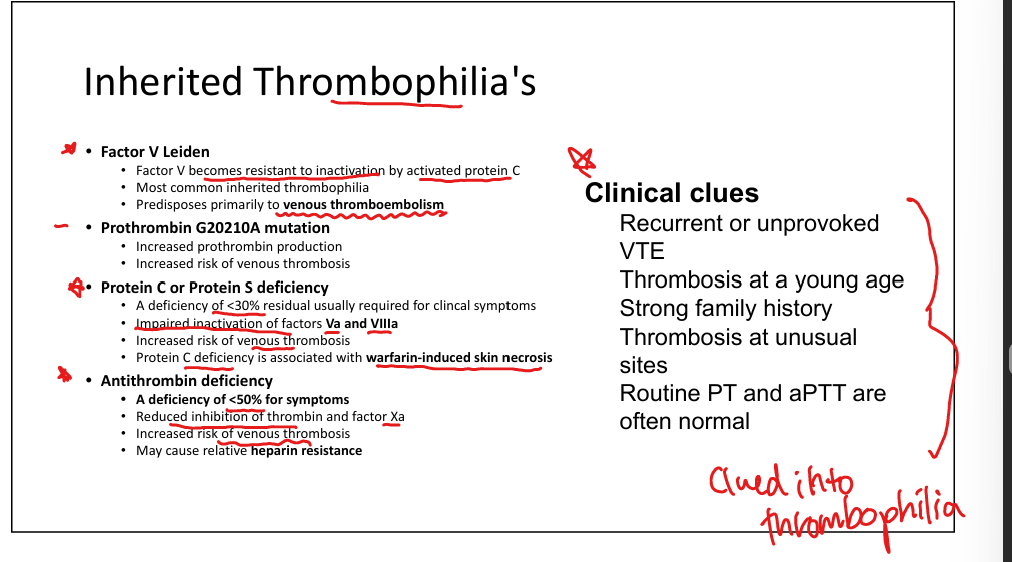
What mutation increases prothrombin levels?
Prothrombin G20210A mutation. Will increase risk of venous thrombosis
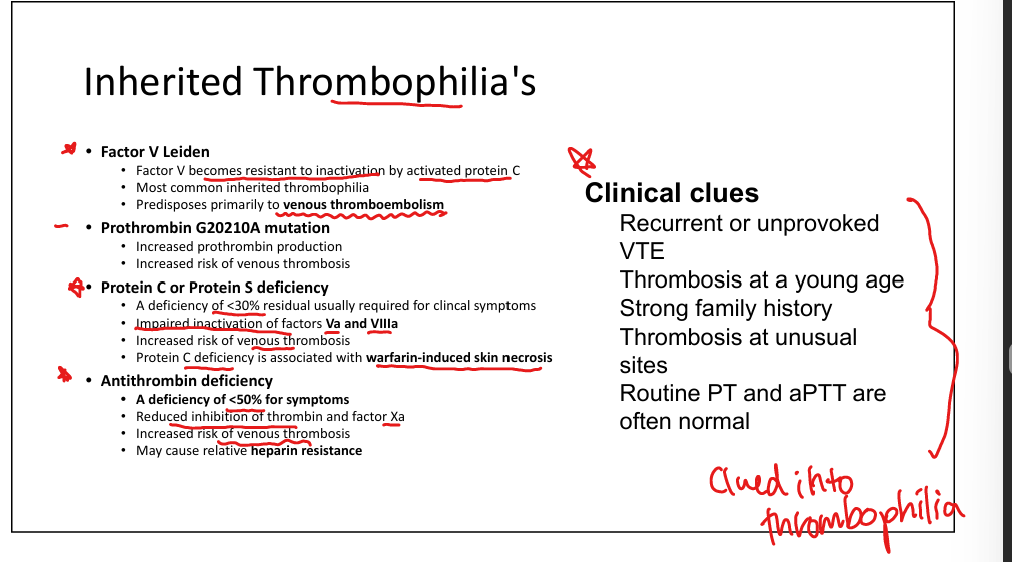
What deficiency causes warfarin‑induced skin necrosis?
Protein C deficiency.
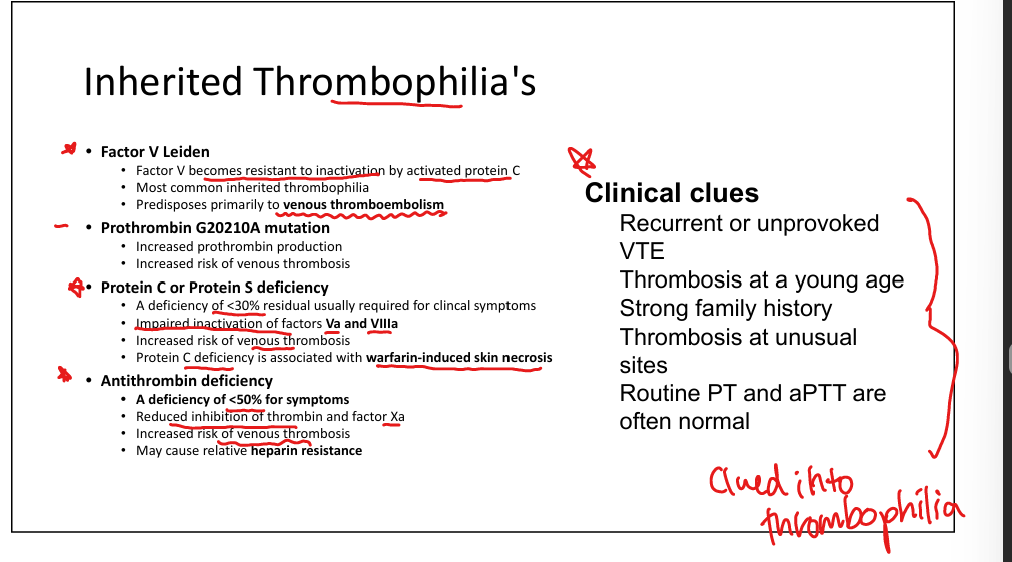
What deficiency causes heparin resistance?
Antithrombin III deficiency. (bc heparin binds to antithrombin)
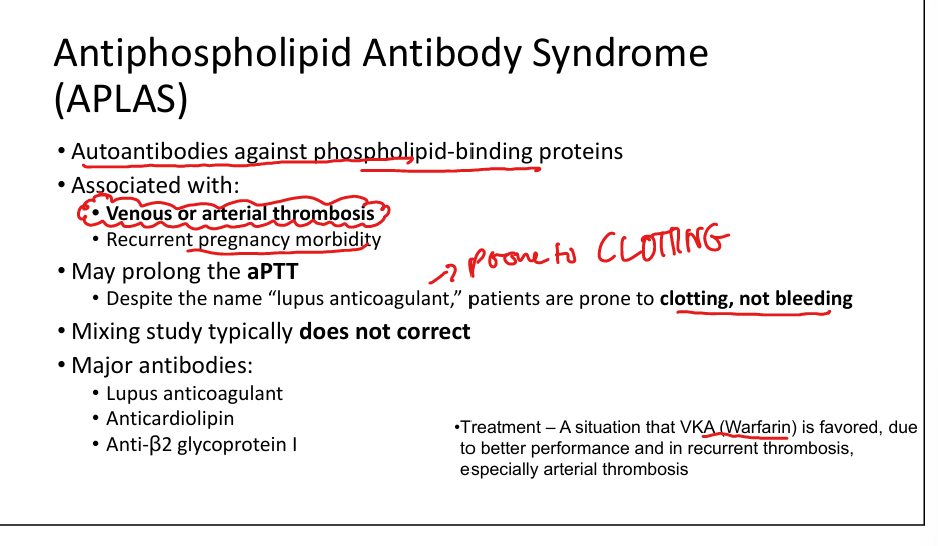
What is Antiphospholipid Syndrome (APLAS)?
Autoantibodies against phospholipid binding proteins»associated with Arterial/venous thrombosis + pregnancy morbidity. Prone to Clotting. Tx: Warfarin (VKA)
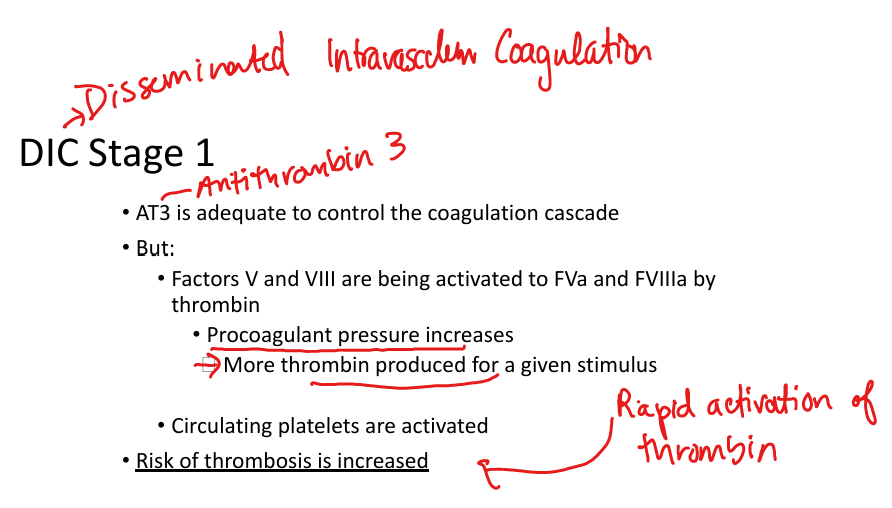
What initiates DIC?
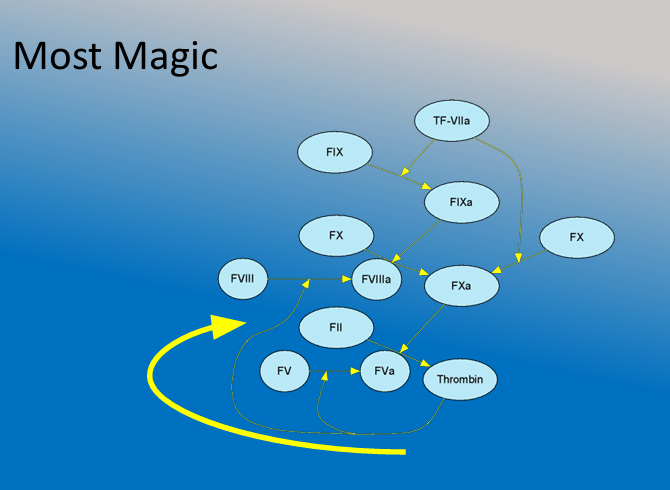
Massive tissue factor exposure → uncontrolled thrombin generation»FVa and FVIIIa»more platelet activation»thrombosis
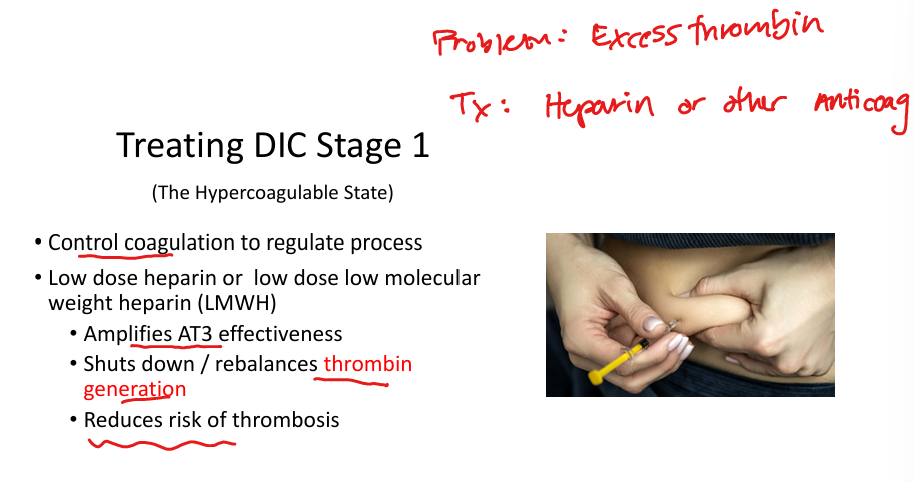
Treatment for DIC Stage 1?
Low‑dose heparin to amplify anti-thrombin III (ATIII) and control thrombin.
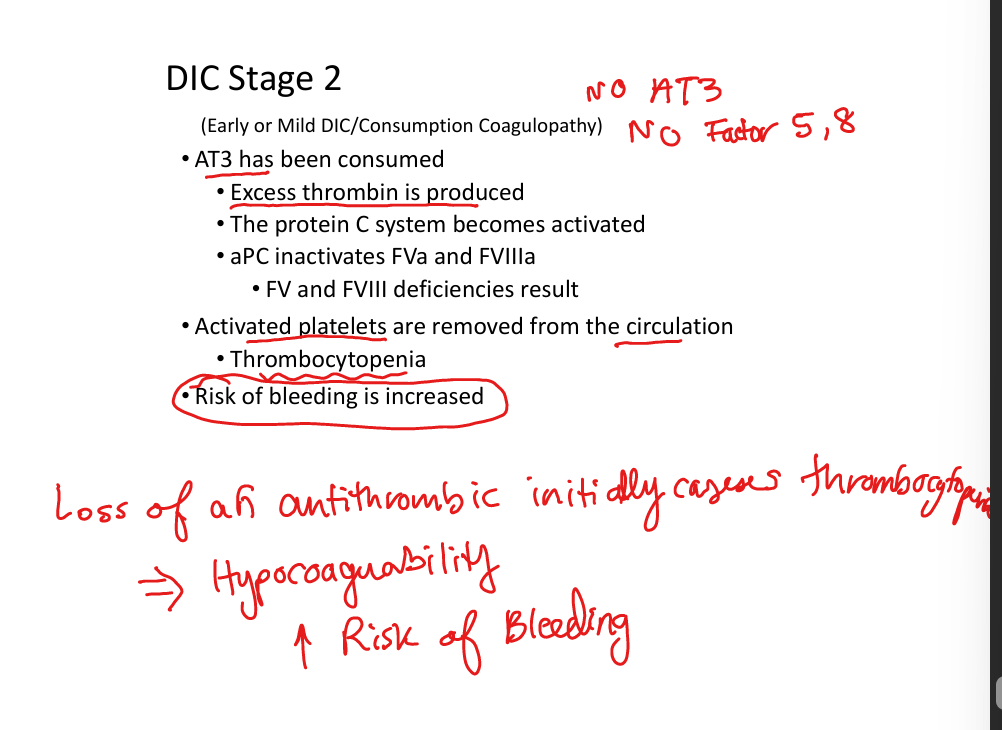
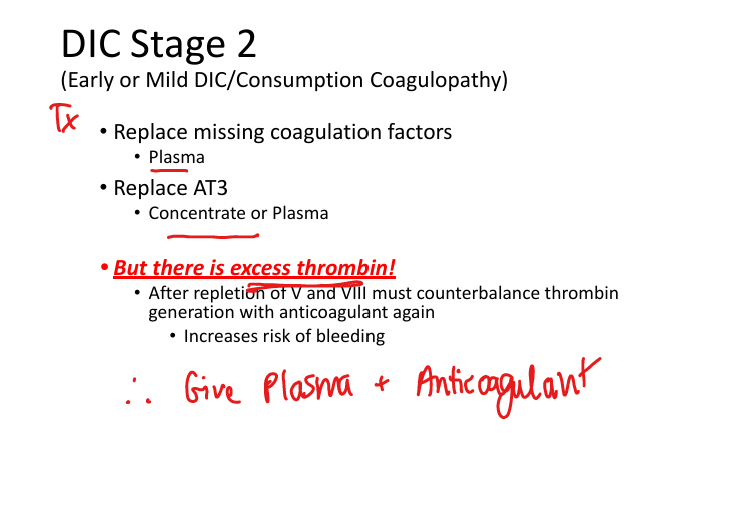
What happens in DIC Stage 2?
Antithrombin III (ATIII) consumed → aPC activated → FV & FVIII inactivated → thrombocytopenia → bleeding risk.
Treatment for DIC Stage 2?
Replace factors (plasma, ATIII), then carefully reintroduce anticoagulation.
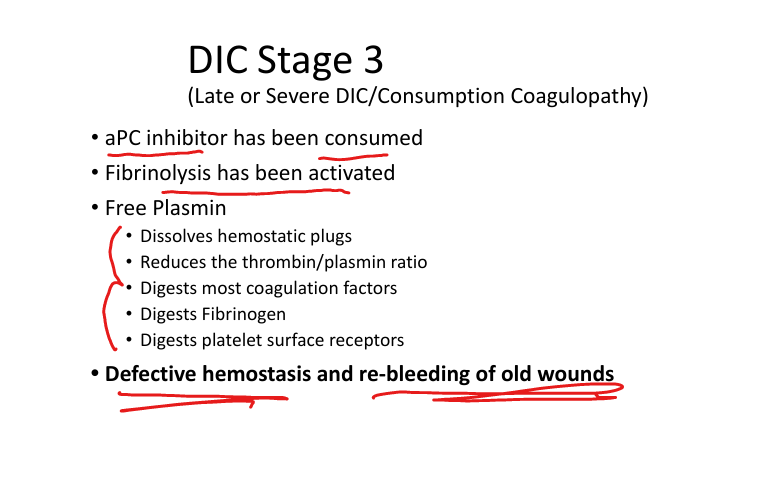
What happens in DIC Stage 3?
Loss of aPC inhibitor → massive plasmin activation → fibrinolysis → severe bleeding and rebleeding of old wounds.
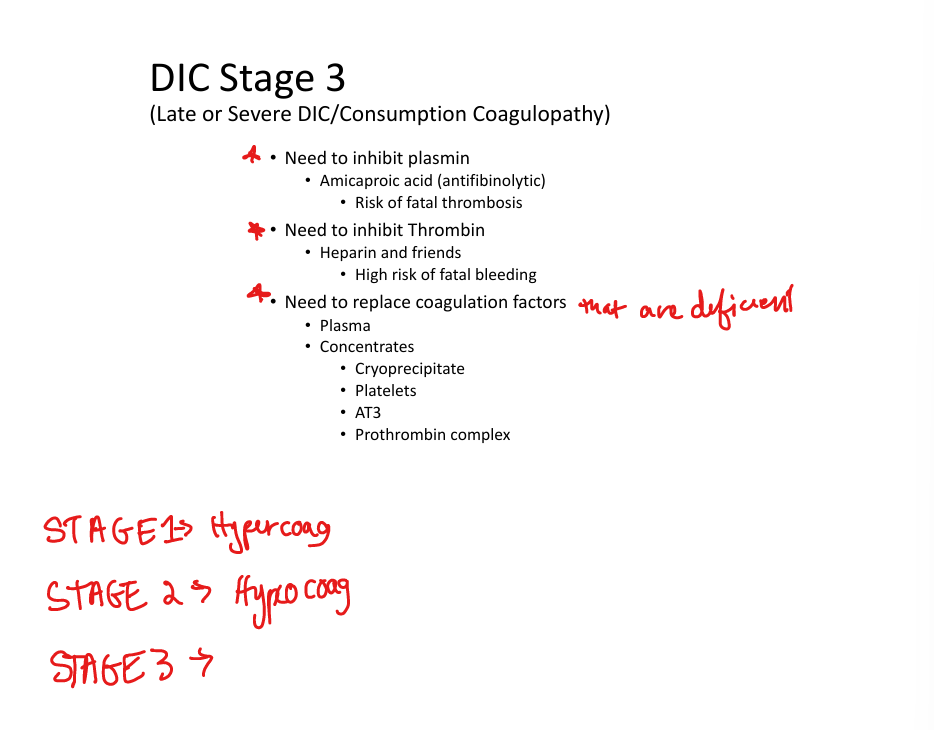
Treatment for DIC Stage 3?
Antifibrinolytics (aminocaproic acid) + factor replacement + cautious anticoagulation.
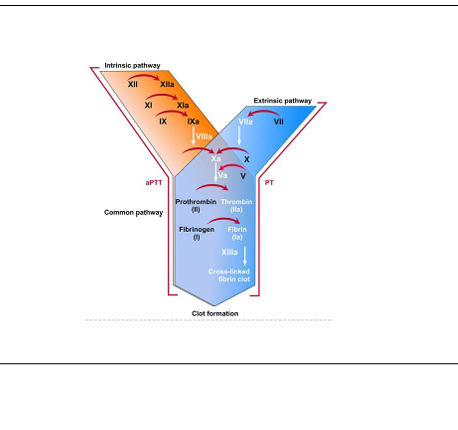
What lab test evaluates the extrinsic pathway?
PT (prothrombin time).
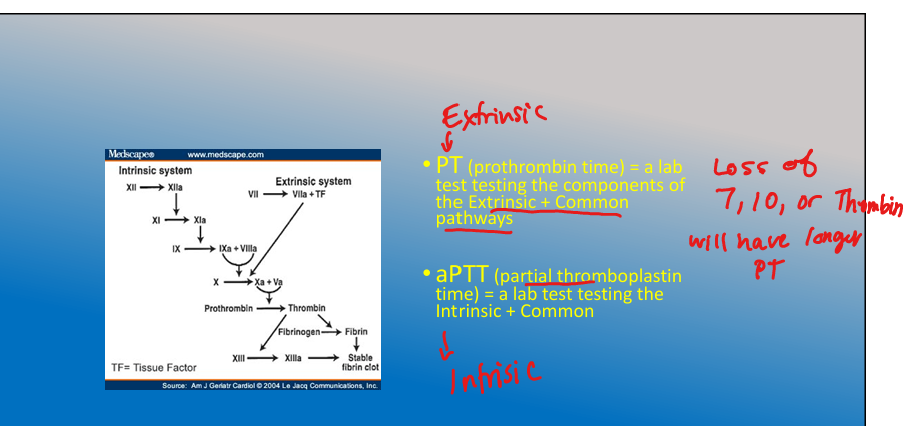
What lab test evaluates the intrinsic pathway?
aPTT (activated partial thromboplastin time).
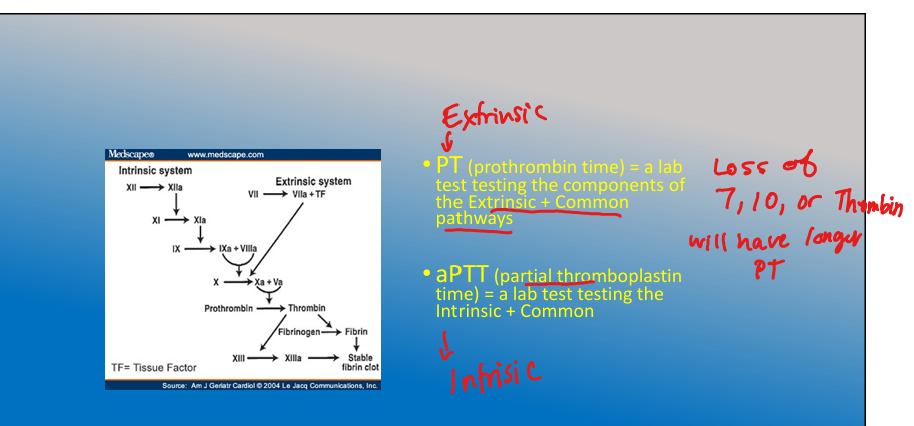
What factor deficiency prolongs PT?
Factor VII deficiency. 10, thrombin(II)
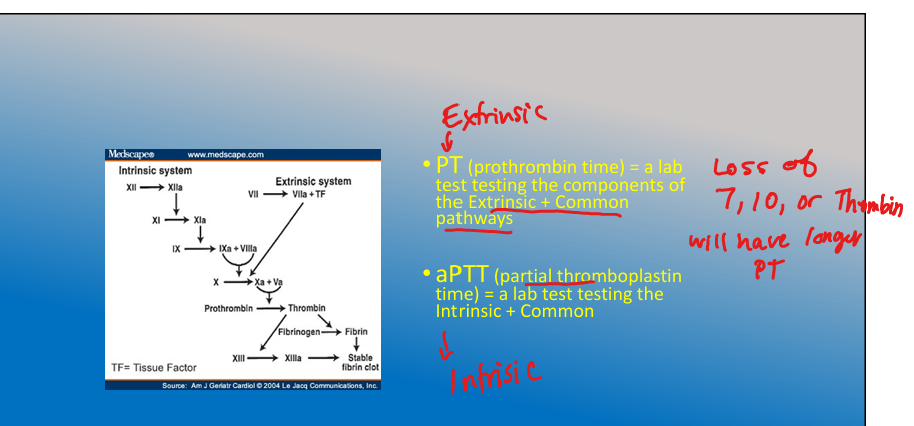
What factor deficiencies prolong aPTT?
Factors VIII, IX, XI, XII.
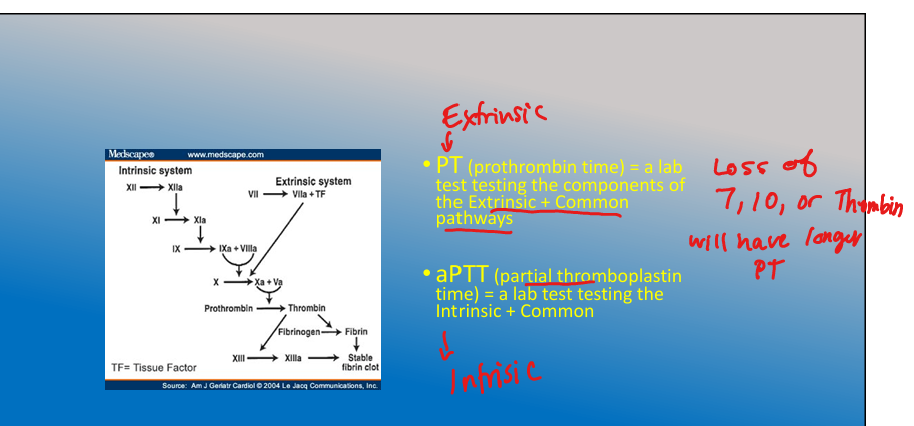
What increases D‑dimer?
Fibrin crosslinking + plasmin digestion (DIC, thrombosis).
Protein C or S deficiency
Deficiency of <30% residual, impaired activation of factors Va and VIIIa. Leads to increase risk of venous thrombosus and Protein C deficiency is associated with warfarin-induced skin necrosis
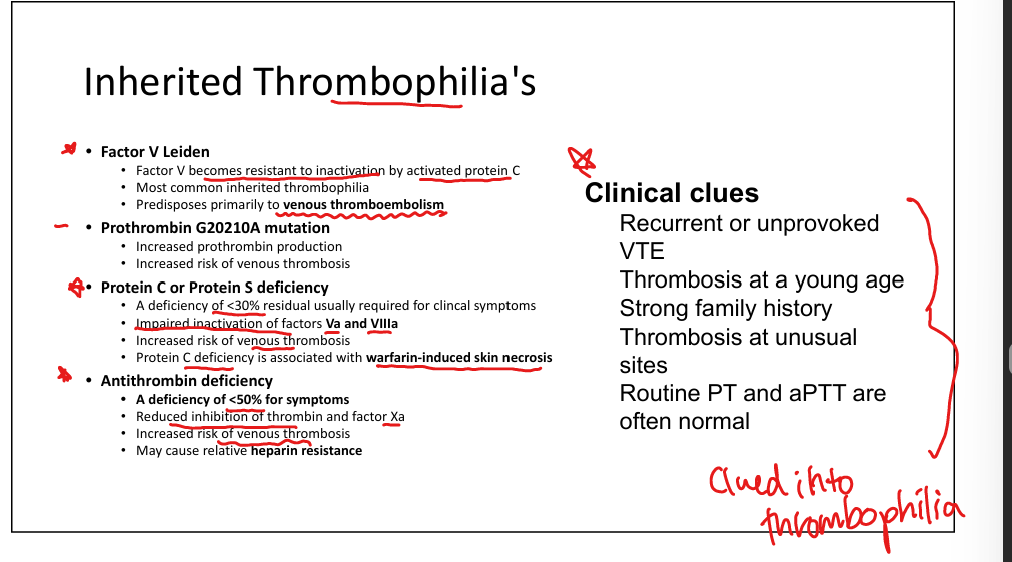
Antithrombin Deficiency
A deficiency of <50%; due to reduced inhibition of thrombin and factor Xa. Leads to increased risk for venous thrombosus and may cause heparin resistance
In vitro coagulation cascade
Plasmin vs Antithrombin
Plasmin breaks down clots(fibrinolysis) and antithrombin prevents clots from forming
Protein C and S function
inactivate Factor V and VIII