Forms of Contraception
 Call Kai
 Learn
Learn Practice Test
 Spaced Repetition
 Match
Match Flashcards
 Knowt Play
1/24

There's no tags or description
Looks like no tags are added yet.
Name | Mastery | Learn | Test | Matching | Spaced | Call with Kai | Chat |
|---|
No analytics yet
Send a link to your students to track their progress
25 Terms
An IUD or IUCD is a —-
reversible form of contraception
— is placed in the uterine cavity and prevents implantation of the fertilized ovum
An IUD
—, a small plastic T-shaped IUD, distorts the uterine cavity and also releases small amounts of progestin to impede implantation and produce lighter menstrual bleeding.
the Mirena
— is another T-shaped IUD, although it utilizes copper in its composition to inhibit sperm transport, or to prevent fertilization or transplantation
The ParaGard
Intrauterine devices create posterior shadowing and have been described as producing an — on a sonogram
“entrance and exit echo”
IUDs should be located within the —
fundal portion of the endometrium
Patients who have an IUD that has perforated into the uterine wall will often complain of —
irregular or heavy bleeding and cramping.
The use of IUDs has been linked with —
PID, ectopic pregnancy, and spontaneous abortions
sonorgaphic findings of Copper 7 IUD
Shadowing number “7”-shaped device
sonographic findings of Copper T IUD
Shadowing letter “T”-shaped device
sonographic findings of a Lippes Loop IUD
Five equally spaced shadowing structures
sonographic findings of a Dalkon shield IUD
Shadowing ovoid shape device
sonographic findings of a Mirena IUD
Shadowing letter “T”-shaped device (M)
sonographic findings of a ParaGard IUD
Shadowing letter “T”-shaped device (P)
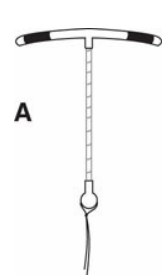
The ParaGard is a copper-releasing IUD (approved life span, 10 years)

The Mirena progestin-releasing IUD (approved life span, 5 years) are available in the United States.
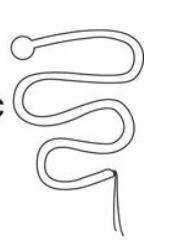
Although sonographers may encounter these devices, the flexible polyethylene Lippes loop is used throughout the world except in the United States. IUD, intrauterine contraceptive device.
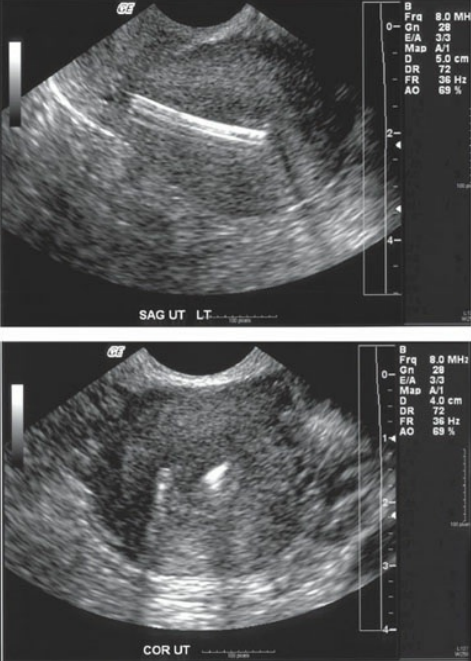
Intrauterine device. Transvaginal image of an intrauterine device in sagittal (A) and coronal (B).
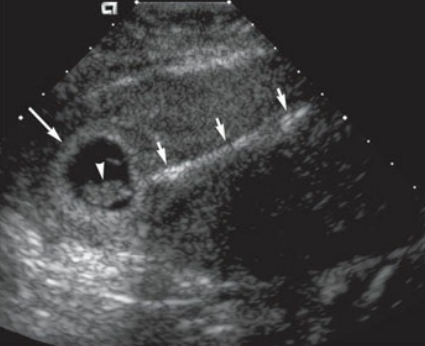
Intrauterine device and coexisting intrauterine pregnancy. Transabdominal image revealing an intrauterine device (small arrows) adjacent to an intrauterine gestational sac (long arrow) containing an embryo (arrowhead).
— is a popular form of birth control, and it is highly successful if the manufacturer guidelines are strictly followed
The pill
Birth control pills produce an —
anovulatory cycle.
— is a permanent form of birth control that uses small coils placed into the proximal isthmic segment of the fallopian tubes.
The Essure device
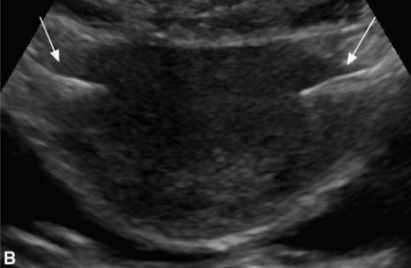
Bilateral Essure devices are seen in the uterine horns (arrows) in this transverse transabdominal pelvic image.

Essure device placement