GI 7: Small Intestine Digestion & Absorption (CHO + Fat)
 Studied by 0 people
 Call Kai
 Learn
Learn Practice Test
 Spaced Repetition
 Match
Match Flashcards
 Knowt Play
1/45

There's no tags or description
Looks like no tags are added yet.
Name | Mastery | Learn | Test | Matching | Spaced |
|---|
No study sessions yet.
46 Terms
Major Foods Classification and Ingestion
Carbohydrate, Fat, or Protein
- (Vitamins & Minerals are others nutrient groups)
Ingested as larger complex compounds (Polysaccharides, Triglycerides, Polypeptides)
In order to be assimilated into the body, larger complex compounds must be?
first broken down (Digested) into molecules capable of being absorbed
- Monosaccharides, Fatty Acids, & Amino Acids
- i.e. must be able to be transported from the lumen across the GI mucosal epithelium and into the blood or lymph by various substrate-specific transport processes
what is the major site of digestion & absorption?
small intestine
Intestinal epithelial cell loss + turnover
cell loss is high
- mainly due to the abrasion resulting from the movement of GI content through the tract
cell turnover is rapid
- replaced 3-6 days
- due to stem cells located in Villus Crypts that produce new Enterocytes and Mucus secreting Goblet Cells
- these cells constantly migrate upwards and replace cells lost at villus tips
hydrolysis
the basic process of digestion
Digestion of Carbohydrates
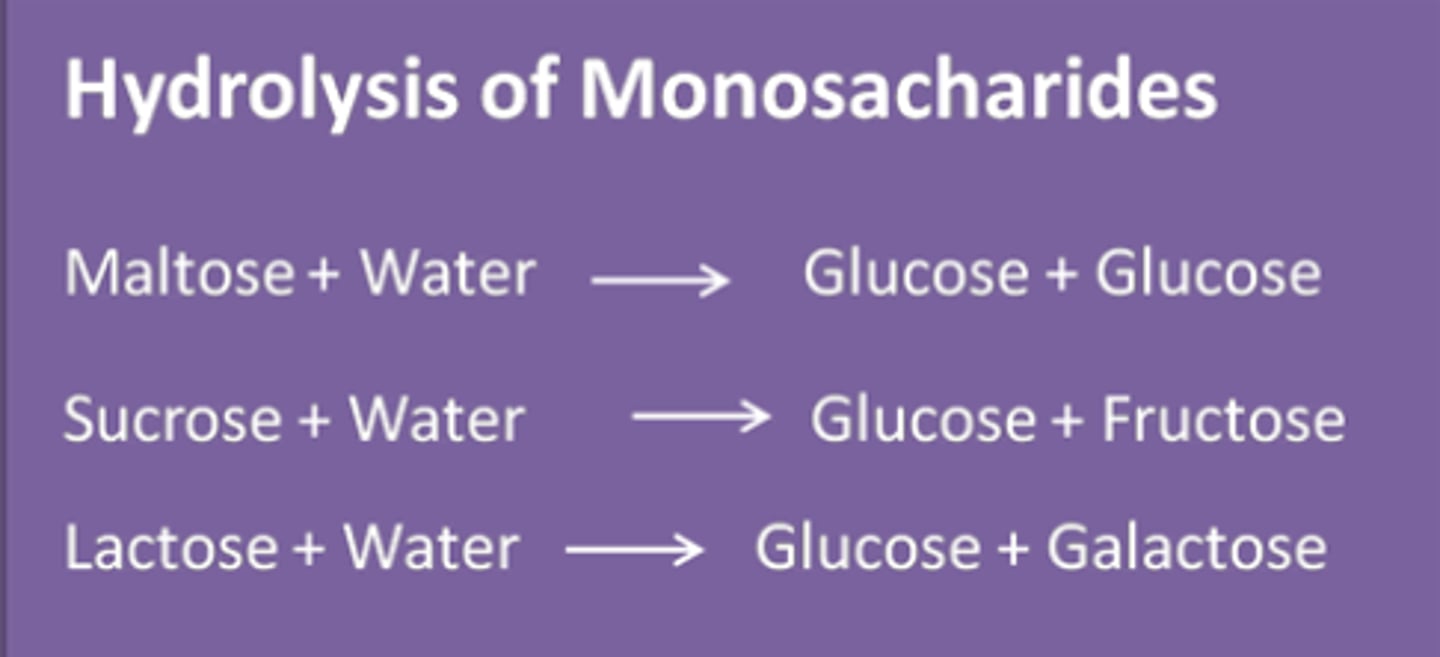
Enzymes return hydrogen and hydroxyl ions from water (hydrolysis) to polysaccharides separating the monosaccharides from one another
3 major sources:
• Sucrose: a disaccharide
• Lactose: a disaccharide
• Starch: a polysaccharide
hydrolysis of monosaccharides
Digestion of Carbohydrates: Mouth
enzyme: Salivary α amylase - ptyalin
product: maltose
% digested: 5% of starch
Digestion of Carbohydrates: Stomach
enzyme: Gastric enzymes
product: maltose
% digested and time: 30-40% of starch, 1 hour
Digestion of Carbohydrates: Small Intestine
enzyme: Pancreatic amylase
product: maltose
% digested: 100%
Digestion of Carbohydrates: Small Intestine - Brush Border
enzymes:
- Lactase: Lactose
- Sucrase
- Maltase
- α dextrinase
product: glucose
% digested:
- Glucose is 80% of final product
- Galactose and fructose are 10% each
Carbohydrate substrate
constitute 50-80% of a typical American diet (300-500 gms = 1,600 C/day)
includes:
- starch
- glycogen
- disaccharides
- monosaccharides
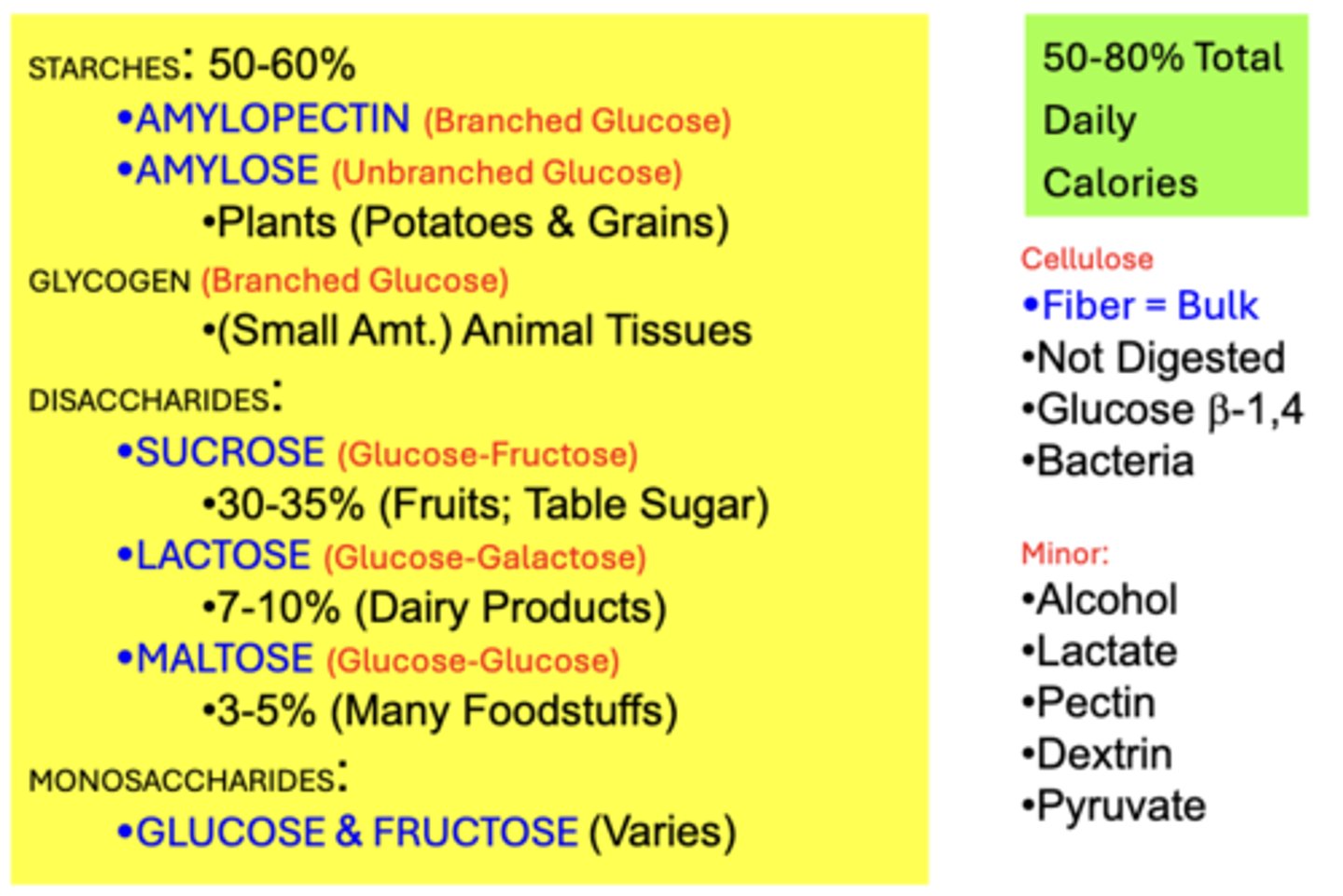
starches
50-60% of digested carbs
includes:
• amylopectin (Branched Glucose)
• amylose (Unbranched Glucose)
• Plants (Potatoes & Grains)
glycogen
branched glucose
- (Small Amt.) Animal Tissue
disaccharides
sucrose (Glucose-Fructose)
• 30-35% (Fruits; Table Sugar)
lactose (Glucose-Galactose)
• 7-10% (Dairy Products)
maltose (Glucose-Glucose)
• 3-5% (Many Foodstuffs)
monosaccharides
Single sugar molecules
- glucose and fructose
minor carbohydrates
• Alcohol
• Lactate
• Pectin
• Dextrin
• Pyruvate
cellulose
• Fiber = Bulk
• Not Digested
• Glucose β-1,4
• Bacteria
Carbohydrate Digestion Substrates Overview
Phases of CHO Digestion
Ingested Starches, Glycogen & Disaccharides must be hydrolyzed to Monosaccharides in order to be absorbed by enterocytes
Digestion occurs in two phases:
A. Luminal
B. Membrane
Luminal Phase of digestion of CHO
• begins in the mouth & stomach through the actions of Salivary ⍺-Amylase
• However, digestion mainly occurs in the small intestine via Pancreatic ⍺-Amylase action

final products of ⍺-Amylase action (luminal phase)
1. small oligosaccharides
• Maltose
• Maltotriose
• a-Limit Dextrin
2. Disaccharides
• Maltose
• Lactose
• Sucrose
Luminal phase of digestion of CHO does NOT produce?
⍺-Amylase Digestion Does NOT Produce Any Absorbable Monosaccharides
• The end-products above remain undigested because ⍺-Amylase can only hydrolyze Interior ⍺-1,4 linkages
• Most end products possess either Terminal ⍺-1,4 linkages or Branch Point ⍺-1,6 Linkages
Membrane phase of digestion of CHO
products of Luminal Digestion are further hydrolyzed
- forms absorbable Monosaccharides
- done by digestive enzymes located on the mucosal brush border membrane
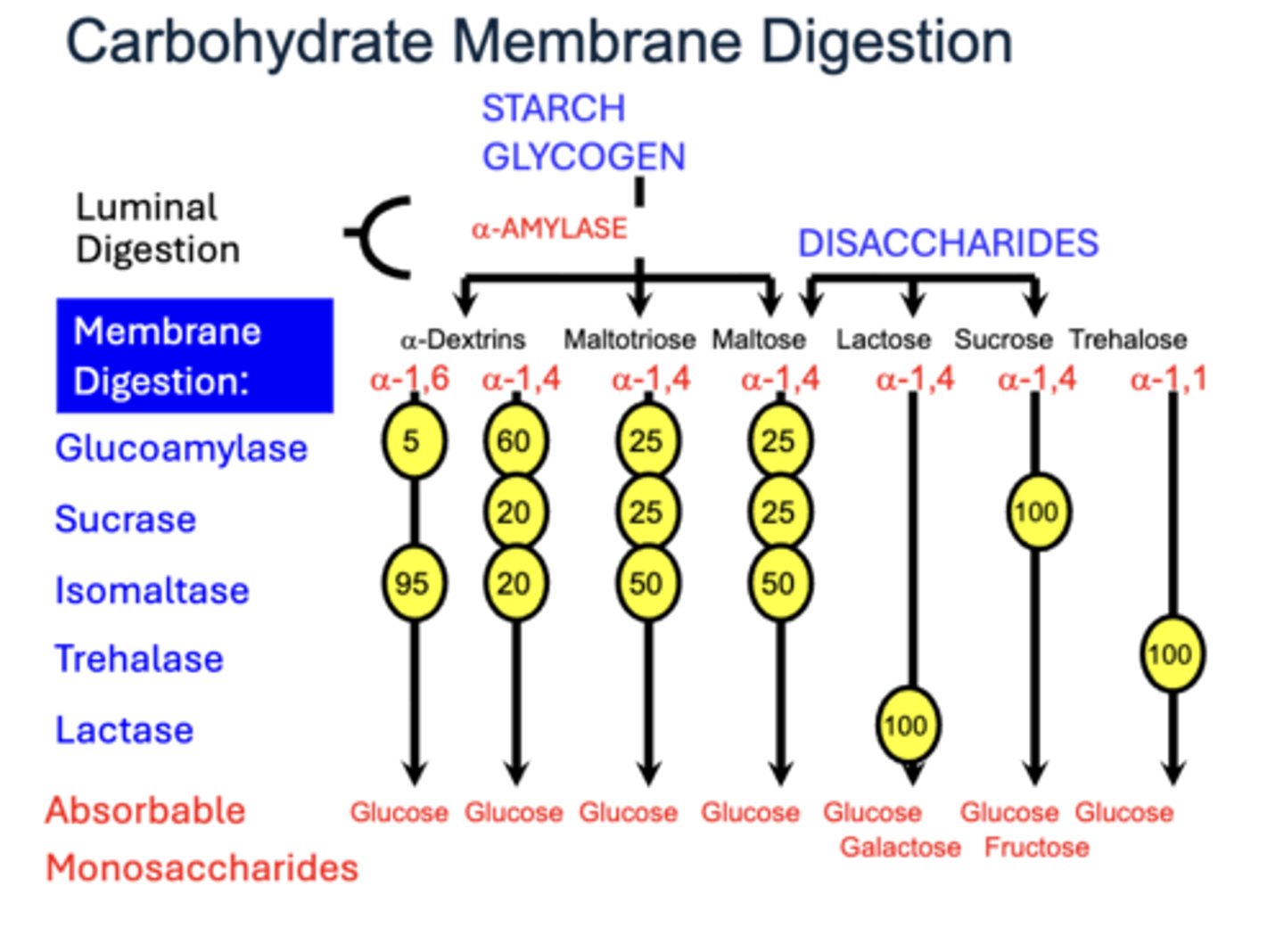
Membrane enzymes
are mostly Disaccharidases that cleave:
1. one or more ⍺-amylase digestion product
- ⍺-Dextrins
- Maltotroiose
- Maltose
2. ingested disaccharides
- Sucrose
- Lactose
- Trehalose
Membrane Digestion
Maltose, Lactose, Sucrose & Maltotriose and ⍺-Limit Dextrin must be further digested to monosaccharides incoordination with enzymes associated with the second phase of carbohydrate breakdown
⍺-amylase requires?
a near neutral pH (optimal 6.7)
- to retain activity
- disorders that impair the ability to neutralize acidic gastric chyme will also impair carbohydrate digestion
Digestion: Fat
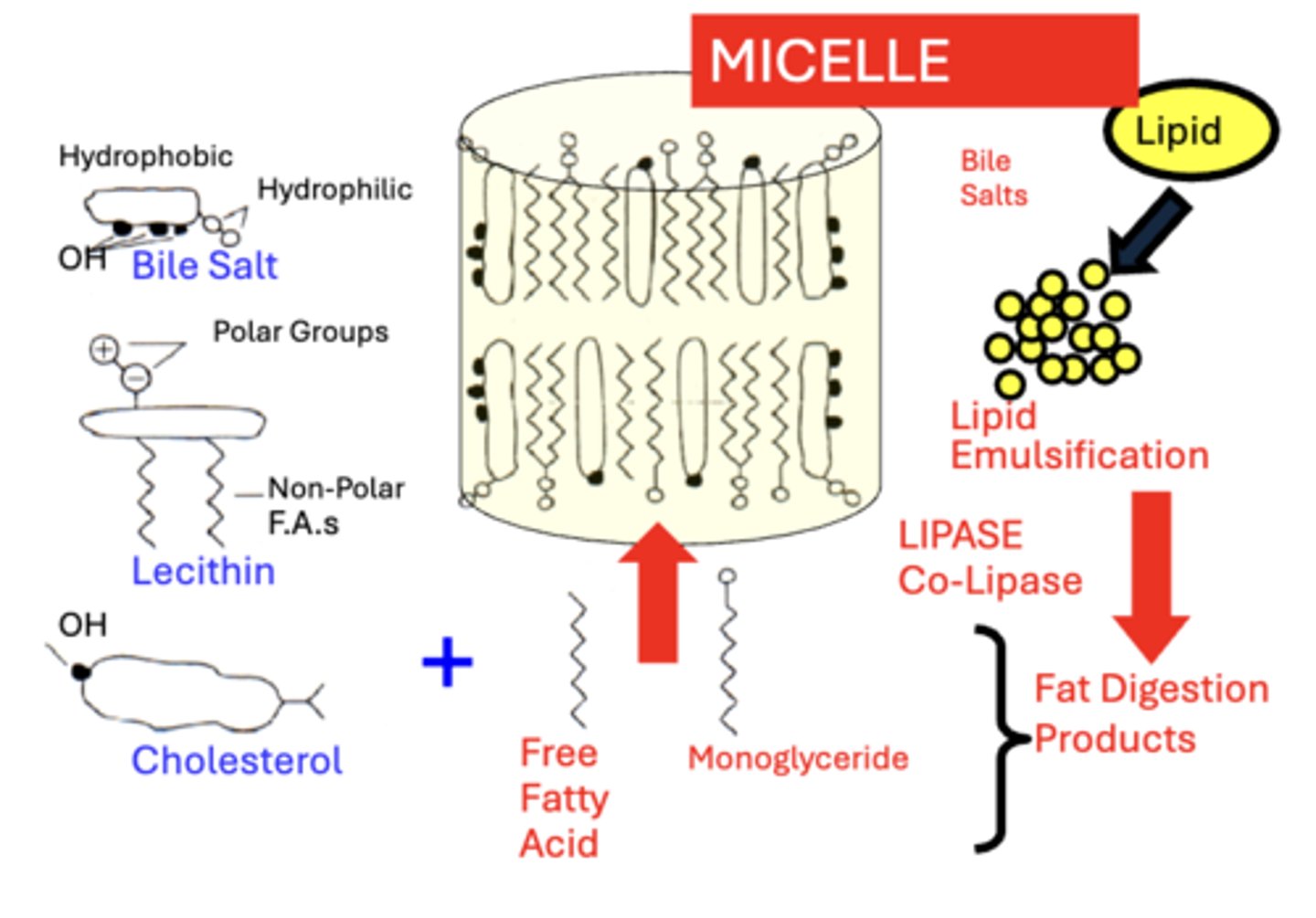
mechanism: Bile and agitation
end product: Emulsified fat
Digestion: Emulsified Fat
mechanism: Pancreatic lipase
end product: Monoglyceride and free fatty acids
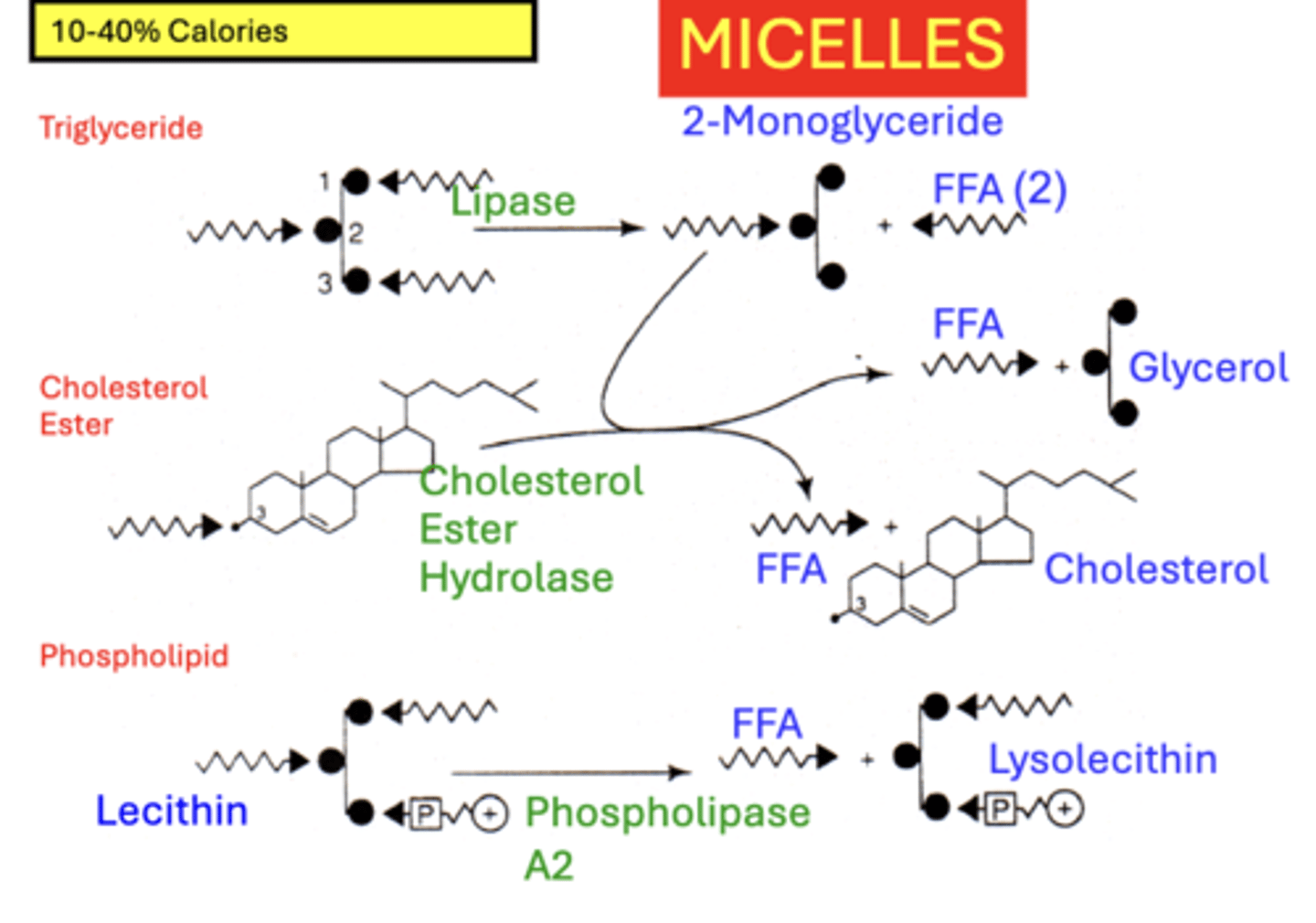
Digestion: Cholesterol Esters and Phospholipids
mechanism:
- Cholesterol ester hydrolase
- Phospholipase A2
end product:
- Monoglycerides
- free fatty acids
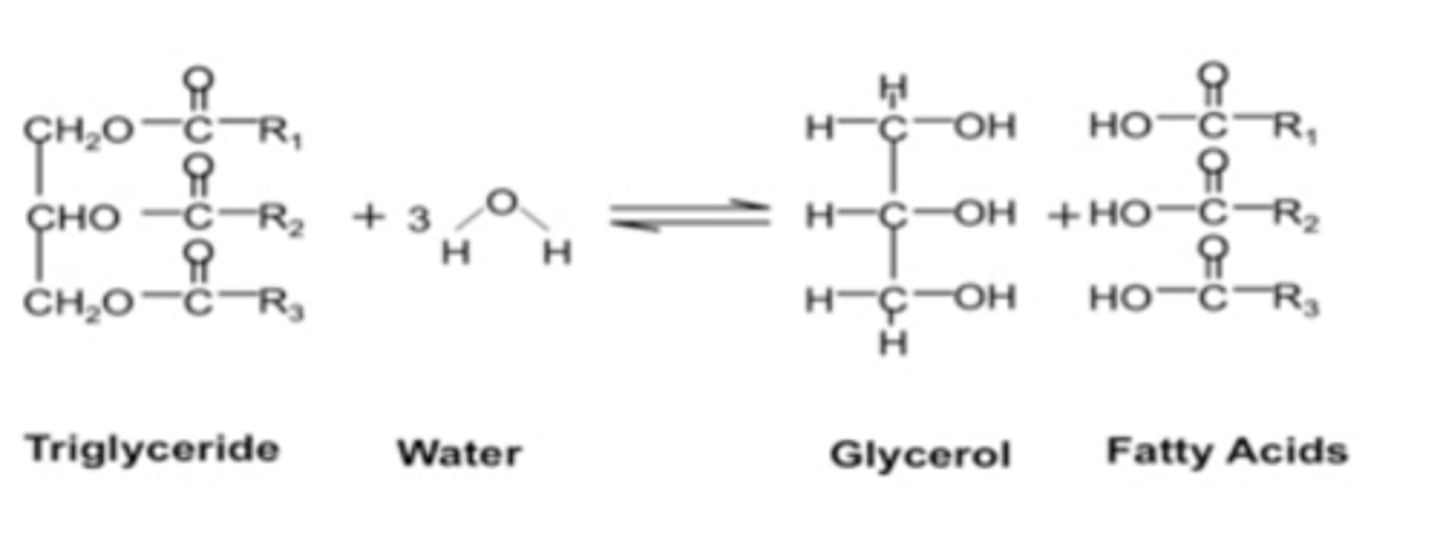
Digestion of the triglyceride molecule
the fat digesting enzymes return three molecules of water to the TG molecule, splitting the fatty acid molecule away from the glycerol
Fat digestion locations
1. oral cavity
2. stomach
3. duodenum
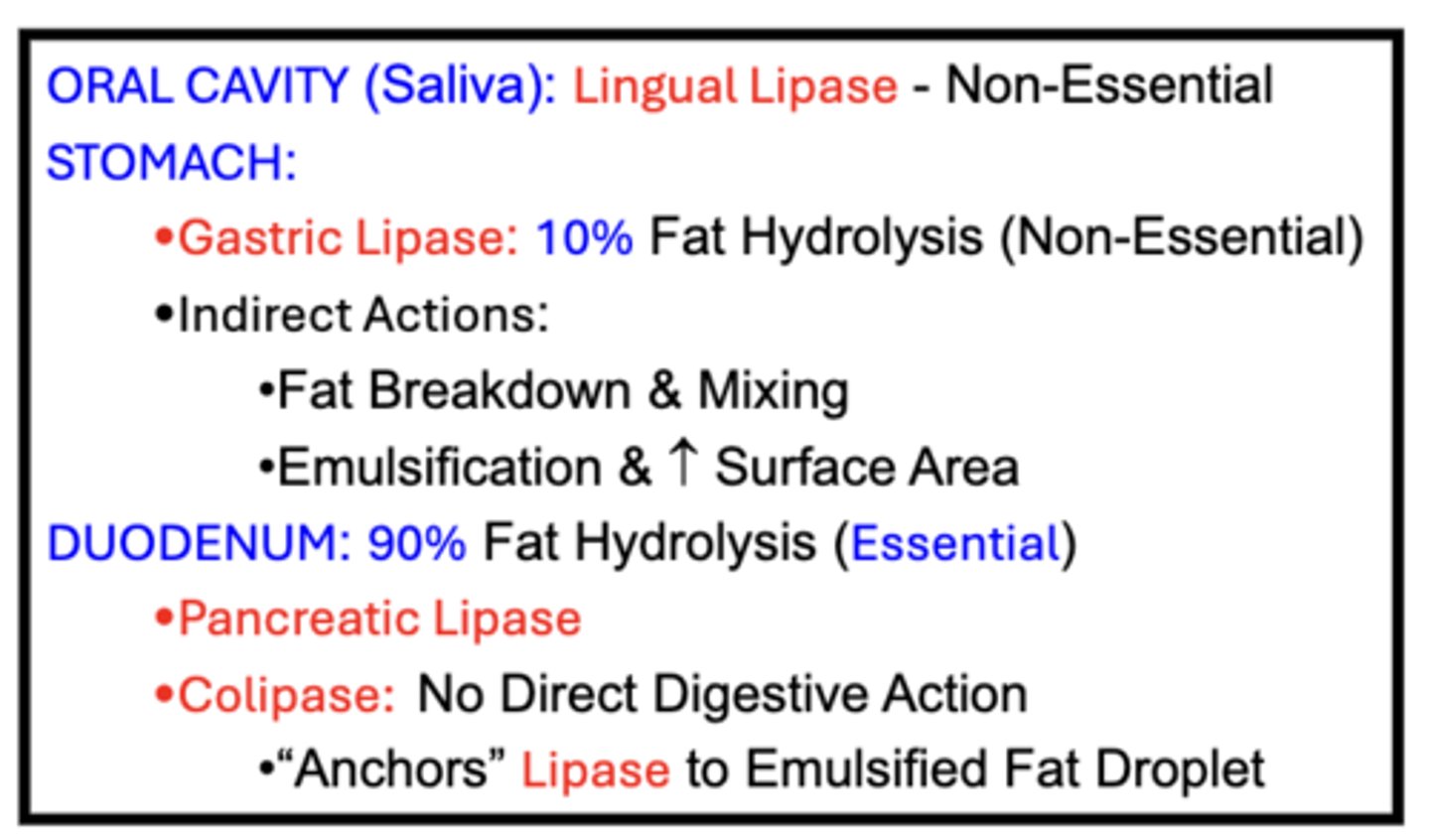
Fat digestion: Oral Cavity
Lingual Lipase
- secreted into Saliva
- initiates fat digestion
- Due to limited exposure time, actions are Non-Essential for complete fat digestion
Fat digestion: Stomach
Gastric Lipase
• secreted from the fundus
• has similar actions to pancreatic lipase.
• gastric lipase accounts for only 10% of dietary fat (triglycerides) digestion
• Gastric lipase activity is usually considered Non-Essential because of the normally excessive secretion of pancreatic lipase
Indirect Actions: Mechanical Breakdown & Mixing of lipid compounds
• important for lipid digestion
• increases Surface Area for breakdown by Lipase
- assists in the emulsfication of hydrophobic fats
when does gastric lipase become essential?
gastric contribution can be important under abnormally high acid output conditions (Zollinger-Ellison syndrome) that can cause pancreatic lipase inactivation
Fat digestion: Duodenum
Pancreatic Lipase
- 90% of enzymatic fat digestion
- digests triglycerides into fatty acids & 2-monoglyceride
- activity depends on Colipase. secreted from the pancreas and functions as follows:
• acts at the lipid-water interface of fat droplets to hydrolyze emulsified triglycerides
Sites of Dietary Fat Digestion Overview
Lipase Impairment
• Pancreatic Insufficiency: Lipase Deficiency
• H+ Hypersecretion: Lipase Inactivation
Review of Micelle Formation & Lipid Digestion
Fat digestion - Triglycerides
the major components of dietary fat
• comprised of three fatty acids esterified to glycerol
• Pancreatic Lipase digests Triglycerides into two Free Fatty Acids (FFA) and 2-Monoglyceride

Fat digestion - Cholesterol esters
• Consist of cholesterol esterified to a fatty acid.
• Cholesterol Ester Hydrolase hydrolyzes esters to Cholesterol & FFAs
• completes triglyceride breakdown by hydrolyzing 2-Monoglyceride to Glycerol & FFA
Fat digestion - Phospholipids
e.g. Lecithin
• comprised of glycerol esterified to two fatty acids and either choline (phosphatidylcholine) or inositol (phosphatidylinositol)
• Phospholipase A2 releases FFAs to yield lysophospholipids (Lysolecithin)
Summary of Fat Digestion
Intestinal Bacteria
- E. Coli
- Enterobacter aerogenes
- Clostridium perfringens (Gas Gangrene)
found:
- duodenum/jejunum - few if any
- ileum - few
- colon - large numbers
• Harmless Inside
• Harmful Outside GI Tract (Sepsis)
Intestinal Bacteria Produce?
• Vitamin K
• Vitamin B12
• Thiamine (B1)
• Riboflavin (B2)
• Folate
• Short-Chain FFA
• Pigments (Bile)
• Gases
• Amines
• Ammonia
Intestinal Bacteria Utilize?
• Cellulose
• Vitamin C
• Vitamin B12
• Choline