CHEM 1220: Radioactivity
 Call Kai
 Learn
Learn Practice Test
 Spaced Repetition
 Match
Match Flashcards
 Knowt Play
1/10

There's no tags or description
Looks like no tags are added yet.
Name | Mastery | Learn | Test | Matching | Spaced | Call with Kai | Chat |
|---|
No analytics yet
Send a link to your students to track their progress
11 Terms
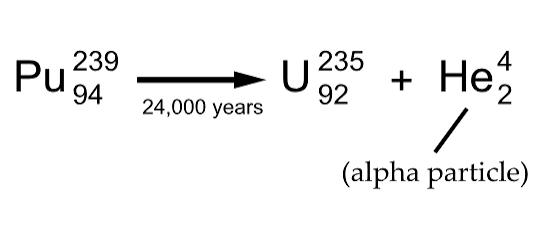
alpha
Mass # (A) down 4
Atomic # (Z) down 2
Emits He42
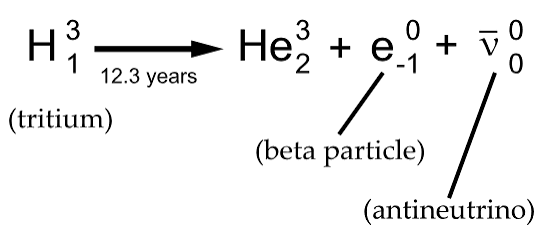
Beta
Mass # (A) remains constant
Atomic # (Z) increases by 1 (neutron → proton)
Also creates an accompanying electron
(are positively charged)
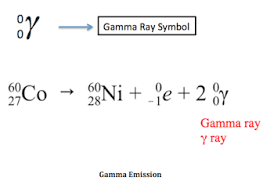
Gamma
Is a high-energy photon & is nuclear (has no charge)
nuclear reactions

Positron emission
Is the antiparticle of the electron (a positive (+) electron; NOT a proton)
Mass # (A) remains constant
Atomic # (Z) decreases by 1
A proton creates a positron and a neutron
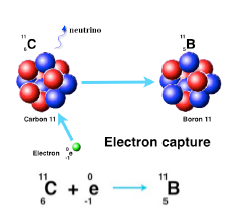
Electron Capture
Creates a neutron from a proton (+) and an electron (–)
Mass # (A) remains constant
Atomic # (Z) decreases by 1
The nucleus ‘eats' an electron and combines it with a proton in the nucleus
If Z > 83
alpha
When too many neutrons & too few protons
beta
If it has too few neutrons & too many protons
positron
If it has too many protons
electron capture
If accompanying alpha or beta decay
gamma
C146 = EAZ
Z = 14 is the atomic number (sum of protons and neutrons)
A = 6 is the # of protons
This example has 6 protons and 8 neutrons