International Psychology Olympiad (IPsyO)
 Call Kai
 Learn
Learn Practice Test
 Spaced Repetition
 Match
Match Flashcards
 Knowt Play
1/748

There's no tags or description
Looks like no tags are added yet.
Name | Mastery | Learn | Test | Matching | Spaced | Call with Kai | Chat |
|---|
No analytics yet
Send a link to your students to track their progress
749 Terms
Psychology
the scientific study of behavior and mental processes
Goals of Psychology
To describe, explain, predict, and control (in the sense of understanding and applying the knowledge for the public good) the events it explains.
Theory
- Comprehensive explanations and predictions that help organize facts and principles into coherent frameworks. Unlike everyday theories, psychological theories are formal constructs based on extensive study of existing research and psychological knowledge
- Satisfactory psychological theories allow us to predict behavior
What activities to psychologists engage in?
Research, practice, and teaching
Pure research
undertaken because the researcher is interested in the research topic and has no immediate application to personal or social problems; "research for its own sake"
Applied research
designed to find solutions to specific personal or social problems
What is Clinical Psychology?
Assisting individuals with psychological disorders through assessment, therapy, and behavior modification techniques.
What is Counseling Psychology?
Addressing adjustment issues and decision-making challenges, often in educational or career contexts.
What is School Psychology?
Supporting students' educational progress by identifying and addressing learning barriers.
What is Educational Psychology?
Enhancing learning processes and educational outcomes through research on factors like motivation and instructional methods.
What is Developmental Psychology?
Investigating physical, cognitive, social, and emotional changes across the lifespan, influenced by genetics and environment.
What is Personality Psychology?
Examining individual differences in traits, thoughts, feelings, and behaviors.
What is Social Psychology?
Exploring how social contexts shape individual behavior, emotions, and cognition.
What is Environmental Psychology?
Studying interactions between people and their environments, aiming to optimize well-being and sustainability.
What is Experimental Psychology?
Investigating basic psychological processes such as learning, memory, and perception through controlled experiments.
What is Industrial-Organizational Psychology?
Enhancing workplace dynamics, organizational behavior, and human factors to improve productivity and well-being.
What is Health Psychology?
Examining the psychological factors affecting physical health and promoting healthier behaviors.
What is Forensic Psychology?
Applying psychological principles within legal contexts, such as assessing criminal behavior and providing expert testimony.
What is Sport Psychology?
Enhancing athletic performance through psychological techniques like visualization and stress management.
Aristotle's contribution to psychology
He posited that human behavior is governed by rules and laws, similar to natural phenomena.
Democritus's contribution to psychology
He suggested that behavior could be understood in terms of the interaction between body and mind, a notion still relevant in contemporary psychology. He also questioned free will, pondering where external influences end and our "real selves" begin.
Socrates's influence on psychology
He emphasized rational thought and introspection—careful examination of one's thoughts and emotions—to gain self-knowledge, highlighting our social nature and mutual influence.
Gustav Theodor Fechner's contribution to psychology
In 1860, published "Elements of Psychophysics," demonstrating how physical events like light and sound stimulate psychological sensations and perceptions. Fechner's work laid the groundwork for scientifically measuring these effects.
Wilhelm Wundt
-Established the first psychological laboratory in Leipzig, Germany, marking the official birth of modern psychology as an experimental discipline; father of structuralism who pursued philosophy and psychology, viewing the mind as a natural occurrence subject to scientific study.
-He used introspection to uncover the basic elements of experience, founding the school of structuralism.
-"Father of Psychology"
Structuralism
-Aimed to break down conscious experience into objective sensations, such as sight or taste, and subjective feelings, such as emotional responses, and mental images such as memories or dreams. Structuralists believed that the mind functions by combining objective and subjective elements of experience.
-OSM
William James
-Father of functionalism; emerged as a pivotal figure in American psychology, emphasizing the relationship between conscious experience and behavior. He argued that consciousness is fluid and continuous, opposing the structuralist view of breaking down experiences.
-Noted that habitual behaviors sustain societal functions
-Wrote Principles of Psychology and mentored Mary Calkins
-Influenced by Darwin
Functionalism
-Focused on how behavior and mental processes (our experience) help individuals adapt to their environments. -Influenced by Charles Darwin's theory of evolution, functionalists proposed that adaptive behaviors are learned and maintained, while maladaptive behaviors diminish over time.
Behaviorism
-Behaviorism centers on learning observable behavior. The term observable refers to behaviors that are observable by means of specialized instruments, such as heart rate, blood pressure, and brain waves (they are public).
-Founded by James Watson and furthered by Skinner
Gestalt Psychology
-Posits that human perception cannot be understood by breaking it down into parts, unlike structuralism. Instead, perceptions are viewed as wholes that give meaning to individual elements.
-Believed learning could be active and purposeful, not merely mechanical
-Founders: Max Wertheimer, Kurt Koffka, and Wolfgang Köhler
Psychoanalysis
developed by Sigmund Freud, is both a theory of personality and a method of psychotherapy. It suggests that much of our behavior is influenced by unconscious ideas and childhood conflicts. Psychoanalysis aims to help patients gain insight into these conflicts and find acceptable ways to express their needs and desires.
Biological perspective
Psychologists with a biological perspective explore the relationships between the brain, hormones, heredity, evolution, and behavior.
Cognitive perspective
Cognitive psychologists investigate mental processes to understand human nature. They study the ways we perceive and mentally represent the world, how we learn, remember the past, plan for the future, solve problems, form judgments, make decisions, and use language. Cognitive psychologists, in short, study those things we refer to as the mind.
-Criticized behavioral by saying not examining thought is not studying the entire individual
Humanistic-Existential Perspective
-The humanistic-existential perspective emphasizes the role of subjective (personal) experience.
-Humanism focuses on self-fulfillment, consciousness, self-awareness, and decision-making. Humanists believe in the human capacity to "invent" ourselves and our relationships with the world. Consciousness is seen as a unifying force for our personalities.
-Existentialism stresses freedom of choice and ethical responsibility. Influenced by Carl Rogers and Abraham Maslow.
Psychodynamic perspective
Study of the unconscious (depository of memory, feelings, and drives like libido).
-Belief that behavior is determined by past experiences
-Sigmund Freud
-Belief that libido is a source of "psychological energy"
-Influenced by thermodynamics
-Criticized for not being able to study the unconscious objectively
-Contemporary psychologists who follow Freud's theories often identify as neoanalysts, such as Karen Horney and Erik Erikson. They focus more on conscious choice and self-direction than on unconscious processes.
Behavioral perspective
-Arose from criticisms from the psychodynamic approach
-Focuses on observable behavior rather than unconscious
-Watson, Thorndike, Skinner, and Pavlov influence
Sociocultural perspective
Emphasizes the impact of people's overall environment, i.e., ethnicity, gender, culture, and socioeconomic status and addresses many of the ways that people differ from one another.
Ethnicity
Members of an ethnic group share cultural heritage, race, language, or history. Ethnicity affects behavior and development through social, political, and economic factors.
Gender
Gender encompasses culturally defined concepts of masculinity and femininity, influenced by cultural expectations and social roles. Gender impacts self-concept, behavior, and aspirations.
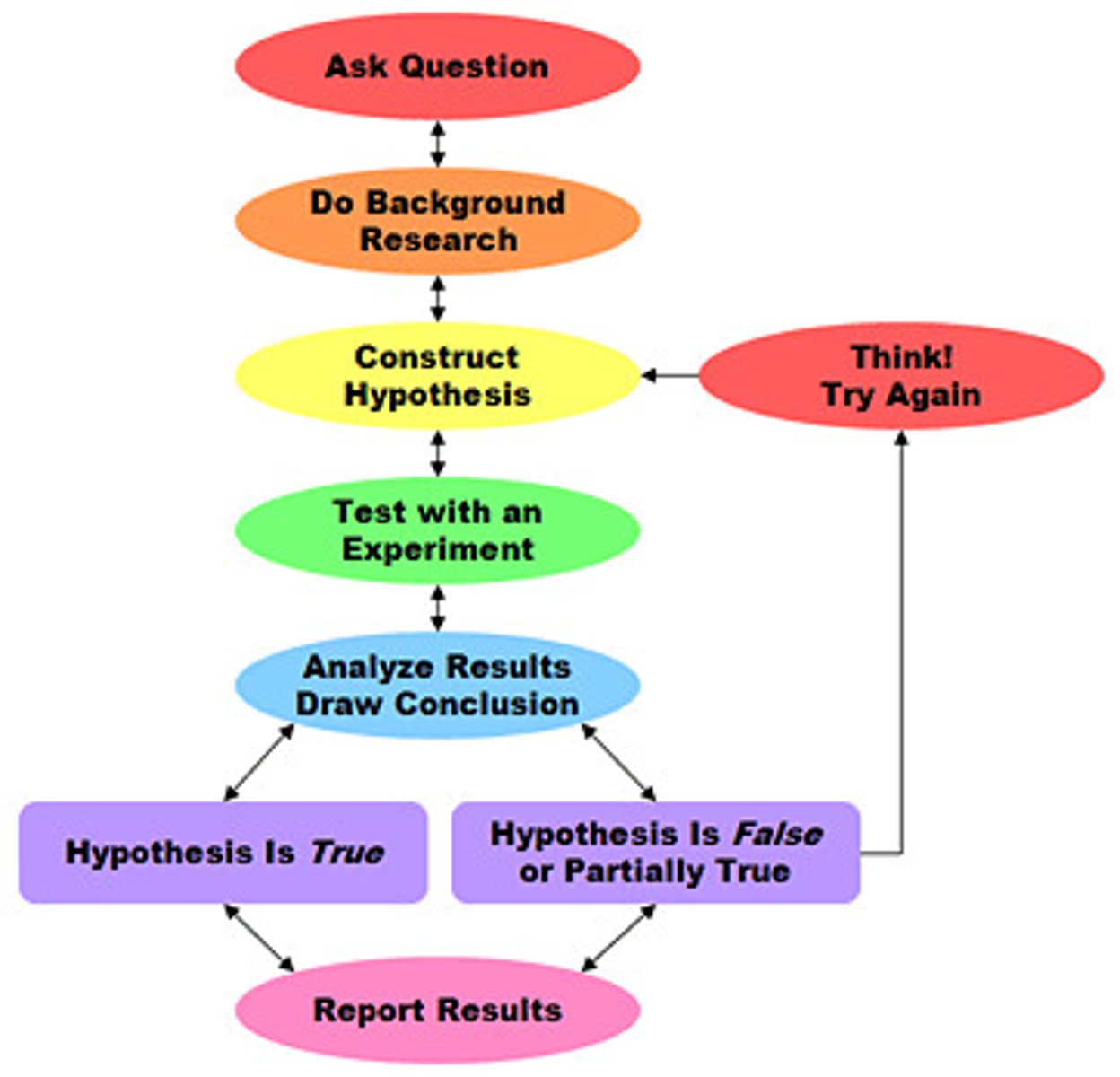
The Scientific Method
1) identifying questions of interest
2) formulating an explanation (specify a theory then formulate a hypothesis)
3) carrying out research designed to support or refute the explanation (devise operational definition then select research method then collect the data and lastly analyze the data)
4) communicating the findings
Social-Cognitive theorists
argue that people can modify their environments and engage in intentional learning by observing others
Formulating hypotheses
-Specific predictions derived from theories that can be empirically tested
-First step is to restate the research question as a hypothesis (derived from an exisiting theory)
-Be SPECIFIC and state a relationship between VARIABLES
-It should be conceived at a conceptual level but also have an implied OPERATIONAL DEFINITION
-Make sure it is FALISIFIABLE
-PREREGISTER it: publicly state the hypothesis and planned methodology before collecting or analyzing your data (this prevents HARKing and increases credibility and transparency)
Descriptive Research
-Designed to systematically investigate a person, group, or patterns of behavior without exploring relationships
-Focuses on organizing and summarizing the properties of a set of data
-Often encapsulated in frequency claims, e.g., 74% of the world was happy yesterday
-Uses measures of central tendency
-Concern of external validity
-Includes archival research, naturalistic observation, survey research, and case studies
-Can't be obtained using experimental method but still uses scientific questions, hypotheses, and careful data collection
Archival research
Involves examining existing data, such as census documents, college records, and newspaper clippings, to test a hypothesis
Naturalistic observation
researchers observe naturally occurring behavior without intervening
Survey research
-Involves asking a sample of people questions about their behavior, thoughts, or attitudes to infer how a larger population would respond.
-Surveys are effective for understanding public opinion or behavior patterns
-Must be designed to ensure a representative sample to avoid biased results
-Has to control for response biases
-Interviews are a type of
Case study
-An in-depth, intensive investigation of a single individual or a small group, often including psychological testing.
-Aims to gain insights into the individual or group and apply these insights to broader understanding
-Focus on unique individuals
Correlational studies
-Two sets of variables are examined (NOT MANIPULATED) to determine whether they are associated, or "correlated."
-The strength and direction of the relationship between the two variables are represented by a mathematical statistic known as a correlation coefficient
Variables
Aspects of behavior, events, or characteristics that can vary
Experimental research
-Only way researchers can establish cause and effect relationships
-Researcher investigates the relationship between two (or more) variables by deliberately changing one variable (experimental manipulation) in a controlled situation and observing the effects of that change on other aspects of the situation
-Has experimental group and a control group
-Includes random (based on chance) assignment to either the experimental or control condition
-Experiments have to be replicable
Quasai Experiment
tests cause and effect but lacks random assignment
Falsifiability
a feature of a scientific theory, in which it is possible to collect data that will prove the theory wrong
Precision
the exactness of a measurement
Parsimony
simplicity
Informed consent
-Human ethical principle
-They should have a general overview of the research and the opportunity to choose not to participate.
-This gives them a sense of control and reduces the stress of participating.
Confidentiality
-Psychologists keep research participants' and therapy clients' records confidential.
-Respecting privacy encourages people to express their false thoughts and feelings
Use of Deception
Psychologists may use deception only when the research benefits outweigh its potential harm, when they believe participants might have been willing to participate if they understood the benefits, and when participants are debriefed afterward.
Ethics of Research with Animals
-According to APA, animals may be harmed only when there is no alternative and when researchers believe that the benefits of the research justify the harm
-Humane treatement
Critical thinking
a process of thoughtfully analyzing and probing the questions, statements, and arguments of others
Principles of critical thinking
1) Be skeptical. (keep an open mind)
2) Insist on evidence.
3) Examine definitions of terms.
4) Examine the assumptions or premises of arguments.
5) Be cautious in drawing conclusions from evidence.
6) Be especially skeptical of anecdotes.
7) Consider alternative interpretations of research evidence.
8) Do not oversimplify.
9) Do not overgeneralize.
10) Apply critical thinking to all areas of life.
Research design
-An overall plan for obtaining the information needed to address a research problem or issue
-Fundamentally about evaluating how well research supports various claims
-Teaches how to plan studies, find and read research, and ask critical questions about it
-Importance: lies in its ability to support evidence-based treatments, inform effective teaching methods, and provide quantitative information; also enables ppl to make better, more informed decisions
Control group
level of an independent variable that is intended to represent 'no treatment' or a neutral condition
Subject Variable
a variable that characterizes preexisting differences among the participants in a study
Random assingment
-primary function is to enhance internal validity
-the use of a random method (e.g., flipping a coin) to assign participants into different groups
Observational research
the process of watching people or animals and systematically recording how they behave or what they are doing
Internal validity
a study's ability to rule out alternative explanations for a causal relationship between two variables
External validity
-An indication of how well the results of a study generalize to, or represent, individuals or contexts besides those in the study itself
-Includes generalizability
Ecological Validity
The extent to which a study is realistic or representative of real life.
Construct Validity
the degree to which a test measures what it claims, or purports, to be measuring
Face Validity
extent to which respondents can tell what the items are measuring
content validity
the extent to which a test samples the behavior that is of interest
criterion validity
the extent to which a measure is related to an outcome
predictive validity
The success with which a test predicts the behavior it is designed to predict; it is assessed by computing the correlation between test scores and the criterion behavior.
concurrent validity
the extent to which two measures of the same trait or ability agree
test-retest validity
A property exhibited by a test on which people get about the same scores when they take the test more than once.
intercoder reliability
in content analysis, the degree of agreement between or among independent coders
parallel forms reliability
consistency between/among alternate versions of the same instrument; e.g. creating 2 parallel forms of a questionnaire (with difficult questions) and both tests show correlation
split-half reliability
A measure of reliability in which a test is split into two parts and an individual's scores on both halves are compared.
face validity
extent to which respondents can tell what the items are measuring
social desirability bias
A tendency to give socially approved answers to questions about oneself.
acquiescence bias
The tendency to agree rather than disagree with items on questionnaires.
question-order bias
the tendency for earlier questions on a questionnaire to influence respondents' answers to later questions
Courtsey bias
participants give answers that are more polite, positive, or socially acceptable rather than expressing their true opinions.
tuskegee syphilis study
lack of informed consent and minimal risk
experimenter effect
tendency of the experimenter's expectations for a study to unintentionally influence the results of the study
placebo effect
experimental results caused by expectations alone; any effect on behavior caused by the administration of an inert substance or condition, which the recipient assumes is an active agent.
demand characteristics
those aspects of an observational setting that cause people to behave as they think someone else wants or expects
social desirability bias
A tendency to give socially approved answers to questions about oneself.
Measurement reliability
-How consistent the results of a measure are
-Crucial aspect of construct validity
Probability sampling (PS)
a category name for random sampling techniques... in which a sample is drawn from a population of interest so each member has an equal and known chance of being included in the sample
What is simple random sampling? (PS)
The most basic form of probability sampling, in which the sample is chosen completely at random from the population of interest.
What is systematic sampling? (PS)
The researcher uses a randomly chosen number N, and counts off every Nth member of a population to achieve a sample.
What is cluster sampling? (PS)
Clusters of participants within the population of interest are selected at random, followed by data collection from all individuals in each selected cluster.
What is multistage sampling? (PS)
Involving at least two stages: a random sample of clusters followed by a random sample of people within the selected clusters.
What is stratified random sampling? (PS)
The researcher identifies particular demographic categories, or strata, and then randomly selects individuals within each category.
What is oversampling? (PS)
A variation of stratified random sampling in which the researcher intentionally over-represents one or more groups
Non-probability sampling
-The probability of any particular member of the population being chosen is unknown
-General term for biased sampling techniques... that result in a biased sample
-Not everyone has an equal chance of being selected
-Limits external validity
voluntary sampling
A sample which includes only willing participants
What is convenience sampling?
Choosing a sample based on those who are easiest to access and readily available.
What is purposive sampling?
Only certain kinds of people are included in a sample in a nonrandom way.
What is snowball sampling?
Participants are asked to recommend acquaintances for the study.