Learn: The Neuron (AP)
 Call Kai
 Learn
Learn Practice Test
 Spaced Repetition
 Match
Match Flashcards
 Knowt Play
1/54

There's no tags or description
Looks like no tags are added yet.
Name | Mastery | Learn | Test | Matching | Spaced | Call with Kai | Chat |
|---|
No analytics yet
Send a link to your students to track their progress
55 Terms
Contains the nucleus and important parts to keep the cell alive; doesn't really play a role in the communication process
Soma (cell body)

Soma (cell body) (image)
tail-like structure down which the electrical charge travels
Axon
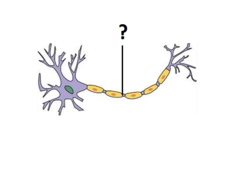
Axon (image)
Glial cells that have wrapped around the axon and protected/insulated it
Myelin Sheath

Myelin Sheath (image)
branches at the end of the axon that contain the neurotransmitters
Axon Terminals

Axon Terminals (image)
chemical messengers that cross the synapse between neurons
Neurotransmitters
Sacs in the tips of the axon terminals that contain the neurotransmitters
Synaptic Vesicles
The gap between neurons
Synapse
Holes in the surface of a dendrite into which the neurotransmitters fit
Receptor Sites
A neuron fires or doesn't; It doesn't partially fire
All-or-None Principle
the threshold at which a neuron fires
-55 mv
charge of a neuron at resting potential
-70 mv
Neurotransmitters going back to the axon terminals that released them after the other neuron fires
Reuptake
ions that are outside the neuron when at resting potential and enter the neuron as it gets closer to firing
+NA
ions that are inside the neuron when at resting potential
-K
Glial Cells in the Peripheral Nervous System that for myelin sheath
Schwann Cells
Glial Cells in the Central Nervous System that form myelin sheath
Oligodendrocytes
Nourishing cells that wrap around the axon to form myelin sheath
Glial Cells
John Locke's idea that we are all born with a 'clean slate'
Tabula Rasa
The idea that we have a physical brain and a non-physical mind
Dualism
The idea that our mind is a product of our physical brain
Monism
The idea that the bumps on our brains determine our personalities and traits
Phrenology
Founder of Phrenology
Franz Joseph Gall
the idea that various brain regions have particular functions
Localization of Function
gaps in the myelin sheath that charge the action potential
Nodes of Ranvier
The idea that we learn everything from experience and aren't born with knowledge
Empiricism
Disease in which the immune system eats away at the myelin sheath
Multiple Sclerosis
Filtration
Physical separation technique best used to separate sand from a mixture of sand, salt, and water
Particle size and insolubility in water
Physical properties that allow filtration to separate sand from saltwater
Paper chromatography
Physical separation technique best used to separate plant pigments and dyes
Differences in solubility and rate of travel through the stationary phase
Physical property that allows paper chromatography to separate plant pigments and dyes
Magnetic separation
Physical separation technique best used to separate iron filings from sand
Magnetism
Physical property used when separating iron filings from sand with a magnet
Decanting
Physical separation technique best used to separate water from rice after it has been boiled
Differences in state and density, allowing the liquid to be poured off from the solid
Physical property that allows decanting to work when separating a liquid from a settled solid
Evaporation
Physical separation technique best used to separate salt from saltwater when only salt is needed
Difference in boiling points and volatility
Physical property that allows evaporation to separate salt from water
Simple distillation
Physical separation technique best used to separate and collect pure water from saltwater
Differences in boiling points
Physical property utilized during simple distillation
Density separation (using a separating funnel)
Physical separation technique best used to separate oil and water when they form distinct layers
Differences in density and immiscibility
Physical property used to separate oil and water in a separating funnel
Centrifugation
Physical separation technique that separates a mixture by rapidly spinning it
Differences in density
Physical property that allows a centrifuge to separate mixture components
Fractional crystallization
Physical separation technique used to separate dissolved solids that have different solubilities by forming crystals
Differences in solubility
Physical property utilized in fractional crystallization
Mechanical separation
Physical separation technique used for physically sorting large pieces of a mixture apart
Differences in size, shape, or visual appearance
Physical property used during mechanical separation
Fractional distillation
Separation technique best suited for separating two miscible liquids with close boiling points
Sublimation
Separation technique used to isolate a mixture component that transitions directly from solid to gas
Residue
The insoluble solid component that remains trapped on the filter paper during filtration
Filtrate
The liquid or solution that passes through the filter paper during filtration
Separating funnel
Laboratory glassware specifically designed to separate immiscible liquids of differing densities