Bio lab test 3
 Call Kai
 Learn
Learn Practice Test
 Spaced Repetition
 Match
Match Flashcards
 Knowt Play
1/112

There's no tags or description
Looks like no tags are added yet.
Name | Mastery | Learn | Test | Matching | Spaced | Call with Kai |
|---|
No analytics yet
Send a link to your students to track their progress
113 Terms
What part of the plant is cabbage?
terminal bud
What part of the plant is the brussel sprout?
axillary bud
What part of the plant is broccoli?
flower/flower bud
What part of the plant is an onion?
leaf
What part of the plant is celery?
petiole
What part of the plant is carrot?
storage root
What part of the plant is potato?
modified stem
What part of the plant is a sweet potato?
storage root
What part of the plant is a peanut?
fruit
What part of the plant are peas in a pod?
fruit
indeterminate growth
when a plant grows continuously throughout its life due to the activity of meristems
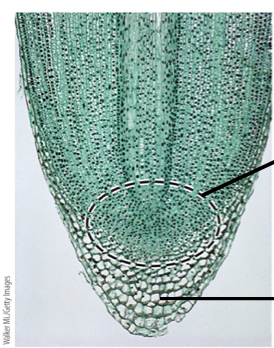
What is the name of the part of the root that the top arrow is pointing to?
root apical meristem
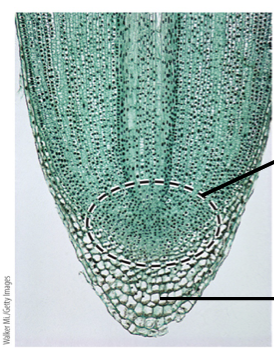
What is the name of the part of the root that the bottom arrow is pointing to?
root cap
What is the purpose of the root stem?
to increase surface area (helps with water intake)
meristem
area of cell division
apical meristem
primary (upward/downward) growth
axillary/lateral meristem
secondary (outward) growth
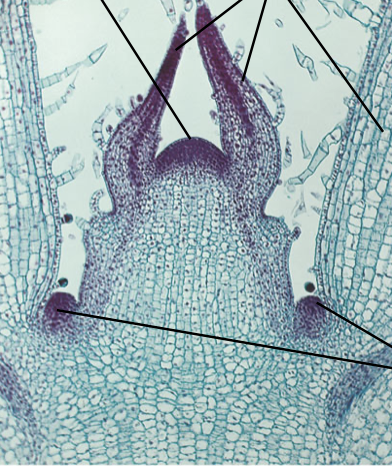
what are the top arrows pointing to?
apical meristem
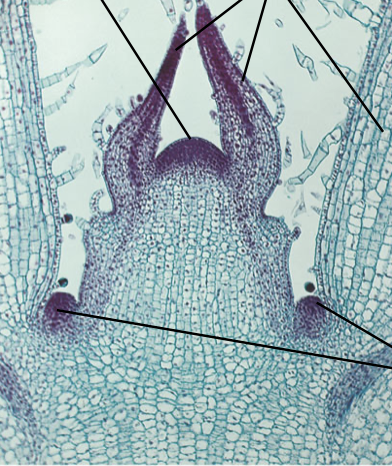
what are the bottom arrows pointing to?
axillary/lateral bud meristems
what are the 3 basic tissue systems?
dermal, ground, vascular
leaves
site of photosynthesis'; plants move sugar from leaves to other parts of the plant
stems
vascular tissue (xylem/phloem) for transport and support
roots
site for absorption of water and minerals
parenchyma
living cells with thin cell walls that function in storage and metabolism (word means beside or alongside)
collenchyma
living cells with thicker cell walls that provide support to herbaceous (green) stems (kolla means glue)
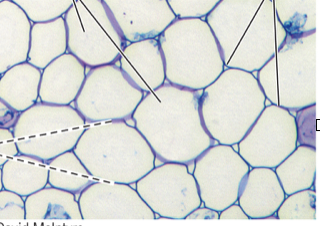
Are these parenchyma or collenchyma cells?
parenchyma
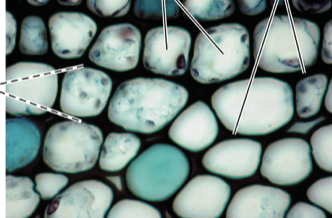
Are these parenchyma or collenchyma cells?
collenchyma
leucoplast
type of plastid for storage of starch
what do vascular bundles consist of?
xylem and phloem
What does xylem transport?
water and minerals
What does phloem transport?
sugars
What structures are dead at maturity?
xylem and sclerenchyma
list the characteristics of a monocot
single cotyledon, parallel venation, multiples of 3, scattered vascular tissue
List the characteristics of a dicot
2 cotyledons, network of veins, flowers in multiples of 4-5, concentric vascular tissue
cotyledon
energy source for germination of seed
endodermis
controls movement of water and minerals in the vascular cylinder
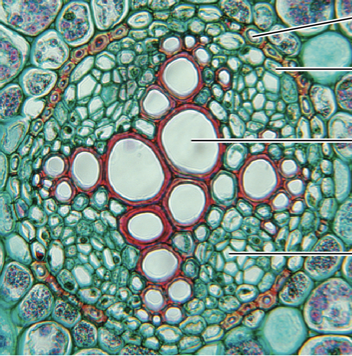
which arrow is pointing to the xylem?
arrow 3
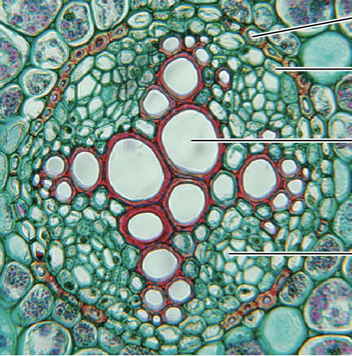
Which arrow is pointing to the phloem?
arrow 4
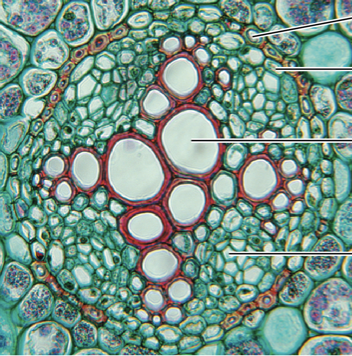
Which arrow is pointing to the pericycle?
arrow 2
pith
innermost tissue composed of parenchyma cells
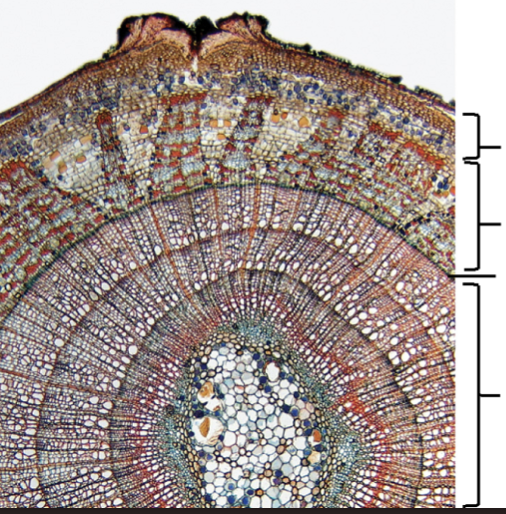
What is the top segment of the tilia cross section?
cortex
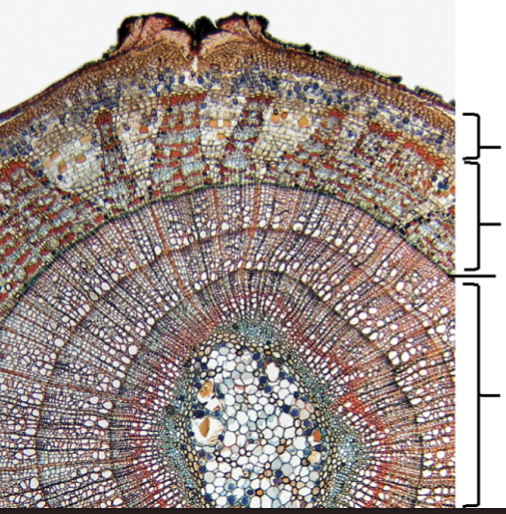
What is the second segment of the tilia cross section?
secondary phloem
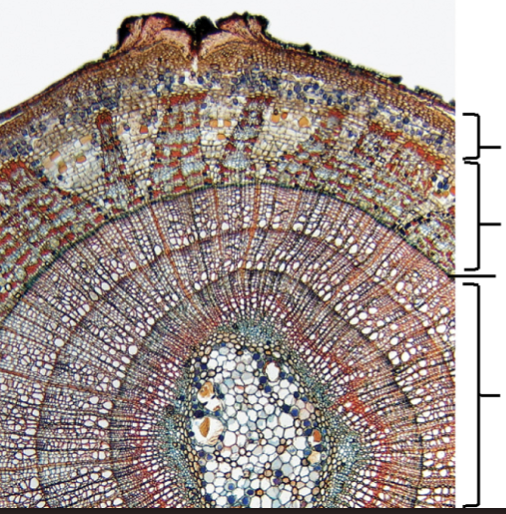
What is the third segment of the tilia cross section?
vascular cambium
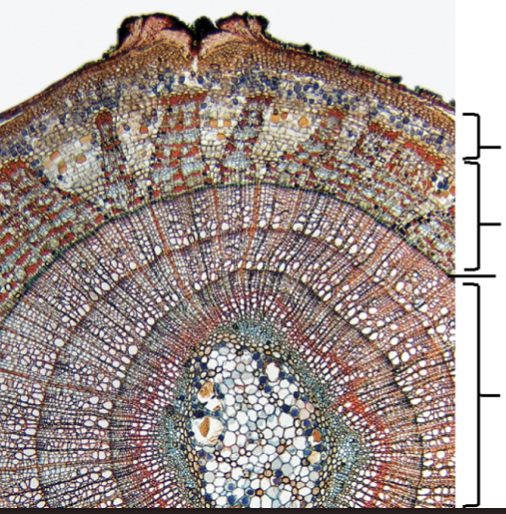
What is the fourth segment of the tilia cross section?
secondary xylem
Are fungi autotrophs or heterotrophs?
heterotrophs
How do fungi break down molecules?
by using enzymes
What 3 ecological lifestyles do fungi occupy?
decomposers, parasitic fungi, mutualistic symbionts
decomposers
break down and absorb nutrients from nonliving organic material (saprotrophs)
parasitic fungi
absorb nutrients from living hosts, fungus benefits, host is harmed
mutualistic symbiont
absorb nutrients from hosts and reciprocate with actions that benefit the host
What are fungal cells called?
hyphae
What is a mass of hyphae called?
mycelium
What type of cell walls do have and what are they made of?
tubular, chitin
Which structures dominate fungus life cycle?
haploid
How are fungal gametes formed?
mitosis and differentiation of haploid cells
plasmogamy
union of cytoplasm from two parent mycelia
heterokaryon
cell with two separate haploid nuclei
In zygomycetes, do sporangia produce haploid or diploid spores, and are they asexual or sexual?
haploid, asexual
karyogamy
when two haploid nuclei fuse to form a single diploid nucleus
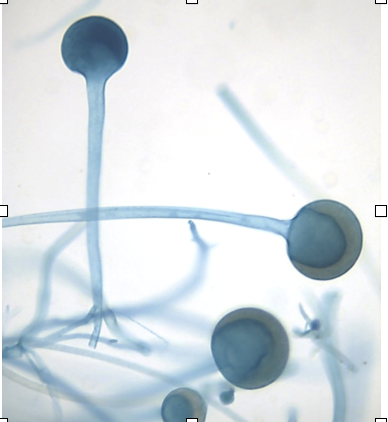
Is this a photo of sporangia or zygosporangia?
sporangia
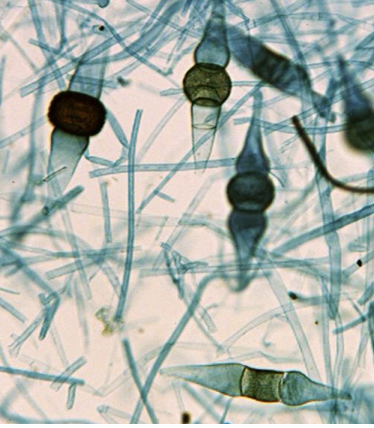
Is this a photo of sporangia or zygosporangia?
zygosporangia
Where can Ascomycetes be found?
marine, freshwater, and terrrestrial habitats
Do ascomycetes produce asexual or sexual spores?
sexual
Where are spores produced in ascomycota?
asci
Do cells in the ascus go through mitosis or meiosis?
meiosis which leads to 8 ascospores
How does ascomycota reproduce?
via asexual spores called conidia
How are conidia produced?
at the tips of specialized hyphae called conidiophores
What are some examples of basidiomycetes?
mushrooms, puffballs, and shelf fungi
How are basidiomycetes described?
clublike basidium with transient diploid stage
Do the mycelium in basidiocarps reproduce sexually or asexually?
sexually
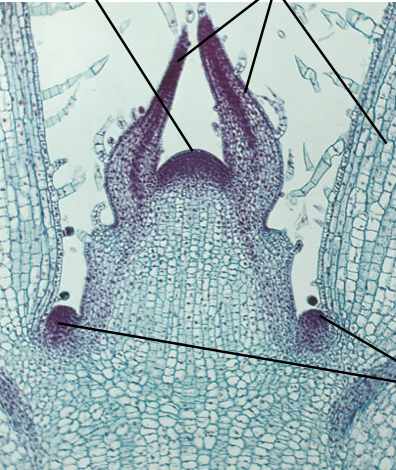
What is the top right arrow pointing to?
leaf primordia
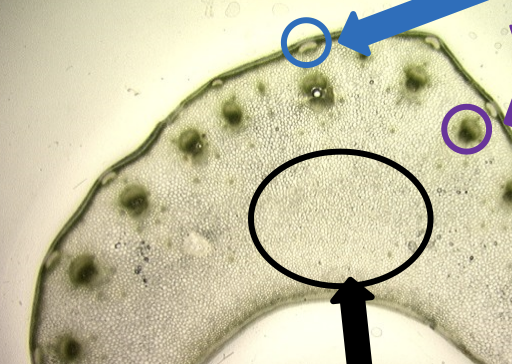
What is the blue arrow pointing at?
collenchyma
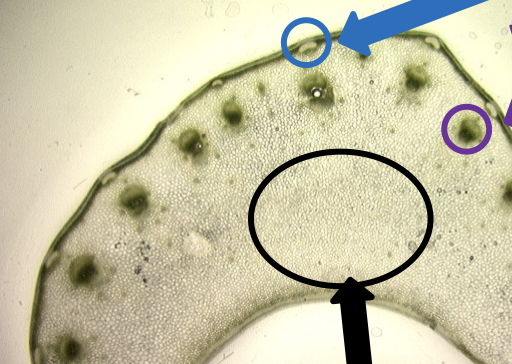
What is the purple arrow pointing at?
vascular bundle
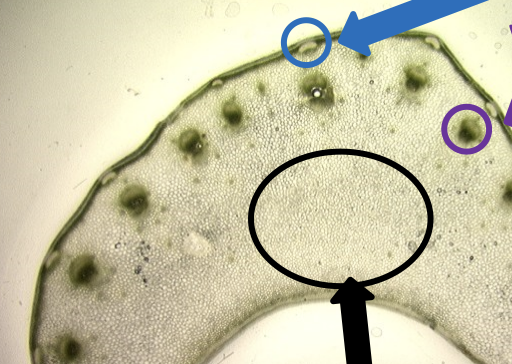
What is the black arrow pointing at?
parenchyma
sclerenchyma
very thick cell walls that are either sclerid shaped or fiber shaped
What is the site of photosynthesis?
leaves
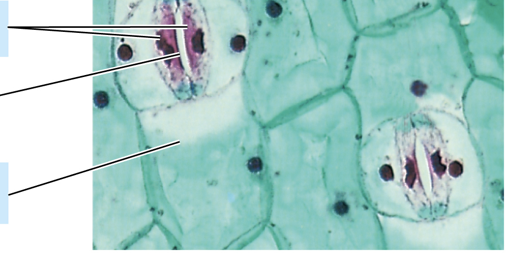
What are the top arrows pointing at?
guard cells
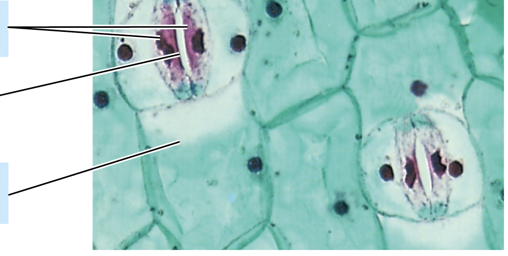
What is the middle arrow pointing at?
stomatal pore
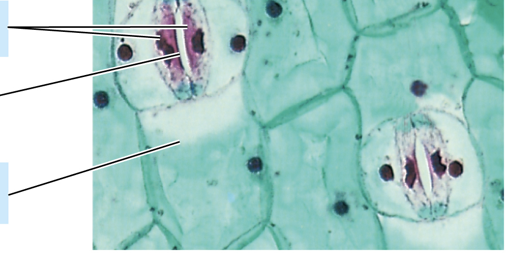
What is the bottom arrow pointing at?
epidermal cell
WHat is the function of a guard cell?
to regulate the opening and closing of the stomata
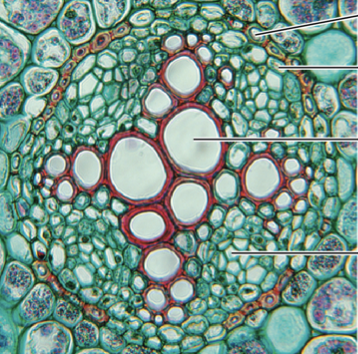
Is this a monocot or a dicot?
dicot
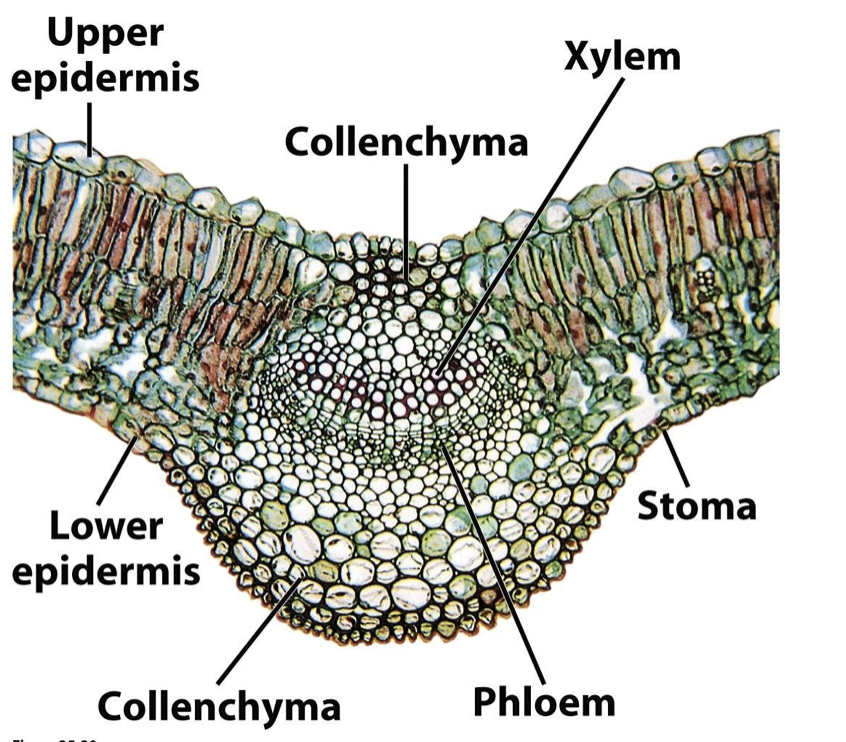
leaf cross section
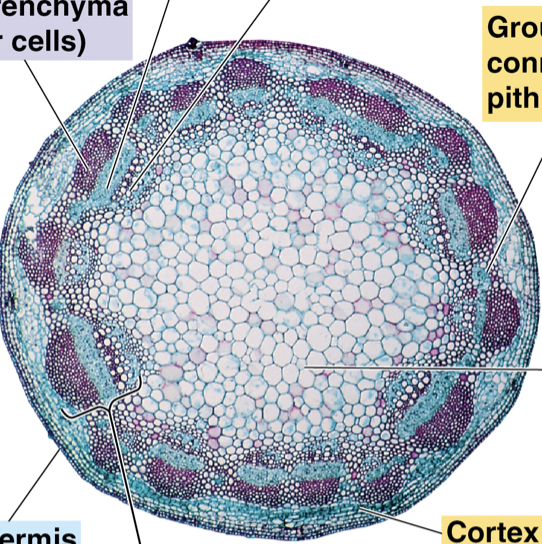
Is this a monocot or dicot stem? Why?
dicot because the vascular bundles are lined around the outside
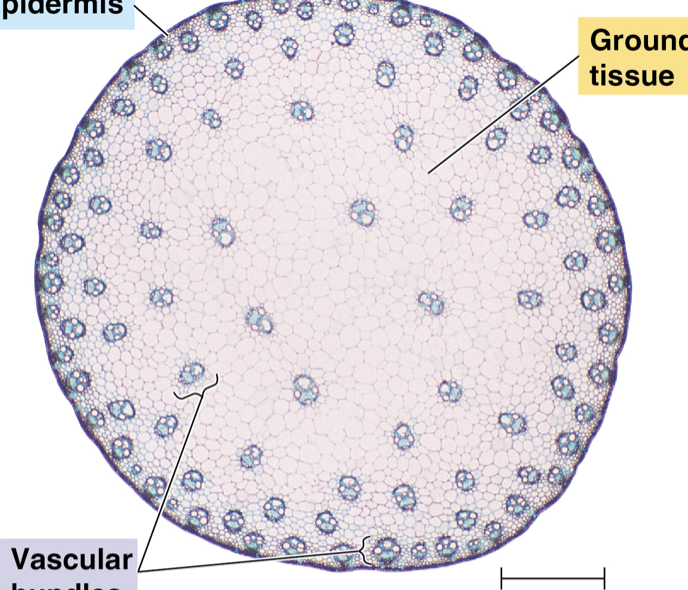
Is this a monocot or dicot stem? Why?
monocot because the vascular bundles are spread throughout
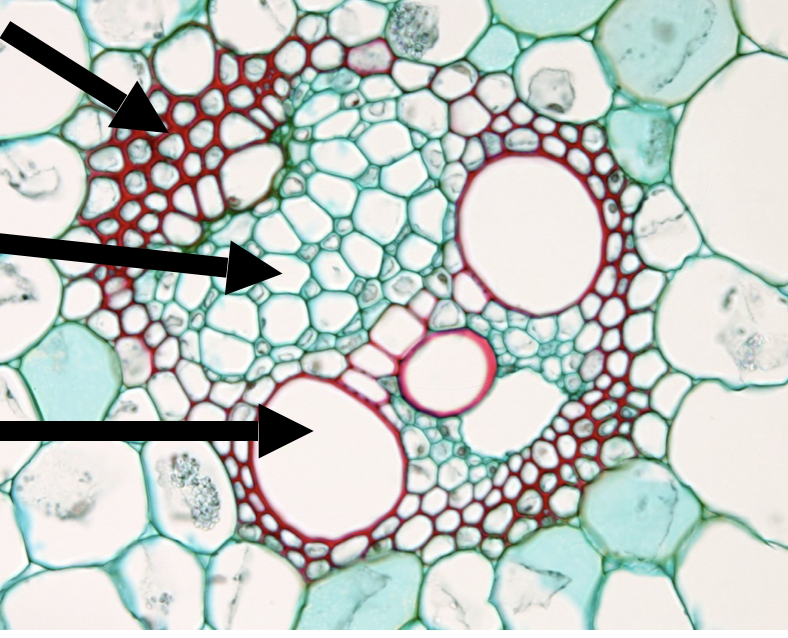
Top arrow
sclerenchyma
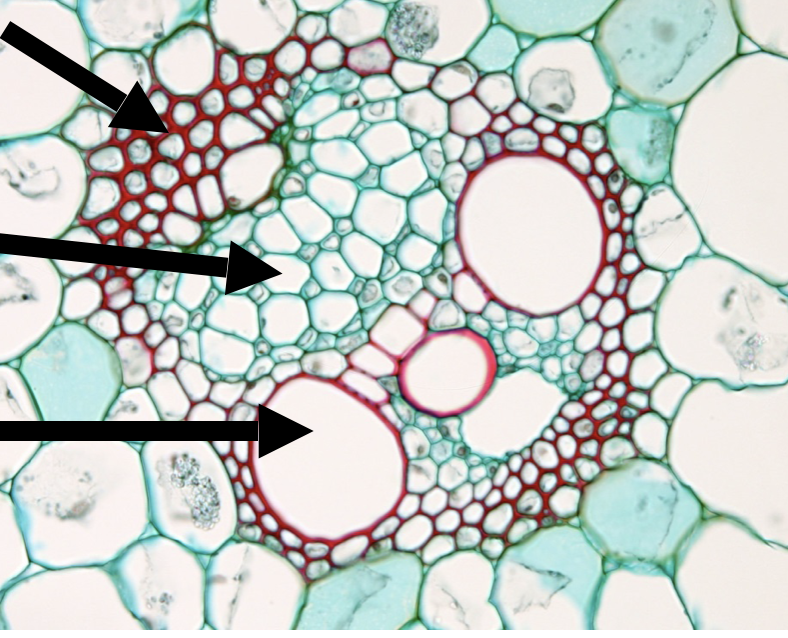
middle arrow
phloem
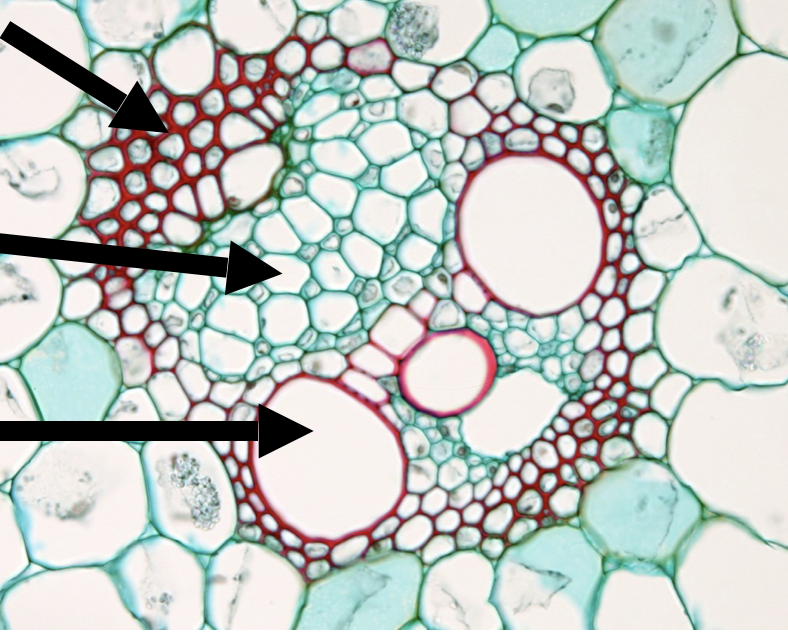
bottom arrow
xylem
main meristem in the stem
vascular cambium
What cell division process produces spores during asexual reproduction?
mitosis
Is xylem on the inside or outside of the stem?
inside
Is phloem toward the inside or outside of the stem?
outside
plasmogamy
union of cytoplasm from two parent mycelia
heterokaryon
cell with two separate haploid nuclei
Site of karygoamy and meiosis
zygosporangia
ectomycorrhizal
sheaths of hyphae formed over root and grow into extracellular spaces
endomycorrhizal
grow into extracellular spaces
What are the possible photosynthetic components of lichens?
green algae or cyanobacteria
What is the fungal component of lichens?
ascomycete
What are the 3 types of lichen?
fruticose (shrublike), foliose (leaflike), crustose (encrusting)
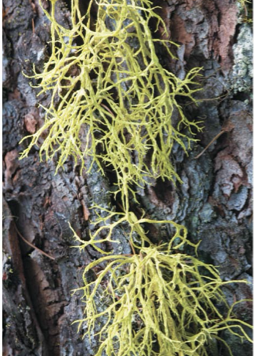
What type of lichen is this?
fruticose