Bio15 Lax Exam :)
 Call Kai
 Learn
Learn Practice Test
 Spaced Repetition
 Match
Match Flashcards
 Knowt Play
1/76

There's no tags or description
Looks like no tags are added yet.
Name | Mastery | Learn | Test | Matching | Spaced | Call with Kai | Chat |
|---|
No analytics yet
Send a link to your students to track their progress
77 Terms
inappropriate antibiotic use increases the likelihood of developing
antibiotic resistance
antibiotic resistance can arise from
- using antibiotics when they are not needed
- selecting the wrong drug for the type of infection
- prescribing incorrect dosafes
- ending treatment too early
antibiotic susceptibility test
lab test that determines how effective different antibiotics are against particular bacterial strain
- Kirby Bauer disk diffusion test (culture and sensitivity test) using Mueller Hinton agar
antibiotics diffuse at different rates depending on molecular size: standardized reference tables classify bacterial response as
sensitive (S): antibiotic will most likely work at standard doses
intermediate (i): antibiotic may work at higher doses or in combination
resistant (r): antibiotic is unlikely to be effective
symptom caused by bacteria: how to choose antibiotic
- showing effectiveness
- large zone of inhibition
- sensitive (s) on chart
why penicillin is not good for P. fluorescens
P. fluorescens is gram negative.
penicillin = beta-lactam antibiotic
G- outer membrane = penicillin cannot target peptidoglycan wall
G- produces beta-lactamase enzymes = penicillin does not work
why important to measure zone of inhibition and use standardized charts
size of zone of inhibition depends on how well it works and how well it diffuses --> molecule size
small molecule diffuse far
shows if bacterium is sensitive, resistant, or intermediate
in clinical testing what are two factors to consider beyond Kirby-Bauer test result when choosing antibiotics
- allergies
- drug interactions with other medications
disinfectants kill microorganisms on external surface are called
antiseptics
Florence Nightingale introduced routine of what on care on wounded soldiers
use of hot water and soap = drop in infection and death rates
some compounds work on some bacteria but not others --> compound is
selective
epidemic occurs when
number of individuals affected by specific infectious disease rises significantly above normally expected within population or region
study of epidemics is known as
epidemiology = identify cause of outbreak, how it spread, how to control
epidemiology: why was red colony growth the only type recorded in experiment using S. marcescens?
S. marcescens makes natural red pigment called prodigiosin when it grows
epidemiology: if we used white candy instead of red would it compromise results of simulation
not really; it'll be hard to see if red bacteria spread because the red candy color helped us visually track infection when shaking hands to contaminate... white candy = still would grow red colony because of prodigiosin in S. marcescens
factors real epidemics are hard to track
- infections spread invisibly (asymptomatic carriers)
- more transmission pathway than just shaking hands (vectors formites droplet... hard to find source of travel)
- not everyone will report everyday contact, might not remember it... hard to trace to source
- not a contained space and population (control) like the lab
why airborne epidemic more difficult to trace using same method of red candy and hand shaking
it can spread to more people at once, compared to direct contact one to one in this lab
harder to see and know who infected who, cannot "see" every exposure
lytic cycle
viral (phage) replication cycle: virus needs host cell's metabolic process for viral replication
after virus attaches to cell surface and injects DNA into host it happens
- virus infects --> replicates --> lyses cell --> causes plaques (clear zones where phage lysed bacteria)
calculate concentration of plaque forming in units/mL in original sample
PFU/mL = (plaques counted / dilution factor x volume plated)
bacteriophage (phage=virus)
virus that infects bacterial cells
lysogenic cycle of bacteriophage
viral DNA incorporated into bacterial chromosome --> form prophage (viral dna in host genome) --> bacterial cell infected, called lysogen --> grow and divide
dilution series for accurate estimation of number of viable virus particles in sample
10^-1: likely heavy lysis no lawn if too concentrated
10^-2: moderate plaques for counting
10^-3: likely fewer plaques, maybe isolated with clear rings
why important to perform plaque assays using bacteria in log phase of growth
log phase = metabolically active bacteria, dividing --> best for phage to infect replicate and lyse host cell
what is added to control plate for viral plaque
only bacterial culture to see lawn
no bacterial lawn on plate for plaque assay can mean too FEW bacteria or too MANY virus
exposing bacterial lawn with lysogenic virus (phage dna in lysogen) to UV light... affect on plaque formation
uv triggers prophage in lysogenic cells to enter lytic cycle --> cells lyse --> release new virus --> more plaque
uneven spreading of lawn... affect of plaque assay result
you need uniformal even bacterial lawn, so plaques are separated
uneven spreading results in
- uneven plaque distribution
- merged plaques
- hard to count in accuracy in PFU/mL
anthrax laced letters... strain of B. anthracis = causes anthrax in humans
strains have different mutations during cellular replication in bacteria's dna
B. anthracis distributed to different labs --> cells grew and reproduced --> replicate own DNA each division
dna replication: double helix unzips --> nucleotide create complementary pairs for sequence AT CG --> IF WRONG NUCLEOTIDE INSERTED --> mutation
Sanger method DNA sequencing
mix template DNA with nucleotides, helper proteins, and fluorescent nucleotides --> build dna strands --> fluorescent nucleotide attaches to strand, stop copy process --> incomplete copies of dna strand with varying length --> sort strands by length --> find sequence
match sequence to find where strain came from
protozoa = primitive single celled organism that resemble animals in behavior from what kindgom
protista, like algae
are EUKARYOTIC have nucleus and membrane bound organelles
- most are motile
protozoa absorb nutrients through outer membrane this is called
endocytosis = engulf external materials into cell
amoeboids move using
pseudopods
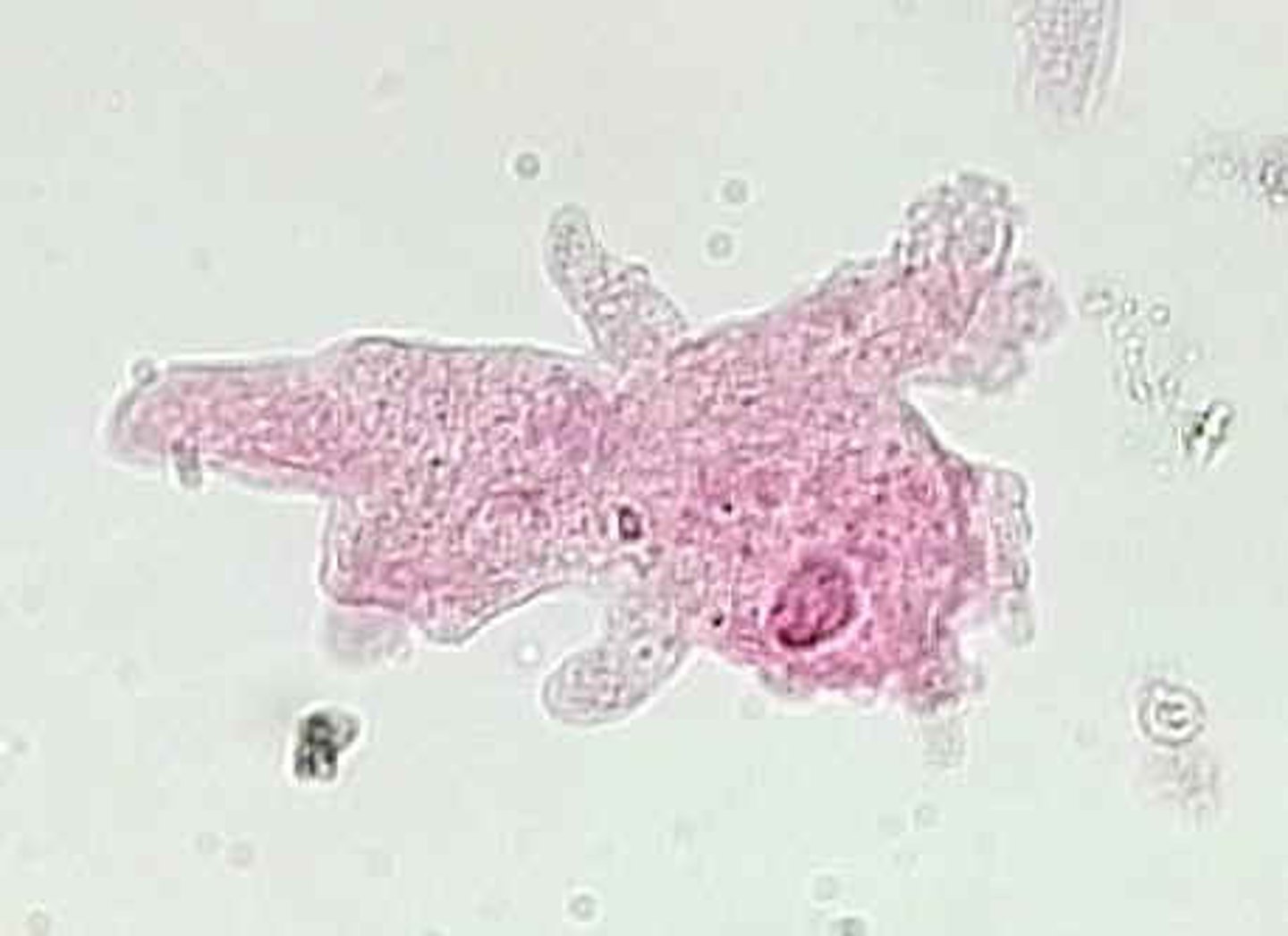
ENTAMOEBA HISTOLYTICA CAUSES
AMOEBIC DYSENTERY GI INFECTION --> invades lining of colon and forms ulcers
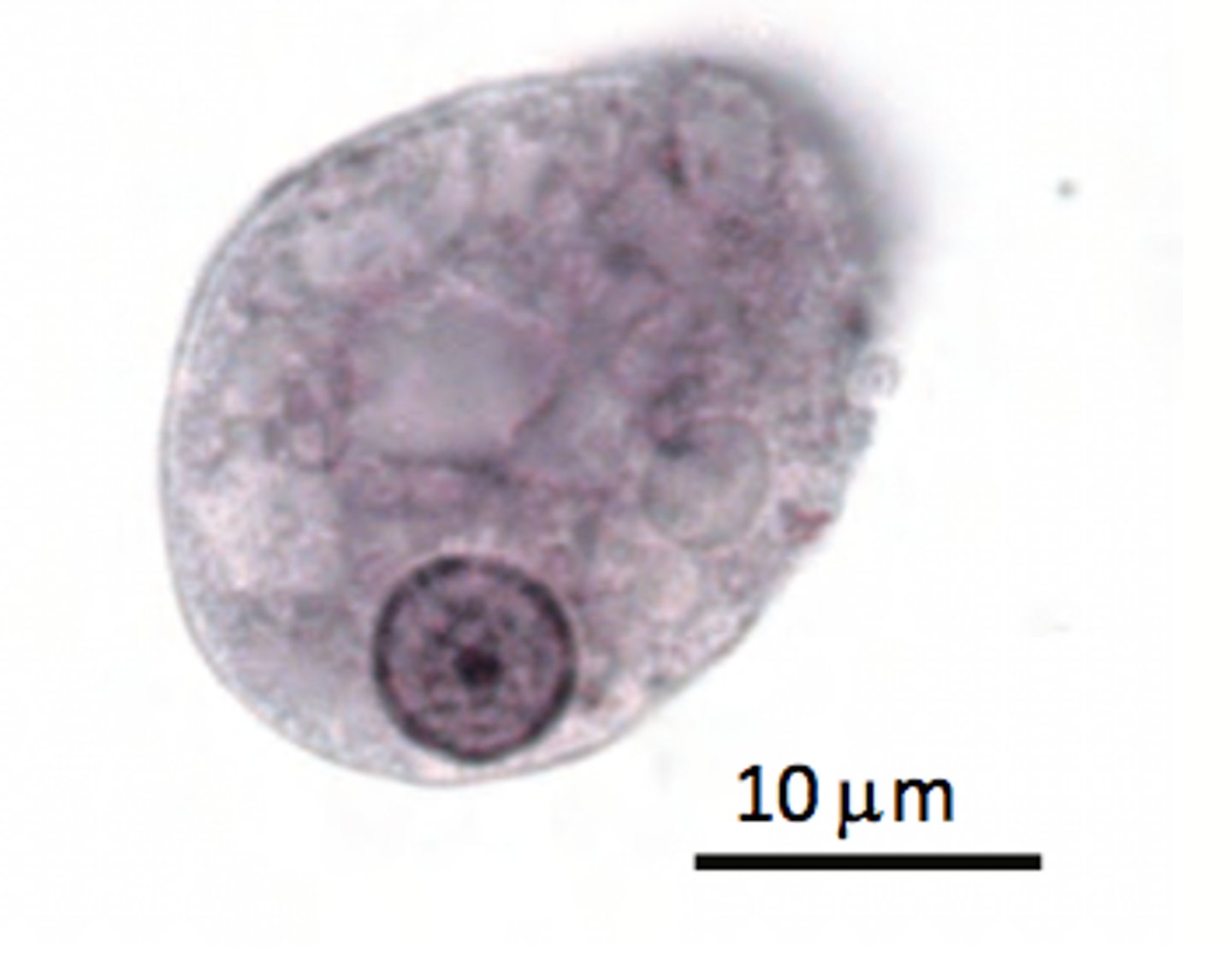
flagellates move using
one or more whip like flagella
FLAGELLATE GIARDIA LAMBILIA CAUSES
GIARDIASIS INTESTINAL ILLNESS --> attaches to walls of small intestine --> nutrient absorption issue --> diarrhea gas and cramps
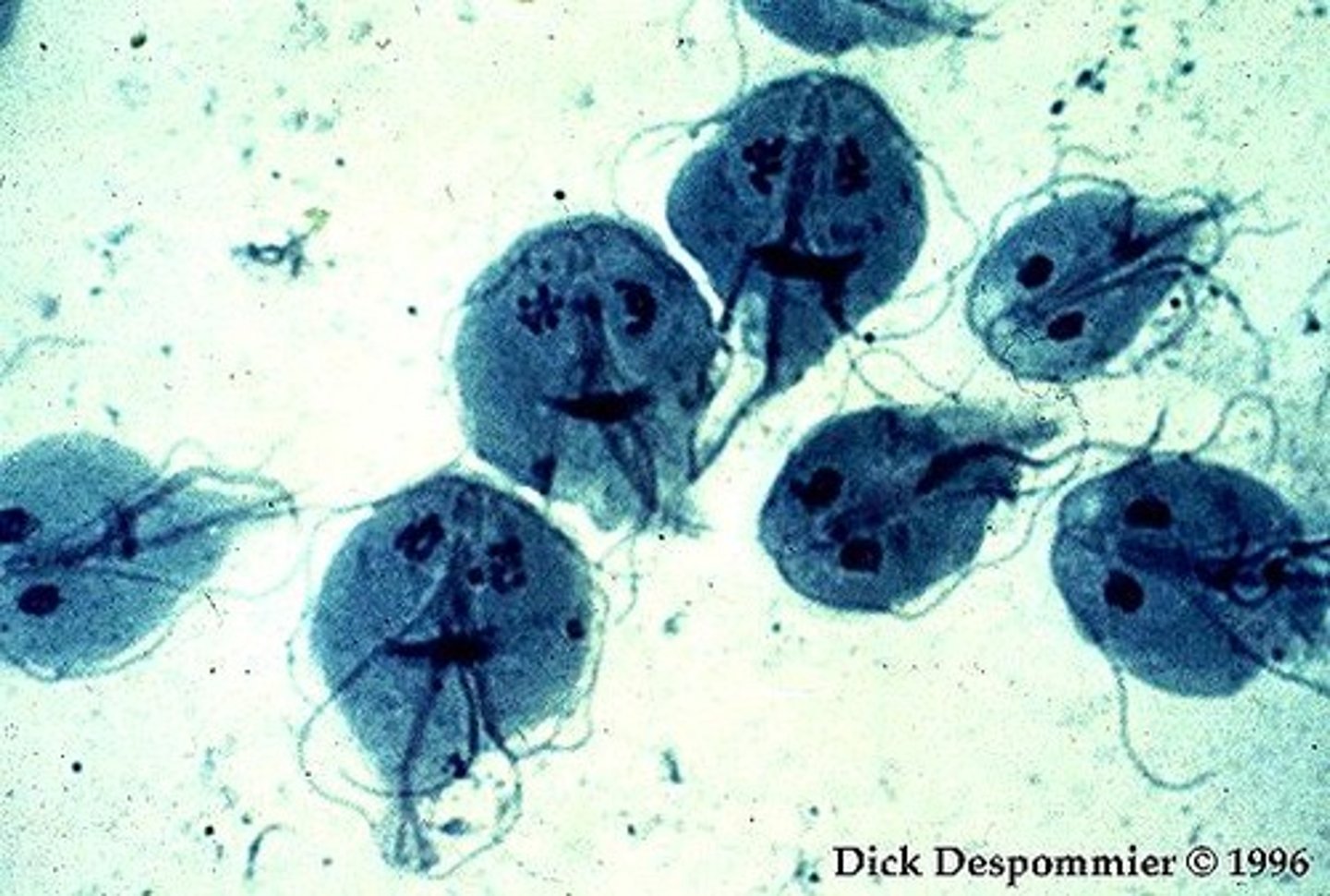
FLAGELLATE TRICHOMONAS VAGINALIS CAUSES
TRICHOMONIASIS STI --> affect urogenital tract --> itching burning discharge or male carrier
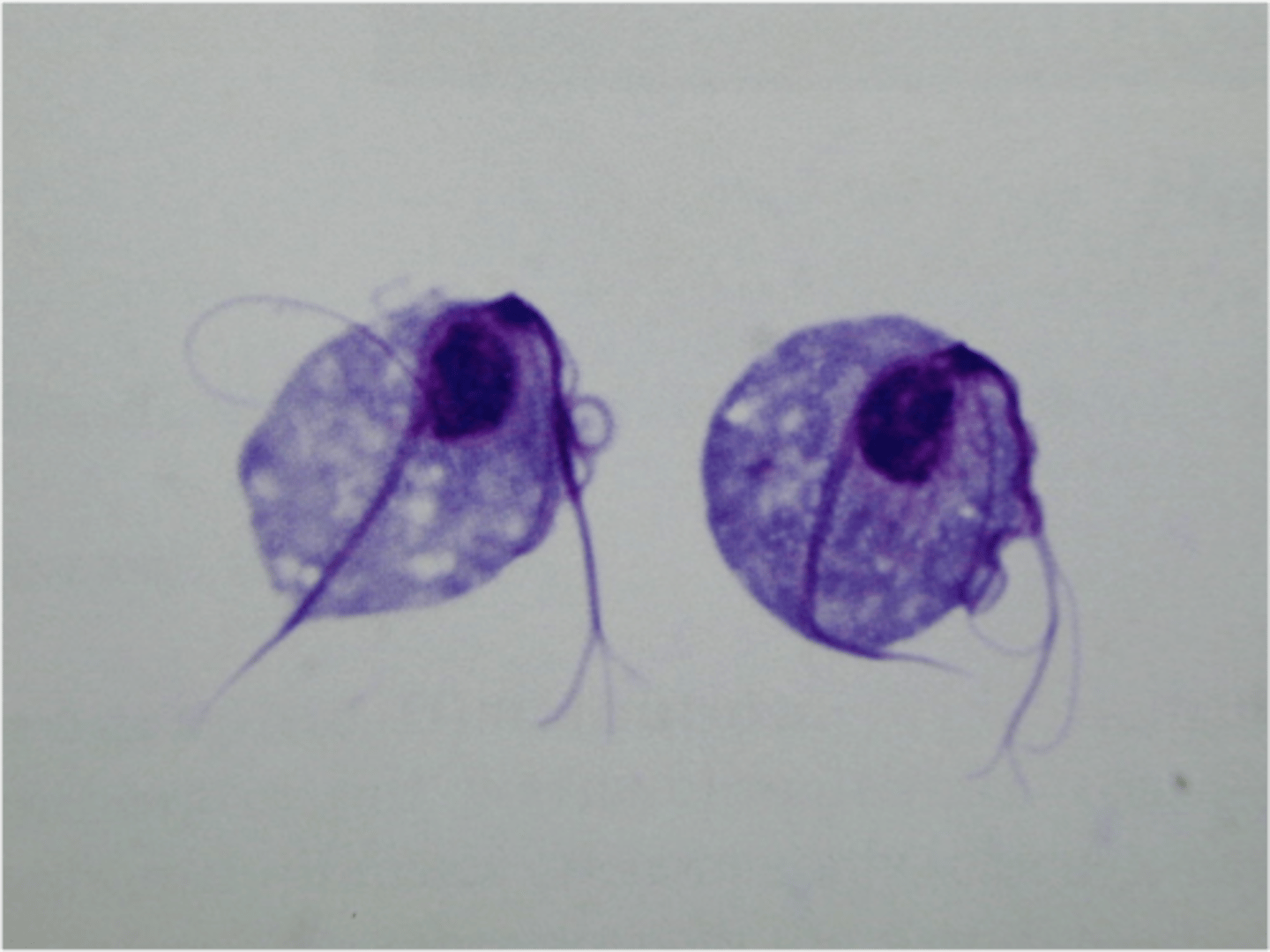
FLAGELLATE TRYPANOSOMA BRUCEI CAUSES
AFRICAN TRYPANOSOMIASIS SLEEPING SICKNESS --> transmitted by tsetse fly causing fever joint pain swollen lymph nodes --> invade central nervous system causing confusion coma death TRAVEL IN BLOOD USING UNDULATING MEMBRANE
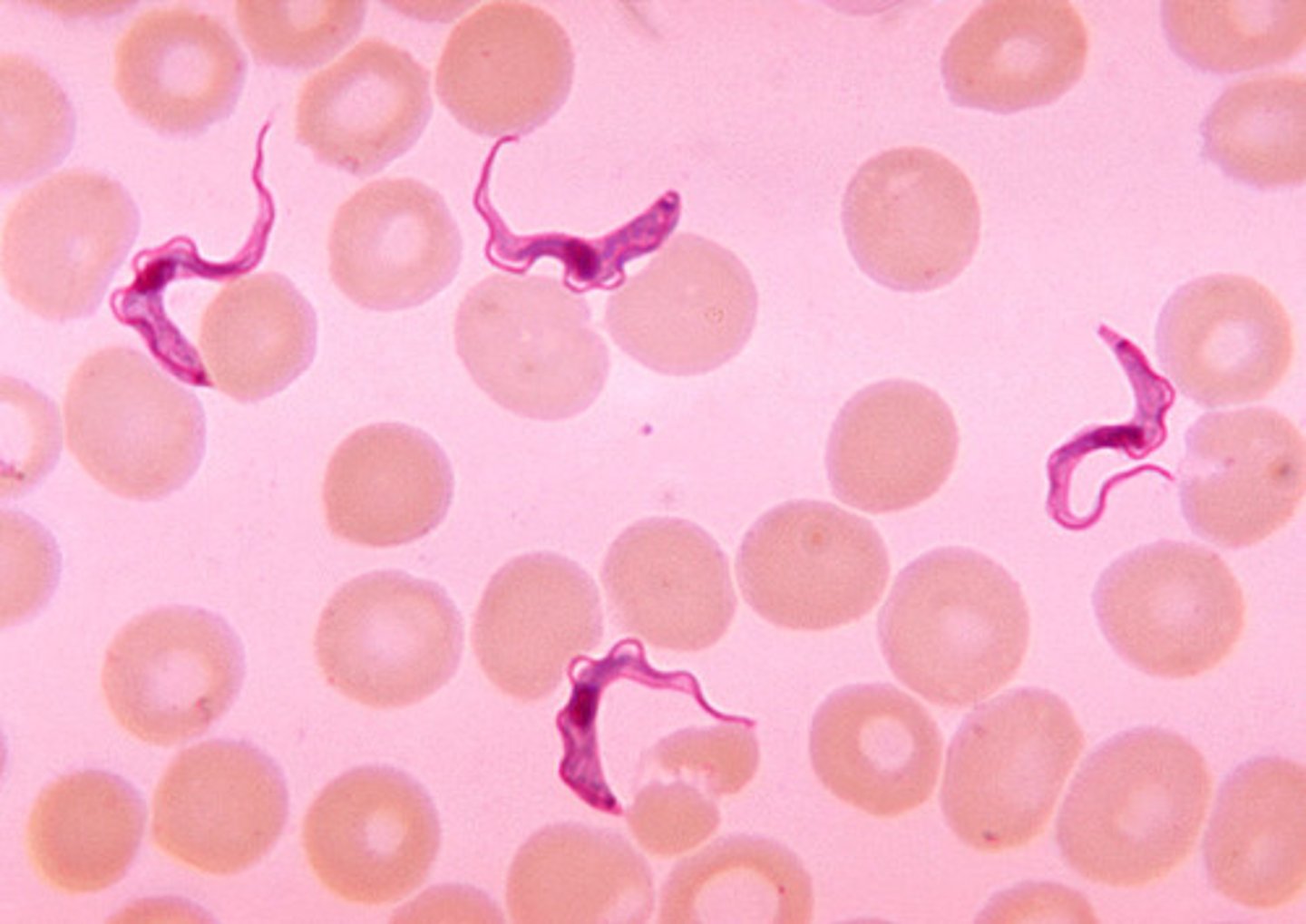
FLAGELLATE TRYPANOSOMA CRUZI CAUSES
CHAGAS DISEASE BY THE KISSING BUG --> bites, parasite in feces --> scratch, parasite enter bloodstream --> damage to heart esophagus colon
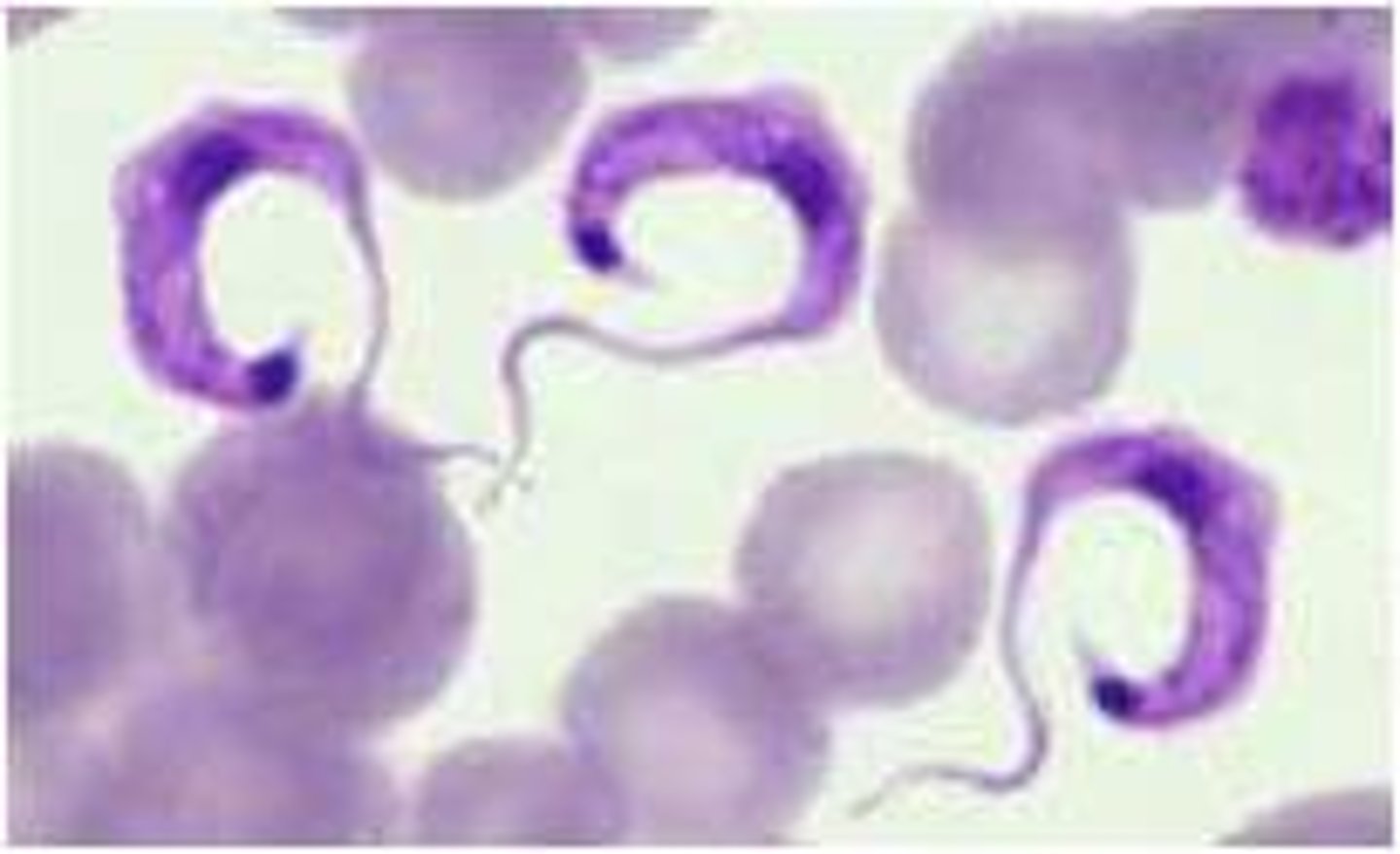
apicomplexans DOES NOT MOVE
non motile obligate intracellular parasite
APICOMPLEXAN PLASMODIUM CAUSES
MALARIA --> parasite transmitted by bite of infected mosquito --> plasmodium invade liver cells and RBC --> cause fevers chills sweat bursts more cells
APICAL COMPLEX PENETRATES HOST CELL --> PRODUCE CYST OR SPOROZOITE
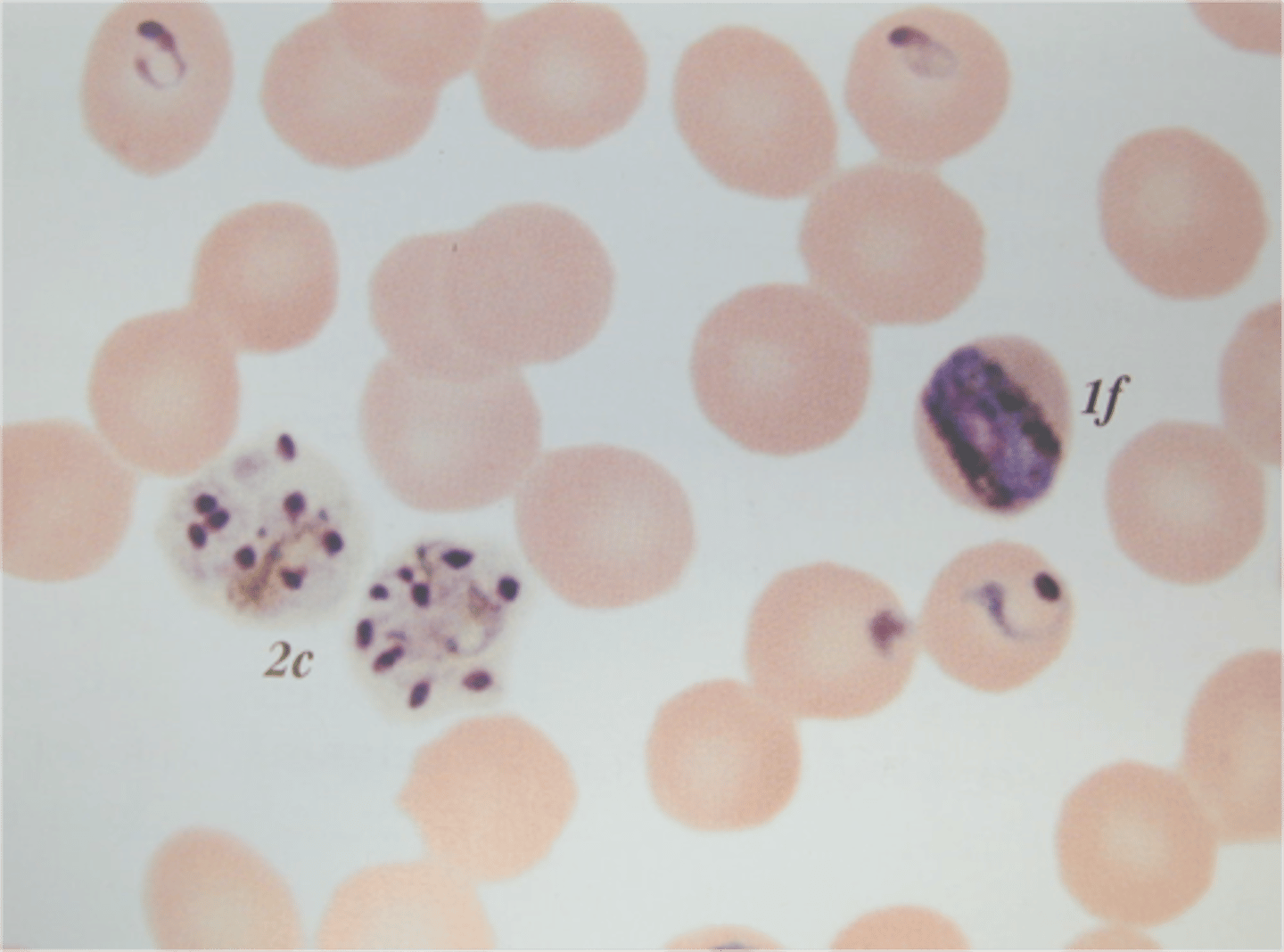
APICOMPLEXAN TOXOPLASMA GONDII CAUSES
TOXOPLASMOSIS in pregnant women
ciliates move using
coordinated beating of cilia
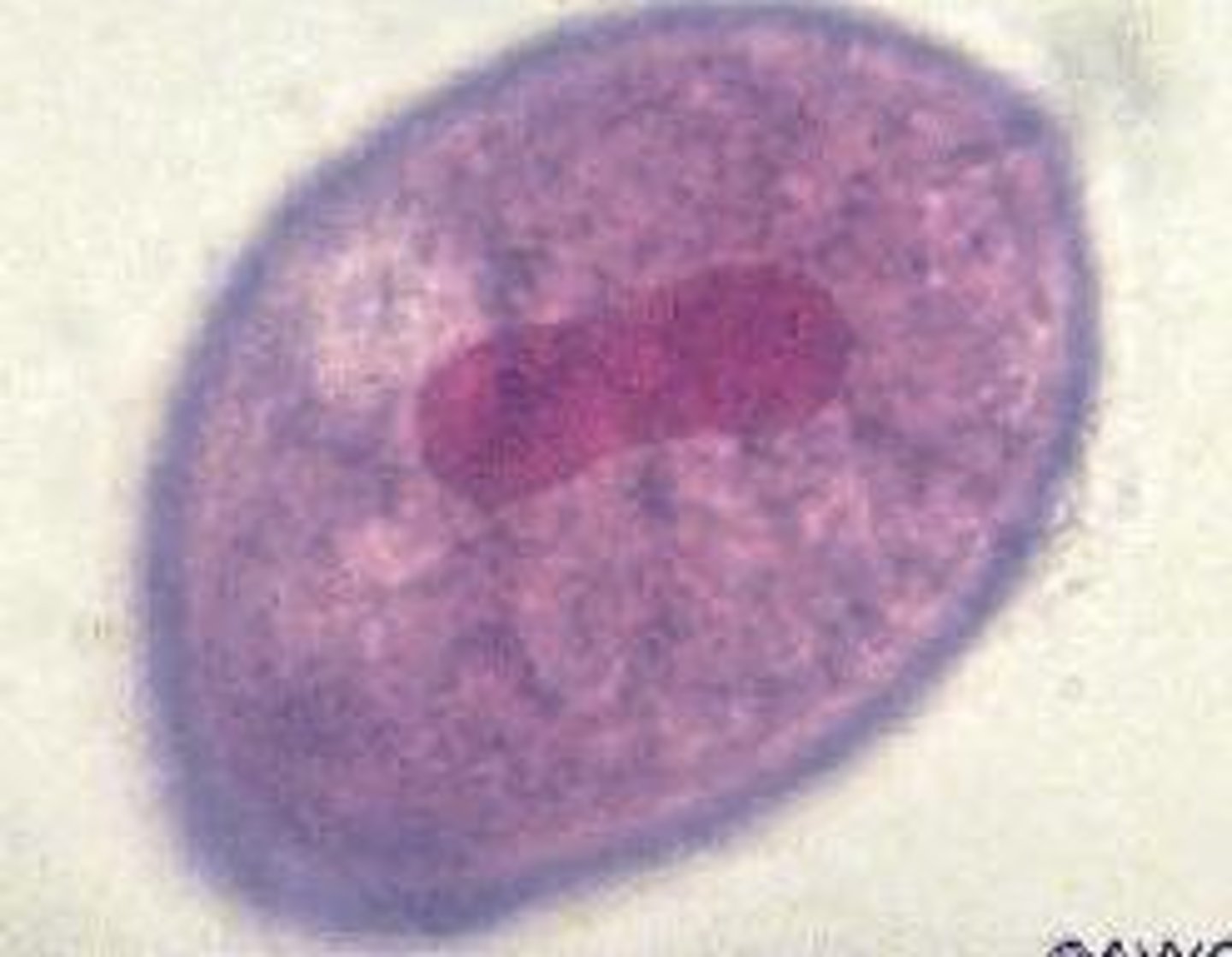
CILIATE BALANTIDIUM COLO CAUSES
BALANTIDIASIS RARE INTESTINAL INFECTION --> ingest cyst in contaminated water --> large bean shaped nucleus and covered in cilia for movement --> diarrhea
plasmodium apicomplexan malaria and trypanosoma flagellate sleeping sickness are both
parasites inside RBC bumpy and in blood plasma... both depend on host body to survive
how to tell parasite vs free living
parasites: close or inside host cell, smaller than free living protozoa, have flagella or adhesive disks
free living protozoa: like amoeba and ciliates have psuedopods and bigger
why is it important to know about parasitic protozoa even in the US
- travel and import cases of parasites
- global trade, climate change increase temperature preferred by parasites, increase risk in transportation of infected organism
kingdom protista includes
protozoa (parasite and freeliving) and algae (photosynthetic)
algae vs photosynthetic bacteria
algae EUKARYOTIC and have chloroplast
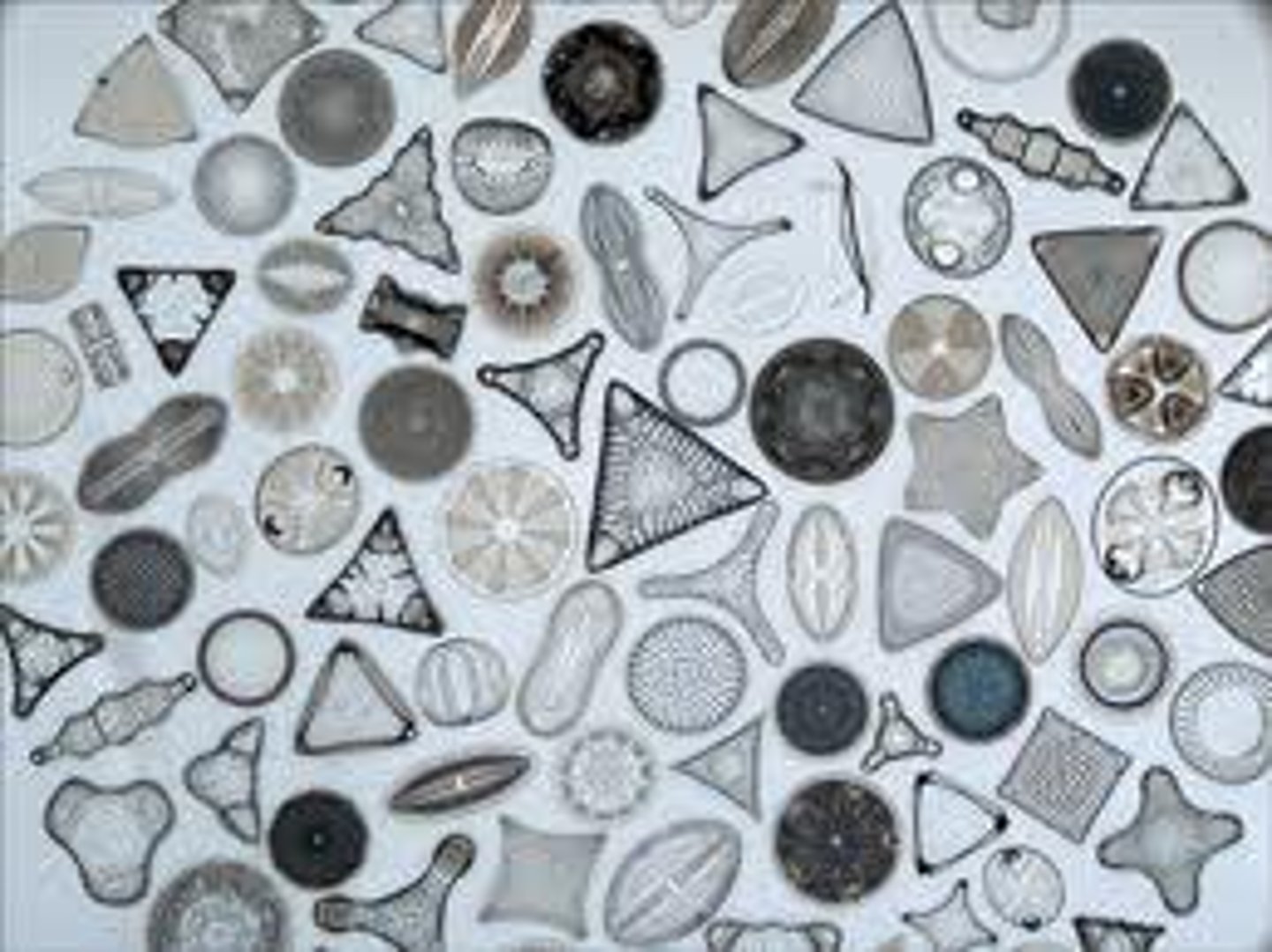
single cell algae DIATOM
entire life cycle as individual cell
- shell (test made of silica or glass)
unlike calcium carbonate (clam shells) that won't let sunlight in
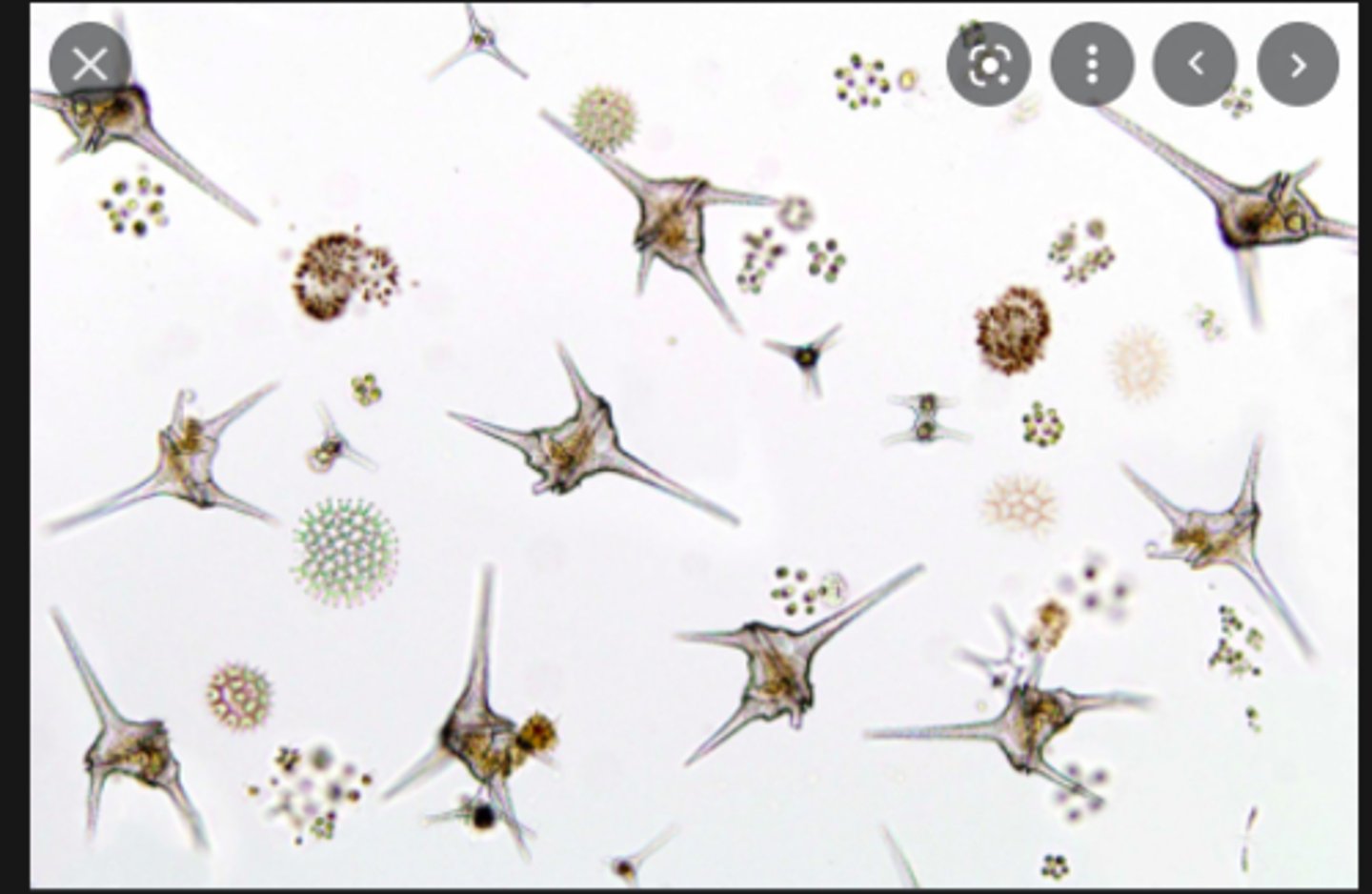
single cell algae CERATIUM
entire life cycle as individual cell
- shell (test made of silica or glass) with groove, flagella out of groove
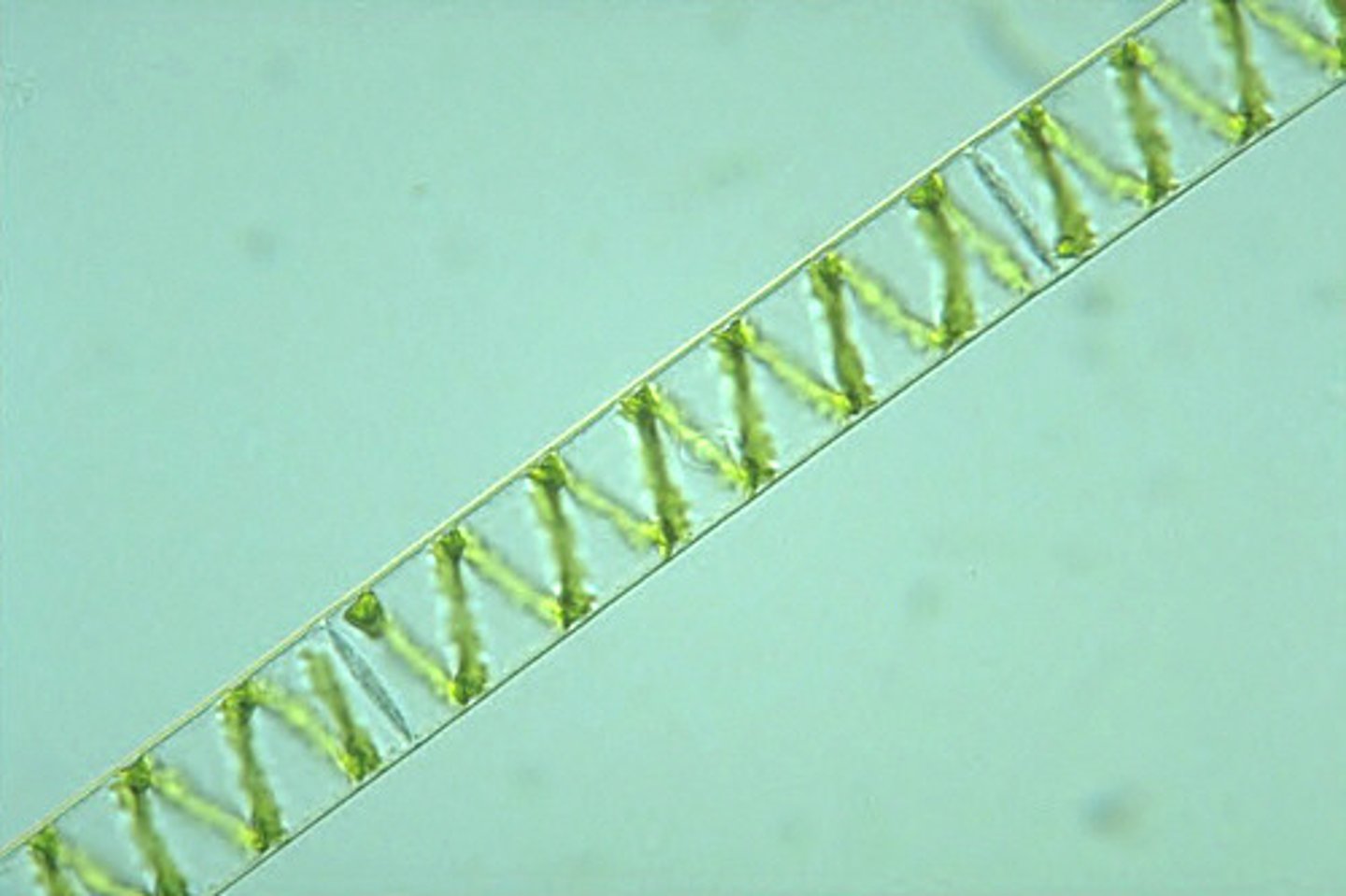
filamentous algae SPIROGYRA (internal spiral structure)
made of many cells all alike, in long thread
slimey green in tide pools and stream beds
MOVE BY TWISTING BENDING STRAIGHTENING INDIVIDUAL FILAMENTS
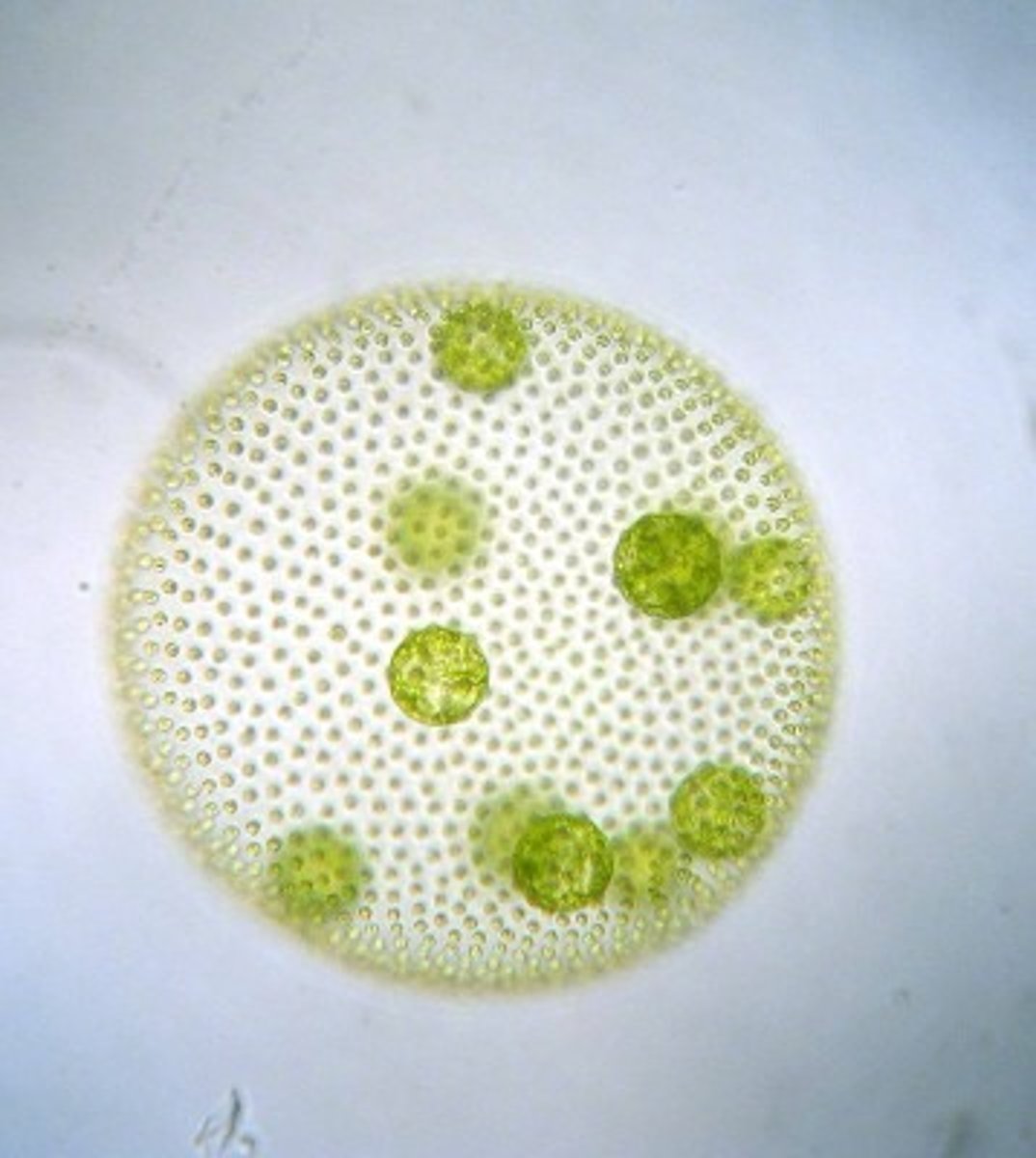
colonial algae VOLVOX
sheets or hollow balls, some reproduce growing new small balls of cells inside larger balls
each cell of sphere has two or more flagella
pond water rotifer
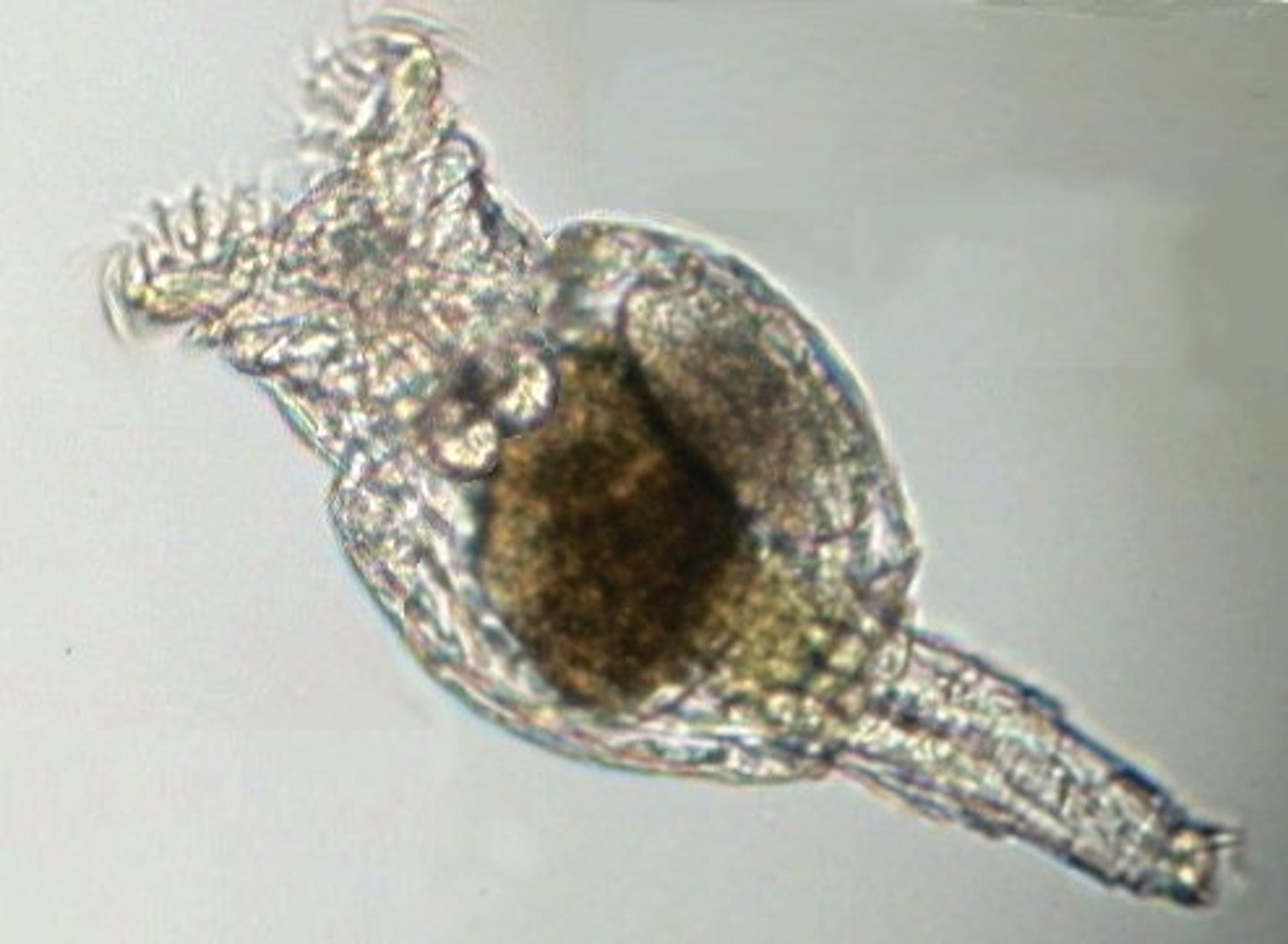
why you can't tell if pathogenic organism in water with naked eye
microorganisms including pathogens (virus bacteria protozoa) are microscopic
make sure sample size is big enough to find pathogens, or zoomed in enough to see virus
fungi important
recycle dead material, return nutrient
ALL FUNGI ARE EUKARYOTES
single celled yeast also very important
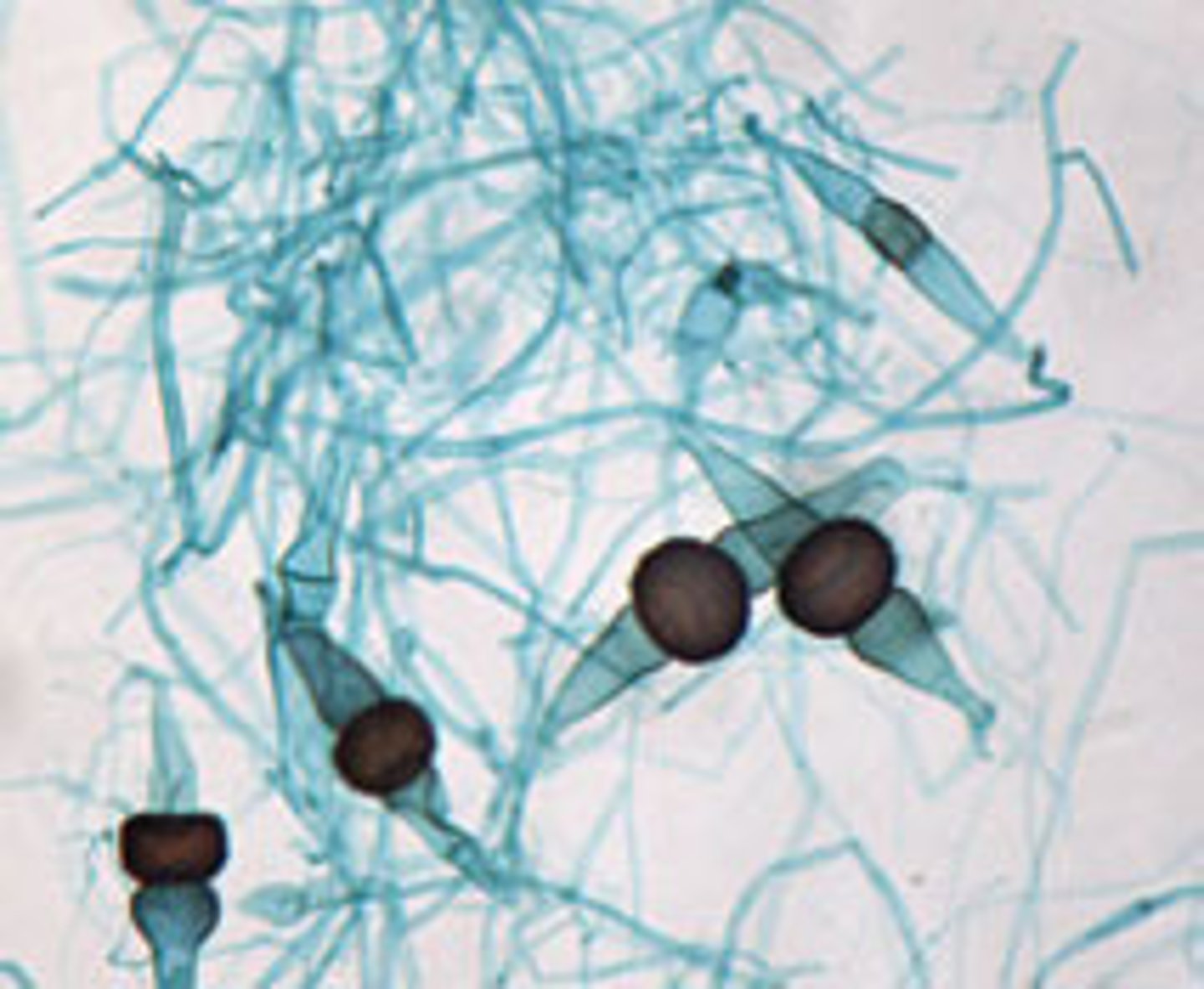
fungi rhizopus with zygospores
+- mating type
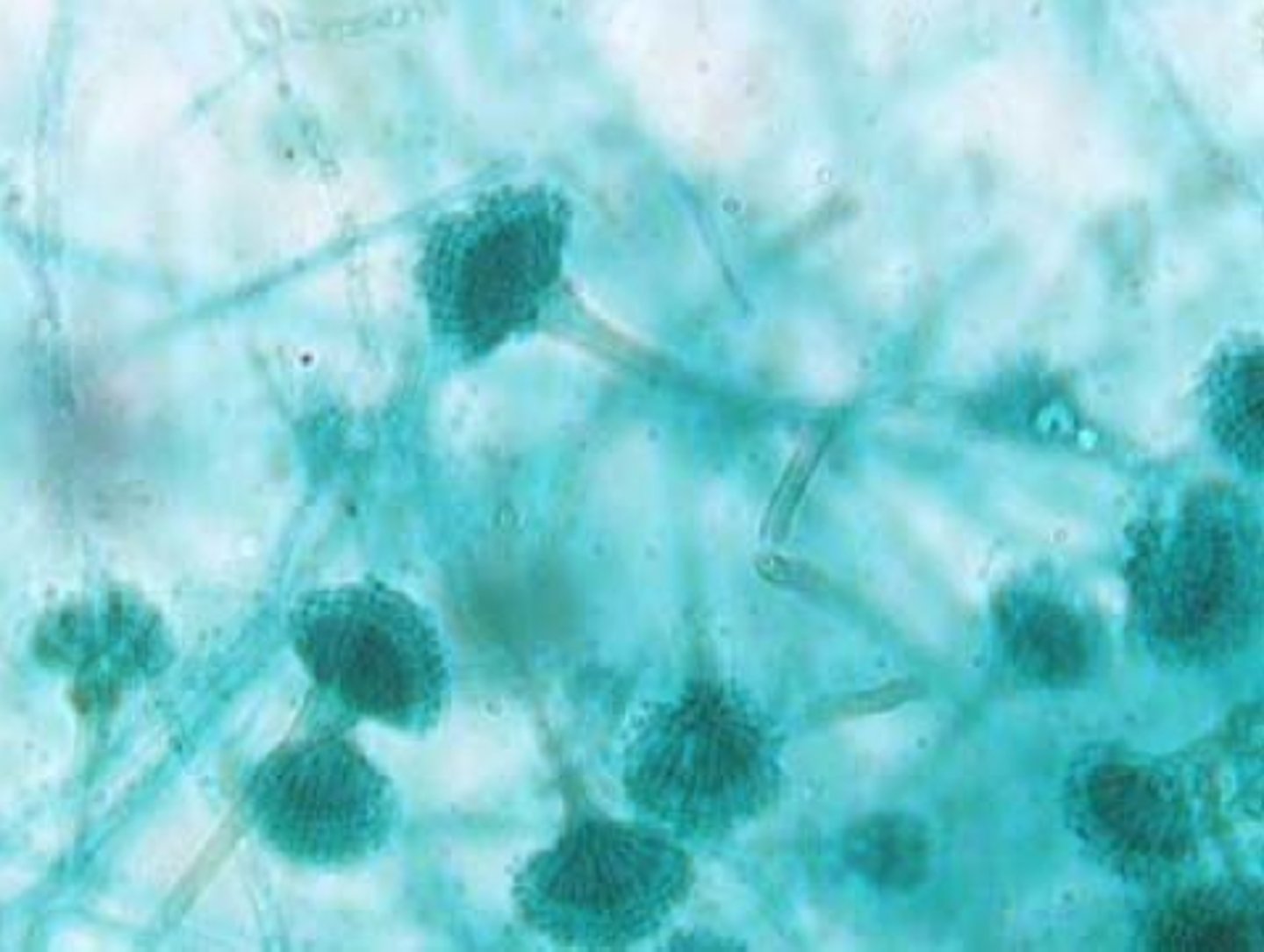
fungi aspergillus with conidia covered with spores
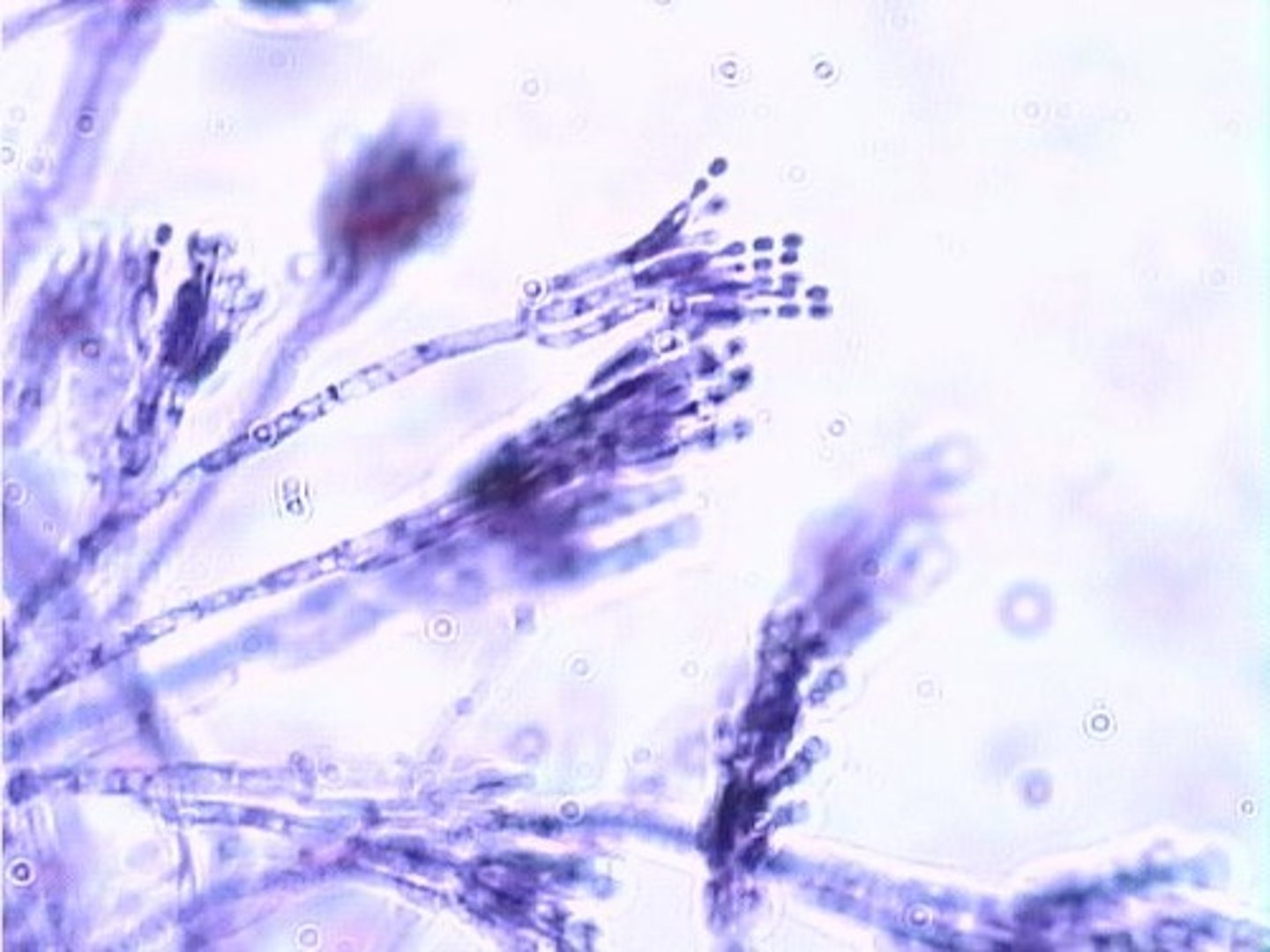
fungi penicillium with branched conidia
fungi candida albicans with hyphae and round yeast type cell
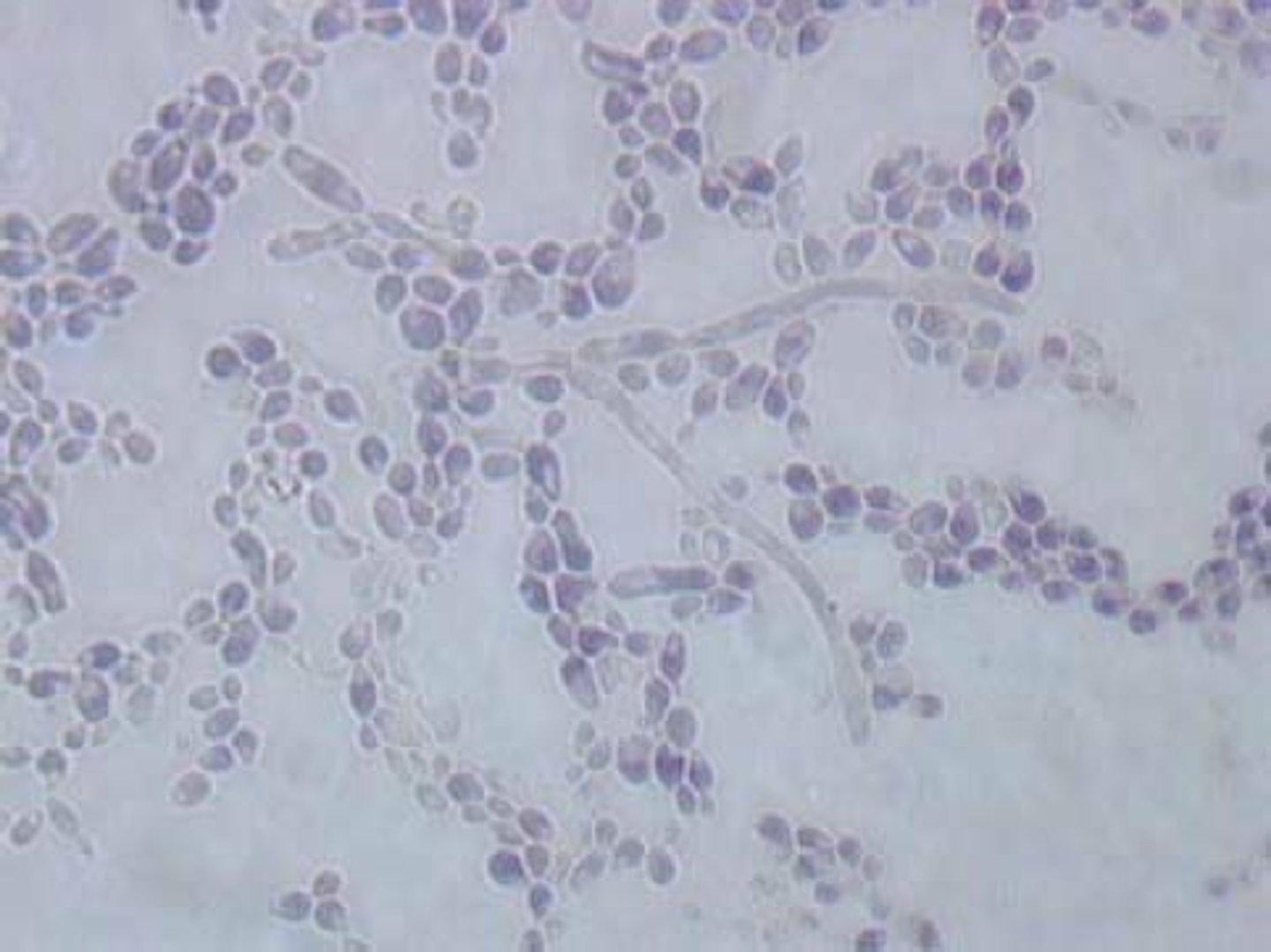
fungi saccharomyces with budding cells
single cell, budding cells are daughter cells
no sexual reproduction, no spores, o are single cell organisms
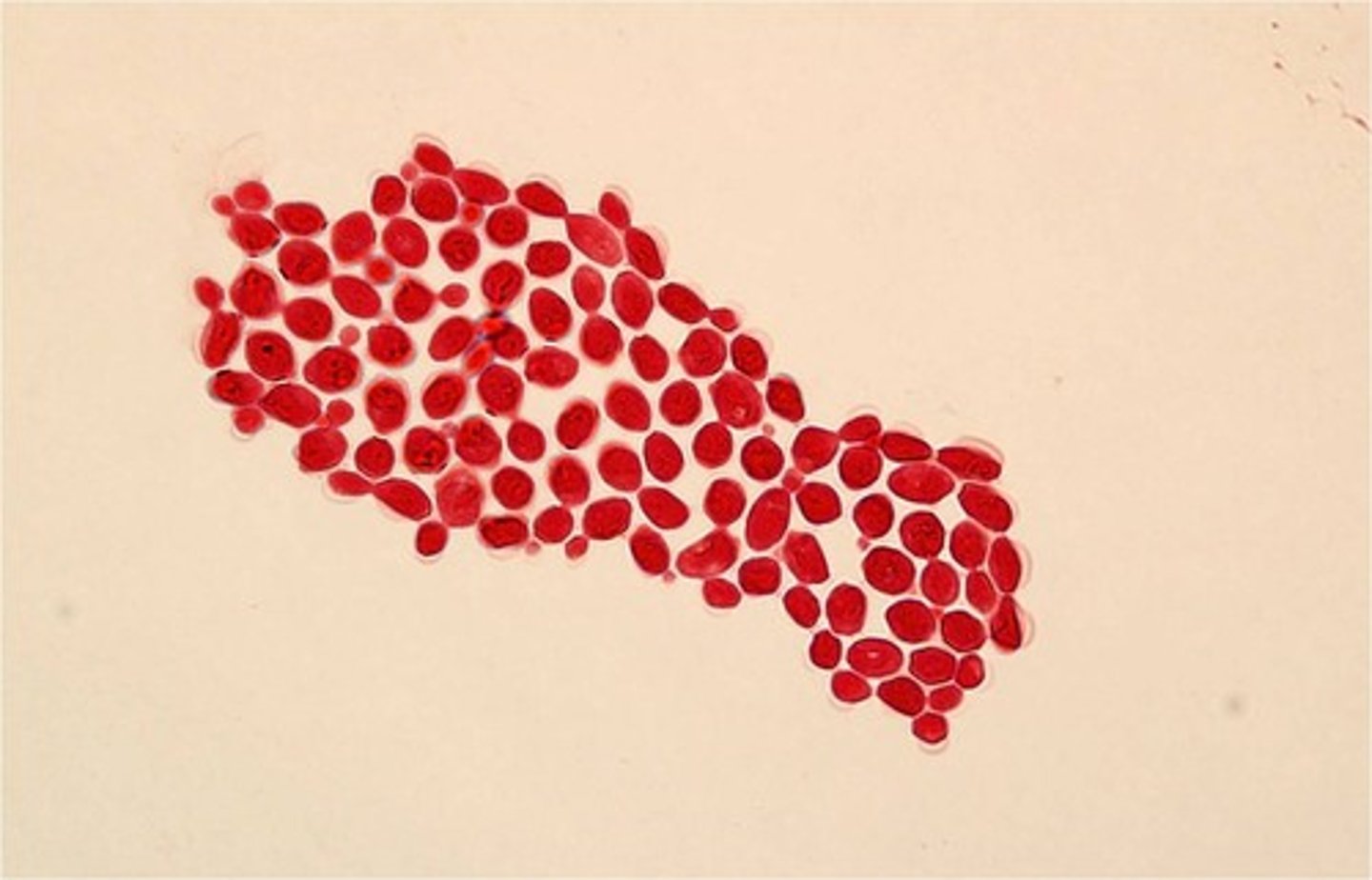
fungi schizosaccharomyces with ascus and spores inside
fungal spores come off easily why
- rapid reproduction
- large number of spores
- dispersal mechanisms
- adaptation in diverse environments
- increase chance of reproduction
pure culture = population of cells growing in absence of any other species... how to isolate colonies of pure cultures
t streak, 2 times
good isolation: flame loop properly between sections
overlap to get enough inoculum on streaks
if bacterium has capsules (sticky surface) can cause clumping, harder to do t streak isolation
gram positive has thick layer of peptidoglycan = stain doesn't wash out
gram negative is thin = washes out
gram stain steps
- smear
- primary stain CRYSTAL VIOLET 30-45sec
- wash WATER 2-3sec
- mordant IODINE to bind crystal violet 60sec
- wash WATER 2-3sec
- wash ALCOHOL 2-5sec
- wash WATER 2-3sec
- counterstain SAFRANIN 5MINS
- wash WATER until clear
always have control because it can be dyed too long or washed too long
mutations are changes in base sequence of DNA during replication... rate increased by
mutagen (can be chemical or physical like electromagnetic radiation)
mutagen electromagnetic radiation: ionizing and nonionizing radiation
ionizing radiation: xray gamma ray damage dna rna
short wavelength high energy dangerous --> penetrate cell structure
nonionizing radiation: UV LIGHT excite electrons form dimers distort DNA strucutre in transcription
can harm human cells and cause melanoma
UV exposure increase, bacterial growth decrease
uv disrupts bacteria replication
longer exposure more killed
sunscreen reduces damage from uv
uv is not good for sterilizing syringe in plastic wrap why
uv cannot penetrate plastic so cannot work unless it is exposed surface with no chemical or physical protection
ionizing radiation is used to treat fresh fruits and veggies, why uv not as good
ionizing penetrates more with shorter wavelength and higher energy. uv has poor penetration and can only kill microbes on surface, not as reliable
obligate aerobe M. luteus
only grow when oxygen present: only respiration not fermentation
obligate anaerobe C. sporogenes
only grow when oxygen not present: only fermentation
facultative anaerobe E.coli
can grow in both: use cellular respiration when oxygen is present (energy efficient), use fermentation when oxygen is not present (not as energy efficient)
highly adaptable, requires complex regulation and multiple metabolic pathways, energy costly
microorganisms (microscopic organism like bacteria, fungi, algae) need nutrients and proper environment to grow... and use
nutrient agar
growth forms colony of identical cells
helps find PURE CULTURE = isolated and uniform in color
incubate to make sure there is no contamination
bacterial growth curve 4 stages
- lag = metabolically active but not dividing = LOW OD
- log = exponential growth (ideal for experiments) = INC OD
- stationary = cell division slows and is appx equal to death rate = stationary OD
- death = dying cells exceed number of new cells
record pattern and growth using spectrophotometer
measures amount of light absorbed
turbidity = cloudiness
emits light at specific wavelength and OPTICAL DENSITY OD determined by how much light is blocked
spectrophotometer trasmittance vs absorbance
transmittance = amount of light passes sample
absorbance = amount of light blocked
WE USE ABSORBANCE SCALE
measured on LOG SCALE
LOG GROWTH straight line on semi log graph paper
generation time population to double: double OD, find time, time in btwn