Cholinergic Drugs
 Call Kai
 Learn
Learn Practice Test
 Spaced Repetition
 Match
Match Flashcards
 Knowt Play
1/23

There's no tags or description
Looks like no tags are added yet.
Name | Mastery | Learn | Test | Matching | Spaced | Call with Kai | Chat |
|---|
No analytics yet
Send a link to your students to track their progress
24 Terms
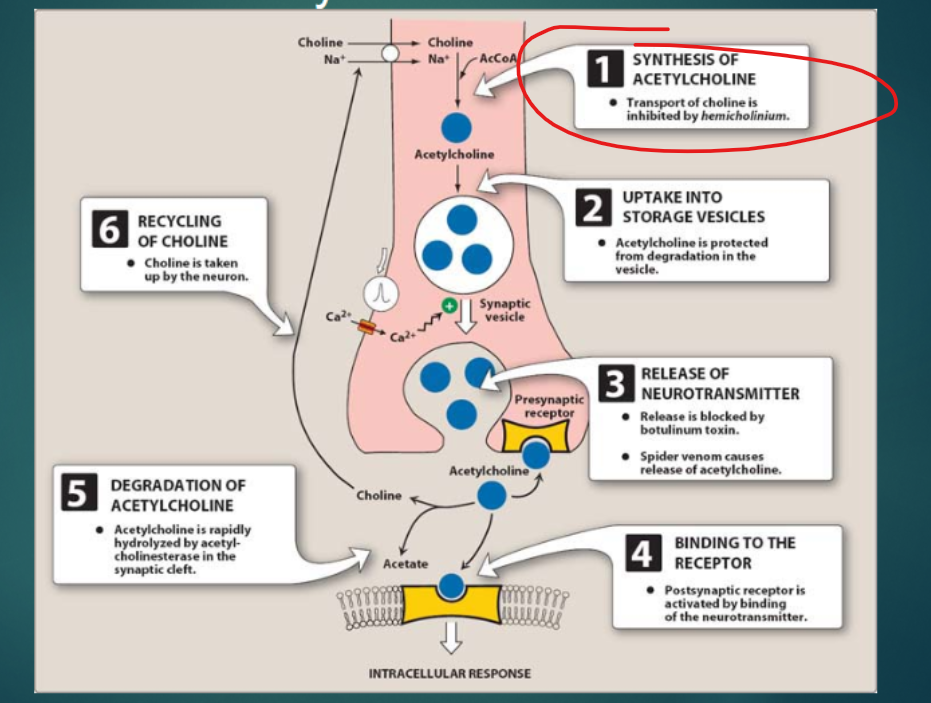
Describe the Synthesis, release, & degradation of acetylcholine
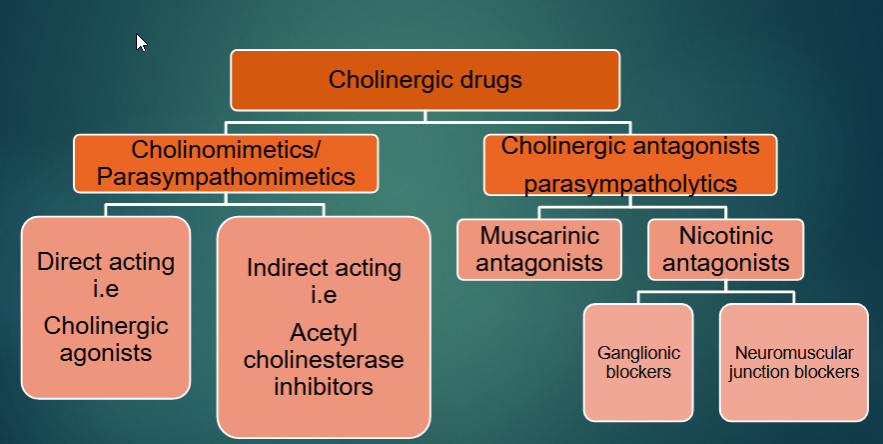
List out the classes of Cholinergic Drugs


Describe Bethanechol
AKA?
Clinical Uses?
MOA?
Bethanechol
AKA: (Duvoid)
Clinical Uses:
Disorders associated w/ decreased parasympathetic tone
Postoperative & postpartum:
urinary retention
Bladder inadequate emptying
abdominal distension
GI tract atony or paresis
MOA:
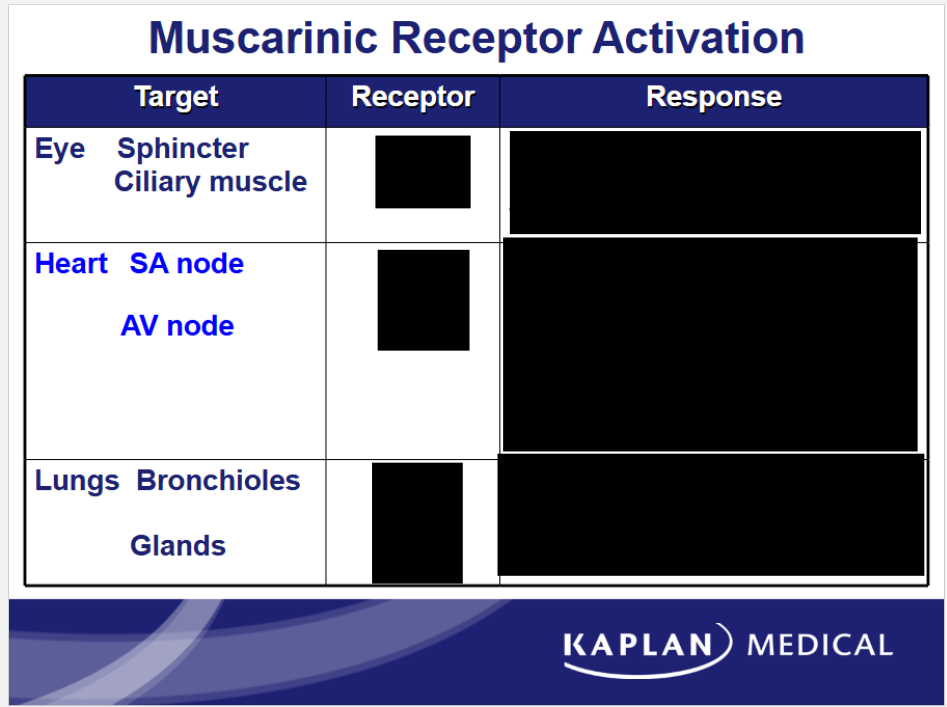
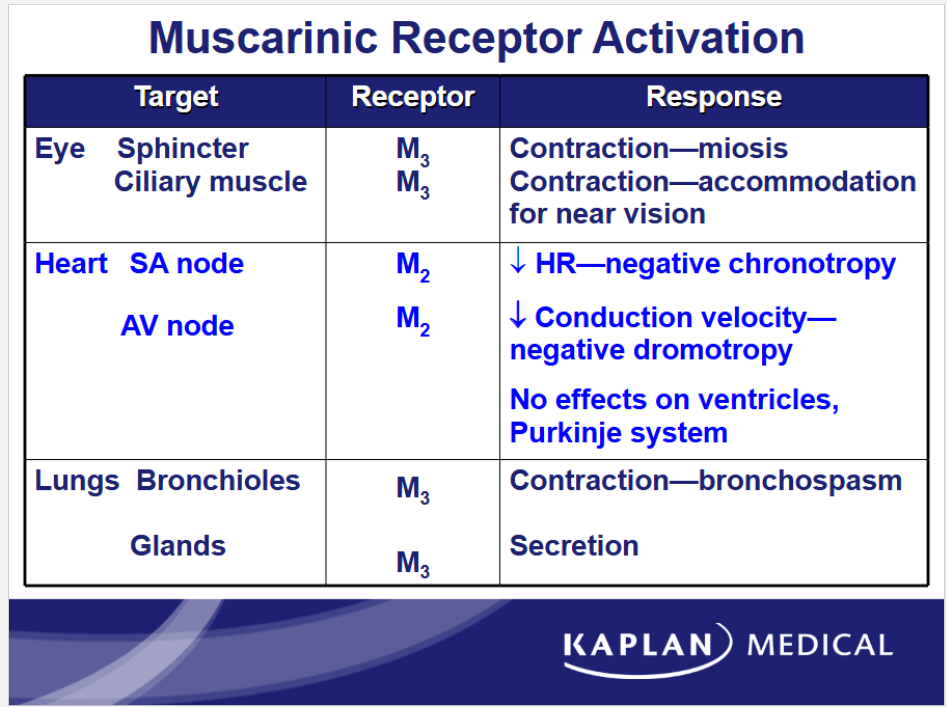
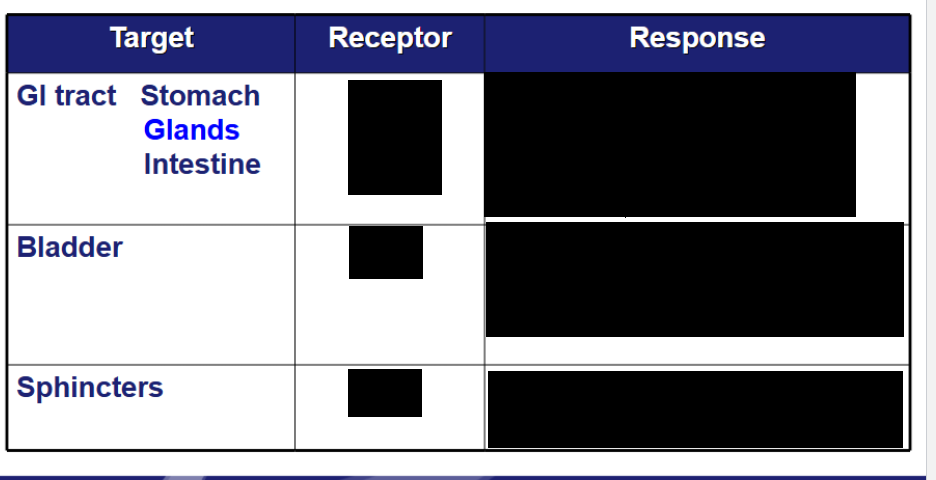
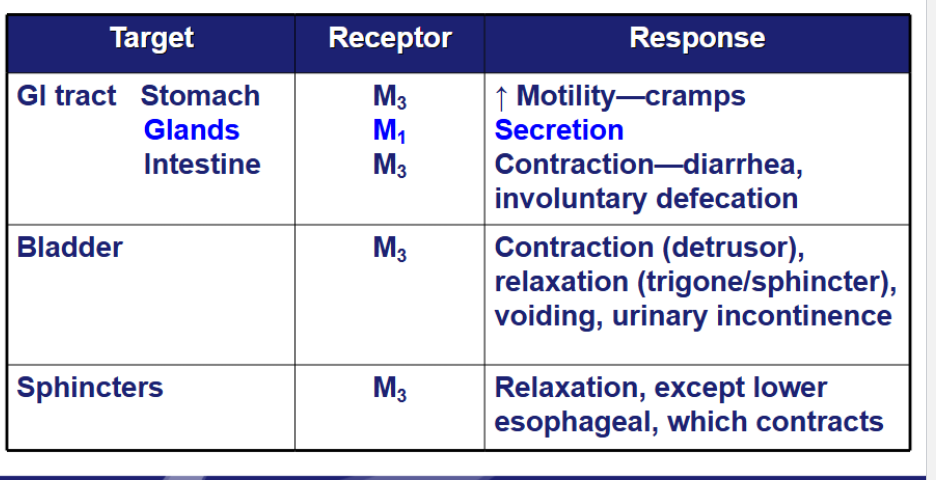
Acts on muscarinic receptors
contract detrusor muscle
increase GI motility
Describe PILOCARPINE
AKA?
Clinical Use
MOA?
AKA:
OCUSERT
PILOCAR
Clinical Uses:
reduce intraocular pressure (IOP) in open angle glaucoma
treat dry mouth (xerostomia)
MOA
IOP Reduction:
M3 -> Contracts Sphincter -> Reduces Angle Block -> Improves drainage of aqueous humor.
Xerostomia
M3 Receptors on Salivary Gland
NOTE: Topical
List the Muscarinic agonists: Side effects
Diarrhea
Diaphoresis
Miosis
Nausea
Salivation
Urinary urgency
CNS Disturbances
w/ drugs that crosses BBB (Pilocarpine)
Describe ACh Esterases
What is it?
What is Pseudo cholinesterase (plasma cholinesterase, Butyryl cholinesterase)
ACh Esterases
What is it?
Resides in synapse -> degrades AcH from Nerve Terminals
What is Pseudo cholinesterase (plasma cholinesterase, Butyryl cholinesterase)
Circulating, non-specific esterase
Removes circulating Ach
Describe AChE inhibitors
MOA
Potential sites of action
AChE inhibitors
MOA:
Inhibit AcHesterase -> prolongs activity of AcH
Potential sites of action:
@ all sites innervated by para
Eye, GI, urinary bladder
NMJ
All autonomic ganglia
List the Types of AChE inhibitors

List the CLINICAL USES OF AChE inhibitors
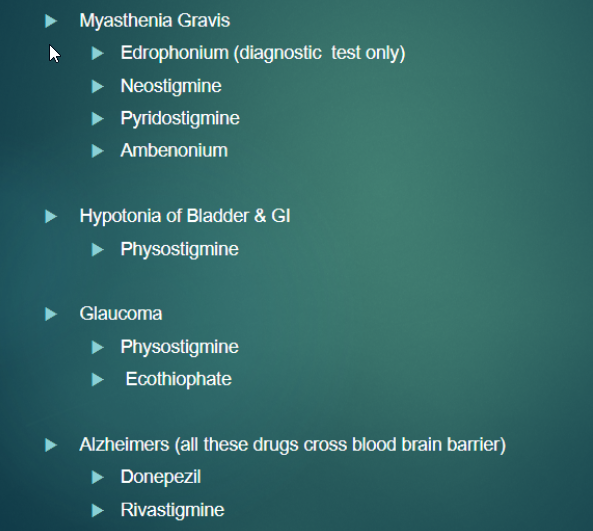
Describe NEOSTIGMINE
Clinical Use
Adverse Effects
NEOSTIGMINE
Clinical Use:
myasthenia gravis
Adverse effects:
Generalized cholinergic stimulation
BP Drop
Overdose: cholinergic crisis & muscle paralysis
NOTE: cannot enter the brain
Describe Physostigmine
MOA
Clinical Usage
Adverse Effects
MOA:
Potentiates Ach effects by preventing degradation.
Clinical Usage:
Antidote for overdoses of atropin + other anticholinergic drugs
Reduces IOP in Glaucoma
Similar mechanism as pilocarpine
Adverse effects
Diarrhea, nausea, sweating, miosis, urinary urgency
@ high Doses:
Convulsions
bradycardia
hypotension
NOTE: Tertiary amine that can cross the BBB
Describe Organophosphate poisoning
What causes it
Symptoms
MOA
Aging Effect
Treatment
What causes it?
insecticides and pesticides
Contains compounds that are Long acting acetylcholinesterase inhibitors
Act. Muscarinic/Nicotinic
Symptoms:
DUMBBELLS
Increased GI motility, emesis/vomiting,
MOA:
phosphorylate AchE -> Inactivation
@ serine hydroxyl groups
Aging Effect:
These can permanently inactivate AchE
Treatments:
AChE Regen:
Pyridostigmine: Regen of AChE
Reversing Poisoning
Post-exposure-High doses of muscarinic antagonist atropine
Injection of Pralidoxime (2-PAM)
Breaks Phosphate Bonds
List the MUSCARINIC RECEPTOR ANTAGONISTS

Describe Atropine
Clinical Uses
Side Effects
ATROPINE
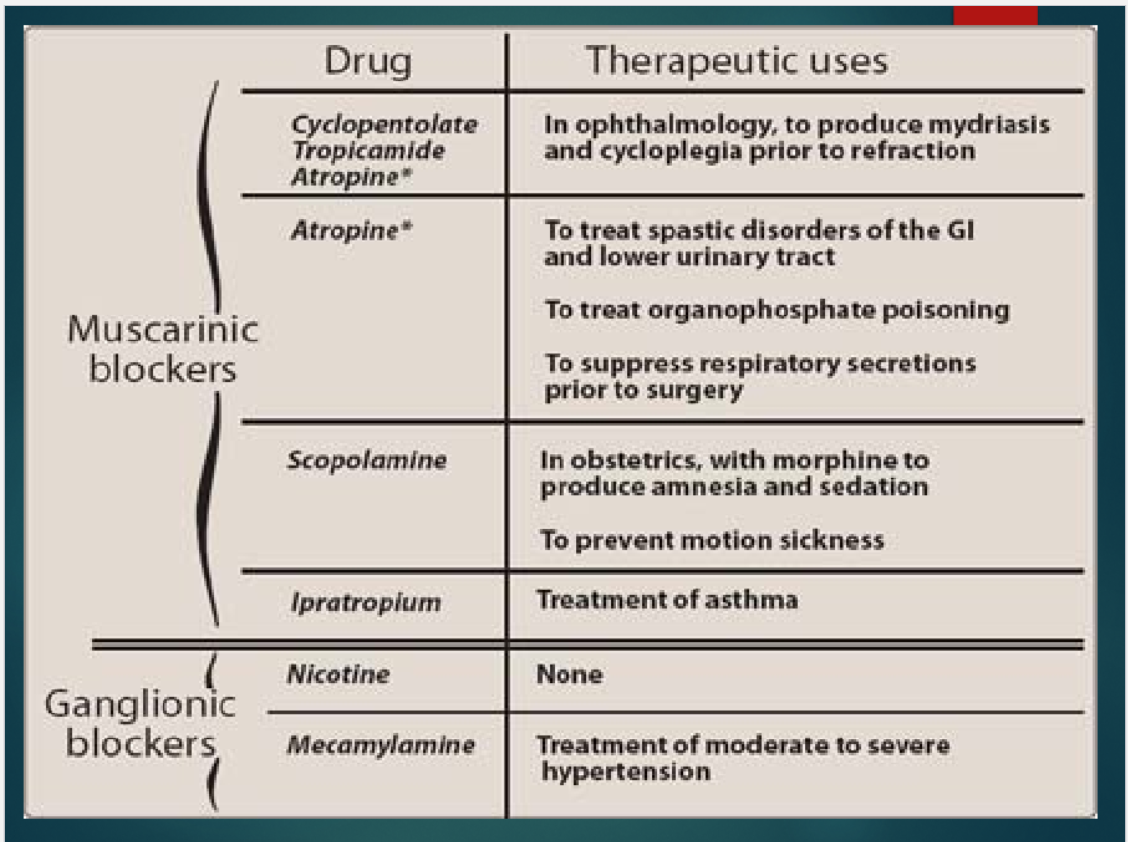
Class: Muscarinic Antagonist
Clinical Uses:
Reversal of severe bradycardia
produce mydriasis and cycloplegia (loss of accommodation) -> eye exam
Antispasmodic
suppress respiratory secretions prior to surgery
treat organophosphate (AChE inhibitors) insecticide poisoning
treat mushroom poisoning
Side effects
Dry mouth
Constipation
Dilated pupils (Mydriasis)
Blurred vision due to cycloplegia
Hot, dry flushed skin
Tachycardia
Fever
CNS disturbances
Describe SCOPOLAMINE
Clinical Use
Contrast to Atropine?
Side Effects
SCOPOLAMINE
Clinical uses:
Prophylactic for motion sickness (~ 4 hrs before travel)
Adjunct drug in anesthesia
sedation & amnesia
Opthalmic use
Contrast to atropine
crosses BBB much more
Side effects
Similar to Atropine
CNS effects more prominent
Describe IPRATROPIUM BROMIDE
AKA?
Clinical Uses
MOA
Compared to Atropine?
AKA: ATROVENT
Clinical uses:
Adjunct to albuterol
Treat Asthma and COPD
Can also be an alt. to albuterol
For pts. Who can’t take adrenergic agonists
MOA
Blocks M receptors -> reduces Para. induced bronchoconstriction
Compared to Atropine:
Minimal inhibitory effect on mucociliary clearance
Less CNS effects
Describe Tiotropium Bromide
AKA?
Clinical Uses?
AKA: SPIRIVA
Clinical Uses:
COPD and Asthma
Much more selective action at the bronchioles
Greater affinity for M3 vs M2
Describe TOLTERODINE
AKA?
Clinical Uses?
MOA?
Other drugs in the same category as Tolterodine
TOLTERODINE
AKA: DETROL
Clinical Uses: Treatment of overactive bladder
Reduces # of incontinent episodes
Increase # urine bladder can hold
Reduce # of urination
Decrease urgency
MOA
Blocks M3 on Detrusor Muscles
Blocks parasympathetic tone to the sphincter
Prevents leaks
Other drugs in the same category as Tolterodine
Solifenacin (Vesicare)
Darifenacin (Enablex)
Oxybutynin (Ditropan)
***Indicated for overactive bladder.***
List the contraindication for M3 Antagonists
M3 Antagonists: Contraindication
Slows Voiding
Not for PTs w/ BPH (Benign prostatic Hyperplasia)
Kidneys problem w/ urination
Glaucoma
Myasthenia Gravis
Excessive constipation
Describe GANGLIONIC BLOCKERS
MOA
Drugs in this Category
MOA:
Block the ganglionic (Nn) receptor
Drugs in this category
Very Few
Hexamethonium bromide, Trimethopham