Exam 1 CF Dual Credit
 Call Kai
 Learn
Learn Practice Test
 Spaced Repetition
 Match
Match Flashcards
 Knowt Play
1/95

There's no tags or description
Looks like no tags are added yet.
Name | Mastery | Learn | Test | Matching | Spaced | Call with Kai | Chat |
|---|
No analytics yet
Send a link to your students to track their progress
96 Terms
What are the 4 classes or groups of biomolecules?
Carbohydrates
Lipids
Proteins
Nucleic Acids
Monomers or building blocks of carbohydrates are ____.
Monosaccharides
(such as glucose)
Monomers or building blocks of lipids are ____.
Fatty Acids and Glycerol
Monomers or building blocks of proteins are ____.
Amino Acids
Monomers or building blocks of nucleic acids are ____.
Nucleotides
What 3 parts or subunits make up a nucleotide?
5-Carbon sugar
Phosphate Group
Nitrogenous Base
What 5-carbon sugars would you expect to find in a nucleotide?
Deoxyribose (in DNA)
OR
Ribose (in RNA and ATP)
Carbohydrates that are sugars (monosaccharides and disaccharides) often end in the suffix.
-ose
What nitrogenous bases would you expect to find in a nucleotide?
Any one of these:
Adenine (DNA, RNA, & ATP)
Guanine (DNA & RNA)
Cytosine (DNA & RNA)
Thymine (only DNA)
Uracil (only RNA)
___ make up polymers. They are like building blocks.
Monomers
Monomers join together to make up ___.
Polymers
Which group of biomolecules have this structure?
Carbohydrates

Carbohydrates can be classified into 3 groups based on size. What are they?
Monosaccharides (1 sugar big such as glucose)
Disaccharides (2 sugars big, such as sucrose)
Polysaccharides (many sugars big, such as starch or cellulose)
Identify this molecule.
What class of biomolecules does it belong?
Glucose
Carbohydrate
(simple sugar or monosaccharide)

How does this molecule function in cells?
Basic energy or fuel source
(This molecule is converted to ATP so the cell can do work)

1. Where in the cell is this molecule produced?
2. Where in the cell is this molecule converted to cellular energy or ATP?
1. Chloroplasts (plant cells)
2. Mitochondria (all cells)

1. What must be removed for two or monomers to join together to make a larger molecule (polymer)?
2. What is this called?
1. Water
2. Dehydration synthesis ("building larger by taking away water")
1. What must be added to a polymer to break it down into smaller pieces?
2. What is this called?
1. Water
2. Hydrolysis ("breaking by adding water"
How do carbohydrates function?
1. Primary energy source (glucose)
2. Structure (cellulose)
3. Short-term storage (starch, glycogen)
Identify this molecule.
Amino Acid

If you put many of these molecules together (by removing water), what larger molecule will they form?
Protein

Which group of biomolecules function in building tissues, structure maintenance, and repair?
Protein group
The "meat" you eat (beef, chicken, ham, etc) is actually ___ and therefore, which type of biomolecule?
Muscle; Protein
Proteins that are produced by white blood cells and circulate in your blood stream help to defend your body against foreign invaders. What type of biomolecule are antibodies?
Antibodies
This type of biomolecule is nonpolar; it does not dissolve in water.
Lipid
This lipid has both a polar and non-polar region. It's non-polar regions face the aqueous cytoplasm and extracellular fluid making it an excellent boundary for the cell. This molecule is known as a(n) ___.
Phospholipid
Long-term, back-up energy storage and insulation are the functions of which biomolecule?
Lipids
List 3 types of lipids.
1. Triglycerides (true fats) such as fats, oils, & waxes
2. Phospholipids
3. Steroids
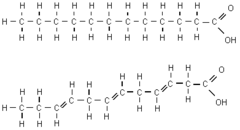
Identify these 2 molecules
Top = Saturated Fatty Acid
Bottom = Unsaturated Fatty Acid

Which of these 2 molecules tends to be liquid at room temperature like a vegetable oil?
Bottom one - unsaturated fatty acid
(*Note - double bonds between some of the carbon atoms)
Identify this molecule.
Lipid
(triglyceride= glycerol +fatty acids)

1. Identify
2. Where woud you expect to find this?
1. Phospholipid bilayer
2. Cell membrane

1. Identify this molecule.
2. Where would you expect to find it?
1. Phospholipid
2. Cell membrane (or other membranes) to form bilayer

The molecules surrounded by blue circles are removed when this lipid is formed. The process is called_________ ____________.
Dehydration synthesis, a building reaction

Which molecule is RNA?
The one on the left
(single sided)

How do you know the molecule on the right is DNA?
1. Double helix
2. Thymine is a nucleotide

1. What is the sugar in the molecule on the left?
2. What is the sugar in the molecule on the right?
1. Ribose
2. Deoxyribose

These 3 molecules make up a(n) ___ which is a monomer of ___.
nucleotide
nucleic acid

Which nucleic acid functions as the Genetic Code which stores hereditary info?
DNA
Which nucleic acid functions as the instructions for synthesizing proteins?
DNA
A change in the shape of a protein (such as an enzyme) that can be caused by changes in temperature or pH (among other things).
Denature disrupts secondary and tertiary structure, NOT primary structure (peptide bonds)
to make or produce
Synthesis
enzyme
-ase
Polypeptide
Another name for a protein
Peptide bond
covalent bond formed between amino acids to form a protein
Calories per gram for carbs and proteins
4
Calories per gram for lipids
9
Cellulose
A substance (made of sugars) that is common in the cell walls of many organisms, humans cannot digest, lack enzymes
Base pairing practice: 5' ATCG 3' of DNA
3' TAGC 5'
Enzymes
Proteins that speed up chemical reactions by lowering activation energy. Recognize a single stereoisomer (sucrose but not sucralose)
Isomers
Two different molecules that have the same chemical formula (fructose, galactose, glucose) C6H12O6
Glycogen
An extensively branched glucose storage polysaccharide found in the liver and muscle of animals; the animal equivalent of starch.
quaternary structure
The fourth level of protein structure; the shape resulting from the association of two or more polypeptide subunits.
Hydrogenation
The process of converting unsaturated fats to saturated fats by adding hydrogen
Biomolecule elements
Carbs: CHO, Lipids: CHO, Proteins: CHON, Nucleic Acids: CHONP
cell
the smallest unit of life
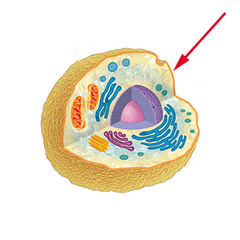
unicellular
made of only one cell

multicellular
made of two or more cells

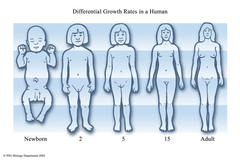
growth
process of getting bigger in size
reproduction
making new organisms

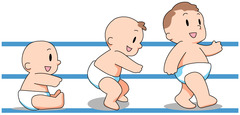
development
changes that occur in an organism's lifetime;
cells become specialized into different cell types
response
a reaction to a stimulus

homeostasis
an organism's ability to maintain steady internal conditions when outside conditions change. Shivering in cold temps
adaptation
changes in a species of organisms over time in response to their environment

energy use
plants require energy from the sun, animals require energy from their food
Hypothesis
A testable prediction
Control
In an experiment, the standard that is used for comparison. Does not change
independent variable
The experimental factor that is manipulated or changed. Graphed on X axis.
dependent variable
The measurable effect, outcome, or response from and experiment. Graphed on Y axis.
Theory
well-tested, highly supported explanation that unifies a broad range of observations
inductive reasoning
specific cases to general principles
deductive reasoning
general principles to specific cases
homologous structures
Structures in different species that are similar because of common ancestry. Bat wings, porpoise fins, human hand.....
natural selection
A process in which individuals that have certain inherited traits tend to survive and reproduce at higher rates than other individuals because of those traits.
Archaea
Domain of unicellular prokaryotes that have cell walls that do not contain peptidoglycan, found in extreme environments, prokaryotes (no nucleus)
Fungi Kingdom Characteristics
Kingdom composed of heterotrophs; many obtain energy and nutrients from dead organic matter, has cell walls, multicellular (except yeast)
Protista Kingdom
Single cell, multi cell, autotrophs, heterotrophs, microscopic organisms, eukaryotic cells, cell wall for some
Animalia Kingdom
multicellular, eukaryotic, heterotrophs, no cell wall
Viruses are not considered living organisms because they
cannot reproduce on their own, need host cell
Matter
Anything that has mass and takes up space, composed of atoms
Molecules
Groups of two or more atoms held together by chemical bonds
pH
A range of values used to express the concentration of hydrogen ions in a solution, a negative logarithm
Oxidation
loss of electrons
reduction
gain of electrons
covalent bond
A chemical bond that involves sharing a pair of electrons between atoms in a molecule
ionic bond
Formed when one or more electrons are transferred from one atom to another
hydrophobic interactions
a type of weak chemical interaction caused when molecules that do not mix with water
Hydrophilic
Attracted to water
pH scale
A range of values 1-14 used to express the concentration of hydrogen ions in a solution, 10x concentration difference
Major elements for life
CHON
capillary action
the combined force of attraction among water molecules and with the molecules of surrounding materials (cohesion and adhesion to walls)
Acid
1-6.9 on pH scale
Base
7.1-14 on pH scale
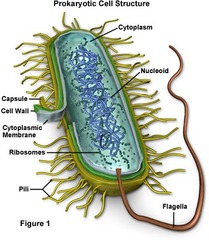
Is this a prokaryotic or eukaryotic cell?
Prokaryotic cell
Is this a prokaryotic or eukaryotic cell?
Eukaryotic Cell, has compartmentalization which allows for organelles

Is a virus alive?
No, it cannot reproduce, growth and development, not made of cells so cannot be killed