Lecture 23. GI Infections 4
 Call Kai
 Learn
Learn Practice Test
 Spaced Repetition
 Match
Match Flashcards
 Knowt Play
1/34

There's no tags or description
Looks like no tags are added yet.
Name | Mastery | Learn | Test | Matching | Spaced | Call with Kai | Chat |
|---|
No analytics yet
Send a link to your students to track their progress
35 Terms
Etiologic agent of porcine proliferative enteropathy
Lawsonia intracellularis, an intracellular gram-negative rod.
Cultivation of Lawsonia intracellularis is only in...
Only in cell culture.
Transmission of porcine proliferative enteropathy
Fecal-oral transmission.
Pathogenesis of porcine proliferative enteropathy
Causes mild, self-limiting hyperplasia and inflammation of jejunum, ileum, cecum, and colon.
Severe forms of porcine proliferative enteropathy lead to
Proliferative ileitis, proliferative hemorrhagic enteropathy, fibrinous casts, and blood clots.
Clinical signs of hemorrhagic form of porcine proliferative enteropathy
Melena, inappetence, and sudden death.
Clinical signs of non-hemorrhagic form of porcine proliferative enteropathy
Sudden reddish diarrhea and possibly chronic necrotic enteritis.
Confirmatory diagnosis for Lawsonia intracellularis
Identification of organism in the apical cytoplasm of proliferative enterocytes.
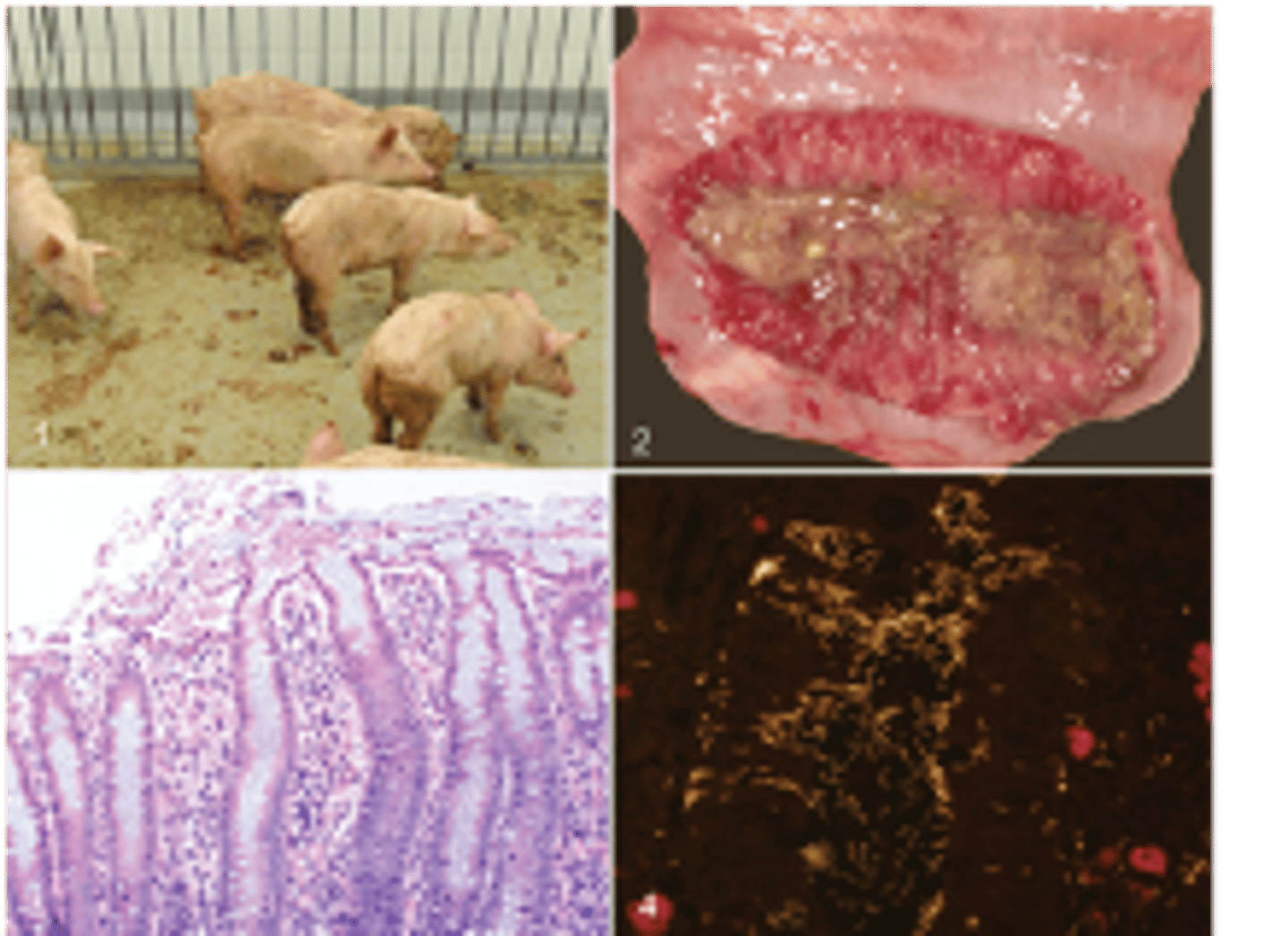
porcine proliferative enteropathy
this disease state is likely associated with what condition
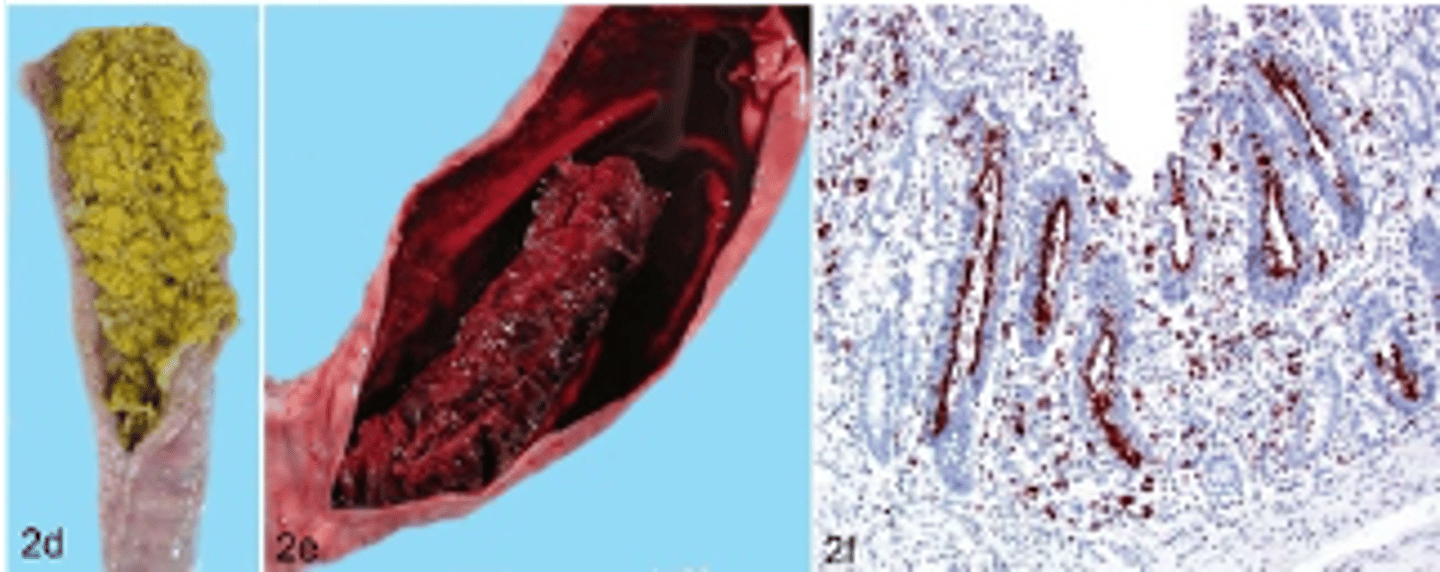
Necropsy findings for porcine proliferative enteropathy
Thickened and corrugated ileal mucosa with blood clots.
Usefulness of PCR in diagnosing Lawsonia intracellularis
Often of limited diagnostic value.
Treatment for porcine proliferative enteropathy
Antimicrobials in feed or administered parenterally.
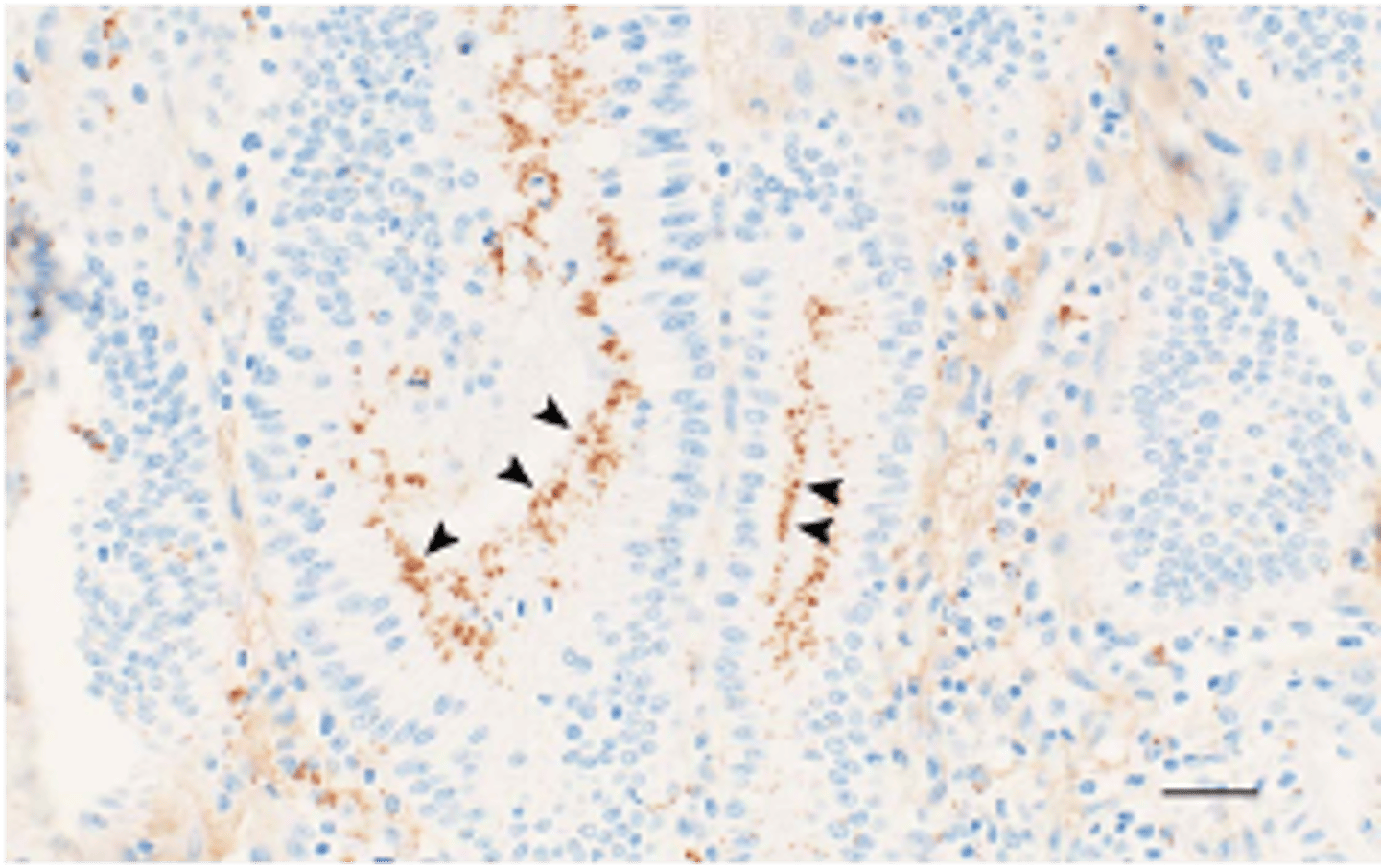
Lawsonia intracellularis
what is revealed in this tissue sample from the GIT
Prevention of porcine proliferative enteropathy
Modified live vaccine (MLV) and preventing introduction of carriers.
Etiologic agent of equine proliferative enteropathy
Lawsonia intracellularis.
Age group of horses affected by Lawsonia intracellularis
4-6-month-old foals.
Predisposing factors for equine proliferative enteropathy
Stress and secondary infections.
Morbidity and mortality of equine proliferative enteropathy
Low morbidity and mortality.
Clinical signs of equine proliferative enteropathy
Rapid weight loss, colic, subcutaneous edema, and protein-losing enteropathy.
Treatment for equine proliferative enteropathy
1. Oxytetracycline + doxycycline
2. mild cases treated with oral doxycycline.
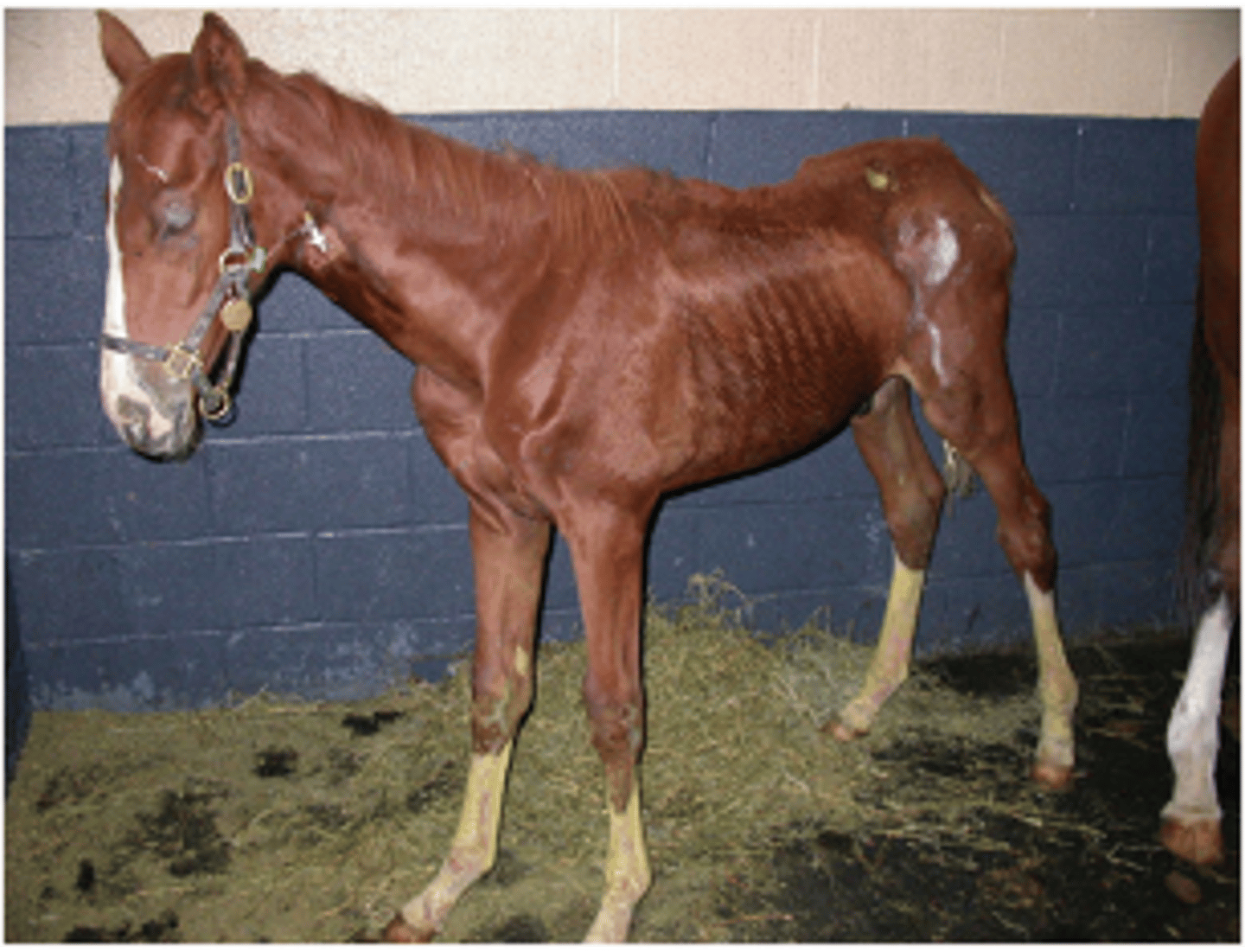
equine proliferative enteropathy
this horse is likely suffering from what disease
Most common etiologic agent of swine dysentery
Brachyspira hyodysenteriae.
Other species of Brachyspira associated with swine dysentery
B. hampsonii and B. suanatina.
Key culture characteristic of Brachyspira species
Strong beta-hemolysis under anaerobic conditions.
Transmission of swine dysentery
Fecal-oral ingestion.
Location of Brachyspira multiplication in swine
In the large intestine.
Pathogenesis of swine dysentery
Muco-hemorrhagic diarrheal disease of the large intestine
How does swine dysentery decrease mucosal absorption leading to diarrhea
1. Degenerate and inflame superficial mucosa
2. Hypersecretion of mucus
3. Multifocal hemorrhage
Clinical signs associated with swine dysentery
1. Anorexia, soft feces (first)
2. rapidly progressing muco hemorrhagic diarrhea with mucus and blood
3. eventual weight loss.
Mortality rate of swine dysentery if untreated
Up to 50%.
Diagnosis of swine dysentery
1. Clinical signs, postmortem findings
2. histologic lesions in the large intestine
3. anaerobic culture of strongly beta-hemolytic Brachyspira.
Reason culture is preferred over PCR in diagnosing swine dysentery
PCR is less specific; culture provides more definitive identification.
Treatment for swine dysentery
Antimicrobials combined with minimum inhibitory concentration (MIC) testing due to AMR resistance
Prevention of swine dysentery
Control of rodent and waterfowl carriers.
swine dysentery
the disease state in these images points to what disease