Overview of the Skeletal System and Its Functions
 Call Kai
 Learn
Learn Practice Test
 Spaced Repetition
 Match
Match Flashcards
 Knowt Play
1/126

There's no tags or description
Looks like no tags are added yet.
Name | Mastery | Learn | Test | Matching | Spaced | Call with Kai | Chat |
|---|
No analytics yet
Send a link to your students to track their progress
127 Terms
Skeletal System
Consists of organs called bones.
Axial Skeleton
Includes skull, spine, rib cage.
Appendicular Skeleton
Comprises bones of the arms, legs, feet, shoulders and pelvic bones
Bone Composition
Over 20% water, two-third is minerals, and one-third is organic matter.
Main Bone Minerals
Calcium, phosphorus, and magnesium.
Collagen
Protein fiber forming bone matrix.
Bone Marrow
Fills openings in spongy bone.
Yellow Marrow
Fat tissue inside bone shaft.
Red Bone Marrow
Site of red blood cell production.
Periosteum
Tough membrane covering bone surfaces.
Haversian Canals
Network for blood vessels and nerves.
Diaphysis
Long part of the bone shaft.
Epiphysis
Ends of the bones.
Metaphysis
Link between diaphysis and epiphysis.
Bone Growth
Cartilage converts to bone during growth.
Number of Bones at Birth
270 bones, reduces to 206 in adulthood.
Smallest Bones
Malleus, incus, and stapes in the ear.
Functions of Skeletal System
Supports protects, and forms blood cells, provides a point for muscle attachment, gives the body's shape.
Spinal Column
Stack of vertebrae supporting the head, keeps trunk erect, and protects the spinal cord.
How many cervical vertebrae are there?
7
How many thoracic vertebrae are there?
12
How many lumbar vertebrae are there?
5
How many sacral vertebrae are there?
5 fused bones
What is the common name for coccygeal vertebrae?
Tailbone
How many pairs of ribs are in the rib cage?
12 pairs
What do the top 10 pairs of ribs connect to?
The sternum via cartilage
What are the last two pairs of ribs called?
Floating ribs
What are true ribs?
The first seven pairs that are directly attached to both the spine and sternum
What are false ribs?
The last five pairs that are attached to the cartilage of the rib above or have no anterior attachment
What structures are included in the thoracic area?
Clavicle (anteriorly) and scapula (posteriorly)
What is the xiphoid process?
A small bony structure at the sternum's inferior end
Long Bones
Hollow cylinders determining height and strength.
What are the long bones of the leg?
Tibia and fibula
What is the bone located at the knee?
Patella
What are the long bones of the upper extremities?
Humerus, radius, and ulna
Which bone is on the thumb side of the forearm?
Radius
Which bone is on the little finger side of the forearm?
Ulna
What is the longest bone in the human body?
Femur
What does the femur connect?
Hip joint to knee
Coxae
Two large bones which are joined posteriorly with the sacrum.
Ilium
Top blade-shaped portion of the coxae.
Pubis
Anterior lower portion of the pelvic girdle.
Ischium
Posterior lower portion of the pelvic girdle.
Symphysis Pubis
Point of attachment of right and left pubis.
Acetabulum
Socket where femur head fits in hip.
Articulation (joint) definition
Connection between two or more bony parts.
Ligaments
Strong connective tissue holding joints together.
Diarthrosis (Synovial Joints)
Freely movable joints like knee or elbow.
Amphiarthrosis (Cartilaginous Joint)
Partially movable joints like rib-spine connection.
Synarthrosis (Fibrous Joints)
Immovable joints like cranial sutures.
Articular Cartilage
Smooth surface providing joint movement ease.
Bursa
Saclike capsule cushioning joints.
Synovial Fluid
Lubricates synovial cavity for joint movement.
Greenstick Fracture
(the bone doesn't break completely) are common in children's bones.
simple fracture (closed)
Complete break without skin involvement, often caused by injuries or conditions like osteoporosis

compound fracture (open)
Bone protrudes through the skin, risk of infection. Happens during sports

Impacted Fracture
Bone ends jammed into each other.
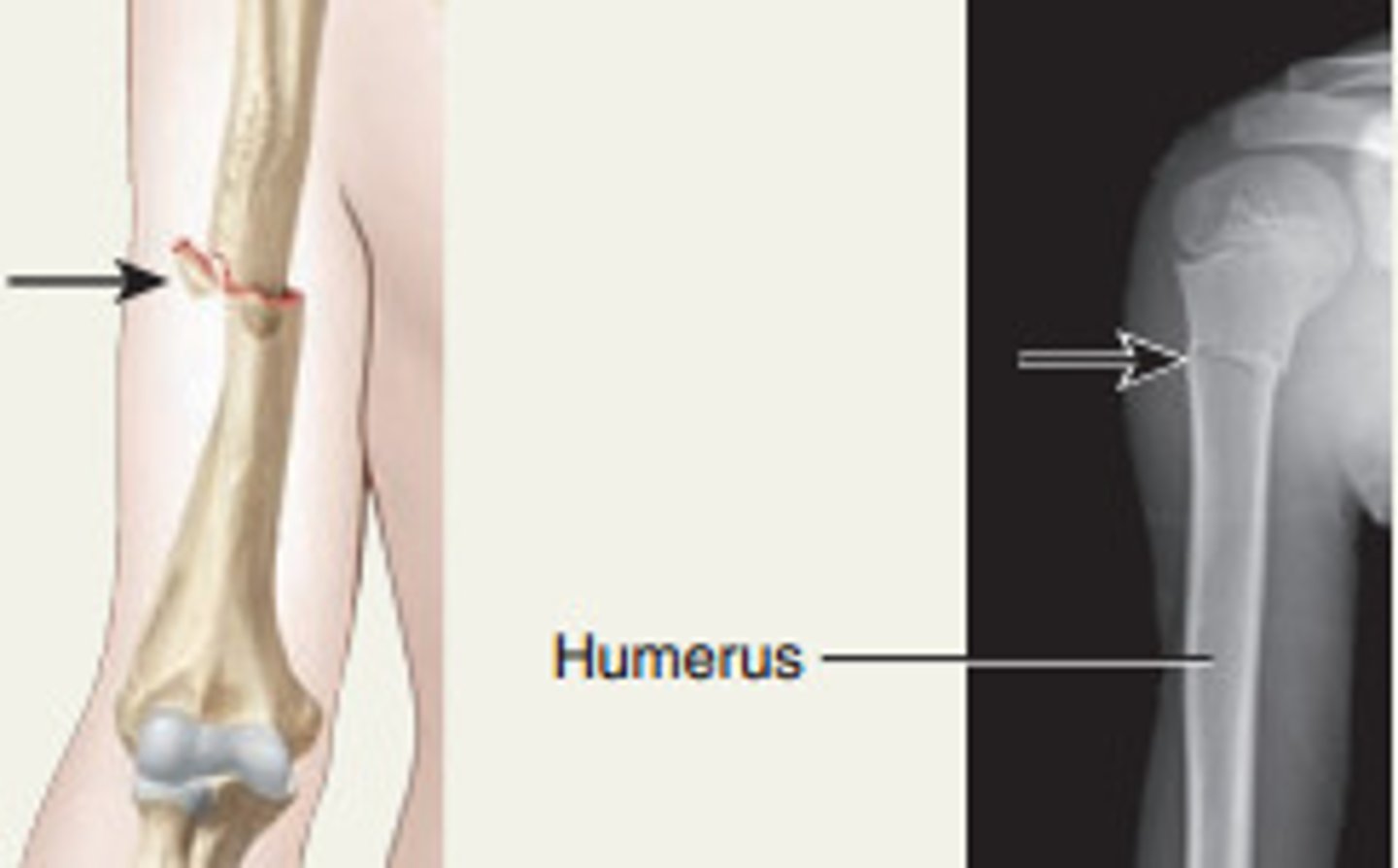
Comminuted Fracture
Multiple fracture lines from high-impact trauma.
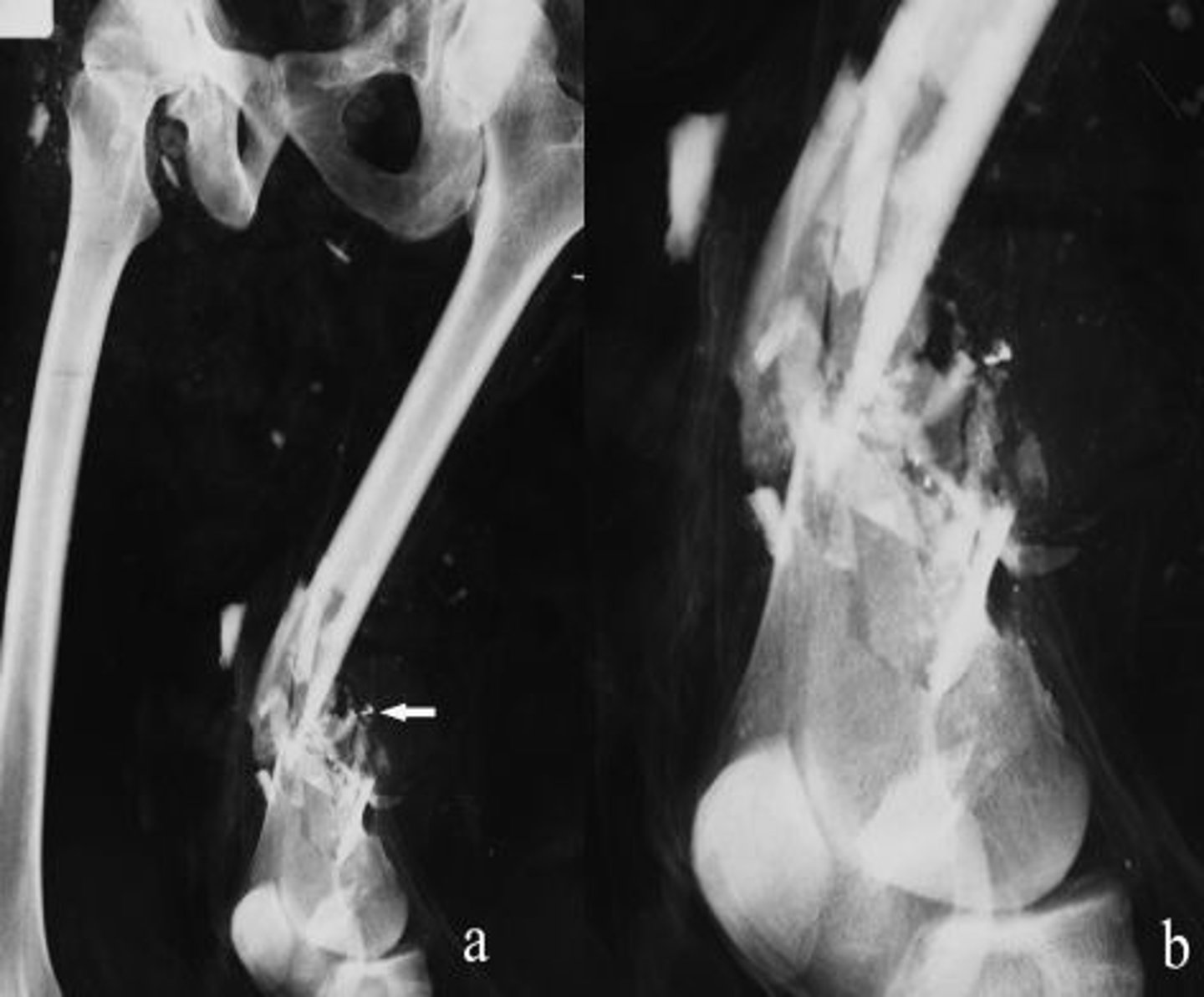
Depressed Fracture
Skull piece driven inward from head injury.
Spiral Fracture
Twisting injury, common in skiing accidents.
Colles' Fracture
Distal radius fracture from falls on outstretched hand.
Bone Healing Process
Involves hematoma, inflammation, callus formation.
Callus
Tissue formed during bone healing process.
Fat Embolus
Fat droplets enter the bloodstream post-fracture. This can lead to hypoxia and altered mental status
Hypoxia
Deficiency of oxygen in tissues.Symptoms may include apprehension, sweating, fever, rapid heart rate, difficulty breathing, and bluish skin discoloration.
Arthroscopy
an endoscopic procedure for direct visual inspection of joints, typically the knee.
Bone Scan
A nuclear medicine procedure that uses a radioactive substance injected into a vein to diagnose diseases based on bone structure.
CT Scan
X-ray technique for cross-sectional imaging, for three-dimensional anatomy assessment.
MRI (without radiation)
Imaging using magnets and radio waves.
X-ray
A common test used to evaluate bone conditions, including dislocations, sprains, fractures, and structural changes in conditions like osteoporosis and Paget's disease.
Arthritis
Joint inflammation affecting millions, primarily women.
Rheumatoid Arthritis
Chronic immune-mediated inflammatory disease affecting joints. more common in women, typically between ages 35-45.
Joint Pain
Discomfort in joints, common in arthritis.
Joint Stiffness
Reduced flexibility in joints, often with arthritis.
Acetaminophen
Pain reliever used for osteoarthritis management.
NSAIDs
Non-steroidal anti-inflammatory drugs for pain relief.
Corticosteroids
Anti-inflammatory drugs used in arthritis treatment.
Methotrexate
Medication for rheumatoid arthritis requiring monitoring.
Enbrel
Biologic drug for rheumatoid arthritis treatment.
Juvenile Rheumatoid Arthritis
Arthritis affecting children, causing joint issues.
Symptoms of Fat Embolus
Apprehension, sweating, fever, rapid heart rate.
Osteoarthritis Treatment
Includes weight loss, mobility aids, and injections.
Rheumatoid Arthritis Symptoms
Edema, cartilage destruction, and joint deformities.
Gout
Metabolic disease causing severe joint pain from uric acid.
Uric Acid
Waste product linked to gout from purine metabolism.
Bursitis
Inflammation of bursa causing joint pain and motion limits.
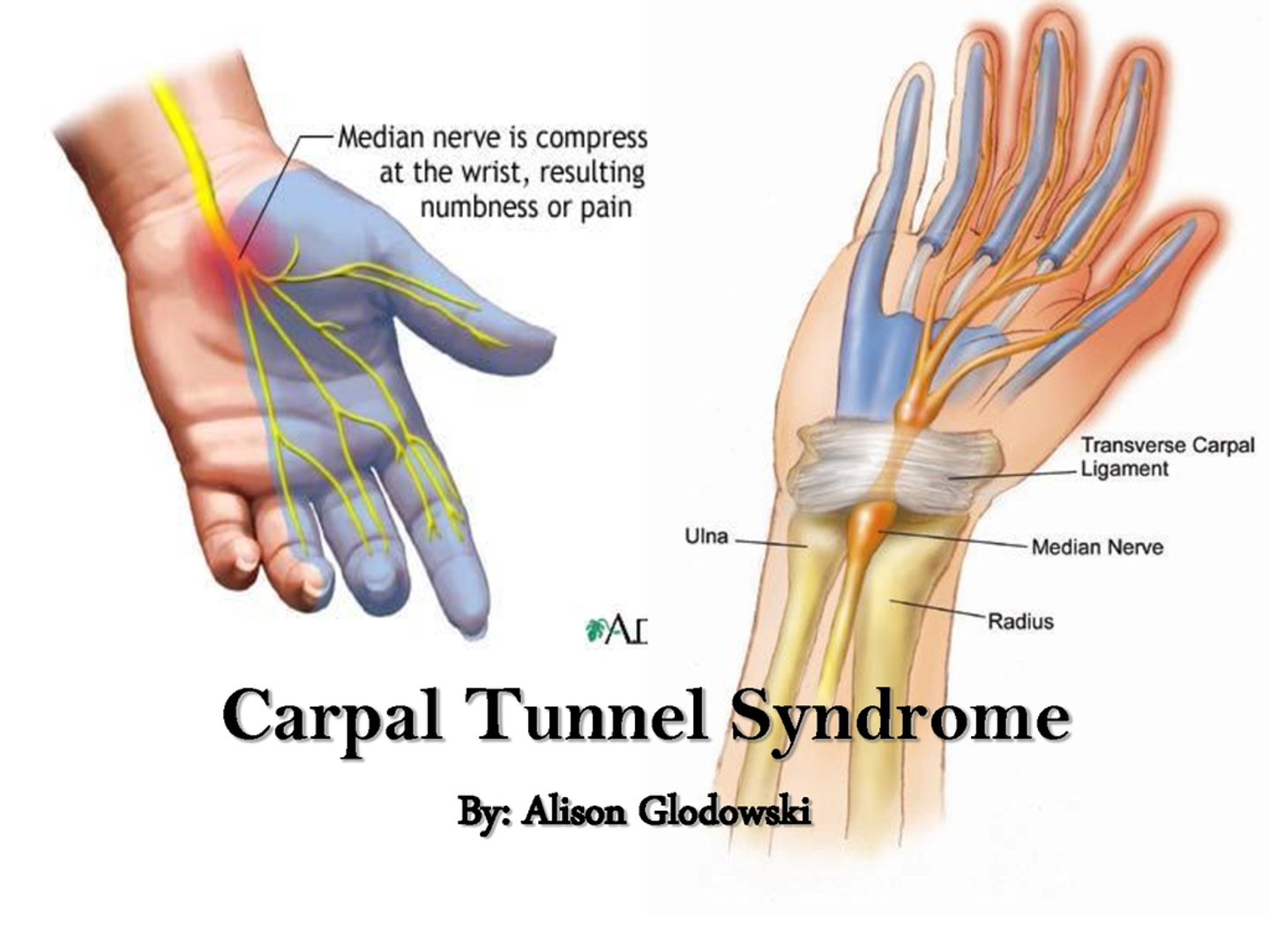
Carpal Tunnel Syndrome
Median nerve compression at the wrist causing hand symptoms.
Congenital Hip Dysplasia
Hip disorder in infants leading to dislocation risks.
Epicondylitis (tennis elbow)
Inflammation of elbow tendons from repetitive motions.
Hallux Valgus
Lateral deviation of the great toe, often forming bunions. Commonly found in women
Herniated Disc
Disc material protrusion causing back pain and nerve pressure.
Splinting
Supportive device used to immobilize and protect joints.
Traction
Therapeutic method to relieve pressure on joints.
Repetitive Trauma
Injury caused by repeated stress on joints.
Degeneration
Deterioration of joints or discs over time.
Laminectomy
Surgical procedure to remove protruding disc material.
Spinal Fusion
Surgical procedure stabilizing vertebrae with fixation.
Kyphosis
Bowing of the back, often at thoracic level.
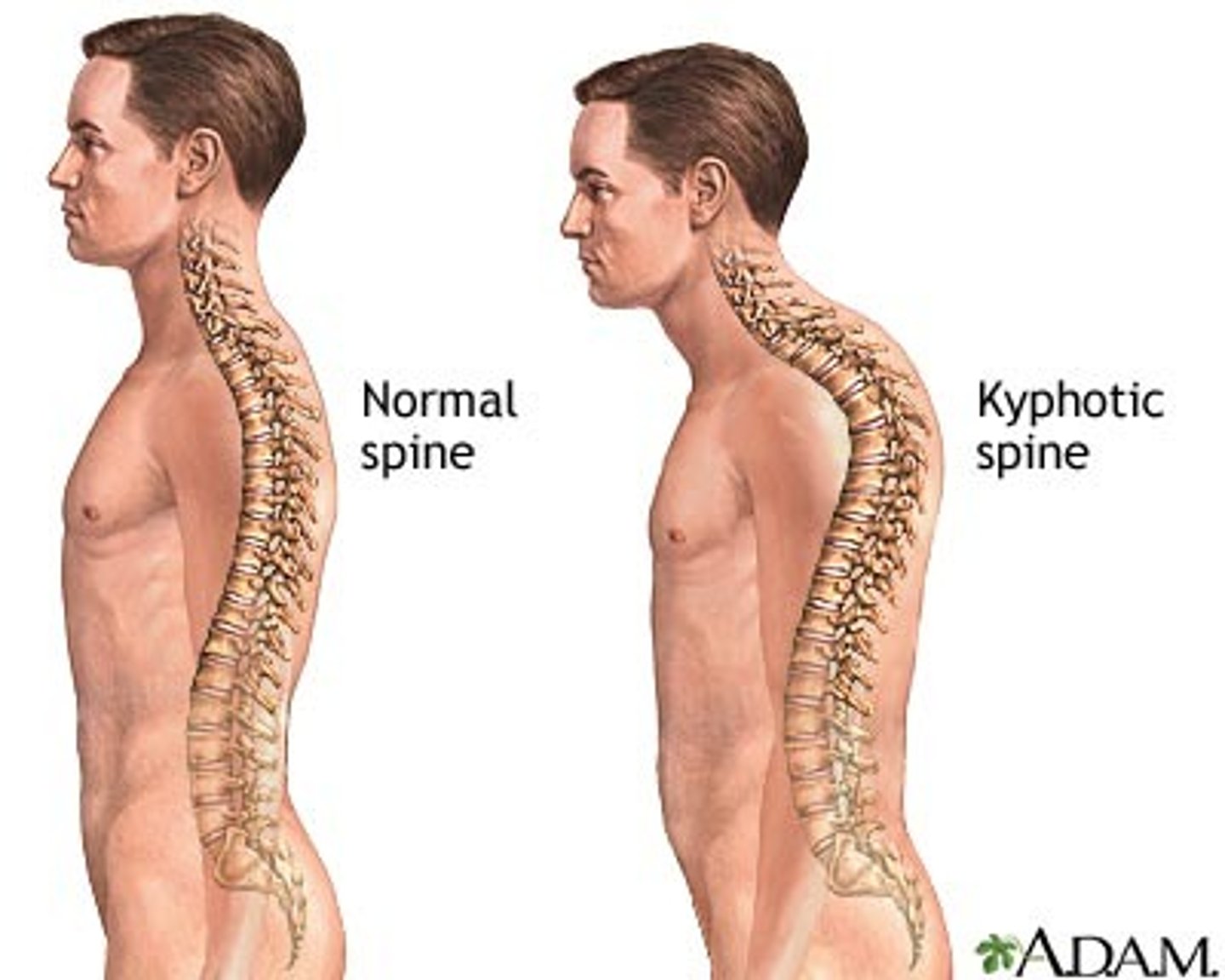
Adolescent Kyphosis
Visible curve with mild pain in youth.
Adult Kyphosis
Rounded back with potential pain in adults.