MARK 1115 - CH 5
 Call Kai
 Learn
Learn Practice Test
 Spaced Repetition
 Match
Match Flashcards
 Knowt Play
1/23

There's no tags or description
Looks like no tags are added yet.
Name | Mastery | Learn | Test | Matching | Spaced | Call with Kai | Chat |
|---|
No analytics yet
Send a link to your students to track their progress
24 Terms
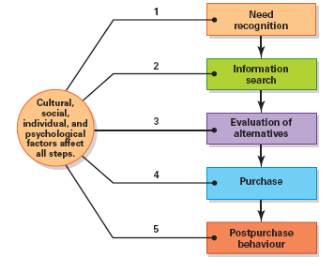
consumer decision-making process
vocab: consumer behaviour
how consumers make purchase decisions and how they use and dispose of purchased goods or services
vocab: belief
an organized pattern of knowledge that an individual holds as true about their world
vocab: attitude
a learned tendency to respond consistently toward a given object, such as a brand
need recognition
when consumers are faced with an imbalance between actual and desired states
vocab: stimulus
any unit of input affecting one or more of the five senses: sight, smell, taste, touch, or hearing
vocab: internal information search
the process of recalling information stored in one’s memory.
vocab: external information search
process of seeking information in the outside environment
marketing vs nonmarketing controlled information source
marketing: originate from marketers promoting the product (advertisments)
nonmarketing: one that doesn’t originate from the organization making the product (from family/friends recommondations)
Vocab: evoked set
evoked set: the brands that come to mind when thinking of a product category
vocab: cognitive dissonance
buyers remorse
when your expecations are not met
exhibit 5.1: consumer buying decisions
involvement - time and effort you spend
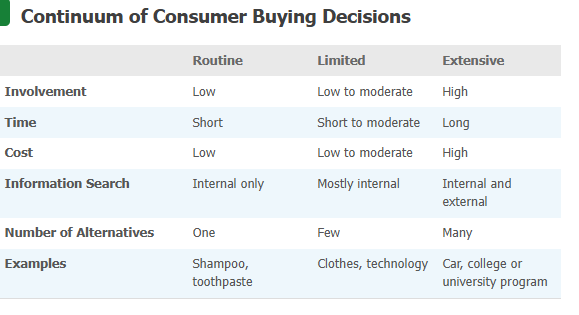
vocab: routine response behaviour
frequently purchased, requires little to no involvement on the search and decision making
→ toothpaste, pens
vocab: limited decision making
moderate amount of information gathering
→ previous product experience but not current brands
vocab: extensive decision making
requires lots of involvement in researching and decision making
factors determining the level of consumer involvement
previous experience - good experience before = more likely to buy again
interest - ↑ interest = ↑ chance of going
perceived risk of negative consequences - financial/social/psychological
situation - e.g. buying fruits for yourself vs dinner parties (higher quality)
social visibility - makes a statement of the buyer (has social risk)
cultural influences on consumer buying decisions
pervasive - what they do without conscious choice
functional - human interaction create values
learned -
dynamic - culture adapts to changing needs and an evolving environment
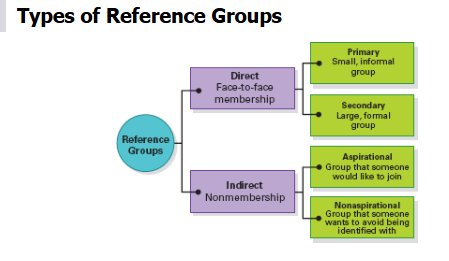
exhibit 5.5 types of reference groups
groups that influence the purchasing behaviour of the buyer
psychological factors
perception, motivation, learning, beliefs, and attitudes
vocab: opinion leader
those who influence others
vocab: selective exposure
a process whereby a consumer decides which stimuli to notice and which to ignore
vocab: selective distortion
occurs when consumers change or distort information that conflicts with their feelings or beliefs
→ person who smokes and doesn’t want to quit will ignore warning labels
vocab: selective retention
a process whereby consumers remember only information that supports their personal feelings or beliefs
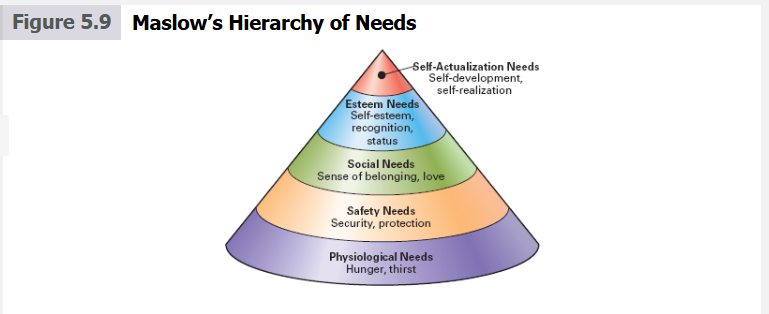
maslow’s hierarchy of needs