Teas 7 READING KEY POINTS nurse chung pt.1
 Call Kai
 Learn
Learn Practice Test
 Spaced Repetition
 Match
Match Flashcards
 Knowt Play
1/52

There's no tags or description
Looks like no tags are added yet.
Name | Mastery | Learn | Test | Matching | Spaced | Call with Kai | Chat |
|---|
No analytics yet
Send a link to your students to track their progress
53 Terms
Topic sentence
First sentence of every paragraph in the TEAS
Main IDEA
LAST sentence of the first paragraph
Supporting details
found in the Same paragraph as the topic sentence
summary
The first sentence of the Last paragraph

What is the red sentence?
Topic

what is the light blue?
supporting details

What is the purple sentence?
Main Idea
Inferences and logical conclusions
Conclusions reached on the Basis of evidence and reasoning
prior knowledge and text evidence
a smart guess based on clues.
You use:
📖 Text evidence = what the text tells you
🧠 Prior knowledge = what you already know
Simple formula:
Text Evidence + What I Know = Inference
Example:
📖 Text: “Sarah grabbed an umbrella before leaving.”
🧠 What I know: Umbrellas are used when it rains.
➡ Inference: It is probably raining or might rain.
Super easy to remember:
Inference = Clues + What I Know → Conclusion
Explicit evidence
Think “e” in both “explicit” and “expressed”
information stated clearly and in detail, leaving no room for doubt
ex: a sign that says “ wet paint” tells you the paint is wet
No guessing needed.
Exactly what it says.
Implicit evidence
think “I” in both “Implicit” and “implied”
Not directly stated but is implied or suggested
ex: a bench has a paint can and brush next to it. The bench looks wet but does not have a “ Wet paint” sign on it. You can infer or imply that the paint is likely WET
not directly said, but you can figure it out from clues.
“I” = Implied
You have to make a smart guess .
Example: 🪑 Bench looks wet + paint can nearby → The paint is probably wet.
👉 Easy memory: Implicit = It's implied, not said.

what’s this?
Comprehension of written directions
Transition words and phrases for order and relationship
Transition words are words that help show the order or relationship between ideas .
Think of them as signposts that tell you how ideas connect.
Order: First → Second → Finally
Adding information: Also → Additionally → Furthermore
Showing differences: But → However → On the other hand
👉 Easy way to remember:
Transition words = clues that show how ideas are connected or what comes next.
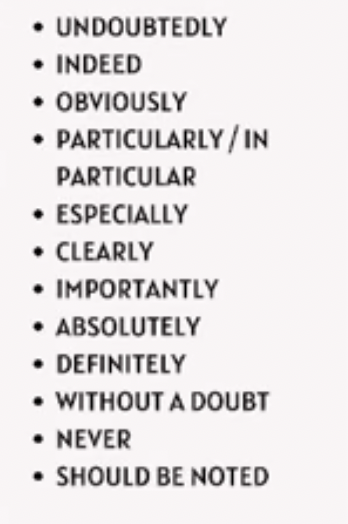
what’s this?
Comprehension of written directions
Transition words and phrases for order and relationship
EMPHASIS= “highlight something”
= giving extra attention or importance to something.
“This is important!”

What’s this?
Comprehension of written directions
Transition words and phrases for order and relationship
ADDITION “add more information”
adding more information or another idea.
Addition = “Here's more!” ➕

What’s this?
Comprehension of written directions
Transition words and phrases for order and relationship
Contrast “differences/ opposing ideas”
showing how two things are different.
Contrast = “What's different?”

what’s this?
Comprehension of written directions
Transition words and phrases for order and relationship
ORDER “sequence of ideas or events”
Showing the sequence of things or what happens first, next, and last.
We use order transition words to help us understand the steps or sequence of events .
Examples:
First → what happens first
Second → what happens next
Finally → what happens last
👉 Easy way to remember:
Order = “What comes first, next, and last?”
When looking for a transition word, we look for a …
A transition word with a comma after it.
ex: Importantly,

what’s this?
missing information
We do these steps when looking for missing information because the answer may not be directly stated in the passage.
🧠 Super Easy:
Skim the passage → Get the main idea .
Read the question → Know what information you need .
Look for gaps → Find what the passage doesn't clearly explain .
👉 Easy way to remember:
Main idea → What does the question ask? → What information is missing?
This helps you figure out the answer using clues from the text.

What’s this?
Contradictions ⚡
Contradiction = when two pieces of information disagree or don't match.
Example:
Sentence 1: “John likes dogs.”
Sentence 2: “John doesn't like dogs.”
➡ These contradict each other because they say opposite things.
👉 Easy way to remember:
Contradiction = “These two things don't agree.”

what is this?
glossaries
alphabetical list of terms
a list of important or difficult words with their meanings.
words + definitions.

what’s this?
Indexes
Topics and page numbers in the back of book
a list of topics or words in a book that tells you what page to find them on.
“Where can I find it?” 🔍
Heart — page 45 → Go to page 45 to learn about the heart.

What’s this?
Table of contents
Topics and page numbers in the Front of the book
A list of the chapters/sections in a book and the page where each one starts.
What's in the book and where does it start?”
Example:
Chapter 1 — Introduction — page 1
Chapter 2 — The Human Body — page 20

What is a heading?
Title at the head of a page or document
introduces the Main Topic or theme of a passage
the title of a section that tells you what it is about.
“What is this section about?”
“Causes of Stress” → tells you the section will explain the causes of stress.
BIG topic

What are subheadings?
Headings underneath the main heading that provide additional details
Break down the main topic into more specific areas or aspects
a smaller title under the main heading that tells you what a specific part is about.
smaller topic

What are side bars?
short piece of text
found alongside or in the margins of the main text
a small section on the side of a page that gives extra information about the main topic.
extra information on the side.

underlined, bolded, and italicized text
line drawn underneath text; darker and thicker text; slanted to the right text
found within the main text
These are ways writers make certain words stand out because they are important.
Underlined → words have a line underneath them.
Bolded → words look darker/thicker .
Italicized → words look slanted .
👉 Easy way to remember: They make important information stand out.

what is footnotes?
additional information or citations
found at the bottom of the page
extra information at the bottom of a page.
information at the foot (bottom) of the page.
legends
explanatory information or key for understanding figures, tables, or maps
found below or beside the figure, table or map
a key that explains what symbols, colors, or pictures mean.
“What do these symbols mean?”

What is the title?
Description of what the graph is about
found at the top of the graph
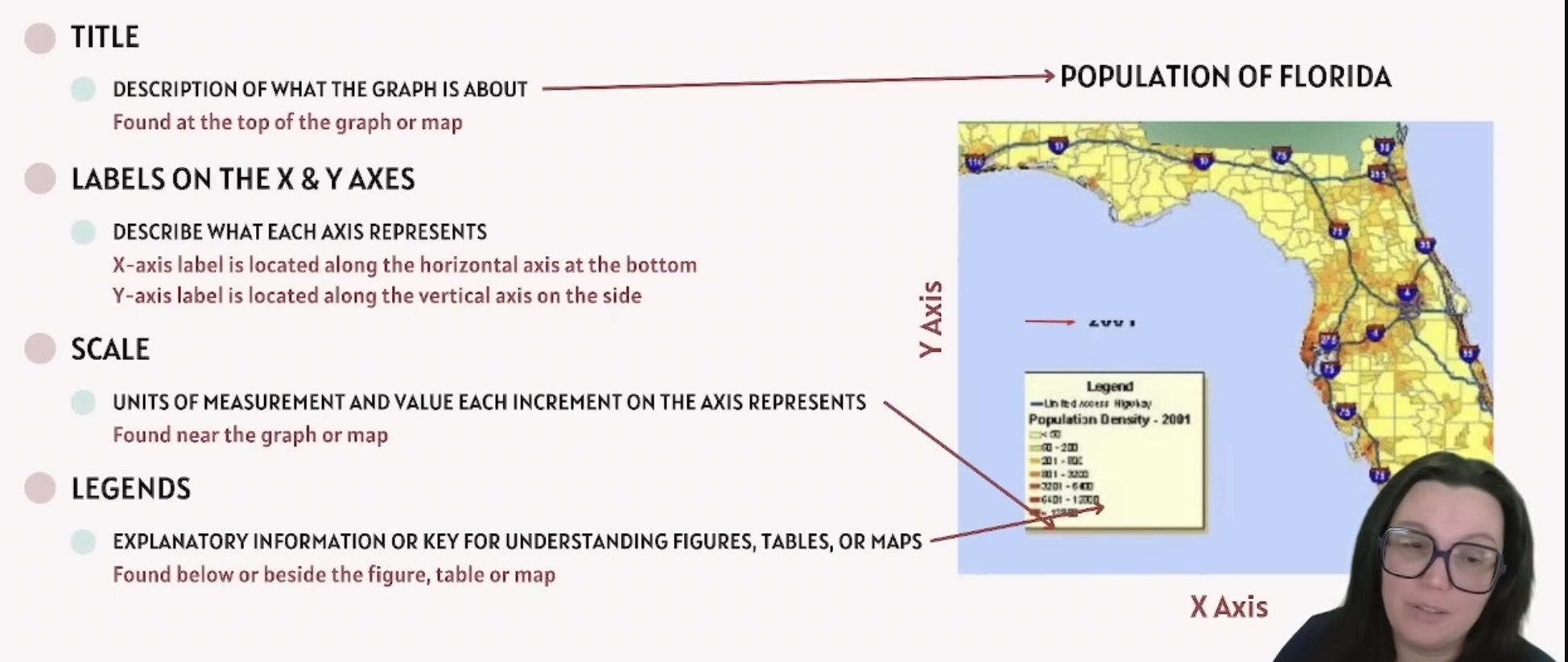
what is labels on the x and y axes?
Describe what each axis represents
x-axis label is located along the horizontal axis at the bottom
y-axis label is located along the vertical axis on the side
Axes = the lines on a graph that tell you what the graph is showing.
X-axis → horizontal (left ↔ right), at the bottom
Y-axis → vertical (up ↕ down), on the side
👉 Easy way to remember:
X = bottom
Y = side
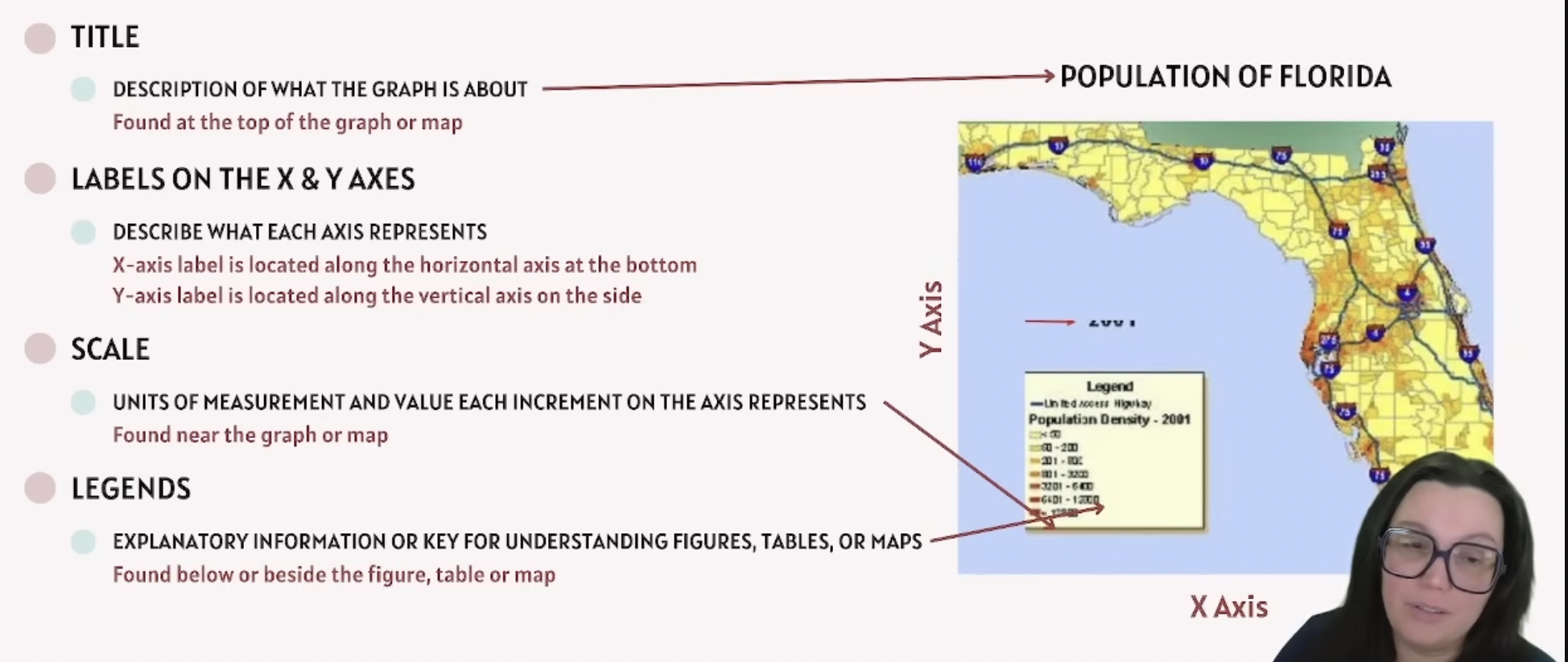
scale
Units of measurement and value for each increment on the axis represent
found near the graph or map

legends
explanatory information or a key for understanding figures, tables, or maps
found below or beside the figure, table or map

Manipulating Scale 📊
This means changing the numbers or spacing on a graph to make the data look different.
Example:
A graph shows sales going from 100 to 110. If the graph starts at 99 instead of 0, the increase can look much bigger than it really is.
👉 Remember: Manipulating scale = changing the graph to change how the trend looks.
… = changes how data LOOKS

📋Selective Data Presentation
This means only showing the information that supports your argument and leaving out information that you disagree with.
Example:
A company says, “Our product works great!” and only shows positive test results while not showing the negative results .
👉 Remember: Selective data = showing only the data you want people to see.
⭐ Main Difference:
…= changes what data is SHOWN

misrepresent correlations
making it seem like two things are related when they actually aren't, or making the relationship seem stronger than it is.
Example: ☀ Ice cream sales go up + 🏊 swimming increases.
You might wrongly say “Ice cream causes people to swim more.”
But really, hot weather causes both.
making a connection seem true when it isn't.

What are inappropriate graph types?
Using the wrong kind of graph for the information.
For example:
Using a foot chart when you need to show changes over time.
Using a line graph when you're comparing separate categories.
👉 Easy way to remember:
Wrong graph = can make the data confusing or misleading.
Imagine you want to show how your grades changed over 5 tests :
Test 1: 70%
Test 2: 75%
Test 3: 80%
Test 4: 85%
Test 5: 90%
❌ Using a pie chart would be inappropriate because a pie chart is better for showing parts of a whole .
✅ A line graph would be better because it shows change over time .
👉 Easy to remember: Use the right graph for the type of information .

what transition word is this?
BEFORE
“happens in the past”

what transition word is this?
FIRST
“initial step”

What transition word is this?
NEXT
“starts after a step”

what transition word is this?
Sometimes
“happens at irregular intervals”
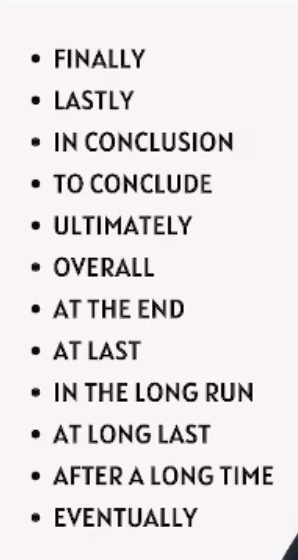
What transition word is this?
Last
“final point”
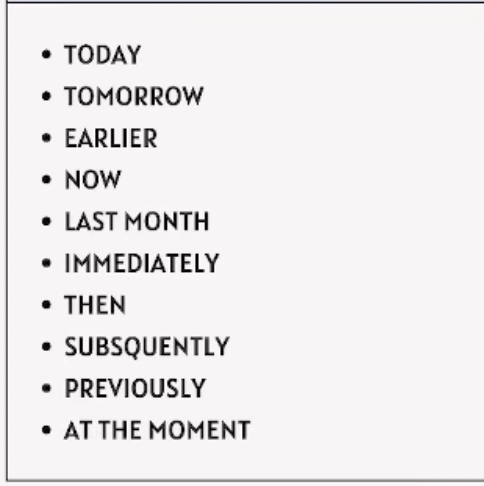
what transition/ cohesion of events is this?
Cohesion = events make sense together and happen in a logical order.
Example:
Wake up → Eat breakfast → Go to school → Go home
WHEN
“timing”

what transition/ cohesion of events is this?
Cohesion = events make sense together and happen in a logical order.
HOW OFTEN
“frequency”

what transition/ cohesion of events is this?
Cohesion = events make sense together and happen in a logical order.
LENGTH OF TIME
“how long”
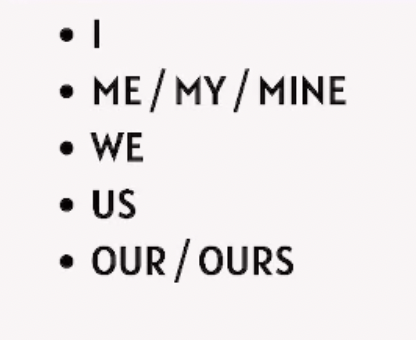
what is this?
Example: “ I went to the store with my friend.”
First person
when the writer talks about themselves.

what is this?
Example: “ You should finish your homework.”
second person
when the writer speaks directly to the reader.
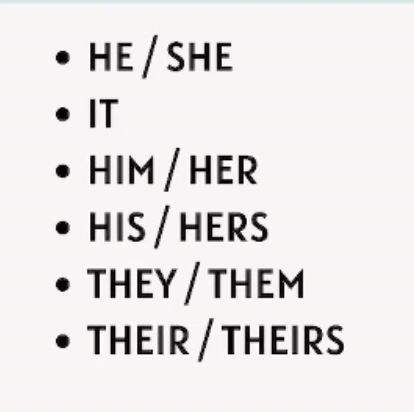
what is this?
Example: “ She went to the store with her friend.”
THIRD person
when the writer talks about other people.

What is the AUTHORS TONE here?
author’s attitude or emotional stance towards a subject
Tone = How does the author feel?
positive
What is the AUTHORS TONE here?
author’s attitude or emotional stance towards a subject

Tone = How does the author feel?
negative
What is the AUTHORS TONE here?
author’s attitude or emotional stance towards a subject

Tone = How does the author feel?
neutral

What is the authors tone here?
FORMAL
serious, professional, and respectful language.
professional, not casual.

What is the author’s tone here?
NOSTALGIC
feeling happy or sad when thinking about the past.
remembering the past with strong feelings.
“I miss the days when my friends and I played outside after school.”
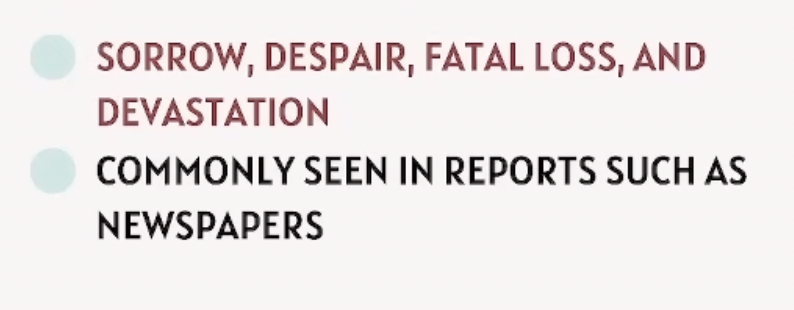
What is the author’s tone here?
TRAGIC
very sad, serious, or involving a terrible event.
“The family lost their home in the fire.”

What is the author’s tone here?
REFLECTIVE
thinking deeply about something, especially your past experiences or feelings.
thinking back and learning from it.
“I learned a lot from the mistakes I made.”
lots of I and me used