Vocabulary
 View linked note
 Call Kai
 Learn
Learn Practice Test
 Spaced Repetition
 Match
Match Flashcards
 Knowt Play
1/59

There's no tags or description
Looks like no tags are added yet.
Name | Mastery | Learn | Test | Matching | Spaced | Call with Kai |
|---|
No analytics yet
Send a link to your students to track their progress
60 Terms
nucleus
The control center of a cell that contains genetic material.
microtubule
A component of the cytoskeleton, providing structural support and shape.
microfilaments
Thin filaments of the cytoskeleton involved in cell movement and shape.
centrioles
Cylindrical structures that play a role in cell division.
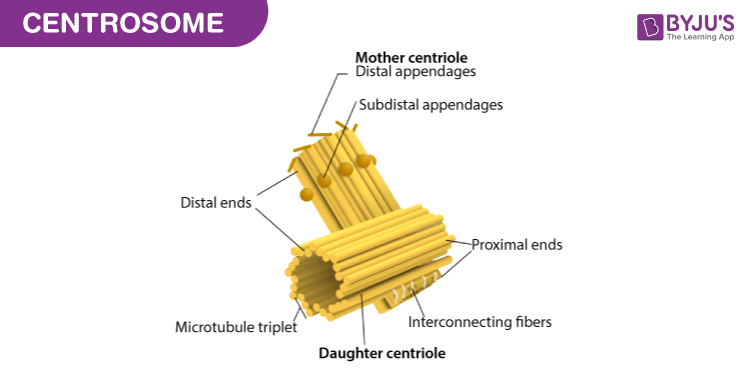
centrosome
Region in a cell that organizes microtubules and is involved in cell division.
basal body
Structure that anchors cilia and flagella to the cell.
cilia
Short hair-like structures on the cell surface involved in movement.
flagella
Long whip-like structures that enable movement in some cells.
rough endoplasmic reticulum
A network of membranes with ribosomes that synthesizes proteins.
smooth endoplasmic reticulum
A network of membranes involved in lipid synthesis and detoxification.
ribosomes
Molecular machines that synthesize proteins by translating mRNA.
Golgi body (Golgi apparatus)
Organelle that modifies, sorts, and packages proteins for secretion.
secretion vesicle
Membrane-bound sac that transports substances to the cell membrane for release.
lysosome
Cell organelle that contains enzymes for digestion and waste processing.
microbodies (peroxisome and glyoxysomes)
Organelles that contain enzymes for fatty acid breakdown and detoxification.
chloroplast
Organelle in plant cells that carries out photosynthesis.
mitochondrion
The powerhouse of the cell, generating ATP through respiration.
plastid (leucoplast and chromoplast)
Types of organelles in plant cells involved in storage and pigment synthesis.
kinetochore
Protein structure on a chromosome that attaches to spindle fibers during division.
centromere
A region of a chromosome where sister chromatids are joined and where kinetochores form.
microtubule organizing center
Region in the cell where microtubules are nucleated and organized.
spindle fibers
Filaments composed of microtubules that separate chromosomes during cell division.
cisternae
Flattened membrane-bound compartments in the Golgi apparatus.
cytoskeleton
A network of fibers that provides structure and shape to the cell.
autophagy
The process by which cells recycle their own organelles and proteins.
residual body
A cellular structure that contains indigestible material after lysosome action.
forming face
The side of the Golgi apparatus that receives vesicles from the endoplasmic reticulum.
maturing face
The side of the Golgi apparatus that releases processed vesicles.
hydrolytic enzymes (lipase, glycosidases, proteases, nucleases)
Enzymes that catalyze the breakdown of different biological macromolecules.
acrosome
A cap-like structure that covers the head of a sperm and contains enzymes for fertilization.
intermediate fibers
Filamentous proteins that provide structural integrity to cells.
tubulin
The protein subunit that makes up microtubules.
cytoplasm
The semi-fluid substance within the cell membrane, excluding the nucleus.
nuclear envelope
A double membrane that encloses the nucleus.
nucleoplasm
The gel-like substance within the nucleus.
vesicle
A small membrane-bound sac that transports substances within the cell.
plasma membrane
The outer boundary of a cell, regulating entry and exit of substances.
phospholipid
A molecule consisting of two fatty acids, a phosphate group, and a glycerol backbone, forming cell membranes.
lipid bilayer
A double layer of phospholipids that makes up the plasma membrane.
hydrophilic/hydrophobic regions
The polar (water-attracting) and nonpolar (water-repelling) parts of molecules like phospholipids.
transmembrane proteins
Proteins that span the lipid bilayer, aiding in transport and communication.
cholesterol
A lipid that stabilizes cell membranes and maintains fluidity.
glycoproteins
Proteins with carbohydrate groups attached, involved in cell recognition.
glycolipids
Lipids with carbohydrate groups attached, involved in cell recognition.
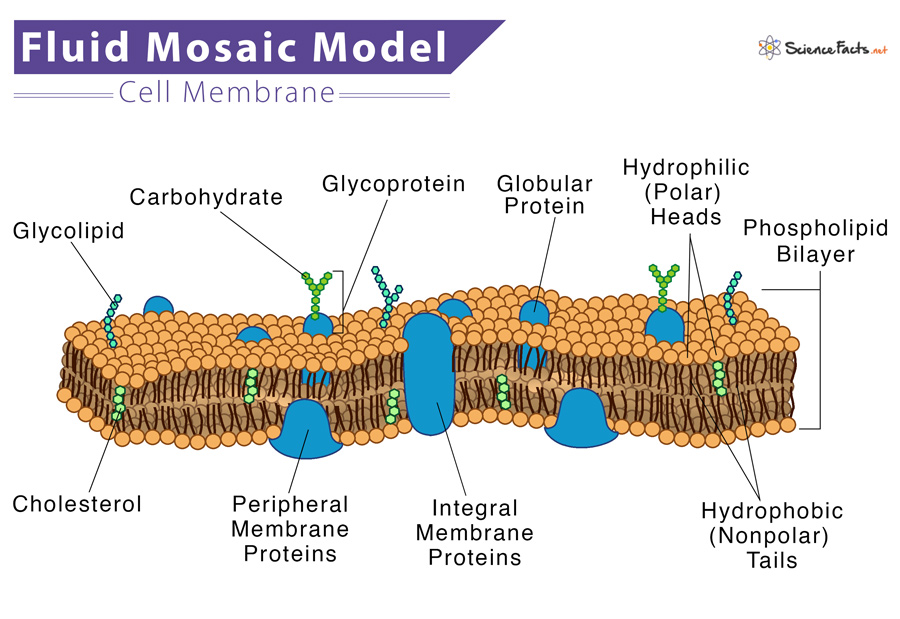
fluid mosaic model
A description of the plasma membrane structure as a mosaic of diverse protein molecules.
diffusion
The passive movement of particles from an area of higher concentration to lower concentration.
osmosis (hypertonic, isotonic, hypotonic)
The diffusion of water across a selectively permeable membrane; hypertonic has higher solute concentration, isotonic has equal, and hypotonic has lower.
facilitated diffusion
The process of passive transport of molecules across a membrane via a protein channel.
active transport (sodium-potassium pump)
The movement of ions against their concentration gradient, requiring energy.
coupled channels (symport and antiport)
Membrane transport mechanisms where one substance moves along with another in the same direction (symport) or opposite directions (antiport).
endocytosis
The process by which cells internalize substances, including phagocytosis, pinocytosis, and receptor-mediated endocytosis.
exocytosis
The process where substances are expelled from a cell by vesicle fusion with the plasma membrane.
gap junctions
Channels that allow communication and transport of ions and molecules between adjacent cells.
tight junctions
Connections between cells that prevent the movement of materials through the spaces between them.
anchoring junctions
Cell junctions that provide mechanical stability to tissues.
plasmodesmata
Channels that connect plant cells, allowing for transport of materials.
desmosomes
Junctions that anchor adjacent cells together in tissues.
phagosome
A vesicle formed around a particle engulfed by phagocytosis.
polysaccharide maltose
A disaccharide sugar formed from two glucose units.
enzymes
Biological catalysts that accelerate chemical reactions in living organisms.