Vasari’s First and Early Second Periods: the Franciscan Revolution
 Call Kai
 Learn
Learn Practice Test
 Spaced Repetition
 Match
Match Flashcards
 Knowt Play
1/20

There's no tags or description
Looks like no tags are added yet.
Name | Mastery | Learn | Test | Matching | Spaced | Call with Kai | Chat |
|---|
No analytics yet
Send a link to your students to track their progress
21 Terms
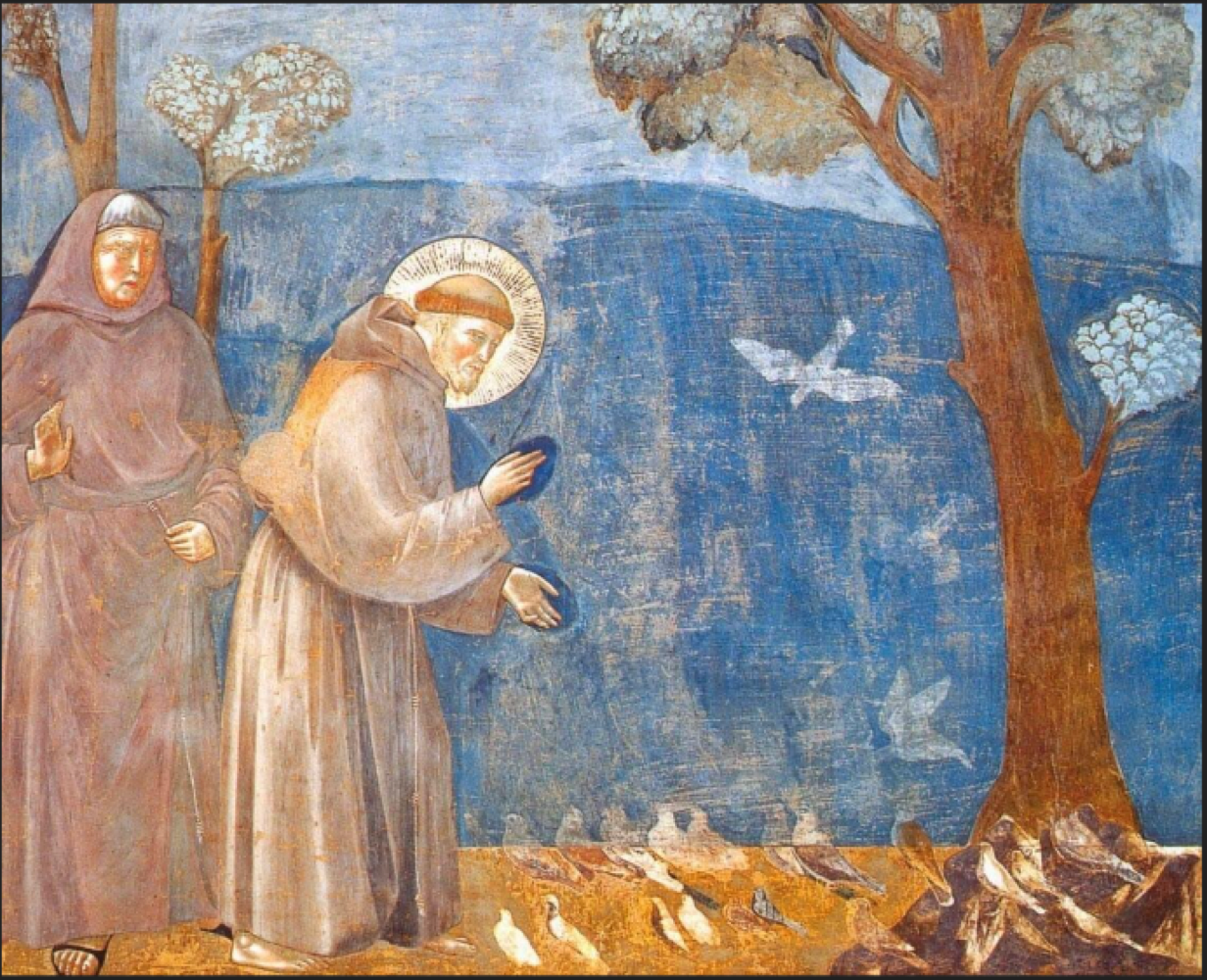
Giotto di Bondone (1266/76–1337)
St. Francis Preaching to the Birds, fresco, ca. 1300 Patron: Franciscan Friars of Assisi (debated attribution to Giotto; in Basilica of St. Francis, Assisi)
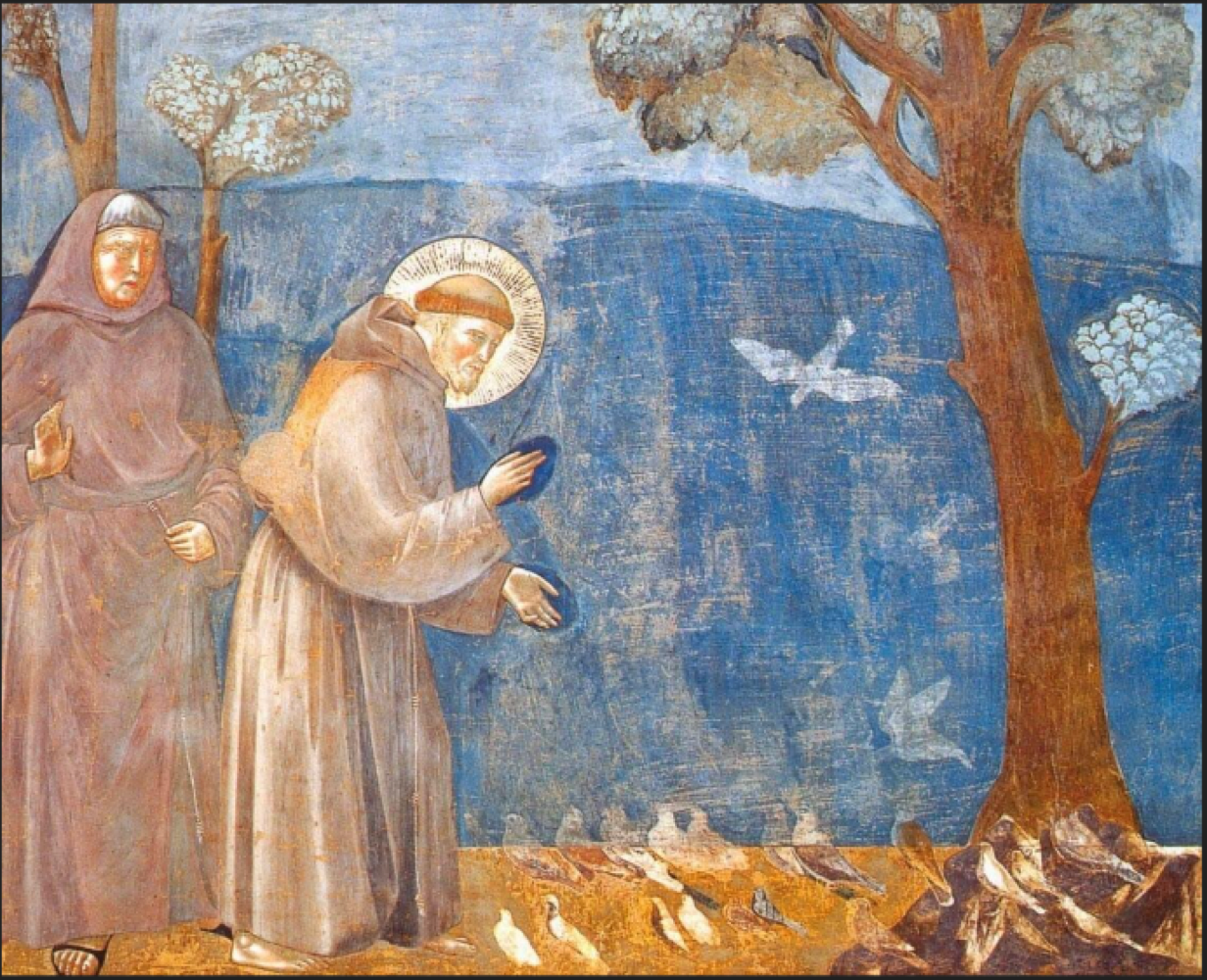
describe the composition of St. Francis Preaching to the Birds and its significance
Francis with his gaze towards the earth, cropping of Giotto of person making a gesture-bring us in, narrative composition- oblivious to viewer. Set within nature, golden halo, god in nature= mediate and think about change and how nature was made in God’s image
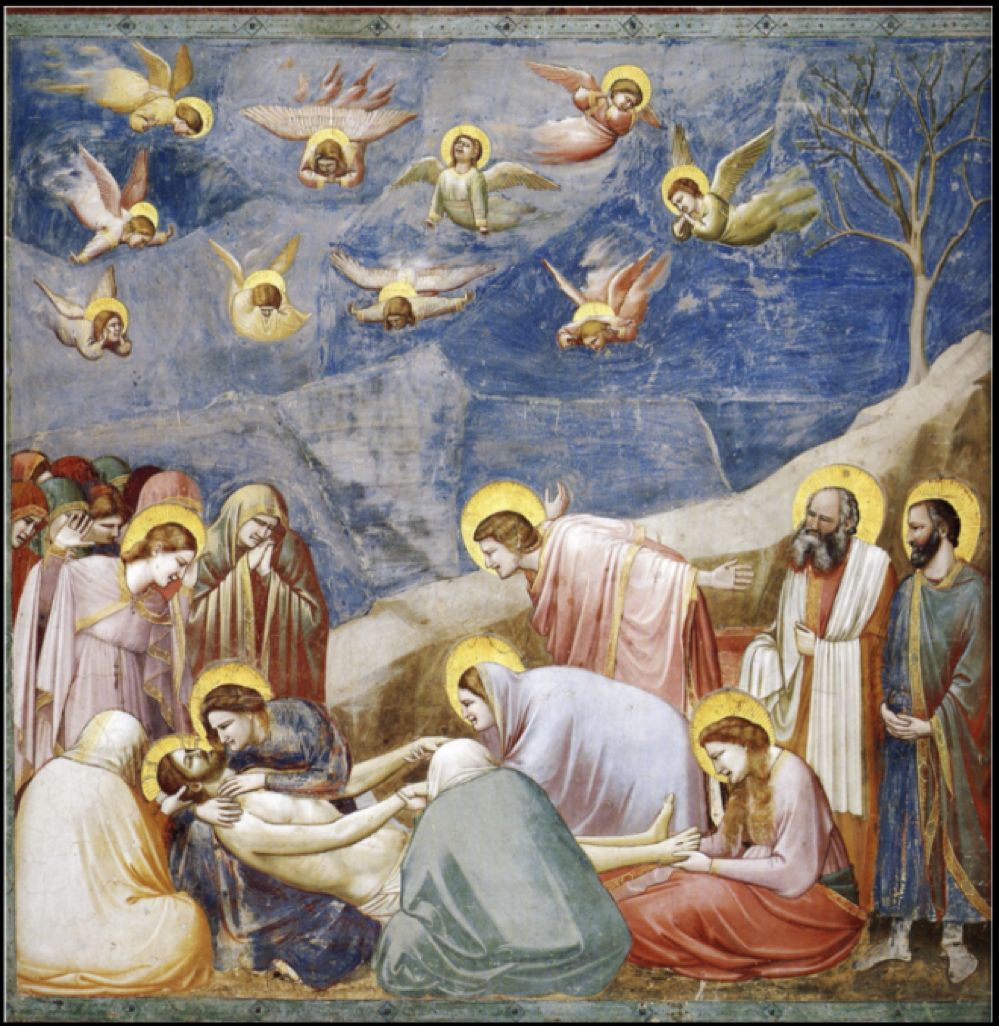
Giotto di Bondone (1266/76–1337)
Lamentation in The Scenes from the Lives of the Virgin and Christ, fresco, ca. 1305 Patron: Enrico Scrovegni (Scrovegni Chapel, Padua)
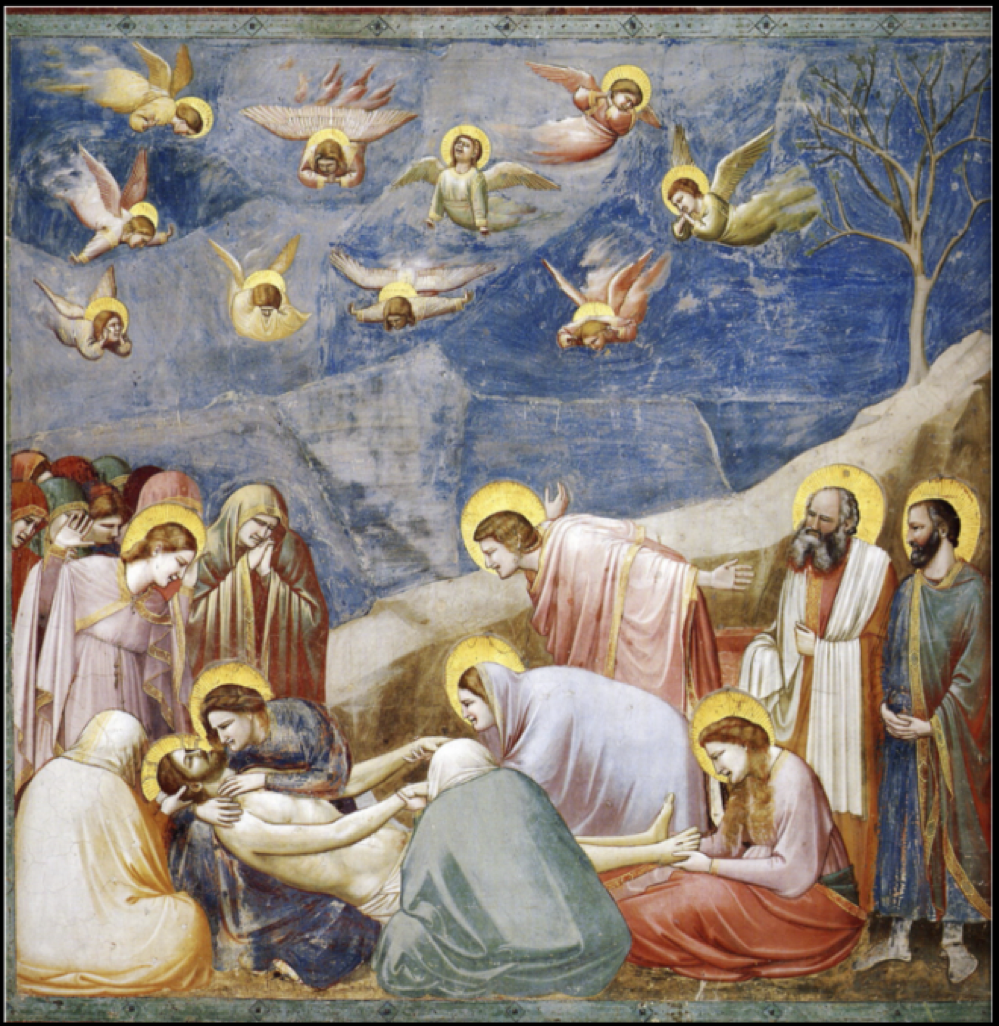
describe the surroundings and context of the Lamentation and its significance
In a chapel that a user created to imitate humility. Depicts the human Christ who suffered and dies
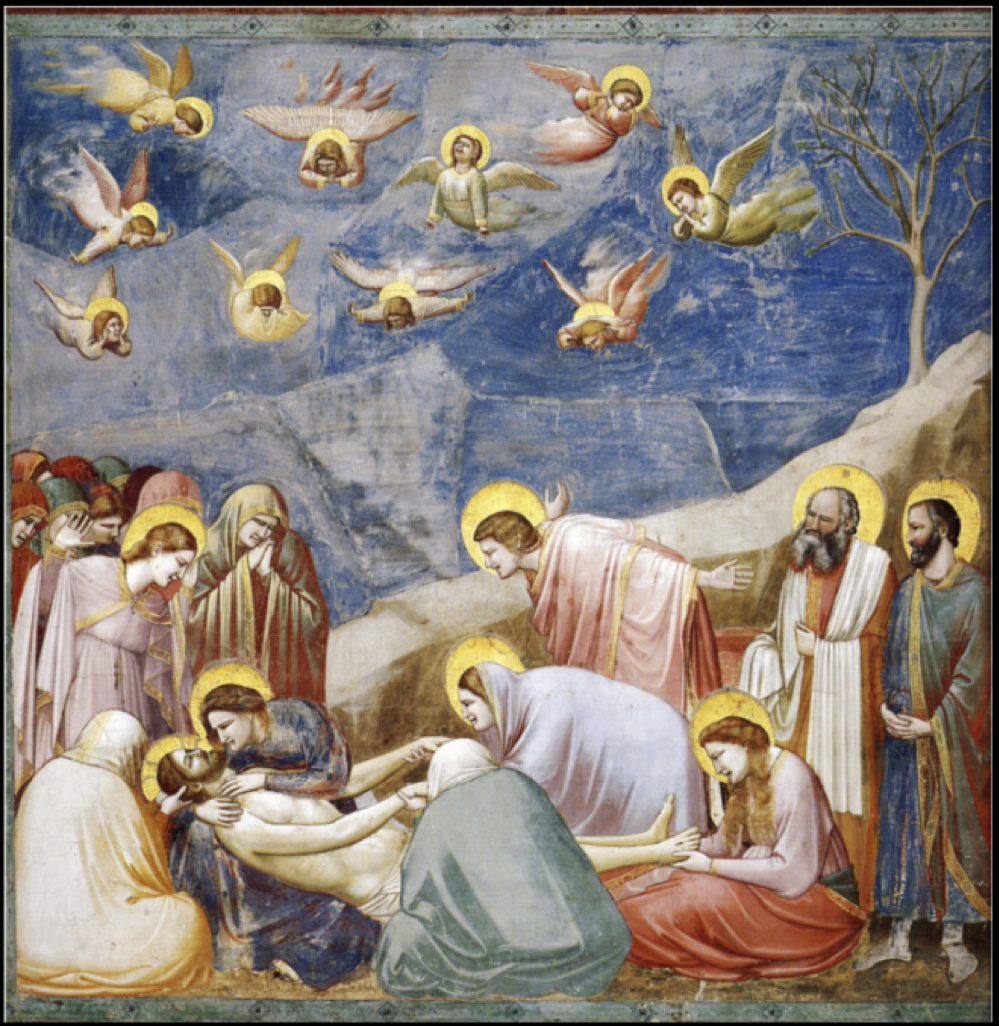
Describe the composition of the Lamentation and its significance
Christ shifted to the side and slightly covered: leads you in to look at him and makes it private and intense with a believable setting. Massive human bodies covered= foreshortening to create depth and imitation of extension = functional and purposeful message. Cropping=crowd continues beyond the frame. Rectangle: narrative-move across from left to right. Backs turned=prioritize view of Mary and Christ. Taken back to central image. Only mathematical and purposeful to tell a Biblical narrative
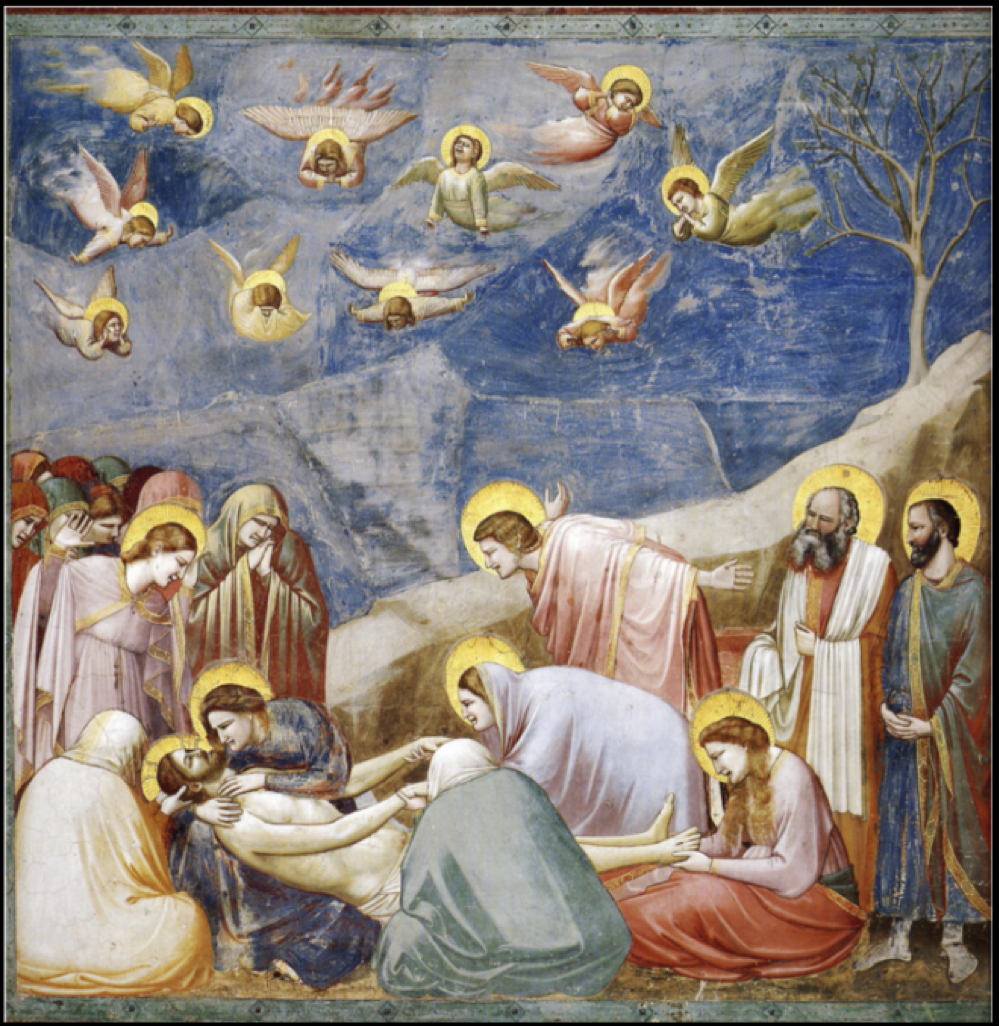
describe the environment in the Lamentation and its significance
Rising of the hill=rising of pain and suffering. dead trees and rocks=how Christ died, reflect enormity of situation, small leaves: metamorphosis of Christ
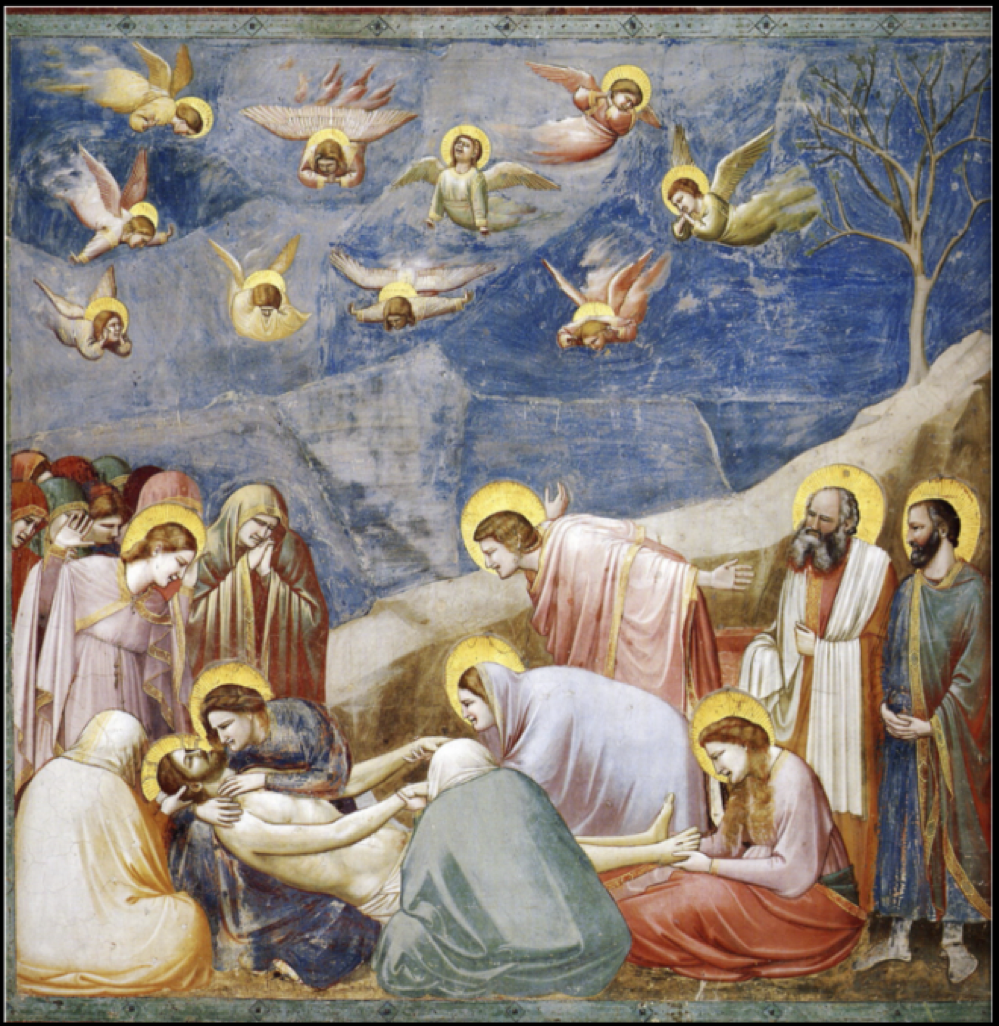
describe the figure in the Lamentation and their significance
angels in pain and commotion, daring human anatomy, facial expressions and body language show Mary in anguish. Naturalism=believable and tangible grief

Giotto di Bondone (1266/76–1337)
Ognissanti Madonna, Tempera on Panel, ca. 1310 Patron: Humiliati Order (originally at the Church of the Ognisanti, now in the Uffizi, Florence)
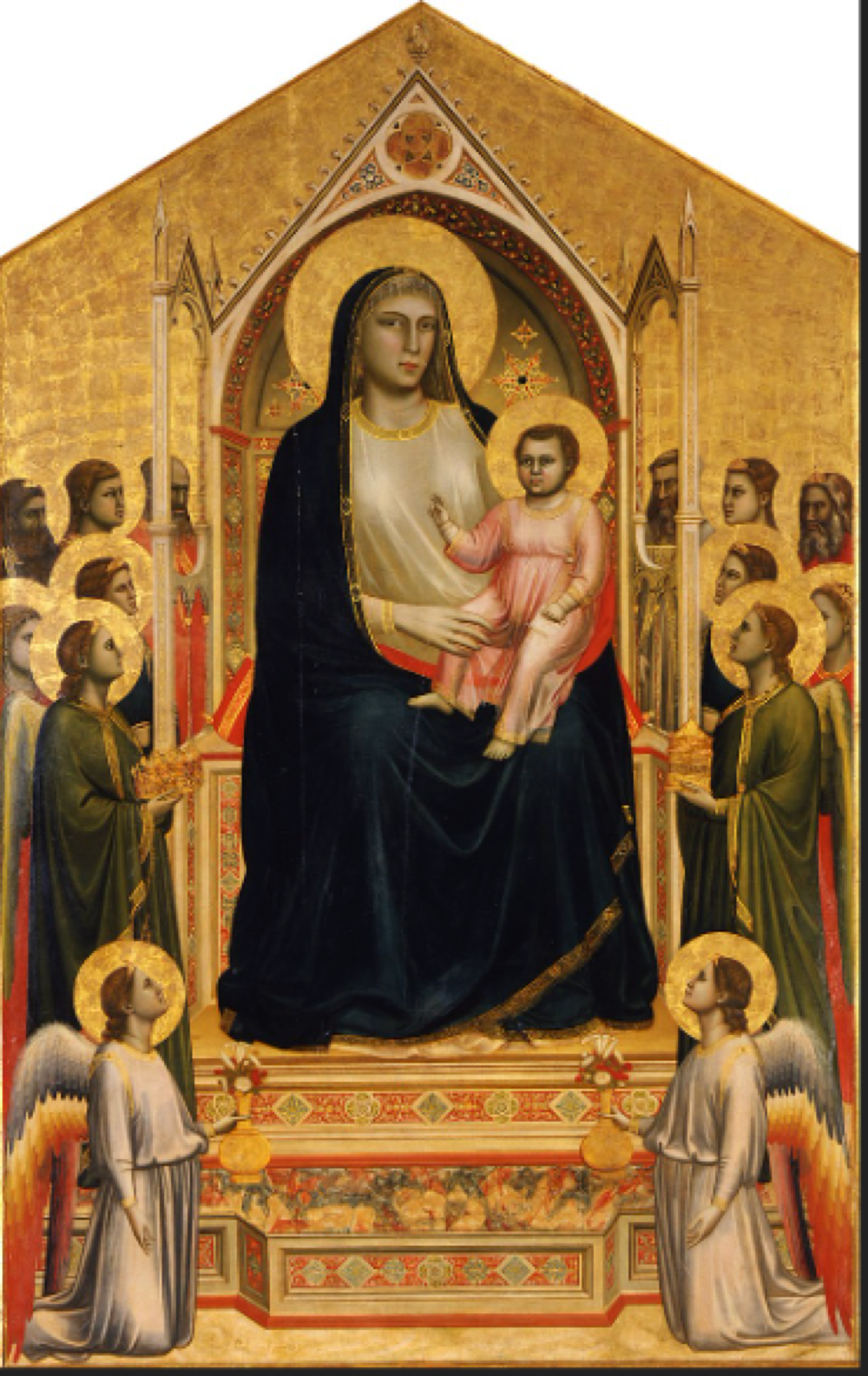
describe the composition and figures of the Madonna and its significance
iconic altarpiece=pray through it, angels and saints cropped, shifting perspective: look straight at Madonna who is human. Wearing white for innocence, blue for holiness, red for suffering and for the fate of Christ. Christ seen fully human and fully divine. Gold/gilding. Mary=human at the center of it showing how she relates to human pain and suffering
Arnolfo di Cambio (ca. 1245–1310)
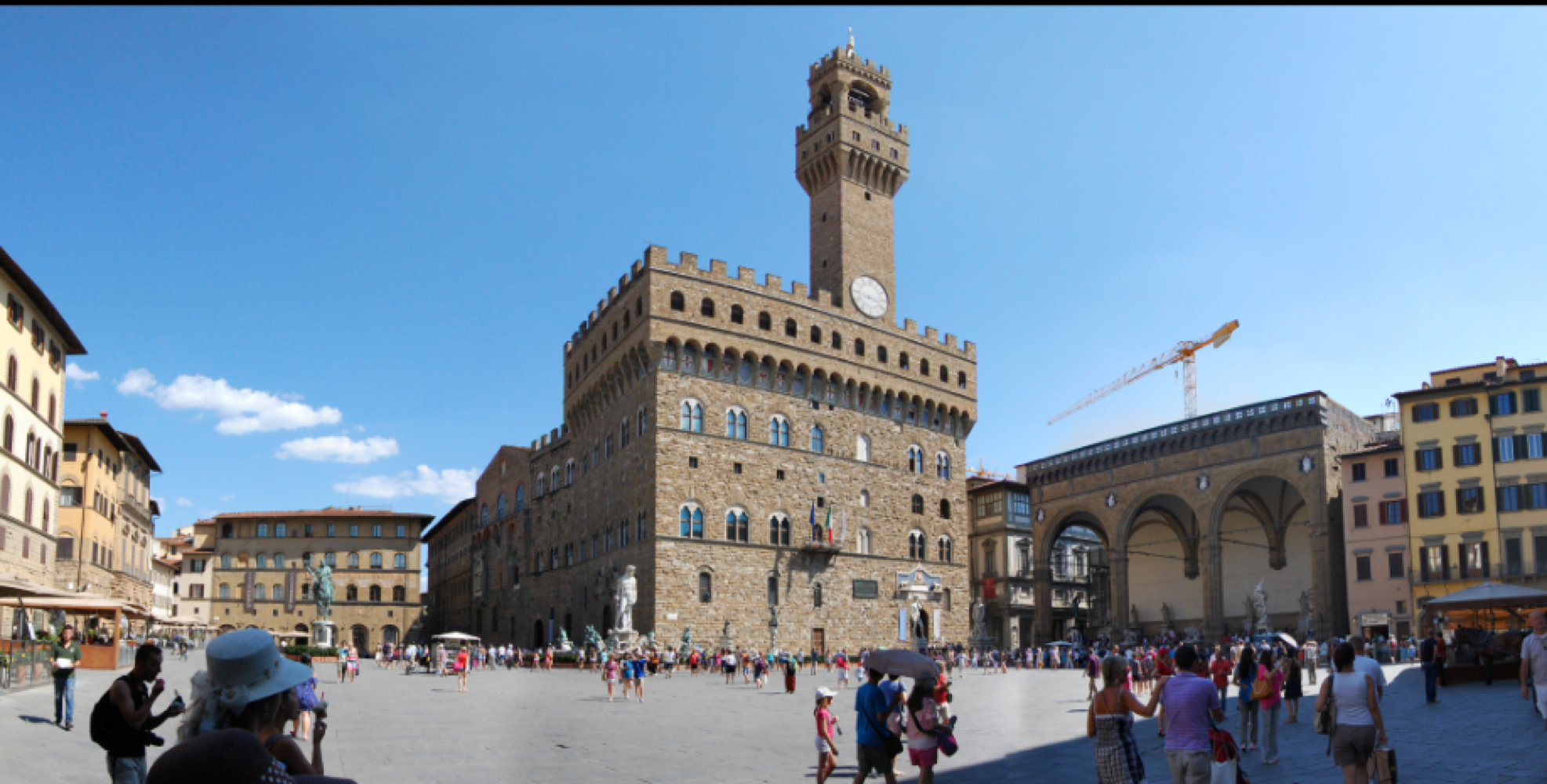
Palazzo della Signoria (Palazzo Vecchio), Rusticated Stone, begun 1299 Patron: Commune of Florence
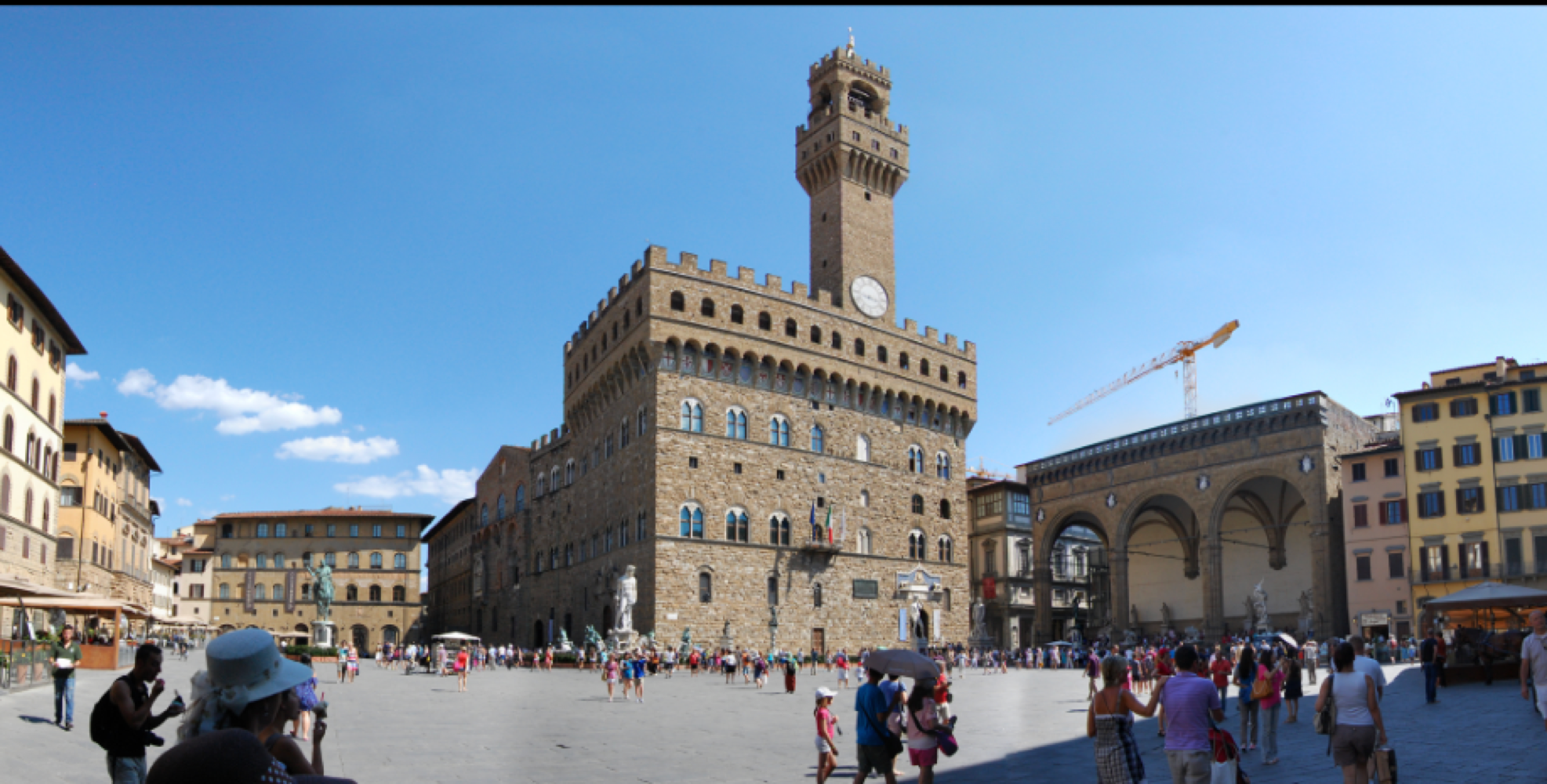
describe the architecture of the Palazzo della Signoria and its significance
rusticated stone: carved to look like it was not carved=expensive and a lot of effort. Tower, crenellations: standard and dove-tailed. Marks unity of empire
Arnolfo di Cambio (ca. 1245–1310)
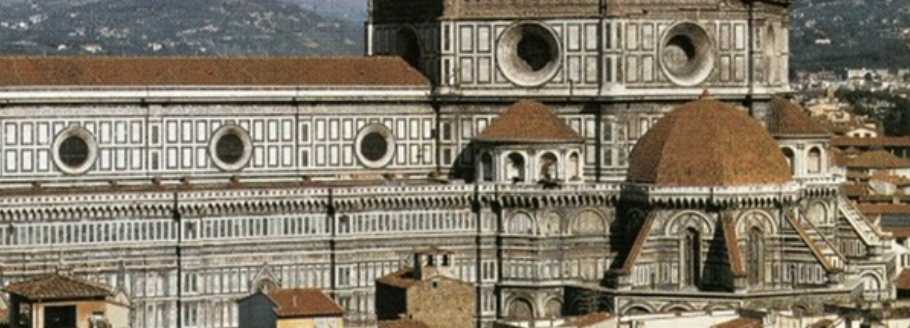
Crossing and Nave of the Cathedral/Duomo (Santa Maria del Fiore), Polychrome marble, 1294– ca. 1418; With architect Francesco Talenti (ca. 1300–1369) Patron: Workshop of the Duomo/Opera del Duomo and Arte della Lana/Guild of the Wool Workers
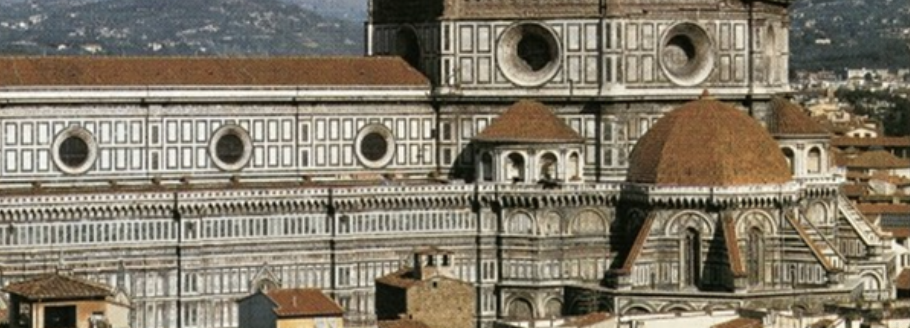
Describe Crossing and Nave of the Cathedral/Duomo
longitudinal basillica, nave with three wide aisles and a monumental octagonal crossing

Giotto di Bondone (1266/76–1337) with Francesco Talenti (ca. 1300–1369)
Bell tower, Polychrome marble, 1334–ca. 1368, Patron: Workshop of the Duomo/Opera del Duomo and Arte della Lana/ Guild of the Wool Workers
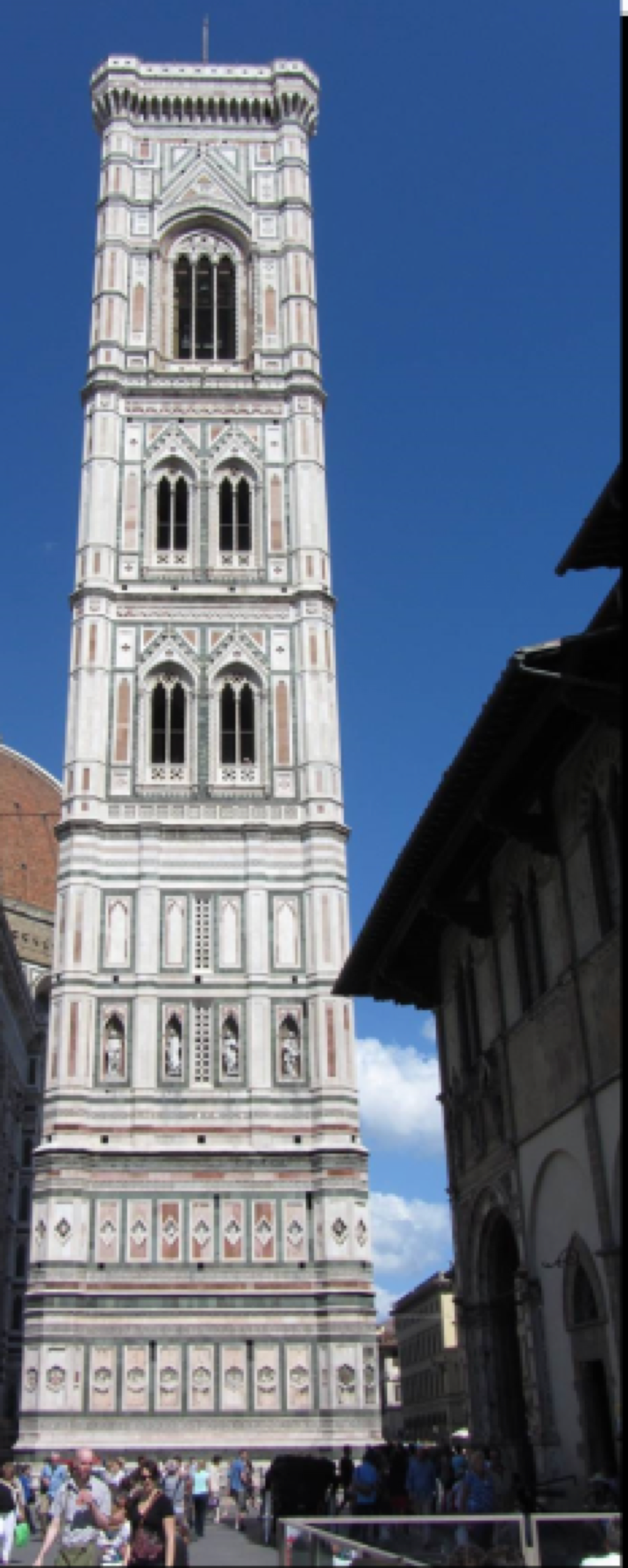
describe the architecture of the Bell Tower and its significance
polychrome, tuscan marble colors=expensive. Separation of space, evenly divided lines that lead the eyes up. Optical enhancements that prompts the gaze up and see how it towers over the city. Shows how man-made environment was more important that natural one
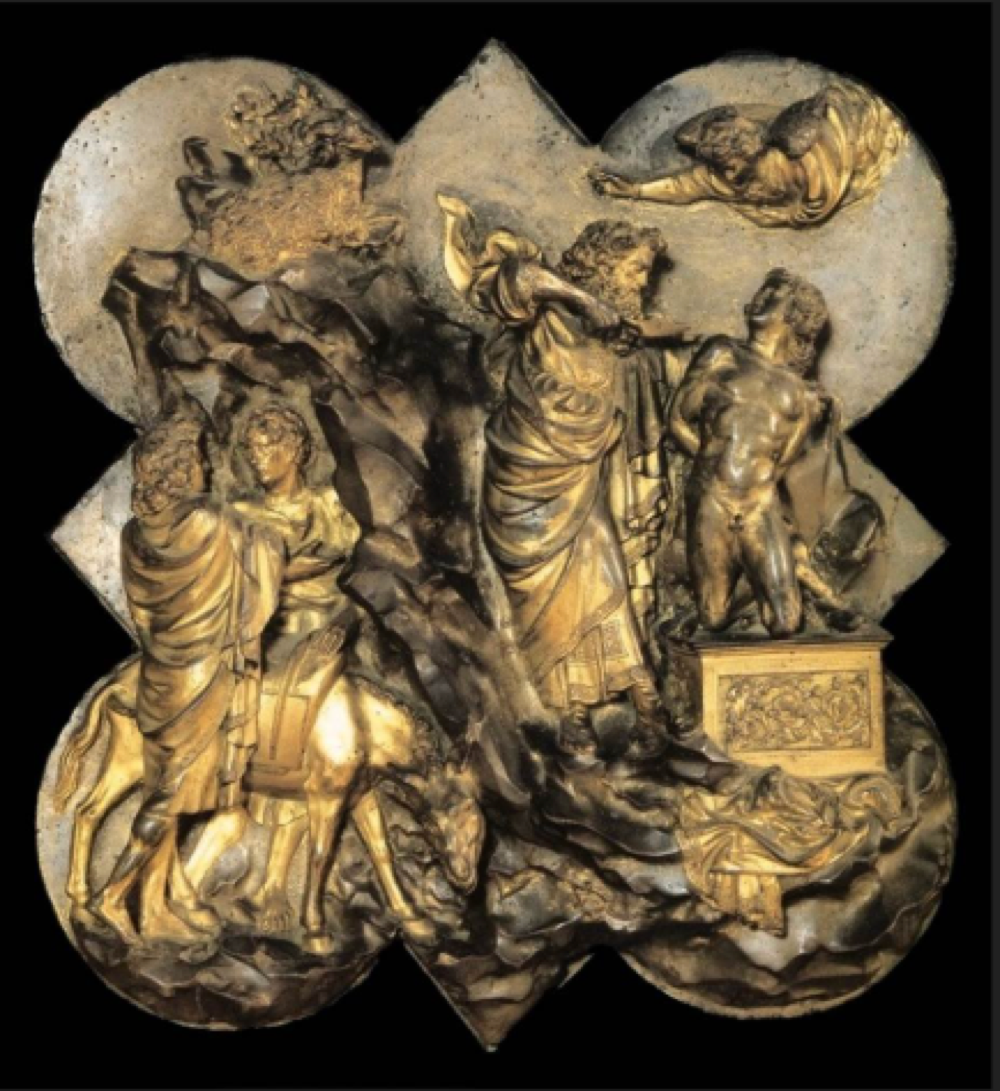
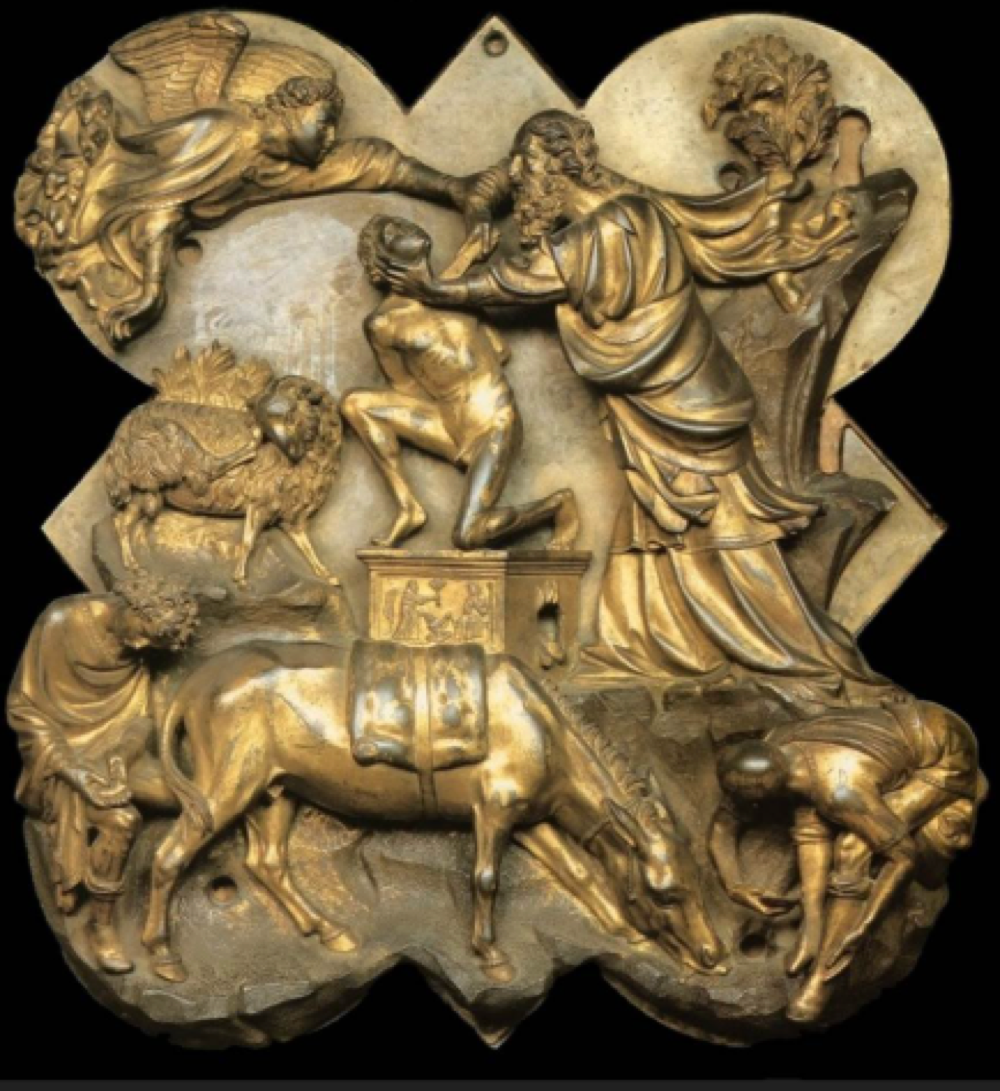
Baptistery Doors Competition, 1401. Patron: the Opera del Battistero/ Workshop of the Baptistery and Arte di Calimala/Guild of the Clothe Merchants
Lorenzo Ghiberti (1378–1455)
The Sacrifice of Isaac, bronze relief sculpture, 1401 (originally on Baptistery door, now in the Bargello Museum)
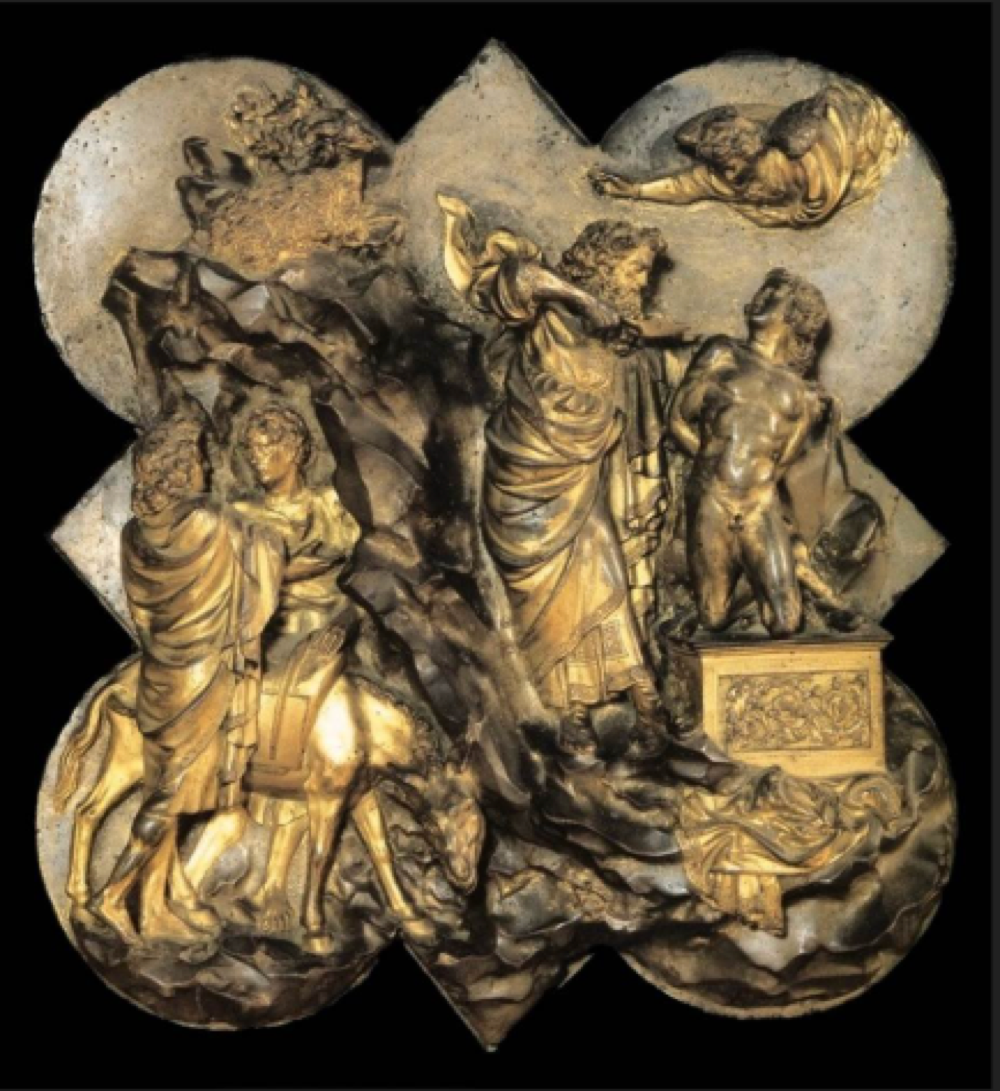
what is depicted in the Baptistery Doors Competition and its significance
the sacrifice of Isaac by Abraham who was asked by God to prove his faith by sacrificing his son. He is stopped at the last minute by an angel and sacrifices a lamb instead. Shepards not aware of the scene= focus on the other figures
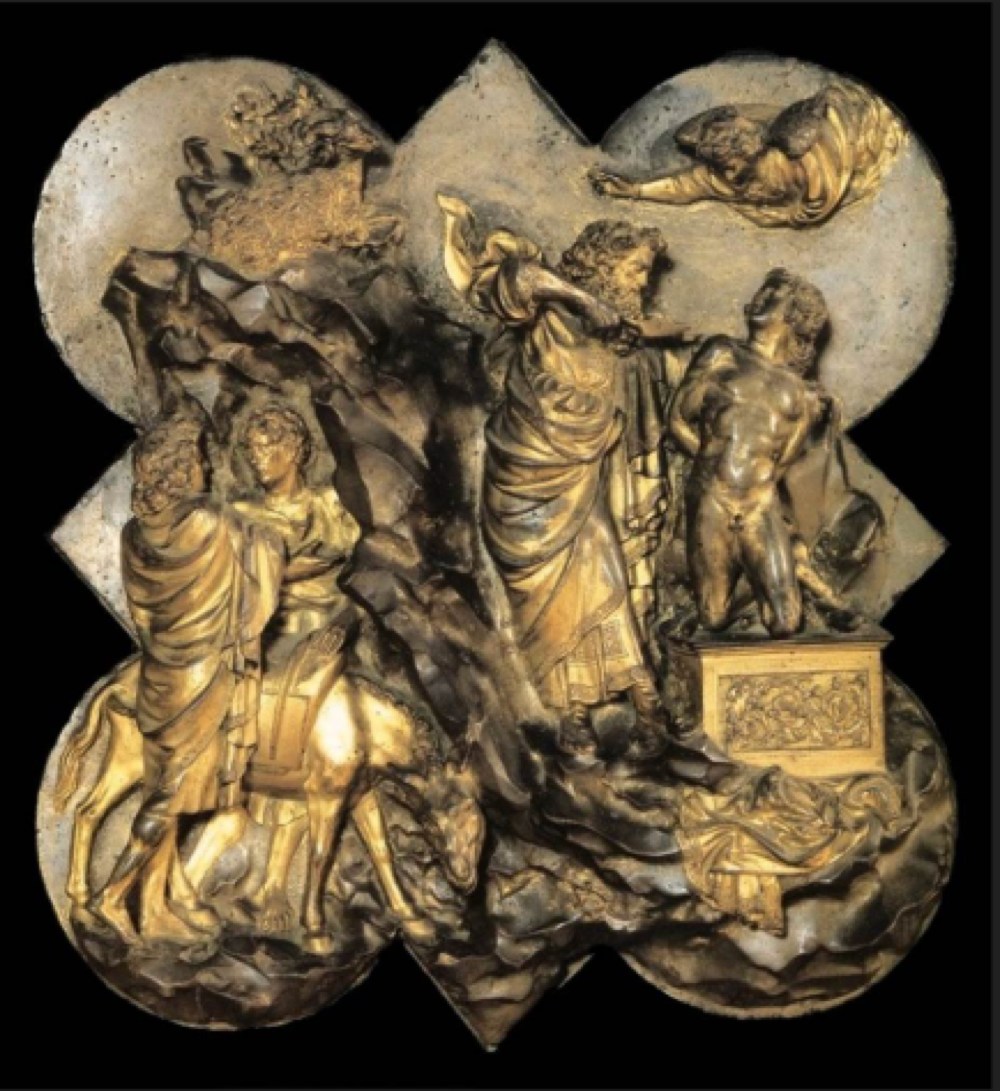
describe the Ghiberti Baptistery doors
lower left figures blinded from scene by S curve, contrapposto pose, angel of god stops action, parallels, human anatomy, elegant high relief in bronze
Baptistery Doors Competition, 1401. Patron: the Opera del Battistero/ Workshop of the Baptistery and Arte di Calimala/Guild of the Clothe Merchants
Filippo Brunelleschi (1377–1446)
The Sacrifice of Isaac, bronze relief sculpture, 1401 (Bargello, Florence)
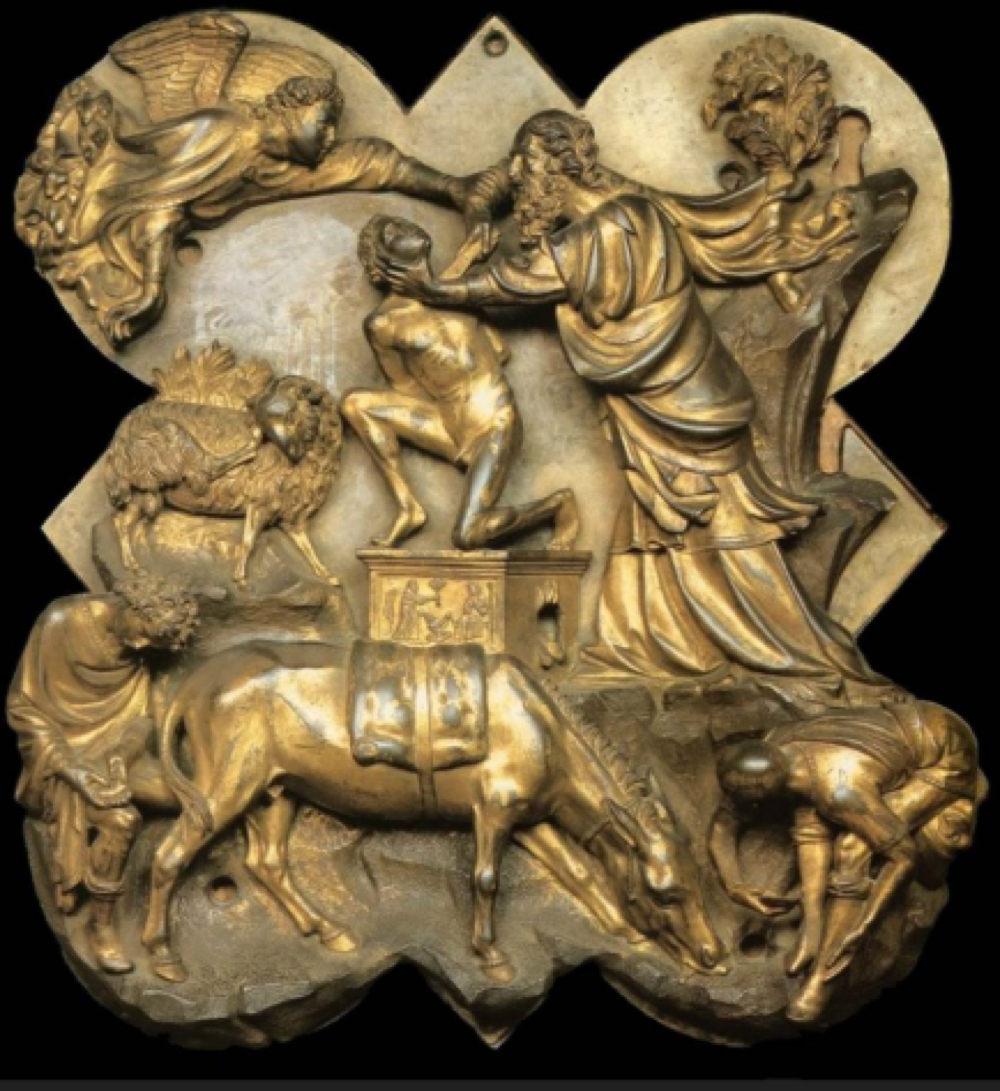
describe the Brunelleschi Baptistery doors
man typing shoe and one pulling thorn out of foot, end of narrative on the left, angel flying in, complex interaction of diagonals
what was the result of the Baptistery door competition
Tie, but Brunelleschi not want to work with Ghiberti so Ghiberti finish the doors and Brunelleschi go to Rome