bacteria genetic
 Call Kai
 Learn
Learn Practice Test
 Spaced Repetition
 Match
Match Flashcards
 Knowt Play
1/12

There's no tags or description
Looks like no tags are added yet.
Name | Mastery | Learn | Test | Matching | Spaced | Call with Kai | Chat |
|---|
No analytics yet
Send a link to your students to track their progress
13 Terms
chromosome
shape
how many base pairs long
Circular Haploid
0.8 - 4x10⁶ base pairs long (4000 kbp)
One copy to each daughter cell
All essential genes for life in chromosome
length
E. coli genome = 4.6x10⁶ bps = 1mm
E. coli cell = 1µm long = 1000 times shorter than genome BUT genome takes up 10% of cell volume
supercoiling and unwiding
DNA topoisomerase/gyrase enzymes
plasmids
many bacteria
circular 1-300kbp
self replicating 1-50 copies./ cell
oe bactierum may have more than one
non essential genes
pathogenicity
AMR
self transmissibility
transposon
do they self replicate
what do they contain
where do they jump between
what do tey cause
elements of DNA which cannot self replicate
contain insertion sequences whic allow then to jumo into new parts of hte genome (transposition)- stcky end
this can include jumping beteen plasmid and chromosme or different plasmid
by causing deletions and genetic rearragement they enhancegenetic diversty and evolution
usually associated with antimicrobial ressitance
ability to move between chromosmes and plasmids increases spread of AMR
restriction and modification
what are the 3 parts
what is the 2 enzyme system
primitive immune system- recognise and distinguish incoming fooregin na from self
ubiquitous among prokaryotes
restriction- cutting (site specific endonuclease actiivty)
modifcation- protection (site specific dna methylase act)
defence mechanisms used to prevent infection by foregin DNA
2 enzyme sstem- restriction endonuclease and methylase (or methyltransferase)
how can change come about by
phenotypic adaptation: metabolic adjustment in whole pop eg biofilm formation
genetic change
how can bacteria genotype vary
through spontaenous mutation of existing genes or acquisition of new genetic material via horizontal gene transfer
heritablechange in a dna sequence can lead to a change in phenotype
therefore a mutant differs in genotype from its parents but not necessarily phenotpe
eg point mutations, large duplication, deletion
how can mutation occur
most commonly spontaenous
mutagen
chemical, physical or biological agent that increase mutation rate
horitzontal gene transfer
extra chromosomal acquisitoin of new genes
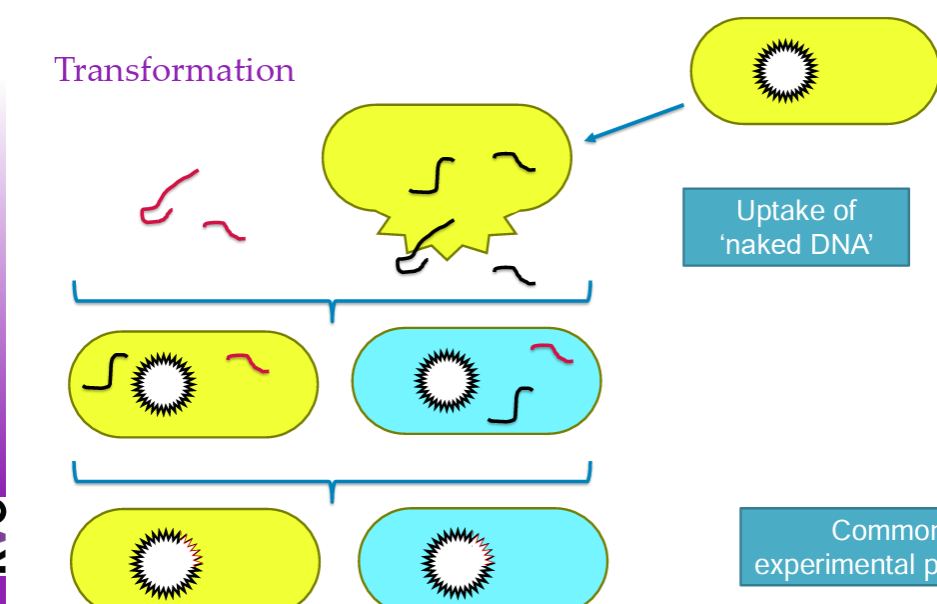
transformaiton- uptake of naked dna- DNA from any origin into any bacterial species (most of the type prokaryotic as eukaryotic wouldnt pose as an advantage but could be from any bacteria eg shigella toxin to e. coli)
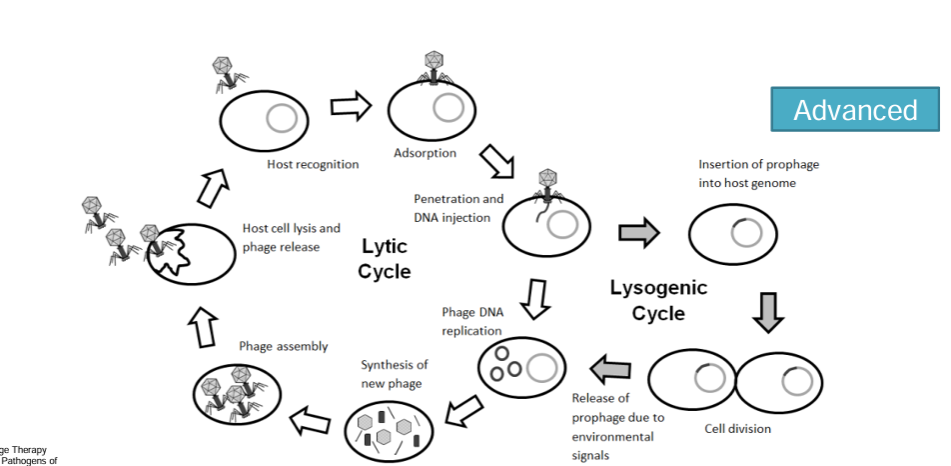
transduction- bacteriophage mediated
conjugation- cell to cell cotnact via pili
transduction and conjugation are species specific, potentially lineage specific
trasnformation
uptake of naked dna. eg released from a lysed cell
dna can pass through bacterial cell envelope - can use shocking in lab to increase rate of uptake
become part of genome
if are circular they are self replicable if they are transposons they must integrate
transduction
bacteriophage mediated exchange (viral type structure)
pins and base plates, inject genetic material into cell.
replicate
reassemble in cell
can mistakenly uptake bacterial dna
cell lyses and can spread bacteria dna
this can inject this into other cells
conjugation
cell cell contact via pilli
cell must be in direct contact
plasmid can move- 2 cells can then have same plasmid
species specific