Renaissance Art and Architecture -works and people Unit IIA
 Call Kai
 Learn
Learn Practice Test
 Spaced Repetition
 Match
Match Flashcards
 Knowt Play
1/41

There's no tags or description
Looks like no tags are added yet.
Name | Mastery | Learn | Test | Matching | Spaced | Call with Kai | Chat |
|---|
No analytics yet
Send a link to your students to track their progress
42 Terms
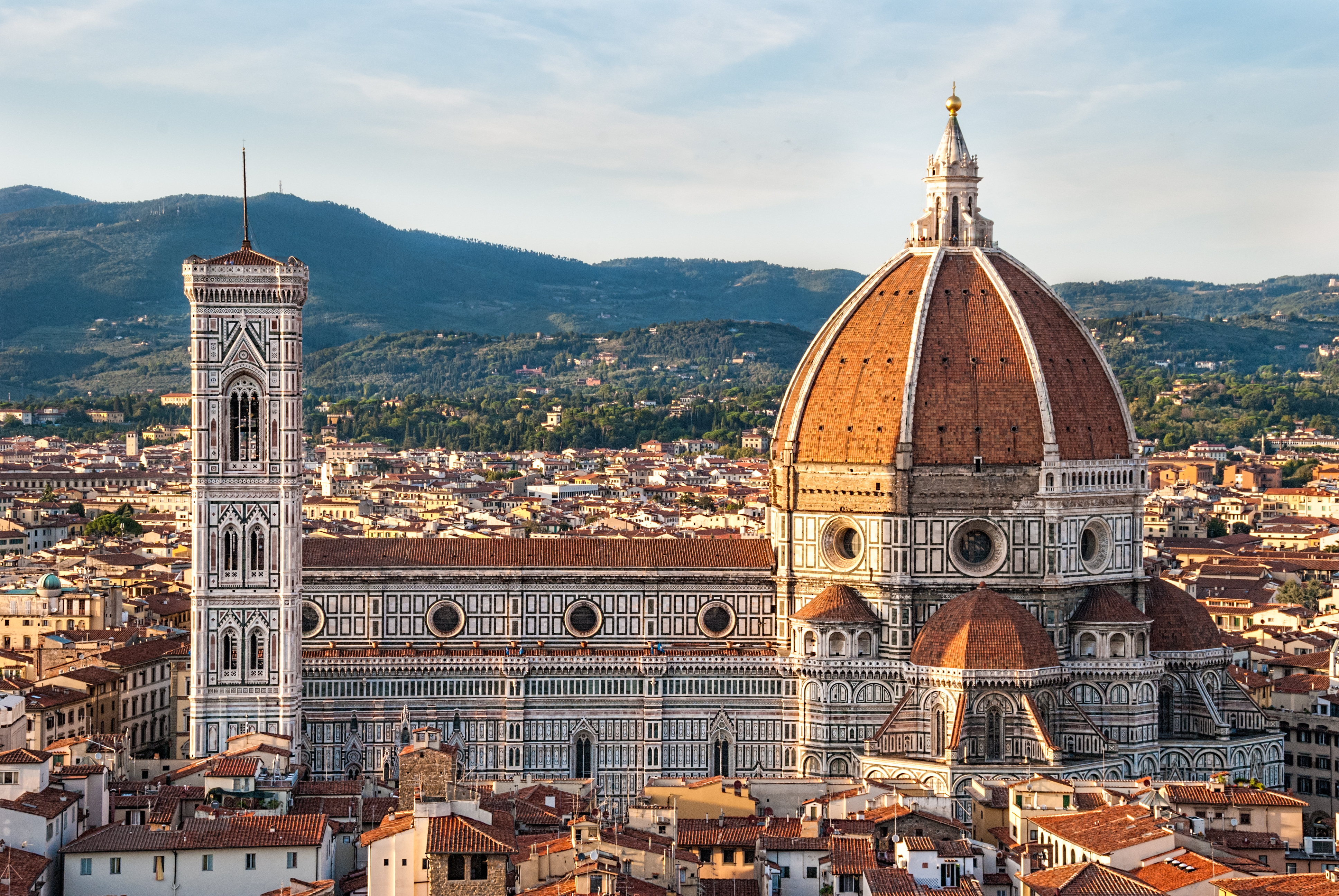
Santa Maria del Fiore
main early Renaissance cathedral, demonstrates humanism by size, Greco-roman simplicity, marble facade and dome (like Pantheon) designed by Brunelleschi, Campanilla del Fiore (belltower) designed by Giotto, Baptistria del Fiore = baptistry
Santa Croce
early Renaissance church, Greco-Roman simple facade, Star of David from donation by Jewish community for repairs/reconstruction (helps identify it)

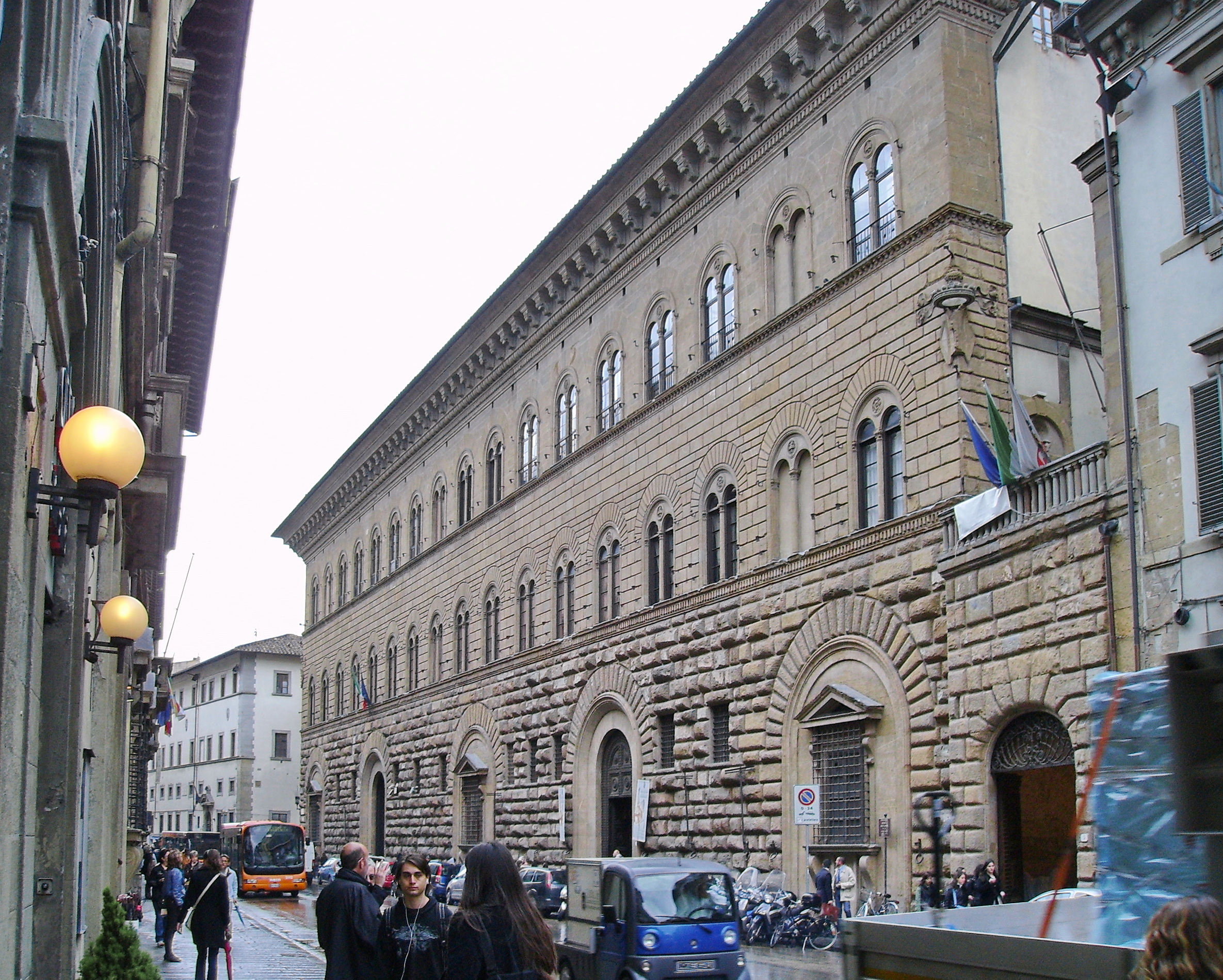
Palazzo Medici
Bank and home of Medici, long buildings with courtyards for security, Greco-Roman culture - rounded arches, pediments
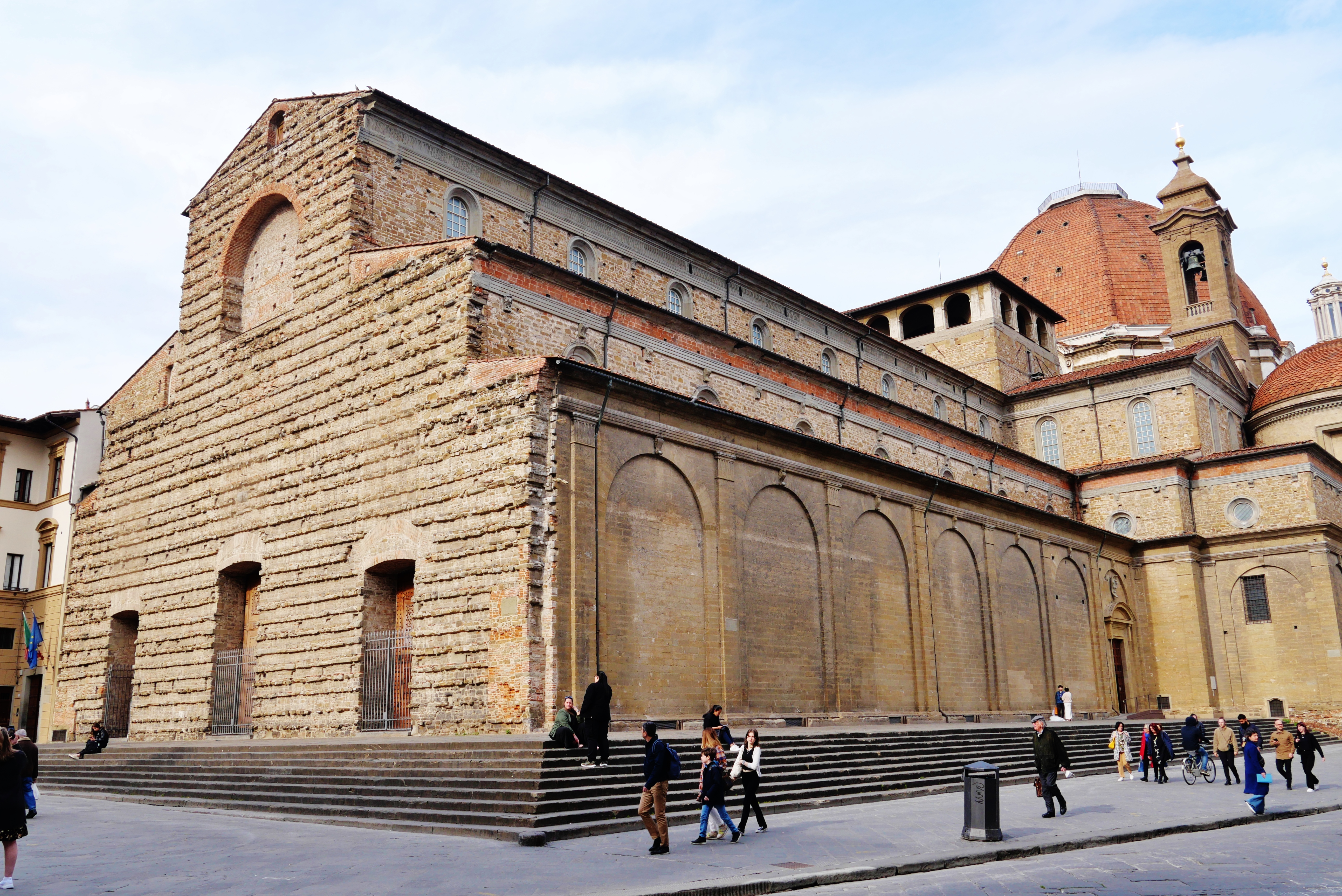
San Lorenzo
home church of Medici family - built for security after conspiracy, no facade, beautiful interior
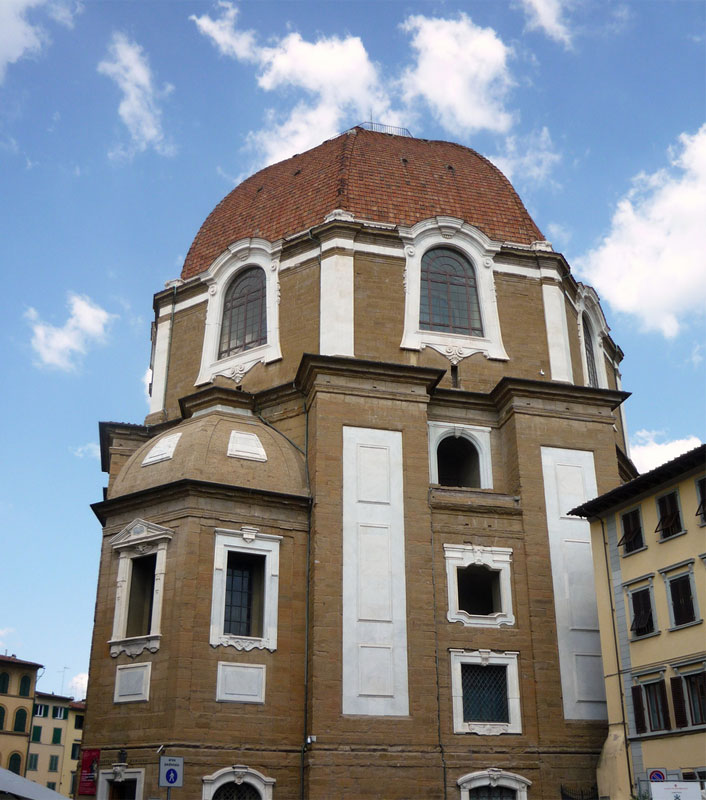
Capella Medici
Mausoleum (indoor cemetery) for Medici family - designed by Michelangelo, Greco-Roman culture - proportions, dome, optical illusion of size
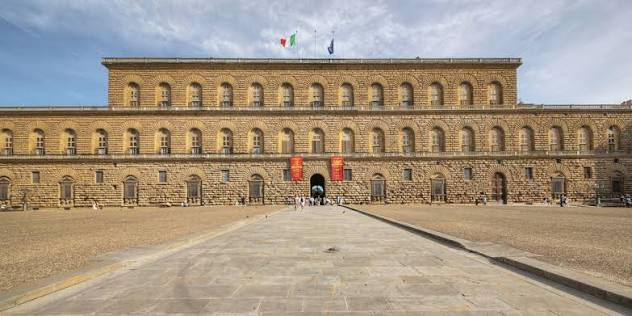
Palazzo Pitti
Pitti home and bank, Greco-Roman culture - pediments and arches
Bargello
medieval fortress structure - jail, now used as museum for Renaissance sculptures

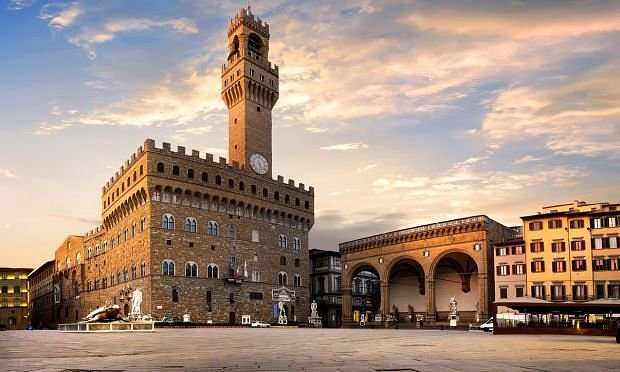
Palazzo della Signoria
built in Middle Ages, asymmetrical clock tower (common in M.A.), Greco-Roman style art on interior
Ponte Vecchio
means “old bridge”, built before Renaissance, has shops/buildings on bridge (originally used as butcher shops to discard debris into river)

Ponte San Trinita
Renaissance bridge built in 1300s, Greco-Roman culture - arches, symmetry, simplicity, legend of Holy Trinity blessing bridge, destroyed in WWII and rebuilt by locals

San Pietro (St. Peter’s)
Church of the Pope, MASSIVE, closest place to Peter, built during Renaissance, Greco-Roman culture - pediment, columns, dome built by Michelangelo - St. Peter’s square w/ columns and sculptures of apostles, artwork on interior

Madonna and Child
wood panel panting by Giotto, Greco-roman culture - symmetry, arch, neutral expressions - struggled with skin color, depth, realism and babies

The Expulsion
fresco painting by Masaccio, biblical story (Adam and Eve/original sin), incorrect anatomy proportions, no muscle tension, humanism - paints Adam laughing - not in bible

Primavera
large canvas painting by Botticelli, means “spring”, Greco-Roman culture - mythological scene (NOT religious!)

The Birth of Venus
canvas painting by Botticelli, Greco-Roman culture - mythology, Aphrodite

The Baptism of Christ
by Verrocchio, scene from the Bible in Jordan, includes John the Baptist (with animal skins and bowl for baptism) and Jesus, student was Leonardo Da Vinci and went on to become famous

Concert
canvas painting by Titian, excellent skin tones and realism

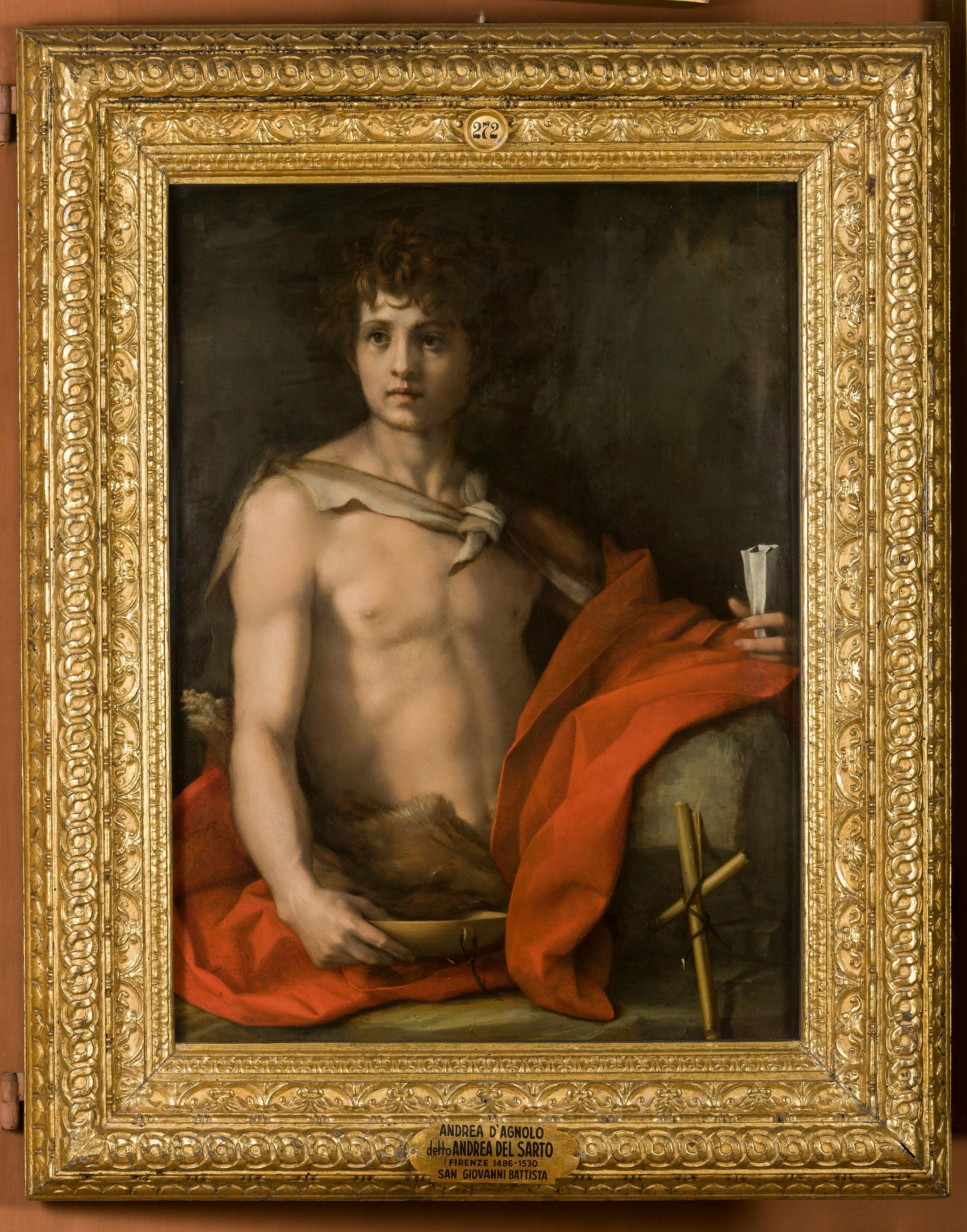
John the Baptist
canvas painting by Andrea del Sarto, perfected 3D/depth effect, uses animal skins and cross to indicate bible figure - uses SHADOWS to create ILLUSION of DEPTH!!
Mona Lisa
canvas painting by Leonardo Da Vinci, famous because no one knows who subject is or what their soul is supposed to show

Christ of the Bullfinch
canvas painting by Raphaello, religious, has Mary (always in blue) and Jesus (associated with red), John the Baptist (in animal skins), calm, feminine, maternal, no conflict

The Little Holy Family
canvas painting by Michelangelo, holy family, shows physical power/stress, incudes people in background for variety of figures, masculine

Filippo Brunelleschi
architect that designed dome on Santa Maria del Fiore, studied Pantheon to create it
Giotto
designed Campanilla del Fiore (belltower) to tell time during Renaissance era, early Renaissance, painted Madonna and Child, struggled with skin color, depth, realism, and babies
Michelangelo Buonarroti
designed dome on San Pietro (St. Peter’s), painted in masculine style showing physical power/stress in all of his paintings, painted Little Holy Family and ceiling and altar wall of Sistine Chapel, sculpted the David
Masaccio
painter from Florence, painted “The Expulsion,” chose to make Adam laughing, demonstrating humanism
Botticellio
painted “Primavera” and “The Birth of Venus” in Greco-Roman style using mythology (NOT religious)
Andrea del Verrocchio
painter from Florence, painted “The Baptism of Christ”, Leonardo was his student
Titian
painted “Concert,” excelled in skin tone and portraits and realism
Andrea del Sarto
painted “John the Baptist”, perfected DEPTH/3D effect, used SHADOWS to create ILLUSION of DEPTH
Leonardo Da Vinci
painted the Mona Lisa and The Last Supper, extremely famous, very creative and intentional
Raphaello
contemporary of Michelangelo and Leonardo, painted “Christ of the Bullfinch”, calm, serene, feminine style with no conflict in paintings
Sistine Chapel
fresco, in the Vatican, ceiling painted by Michelangelo (scenes from Old Testament), side walls painted by Raphaello (life of Jesus), altar wall painted later by Michelangelo (The Last Judgement)

Donatello
sculptor, earlier Renaissance generation, made first true Renaissance sculpture
David (Donatello)
bronze sculpture, Greco-Roman culture - nude, leaning on one leg, difficult - biblical figure (David and Goliath), young looking

Perseus
bronze sculpture by Benvenuto Cellini, Greco-Roman culture - mythology

Benvenuto Cellini
sculptor of “Perseus,” wrote Murder in the Streets about Italian culture
David (Michelangelo)
in Florence, marble sculpture, considered most perfect work of the Renaissance, Greco-Roman culture - style, leaning, expression. humanism - SIZE, focus on MAN, difficulty. sculpted before killing Goliath in bible

Dante Alighieri
wrote the Divine Comedy - first humanist work and in Florence’s vernacular
Machiavelli
wrote The Prince - first secular and amoral work in Modern Era
Castiglione
wrote The Courtier - how to be best Renaissance man - well rounded
Erasmus of Rotterdam
Northern renaissance (from Netherlands), wrote The Philosophy of Christ about translating the bible into the vernacular
Mirandola
wrote On the Dignity of Man - one of the best examples of humanism in history - explains how man’s talents come from God and man can choose to pursue them