Ch. 17 - Learning Objectives
 Call Kai
 Learn
Learn Practice Test
 Spaced Repetition
 Match
Match Flashcards
 Knowt Play
1/139

There's no tags or description
Looks like no tags are added yet.
Name | Mastery | Learn | Test | Matching | Spaced | Call with Kai | Chat |
|---|
No analytics yet
Send a link to your students to track their progress
140 Terms
Nervous System
communicates →
releases
events
speed
Adapts (quickly or slowly)
communicates → electrical impulses, neurotransmitters,
releases neurotransmitters at target cells
local, specific events
Quick, localized
Adapts quickly
Endocrine System
communicates →
releases
events
responds more ______
Adapts (quickly or slowly)
Communicates → hormones
Release hormones into bloodstream
General, widespread effects
Respond more slowly
Adapts slower
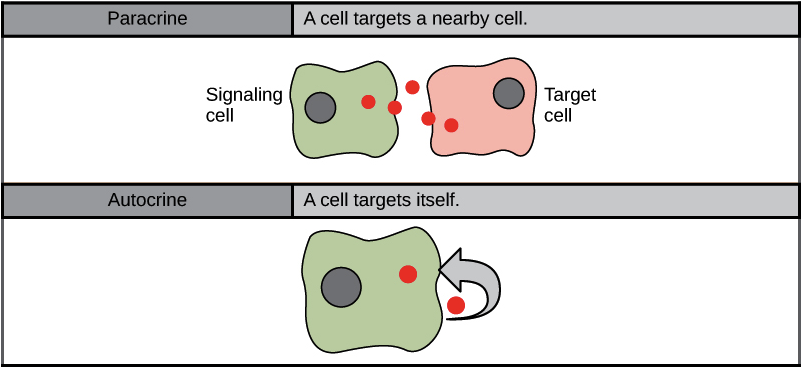
Paracine
most cells
targets nearby cells


examples of Paracrine
histamine, NO
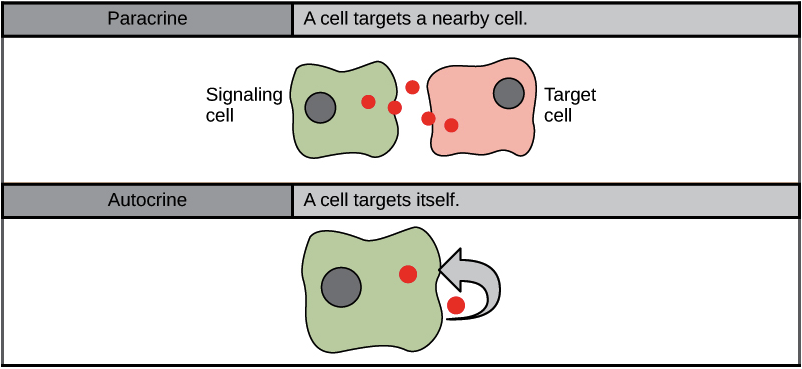
Autocrine
A cell targets itself
examples of Autocrine
hepcidin inhibits intestinal iron absorption

“Direct Communication”
Gap Junction
Endocrine Organs
AT Paris The Adenal Plants Grow
Hypothalamus, Pituitary gland, Pineal gland
Thymus, Parathyroid gland, Thyroid gland
Adrenal glands, Pancreas, Gonads (ovaries and testes)
Neuroendocrine Organs (HPPA)
Hypothalamus, pineal gland, posterior pituitary, adrenal medulla
Secondary Endocrine Organs
skin, liver, kidney, heart, adipose tissue, GI tract(stomach, small intestine), osseous tissue, placenta
examples of steroids
testosterone, estradiol, cholesterol derivatives
Steroids traveling through blood
hydrophobic → need a special carrier protein
Monoamines examples
thyroxine, epinephrine, amino acid derivatives
Monoamines traveling through blood
hydrophilic → does not need carrier
examples of peptides & glycoproteins
Oxytocin, insulin, amino acid chains
Peptides & Glycoproteins traveling through blood
(hydrophilic or hydrophobic)
hydrophilic → does not need carrier
steroids derive from ______
Can pass easily through ______
Need a carrier for _____
cholesterol, membranes, blood
Monoamines
Cannot pass easily in _______
Not need a carrier in _____
membranes, blood
Monoamines derive from . . .
one amino acid (tyrosine or tryptophan)
Peptides
Cannot pass easily in _______
Not need a carrier in _____
membranes, blood
Peptides: DNA → _____ →
RNA, protein
Examples of hormonal stimulation of hormone secretion:
glucocorticoids (ex. Cortisol), Alpha islet cells secrete glucagon
Examples of neural stimulation of hormone secretion
catecholamines (dopamine, norepinephrine, and epinephrine)
Examples of humoral stimulation of hormone secretion
secretion of calcitonin, secretion of Parathyroid hormone (Ca2+ regulators)
capillary blood contains low conc. of Ca2+ which stimulates secretion of PTH
(type of stimulation)
Humoral stimulus
preganglionic sympathetic fibers stimulate adrenal medulla cells to secrete epinephrine and norepinephrine (catecholamines)
(type of stimulation)
Neural stimulation
hypothalamus secretes hormones → stimulates anterior pituitary glands to secrete hormones → stimulates other endocrine secretion
(type of stimulation)
Hormonal stimulation
Specificity
one type of receptor only binds one type of hormone
Saturation
a) the more receptors bound to hormone, the greater the response, b) once all receptors bound to hormone no additional hormone can bind & maximal response achieved
Catecholamines/peptide hormones are ________(hydrophobic or hydrophilic?)
hydrophilic
Steroid hormones are ________(hydrophobic or hydrophilic?)
hydrophobic
Thyroid hormone is ________(hydrophobic or hydrophilic?)
hydrophobic
Catecholamines/Peptide hormones
* (can or cannot) penetrate target cell
* Bind receptors at _______ _______ -
* Show effect in . . .
cannot, plasma membrane, minutes to hours
Catecholamines/Peptide hormones activate _______ processes via ______ _______
intracellular, second messengers
Steroid hormones - fat soluble
* Bind receptors in _______
* Increase _____ ______ in target cell
* Show effect in . . .
Nucleus, gene expression, Hours to Days
Sterioid hormones penetrate the _______ ______
plasma membrane
Thyroid hormone - hydrophobic
* Transported into _____
* Bind receptors in ________
* Increase _____ _______ in target cell
* Show effect in . . .
cells, Nucleus, gene expression, Hours to Days
steps involved in the transduction process that uses cAMP as a second messenger
Hormone-receptor binding activates G protein.
G protein activates adenylate cyclase .
Adenylate cyclase produces CAMP.
cAMP activates protein kinases
Protein kinases phosphorylate enzymes.
Activated enzymes promote metabolic reactions with a wide range of possible effects on the cell.
potential metabolic effects of second messenger systems
• Activation or deactivation of enzymes
• Increase or decrease in amount of protein synthesis in the cell
• Influence on glycogen metabolism (glycogenesis or glycogenolysis)
• Stimulation of mitosis
• Stimulation of apoptosis (programmed cell death)
• Promote differentiation
• Activation or inhibition of membrane channels (via ligand or change in membrane potential)
• Smooth muscle contraction
• Secretion of product
Steps of the transduction process utilized by hydrophobic hormones
Steroid hormone → _______ → receptor _____ → hormone-receptor ______ → DNA → ______ → new _____-
Steroid hormone → cytoplasm → receptor protein → hormone-receptor complex → DNA → mRNA → new protein
Estrogen binds to nuclear receptors in cells of uterus
Thyroid hormone enters cell by ATP-dependent transporter
these are examples of ____________
transduction
Upregulation increases receptor density + sensitivity, creating a ______ response
stronger
Downregulation decreases receptor density + sensitivity, creating a ______ response
diminished
Example of upregulation:
Oxytocin receptors during childbirth

Example of downregulation:
Opioid receptors + drug tolerance

Synergistic effects
Hormones work together to produce greater effect
FSH and testosterone on sperm production
Permissive effects
First hormone allows action of second hormone
Estrogen permits effects of progesterone
Antagonistic effects
First hormone causes opposite effect of another hormone
Calcitonin and parathyroid hormone on blood calcium levels

Hormonal feedback loop:
Hypothalamus → Anterior pituitary → Peripheral endocrine gland → Target cells → Action
Neuroendocrine feedback loops:
Nervous system → Endocrine gland → Target cells → action
Humoral feedback loops:
Changing levels of substance in plasma → endocrine gland → target cells → action

Hypothalamus
regulates primitive functions - e.g., H2O balance, thermoregulation, sex drive, childbirth

Pituitary gland
*composed of two structures of independent origins and separate functions:
secretes hormones as dictated by the hypothalamus
*composed of two structures of independent origins and separate functions:
Adenohypophysis, a.k.a. Anterior pituitary
Neurohypophysis, a.k.a. Posterior Pit
8 hormones produced by the hypothalamus
Twin Cats Go Grow Pet Snacks
Thyrotropin-releasing hormone (TRH):
Corticotropin-releasing hormone (CRH):
Gonadotropin-releasing hormone (GRH):
Growth hormone-releasing hormone (GHRH):
Prolactin-inhibiting hormone (PIH):
Somatostatin:
Thyrotropin-releasing hormone (TRH):
Promotes secretion of thyroid-stimulating hormone (TSH) and prolactin (PRL)
Corticotropin-releasing hormone (CRH):
Promotes secretion of adrenocorticotropic hormone (ACTH)
Gonadotropin-releasing hormone (GRH):
Promotes secretion of follicle-stimulating hormone (FSH) and luteinizing hormone (LH)
Growth hormone-releasing hormone (GHRH):
Promotes secretion of growth hormone (GH)
Prolactin-inhibiting hormone (PIH):
Inhibits secretion of prolactin (PRL)
Somatostatin:
Inhibits secretion of growth hormone (GH) and thyroid-stimulating hormone (TSH)
2 other hypothalamic hormones:
Paraventricular nuclei produces Oxytocin, Supraoptic nuclei produces ADH
6 hormones synthesized by the pituitary gland
Follicle stimulating hormone (FSH)
Luteinizing hormone (LH)
Adrenocorticotropic hormone (ACTH)
Thyroid-stimulating hormone (TSH)
Prolactin (PRL)
Growth hormone (GH)
Posterior Pituitary Hormones
Antidiuretic hormone (ADH)
Oxytocin (OT)
Follicle Stimulating Hormone (FSH)
Female: Growth of ovarian follicles and secretion of estrogen
Male: Sperm production
Luteinizing hormone (LH)
Female: Ovulation, maintenance of corpus luteum
Male: Testosterone secretion
Thyroid-stimulating hormone (TSH)
Growth of thyroid, secretion of thyroid hormone
Adrenocorticotropic hormone (ACTH)
growth of _______, secretion of ________
Growth of adrenal cortex, secretion of glucocorticoids
Prolactin (PRL)
Milk synthesis
Growth hormone (GH)
Widespread tissue growth, especially in the stated tissues
Antidiuretic hormone (ADH)
water retention
Oxytocin (OT)
Labor contractions, milk release, possibly involved in ejaculation, sperm transport, sexual affection, and mother-infant bonding
steps involved in the hypothalamic-hypophysial portal system
Hypothalamic neurons secrete releasing and inhibiting hormones into the hypothalamic capillary bed.
Hormones travel through portal veins in the infundibulum.
Hypothalamic hormones exit the anterior - pituitary capillary bed to bind to receptors on anterior pituitary cells.
Hypothalamic hormones stimulate or inhibit secretion of hormones from the anterior pituitary cells.
Starting with cells in the hypothalamus and ending with the release of each of two hormones from the posterior pituitary gland, order the steps involved
Hypothalamic neurons make either ADH or Oxytocin
The hormones travel through the hypothalamic axons in the infundibulum.
ADH and oxytocin are stored in the axon terminals in the posterior pituitary.
The hormones are secreted into the blood when the hypothalamic neurons fire action potentials.
Oxytocin: stimulus
(activation of stretch receptors or myoepithelial cells)
Oxytocin: receptors
mechanoreceptors in cervix or breast tissue
Oxytocin: response
OT release from posterior pituitary into blood
Oxytocin: target tissues
smooth muscle of uterus or myoepithelial cells in breast tissue
Oxytocin: effects on target tissues
contraction of smooth muscle in uterine wall; “let down” of milk
Oxytocin: feedback
positive feedback to increase OT until stimulus stops (birth or infant stops suckling)
ADH: stimulus
(high solute concentration, low water concentration in plasma)
ADH: receptors
osmoreceptors in hypothalamus
ADH: response
ADH release from posterior pituitary into blood
ADH: target tissues
kidney tubules, smooth muscle, sweat glands
ADH: effects on target tissues
increased reabsorption of water from kidney tubules, vasoconstriction of blood vessels (at high concentrations of ADH), decreased sweat produced
ADH: feedback
Negative feedback to decrease release of ADH
Corticotropin-releasing hormone
Hypothalamic Hormone, Pituitary Hormone, Target structure/organ
Corticotropin-releasing hormone, + Adrenocorticotropic hormone, Adrenal cortex
Gonadotropin-releasing hormone
Hypothalamic Hormone, Pituitary Hormone, Target structure/organ
Gonadotropin-releasing hormone, + Follicle-stimulating hormone + Luteinizing hormone, Ovaries and testes
Growth-hormone-releasing hormone
Hypothalamic Hormone, Pituitary Hormone, Target structure/organ
Growth-hormone-releasing hormone, + Growth hormone, Liver, bone, cartilage, muscle, fat
Prolactin-inhibiting hormone
Hypothalamic Hormone, Pituitary Hormone, Target structure/organ
Prolactin-inhibiting hormone, Prolactin, Mammary glands
Somatostatin
Hypothalamic Hormone, Pituitary Hormone, Target structure/organ
Somatostatin, Growth hormone and thyroid stimulating hormone, Liver, bone, cartilage, muscle, fat
Thyrotropin-releasing hormone
Hypothalamic Hormone, Pituitary Hormone, Target structure/organ
Thyrotropin-releasing hormone, Thyroid-stimulating hormone, Thyroid gland
Long term effects of GH/somatomedins: widespread effects on body tissues
induces ______ to produce _____
Especially cartilage, bone, muscle and fat
induces liver to produce growth stimulants: Insulin-like growth factors [ IGF-I ] & [ IGF-II ] or Somatomedins
GH/somatomedins
First few minutes (make sure the brain gets its glucose)
________ and _________ allow for both protein sparing and glucose sparing
Lipolysis and gluconeogenesis allow for both protein sparing and glucose sparing
GH/somatomedins
Next (growth of most tissues)
• Protein synthesis
• Cell division in especially bone and muscle
• More lipolysis
• Glucose enters cells
• Necessary ions for growth are absorbed and retained so that electrolytes are available to growing
Hyposecretion of GH can result in ________
dwarfism
Hypersecretion of GH can result in ________
Gigantism
in childhood or adolescence, before growth plates CLOSE hypersecretion of GH can cause
Gigantism
Hypersecretion of GH
in adults: ________ thickening of bones and soft tissues
Especially hands, feet, and face
Acromegaly
Graves’ Disease
Bulging eyes, enlarged thyroid
Immune system produces proteins that mimic action of TSH
Disruptions in heart rhythm and BP due to synergism of TH with SNS
TRH and TSH are low
Hashimoto’s disease
______ deficiency
_________: No Thyroid Hormone ➔ no negative feedback → TRH and TSH
Iodine deficiency
Hypothyroidism: No Thyroid Hormone ➔ no negative feedback → TRH and TSH
the TSH → excessive
stimulation of thyroid → thyroid inflammation → development of a Goiter