(1f) Ionic Bonding
 Call Kai
 Learn
Learn Practice Test
 Spaced Repetition
 Match
Match Flashcards
 Knowt Play
1/23

Earn XP
Description and Tags
Name | Mastery | Learn | Test | Matching | Spaced | Call with Kai | Chat |
|---|
No analytics yet
Send a link to your students to track their progress
24 Terms
Formation of Ions
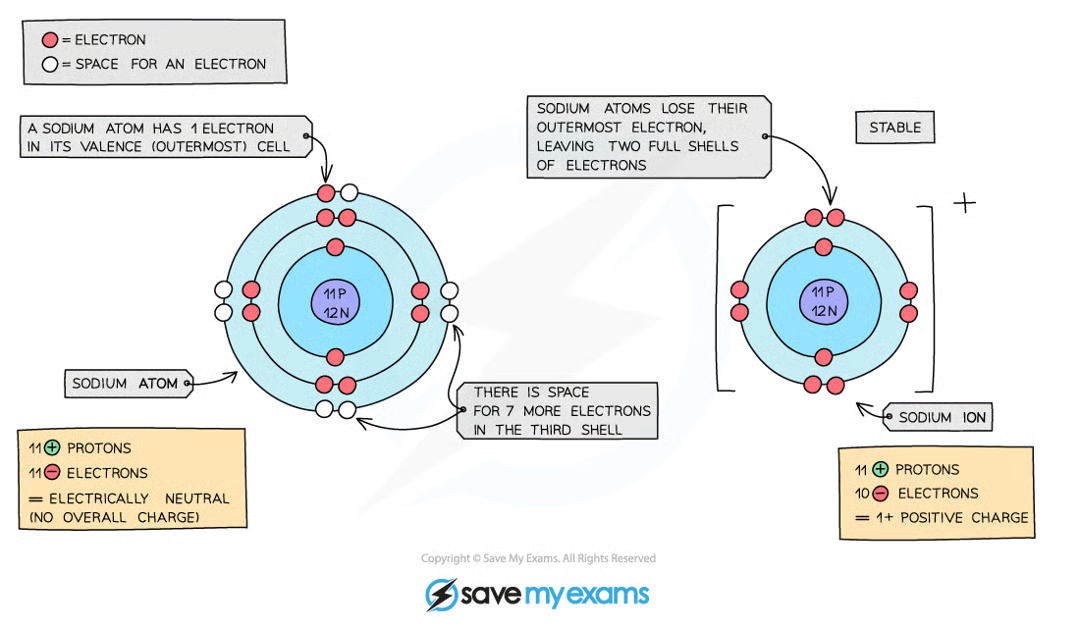
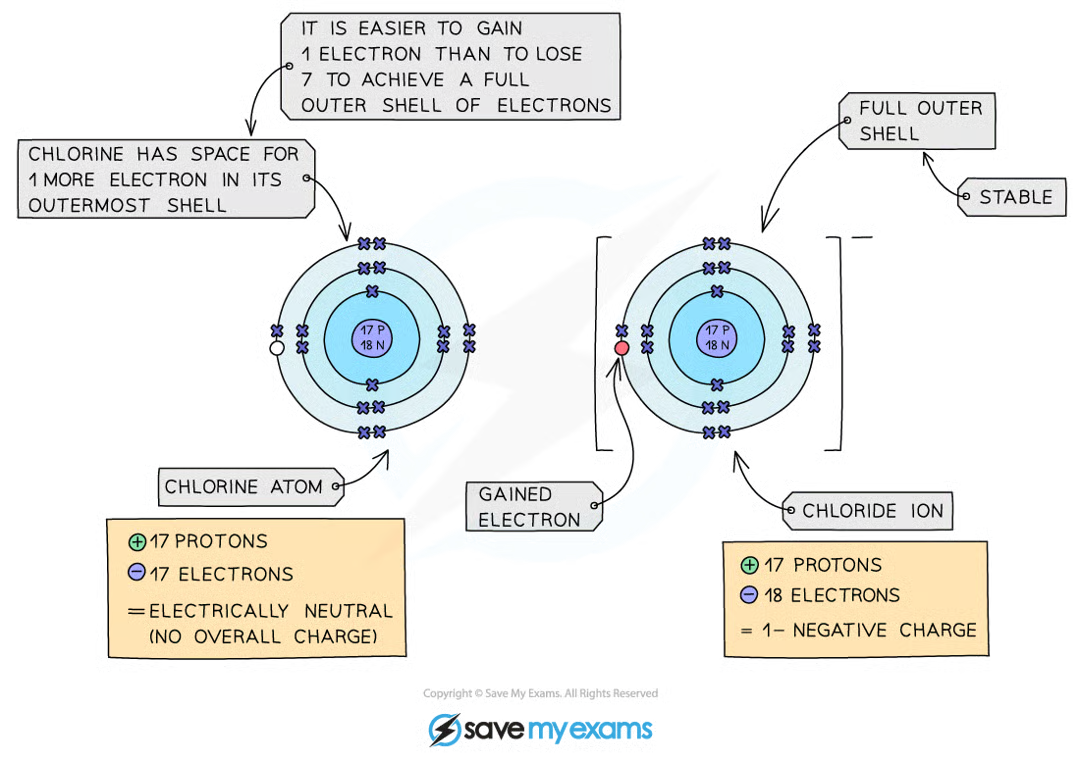
electrically charged atom or group of atoms formed by the loss or gain of electrons
takes place to obtain a full outer shell of electrons
Metal Ions
lose electrons to become positively charged
Non-Metal Ions
gain electrons from other atoms to become negatively charged
Formation of Cations
Formation of Anions
Finding Ion Charge
find outer shell electron numbers
is it easier to gain or lose?
>4: receive electrons
<4: donate electrons
type of ion formed:
gain electrons: anion
lose electrons: cation
Ammonium Ion
NH4+
Hydroxide Ion
OH-
Carbonate Ion
CO32-
Nitrate Ion
NO3-
Sulfate Ion
SO42-
Group 1 Ions
Metals: 1+ (Na+)
Group 2 Ions
Metals: 2+ (Mg2+)
Group 3 Ions
Metals: 3+ (Al3+)
Group 5
Non-metals: 3- (N3-)
Group 6
Non-metals: 2- (O2-)
Group 7
Non-metals: 1- (Cl-)
Ionic compounds have no overall charge because:
Size of any positively charged ions is cancelled by the size of the negatively charged ion
Forming Ionic Compounds (Direct Comparison)
Formula can be determined by directly comparing charges of the ions
Metal charge (ex:2+)
Non-metal charge (ex:2-)
Charges cancel out [ (2+) + (2-) = 0 ]
means one non-metal ion is needed to cancel out one metal ion
Dot and Cross Diagrams
electrons from each atom should be diagrammatically dots and crosses
put one atom’s electrons in dots and the other in crosses
>2 atoms: hollow circles or other symbols may be used
transfer dots from one atom to the other to show electron donated
shells filled = atoms become ions
large square brackets should encompass each ion
charge in superscript on right hand side outside bracket
put number on left hand side to show ratio
Ionic Bonding
ionic compounds: regular arrangement of alternating positive and negative ions where ions are tightly packed together
between cations and anions there are strong electrostatic forces of attraction in all directions
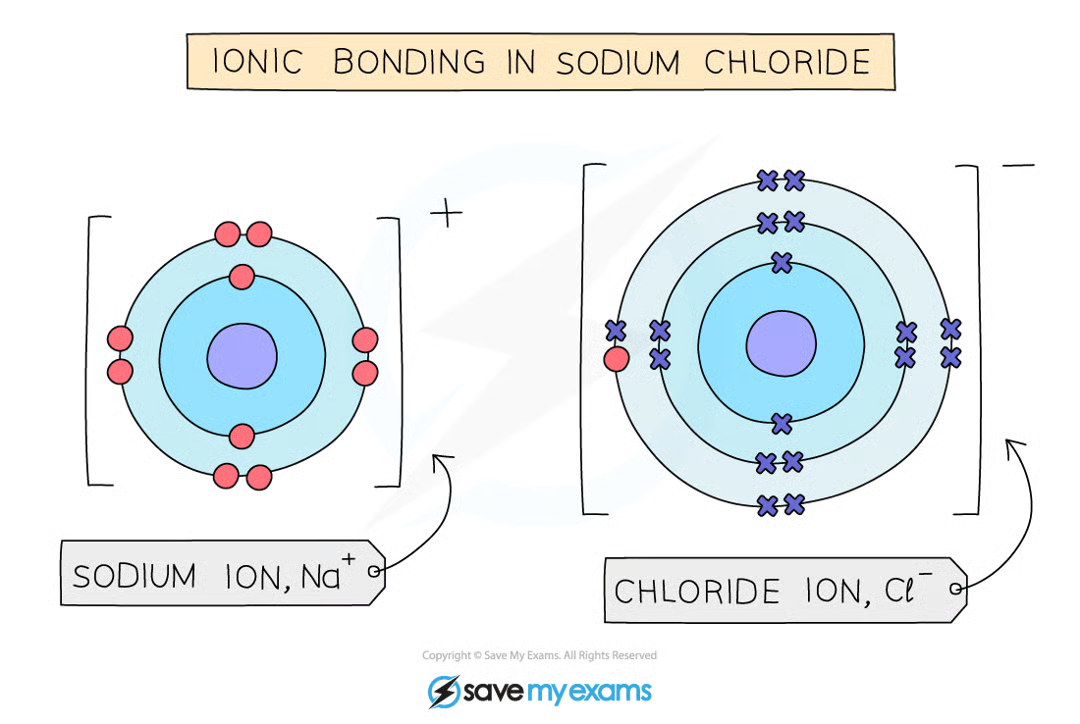
Ionic Lattices
thousands of cations and anions in an ionic compound form a giant lattice structure
giant lattice compounds have high melting points
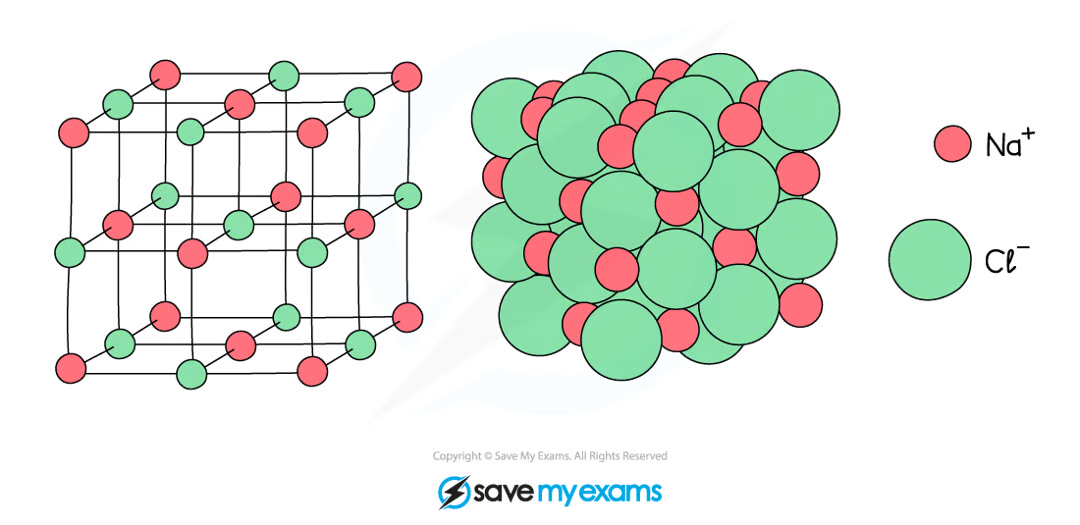
Ionic compounds have high melting and boiling points because:
giant ionic lattices
strong electrostatic forces of attraction between oppositely charged ions in all directions
forces need lots of energy to overcome them
greater charge = greater attractive forces
higher melting point
ex: MgO (Mg2+ and O2-) has a higher melting point than NaCl (Na+ and Cl-)
Conductivity of Ionic Compounds
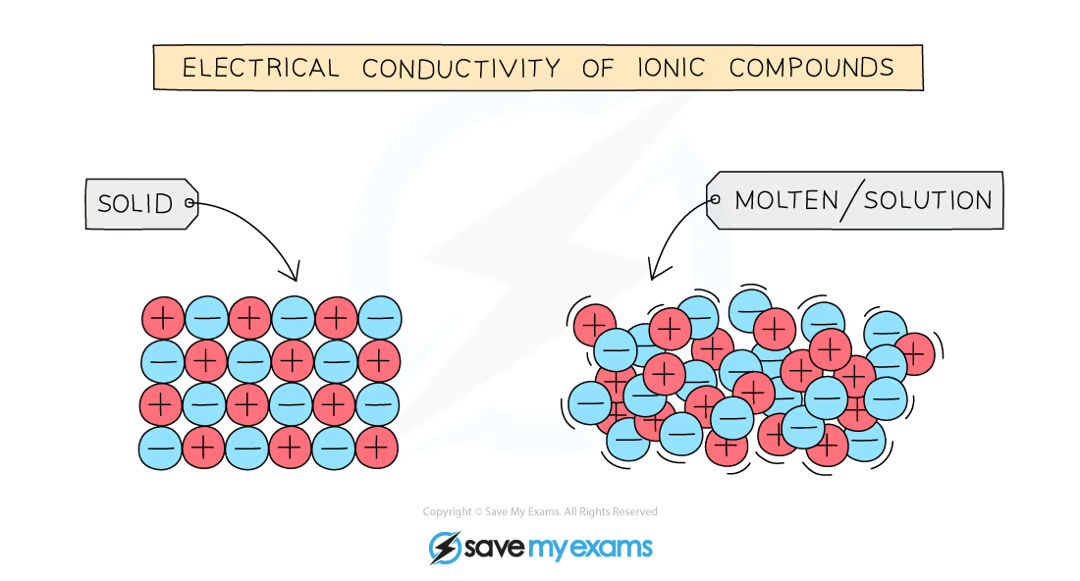
for electrical current to flow there must be freely moving charged particles like electrons or ions present
ionic compounds are poor conductors as solids
ions are in fixed position in lattice
so they are unable to move and carry a charge
good conductors as molten or in solution
melted or dissolved = ions can move and carry a charge