1.3 Aggregate Supply
 Call Kai
 Learn
Learn Practice Test
 Spaced Repetition
 Match
Match Flashcards
 Knowt Play
1/8

There's no tags or description
Looks like no tags are added yet.
Name | Mastery | Learn | Test | Matching | Spaced | Call with Kai | Chat |
|---|
No analytics yet
Send a link to your students to track their progress
9 Terms
Aggregate supply
The total amount of goods and services supplied in an economy over a period of time at any given price level
Aggregate supply in the short run
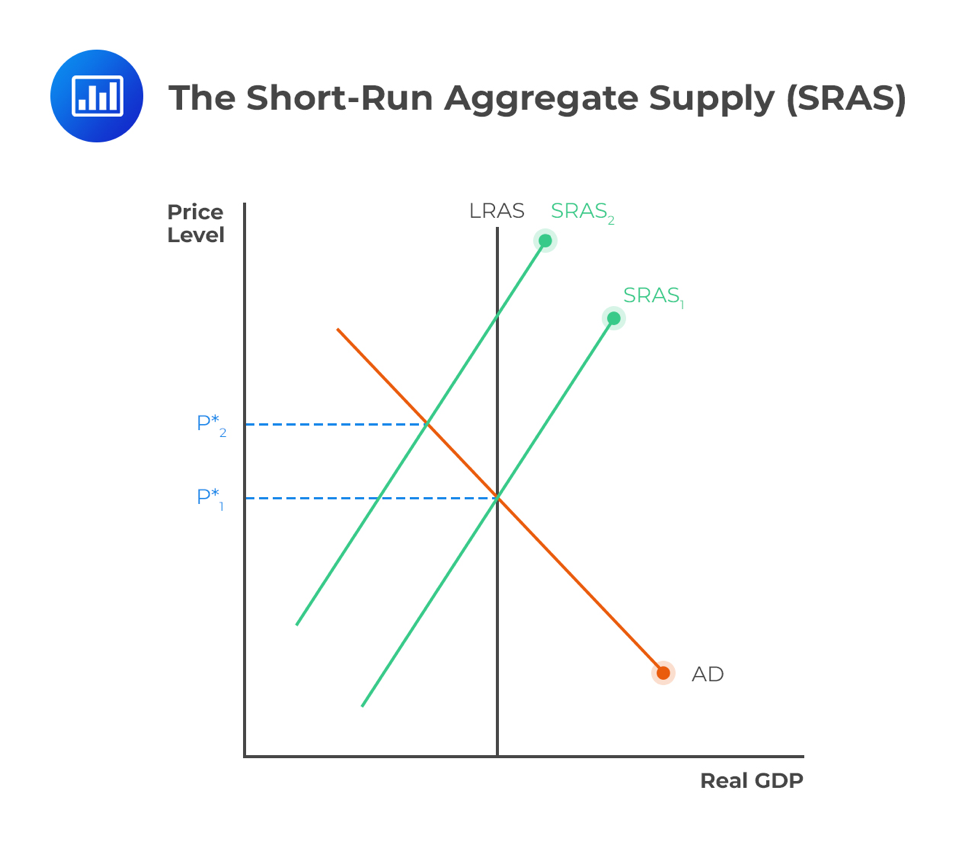
In the short run, factors of production are fairly fixed, but at higher prices, firms would like to supply more, so the short run aggregate supply curve slopes upwards from left to right (change in price level causes movement along the SRAS curve)
Short run in economics
At least one of the factors of production is fixed
Long run in economics
All of the factors of production can vary
Short run aggregate supply (SRAS)
Shows how much output the economy can generate in the short-run at each price level
Firms have little flexibility to vary their inputs
Affected by changes in the costs of production (wages, labour productivity, taxes, external shocks)
Long run aggregate supply (LRAS)
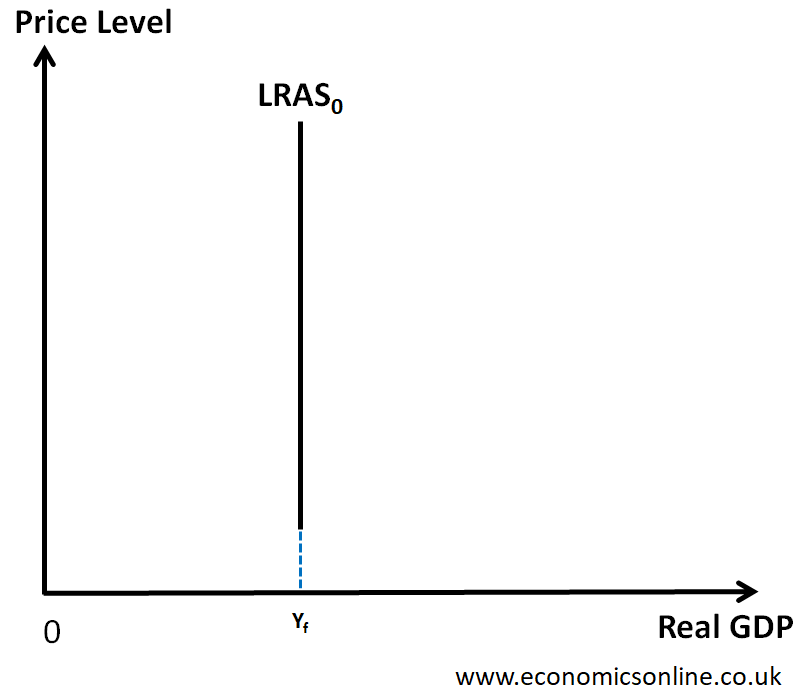
The ability of an economy to produce goods and services is based on the quantity and quality of the factors of production (productive potential)
When the productive potential increases, this will lead to a shift of the LRAS curve
Productivity
Measures the efficiency of the production process. A fall in labour productivity leads to a rise in firms’ unit costs of production, while higher productivity allows businesses to pay higher wages and achieve increase profits.
Non linear AS curve
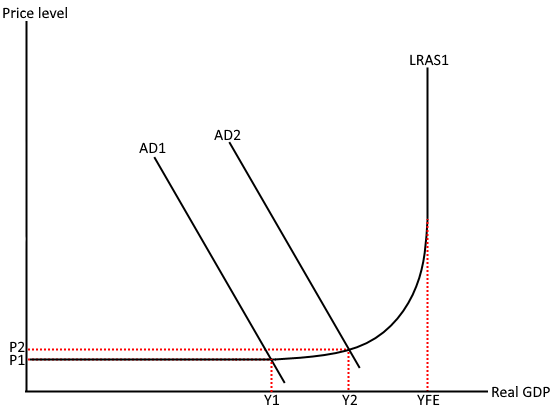
When spare capacity is high (production not on PPC), SRAS is elastic - a rise in AD can easily be met by increased output and there is little threat of inflation
The elasticity of the SRAS curve falls as output increases - the amount of spare capacity declines, there is bottlenecks in supply of inputs and components and resource shortages as the economy approaches full employment
When SRAS becomes perfectly inelastic, the economy is at full capacity
Keynesian AS curve
SRAS and LRAS on one curve
AD is rising so quickly, AS cannot keep up