from PPT and pics
 Call Kai
 Learn
Learn Practice Test
 Spaced Repetition
 Match
Match Flashcards
 Knowt Play
1/46

There's no tags or description
Looks like no tags are added yet.
Name | Mastery | Learn | Test | Matching | Spaced | Call with Kai |
|---|
No analytics yet
Send a link to your students to track their progress
47 Terms
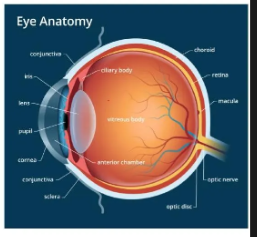
•a. Tunica Fibrosa ; cornea and sclera
•b.tunica vasculosa (uvea): iris, ciliary body and choriod
•c. Tunica nervosa: retina
· concentric tunics of the eyeball
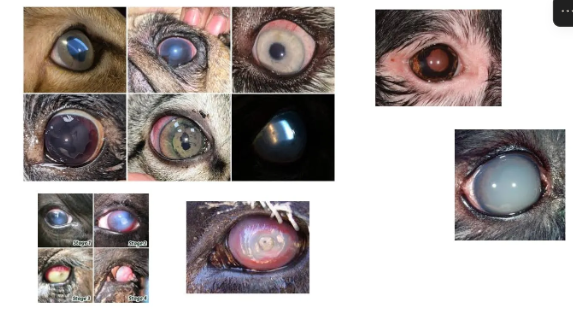
Moraxella bovis. commonly cause pink eye in bovine
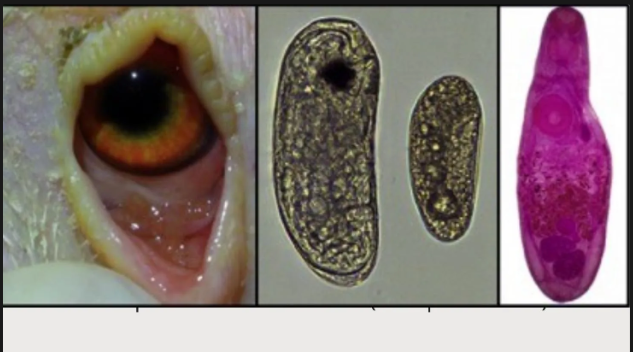
Philophthalmus: Trematode eye fluke of wild birds (Philophthalmidae)
Toxoplasma gondii: Protozoan; cats are the definitive host and may shed unsporulated oocysts in feces for 1–3 weeks.
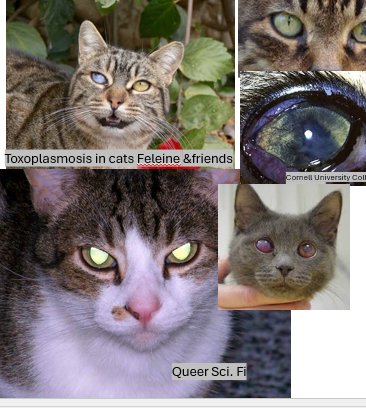
Ocular toxoplasmosis signs: Retinochoroiditis is a hallmark; may also cause cataract/lens cloudiness, uveitis, keratitis, endophthalmitis, microphthalmia, and optic atrophy.
Ocular toxoplasmosis signs: ________ is a hallmark; may also cause _____/lens _______, uveitis, _______, endophthalmitis, ______, and optic atrophy.
Herpesvirus
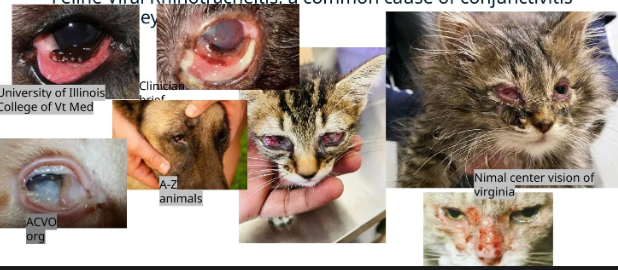
Herpesvirus: Can manifest as eye infections; canine herpesvirus-1 (CHV-1) may cause acute ocular disease in adults, and feline herpesvirus-1 (FHV-1) causes feline viral rhinotracheitis with conjunctivitis/ocular problems.
Herpesvirus spread: Mainly through respiratory droplets; signs often involve upper respiratory/mucosal surfaces plus ocular disease.
Herpesvirus: Can manifest as ___ infections; _____ ______-1 (CHV-1) may cause acute ocular disease in adults, and feline herpesvirus-1 (FHV-1) causes feline viral rhinotracheitis with conjunctivitis/ocular problems.
Herpesvirus spread: Mainly through ______ droplets; signs often involve upper respiratory/mucosal surfaces plus ocular disease.
Mycoses
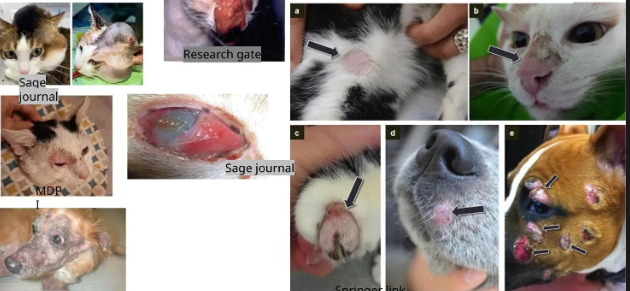
Mycoses: Fungal disease may be superficial or systemic and can involve skin, respiratory tract, nervous system, eyes, bones, and other tissues.
Mycoses: _____ disease may be _____ or systemic and can involve skin, respiratory tract, nervous system, eyes, bones, and other tissues.
Superficial mycosis
Dermatophytosis/ringworm causes hair loss, scaling, and circular lesions.
Systemic mycoses: Blastomycosis can affect lungs, eyes, skin, and bones; histoplasmosis may disseminate in cats; coccidioidomycosis can cause mycotic pneumonia; cryptococcosis may affect respiratory tract, nervous system, eyes, and skin.
_______ mycoses: ________ can affect lungs, eyes, skin, and bones; ________ may disseminate in cats; coccidioidomycosis can cause mycotic pneumonia; ________ may affect respiratory tract, nervous system, eyes, and skin.
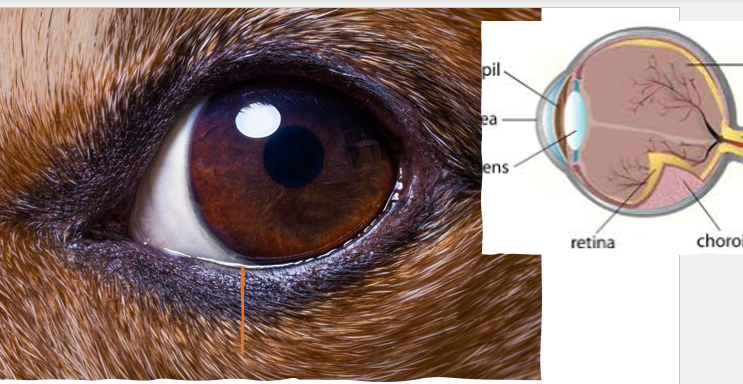
normal eye
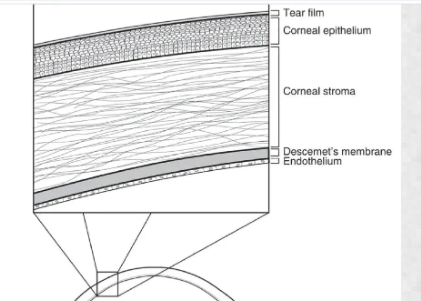
Cornea: Comparable in dogs and humans; transparent surface with epithelium, stroma, Descemet’s membrane, and endothelium.
Corneal epithelium: Non-keratinized stratified squamous epithelium with basal cells.
Corneal stroma: Thickest middle layer; made mainly of collagen/protein.
Descemet’s membrane: Thick basement membrane at the back of the cornea.
Endothelium: Single-cell layer lining the inner cornea.
______: Comparable in dogs and humans; transparent surface with epithelium, stroma, Descemet’s membrane, and endothelium.
Corneal ______: Non-keratinized stratified squamous epithelium with basal cells.
Corneal ______: Thickest middle layer; made mainly of collagen/protein.
_______ membrane: Thick basement membrane at the back of the cornea.
_______: Single-cell layer lining the inner cornea.
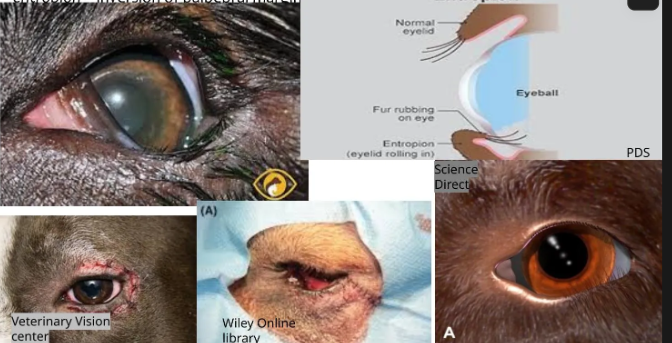
Entropion
Ectropion
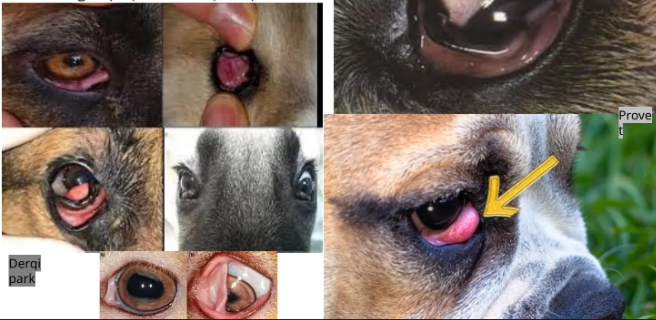
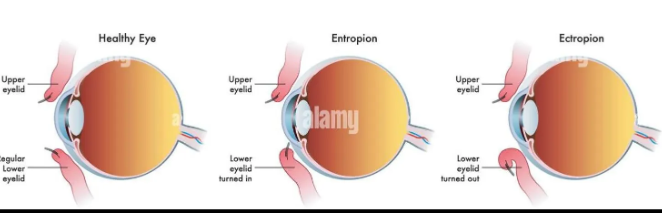
Entropion vs ectropion comparison: Entropion = eyelid turned inward; ectropion = eyelid turned outward.
Entropion vs ectropion comparison: Entropion = eyelid turned ____; ectropion = eyelid turned ______.
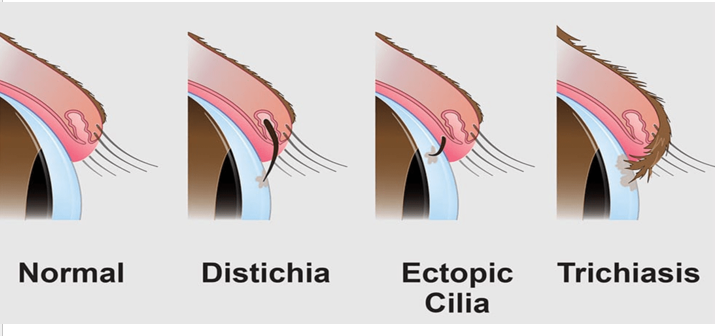
Trichiasis
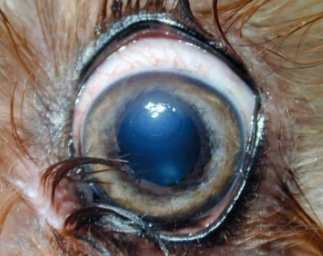
Distichiasis
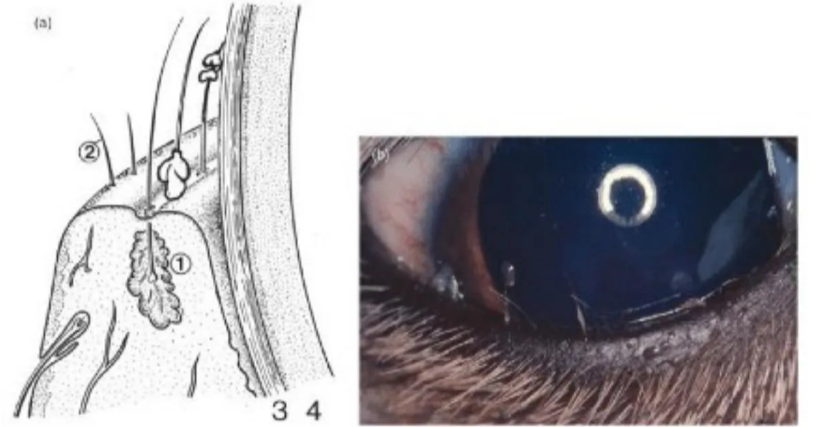
Ectopic cilia
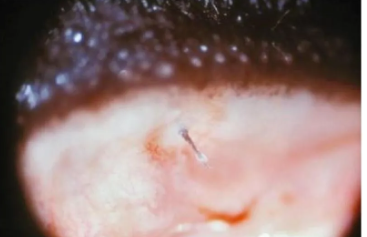
Coloboma
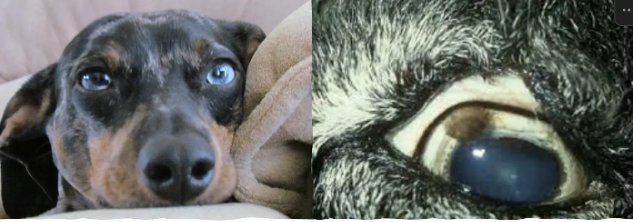
Blepharitis
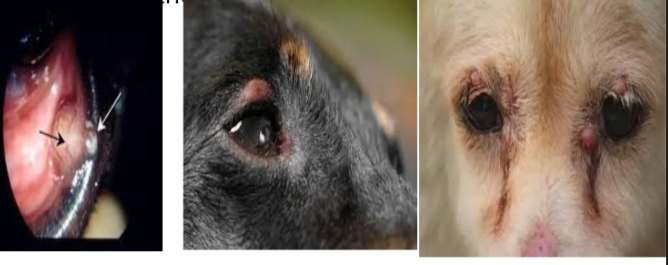
Hordeolum (stye)
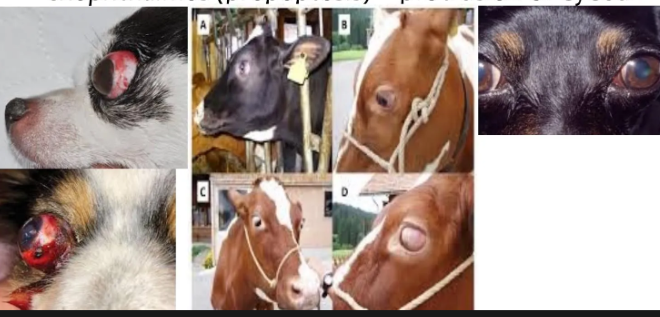
Exophthalmos / proptosis
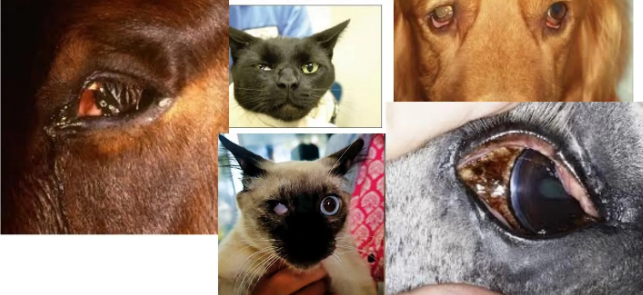
Enophthalmos
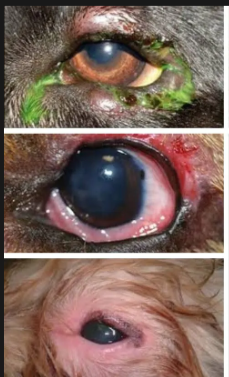
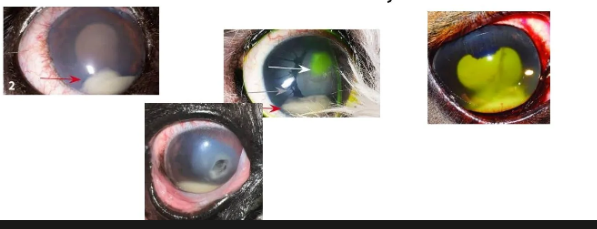
Hypopyon
Hypopyon color note: Pseudomonas aeruginosa can produce green pigment (pyocyanin) and foul odor; myeloperoxidase from WBCs can also contribute green color to pus.
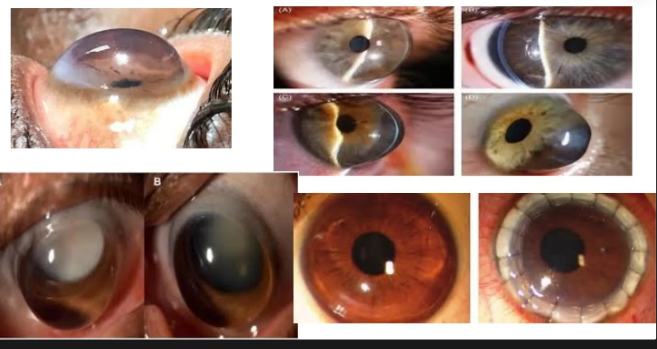
Keratoglobus
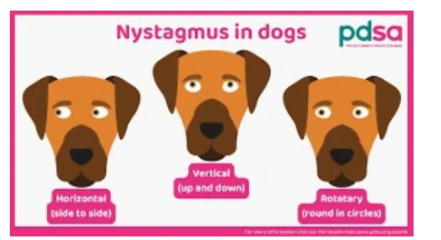
Nystagmus
Uveitis
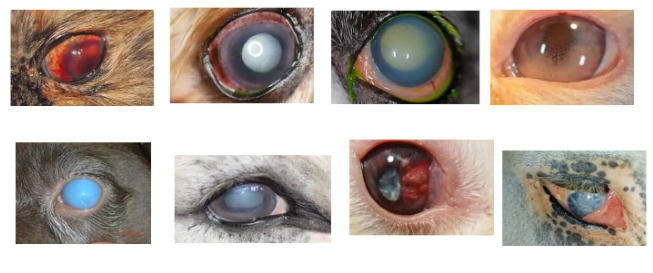
Keratitis
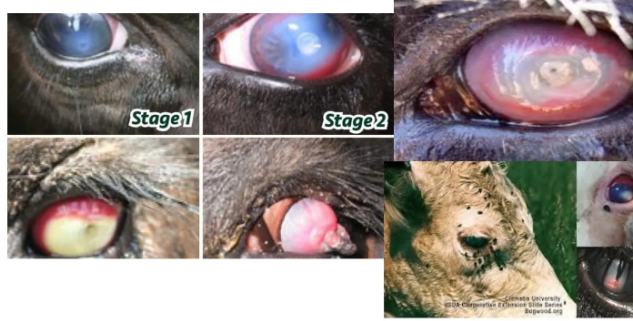
Nyctalopia
Night blindness / impaired vision in dim light; associated with vitamin A/retinol deficiency and can overlap with xerophthalmia.

anisocoria - unequal pupil
mydriasis - excessive dilation
miosis - small pupil

Cataract
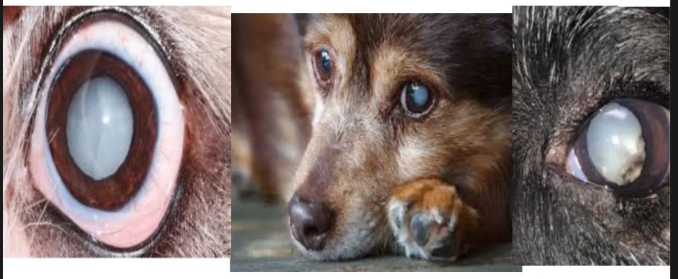
Nuclear sclerosis appears as a uniform haze, while cataracts may have a more localized or uneven opacity
_____ _____ appears as a uniform haze, while _____ may have a more localized or uneven opacity
Veterinarians use an ophthalmoscope (an instrument for examining the inside of the eye) to distinguish between nuclear sclerosis and cataracts.
Veterinarians use an _______ (an instrument for examining the inside of the eye) to distinguish between nuclear sclerosis and cataracts.
Dacryocystitis
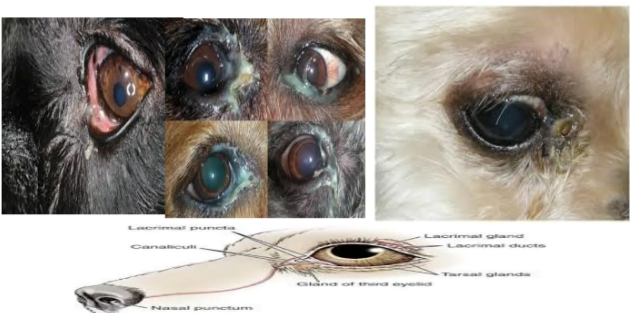
Pannus
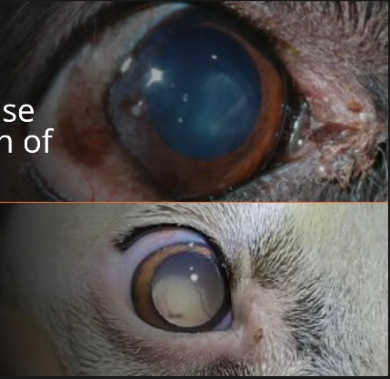
Strabismus

Synechia
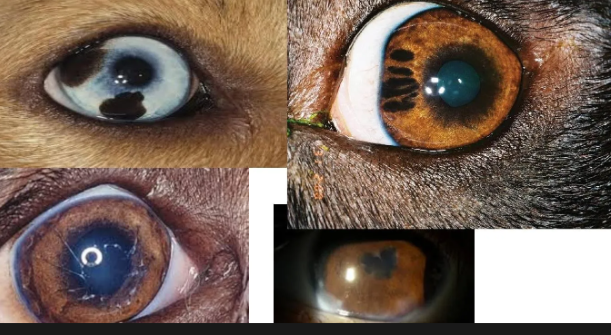
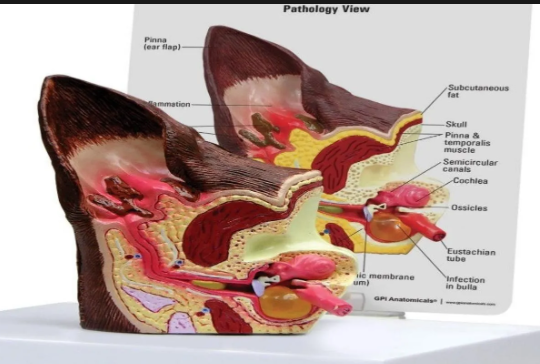
External ear: Includes pinna/auricula and ear canal; cartilage can be hyaline and elastic and extends to the tympanic membrane.
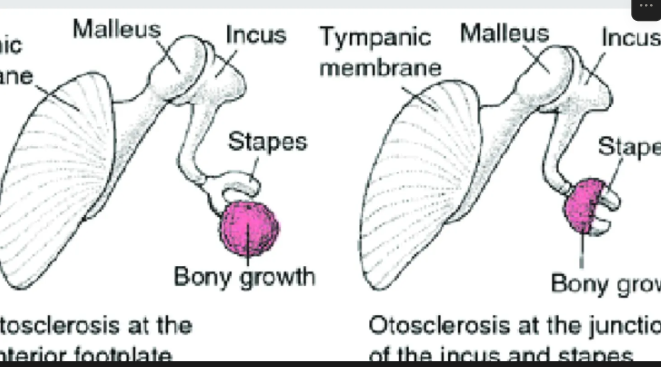
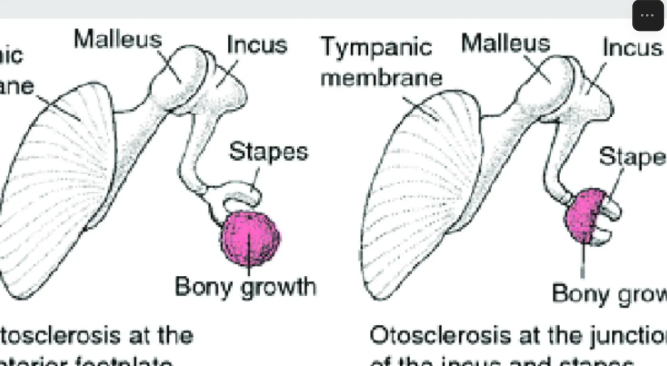
Middle ear: Extends from tympanic membrane to auditory ossicles; contains malleus, incus, and stapes. Function is to amplify sound.
Inner ear: Lies in the temporal bone and contains endolymph-filled canals and the cochlea.
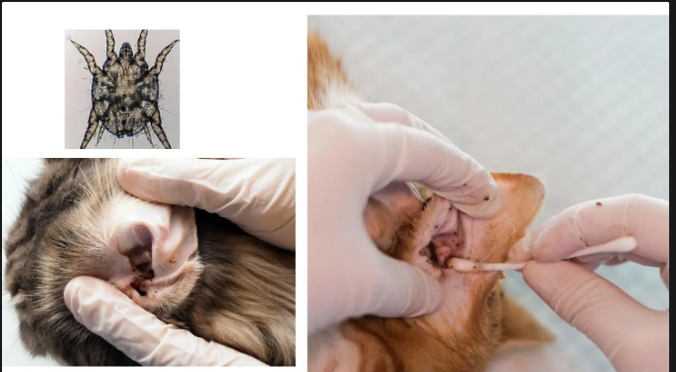
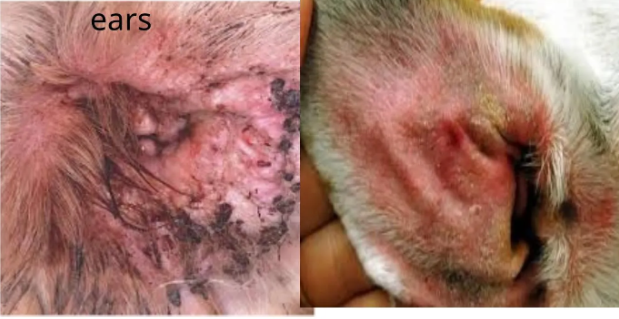
Otodectes cynotis: Ear mite of cats/dogs
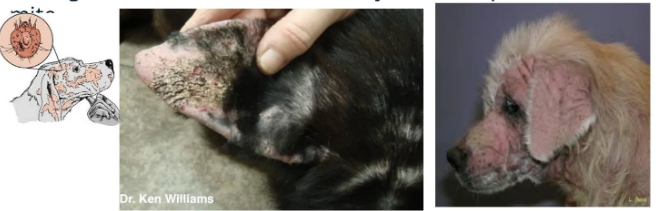
Sarcoptes scabiei: Sarcoptic mange/scabies mite
Raillietia auris: Livestock ear mite
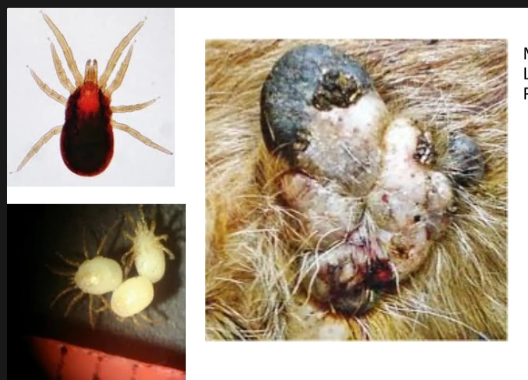
Viral ear infections
Otosclerosis: Excessive bony growth/remodeling around middle/inner ear so sound is not transmitted properly
Myringitis: Inflammation of the tympanic membrane/eardrum
Tinnitus: Perception of ringing/buzzing