Mucosal Immune System
 Call Kai
 Learn
Learn Practice Test
 Spaced Repetition
 Match
Match Flashcards
 Knowt Play
1/32

There's no tags or description
Looks like no tags are added yet.
Name | Mastery | Learn | Test | Matching | Spaced | Call with Kai | Chat |
|---|
No analytics yet
Send a link to your students to track their progress
33 Terms
What are mucosal tissues?
tissues containing mucus
respiratory tract, gastrointestinal tract, urogenital tract, memory glandor eyes.
What effect does SA have?
larger SA of the mucosal tissues → more pathogen enter the body via there.
What is mucus?
huge glycoproteins with repetative polypeptide chains
glycosylated, negatively charged
binds water & antimicrobial peptides
secreted by Goblet Cells
What are the mucus layers like in both intestines?
small intestine: one layer of mucus
large intestine: has two layers of mucus and more bacteria than in small intestines
What is the function of mucosal tissues and what is the property responsible for that?
Gas exchange, uptake of food components, excretion of waste, reproduction, sensory functions
Are all possible because mucosal tissues are thin & permeable
Nothing to memorise just know that having permeable mucos membranes makes us more susceptible to mucosal diseases.
What are functions of mucosal immune system?

What are some features of the mucosal immune system, where lymphoids and epitheial tissues closely interact?
tonsils and adenoids together form a lymphoid tissue ring, called the Waldeyers Ring
tonsils are an example where immune tissue is directly under the epithelial tissue
What are two structures of the mucosal immune system in the gastrointestinal tract?
Peyers Patches are small lymph nodes on top of the small intestines - contain B&T cell areas
isolated lympoid follicles: consist of only B cells & plasma cells that make IgA
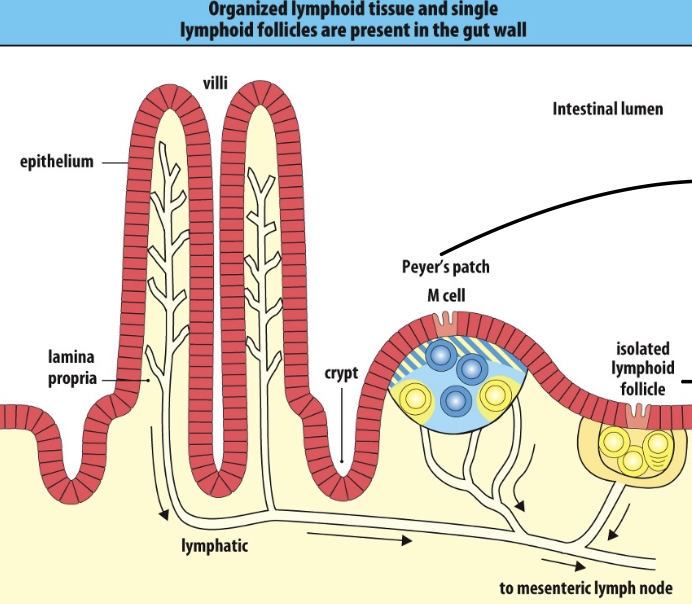
Distinguish between large and small intestine?
Small intestine: villi and crypts, peyers patches and isolated lymphoid follicles, less bactera and less mucus
Large intestine: only crypts, isolated lymphoid follicles, more bacteria and thicker mucus.
Where are M-cells found?
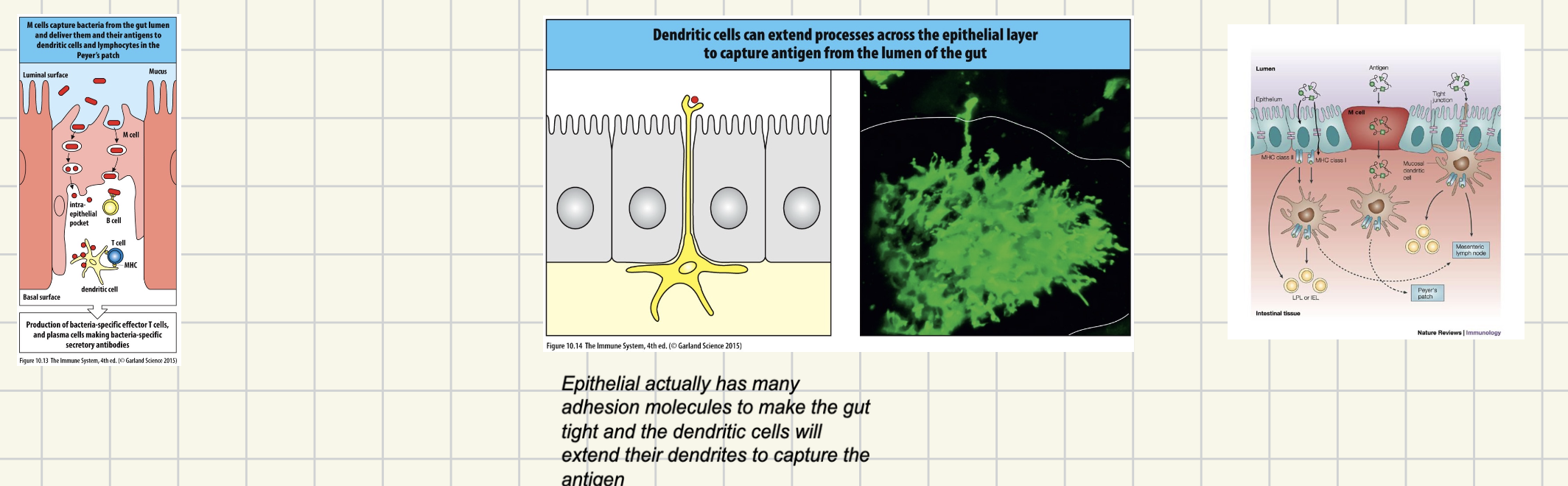
On top of Peyers Patches
A distinctive feature of the mucosal immune system is antigen uptake, what are the three mechanisms?
Antigen uptake by M-cells
Antigen uptake by dendritic cells
Antigen uptake by epithelial cells
What does salmonela do?
Salmonela can use all these mechanisms and act as the antigen to enter the cell, and thereby trick the cells for invasion.
How do effector T-cells undergo immunosurvelillance?
lamina propria has many plasma cells as well as CD8+ T-cells which act as surveillance to move around the epithelial tissue and ensure nothing is wrong
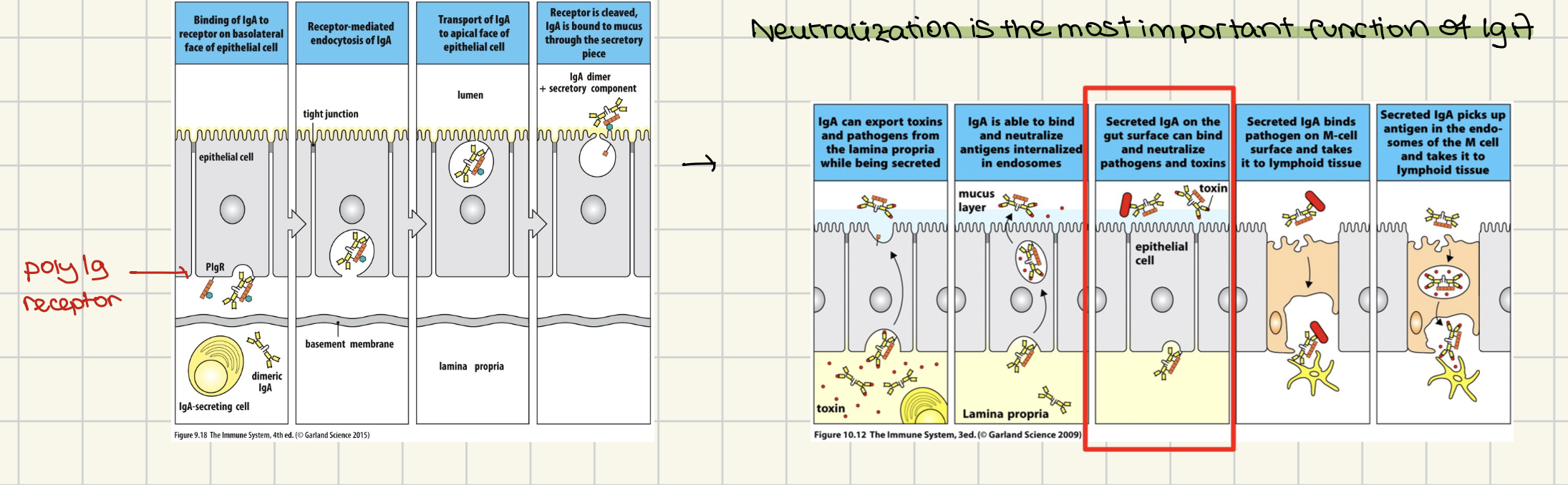
The intestines lamina propria also contains plasma cells producing IgA, what is their main function?
The main function of IgA is to neutralise pathogens in the apical side of the cell and is infact transported from the epithelial → apical side via receptor mediated phagocytosis.
What is striking about mucosal macrophages compared to the others?
they have lower inflammatory activity
How does the peripheral and mucosal immune response differ in terms of inflammation?
peripheral: skin → strong inflammatory response which attract effector cells
mucous: intestines → local effector cells eliminating pathogens with no/weak inflammation (less inflammation due to gut microbiota)
How does conditioning of DCs in the gut work?
Local factors like TGF-β, IL-2, and vitamin A condition DCs differently
These "conditioned" DCs migrate to mucosal lymphoid organs and induce tolerance instead of activation
So what are the 3 mechanisms that ensure that the immune system doesnt react to everything that the gut encounters and only attacks pathogens. In other words what does toleriing do?
Dies — clonal deletion, gone forever (no co-stimulation, so apoptosis)
Becomes anergic — survives but permanently unresponsive
Becomes a Treg — actively suppresses other T cells that recognise the same antigen
If no tolerance is present what is the outcome?
diseases like IBD
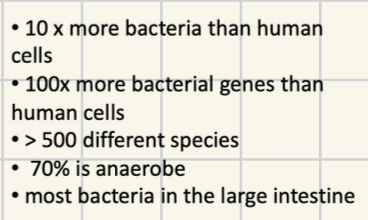
What are facts of the bacteria in intestine?
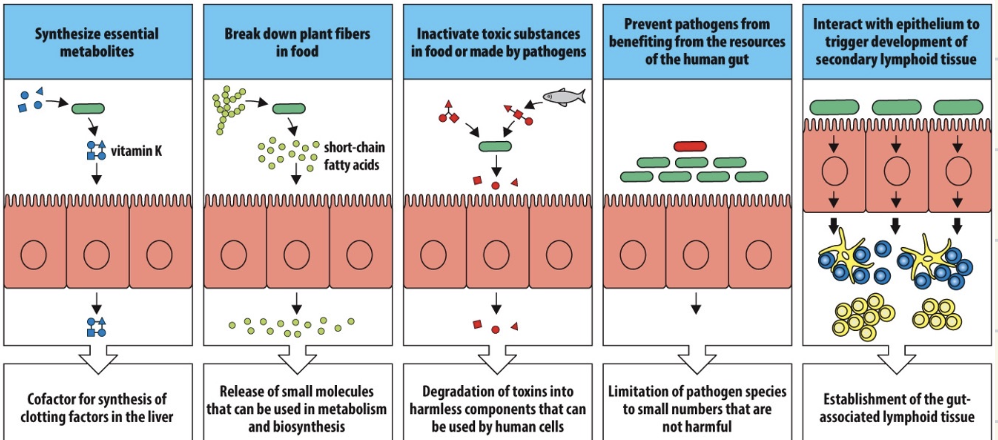
What are some benefits of bacterial microflora?
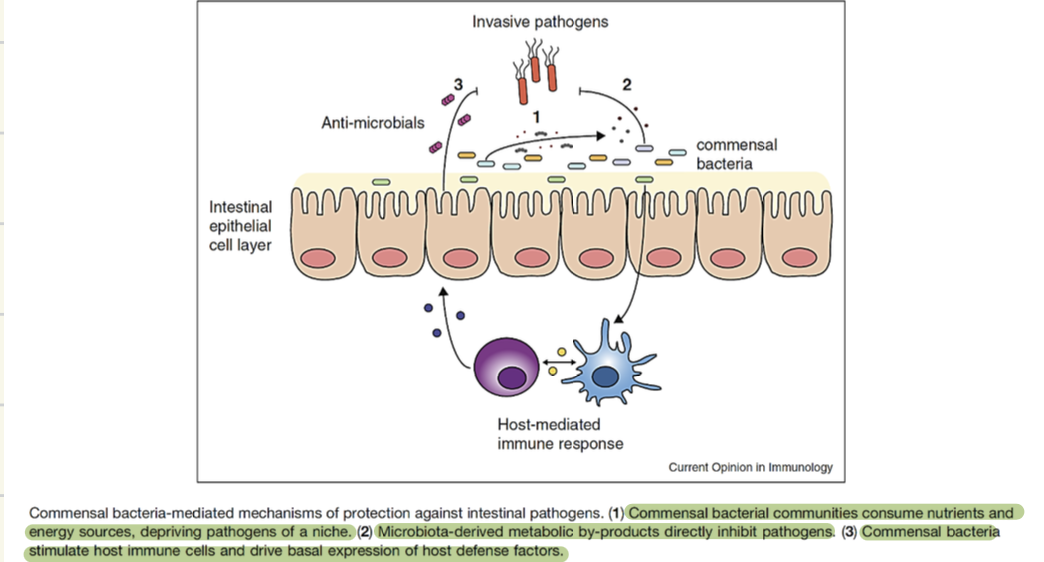
How can comensal bacteria protect against pathogens?
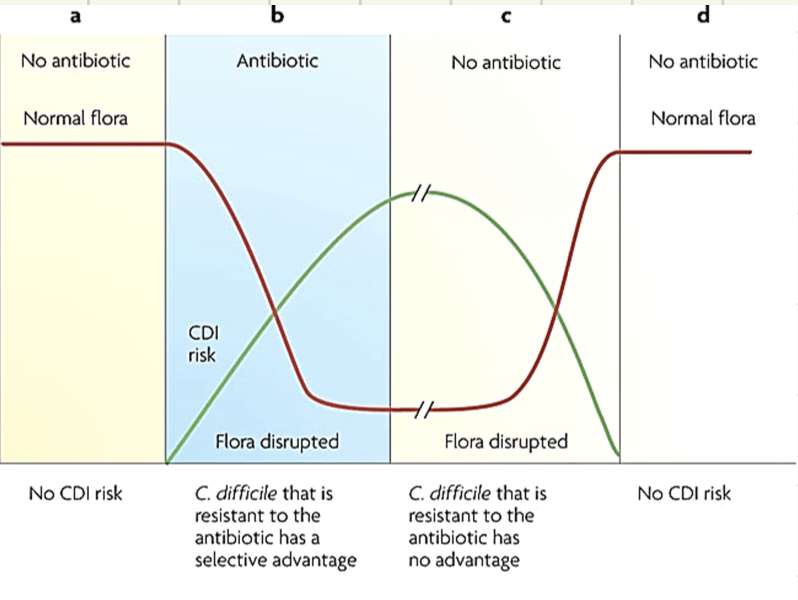
What is the relation between antibiotics and gut flora?
Antibiotic treatment influences the gut flora
Thats why we need to makesure: preventation/treatment of pathogenic infections using reatment with microbiota
What is Clostridium difficile?
Antibiotic treatment can promote infection with resistant bacteria
What is a treatment for C. difficile?
Feces transplantation: transfer of healthy flora to unhealthy patient to stimulate microbial flora.
What does SCFA do?
Gut bacteria break down food → produce SCFAs → SCFAs activate GPR43 on fat cells → fat stores less energy → muscle and liver become more insulin sensitive instead (can take up glucose easy → less storage).
Net result: healthy gut microbiota helps prevent fat accumulation and keeps your metabolism balanced.
Disrupted microbiota = less SCFAs = this system fails = risk of obesity and type 2 diabetes.
The microbiota (flora) of your intestine determines obiesity, how?
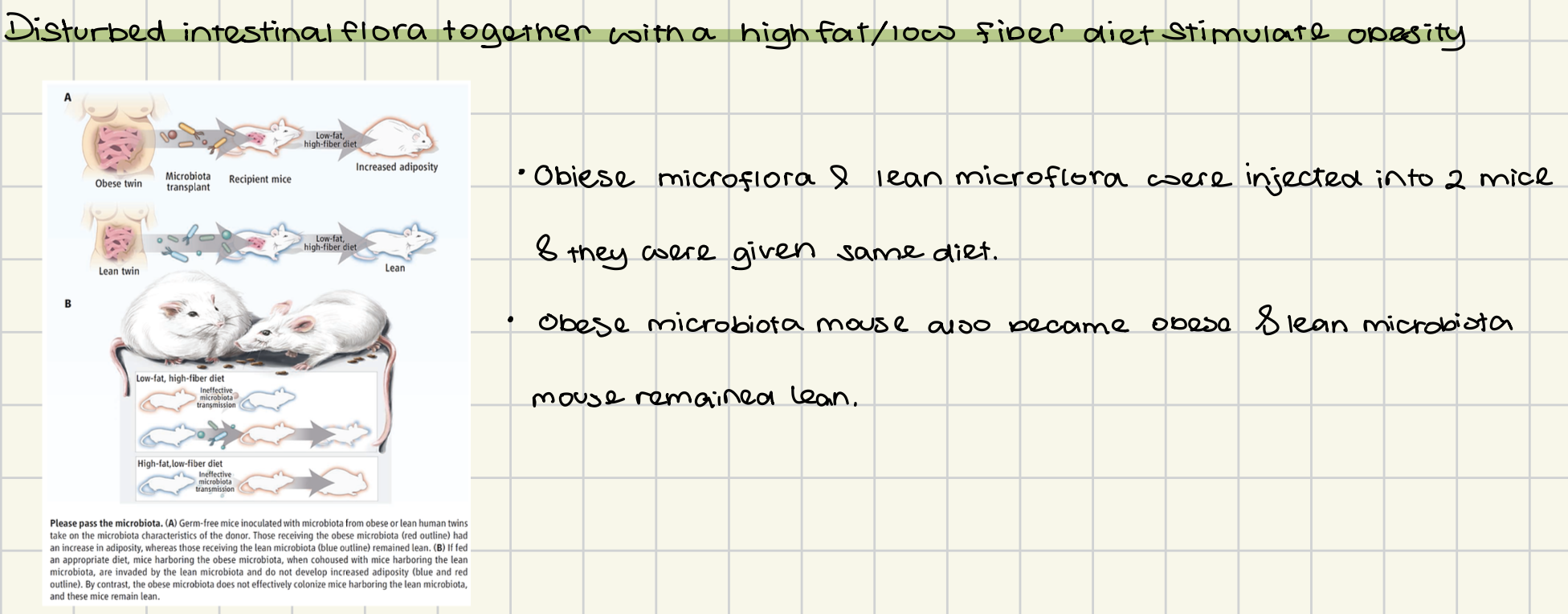
No content, just know that several factors effect your intestinal flora such as: antibiotics, lifestyle, diet and hygiene.
Distinguish between cold and hot tumors? Note this determines whether immunotherapy works on the patient or not?
Hot tumour = immune system noticed the cancer but is being suppressed → unblock PD-1/CTLA-4 → T cells can kill it → immunotherapy works.
Cold tumour = immune system never noticed the cancer, no T cells present → nothing to unblock → immunotherapy doesn't work.
What is the correlation between antibiotics and cancer and intestinal flora?
Antibiotics decrease eficiency of cancer immunotherapies
Immunotherapies for cancer are more effective in patients with a diverse flora
So what can we do to ensure responsivity to checkpoint inhibitors?
microbiota transplantation from responsive individual to non-responsive to make the non-responsive also respond to the checkpoint inhibitor.
bigger trials coming!!
3 ways to manipulate microbiota?
transfer of entire microbiota
pills
probiotics usage to transfer