Nature of Antigens
 Call Kai
 Learn
Learn Practice Test
 Spaced Repetition
 Match
Match Flashcards
 Knowt Play
1/25

There's no tags or description
Looks like no tags are added yet.
Name | Mastery | Learn | Test | Matching | Spaced | Call with Kai | Chat |
|---|
No analytics yet
Send a link to your students to track their progress
26 Terms
Immunogens are ___ capable of triggering an adaptive ___ response in an immunocompetent host.
Causing the formation of ___ by B cells and ___ T cells. If one side is missing, immune response not ___.
macromolecules; immune; antibodies; activating; robust
Antigens are something that is ___ and can react with antibody or T cell. It may ___ evoke immune response!
This is because the antigen must be able to bind ___ antibodies or T cells to produce a response!
foreign; not; enough
All immunogens ___ antigens - but not all antigens are ___.
(Immunogens are the ones who actually ___ an immune response)
are; immunogens; produce
Autoantigens belong to the ___ (self) and do __ normally evoke immune response.
Ex.
-Rh+ = RBCs have D antigen
-No anti-D antibodies (no antibodies = no response)
host; not
Alloantigens are from other members of the host’s ___ that is ___ of producing immune responses.
(Another antigen that I might not have, but someone else can have and cause me to develop an ___ to it)
species; capable; antibody
Heteroantigens belong to another ___ (animals, plants, microorganisms).
species
Heterophile antigens exist in unrelated plants/animals, but are close or ___ to our own antigens. Where antibodies to one species ___ with antigens from either species.
Ex. ABO antibodies (naturally occurring antibodies)
-anti-A antibodies in B + blood
-Antigens in environment look like A antigen so we make antibodies to it
(You are not born w/ antibodies, the antibodies u develop are from environmental ___ and what is compatible with your blood type's antigen(s). )
Ex. Infectious mono
-Antibodies made will react with sheep RBCs (cross-linking of sheep antigen to human antibodies)
identical; cross-react; exposure
List the 4 types of antigens
Autoantigen, Alloantigen, Heteroantigen, and Heterophile antigen
Immunogenicity is the ___ of immunogen to elicit immune ___. (How strong of a response is this immunogen making?)
ability; response
Epitope is the antigenic ___ site, where an antibody ___ on the antigen.
-must be _-_ amino acids long!!
-more epitopes of antigen = more ___!
determinant; binds; 6; 15; immunogenicity
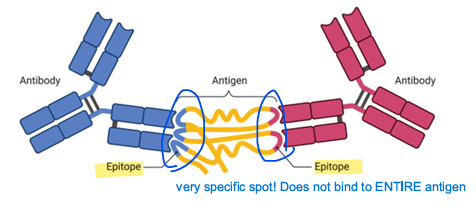
A minimum of ___ epitopes are required for an immune response. This is because antibodies must ___ to signal and activate the immune response.
2; cross-link
What 2 major factors affect the immune response?
Individual’s Traits and Immunogen’s Traits
Individual Traits that affect the immune response include:
-___ (is it an immunocompromised population?)
-overall ___ (better self-care = better immune system)
-dose (How big of a medication or vaccine dose received - must be in “___” zone)
-___ of inoculation (where is antigen coming from? Determines how fast it gets into body and how fast response is)
-___ capacity (how well does your baby make MHCII (antigen-presenting)?)
age; health; goldilocks; route; genetic
Immunogen Traits that affect the immune response:
-Chemical ___ and molecular ___
-___
-Macromolecular ___
-Antigen ___
composition; complexity; foreignness; size; processing
Chemical composition and molecular complexity is the ___ important for immunogenicity. (the bigger it is = more epitopes = more antibodies it can bind)
___ and ___ are the best (big molecules) because:
-3D shapes in subunits
-B cells make Abs to epitopes
-T cells activated by broken parts
It’s important to know that ___ are more complex and therefore, are favored as an immunogen.
most; proteins; polysaccharides; proteins
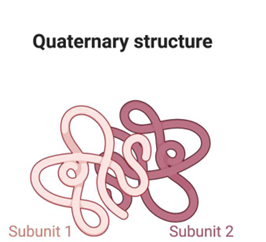
Nucleic acid and lipids alone are ___ immunogenic! While u need 6-15 amino acids long to be epitope, cannot be just nucleic acids and lipids alone! Must be ___ to something big and complex.
Exception: anti-dsDNA (antibody double stranded DNA) because it is bound to ___ and gets bigger.
not; attached; protein
Foreignness is an immunogen trait that ___ self vs non-self. The larger the taxonomical distance = ___ response (the more different to our self).
Exception: auto antibodies (dysregulation of own immune system/autoimmunity)
Because our own cells are attacking itself - it is not considered foreign.
distinguishes; greater
Macromolecular size is an immunogen trait that typically follows “bigger the ___”, with some exceptions.
-MW (molecular weight) > 10,000 amino acid/polypeptide chain needed to ___ immune response!
-MW > 100,000 amino acid/polypeptide chain is the ___ size to produce ___ responses!
better; activate; ideal; robust
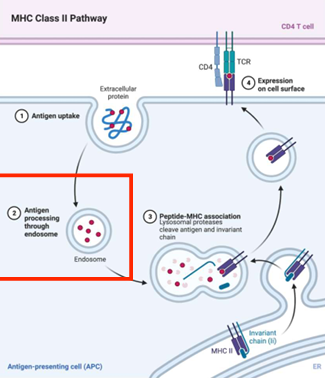
Antigen Processing is the immunogen’s ability for an antigen to be processed. How good can a cell ___ an immunogen or the extracellular protein is related to how ___ your response is going to be.
Enzymatic digestion creates small ___ that complex to MHC molecules that get ___ to lymphocytes.
No ___ = No T cell RESPONSE
digest; strong
peptides; presented
degradation
What are the two classes of immunogens?
Thymic dependent and Thymic independent
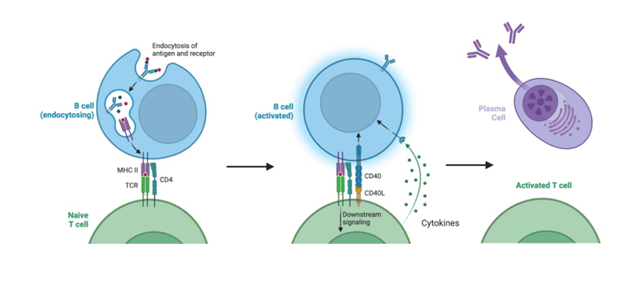
Thymic dependent immunogens are ___ which are recognized by B cells who present peptide to T cell. This ___ the T cell who sends ___ to B cell to activate it. The B cell then transforms into ___ cell to make antibodies.
These cells have ___!
proteins; activates; cytokines; plasma; memory
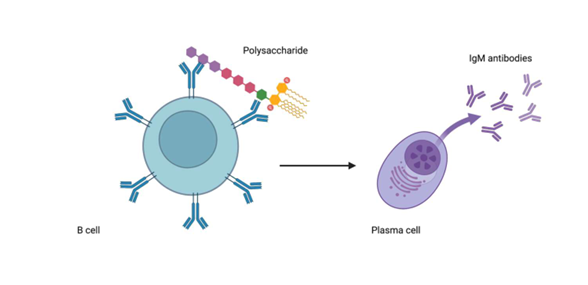
Thymic independent immunogens are ___ which are recognized by B cells. These B cells only make ___ (plasma cells specifically make them).
These cells have ___ memory, the time for response stays the same each exposure.
Ex. ABO antigens
polysaccharides; IgM; no
Allergens are immunogens that induce ___ reactions.
allergic
Haptens are antigens that are ___ immunogenic (too small) and will not produce antibody response.
Adding it to a ___ carrier will cause immune response! Antibodies will react with it (hapten-carrier protein complex).
not; protein
Haptens (“to fasten”) have a ___ epitope. But couple it to a protein carrier and it ___ make an antibody response!
Ex. Poison Ivy (plant molecule binds to skin proteins to elicit immune response, without help of proteins there is no response)
Antibodies produced by a hapten include:
-Anti-carrier protein
-Anti-hapten
-Anti-hapten-carrier complex
Each antibody targets ___ points of complex or whole complex - antibodies all function the same.
single; can; different

An adjuvant (“to help”) is an ___ that enhances immune response.
Added to ___ to increase immune responses! Alone, it is ___ immunogenic. Protects immunogen from being ___.
___ increases immune response (they are more foreign bodies added to body w other immunogens - thus, response increases).
-More macrophages infiltrate
-Increase antibody production
-Increase T cell activation
Ex. Aluminum salts in Hep B vaccines allow the antigen to stay in body longer, letting body make those Hep B antibodies
additive; vaccines; not; degraded; Nonspecifically