Head & Neck 1: Brain & Structure 1
 Call Kai
 Learn
Learn Practice Test
 Spaced Repetition
 Match
Match Flashcards
 Knowt Play
1/42

There's no tags or description
Looks like no tags are added yet.
Name | Mastery | Learn | Test | Matching | Spaced | Call with Kai | Chat |
|---|
No analytics yet
Send a link to your students to track their progress
43 Terms
Brain
Most metabolically expensive tissue, 20% blood oxygen, 130g glucose per day, can’t store glucose
4 Divisions of Brain
Cerebrum
Diencephalon
Brainstem
Cerebellum
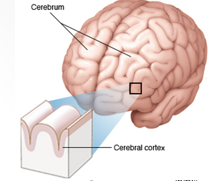
Cerebrum Overview
Largest part of brain (80% brain mass). Gray and white matter.
Parts:
L/R hemispheres
Gyri, sulci, fissures (cerebral cortex)
Corpus callosum
Basal Nuclei/Ganglia
Cerebrum Functions
Conscious thought process
Memory
Reasoning
Conscious and subconscious movement of skeletal muscle
Cerebral Cortex
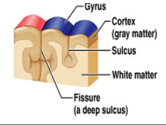
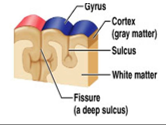
Surface of the cerebrum made of gyri, sulci, and fissures. Gray matter. Help separate the brain.
Gyri
(Gyrus; singular) Ridges, “squishy worms”, gray matter

Sulci
(sulcus; singular) shallow depressions, “lines”, gray matter

Fissures
deeper depressions
Gray matter
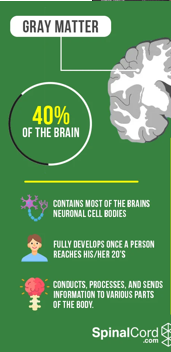
Neuronal cell bodies, dendrites, unmyelinated axons, outer part of brain
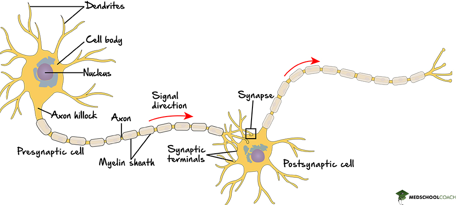
Neuronal cell bodies
Part of a neuron with nucleus and organelles. Processes signals and facilitates communication throughout the nervous system.
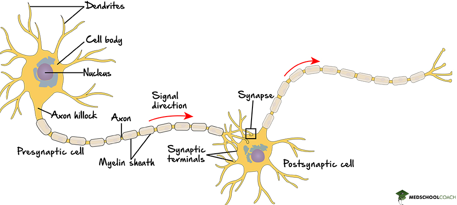
Dendrites
Receives signals and send them towards the cell body.
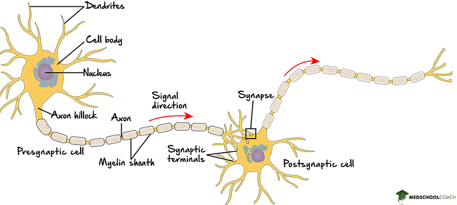
Unmyelinated axons
Axons that lack a myelin sheath are found in gray matter. Slower signal transmission and process sensory and motor information.
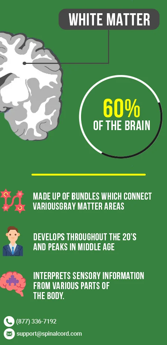
White matter
Most of brain mass, surrounded by gray matter, myelinated axons of neurons
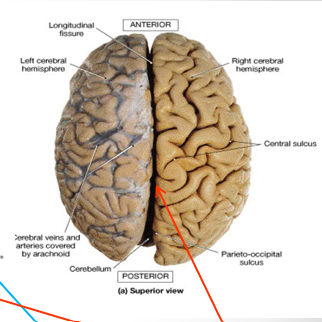
Longitudinal fissure
Separate left and right hemispheres of the cerebrum
Corpus Callosum
Connects left and right hemispheres of the cerebrum through commissural fibers. Allows sharing of learning and memory between hemispheres. White matter.
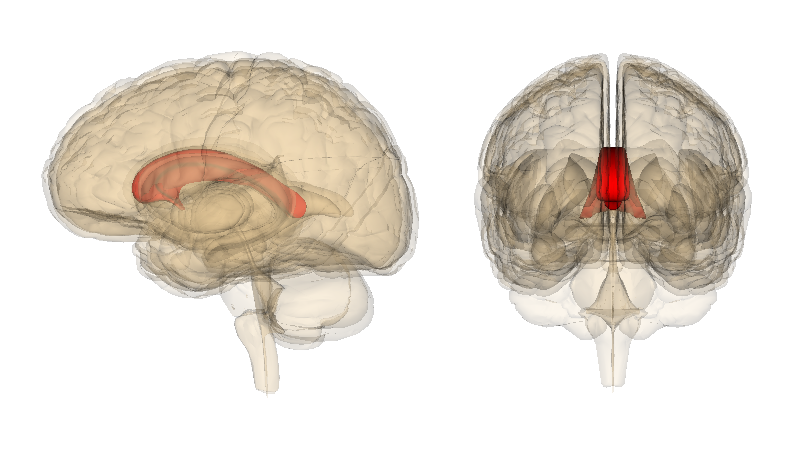
Commissural fibers
Tracts of neurons that cross from one brain hemisphere to the other. Makes up the corpus callosum
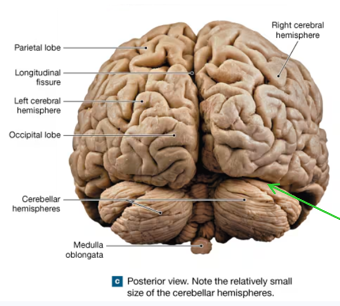
Transverse fissure
Separates left and right hemispheres of the cerebrum from the cerebellum
Frontal lobe
Largest, personality, thinking & reasoning. Primary motor cortex, Broca’s (speech motor). Conscious control of muscles.
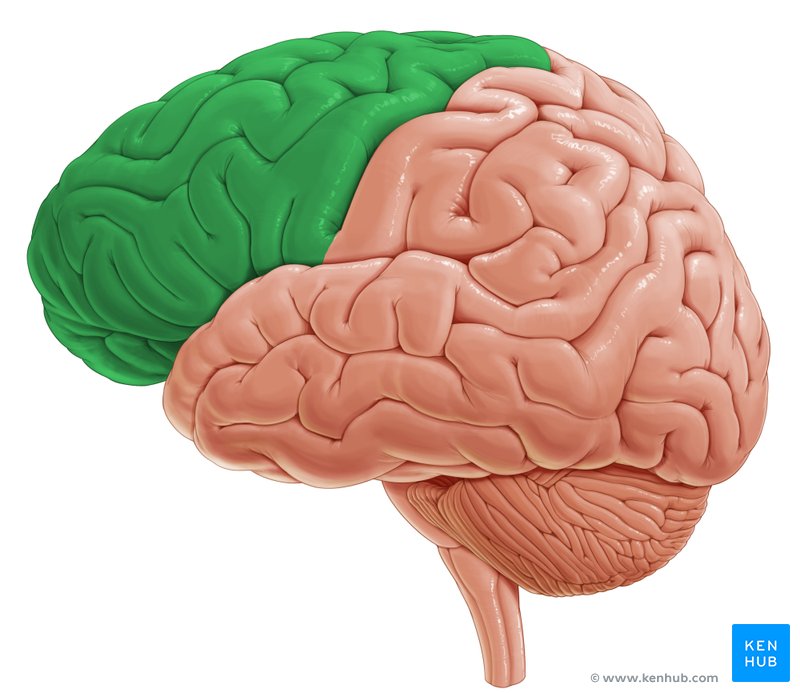
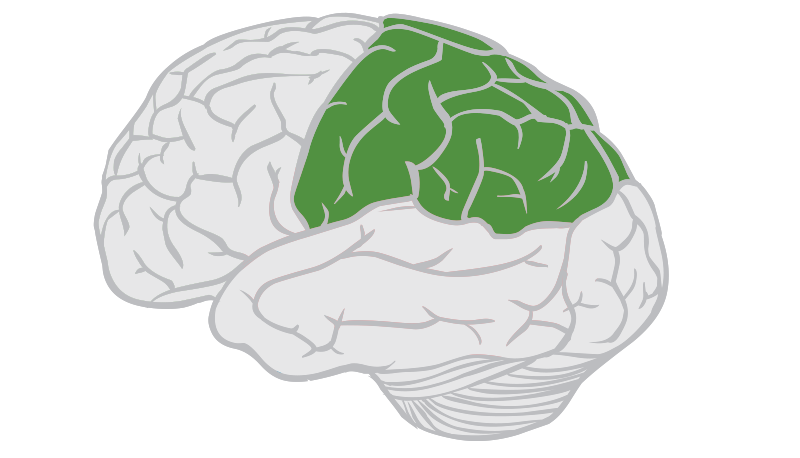
Pariental lobe
Primary sensory cortex. Sensation of touch, temperature, pain, pressure, vibration, taste.
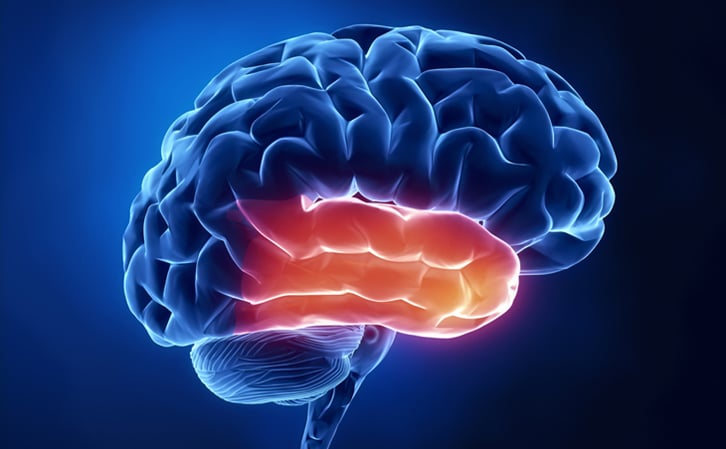
Temporal lobe
Primary auditory and olfactory cortex. Stores sound and smell.
Occipital lobe
Visual cortex. Interprets what you see

Important Sulci
Separate functional sections of the brain (lobes)
Central sulcus
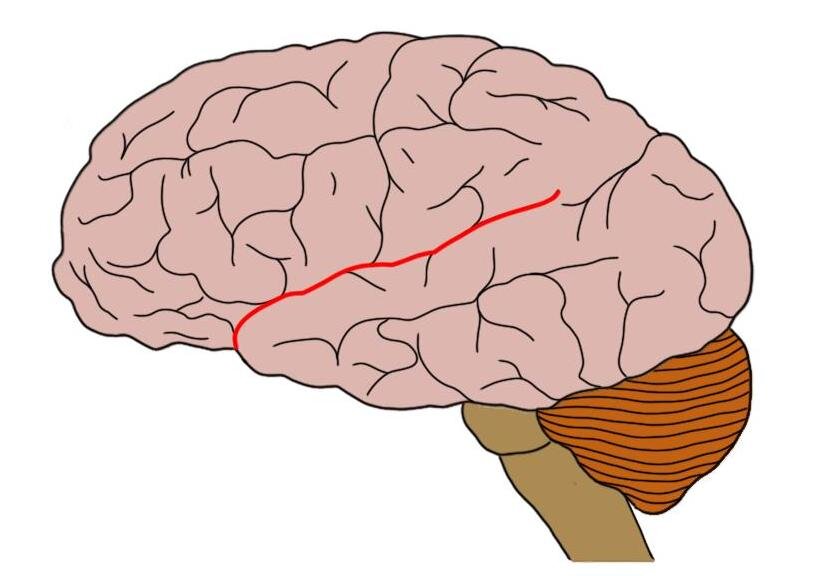
Lateral sulcus
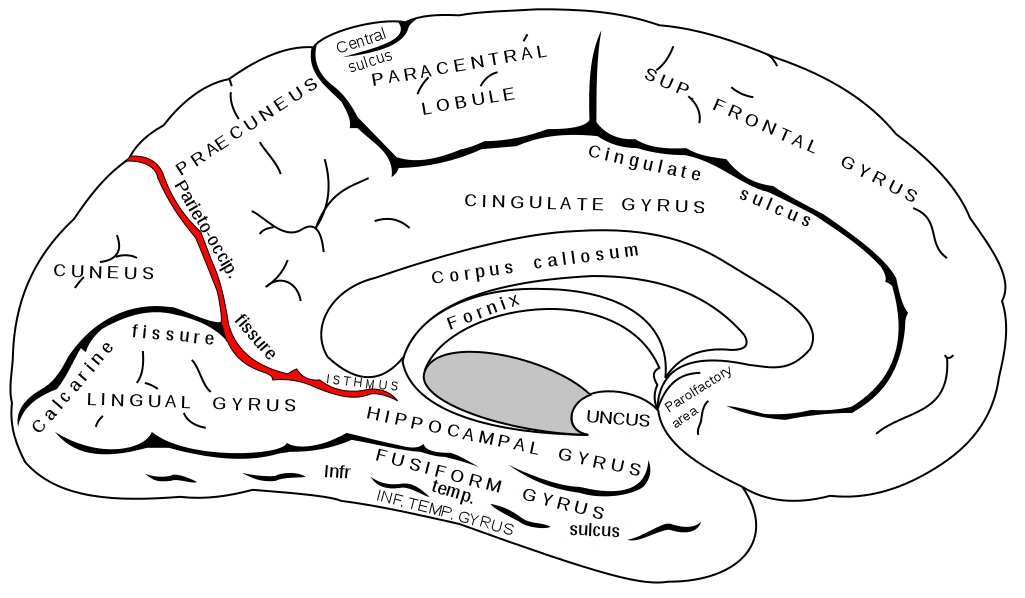
Parieto-occipital sulcus
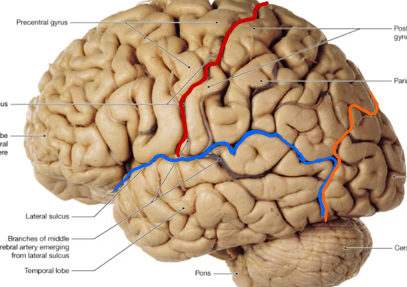
Central sulcus
Separates frontal and parietal lobe
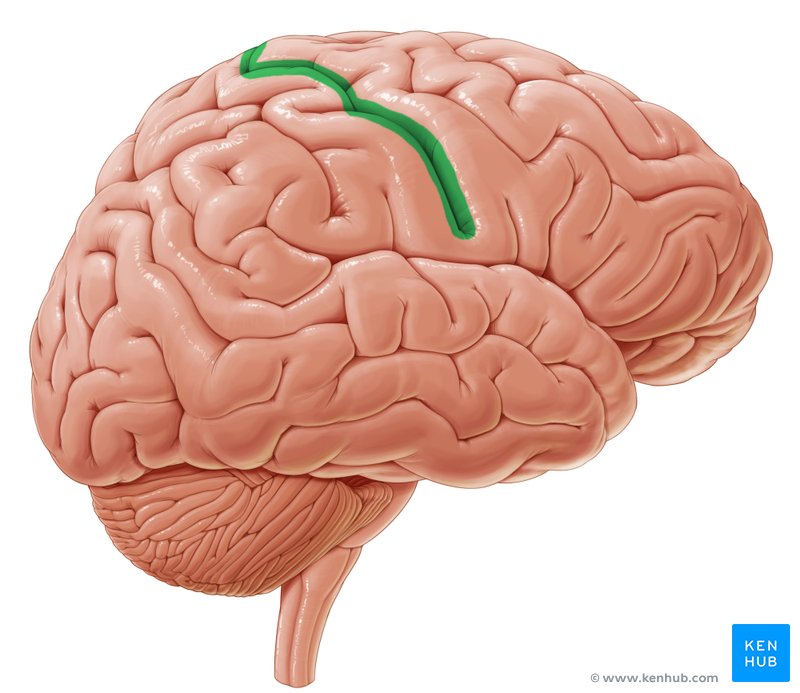
Lateral sulcus
Separates temporal from parietal and frontal lobes
Parieto-occipital sulcus
Separates occipital lobe from the rest of the brain
Important gyri
Separated by central sulcus.
Precentral gyrus
Postcentral gyrus
Precentral gyrus
Primary motor region, frontal lobe, anterior to central sulcus.

Postcentral gyrus
Primary somatosensory region (temperature, pain, pressure anywhere in body), parietal lobe, posterior to central sulcus

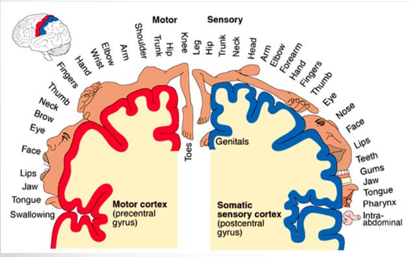
Homonculus
Represents motor and sensory distribution of precentral and postcentral gyrus
Nuclei
Collection of nerve cell bodies
Basal nuclei/ganglia
5 specialized paired masses of gray matter nuclei hidden deep inside sea of white matter.
Striatum:
Caudate nucleus
Putamen
Globus pallidus (under putamen)
Subthalmic nuclei: part of diencephalon
Substantia nigra: midbrain
Associated closely with basal nuclei/ganglia
Movement-control system. The cerebral cortex has an intended movement, and the basal nuclei helps fine-tune which skeletal muscle movement gets expressed appropriately; supresses unwanted movements. Coordination of learned movement patterns (sports, dancing). Located deep in white matter.

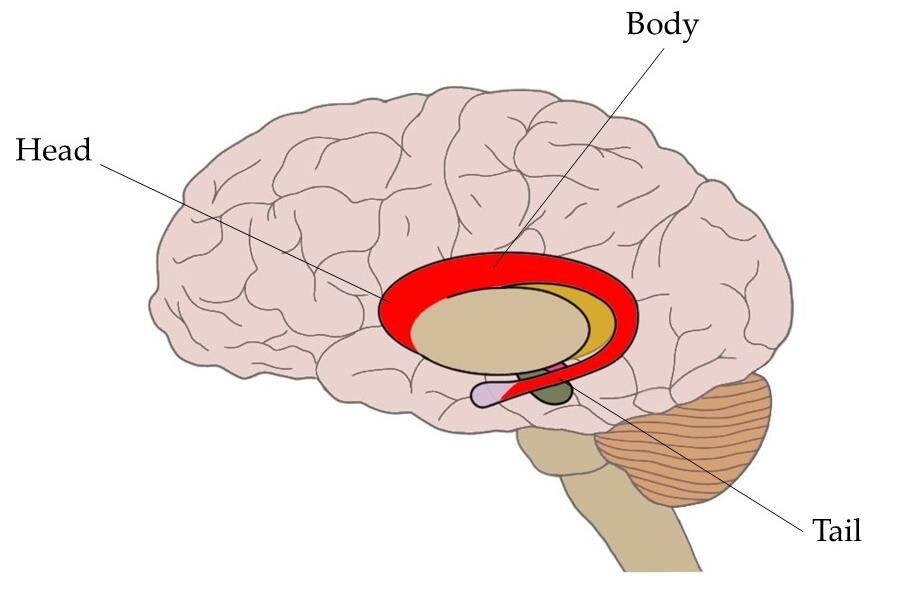
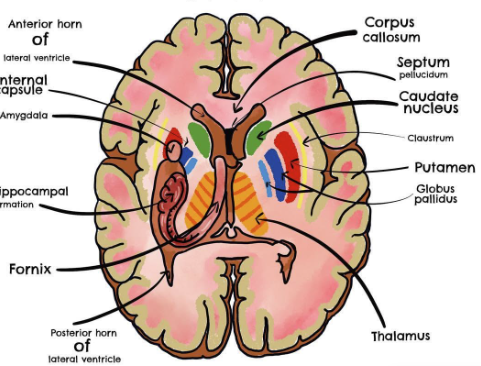
Caudate nucleus
Head, body and tail (ends near amygdaloid body)
Putamen
Lateral/superficial (outermost part)
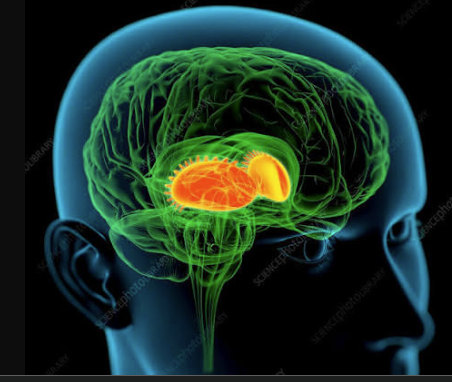
Globus pallidus
Medial/deep (medial to the putamen and inferior to the caudate nucleus)
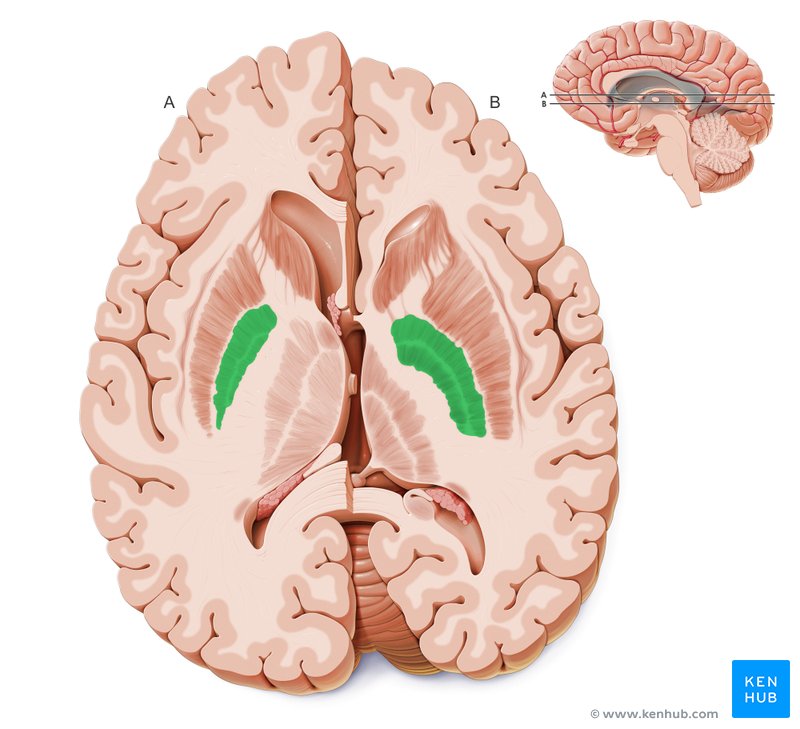
Caudate nucleus, putamen, globus pallidus transverse image
Caudate nucleus, putamen, globus pallidus coronal image
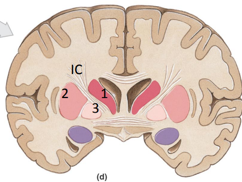
Internal Capsule
White matter between the basal nuclei/ganglia where neuronal tracks go through (projection fibers). Between caudate nucleus and putamen + globus pallidus
Descending motor tracts: go from cerebral cortex through midbrain to cerebral cortex
Ascending motor tracts: go from spinal cord through midbrain to cerebral cortex
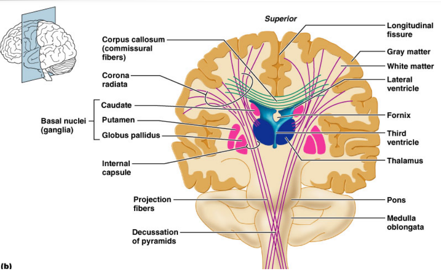
Basal ganglia pathways
Coordinated movement of skeletal muscles. Final movement command loops through brain first before sent to skeletal muscles.
Cortex-to-cortex circuit (basal ganglia consulting loop)
Nigrostriatal (substantia nigra—>striatum) pathway
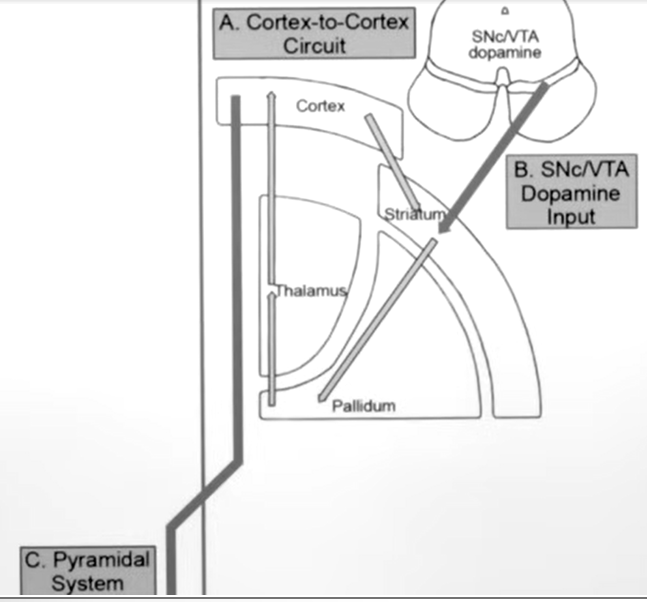
Cortex-to-cortex circuit (basal ganglia consulting loop)
Cortex—>Striatum—>Globus pallidus—>Thalamus—>Cortex—>Midbrain to spinal cord—>Muscles
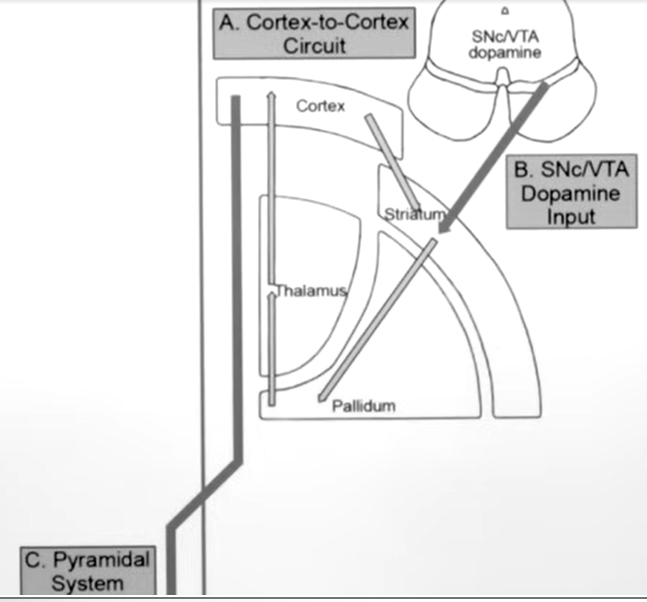
Substantia nigra
Region near the midbrain involved in movement control, cognitive exectutive functioning, emotions.
Pars compacta: produces dopamine from neurons with neuromelanin (black)
Pars reticulata: eye movements and cognitive functions, produces GABA (inhibitory NT)

Nigrostriatal pathway (pars compacta)
Substantia nigra pars compacta (releases dopamine to influence…)—>Striatum
Regulates speed, direction, force of movement
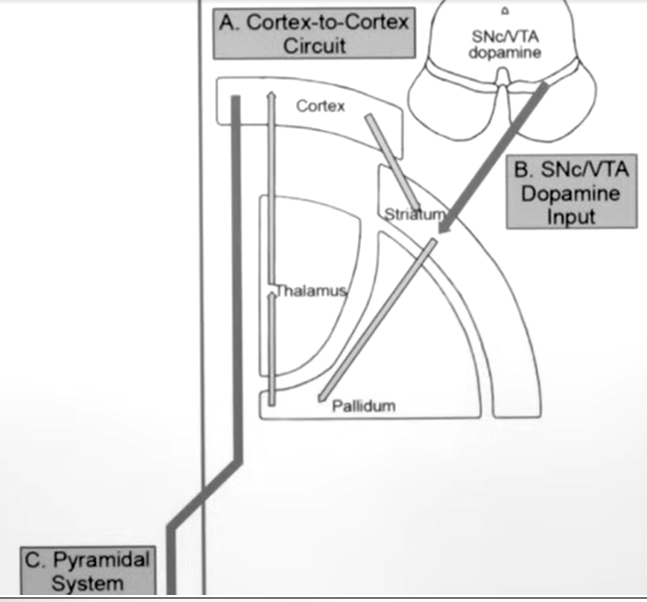
Huntington’s Disease
Inherited neurodegenerative disease affecting striatum
Uncontrolled movements, memory lapses, difficulty concentrating, depression, mood swings, speech changes. Common causes of death: Falls or Aspiration pneumonia due to choking (unable to swallow properly…aspirate bacterial saliva)
Parkinson’s Disease
Progressive degeneration of dopamine producing cells in substantia nigra (black parts…neuromelanin)
Tremors, rigid limbs and torso, impaired balance, affects emotions and cognition. Aspiration pneumonia and falls.